





How Morrisons Connects All of its 120,000 Employees Across 500 Offices on One Platform

6167
Of your peers have already read this article.
2:30 Minutes
The most insightful time you'll spend today!
Morrisons is a large supermarket chain in the United Kingdom, headquartered in Bradford, West Yorkshire, England.
Eleven million customers trust Morrisons, a leading UK supermarket, to provide quality food at affordable prices each week. With 120,000 staff nationwide across more than 500 sites, good communication is crucial. G Suite helps Morrisons connect every member of their team affordably, whether they’re picking stock in a warehouse or serving customers in-store.
Morrisons used to print half a million sheets of paper every week and file them in over 3,000 filing cabinets in order to fulfill compliance requirements. Now, with collaboration in Docs and rapid information collection with Forms, they’ve reduced paperwork. Outside the office, staff has replaced clunky VPNs and outdated handheld devices with G Suite, which can work on any device. And with Google’s intuitive administrative tools, local managers can set up new accounts in three minutes instead of five to ten days.
Instead of shared logins, all employees have a G Suite account, and Google+ brings these colleagues from across the company together to share tips and advice. Morrisons also improves services based on customer feedback collected by shop floor staff that use apps on mobile devices.
Google Products Helps HMH’s Healthcare Staff Work from Anywhere Efficiently and Securely!

10205
Of your peers have already read this article.
3:00 Minutes
The most insightful time you'll spend today!
Hackensack Meridian Health (HMH) executive Mark Eimer explains how an ambitiously-timed rollout of a comprehensive suite of Google products helped the entire organization—from doctors to IT staff—achieve better security, cultivate a more equitable work environment, and ultimately, improve patient outcomes.
How does a recently merged, 17-hospital healthcare system fast-track a platform migration and hardware rollout securely and in a way that improves work for everyone, regardless of location or role? These are the questions that kept me up at night in early 2020, when the pandemic demanded a “big bang”—something our legacy laptops and operating systems couldn’t handle.
We began our work with Google in 2020 with the adoption of Chrome as our default browser. As we migrated platforms, keeping patient data safe was of the utmost importance to us, along with providing every staff member with the tools they needed to work virtually. Our staff often experienced issues accessing our web-based applications using Internet Explorer or Edge Browser, a problem that went away when we switched to Chrome. Chrome’s versatile compatibility also made it easier for my team to migrate all of our web-based operations, and Chrome’s security and manageability were key components to making this switch a huge win for the organization.
The success of this migration led us to extend our Google partnership to patient care applications—where Google’s expertise in AI and ML helps scale the use of diagnostics tools and improve other aspects of the patient journey.

Achieving security at every step
Like so many other healthcare organizations, we’ve been concerned about ransomware attacks. This is part of why we moved to Google Workspace and distributed over 3,000 Chrome OS devices in kiosk mode in March of 2020, when many of us went remote due to the pandemic. We were very concerned about team members accessing corporate applications through home devices that were running EOL operating systems (WIN7), as well as a general lack of antivirus and encryption measures.
We were protected by the fact that Google’s software and hardware both had built-in security features that we needed to stave off sophisticated attackers. For example, Chrome OS automatically updates to the latest security update and encrypts data living outside the cloud on the hardware. These features protected us from security-related disruptions, letting us securely move a huge library of file shares and emails across thousands of accounts to Google Chrome OS in just four months.
A year later, in March 2021, we migrated the enterprise over to Google Workspace and saw an immediate reduction in spam by 30% from the inherent built-in AI/ML. This meant staff were less likely to receive (and click through) phishing attempts. My team could connect, create, and collaborate easily and securely—even as more of us were working from home and needed to access sensitive data remotely.
Leveling the playing field
As an organization, we were surprised by how many team members didn’t have personal computers at home. We quickly decided that if we needed team members to work from home, the health network would have to supply hardware. Chromebooks’ lower price tag compared to PCs—on top of their built-in security controls—allowed us to purchase, deploy, and support that initial distribution of 3,000 Chromebooks to team members in less than three weeks, providing devices to every eligible remote employee instead of just a select few. This was vital to reaching our equitable technology goal as part of our diversity and inclusion initiative: everybody has the same tools to do good work.
When all employees have what they need to do their jobs well, we get better patient outcomes. Before we began this cloud adoption journey, patient and staff experiences were different within the hospitals and outside of them.
Now it’s the same wherever our staff is, and we’ve seen efficiency and accessibility benefits extend to the patient side. For example, we built a web-based contact center that supports 80 locations that use Workspace and Chrome OS devices. Since customer service, admin, and providers are all on the same system, it has become a one-stop shop for patients.
Furthermore, through the Grow with Google program, we were able to provide another benefit to employees that drove our equity goals. Google trained 50 non-IT staff members—from environmental services, food and nutrition, and other non-tech areas who were interested in making a career change to IT—on the Google products we were using. They may not have thought about switching to a career in IT before the Grow with Google program came to our organization, but through this partnership, they now have that opportunity.
A strategic, long-term partner
With any large-scale rollout, the work doesn’t end once laptops are in employee hands. Google has shown their commitment to long-term collaboration as they continuously optimize their products for the unique needs of healthcare providers and go the extra mile in tailoring tools to our staff’s workflows.
For example, on the Chrome OS side, the Google team has helped our registration desks and document centers with device integration for hardware like credit card readers and e-signature pads. They’ve also helped us meet security and privacy requirements mandated by state and federal governments around HIPAA, Medicaid, and Medicare reimbursements. Over this next year, we’ll look at a feature roadmap with Google Cloud to deliver further enhancements, iterating on the product itself to meet our needs for the present and the future.
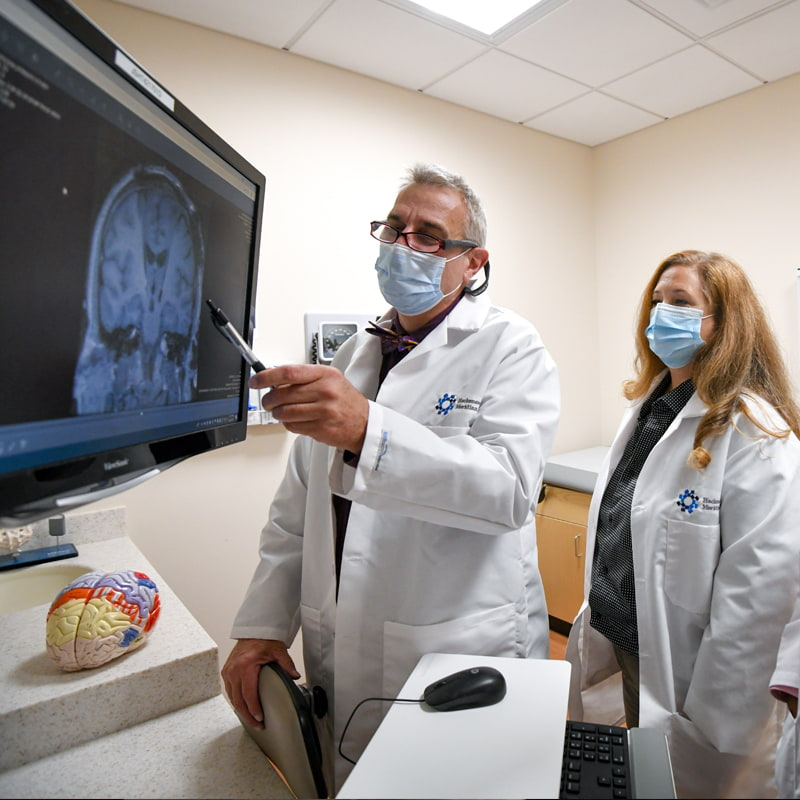
Delivering the future of healthcare
The benefits we’ve seen around security and usability—and the ability to provide all staff with equal access to Google’s technology—are why we’re expanding our partnership with Google to both the administrative and clinical sides of HMH. In addition to further Google rollouts with corporate, next year we’re distributing Chromebooks to all 350 of our ambulatory clinics.
We’re also working with the Google professional services team to create a custom AI model that analyzes 3D mammogram images. This AI model will enable two providers to read mammograms—which adheres to international best practices but is currently rare in the US—without requiring additional time. Conducting double readings of mammograms will yield better health outcomes for our patients, such as a lower patient recall rate and an increased accuracy in detecting breast cancer.
We’re currently building the model using a variety of Google Cloud products, including Cloud Healthcare API. Once complete, this model is expected to be trained, deployed, and maintained in Google’s Vertex AI, allowing our providers to be more productive as they make clinical decisions with AI support. As the model is proven over time, we plan to make the predictive services accessible to other healthcare organizations.
With Google, we’re able to achieve a unified architecture for storing data as well as training and deploying AI models, which enable our staff to work more efficiently and securely from anywhere. While I may not be able to predict the future as accurately as AI can, I foresee our continued partnership with Google as a key part of HMH’s improved provider and patient outcomes.
How Google is Showing the Way to the Differently-abled: A Blind Program Manager’s Account

4244
Of your peers have already read this article.
3:30 Minutes
The most insightful time you'll spend today!
What does “accessibility” mean to businesses? It’s not just about making sure that your office or retail space is accessible to workers and customers who have mobility challenges, it’s also about making sure that your apps, digital tools and content are also more accessible to everyone.
Our product teams work every day to ensure that tools like G Suite have built-in accessibility features. As a Program Manager, I help create those features and use many of them myself, as I’m blind. I would like to give an overview of product accessibility features that have been available for some time, as well as some new ones.
Listen to content with help from screen readers.
A screen reader is a helpful tool for people who are blind or have low vision. It provides methods to interact and control applications and also converts content on screen into spoken text. With a screen reader and keyboard shortcuts, you can read, edit, and comment on files. Getting started is easy: In Google Docs, Slides, or Sheets, go to the Tools menu, and in “Accessibility settings,” check the “Turn on screen reader support” box. Learn how to turn on screen reader support in Docs.
G Suite supports several screen readers, including ChromeVox, Google’s own screen reader. ChromeVox is automatically built into Chrome devices, like Chromebooks. You just have to enable it. There are many other screen readers you can use with G Suite too; this support guide explains which screen readers work best with which web browsers.
Another way to listen to content is with Select-to-speak, a feature that reads content aloud to you using text-to speech (TTS) to verbalize highlighted content. To try it out, highlight text and activate the select-to-speak button. An example of a select-to-speak tool is the one built into ChromeOS.
See a summary of changes to your documents.
To make it easier for people to keep track of collaborators’ contributions in Google Docs (without having to actively watch every single change), we recently added a feature called Live Edits. Helpful if you use a screen reader or magnification, Live Edits periodically summarizes changes made to a document by collaborators within the sidebar. Learn how to comment and collaborate in Docs using a screen reader.
And for people who are sensitive to visual crowding, we also introduced eight different Lexend font families that have varied widths and spacing to accommodate different reading speeds. Read more details about these font options.
Use voice typing to “write” by speaking.
Voice typing is a powerful productivity tool for everyone, including those who do not use a keyboard. It’s especially useful for people with low vision or with motor disabilities that may prevent them from using keyboards, mice or trackpads. When you speak into the computer’s microphone, voice typing uses artificial intelligence (AI) to convert your voice into text. In Docs, you can even use voice commands to select and edit text—for example, bolding words or cutting and pasting text.
What Are India’s Biggest Companies Doing on Google Cloud?
9277
Of your peers have already read this article.
6:30 Minutes
The most insightful time you'll spend today!
In the last year, there’s been an upward trend in cloud adoption in India. In fact, NASSCOM finds that cloud spending in India is estimated to grow at 30% per annum to cross the US$7 billion mark by 2022.
At Google, in our conversations with customers, discussions have evolved beyond cost savings and efficiencies. While those are still very relevant reasons for adopting cloud technologies, Indian enterprises are looking to Google Cloud to help them drive digital transformation, identify new revenue generating business models, reach previously untapped consumer markets, and build customer loyalty through greater insight and personalization.
Here are some companies and their stories.
Tata Steel: Mining data and maximizing its power
Tata Steel is a great example of an established enterprise from a traditional industry that is modernizing and embracing cloud computing. With an ambition to be a leader in manufacturing in India and a digital-first organization by 2022, Tata Steel believes smart analytics is key to enhancing operational efficiency and gaining business advantage.
To organize data from siloed systems across the organization and make it easily accessible to all employees, Tata Steel is using Cloud Search and plans to scale it to more than one million documents and 28 disparate enterprise content sources including enterprise resource planning (ERP) and SharePoint. In fact, Tata Steel is one of the first Indian enterprises to harness the power of Cloud Search to meet some of the most aggressive ingestion demands, with indexing durations reduced from weeks to seconds.
They are also leveraging Google Cloud Platform (GCP) services like Google Cloud Storage and BigQuery to build their data lake and enterprise data warehouse so they can take advantage of advanced analytics and machine learning. Managed services such as AI Platform further enable Tata Steel to manage end-to-end AI/ML workflows within the GCP console. This complements their existing on-premise reporting and analytics tools, and brings data management to the forefront of everything they do—from forecasting market demand to predictive equipment maintenance.
“Digital is not just a goal, it’s become a way of life. We are digitizing everything from the deployment of factory vehicles to improving material throughput to marketing and sales. As a result, we have petabytes of structured and unstructured data that is not only waiting to be mined, but that we can generate intelligence from to create opportunities across our multiple lines of business using GCP,” said Sarajit Jha, Chief Business Transformation & Digital Solutions at Tata Steel.
Helping L&T Financial Services reach customers in rural communities
In rural communities, quick access to financial services can make a tremendous difference to livelihoods. L&T Financial Services provides farm-equipment finance, micro loans and two-wheeler finance to consumers across rural India backed by a strong digital and analytics platform. Their digital-loan approval app, which runs on GCP, makes it significantly faster and easier for people to apply for financial assistance to purchase important things such as farming equipment and two-wheelers. It also helps rural women entrepreneurs get quicker access to funds for their businesses through micro loans.
L&T Financial found G Suite to be a far better collaborative tool to help staff work together efficiently. Employees can interact with each other in real time using Hangouts Meet, and the task of information sharing is more seamless and secure through Drive. BigQuery also helps L&T Financial Services generate behavior scorecards to track credit quality of its micro-loan customers.
“Cloud is the technology that enables us to achieve scale and reach. Today there are countless data points available about rural consumers which enable us to personalize our products to serve them better. With access to faster compute power, we can also on-board consumers more efficiently. Our rural businesses have clocked a disbursement CAGR of 60% over the past three years.” said Sunil Prabhune, Chief Executive-Rural Finance, and Group Head-Digital, IT and Analytics, L&T Financial Services.
Creating conversational connections for Digitate’s customers
Digitate, a venture of TCS (Tata Consultancy Services), has integrated Dialogflow into its flagship brand ignio, an award-winning artificial intelligence platform for driving IT operations, workload operations and ERP operations for diverse enterprises. This integration is the next step in ignio’s product development journey, and will enable users to chat or talk with ignio to detect issues, triage problems, resolve them and even predict system behavior.
“ignio combines its unique self-healing AIOps capabilities for enterprise IT and business operations with Dialogflow’s AI/ML-based, easy to use, natural and rich conversational capabilities to create an unparalleled, intuitive and feature-rich experience for our customers,” says Akhilesh Tripathi, Head of Digitate.
Indian enterprises going G Suite
The base of Indian enterprises that are making the switch to G Suite to streamline their productivity and collaboration also continues to grow. Sharechat, BookMyShow, Hero MotorCorp, DB Corp and Royal Enfield are now able to move faster within their organizations, using intelligent, cloud-based apps to transform the way they work.
A hybrid and multi-cloud future in India
IDC predicts that by 2023, 55% of India 500 organizations will have a multi-cloud management strategy that includes integrated tools across public and private clouds. (IDC FutureScape: Worldwide Cloud 2019 Predictions — India Implications (# AP43922319). We look forward to sharing more success stories of Indian enterprises that have taken the next step in their digital transformation journey.
Apigee Helps Bank BRI Rewrite its Digital Future and Achieve Financial Inclusion

6086
Of your peers have already read this article.
3:00 Minutes
The most insightful time you'll spend today!
About Bank BRI
Bank Rakyat Indonesia is one of the largest banks in Indonesia and is committed to increasing financial inclusions among un-banked Indonesians. Bank BRI specializes in using modern digital banking to facilitate microfinance lending across its network of over 10,000 branches and thousands of branchless agents.
Google Cloud Results
- Contributes $50M in revenue through the Apigee monetization feature
- Wins recognition for best digital bank in Indonesia from The Asian Banker in 2019
- Achieves ISO 27001 information security for open APIs, earning distinction as the only bank in ASEAN to receive certification to date
- Reduces partner onboarding from 6 months to under 1 hour with Apigee developer portal
Bank Rakyat Indonesia is making waves in Asia with its award-winning digital strategy. As a government-owned bank, Bank BRI is dedicated to changing the lives of its customers through accelerating financial inclusion across Indonesia. With an aggressive target of 84 percent of Indonesians participating in the banking system by 2022, Bank BRI is leapfrogging fintech competition thanks to its innovative digital strategy that has APIs at its core. By the end of 2019, Bank BRI expects to have reached a 70 percent financial inclusion rate among the country’s population, in part due to the adoption of the Cloud Apigee API Management Platform as the bank’s digital nucleus.
Transforming a legacy into a digital future
In the banking business, trust is essential, not only between the bank and its customers, but also between the bank and its partners. Recognizing that gaining and maintaining this trust would be key to customer and partner adoption of the new Bank BRI products and services, the bank decided to pursue ISO 27001 certification in 2018, becoming the first bank in ASEAN (the Association of Southeast Asian Nations) to become certified as information security compliant. Now the international community of partners and customers who use the bank’s APIs have yet another reason to place their trust Bank BRI.
“Apigee has become the central nervous system for all communications between the digital core banking, the microservices, the frontend, and the apps. Apigee has become our sun. Everything rotates around Apigee.”—Kaspar Situmorang, Executive Vice President, Bank Rakyat Indonesia
Kaspar Situmorang, Executive Vice President of Bank BRI, had the original vision for how the bank could transform itself into a fintech with digital technology and APIs. His team got started by implementing a web-native frontend over a new technology stack with Apigee as a second layer. This was a big change from the legacy technologies that existed when Situmorang joined the bank in 2017. Previously all of the bank’s products had their own public APIs, which were very difficult to manage, secure, and monetize.
Since deploying Apigee, it’s become much easier to manage the entire API lifecycle. Situmorang’s digital bank team of 15 uses the Apigee monetization and developer portal features while managing and securing APIs and conducting big data integrations. Apigee has become Bank BRI’s center of communications, handling all transactions between the bank and third parties.
Whereas previously it could take up to six months to onboard a new partner using host-to-host and VPN technology, now it takes less than an hour for partners to self-onboard using the Bank BRI Apigee developer portal. On the portal, partners can register, browse APIs, test in the sandbox, and go into production — all in less than an hour.
“Apigee has become the central nervous system for all communications between the digital core banking, the microservices, the frontend, and the apps. Apigee has become our sun. Everything rotates around Apigee,” says Situmorang.
Increasing financial inclusions
With more than 10,000 offices across Indonesia, Bank BRI has the largest network of any bank in ASEAN. The bank is also the biggest microfinance lender in the region. Though already present in even the most far-flung corners of Indonesia, Bank BRI is still working on increasing financial inclusion among un-banked Indonesians. With 56 million people that haven’t accessed banking services, Indonesia is in the bottom four countries for financial literacy in the world, along with Bangladesh, India, and China. It’s estimated that there is up to $8.3 billion in currency being held outside the banking system.
In order to reach this mostly rural, subset of the population, the bank launched Agent BRILink, a nationwide network of branchless agents. These agents can open new accounts, take deposits, pay out withdrawals, and process and disburse loans in under two minutes with the Pinang microfinance mobile app. To date, over 30,000 customers have received loans through Pinang. Handling its own risk-scoring and automatic payroll deductions for payments has translated into less risky and more profitable loans for Bank BRI.
“Customers download the app and scan their ID, capturing their credit score in just a few seconds. The digital offer letter says how much they’re approved for. They can then accept it, go to the approval screen, and do facial recognition. The money is disbursed immediately. GCP has transformed us into a fintech.”—Kaspar Situmorang, Executive Vice President, Bank Rakyat Indonesia
BRILink agents are bank customers who have been scored highly for reliability by the bank’s big data analyses and who maintain a minimum balance of around $800. Combining this data with the Google Maps API, Bank BRI is able to score all 75.5 million of its customers and identify which of them should be recruited as agents for underbanked areas. Since 2018, the bank has been able to appoint more than 200,000 branchless agents using the Agent BRILink app, eliminating the need for logistically challenging face-to-face meetings. This has resulted in an increase in loan volume from branchless business from $15 billion in 2017 to $26 billion in 2018.
To enable branchless agents to sign up new customers and provide banking services, all they need is a mobile phone and internet service. With many parts of rural Indonesia not covered by commercial 3G, Bank BRI has overcome this hurdle by operating its own satellite. With the connectivity the satellite guarantees, branchless agents can help customers obtain microfinancing and open new shops and businesses in all parts of the country. The satellite also provides internet service across the APAC region wherever the bank operates, from Sri Lanka to New Zealand. While it might seem unusual for a bank to operate a satellite, it’s reflective of Bank BRI’s commitment to reaching its financial inclusion targets and meeting its customers wherever they are.
“Pinang was created to win against fintechs trying to compete against us on speed, cost, and security,” says Situmorang. “The truth is that Indonesian regulators closed about 650 fintechs, mainly in the peer-to-peer lending space, because they were unsafe, too expensive, and very slow.”
Using APIs to create and monetize new products
Another way that Bank BRI is leveraging Google Cloud Platform solutions is through an innovative use of the Cloud Vision API, which enables the bank to integrate with the Indonesian government ID database. Identities of new customers — whether they’re coming in via a branch, a BRI Link Agent, or a mobile app — are automatically verified in seconds through facial recognition. With instant credit scoring and identity fraud concerns essentially eliminated, the bank can make more confident lending decisions.
“Monetization is very important to us. It enables us to define our pricing based on API calls and bill automatically based on usage. We’ve already recognized $50 million through the Apigee monetization feature.”—Kaspar Situmorang, Executive Vice President, Bank Rakyat Indonesia
“Customers download the app and scan their ID, capturing their credit score in just a few seconds,” explains Situmorang “The digital offer letter says how much they’re approved for. They can then accept it, go to the approval screen, and do facial recognition. The money is disbursed immediately. GCP has transformed us into a fintech.”
Bank BRI sees a bright digital future, in part thanks to the API product marketplace it’s creating to serve fintechs. With its digital technologies and massive customer base, the bank is sitting on a treasure trove of big data. Bank BRI already packages this data through more than 50 monetized open APIs for more than 70 ecosystem partners wanting to do credit scoring, business assessments, and risk management. Fintechs, insurance companies, and financial institutions don’t have the talent or the financial resources to do quality credit scoring and fraud detection on their own, so they are turning to Bank BRI.
“Monetization is very important to us. It enables us to define our pricing based on API calls and bill automatically based on usage. We’ve already recognized $50 million through the Apigee monetization feature,” says Situmorang.
Bank BRI is meeting and surpassing the goals it has set for itself for digitalization, increasing financial inclusion, and creating new revenue streams with APIs.
Why settle for the status quo?

3959
Of your peers have already read this article.
2:30 Minutes
The most insightful time you'll spend today!
Virtual meetings, remote collaboration, flexible hours: it’s becoming clear that these new ways of working are here to stay.
Business leaders, since the onset of COVID-19, have seen workplace transformation go from an almost theoretical long-term goal to an urgent priority. Employers and employees want more flexible ways of working, and delivering on this requires the right technology.
But flexibility isn’t the only thing that employees want. Remote working has significantly increased the demands we’re getting from many directions—in both our professional and our personal lives. Employees feel overloaded with too much information and too many tasks across too many different tools. Instead of learning another tool, we need the tools we already use to be even more helpful, and work together, in an integrated, intuitive way.
Today’s teams need to re-imagine not only how they communicate and collaborate with each other remotely, but also how they continue to serve their own customers and support the communities they belong to. From doctors consulting with patients, to financial institutions providing critical advice to customers, to teachers delivering distant learning, to car dealerships creating virtual showrooms—it’s clear that these new ways of working are here to stay.
The future of work is here. COVID-19 has accelerated a shift in how organizations like yours get work done. Take this 2-minute assessment below to see where you’re at on the journey to the future of work, and get a free guide to help you take the next step.
More Relevant Stories for Your Company

Scaling Your Startup: Strategies for Optimization and Growth
Reboot your Startup with our technical guided series At Google Cloud, we want to provide you with the access to all the tools you need to grow your business. Through the Google Cloud Technical Guides for Startups, leverage industry leading solutions with how-to video guides and resources curated for startups. This multi-series contains 3
Google Workspace Bolsters Data Security by Adding Client-Side Encryption to Gmail and Calendar
Editor's note: This post originally appeared on the Google Workspace blog. We consistently hear from our customers that the privacy of their data is top of mind, which is why we’ve built state-of-the-art security and privacy-preserving technologies into our products — to keep customer data private and secure. We’ve put

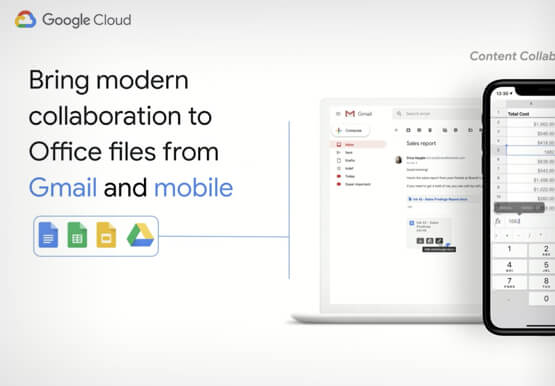
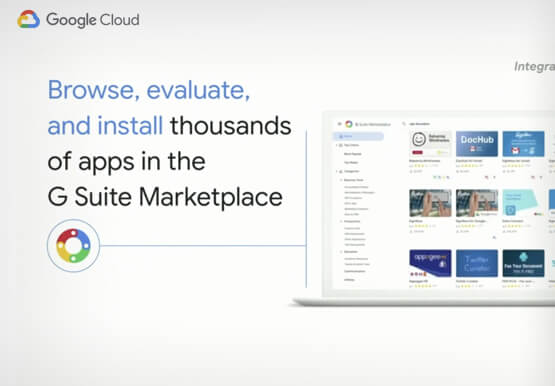

Work beyond borders: How to use G Suite with Microsoft and your favorite third-party applications
The average enterprise uses 129 different applications on a day to day basis. These applications enable critical workflows that drive businesses forward. But when these apps don't work well together that leads to lost time, frustration, and missed opportunities. Professionals have access to dozens of applications in their organization. Apps

Democratizing App Development and Innovation Further with PMI Citizen Developer Partner Program
Today, we are pleased to announce that Google Workspace has joined the Project Management Institute (PMI) Citizen Developer™ Partner Program. By doing so, we are joining organizations from across the globe who are supporting not only the future of work, but the empowerment of the workers who are leading this
