





Expanding Google Cloud Ready – Sustainability Program with 12 New Partners

2827
Of your peers have already read this article.
2:00 Minutes
The most insightful time you'll spend today!
We introduced the Google Cloud Ready – Sustainability designation earlier this year to showcase those partners committed to help global businesses and governments accelerate their sustainability programs. These partners build solutions that enhance the capabilities and ease the adoption of powerful Google Cloud technologies, such as Google Earth Engine and BigQuery, allowing customers to leverage data-rich solutions that help reduce their carbon footprints.
Today, we’re pleased to announce growth of the Google Cloud Ready – Sustainability program, with 12 new partners joining the initiative and bringing their climate, ESG, and sustainability platforms to Google Cloud. These partners include:
Aclima is pioneering an entirely new way to diagnose the health of our air and track climate-changing pollution. Powered by its network of roving and stationary sensors, Aclima measures air pollution and greenhouse gasses at unprecedented scales and with block-by-block resolution.
Sustainability at Airbus means uniting and safeguarding the world in a safe, ethical, and socially and environmentally responsible way. Airbus has a comprehensive sustainability strategy built on four core commitments, which guide the company’s approach to the way it does business and how it designs its products and services: Lead the journey toward clean aerospace, respect human rights and foster inclusion, build the business on the foundation of safety and quality, and exemplify business integrity.
Atlas AI is a predictive analytics platform that analyzes, monitors, and forecasts regions of growth, vulnerability, and opportunity around the world to offer insight into where organizations can grow most successfully, and where investment can boost historically underserved communities. Atlas AI’s platform has been used to expand water and sanitation infrastructure, promote new electrification, target community health services, and broaden internet access in countries across Sub-Saharan Africa and South Asia.
BlueSky Resources makes sense of sensors from both public and private sources by harmonizing inputs from ground, aerial and space based inputs. Expertise in atmospheric science and cloud technology allows BlueSky to provide understanding and insights related to the correlation of emissions insights to assets and activities. This powerful combination of data, climate science and delivery of insights is enabling focused sustainability impact across clients in various industries including energy, waste management, industry and natural resource management.
Electricity Maps provides companies with actionable data quantifying the carbon intensity and origin of electricity. This data is available on an hourly basis across 50+ countries and more than 160 regions. Electricity Maps’ mission is to organize the world’s electricity data to drive the transition toward a truly decarbonized electricity system.
FlexiDAO is a global climate tech company based in the Netherlands and Spain. The company works closely with other critical stakeholders to co-create the international standard around energy-related emissions compliance. Thanks to FlexiDAO’s end-to-end 24/7 Carbon-free Energy platform, companies can quantify and confidently showcase their contribution to society’s decarbonization.
LevelTen Energy helps organizations achieve carbon-free energy usage targets (on an annual and 24/7 basis) by delivering access to the world’s largest clean energy marketplace, and the software, data, analytics, and expertise required for efficient transactions. The LevelTen Platform connects energy buyers and over 40 sustainability advisors with more than 1,800 carbon-free energy projects in 24 countries across North America and Europe.
Ren is a SaaS platform built on Google Cloud that enables companies with global supply chains to source the cleanest energy possible. Despite using country-sized amounts of energy, most companies have no idea how to transition to renewables due to complex financial, technical, and logistical challenges. Ren unlocks cost savings, provides the cleanest energy possible, and ensures companies meet their carbon commitments on time.
Sidewalk Labs, an urban innovation unit in Google, builds products to radically improve quality of life in cities for all. Delve is a product that helps real estate teams design more sustainable buildings and neighborhood blocks, faster. Mesa automates building controls to deliver savings and comfort to commercial building owners and tenants. With these products and others, Sidewalk Labs helps commercial real estate developers, building owners and city planners make more sustainable choices for the built environment that are better for communities and the planet.
Tomorrow.io is The World’s Weather and Climate Security Platform, helping countries, businesses, and individuals manage their weather and climate security challenges. The platform is fully customizable to any industry impacted by the weather. Customers around the world use Tomorrow.io to dramatically improve operational efficiency. Tomorrow.io was built from the ground up to help teams prepare for the business impact of weather by automating decision-making and enabling climate adaptation at scale.
UP42 is a geospatial developer platform and marketplace bringing together industry-leading data and ready-to-use processing algorithms. The platform enables organizations to build, run, and scale geospatial products. With the ability to choose from a wide range of high-resolution commercial and open satellite data, aerial, weather, and others, solution providers can apply best-in-class machine learning and/or processing modules to gain valuable geospatial insights and streamline their processes.
Woza is a sustainable innovation platform that leverages deep geospatial knowledge and existing best-in-class technologies to develop a new generation of streamlined analytics workflows focused on sustainability. Companies in agri-food, energy, and public sector are partnering with Woza to accelerate their journey to Industry 4.0.
Adding expertise to accelerate sustainability use cases
New partners in the initiative join our existing Google Cloud Ready – Sustainability partners like Carto, Climate Engine, Geotab, NGIS, and Planet Labs PBC bringing a wealth of industry knowledge, offering solutions for sustainability challenges ranging from first-mile sustainable sourcing and spatial finance to fleet electrification and rich geospatial visualizations.
CARTO is the world’s leading Location Intelligence platform, enabling organizations to use spatial data and analysis for more efficient delivery routes, better behavioral marketing, strategic store placements, and much more. The company’s solutions extend the geospatial capabilities available in BigQuery, while leveraging the near limitless scalability that Google Cloud provides. When it comes to sustainability, CARTO’s platform is trusted by a wide range of organizations, including Greenpeace, Vizzuality, Litterati, Indigo, WWF, the Marine Conservation Institute, The World Bank, and the Institute for Sustainable Cities.
Climate Engine leverages data from Google Earth Engine and other ecosystem partners to help organizations improve their climate change-related risk planning in areas such as water use, agriculture, storm risk, and wildfire spread. By linking the economy and the environment, organizations can understand how environmental risks are affecting their markets and discover opportunities to reduce their emissions and potential supply chain or operational disruptions from climate-related events.
Geotab is advancing security, connecting commercial vehicles to the cloud, and providing data-driven analytics to help customers better manage their fleets. Processing billions of data points daily, Geotab helps businesses improve and optimize fleet productivity, enhance safety, and achieve sustainability goals and stronger compliance.
Geospatial solutions provider NGIS built a SaaS-based first-mile sustainable sourcing solution called TraceMark using Google Cloud’s geospatial platform and technologies from other ecosystem partners. Several global CPG firms have already used TraceMark to modernize their geospatial workflows and help facilitate the use of space-based data for supply chain sustainability transformation.
Planet Labs PBC operates the largest fleet of Earth imaging satellites in history, with approximately 200 satellites in orbit. Planet’s mission is to image the whole earth’s landmass every day to make global change visible, accessible, and actionable. As a Public Benefit Corporation, Planet’s Public Benefit Purpose is to accelerate humanity toward a more sustainable, secure, and prosperous world by illuminating environmental and social change.
How the Google Cloud Ready – Sustainability program works
If you are a Google Cloud partner with sustainability solutions and expertise to share, the Google Cloud Ready – Sustainability program is open for applications. Entry into the program requires that the partner solution delivers quantifiable results for climate mitigation, adaptation, or reporting needs. To apply for the Google Cloud Ready – Sustainability designation, the solution must:
- Be available on Google Cloud
- Address ESG risk, and assist customers in achieving ESG targets and/or support typical ESG goal frameworks, such as the United Nations’ SDGs
- Demonstrate repeatability
- Meet minimum Google Cloud application development best practices, including security, performance, scalability, availability, and carbon footprint reporting for available services
- Have Google Cloud Carbon Footprint Reporting enabled
- Have at least one public customer case study available.
The selection process begins with an evaluation of the solution. If a partner meets the above criteria, Google Cloud provides a suggested roadmap for tier progression within the program and then issues a formal acknowledgement of participation in the Google Cloud Ready – Sustainability program. Together, Google Cloud sustainability partners can deliver platforms that are helping businesses and governments accelerate progress aligned to their environmental goals.
Google Cloud will showcase the validated solutions on the Google Cloud Partner Directory Listing, Google Cloud Ready Sustainability Partner Advantage page, and — if applicable — via the Google Cloud Marketplace. We hope to help customers better understand how these technologies can help them meet their ESG goals, find the right solution for their particular challenge, and implement a solution faster.
Prospective partners can visit the Partner Portal to learn more about the Google Cloud Ready – Sustainability program or complete an application.

IDC: Firms Should Migrate VM-based Enterprise Workloads to Google Cloud for Optimal Price, Performance, and Security
DOWNLOAD WHITEPAPER4450
Of your peers have already downloaded this article
5:30 Minutes
The most insightful time you'll spend today!
Public cloud platforms provide the scale, elasticity, and operational efficiency that enable enterprises to both innovate and deliver more products and services to the market faster. This increased ability to innovate provides enterprises a competitive advantage and the businesses agility to stay ahead of their competition. Enterprises should leverage the business agility that public cloud infrastructure enables to their strategic advantage. Thus incorporating a cloud platform is an inherent part of their initiatives to modernize their IT infrastructure.
Enterprise cloud adoption is not without challenges. Enterprises cite a lack of skill set, decision fatigue, operational challenges, security concerns, and unpredictable TCO as significant inhibitors to adopting a public cloud service provider. Information technology decision makers (ITDMs) are caught between the need to innovate faster and the fear of instability and mismatched expectations. This dilemma is why enterprises that partner with a trusted service provider before, during, and after migration are more likely to succeed in their cloud journey.
Google Cloud is an ideal platform for virtual machine (VM)–based applications due to its key technical capabilities, such as high-performing virtual machines, including compute-optimized and memory-optimized VMs; custom sizes for virtual machines; high-performance network infrastructure for faster data transfers; and data protection capabilities.
Download this IDC report to understand why ITDMs should consider Google Cloud as the preferred cloud services partner — owing to Google Cloud being a reliable platform for VM-based applications; a trusted partner before, during, and after application migration; and an innovator to future proof the enterprise IT infrastructure.
Held Back by Database Scalability, This Financial Services Company Switches to Google Cloud and Cloud Spanner

11608
Of your peers have already read this article.
4:30 Minutes
The most insightful time you'll spend today!
Azimut Group operates an international network of companies handling investment and asset management, mutual funds, hedge funds, and insurance. Founded in Milan, Italy in 1988, Azimut Group today has branches in fifteen countries, including Brazil, China, and the USA.
“We have subsidiaries and manage funds all over the world,” explains Simone Bertolotti, IT Manager at Azimut Holding S.p.a. “That means that any technology that we put in place has to cover needs from many different countries.”
“When complicated analysis has to be executed, we have to increase our table space in a couple of minutes so that the AI can drill down into the data and deliver the information we need.”
—Simone Bertolotti, IT Manager, Azimut Holding S.p.a.
Azimut manages its funds with investment advisors who use information sourced from Bloomberg, Reuters and others. “They use a huge amount of data,” says Simone. “They work with spreadsheets, algorithms, formulae and they analyse data in minutes.” In finance, every second is crucial, which is why Azimut decided to develop a risk management dashboard that can process information even more quickly, then distribute it worldwide.
“When an advisor manages data, that data is used to make immediate decisions on funds, capital movements or whether to sell stock,” says Simone. “They have to be ready to make recommendations for any amount of data that comes to them. For our dashboard, that means that when additional information arrives or complicated analysis has to be executed, we have to increase our table space in a couple of minutes so that the AI can drill down into the data and deliver the information we need.”
Generating insights at speed
Investors and investment managers make decisions based on the most accurate, up-to-date information possible. For Azimut Group, information sourced through financial data vendors such as Bloomberg and Reuters provided only part of the data that the group required.
“We looked to collect information from a range of different providers,” explains Simone, “then analyse it to develop a predictive algorithm that could work faster than an advisor stationed at the terminal. We set ourselves the challenge to try to manipulate that data to add new insights into our matrix, so that every one of our branches across the world can see risk information about the funds in real-time.”
“We compared Google Cloud Platform’s performance with our previous cloud provider, and saw huge benefits of switching to Google. For me, the key performance issue is scaling. With Google Cloud Platform I know that I can increase and decrease my infrastructure quickly, when I need it.
—Simone Bertolotti, IT Manager, Azimut Holding S.p.a.
The first cloud provider Azimut used to build its system struggled to scale quickly to meet different kinds of data challenges. “If we wanted to add more cores, that was fine,” says Simone. “But the previous cloud provider made it complicated to raise the amount of space in a database infrastructure and scale up to demand. Scaling up for more in-depth analysis would take a day, and our need was immediate.”
That’s why Azimut switched one year ago to Google Cloud Platform to run the 150 VMs on its risk analysis platform. “We compared Google Cloud Platform’s performance with our previous cloud provider, and saw huge benefits of switching to Google. For me, the key performance issue is scaling,” says Simone. “With Google Cloud Platform I know that I can increase and decrease my infrastructure quickly, when I need it. Instead of waiting a day to scale up infrastructure, we can request and add space to our database in a couple of minutes.”
The infrastructure of Azimut’s solution handles around 800TB of data per month, and Google’s global network of servers and high-speed connections ensure that it gets to where it’s most needed by the most direct route. Impressed by the speed, security and availability of Google Cloud Platform, Azimut has moved its intranet on to Google Cloud Platform, too, eliminating the need for staff to login with VPNs.
“Instead of waiting a day to scale up infrastructure, we can request and add space to our database in a couple of minutes.”
—Simone Bertolotti, IT Manager, Azimut Holding S.p.a.
Driving ahead with Noovle
For Azimut, migrating the risk management dashboard is the latest of many Google product collaborations with cloud consultancy Noovle. “Everything started five years ago,” says Simone, “when Noovle assisted us in migrating to Gmail from our on-premise email solution. From G Suite to Google Cloud Platform, we’ve had a great relationship. Noovle provides consultancy services, support for mobility, and external advisors who work on our premises, such as when they trained us how to broadcast our meetings on Google Hangouts. As an independent company, we know we can trust them for transparent advice. All they care about is the best way to get a job done and to help us reach our goals.”
New app, new customers
In a business case comparison, Google Cloud Platform cost Azimut 35% less to run than the previous cloud provider. Now the group is building a major new mobile application on Google App Engine to be released in 2018.
“The new mobile application will allow customers to trade directly, without human advisors, by proposing different investment solutions depending on targets the customers set,” says Simone. “So if a customer aims to make money with investments, they enter their relevant personal information and we carry out the necessary regulatory checks and suggest what they could buy. The entire project will be based on Google Cloud Platform, so customers can control their investments through the app while we manage the fund, using Google Cloud Spanner on the backend.”
3477
Of your peers have already watched this video.
3:30 Minutes
The most insightful time you'll spend today!
Rightmove’s Right Move to Google Cloud
In 2020, Rightmove, UK’s renowned property website app saw over a billion minutes from users and clocked about 100 busy days in 2021. To continue innovating their products and improve customer experiences while achieving sustainability goals, Rightmove chose Google Cloud to migrate their infrastructure!
The property search application platform already boasts of dedicated tech teams running heavily code-driven multi-data center infrastructure and high velocity CI/CD platform. To reduce time to product and time to market, Rightmove selects Google Cloud. Watch further to learn how Google Cloud Products helped them add new features, update their existing services and adhere to sustainability objectives.
Being Cloud-native Means Sustainability and Growth-native for Nuuly!

3421
Of your peers have already read this article.
3:00 Minutes
The most insightful time you'll spend today!
They say black never goes out of style. It’s something the team at Nuuly, URBN’s digital rental and resale business, know well. And it’s not just true of the company’s garments but their gadgets, too.
“I was having an offhand conversation with a UX designer recently,” Rebecca Sandercock, Nuuly’s strategy and insights manager, recalled in a recent interview from the company’s sunny, South Philly headquarters. “The designer was talking about how we had chosen dark mode for a number of interfaces internally because it actually saves so much on electrical output. They had the data to back that decision up, but more importantly, it’s just the kind of thing everyone is thinking about all the time here.”
Of course most every business is thinking about sustainability in some way these days. What makes Nuuly stand out is how quickly it can act, thanks in large part to the technology platform that’s made the entire enterprise possible.
“We’re kind of sustainable by our very nature,” Kim Gallagher, Nuuly’s director of marketing and customer success, said.
While she meant the rental and resale business, which helps customers buy fewer clothes and sees Nuuly items worn many times by many people—Gallagher could just as well have been referring to the sustainability inherent in, and enabled by, cloud computing.

There are the obvious, and oft-cited, advantages, such as how centralized data centers can operate more efficiently (some have been carbon neutral since the beginning). Yet there are even more subtle yet substantial benefits. In a marketplace and climate that are both changing faster and faster, sustainability requires a certain amount of agility. Such adaptability and scalability are intrinsic to the cloud technology that threads its way throughout Nuuly.
It turns out that being cloud native also means being sustainability native—as well as growth native. Since its 2019 launch, Nuuly’s net sales have risen roughly 6x over the first three fiscal years.
Cloud fits any situation
When URBN was developing Nuuly—launching in just 10 months—it chose to create everything from scratch on Google Cloud. Despite being part of a larger organization with decades of history and expertise, the company recognized the limitations presented by legacy systems and, more importantly, the necessity of building a wholly new platform that could be fully responsive.
The company has to react not only to new fashion trends but, crucially, the changing behaviors of customers. And not just their evolving tastes but also shopping habits, delivery preferences, unexpected customer service requests—is this a pattern, or a stain?—and social media chatter.
The pressure for a successful launch was high. The URBN portfolio, which also includes Urban Outfitters, Anthropologie, and Free People, had to keep evolving to satisfy a new generation of shopper who exists in an increasingly crowded and demanding digital marketplace.
The cloud’s responsiveness has thus proven its worth in creating a financially sustainable business as well as an environmentally sustainable one. Those even go hand in hand, as Gallagher points out: “Every customer who keeps renting is one who isn’t buying more occasion-specific clothes that go unworn most of the time.”

Dr. Alan Rosenwinkel, director of data science at URBN, had heard from his team about one garment that has become an emblem for the power of the platform. “It had been rented 25 different times before someone loved it enough to buy it and keep it forever,” he explained. (It’s also an emblem of the power of the cloud, that they would have the data awareness to track a single item so closely.)
It’s a new way of shopping made possible by a new way of computing. As one writer for Business Insider cheered, Nuuly “completely cured my addiction to fast-fashion.”
It makes for a healthy business, too. Sales for fiscal year 2019 exceeded $8 million and surpassed $24 million in 2020—one of the few URBN segments to grow during a tough year for fashion—and reached $47 million in 2021. The subscriber base had grown to 51,000 at the end of January.
Agility drives sustainability drives agility
For digital retailers to achieve such customer enthusiasm often relies as much on how the clothes get there as how they look. And those deliveries turn out to be a prime example of where Nuuly’s sustainability and technology meet.
For now, all shipping is handled through a state-of-the-art distribution center in Bucks County on the Philadelphia outskirts. Garments are shipped six-at-a-time, in fully reusable packaging, using ground transportation to keep the carbon footprint to a minimum. In certain limited geographic areas, shipments were sometimes taking longer than the two to five days most members would find acceptable.

“If we were an older company or weren’t set up from a technology perspective to be agile, we might have just said, ‘All right, we’re going to just go to three-day shipping for everyone,’” Rosenwinkel said. “That would drive up the cost, and the environmental impact. But we were able to be more strategic and more targeted about it.”
By regularly analyzing customer sentiment and retention data through BigQuery and Cloud Composer, and tying those to historical shipping times, Nuuly has been able to understand how shipping speed impacts its customers. Using a custom-built order management system, deliveries can be automatically adjusted to arrive more quickly, particularly when certain regions or days of the week are proving difficult to reach customers in time. These accelerated deliveries, like all Nuuly shipments, are made via UPS’s Carbon Offset program.
“Because we have the data, and the platforms to analyze it all,” Rosenwinkel said, “we’re delivering faster with the bare minimum impact on cost and emissions.”
It’s just one example of how modern retailers must juggle so many demands from consumers, workers, suppliers, and even regulators. Adding sustainability to that mix could be seen as a burden, but Nuuly shows how the right technology can lead to a holistic approach that makes all those interests work together even better.
And it allows for more opportunities and more kinds of sustainability, reaching from the designer’s atelier to the customer’s doorstep.
Sustainable details at every level
Back at the distribution center, workers can experience sustainability in a different way, as data is leveraged to enhance their well-being.
All workers are equipped with customized Android devices that help guide order tracking and fulfillment, plus cleaning, repairs, and reselling of garments as needs change throughout their lifecycle. Yet the insights go even deeper. The data science team has closely analyzed routes and repetitive motions for workers to keep their strenuous jobs as low-impact as the company’s broader environmental footprint.
“Through machine learning, we estimate we’ll be able to save our workers over 300,000 miles of steps over a five year period,” Rosenwinkel said. That’s enough walking to circumnavigate the globe 12.5 times.

The company has also applied ingenuity to one of the most notorious aspects of digital retail: packaging. Made from 100% post-consumer recycled materials like plastic bottles, Nuuly’s reusable carriers require no disposable bags or hangers to send goods back and forth. And once the packages have reached their end of life, the team is working with designers on ways to repurpose them into items that can then be offered for rental or sale on Nuuly.
“We’re really looking at the circular economy from every angle,” Gallagher said. “It’s built into the business.”
That includes not just the research the team did on-site at the Dry Cleaning & Laundry Institute—”We went to laundry school,” Gallagher jokes—but the digital tools that take those lessons even further. The team is always looking for ways to optimize fabric care, both to cut down on chemicals and water usage and extend the life of a garment. By analyzing the lifespan of every item, Nuuly not only makes them last longer but can identify problems faster. Employees even use custom apps to mark stains and damage so repair teams can more easily identify and fix the issues.
With its meticulous inventory tracking, Nuuly can even take marginal items, like a white gown or jeans with a small stain, and turn them into a custom dye job or an upcycling opportunity with a partner. These reworked items are then inserted back into the Nuuly Rent inventory as part of a growing collection of one-of-a-kind pieces, called Re_Nuuly.
Other services have launched quickly and easily thanks to the company’s cloud-enabled backend. Wanting to encourage more community and more reuse, the company created Nuuly Thrift. Debuting last fall after just a year in development, the team built everything from new interfaces to an evolved point of sale system.

It’s enabled Nuuly to offer many garments for rent or sale simultaneously, with “truly real-time inventories,” Rosenwinkel said. “So when it’s gone on one site, it shows up as gone on every site—no more surprises.”
Except for the good kind.
“I like to think we’re helping our customers think about ownership in a completely new way,” Sandercock said. “Once they run out of a use for a garment, they can offer it back, and sell it, and someone else will get to enjoy it and give it a new life. And Nuuly, we get to keep it in the community and keep it in the ecosystem, which is really cool—we’re taking extended responsibility over what happens to the clothing we create.”
How to Get Your Cloud Migration Journey Started Off on the Right Foot

3614
Of your peers have already read this article.
2:30 Minutes
The most insightful time you'll spend today!
When moving to the cloud, many organizations concentrate their focus on the change in technology, and overlook an area just as complex: cultural change.
At Google, we’ve spent years nurturing our culture and workforce to best operate in the cloud, and the Google Cloud Professional Services team leverages the lessons we’ve learned for the benefit of enterprise customers embarking on their own cloud journeys.
While it can be tempting to believe in a universally ‘correct’ strategy for change management, there is no one-size-fits-all answer. Every organization will have its own unique considerations. But with that said, there are some core strategies we’ve found to be relevant and useful across a broad range of businesses.
1. Define your purpose for moving to Cloud
While pockets of cloud use and experimentation can evolve independently and in parallel across an organization, it’s important to make some deliberate decisions before starting a larger migration. At this stage, we recommend having a detailed answer to two key questions to ensure a successful cloud migration:
- Where do you want to go? (Or “What’s your cloud vision?”)
- How do you plan to get there?
Start by having a conversation with leaders and those who will be key to the journey about how far you want to push your cloud vision. This alignment ensures everyone is on the same page—and will provide greater direction, allowing more deliberate action.
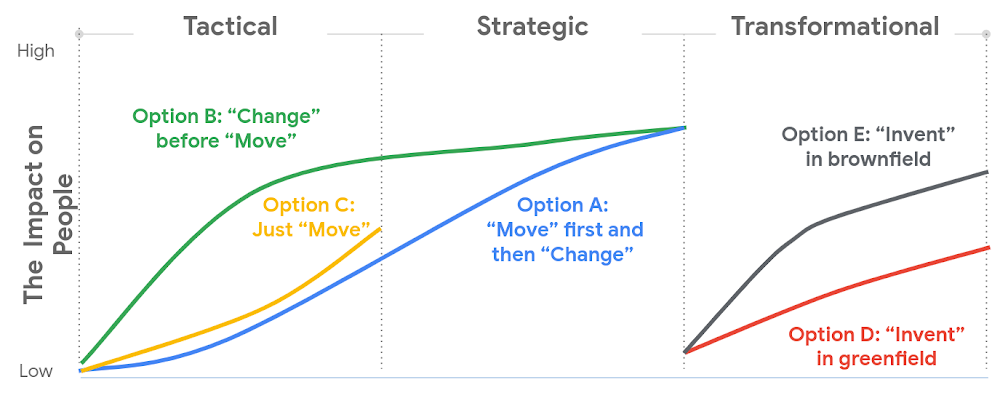
2. Find the change path which is right for you
Whether a ‘lift and shift’ approach to the cloud is right for you, or a more transformative approach with a lot of re-architecting—the most important thing is to find the flavor of change which is appropriate to your context and level of ambition.This will both shape your key migration activities, but also the level of impact to be managed within your organization.
There are many ways to embark on a change journey for cloud migration (which one can find in the chart below). It is important to deeply understand the needs of your business and its people and determine what strategy makes the most sense.
3. Learn from best practices
Based on the lessons we’ve learned along our own journey, and the work we’ve done with customers, there are a number of recommendations we can share that can make a cloud migration more successful. We go into these in more detail in our new whitepaper, but below you can find the ones we think are most relevant:
- Share the vision—and measure, measure, measure. Once you’ve crystallised your cloud vision with leadership and key stakeholders, share that vision widely. Set success goals and communicate them to hold yourself accountable.
- Be clear about the capabilities you will need in the future—and where you’ll get them. For example, if your vision is to become a cloud-first, data and AI-led organization, ensuring you have the right data science skills and machine learning capabilities in your organization to achieve that vision becomes a critical step—be they home-grown or bought-in.
- Find the right balance between capabilities that should be under central control, and capabilities that should be decentralized, or agile. For example, should machine learning be something that sits centrally, or should it be spread across your organization? For every business, the solution will be a little different, and there’s no “one true answer.” There’ll be lots of different opinions about this, so the sooner the conversation starts, the better.
- Start thinking about the needed tech and non-tech skills now, and how you’ll fill the gaps. Building the tech skills will take time, and not everyone will feel comfortable with the future picture of collaboration, innovation, and agility.
To help businesses navigate their own cloud journeys, Google Cloud Professional Services has released a new whitepaper that can help guide organizations. “Managing Change in the Cloud” is closely aligned with the Google Cloud Adoption Framework and is a practical guide for organizations looking to maintain momentum in their cloud adoption. You can download the whitepaper here.
More Relevant Stories for Your Company

Johnson & Johnson Increases it’s Ability to Find Highly Qualified Staffers for Business Critical Roles by 41% with Easy-to-Use AI
Job seekers can often feel lost or disconnected—like the right opportunity is out there, but they don’t know where or how to look. Employers face a similar challenge when trying to attract the right candidates. Many companies, especially large enterprises, face a talent shortage across a range of critical roles. For global

Customer Voices: How Firms from Across Industries Leverage Google Cloud
From powering everyday operations and accelerating application innovation, to providing tools for specific business needs and executing on big ideas, to advancing the security of technology solutions, companies from across industries have leveraged Google Cloud for business benefits. Companies from across industries have turned to Google Cloud for transforming their

How the Telegraph is Reimagining Media with Google Cloud
Whether they’re reading the newspaper on the way to work, or catching up on the latest headlines on their smartphones, readers expect up-to-the-minute news wherever and whenever makes the most sense for them. As a result, media companies are increasingly looking for ways to improve, expand, and simplify their offerings,
Security at Scale: A Peek into the Life of Google
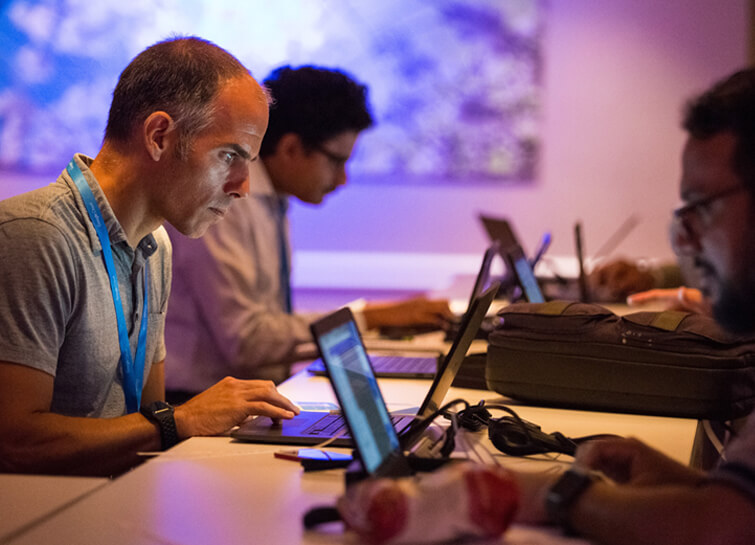
Defending the world’s largest network against persistent and constantly evolving cyber threats has driven Google to architect, automate, and develop advanced tools to help keep it ahead. Understanding how Google has built and evolved it’s defenses can help you make smart architectural decisions of your own as you move forward.
