






Customer Voices: How Firms from Across Industries Leverage Google Cloud
READ FULL INTRODOWNLOAD AGAIN14073
Of your peers have already downloaded this article
1:30 Minutes
The most insightful time you'll spend today!
Bharat Light & Power’s CEO Says Enough! It’s Time to Leverage AI and IoT

3936
Of your peers have already read this article.
4:30 Minutes
The most insightful time you'll spend today!
As community and business concern over global warming, sustainability, and energy security continues to rise, companies such as Bharat Light & Power (BLP) are working on answers.
Founded in 2010 and located in Bangalore and Delhi, BLP is one of the leading clean energy generation companies in India. According to Tejpreet Singh Chopra, Chief Executive Officer of BLP, the business started with the aim of delivering clean energy from renewable sources such as wind, solar, biomass, and hydro to the 300 million residents of India that did not have reliable access to power at that time.
However, BLP soon began experiencing problems ensuring availability of the wind turbines that powered utility-scale wind power generation across the country.
“While we were investing large amounts building wind farms, the failure of the smallest component could shut down an entire wind turbine and compromise our efficient operation,” says Chopra. “A $5,000 battery could fail and shut down a $2.5 million piece of equipment!”
BLP transformed its legacy thinking about man, machine, technology, and process, and implemented an AI and Internet of Things (IoT) project. The business used hundreds of tags from its wind turbines to capture and send machine behavior and performance data to a control center. This data triggered an 18-month project to create AI and machine learning algorithms that would enable engineers to predict component failures in wind turbines, improve generation, and adjust maintenance and replacement schedules accordingly.
This activity provided the foundation of a technology business—one of the three companies that comprise BLP—that delivers enterprise AI for industrial uses over a platform, branded Orion.
“We provide an end-to-end solution that enables businesses in industries such as transportation, logistics, ports, infrastructure, oil and gas, supply chain manufacturing, steel, and automotive to improve productivity,” says Chopra.
As the business expanded, it began to extend beyond its core “AI for industry” mission. It recruited an IoT team to help factory owners and operators enable the programmable logic controllers (PLC) and supervisory control and data acquisition (SCADA) systems that run disparate equipment and machines—such as production line machines of different ages and countries of origin—to talk to each other and provide usable data and insights.
Agility and adaptability key
BLP’s management team realized early that the business needed to be agile and adaptable to keep pace with changes in technology.
“We knew we would have to effectively destroy and remake the business every 18–24 months to remain relevant, so we needed a service that could support our dynamic infrastructure, data, and AI needs,” says Chopra.
The business started operations on a cloud service but quickly ran into problems. “We found in the world of industry—the vast amounts of data, the variety of sources of data, and the complexity of insights required—created a very different set of challenges relative to the consumer technology environment,” says Chopra. “Our cloud provider could not provide an architecture that made sense for an industry-focused solution.”

Google Cloud to power AI and visual analytics
Within two years, BLP advanced its strategy and focused on using open source to reduce the cost of its architecture. As Orion matured and its take-up grew, the business began looking at multinational cloud services to run the forthcoming version 3.0 of the platform.
BLP found Google Cloud provided the best fit for its needs for a range of reasons, including the ease of use of Google Cloud services—likened by the BLP technology team as “the equivalent of a consumer app experience”—and its high quality database services, high availability, fast response times, and the power to run the platform’s AI and visual analytics.
BLP established as its key objective a 20% reduction in costs over its previous cloud service and availability levels exceeding 99.9%. The business completed the deployment in June 2019 following discussions and input from Google Cloud’s engineering and architecture experts prior to and during the first stage of the project.
Cloud IoT Core—a managed service that allows organizations to connect, manage, and ingest data from dispersed devices—is the cornerstone of the architecture supporting the latest latest version of the Orion platform, Orion 4.0. BLP has also created a data pipeline based on Cloud Pub/Sub event ingestion and delivery and Cloud Dataflow data processing.
Cloud Bigtable provides a high-performance NoSQL database service for the platform’s analytical workloads and BigQuery delivers a powerful analytics data warehouse. Cloud Functions enables the business’s developers to build event-driven serverless applications.
This architecture currently captures, processes, analyzes, and reports on 8 million data points in 578 turbines around the world per day and processes data from 200,000 data points in 4,000 sensors per day.
The Google Cloud architecture supports the data visualization and reporting and the AI and machine learning-powered products created by BLP. These reports and products enable users to monitor remote assets and use AI-based analytics to predict machine failures before they occur, sequence failure events, and maximize equipment uptime.
A range of benefits to customers
With Google Cloud, BLP is delivering projects with a range of benefits to customers, including increasing manufacturing productivity by at least 5% and reducing costs by about 10%.
“We’ve enabled one of the largest electrical companies in India to compare production line performance by capturing data from PLC and SCADA systems and extracting it to Google Cloud for processing, analysis, and reporting,” says Chopra. “For another customer, we’ve deployed an IoT system that has saved them about $200,000 in energy costs over six months.”
The business is also providing monitoring, reporting, and analysis to predict likely failures of gearboxes, bearings, generators, and blades in 2,000 wind turbines—that provide close over 2 GW of wind power—in countries such as France, Germany, Italy, India, Portugal, Spain, the United Kingdom, and the United States.
Furthermore, BLP is providing visual analytics to help one of the largest ports in the world detect when workers are not wearing helmets or safety equipment.
“We also do a lot of inventory track-and-trace work to help companies improve supply chains and help factories keep track of tooling through Bluetooth low-energy technologies,” says Chopra.
With Google Cloud, BLP is now ideally placed to execute its business strategy of helping customers improve productivity and increase growth, control and reduce costs, and enhance quality and safety.
“We are realizing this strategy by working to become the best company in the world at using AI to predict machine failure,” says Chopra. “Our underlying technology strategy entails enabling the most advanced IoT hardware used by industry to talk to software and the cloud, using the most powerful AI cloud around—which is why we chose to marry our AI algorithms with Google Cloud—and delivering insights through visualization.”
Testing Edge TPU
The business is now testing Edge TPU to run AI at the edge in high-performance, small-footprint, and low-power ASIC environments.
“We think that will be the next big revolution as TPU costs come down,” says Chopra. “It will be a considerable benefit performing AI at the edge rather than involving the full infrastructure of the cloud.”
BLP is keen to build on its existing relationship with and use of Google Cloud to further transform manufacturing worldwide.
“Manufacturers are pushing the boundaries of quality and cost through initiatives such as Lean Six Sigma, Zero Defects, poka-yoke, just in time, and other methodologies and approaches,” says Chopra.
“The next wave of manufacturing improvements are coming through industry 4.0, AI, IoT, and Google Cloud’s analytics, databases and other services. These are ideal to power this change in the industrial world.”
Google Cloud and Ericsson to Deliver 5G and Edge Cloud Solutions

3412
Of your peers have already read this article.
1:30 Minutes
The most insightful time you'll spend today!
Editor’s note: 5G is much more than a network—it’s a platform for innovation with the ability to provide immediate global scale and enable use cases that we haven’t even dreamed of yet. But to achieve this, industry players must come together to drive this growing ecosystem. Today, Erik Ekudden, CTO of Ericsson, and Bikash Koley, VP of Global Networking at Google Cloud, share their insights into the potential of edge and 5G.
Experts consider 2021 to be the year that serves as the inflection point between network readiness and 5G availability. However, communications service providers (CSPs) are still faced with the task of modernizing their networks, systems, and infrastructure to maximize the potential of 5G for themselves and for the enterprise customers they serve. As you weigh whether to tackle this challenge, let’s first examine what’s different about 5G and how CSPs can best leverage 5G and the edge together as an even stronger platform for innovation than just 5G alone.
With 5G, applications and mobile networks are no longer isolated
Let’s first address what 5G brings to the table. Faster speeds and lower latency are expected of course, and throughout the evolution from 2G to 3G to 4G, there’s been a step function in performance improvements with each of these. However, with every generation, applications and networks have been like ships passing in the night. Networks have been unaware of what the applications have been doing and applications have been guessing what the network was capable of.
What’s different this time around is that there is some real innovation happening with the development and rollout of 5G itself. The network is on a path to become more accessible via APIs so that applications can call on and consume what they need from the networks in a more programmable way. This sets us up for more open architectures and ecosystems.
5G leverages a more open architecture
One key difference with 5G as compared to prior generations is that it’s the most open and flexible network architecture the CSP industry has seen. This is thanks to its service-based approach and the decoupling of hardware and software components. CSPs are now running core network elements in the public cloud, private cloud, hybrid cloud, and even multi-cloud, which was unthinkable even five years ago.
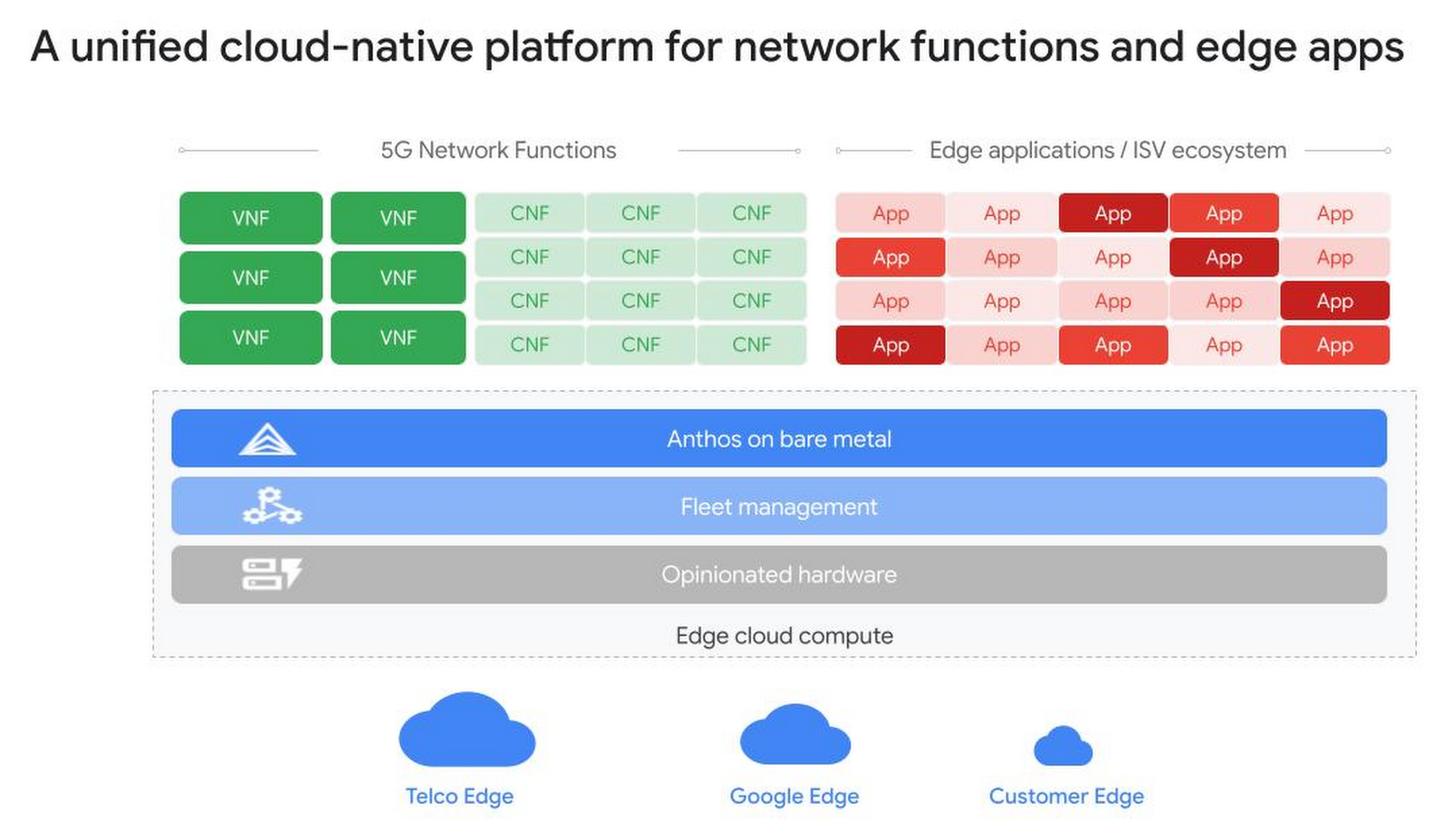
The flexibility of this more open architecture allows us to push the cloud to the edge while still being able to manage it from a single pane of glass. This is a huge leap forward from traditional networks, which have been domain-specific, managed in silos, and with slow service creation and delivery. Now, hyperscale cloud vendors and network equipment providers are offering solutions that help CSPs break down these silos to enable more flexible, automated networks with improved orchestration, visibility, and control across multi-vendor, multi-cloud and hyperscale cloud-provider environments. In addition, the separation of hardware and software provides a much more flexible and cost-effective way to upgrade from one network generation to the next.
To provide solutions that are relevant to enterprises, CSPs must offer capabilities beyond connectivity. Enterprise service orchestration, including exposure of network assets and network slicing, are foundational capabilities to provide value to the application ecosystem and be in control of the network and the delivered services.
Combining 5G and edge to help industries reimagine user experiences
This convergence of compute, storage and networking at the edge coming together for the first time will enable CSPs and enterprises to offer their customers completely reimagined user experiences. Consider, for example, how the automotive industry might enhance how customers shop for a car. As part of Fiat Chrysler Automobiles’ Virtual Showroom at the recent CES 2021 event, consumers were able to experience the innovative new 2021 Jeep Wrangler 4xe by scanning a QR code with their phones, and then see an Augmented Reality (AR) model of the Wrangler right in front of them—virtually placed on their own driveway or in any open space.
By rendering the model in Google Cloud, then streaming it to mobile devices, visitors could also see what the car looked like from any angle, in different colors, and even step inside to see the interior in incredible detail. That is the true digitization of an industry segment and highlights the device-to-network-to-edge-to-cloud application relationship and how it can impact the user experience.
A programmable network unlocks more application use cases
The programmability of the 5G network will truly enable application developers to utilize all the benefits of the underlying network. Programmability supports ease of use and enables CSPs, integrated software vendors (ISVs) and the ecosystem to have the right network-level APIs exposed so that applications can be optimized based on the network behavior and vice versa. Imagine, for instance, automatically pushing applications from a cloud region to the edge based on network latency and performance metrics.
Finally, 5G’s programmability is also about having the right tools available for developers to build and integrate applications on the network with zero-touch onboarding and validation. With this, we’ve come to the point where the network is now a “platform” for application innovation.
5G and edge will be all about the ecosystem
One thing is for certain: the shift to 5G will place tremendous focus on the ecosystem, and it needs to be an ecosystem that includes CSPs, public cloud providers, application developers and technology providers, all coming together to optimize the user experiences across industry applications. For instance, Google Cloud and Ericsson recently announced our partnership to deliver 5G and edge cloud solutions for CSPs and enterprise. In addition, Google Cloud is also teaming up with popular ISVs to deliver more than 200 edge applications from 30-plus partners, all running on our cloud.
With collaboration across ISVs, cloud providers and network equipment providers, we are enabling the rapid delivery and deployment of new vertical services and applications, leveraging capabilities like Anthos, artificial intelligence (AI), and machine learning (ML), as well as multi-vendor, multi-cloud and hyperscale cloud provider service orchestration and global edge networks such as those provided by Google and telecom service providers.
As members of the technology ecosystem, we talk about compute, storage and networking, but when it comes down to it, it’s about optimally placing these resources—whether in the cloud, at the provider core, at the edge or anywhere in between—to maximize the end-user experience. The openness and programmability of 5G lends itself to collaboration like never before. We predict that in 2022 and beyond, it will be all about the ecosystem coming together to leverage 5G and the edge to build innovations that we can’t yet imagine.
To learn more, watch the full Ericsson 5G Things CTO Focus fireside chat, where we discuss these topics and more.
How Rustomjee Increased speed, agility, and worker mobility with Google Cloud Platform

4211
Of your peers have already read this article.
6:30 Minutes
The most insightful time you'll spend today!
Operating for 23 years, Rustomjee has carved a niche for itself in the ever-growing real estate sector. Rustomjee’s portfolio includes 14.32 million square feet of completed projects; 12 million square feet of ongoing development; and another 28 million square feet of planned development. These projects span the best locations of the Mumbai Metropolitan Region. Rustomjee adds value to the lives of its homeowners through its core business, its corporate social responsibility initiatives, and its philanthropy. The business strives to ensure that every blueprint includes child-friendly spaces for parks, playgrounds, and learning rooms, encouraging families to spend quality time with each other.
In the 17 years Rustomjee’s Corporate Head of Information Systems, V M Samir, has worked with the business, it has grown from 100 employees to more than 800 employees – primarily professionals such as engineers, architects, lawyers, accountants, and regulatory consultants. The remainder work in marketing, sales, administration, security, human resources, and other associated areas.
Historically, Samir says, the real estate industry globally has lagged in embracing new workplace technologies, making building business cases, securing sponsorship, completing implementations, and encouraging adoption a difficult task.
G Suite powers cloud journey
Rustomjee started operations running an on-premises email service. However, the business wanted to upgrade its anti-spam capabilities and, in 2007, turned to G Suite. “There was no practical way I could build an anti-spam engine within that service that could match the power of the G Suite anti-spam engine and the intelligence held within its databases,” says Samir. “Our second key reason for moving was the lower cost of G Suite relative to an on-premises service that required us to spend on compute, backup, storage, and administration resources. Running G Suite would also help ensure users could still access their emails if their machines experienced an outage.”
Finally, G Suite enabled Rustomjee to access and compose emails from any location – a luxury for a real estate organization whose workers often attended construction projects with poor connectivity. “Finally, G Suite was the only service in those days that integrated calendar, meeting, and storage repositories through single sign-on. Google was so far ahead of the curve at that time and we saw the potential of G Suite to transform our communications and ultimately our business.”
“We did not have to shut down the business operations during the migration because Google Cloud Platform complemented every idea we had. And when my business users came to work on the Monday morning [after the final migration], everything was stable and the performance had improved. We told them our infrastructure had changed and they should start thanking Google Cloud!”
—V M Samir, Corporate Head, Information Systems, Rustomjee
The business started its cloud and IT modernization journey by decommissioning its on-premises email servers and using G Suite for Business. It began testing in March 2007 and went live with all production email services for 500 users in June 2008.
The intuitive nature and ease of use of G Suite made the transition seamless. “I did not have to undertake a large-scale change management exercise,” says Samir. “Users bought into the program and acquired the necessary knowledge quickly, meaning our adoption rate was extremely fast.”
With G Suite, email became the new norm to complete a range of tasks at Rustomjee. “We started exchanging CAD drawings, videos, high-resolution images, and other large files with our consultants,” says Samir. “These files had been difficult to store in on-premises environments.”
Rustomjee has improved collaboration and performance with G Suite, primarily due to four services. Gmail enables workers to communicate seamlessly externally and with each other, while Calendar enables them to set up and synchronize meetings. These meetings can be conducted through Hangouts Meet. “If a group of people internally need to discuss a work order or contract, they can coordinate calendars, sit at different locations within our organization, and collaborate using audio and video on a common service,” says Samir. “They can also work from and update a single document in Drive.”
With email and other collaboration applications running smoothly, Rustomjee saw an opportunity to enhance its technology infrastructure. The business had started operations running workplace applications on servers in small air-conditioned rooms. These servers ran databases and applications that sent data across a network to endpoints including desktops and laptops.
Expansion and the changing demands of workplace technology prompted Rustomjee to upgrade its capabilities, and the business commissioned a data center. However, Rustomjee’s continuously fast-growing compute and storage requirements, as well as the need to access new technologies to innovate and compete, quickly strained its technology model. “We required eight weeks each time we needed to add new compute and storage to our environment,” says Samir. “In addition, the heavy investments in our captive data center meant we were unable to easily leverage new technologies and decommission old technologies.”
Public cloud supports growth
Rustomjee reviewed its options and decided public cloud services could best meet its ongoing needs. “The rising cost of maintaining old hardware would force us to refresh data center technologies every five to seven years,” says Samir. “More broadly, a hardware-defined data center could not adapt quickly in the cloud-computing world, making it difficult to align compute with growth.”
The business started by moving its corporate website and microsites to a public cloud service to accommodate increased traffic delivered from a change in business strategy. “We saw an opportunity to shift our marketing and advertising from print advertising to digital platforms,” says Samir. “We wanted to be available to buyers from the point at which they start looking at properties online.”
However, Rustomjee’s digital marketing teams found it difficult to scale instances in line with demand, and work with complex user administration screens and control panels.
“With Google Cloud Platform, we’ve achieved a considerable reduction in timelines and simplified technology management and administration. All of our business users are delighted.”
—V M Samir, Corporate Head, Information Systems, Rustomjee
Google Cloud Platform presented an opportunity for Rustomjee to run its websites and microsites in a reliable, scalable, and responsive infrastructure. “Our evaluation confirmed Google Cloud Platform could support our growing demand for compute and storage,” says Samir. ‘In addition, because we undertake projects that are geographically distributed, networking – not only within the data center, but that could be accessed from any location – was very important. Only Google Cloud Platform had its own networking infrastructure.”
“More broadly, in a cloud environment, we could select any database we needed and start consuming operating systems as a service,” he adds. “In addition, we did not have to invest capital in licenses and hardware and we could always resize network bandwidth. Further, we could take advantage of pay-as-we-use cloud services, and link this to business growth.”
Google Cloud Platform also allowed Rustomjee to reduce the size of the teams needed to manage and operate its infrastructure. “When you have infrastructure running in the data center and in disaster recovery locations, you need to have a large pool of resources working around the clock to ensure constant uptime, sound backup, and good replication measures in place,” says Samir. “With the cloud, everything is simplified and we do not have to consider issues like how many hard drives have failed in on a particular morning.”
The business started testing and created its first virtual machine instance to Google Cloud Platform in April 2017. Because the Mumbai data center was not yet operating Rustomjee initially hosted its instances in the Google Cloud Platform Singapore Region. This initial move enabled the business to reduce the number of required virtual machine instances from six to one. After a year of running the website on Google Cloud Platform, the business found the simplicity of scaling compute resources meant its digital marketing teams were running more campaigns and servicing more leads, while compute spend had fallen by 56 percent. Furthermore, Rustomjee was not experiencing latency that impacted the user experience.
The opening of the Google Cloud Platform Region in Mumbai in late 2017 gave Rustomjee an opportunity to use compute, storage, and networking services located domestically. The business decided to go all-in on Google Cloud Platform and migrated a range of applications to the service.
These included an SAP enterprise resource planning system, running initially on Oracle but moved to the SAP HANA in-memory computing platform, with the assistance of advisory consultants from a leading firm. This system is integral to Rustomjee’s successful operations, meaning it has to be highly available and responsive. “All our financials are captured and stored in this system, as well as projects, materials management, order management, financial systems, and sales ordering systems, both procurement and supply-side,” says Samir. “In short, we cannot live without SAP ERP!”
Rustomjee turned to SAP specialist partner InfraBeat Technologies, a leading network implementation provider, and Google engineers to complete the migration successfully. “We were all in this together and collaborated closely to deliver the project successfully,” says Samir. “We were very impressed by the expertise and skills of everyone involved.”
A nine-day migration
With assistance from Google Cloud and the partners, Rustomjee moved all its SAP workloads, from sandbox to development, development to quality, and quality to production, in just nine calendar days, without impacting the business. “We did not have to shut down the business operations during the migration because Google Cloud Platform complemented every idea we had,” says Samir. “And when my business users came to work on the Monday morning [after the final migration], everything was stable and performance had improved. We told them our infrastructure had changed and they should start thanking Google Cloud!”
Moving to Google Cloud Platform enabled the business to complete certain customer invoicing workloads in just two hours, down from 13 hours previously. Backups of the SAP enterprise resource planning system that had taken up to six hours, were now being completed in six minutes.
“We have now fully embraced a cloud-first approach and have moved 100 percent of our workloads to the cloud. We depend totally on Google Cloud Platform to run our business.”
—V M Samir, Corporate Head, Information Systems, Rustomjee
Eight weeks down to 20 minutes
Rustomjee has also cut the eight-week cycles needed to set up the infrastructure and applications for a new real estate project, and integrate it into the SAP system, to just 20 minutes. “With Google Cloud Platform, we’ve achieved a considerable reduction in timelines and simplified management and administration,” says Samir. “All of our business users are delighted.”
With its website and enterprise resource planning system running successfully on Google Cloud Platform, the business decided to move its virtual application delivery environment into the service. “We decided to move all 800 of our employees into the cloud, so they could access applications through any endpoint, be it a mobile phone, tablet, thin client, desktop, or laptop,” says Samir.
The business decided to replace an existing application virtualization product with public images available on Compute Engine, with testing of Android, iOS and Windows operating systems across a range of devices proving highly successful. “Running the remote desktop service in Compute Engine and using public images enabled us to operate a leaner, simplified desktop as a service environment,” says Samir. “We have been able to deploy business function-specific virtual machine instances on the cloud and compartmentalize data to the business functions that need them. The business completed the move – including 8.1TB of data – in just six weeks. “The only workloads we did not move during that period were intensive workloads for visualization,” says Samir.
However, the four teams that did not use the remote desktop as a service environment – and that created visualization-intensive workloads – were working in traditional ways, compromising productivity and increasing risk. “They used to be given a desk in their respective offices and their workstations loaded with the applications,” says Samir. “There was no way of taking hourly backups of these devices and there was no recovery mechanism for the applications, because they were not in the data center.
“The other challenge was what happens to the data, because we operate out of multiple locations. The users in these four teams always had to come back to pre-assigned desks and continue working from there. This was counterproductive.”
The business subsequently implemented virtual machine instances with GPU access for visualization-intensive workloads. “We started evaluating Nvidia T4 (Tesla) GPUs in the Mumbai Region on 13 February and went live on 11 March in Mumbai,” says Samir. “By moving these 40 team members to Google Cloud Platform, we have enabled them to work with visualization workloads from any location, improving productivity and flexibility.”
Focus on core business
With Google Cloud Platform, Rustomjee can focus on running real estate projects and using technology to enable them. “I don’t have to refresh my technology every five to seven years, and I can leverage new technologies as they come on stream,” says Samir.
Reliable application access
With the flexibility and scalability of Google Cloud Platform, Rustomjee is now well-positioned to support further growth and operate in accordance with the time-limited nature of the real estate industry in India. “If we have promised to hand over the keys to a customer by a certain deadline and we fail to do so, we face a penalty of 10 percent of the cost of the project,” explains Samir. “The Indian Government introduced this regime in 2017 and business and technology have to align with its requirements.
“Google Cloud Platform is the right service to move us forward and enable us to overcome these challenges,” he adds. “We have now fully embraced a cloud-first approach and have moved 100 percent of our workloads to the cloud. We depend totally on Google Cloud Platform to run our business.”
Google Cloud Connector for SAP LaMa Helps Make Most of the Multi & Hybrid-cloud Strategies

3488
Of your peers have already read this article.
1:30 Minutes
The most insightful time you'll spend today!
As an SAP user, you may already be familiar with SAP Landscape Management (SAP LaMa) — a specialized product that supports centralized management of your SAP landscape. SAP LaMa is useful for a wide range of SAP customers and use cases, but it’s especially important to large enterprises that manage very large, diverse, and often geographically dispersed SAP landscapes.
Google Cloud recently released a free connector that our SAP customers can deploy on an existing or new SAP LaMa instance. It’s a potentially important contribution for enterprises that need to address the growing complexity associated with multi-cloud and hybrid-cloud application strategies.
Let’s take a look at how SAP LaMa works, how it fits into a customer’s SAP landscape, and what kinds of benefits they can expect. We’ll also run through some adjustments that SAP admins will need to make in order to launch the connector.
SAP LaMa: Bringing simplicity to SAP landscapes
The Google Cloud Connector for SAP LaMa is distributed as a Java archive — provided free of charge — that customers can deploy on a SAP LaMa system that already exists on premises, or on another cloud, or as part of a new SAP LaMa deployment on Google Cloud. SAP LaMa itself is a centralized SAP management tool designed to simplify, automate, and orchestrate a variety of management and administration tasks across your entire SAP landscape. Some examples of use cases for LaMa include:
- Getting a single, comprehensive overview of your organization’s full SAP landscape
- Automating day-to-day system administration tasks, like system refreshes
- Executing mass stop/start operations across your landscape
- Deploying custom operations and workflows within the SAP application environment
SAP admins can reclaim a significant amount of time by creating SAP context sensitive automation routines that can execute without human intervention, and by completing system maintenance tasks more quickly and consistently. SAP LaMa also elevates service quality by using automation to remove manual intervention (and thus human error) from the system admin process.
The Google Cloud Connector builds bridges for SAP customers
The Google Cloud connector functions as a trigger that extends LaMa functionality to SAP systems deployed on Google Cloud. The connector enables standard SAP LaMa execution scenarios, such as:
- Listing Google Cloud projects, zones, and VM instances within SAP LaMa’s landscape overview
- Mass stop/start of Google Compute Engine (GCE) instances, using either the SAP LaMa user interface or the scheduler
- System clone, copy, and DB refresh with Post Copy Automation
- Resizing of machine types
- Relocating SAP application instances to another VM instance
- SAP HANA failover to a replicated SAP HANA HA system via the SAP Host Agent
By supporting native SAP automation and orchestration, the Google Cloud connector contributes to the overall value customers get from using SAP LaMa. What may be just as important, however, is how the connector makes life easier for customers running Google Cloud as part of a hybrid cloud or multi-cloud SAP landscape. That’s an increasingly important advantage, given recent research revealing that 82% of enterprises are currently deploying hybrid clouds.1
Before getting started with the Google Cloud connector, it’s important to be aware that you’ll have to run it on SAP LaMa 3.0 (the current version), and that you will need to have an SAP Landscape Management – Enterprise Edition licence provided by SAP to support all functionality.
In addition, getting access to the full SAP LaMa feature set for your Google Cloud SAP environment will require you to deploy SAP systems using SAP’s adaptive design principles. These include:
- Using SID (SAP system ID) and instance-specific disk mount points
- Using alias IP for virtual host mapping and portability
- Configuring DNS to manage virtual hostname (aka. FQDN) for all VMs
- Using a local NFS host to manage shared files, as well as copying, migrating, and managing solutions like Filestore and NetApp separately
Because meeting these requirements may require altering your production systems, you’ll have to assess the pros and cons of doing so to take full advantage of the Google Cloud Connector.
Google Cloud is constantly looking for ways to support our SAP customers in running more efficiently and in making the most of their hybrid cloud and multi-cloud strategies. Releasing the Google Connector for SAP LaMa is one more reflection of our commitment to creating value for customers any way we can. Learn more about Google Cloud offerings for SAP customers.
Download the Forrester Study to Explore the Benefits of AI for IT Operations in Cloud Environment

7088
Of your peers have already read this article.
1:30 Minutes
The most insightful time you'll spend today!
Organizations are currently modernizing their businesses in order to meet the increasing complexity of today’s business landscape. In effect, business leaders must evaluate the best way to mitigate the challenges which plague their cloud operations, all while meeting customers’ growing expectations around digital experience (DX) through agility, automation, and proactive incident avoidance.
In this commissioned study, “Modernize With AIOps To Maximize Your Impact”, Forrester Consulting surveyed organizations worldwide to better understand how they’re approaching artificial intelligence for IT operations (AIOps) in their cloud environments, and what kind of benefits they’re seeing.
Within this July 2021 study, you’ll see that AIOps systems and principles are here to help. It covers how AIOps increases efficiency and productivity across day-to-day operations, and how businesses are taking note. In fact, 91% of respondents have implemented AIOps to address at least one cloud operations issue, and expansion is set to skyrocket. Those that wait to act, risk losing out on the efficacy of their cloud investment and falling behind their more efficient competitors.
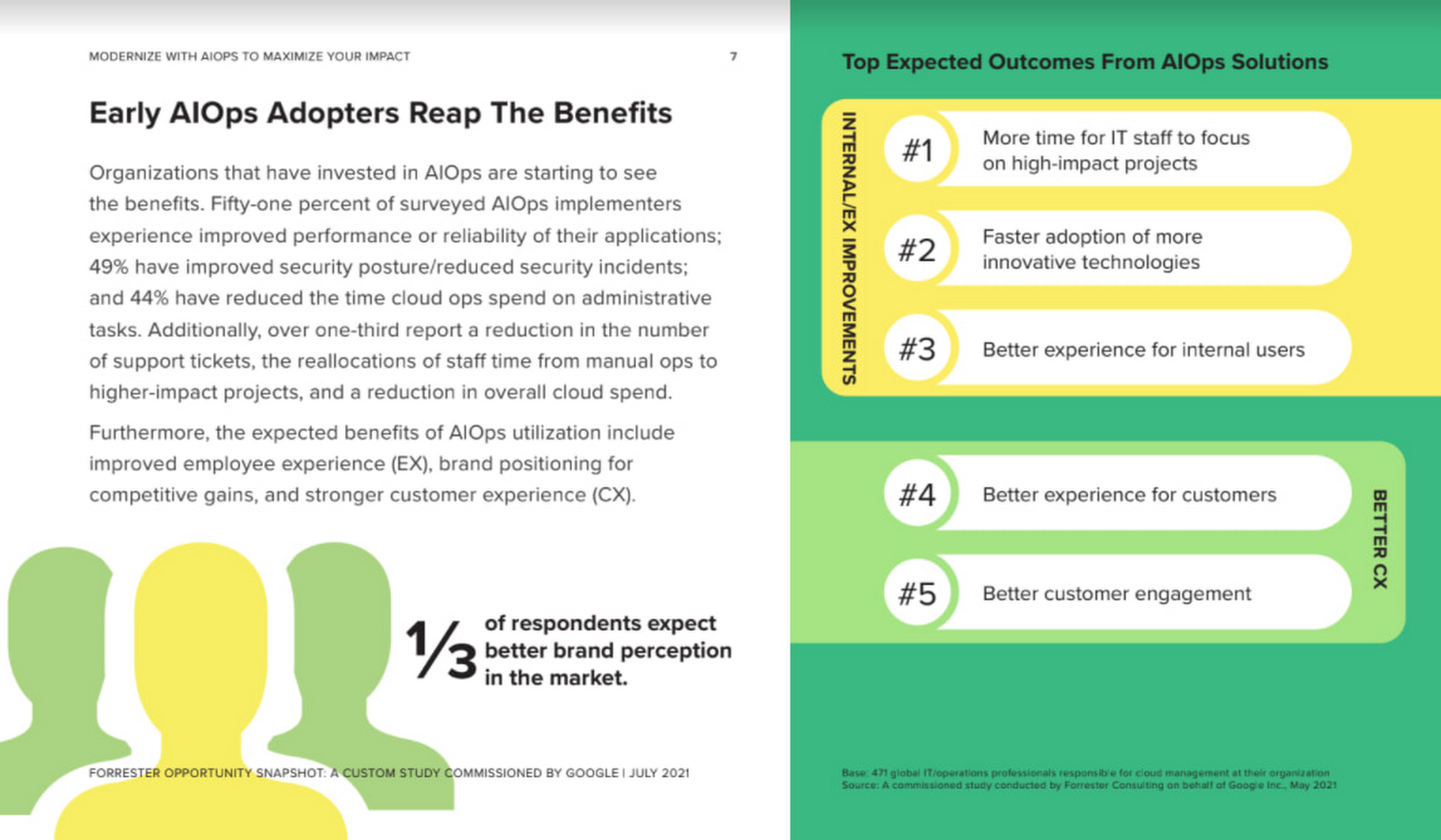
As you can see in the image above, there is a plethora of great information in this complimentary study. So, if you’re looking to enhance your cloud operations and/or adopt AIOps within your organization, be sure to download this free study today.
More Relevant Stories for Your Company

What Our Google Cloud Experts Say About Multi-cloud Journey
Do you want to fire up a bunch of techies? Talk about multicloud! There is no shortage of opinions. I figured we should tackle this hot topic head-on, so I recently talked to four smart folks—Corey Quinn of Duckbill Group, Armon Dadgar of Hashicorp, Tammy Bryant Butow of Gremlin, and James Watters of VMware—about what multicloud is

Autonom8: Achieving growth and profits for businesses with Google Cloud
With Google Cloud, Autonom8 can run a platform that accelerates and streamlines customer journeys in a scalable, reliable, cost-effective infrastructure, while using advanced optical character recognition to enable intelligent document processing. Google Cloud results: Increased margins by up to 30% by switching from a home-grown OCR system to Cloud Vision

Attract Investor Funding by Harnessing the Power of Cloud Operations, Billing, and Customer Care
More and more startups are choosing to build their business on Google Cloud, and if yours is one of them — welcome! And even though Google Cloud is easy to use, there’s still a lot to learn, starting with how to create and activate your account, and how to create projects, folders,

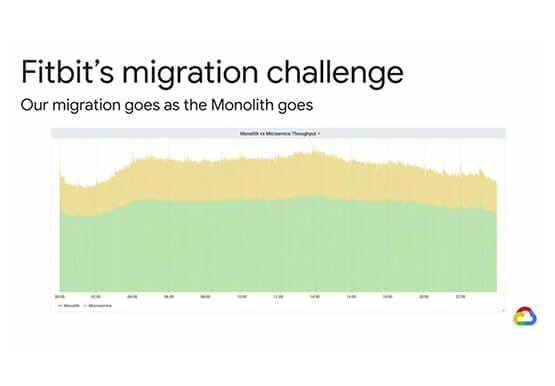
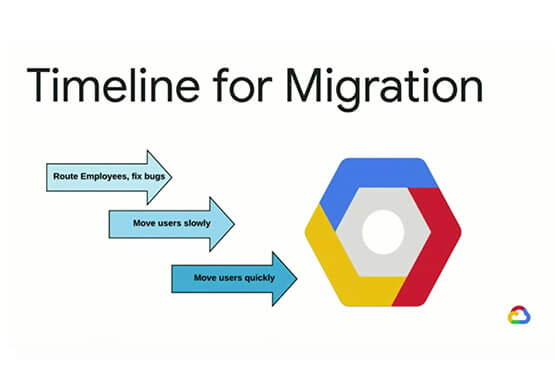

Fitbit’s Zero-Downtime Migration to GCP
In 2019, Fitbit moved all of its production operations from managed hosting to Google Cloud Platform without any downtime. The Fitbit experience is provided by a monolithic application backed by 200+ data stores, making the task of moving service by service impossible. So, Fitbit decided to run services in both
