





Best Kept Security Secrets: How Assured Workloads Accelerates Security

1230
Of your peers have already read this article.
5:00 Minutes
The most insightful time you'll spend today!
Digital transformation is now a strategic imperative for organizations across every industry. For governments and regulated businesses, moving services to the cloud poses a unique set of challenges.
As a vital enabler of transformation, the cloud can unlock innovation and help keep pace with the accelerating pace of digital business. Unfortunately, many government agencies and firms in regulated industries don’t have the luxury of adopting new systems at will. They must deal with issues such as limited resources, lack of digital skills, and siloed operations. However, they also face cloud-specific challenges, including:
- Data sovereignty: Regulated industries and the public sector often have concerns about the location of data, how it is protected, who else can access it, and whether it is stored in a secure location.
- Compliance: Government agencies and regulated businesses must ensure that their data and cloud use are compliant with all applicable government requirements, privacy and data protection laws, and other regulations.
- Security: Compliance is a natural component of any strong approach to security. As a result, government regulations and industry standards mandate a responsibility to secure and protect data from unauthorized access or use.
- Cost: Every organization wants to ensure it’s getting good value for their money when using cloud computing, but especially government agencies that are more likely to be working with fixed budgets and fewer resources.
To address the unique requirements of governments and other highly regulated organizations, some cloud providers have built separate government clouds (“GovClouds”) that run in specialized, stand-alone data centers that make it easier to meet specific requirements around data residency, personnel controls, and other government standards. However, isolated GovCloud environments come with limitations: They can restrict the ability to integrate regulated data with data from other sources, they create siloed infrastructure that can slow down access to new features and technologies, and they usually require more resources to manage and maintain, which translates into higher costs for end-users of GovCloud services.
But what if you could get the features of a government cloud — the certifications and strict controls on data residency and personnel access — on a commercial cloud?
This is where Assured Workloads comes in. Assured Workloads is a unique Google Cloud service that allows governments and organizations from regulated industries to meet stringent compliance requirements at scale on commercial cloud infrastructure.
What is Assured Workloads?
Assured Workloads provides a set of security controls and guardrails you can apply to your cloud environments, making it easier to achieve compliance while maintaining the advantages of a full commercial cloud. It includes features like data residency controls for specific compliance types, data and personnel access controls, and real-time monitoring for compliance violations to ensure you implement and maintain the cloud controls required by your compliance regimes.
Check out our Best Kept Security Secrets series
- Tap into the power of Organization Policy Service
- How VPC Service Controls can help build defense in depth
- How Cloud EKM can help resolve the cloud trust paradox
Assured Workloads can make it easier for agencies and businesses in regulated sectors to meet compliance requirements by providing:
- A secure and compliant environment: With Assured Workloads, you can create controlled environments for your regulated workloads and automatically enforce data location and resource deployment. It’s designed for customers that need to meet strict security and compliance requirements, such as the government, healthcare, and financial services sectors.
- Broad security capabilities: Assured Workloads provides comprehensive security for your regulated workloads. Data is encrypted at rest and in transit by default and includes additional features, such as encryption key management according to your compliance regime and Identity and Access Management (IAM) for authentication, authorization, and user access management.
- Support for multiple compliance frameworks: Assured Workloads is designed to create regulated boundaries on public cloud infrastructure that support multiple compliance frameworks across sectors, including FedRAMP, IL5, PCI DSS, SOC 2, HIPAA, and HITRUST, allowing customers to segment and label their regulated data.
- Control data residency: Assured Workloads gives you the ability to control the regions where data at rest is stored.
- Assured support: Assured Workloads’ approach ensures only Google Cloud support personnel meeting specific geographical locations and personnel conditions support customers’ workloads.
Instead of having to configure, manage, and maintain the right controls and guardrails yourself, you select the regulatory framework you need to follow. Assured Workloads automatically configures and deploys the controls needed to help meet your requirements.
With these specific capabilities, governments can simplify compliance configurations and monitor for violations without missing out on Google Cloud’s innovative technologies, scalability, performance, reliability, and cost savings that are hallmarks of our commercial Cloud offering.
How it works
When you use Assured Workloads to create controlled environments in Google Cloud, you will be required to set up an Assured Workloads folder. This folder acts as the regulatory boundary to help enforce your chosen compliance framework. They are created with preconfigured platform controls, which are packaged based on the specified regulated data type, personnel controls, and data location.
Assured Workloads automatically restricts developers to using products and services that are in-scope for your selected compliance framework. Security controls are mapped to Assured Workloads folders, so any Google Cloud resources you deploy in an Assured Workloads folder inherit the same controls. This also helps ensure that only Google Cloud personnel who meet your compliance requirements have the ability to support your resources and prevents resources from being deployed outside of compliant regions.
Depending on your compliance regime, Assured Workloads supports several different options for encryption. You can use any Google key management service unless your compliance requirements mandate otherwise, including Cloud Key Management Service, Cloud External Key Manager, or customer-managed encryption keys (CMEK). You can also choose Google-managed keys, which provide on-by-default FIPS-validated encryption.
Here are a few common use cases that companies are already accomplishing with Assured Workloads:
- Iron Mountain uses Assured Workloads to serve our customers’ compliance needs
- Implementing EU Data Sovereignty
- Running CJIS workloads
However, Assured Workloads is more than a better government cloud or a tool for highly regulated businesses. Assured Workloads is a packaged solution that provides security by default and removes toil and complexity for users. Users can reduce the time and effort required to meet their compliance requirements and also improve the security of their data.
Do I need Assured Workloads?
We believe that cloud adoption for governments, government suppliers and contractors, and other strictly regulated businesses shouldn’t have to happen in a separate, isolated cloud environment that forces tradeoffs in terms of service availability, scale, and cost. Assured Workloads is a new approach to running regulated workloads that transforms the “govcloud” into a capability that cuts down on the friction of compliance without sacrificing any of the cloud-y goodness.
To learn more about Assured Workloads, please review these resources:
Request a free trial today and experience how Aside Assured Workloads helps you achieve compliance-based outcomes.
Google Cloud & Siemplify Join Forces to Empower Companies to Manage Threat Responses Better

2984
Of your peers have already read this article.
1:30 Minutes
The most insightful time you'll spend today!
At Google Cloud, we are committed to advancing invisible security and democratizing security operations for every organization. Today, we’re proud to share the next step in this journey with the acquisition of Siemplify, a leading security orchestration, automation and response (SOAR) provider. Siemplify shares our vision in this space, and will join Google Cloud’s security team to help companies better manage their threat response.
In a time when cyberattacks are rapidly growing in both frequency and sophistication, there’s never been a better time to bring these two companies together. We both share the belief that security analysts need to be able to solve more incidents with greater complexity while requiring less effort and less specialized knowledge. With Siemplify, we will change the rules on how organizations hunt, detect, and respond to threats.
Providing a proven SOAR capability unified with Chronicle’s innovative approach to security analytics is an important step forward in our vision. Building an intuitive, efficient security operations workflow around planet-scale security telemetry will further realize Google Cloud’s vision of a modern threat management stack that empowers customers to go beyond typical security event and information management (SIEM) and extended detection and response (XDR) tooling, enabling better detection and response at the speed and scale of modern environments.
“We’re excited to join Google Cloud and build on the success we’ve had in the market helping companies address growing security threats,” said Amos Stern, CEO at Siemplify. “Together with Chronicle’s rich security analytics and threat intelligence, we can truly help security professionals transform the security operations center to defend against today’s threats.”
The Siemplify platform is an intuitive workbench that enables security teams to both manage risk better and reduce the cost of addressing threats. Siemplify allows Security Operation Center analysts to manage their operations from end-to-end, respond to cyber threats with speed and precision, and get smarter with every analyst interaction. The technology also helps improve SOC performance by reducing caseloads, raising analyst productivity, and creating better visibility across workflows.
We plan to invest in SOAR capabilities with Siemplify’s cloud services as our foundation and the team’s talent leading the way. Our intention is to integrate Siemplify’s capabilities into Chronicle in ways that help enterprises modernize and automate their security operations.
We’re looking forward to welcoming the Siemplify team to Google Cloud and working with them to help security operations teams accomplish so much more in defense of their organizations. You can read Siemplify CEO Amos Stern’s blog for more on this exciting news.
Latest Enhancements in reCAPTCHA Enterprise Helps Govts Sites Protect against Digital Frauds

2997
Of your peers have already read this article.
1:30 Minutes
The most insightful time you'll spend today!
Download our guidebook to learn how reCAPTCHA Enterprise can help strengthen your website security quickly.
Cyber threats on the rise
In 2021, the United States saw 40.5% of website attacks committed through “bad bots” on the internet, with 37.2% of government website traffic being bad bots, according to research by cybersecurity firm Imperva1. As cyber threats increase, government agencies need a way to safely let constituents access digital services. Google Cloud reCAPTCHA Enterprise protects websites by distinguishing between humans and bots. Full-scale implementation of reCAPTCHA Enterprise solution expands on bot detection to protect public sector websites from a broad range of digital fraud. Below are some highlights from our new reCAPTCHA Enterprise guidebook detailing functional enhancements and ways for government agencies to take advantage of enterprise capabilities.
Advanced website protection
reCAPTCHA Enterprise builds upon the existing reCAPTCHA API that has defended 5+ million websites for over a decade. It uses advanced risk analysis techniques to distinguish between humans and bots, protecting sites from spam and abuse as well as detecting other fraudulent activities, including credential stuffing, account takeovers (ATO), and automated account creation.
How it works
Detecting password leaks and credential breaches
With reCAPTCHA Enterprise’s password leak protection, agencies can conduct regular audits of user credentials, such as passwords, to detect leaks and breaches and prevent account takeovers (ATOs), as well as credential stuffing attacks.
UI challenge vs. frictionless
reCAPTCHA Enterprise returns a score, giving you the ability to take a number of actions, including requiring additional factors of authentication or throttling bots that may be scraping content. This functionality allows you to verify if an interaction is legitimate without any user interaction.
User-friendly migration
Google Cloud’s reCAPTCHA Enterprise offers a simple migration process in which your account is moved from the reCAPTCHA Admin to the Google Cloud Platform (GCP) after you create a project to migrate it to. Watch our 10-minute webinar to see how.
A cost-effective upgrade to a standard cybersecurity solution
Google reCAPTCHA Enterprise comes with 99.9%+ uptime, multi-factor authentication, and support for Android, iOS, and web applications. Our reCAPTCHA offering is structured in a way that allows you to fully control your investment and responsibly allocate taxpayer dollars.
reCAPTCHA Enterprise in action
Google Cloud’s reCAPTCHA protects against key automated attacks, including account creation, credential stuffing, cashing out, denial of inventory, and skewing. State governments have found success with using Google Cloud’s reCAPTCHA for cyber risk management. Wisconsin’s Workforce Development Agency used fraud detection and identification, including reCAPTCHA, to mitigate malicious bot logins on its external website, and several agencies in the Commonwealth of Pennsylvania have implemented reCAPTCHA to prevent bots from booking and reselling COVID-19 vaccine appointments.
Protecting public sector websites from bad actors can be challenging, especially with emerging threats from adversaries and extremist groups. Google Cloud’s reCAPTCHA Enterprise offers comprehensive website security solutions to successfully protect against cyber threats.
Download our reCAPTCHA Enterprise guidebook for a detailed look at how you can use reCAPTCHA Enterprise to strengthen your website security and implement the solution quickly and easily.
References:
The Right Datawarehouse Helps Fight Climate Change, While Improving Customer Experience

7080
Of your peers have already read this article.
4:30 Minutes
The most insightful time you'll spend today!
When you think about climate change, you might not consider a daily commute to work or a drive around town as big contributing factors. And yet, transport is the fastest growing source of CO2 emissions from fossil fuel, which in turn is the largest contributor to climate change. This is the key insight behind the mission of Spanish carbon-neutral multinational Acciona. The group, which provides sustainable solutions for infrastructure and renewable energy projects across 65 countries, launched an electric scooter sharing service called Acciona Mobility in 2018.
Aiming to contribute to the decarbonization of the transport sector while helping relieve traffic congestion within cities, Acciona Mobility enables users to rent electric scooters powered 100% by energy from renewable sources. Users can find, reserve, and rent the scooters at the tap of their mobile screens via the Acciona Mobility application and pay on the basis of minutes spent riding. The app, which is available free to download online, is also the gateway through which new users can register for the service, which welcomes anyone with a valid driver’s license for motorbikes. After having their right to drive, identity, and card details validated, citizens can start enjoying the service, available 24 hours a day, every day of the year.
“We needed to deploy a reliable infrastructure for a new service before understanding exactly what its scale and demand would be. Our strategy was to adopt a serverless architecture that can grow with us to sustain our long-term vision. This kind of thinking led us directly to Google Cloud.”
—Jose Luis Rosell, CIO Services Division, Acciona
“Acciona Mobility is exciting because it stems from our vision to make people’s lives easier in a sustainable way,” says Jose Luis Rosell, CIO of Acciona’s Services Division. “40% of the pollution near cities comes from private transportation. We want to help solve that problem with zero-carbon, electric, multimodal transportation that’s also convenient for people to use.”
However, Jose Luis says that building the appropriate IT infrastructure to bring the new service to life required external support. “We needed to deploy a reliable infrastructure for a new service before understanding exactly what its scale and demand would be. Our strategy was to adopt a serverless architecture that can grow with us to sustain our long-term vision,” he explains. “This kind of thinking led us directly to Google Cloud.”
Developing the transportation platform of the future
Because Acciona was already a Google Cloud customer, Jose Luis and his team reached the decision to develop the new service on Google Cloud with ease, as he explains: “We had a very positive experience working closely with the Google Cloud team during Acciona’s first project on Google Cloud, and that collaborative mentality is very important for us. We feel Google Cloud is a trustworthy partner that is willing to take risks with us and is flexible enough to lead us through business uncertainty with the right technology,” he says. “So we were confident that its technology and people could help us bring the Acciona Mobility service from theory to reality.”
This time, Acciona partnered with cloud consultancy Altostratus as well, to consult on a selection of Google Cloud products that would help develop the application quickly by making use of managed services. Acciona’s strategy was to launch the new services first in Madrid, where the company is headquartered, and then spread the vision across more cities later, if the idea worked out well in practice. Due to the scale of the project and its data needs, BigQuery was chosen as the primary data warehouse to store all the information related to the service, such as the location of scooters and their availability status. With all its data readily available on BigQuery, Acciona is able to run specific queries that help it to gain insights such as which urban areas have the highest volume of scooters being rented. Knowing this, Acciona can reorganize availability to make sure there are always enough scooters in that specific location.
Integrating it with Pub/Sub and Dataflow, Acciona ensures that the data generated by scooters is ingested and processed in real time so that users searching for scooters nearby, using the Acciona Mobility application on their phones, can always have up-to-date information at hand. Using Google Maps Platform APIs such as the Directions API, Acciona’s mobile app translates the geographical coordinates of scooters into an easy-to-read address displayed beside a visual map. Using Cloud SQL, Acciona automates the storage capacity management of the database as the number of scooters and active users grow.
Meanwhile, Google Cloud Armor protects the service against cyber breaches and distributed denial of service attacks to keep it running uninterrupted. In addition, Google Cloud itself helps to reinforce the cyber security measures with secure-by-default managed services, such as data encryption. “The managed services mean more resilience and more uptime, because we don’t need to worry about maintenance or external threats,“ says Jose Luis of the solutions protecting all information generated by the new service, which as CIO is a topic he holds dearly. “I face cybersecurity issues more confidently as a Google Cloud partner,” he adds.
“Today, we have data coming in every 15 seconds from 10,000 electric scooters around Europe. BigQuery and Cloud SQL-managed services help us handle that data very carefully and with precision so that our users don’t experience any lags when searching for scooters or returning them.”
—Jose Luis Rosell, CIO Services Division, Acciona
Expanding an 100% sustainable transport solution throughout Spain
Within two months of the decision to deploy Acciona Mobility on Google Cloud, the service was ready for launch, filling the streets of Madrid with 500 electric scooters that run 100% on renewable energy. By 2020, the number of scooters has grown to 10,000 and the service has scaled to multiple cities in and outside of Spain, including Lisbon, Milan, and Rome. To date, more than 3.5 million intracity rides have used the Acciona Mobility app, reducing CO2 emissions by more than 1,000 tons.
“Today, we have data coming in every 15 seconds from 10,000 electric scooters around Europe. BigQuery and Cloud SQL-managed services help us handle that data very carefully and with precision so that our users don’t experience any lags when searching for scooters or returning them,” says Jose Luis of the fast-growing scale of the project.
“Google Cloud enables us to keep our services always available and to scale quickly to respond to its growing demand. Our ratings have been very positive as a result. More importantly, our vision of transportation as a cleaner, more sustainable commodity is really spreading and resonating with the public.”
—Jose Luis Rosell, CIO Services Division, Acciona
Set to continue expanding, Acciona is using Google Kubernetes Engine to make sure the Acciona Mobility application has the computing capacity it needs to continue scaling to reach new markets and serve more users. On that note, Google operations tools (formerly Stackdriver) are also being deployed to help monitor, troubleshoot, and improve the performance of the application as it scales.
“Google Cloud enables us to keep our services always available and to scale quickly to respond to its growing demand. Our ratings have been very positive as a result. More importantly, our vision of transportation as a cleaner, more sustainable commodity is really spreading and resonating with the public,” he concludes.
5245
Of your peers have already watched this video.
17:00 Minutes
The most insightful time you'll spend today!
AppSheet: Reduce Shadow IT and Accelerate Development of Enterprise-grade Apps
Google Cloud findings suggest that nearly 40 percent of organizations’ investments are consumed by shadow IT and can be a detractor to the adoption of cutting-edge tools and solutions. Also, about 51 percent of the surveyed executives are of the opinion that the inability to adapt to digital transformation trends and practices are at the risk of going out of business in the next 3-4 years. However, enterprises need not be blindsided by the mounting expenses involved with the implementation and optimization of solutions and tools meant for empowering employees. AppSheet, Google Cloud’s no-code application development and automation platform is at the helm of empowering organizations to custom build apps for employees without relying on third-party services.
Watch the video from the Google Workspace sessions of Next ’21 to hear experts’ insights on AppSheet to effectively govern workforce and ward off security threats to helps employees build enterprise-grade applications!
5 ways a SOAR solution improves SOC analyst onboarding

3039
Of your peers have already read this article.
2:30 Minutes
The most insightful time you'll spend today!
Editor’s note: This blog was originally published by Siemplify on Feb. 19, 2021.
The number of unfilled cybersecurity jobs stretches into the millions, and a critical part of the problem is the length of time it takes to backfill a position.
Industry group ISACA has found that the average cybersecurity position lies vacant for up to six months. Some positions, like security analyst, are difficult to find suitable candidates for thanks to workplace challenges such as lack of management support and burnout.
As the old phrase goes, time is money. So when organizations are fortunate enough to fill a position with the appropriate talent, they want to be able to make up for lost time as quickly as possible. This is especially true for roles in the security operations center, a setting notorious for needing staff to field never-ending alerts generated by an often-disparate collection of security tools.
Training new analysts can be a daunting task. They need time to get acquainted with the SOC’s technology stack and processes. Without documentation, they often ask senior analysts for guidance. This can create distractions and consume time.
A reliance on community knowledge—undocumented, not widely-known information within an organization—creates inconsistency within the SOC that contributes to longer ramp-up times for new analysts. Undocumented processes, combined with security tools that don’t talk to each other, typically mean a SOC will need to spend nearly 100 hours—the equivalent of 2 1/2 weeks—getting a single new analyst up to speed.
Enter automation. Throughout an analyst’s career in the SOC, a security orchestration, automation, and response (SOAR) solution can be their best friend, helping expedite routine tasks and liberating them to perform more exciting work. But the technology can also allow even the most junior analysts to have an auspicious onboarding experience—hitting the ground running on day one, acclimated to their new environment, and feeling comfortable about and confident in their future.
Here are five ways a SOAR solution can, among many other activities, aid in analyst onboarding
1) The SOAR solution deploys automated playbooks
The average SOC receives large numbers of alerts per day, and many will be false positives. That amounts to a lot of dead-ends for analysts to chase and leaves little time to investigate legitimate anomalous network activity. The sheer volume of alerts has even prompted some analysts to turn off high-alert features on detection tools, potentially causing teams to miss something important.
SOAR helps analysts hurdle these roadblocks by allowing teams to create custom, automated playbooks, workflows that equalize resources and knowledge across the SOC, and help maintain consistency in the face of new hires and staff turnover. And if analysts should need to create or edit any of the steps in these playbooks, the optimal SOAR solution will enable them to do this without knowledge of specific coding or query languages, acumen that a novice analyst may lack.
2) The SOAR solution groups related alerts
As multiple alerts from different security tools are generated, some SOAR solutions allow you to automatically consolidate and group these alerts into one cohesive interface. This is what is known as taking a threat-centric approach to investigations, with the SOAR looking for contextual relationships in the alerts and, if identified, grouping these alerts into a single case. Having the ability to work more manageable and focused cases right off the bat will help ensure a smoother transition for new analysts.
3) The SOAR solution pieces together the security stack
https://www.siemplify.co/getstartedFrom next-generation firewalls to SIEM to endpoint detection and response, the security stack in any given organization can be vast and complex. No incoming analyst has reasonable time to familiarize themselves with every tool living within the stack—or to manually tap into these different tools to obtain the appropriate context to apply to alerts. A SOAR solution alleviates this challenge by delivering context-rich data that can be analyzed in one central platform, eliminating the need for multiple consoles for alert triage, investigation and remediation. Plus, with a SOAR solution, there is no need for the SOC to directly touch a detection tool that another group may manage.
4) The SOAR solution streamlines collaboration to enable easy escalation and information sharing
Often the SOC is not capable of responding to every threat, meaning other departments, such as networking, critical ops, or change management need to be involved. In addition, executive personnel are likely interested in security trends happening within the organization. Because not every group communicates in the same way—or consumes information in the same way—breakdowns can occur, and frustrations can mount, especially for a new analyst. A SOAR solution can even the playing field by automatically generating instructions, updates, or reports from the SOC to other teams, and vice versa. SOAR is also a useful solution for collaborating within the SOC team as well, especially in the age of remote and hybrid work.
5) The SOAR solution prevents analysts from quickly burning out.
There is a reason why the SOC has obtained the dubious acronym of “sleeping on chair.” Life in this environment can be a tedious, mental grind, prompting certain inhabitants to literally fall asleep from boredom.
SOAR solutions can counter this tedium in two notable ways. They can prevent analysts from having to stare at a multitude of monitors while working long shifts. They can also free analysts to work on more strategic and thought-provoking assignments, which can help improve the company’s overall security posture—and ensure a new entrant to the SOC doesn’t lose steam immediately.
To learn more about SOAR from Siemplify, now part of Google Cloud SecOps suite, including how to download the free community edition, visit siemplify.co/GetStarted.
More Relevant Stories for Your Company

Customer Voices: How Firms from Across Industries Leverage Google Cloud
From powering everyday operations and accelerating application innovation, to providing tools for specific business needs and executing on big ideas, to advancing the security of technology solutions, companies from across industries have leveraged Google Cloud for business benefits. Companies from across industries have turned to Google Cloud for transforming their



How does Google Pick its Data Center ?
Google is well known for its sustainable tech and hardware initiatives. Did you know alongside its environmental friendly designs of its data centers, it takes into account various factors such as redundant power supplies, data replication, network connectivity, etc. Watch the video to learn more.

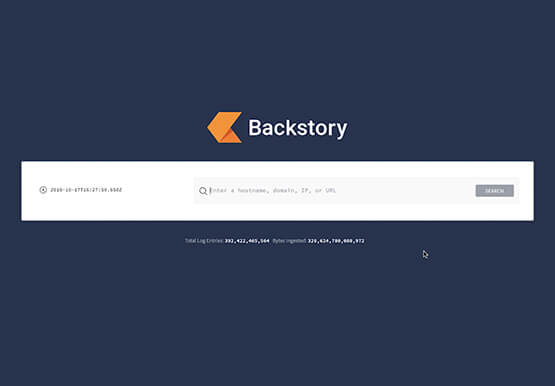
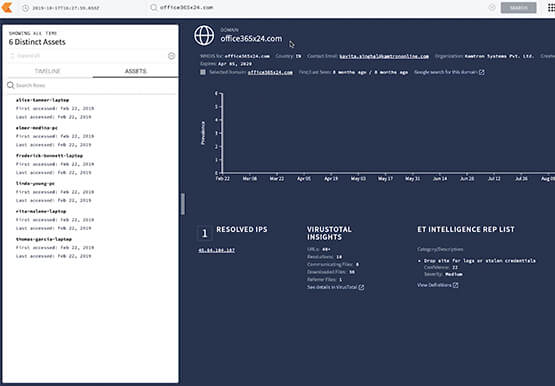
How to Retrace the Steps of a Potential Phishing Attack with Threat Analytics
The majority of cyber attacks begin with phishing emails and websites. Attackers use many tricks, including by leveraging enterprise brand assets, such as company names and logos, to develop phishing websites that appear authentic and lure internet users to enter valuable information such as user names and passwords. Experts say

Confidential GKE Nodes: Now Available on Compute Optimized C2D VMs
Today, we are happy to announce that Confidential GKE Nodes are available on compute optimized C2D VMs. Many companies have adopted Google Kubernetes Engine (GKE) as a key component in their application infrastructure. In some cases, the advantages of using containers and Kubernetes can surpass those of traditional architectures, but
