





Making Mothers’ Day Special: How Google Cloud Migration for 1-800-FLOWERS.COM, Inc Impacts CX

6843
Of your peers have already read this article.
2:30 Minutes
The most insightful time you'll spend today!
Editor’s note: In honor of Mother’s Day, we look at how 1-800-FLOWERS.COM, Inc. migrated to Google Cloud as part of its digital transformation to quickly deploy seamless and convenient customer experiences across multiple brands on Mother’s Day and every day.
As a leading provider of gifts designed to help customers express, connect, and celebrate, 1-800-FLOWERS.COM, Inc. has embraced cloud technologies to grow and transform its business through constant innovation. As part of our digital transformation, we recently completed the migration of our ecommerce platform and other services to Google Cloud. We’ve transitioned from a monolithic to a microservices platform, moved many workloads from our on-premises data centers to our Google Cloud environment, and scaled both horizontally and vertically.
Since our migration, we’ve developed efficient processes to launch new brands, improved the customer experience across all brands, and seen significantly increased site traffic.
Nurturing a more delightful customer journey
Customer delight is at the core of everything we do. Whether it be with a flower bouquet, a sweet treat, or a personalized keepsake, our mission is to deliver smiles. With the rise of the COVID-19 pandemic, we’ve all been challenged to find unique and safe ways to continue honoring the special connections in our lives and celebrating occasions with loved ones. Our customers have adapted by doing things such as sending gifts to isolated loved ones, sharing the same meal together virtually, or using video to engage with others through group activities like flower arranging and building charcuterie boards.
The customer experience is a top priority for us, and we constantly look for innovative ways to enhance the customer journey across our ecommerce platform of more than a dozen brands. As a result, we’ve continued to see a rise in demand as customers enjoy the ease and convenience of our site and discover our full family of brands.
Migrating to a cloud-first mindset
As we’ve continued to innovate and iterate on the customer experience, we knew we wanted to evolve our platform. We wanted to shift to a microservices platform, which would allow our team the opportunity to release updates to our site more often and set up the right continuous integration/continuous deployment (CI/CD) practices.
Working with Google Cloud, we were able to move our ecommerce platform to the cloud and standardize our site and brand deployment by building one release that could then be repeated across all of our brands. We built everything in a modular fashion, including microservices and code libraries, so that sites could be easily constructed and replicated for each brand. And because of this, we were able to launch Shari’s Berries extremely quickly after we acquired the brand in 2019.
Moving our platform to a completely homegrown solution of microservices was a daunting task. But our team handled it beautifully through load-testing, stress-testing, and building new monitoring tools. And with Google Cloud supporting us all along the way, managing the migration process was simple and easy from start to finish.
Arranging a better bouquet of services
Currently, we’ve migrated every customer-facing touchpoint for all of our brands to Google Cloud—whether it’s on the web or mobile, our AI bots, or our chat interfaces.
- We run on Google Kubernetes Engine and Istio.
- We have nearly 200 microservices built to help power our entire ecommerce stack across several cloud services running on Google Cloud.
- We’re utilizing BigQuery for our offline intelligence.
Results are coming up roses
Our new stack on Google Cloud has benefits for both us and our customers. We moved from a session-based to a token-based system, which provides enhanced security as well as a consistent, convenient experience across all our brands. Using service workers and a single-page app, we are able to download all the relevant site content to the browser in under two seconds to create an instant-click experience for each and every customer. We also use Google Analytics to measure our user interactions and provide personalized results to each customer. Our hope is that with this new system, we can learn from customer behavior to offer gift givers a more personalized shopping experience during each visit.
The benefits of our new tech stack have not only helped us enhance the solutions we offer to customers today, they’ve also enabled us to offer new ones at lightning speed. With our legacy system, we used to release new code once a week or once a month. Now, even during our peak periods, we’re able to release 10 to 15 times a day and can deploy and pivot quickly to create new microservices and microsites on the fly—often without having to touch any code.
Efficiencies abound
The benefits of moving our platform to Google Cloud have extended to our internal teams as well. Before the migration, we had only two environments for developing and testing, which made it time-consuming to test updates before they went into production. Now with Google Cloud, we have several different journey teams—which are made up of developers, product owners, and technical owners—all working in several different environments, solving problems, and creating new solutions together.
Everyone is now empowered to be self-sufficient, developing and releasing microservices on their own when they’re ready. This has given our developers more time to take part in continued development and learning opportunities. For example, we offer lunch-and-learn sessions as well as other resources for everyone to take advantage of so they can continue to learn and refine their skills.
Planting the seeds for future growth
As we look to the future and think about how we help our customers express, connect, and celebrate, we’ll continue to collaborate across teams to deliver solutions that spread smiles. Specifically, we’re exploring additional use of AI to help us better serve our customers across all our brands.
We’ve enjoyed the ongoing support we’ve received from the Google Cloud team as they help us build new solutions and design a road map for the future. Their support has helped the 1-800-FLOWERS.COM, Inc. team to realize the power of the cloud and bring the very best experience to our customers.
Learn more about 1-800-FLOWERS.COM, Inc., or check out our recent blog about cloud migration for the real world.

3584
Of your peers have already downloaded this article
3:30 Minutes
The most insightful time you'll spend today!
Defending the world’s largest network against persistent and constantly evolving cyber threats has driven Google to architect, automate, and develop advanced tools to help keep it ahead. Understanding how Google has built and evolved it’s defenses can help you make smart architectural decisions of your own as you move forward.
- At Google every minute:
- 10 million spam messages are prevented from reaching Gmail customers.
- 694,000 indexed Web pages are scanned for harmful software.
- 7,000 deceitful URLs, executables, and browser extensions that may carry viruses, unwanted content, or phishing attempts are spotted and stopped.
- 6000 instances of unwanted software and nearly 1,000 instances of suspected malware are reported to Chrome users.
- 2 phishing sites and 1 malware site are found and labeled.
Download this e-book to know more about Google’s security at scale.
Beany’s Cloud-Based Accounting Solutions Transform Small Business Finance

1817
Of your peers have already read this article.
2:30 Minutes
The most insightful time you'll spend today!
Many people start a small business that aligns with their passions, but soon discover the day-to-day running of a business is very different than anticipated. Dealing with accounting, finance, and other daily activities can quickly overwhelm even the most promising of new businesses.
Recognizing the unique challenges facing small businesses, we founded Beany. With our personalized accounting platform, small business owners can relax knowing that we will look after all their compliance and advisory needs. Business owners who use Beany also benefit because they end up freeing more time to focus on what they enjoy and do best—likely the main reasons they started their business in the first place. We prepare financial statements, minimize tax and keep an eye that our clients are paying the right amount at the right time. We also advise on business purchase and sale, valuations and forecasting for banks. In fact, we do everything that a business owner needs from their accountant, including a help desk filled with domain experts to provide free & unlimited advice and support.
As we expand our team, we’ll continue to introduce new solutions, services, and integrations that make it even easier for small businesses to prioritize business planning, balance budgets, and keep up with ever-changing tax laws. We also plan to launch Beany in new markets and extend our global footprint beyond New Zealand, Australia, and the UK.
Migrating and scaling Beany
Beany was initially developed and hosted on a virtual private server (VPS) with limited capabilities. As our subscriber base grew, we realized we needed a more scalable, secure solution to eliminate downtime and deliver a reliable customer experience. We also understood it would be challenging for our small engineering team to cost-effectively test and deploy new features without a more agile development environment.
With that in mind, we chose the secure-by-design infrastructure of Google Cloud to power Beany and help us scale our innovative accounting platform. We now use Compute Engine to cost-effectively create virtual machines (VMs) that automatically select optimal amounts of processing and memory.
In addition, we encrypt, store, and archive everything on highly secure Cloud Storage, leveraging a combination of solid-state drives (SSDs) and hard disk drives (HDDs) for hot, nearline, and coldline data. With Cloud Storage, we can replicate data between regions in under 15 minutes to enable rapid recovery and business continuity. This has been really useful moving images to data centers on the other side of the planet quickly as we primarily operate out of Sydney and London.
We also connect, create, and collaborate on Google Workspace using Google Gmail, Docs, Calendar, and Meet. Beany smoothly integrates with Google Sheets to provide live reporting from our application direct to our sales, marketing and support staff. It also makes sharing account data with our accounting clients easy and secure.
Analyzing financial data with Google Cloud AI and machine learning
Joining the Google for Startups Cloud Program gave us immediate access to Google Cloud credits which we use to cost-effectively trial and deploy additional Google Cloud solutions. We continue to evaluate Cloud Code which will help our developers more efficiently create, deploy, and integrate applications directly on Google Cloud. We’re also exploring how Google Cloud AI and machine learning products such as Vertex AI and AutoML can further revolutionize accounting with advanced financial analyses and end-to-end automation of business processes.
We can’t wait to see what we accomplish next as we grow our team and introduce new services and solutions that enable small businesses to streamline operations, lower costs, and increase profits. It’s exciting to help small business owners manage accounting and financial planning so they can spend more time doing what they love and realize their business vision.

Beany team members
If you want to learn more about how Google Cloud can help your startup, visit our page here to get more information about our program, and sign up for our communications to get a look at our community activities, digital events, special offers, and more.
3502
Of your peers have already watched this video.
2:30 Minutes
The most insightful time you'll spend today!
Google Cloud Helps DSW Engage Over 28M Shoe Lovers in Real Time
DSW Shoes turned to Google Cloud and Google Cloud Partner – Slalom to develop a realtime, engaging loyalty program that serves more than 28 million active members instantly.
The major move from on premise to a cloud-based, data-driven platform that offers speed, flexibility, and scalability has helped increase DSW’s new customer rate by 9% and allows the company to achieve a best-in-class retention rate.
Watch the video to understand how DSW Shoes did this.
EyecareLive Sees a Brighter Future in the Cloud with Enhanced Support

2949
Of your peers have already read this article.
3:30 Minutes
The most insightful time you'll spend today!
EyecareLive transforms the healthcare ecosystem with Enhanced Support, a support service from the Google Cloud Customer Care portfolio.
Telemedicine is now mainstream. It exploded during the COVID-19 pandemic. A 2022 survey by Jones Lang Lasalle (registration required) found that 38% of U.S. patients were using some form of telemedicine. This number is expected to grow as consumers are demanding more convenient and immediate access to care, and doctors are seeking efficiencies, cost savings, and to forge closer relationships with patients.
But because the eye-care field is so heavily regulated, optometrists and ophthalmologists face more technical hurdles to perform telemedicine than their peers in other medical practices.
To join the telemedicine revolution, a generic technology solution wouldn’t do. Eye-care professionals need a more carefully architected and rigorously secure platform – one that ensures a very high degree of compliance and privacy.
EyecareLive provides exactly that. Their comprehensive cloud-based solution was built specifically for eye-care telemedicine practices. They not only facilitate telemedicine visits with patients via video, but help providers stay in compliance with complex industry regulations.
What’s more, EyecareLive is the only platform in the industry that conducts vision screening using Food and Drug Administration (FDA)-registered tests to check a patient’s vision before connecting them to a doctor through a video call. The doctor can thus triage any issues immediately and quickly determine the right next steps for proper care. In addition, their platform digitally connects optometrists and ophthalmologists to the entire eye-care ecosystem, including other doctors for referrals, insurance companies, hospitals, pharmaceutical firms, pharmacies, and, of course, patients.
On top of all of this, the automated back office for their eye-care practices processes electronic health records (EHRs), clinical workflow, billing, coding, and more into one platform. EyecareLive streamlines operations and frees up doctors to focus on delivering the highest possible eye healthcare and on building stronger relationships with patients.
“Considering the number of plug-and-play services that Google has built into the Google Cloud Healthcare solutions, Google is basically supporting the entire healthcare industry from an infrastructure provider point of view.” — Raj Ramchandani, CEO, EyecareLive
Seeking greater agility, EyecareLive migrated to Google Cloud
EyecareLive is truly cloud first. They had operated entirely in the AWS cloud since opening their doors in 2017. Several years in, they decided to look for an additional cloud provider with broader support for digital health platforms. They specifically wanted to migrate to one they could rely on to deliver plug-and-play services, which would accelerate innovation of their platform. Rather than re-architecting for a new cloud, EyecareLive wanted a cloud platform that would offer compatible services they could use to meet their needs for reliability and availability.
“If we want to deploy a new conversational bot or build AI models that assist doctors to diagnose based on a retina image, Google Cloud provides these services which are reliable and tested by Google Cloud Healthcare solutions in many cases.” — Raj Ramchandani, CEO, EyecareLive
Versatility was another requirement. The EyecareLive platform must fulfill the demands of a variety of organizations — doctors, pharmaceutical companies, clinics, and others. EyecareLive also has an international deployment strategy that goes far beyond offering a domestic telehealth solution. Therefore EyecareLive needed a cloud functionality that extended into the broader global eye-care ecosystem.
EyecareLive chose Google Cloud. The most compelling reason was the deep industry expertise found in Google Cloud for healthcare and life sciences. This distinguished Google Cloud from all other possible cloud providers considered by EyecareLive. “We like Google Cloud because of the differentiations such as Google Cloud Healthcare solutions, computer vision, and AI models that can be used out of the box,” says Raj Ramchandani, CEO of EyecareLive. “We found these features more robust for our use cases on Google Cloud than any other.”
“Google is heavily into its Healthcare Cloud. That’s what differentiates it. We love that part because we can tap into innovative healthcare cloud functionality quickly.” — Raj Ramchandani, CEO, EyecareLive
Key to production deployment (and beyond): Google Cloud Enhanced Support
As a cloud-born company, EyecareLive had an exceedingly tech-savvy team. But the migration was a complex one that involved migrating third-party software and networking products that were tightly integrated into EyecareLive’s own code. The team knew it needed expert help with the migration. What’s more, doctors, patients, and other users required 24/7 access to the platform, and any interruptions to availability or infrastructure hiccups during the migration would disrupt their online experiences. However, the EyecareLive team was already stretched by continuing to grow and innovate the business, so they asked Google Cloud for help.
EyecareLive purchased Enhanced Support, a support service offered by the Google Cloud Customer Care portfolio. Specifically designed for small and midsized businesses (SMBs). Enhanced Support gave EyecareLive unlimited, fast access to expert support from a team of experienced Google Cloud engineers during the intricate, multifaceted migration.
“It was my top priority to engage Google Cloud Customer Care to help us keep the platform always available for our doctors and users,” says Ramchandani. “The level of detail to the answers, the clarifications of having the Enhanced Support experts tell us to do it a certain way has been enormously helpful.”
For example, one of the valuable features delivered by Enhanced Support is Third-Party Technology Support, which gives EyecareLive access to experts with specialized knowledge of third-party technologies, such as networking, MongoDB, and infrastructure. This meant all components in EyecareLive’s infrastructure could be seamlessly migrated to Google Cloud, and afterward EyecareLive could lean on Enhanced Support experts to continue to troubleshoot and mitigate issues as necessary.
“The response times to the questions and issues we had when going live was fantastic. It was the best experience with a tech vendor we’ve had in a long time.” — Raj Ramchandani, CEO, EyecareLive
With Enhanced Support at their side, EyecareLive was able to get up and running quickly in preparation for their international expansion by using Google Cloud’s prebuilt AI models, load balancers, and networking technologies that were designed to be easily deployed across multiple regions throughout the globe. “We know exactly how to implement data locality to scale our deployment into different regions and into different countries, because we’ve learned that from the Google Cloud support team.” — Raj Ramchandani, CEO, EyecareLive
EyecareLive then proceeded to rapidly scale their business, knowing that Google Cloud would ensure they could meet compliance standards in whatever country or region they expanded into.
“Since we’ve moved to Google Cloud and chose Enhanced Support, we’ve had 100% availability. That’s zero downtime, which is incredible.” — Raj Ramchandani, CEO, EyecareLive
Enhanced Support also provided the capabilities for EyecareLive to:
- Resolve issues and minimize any unplanned downtime to maintain a high-quality, secure experience for doctors and patients during and after migration
- Acquire fast responses to questions from technical support experts
- Learn from guidance from the Enhanced Support team beyond immediate technical issues
EyecareLive builds momentum toward their vision for eye-care telemedicine
By working closely with the Google Cloud Enhanced Support team, EyecareLive was able to successfully migrate their platform.
“If you ask any of my engineers which cloud provider they prefer, they’d all respond ‘Google Cloud,’” says Ramchandani. “The documentation is there, the sample code is there, everything that we need to get started is available.”
EyecareLive was then able to go on to grow and scale their business in the cloud in the following ways:
- Successfully managed a complex migration with minimal disruption and maximum availability, ensuring a consistent, secure, and compliant-ready experience for doctors and patients
- Gained the trust of both doctors and patients – they know that EyecareLive protects their sensitive medical data
- Kept EyecareLive agile and focused on innovating forward rather than building new features from scratch by supporting the team as they took advantage of Google’s tailored, plug-and-play technologies
- Analyzed performance over time to plan for future growth by partnering with Enhanced Support for the long term
“We know we can rely on Google Cloud from a security point of view. We love the fact that Google Cloud Healthcare solution is HIPAA compliant. Those are the things that make us trust Google to do the right thing.” — Raj Ramchandani, CEO, EyecareLive
With Enhanced Support, EyecareLive sees a bright future in the cloud
With the help of Enhanced Support, EyecareLive brings digital transformation to the eye-care in the healthcare industry by integrating the entire ecosystem of eye-care partners onto one platform making EyecareLive a leader in their industry.
Learn more about Google Cloud Customer Care services and sign up today.
Google Cloud’s Professional Service Organization: How it Accelerates Operational Health Review Cloud Migration

3375
Of your peers have already read this article.
2:00 Minutes
The most insightful time you'll spend today!
Introduction
The Google Cloud Professional Services Organization’s (PSO) mission is to help our customers get the most out of Google products. PSO is responsible for customer success by sharing our technical expertise in order to unlock business value from the cloud by providing cloud strategy and best practice advice, implementation guidance, and training using our proven methodology.
In this blog post, we want to focus specifically on Operational Health Reviews and how PSO engages in a myriad of activities to ensure the overall success and health of a customer engagement while ensuring we are meeting customer expectations and objectives, managing risk, and ultimately delivering value during or after the Google Cloud migration. We will discuss the assets, methodology, and tools that we leverage to ensure this success.
What is an Operational Health Review and what purpose does it serve?
Operational Health Reviews (OHR) are regular reviews to proactively address the below topics:
- A customer’s support experience
- Analysis of trends in key operational metrics
- Analysis of trends in Google Cloud usage
- Status reports for high-priority cloud projects
- Discussion of upcoming events
- Discussion of potential opportunities for training
- Review of feature requests
The core aim of an OHR is to measure progress and advise customers on the overall health of the account and migration progress while providing recommendations as a team on what adjustments should be considered to ensure continued success. During the OHR, we will address any pain points as well as identify and remediate any negative trends in support interfaces and usage metrics.
The intention of the activity is to also perform a blameless reflection for continuous improvement. This supports the effort to maintain common ground and obtain mutual optimism for the next phase of the customer’s journey on Google Cloud.
Let’s dive a little deeper into some of the activities that go into an OHR.
Support experience
One of the Google Cloud’s Support Organization’s goals is to simplify and streamline our customer’s support experience with a scalable and flexible set of offerings built with the customer needs at the center. This includes supporting an ongoing partnership model, with a proactive and collaborative approach. Premium Support is our top-tier support model which is a paid support offering designed for enterprises that run mission critical workloads and require fast response times, platform stability, and increased operational efficiencies. As part of this offering, customers are provided with a Technical Account Manager (TAM) who is in charge of delivering frequent touchpoints, including OHRs.
During the support experience section of an OHR, some of the following topics may be reviewed:
- Case volume by priority
- Case volume by product
- Cases linked to Google Cloud incidents
- Escalated cases or incidents
- Case initial response time (IRT)
- Case IRT SLO Met Rate
- Case total resolution time (TRT) hours
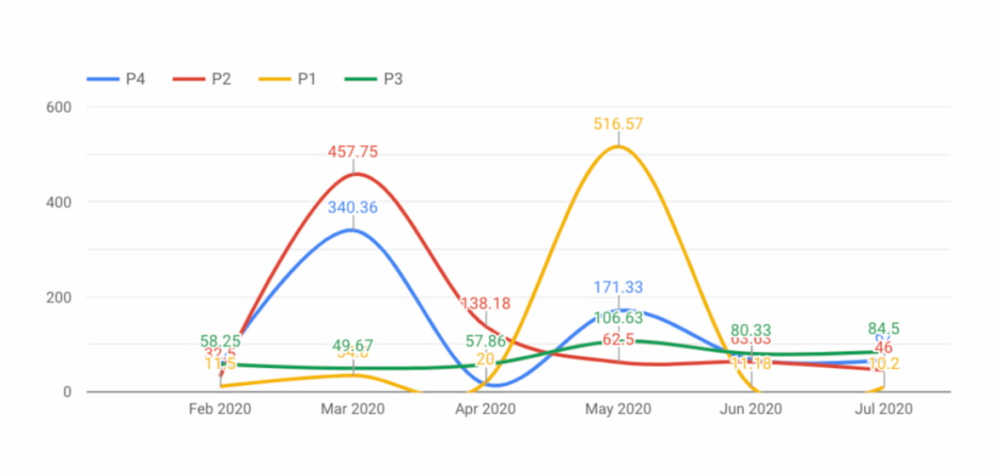
The purpose of this activity is to better understand the efficiency of both the customer’s and Google’s cloud operations from a support trend perspective. The goal is to celebrate any positive trends, but also to identify potential negative trends and proactively determine a remediation strategy.
Status reports for high-priority cloud projects
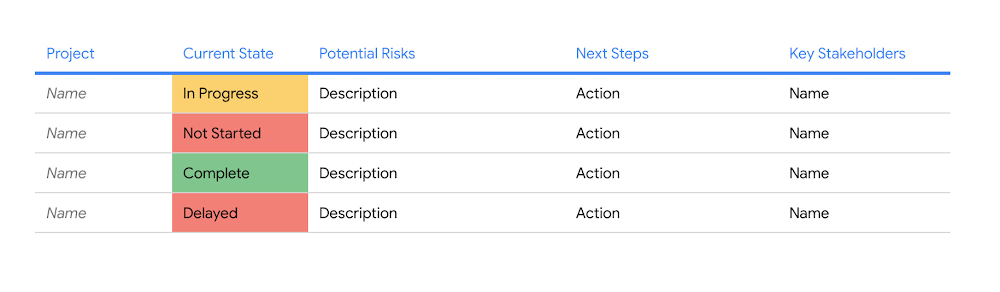
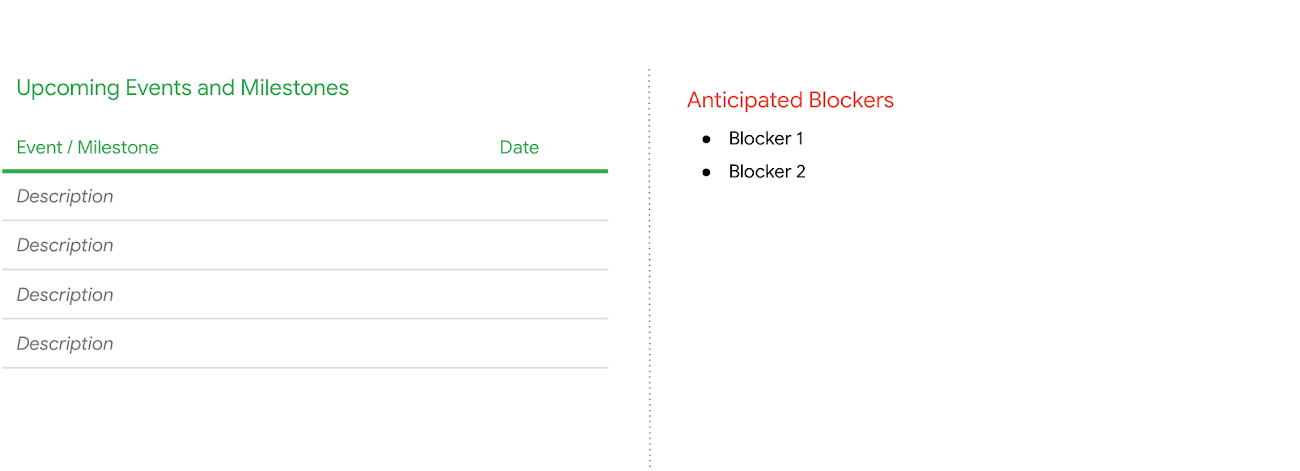
The purpose of this part of the OHR is to ensure the senior management stakeholders have continued visibility into the status of all their high-priority cloud initiatives with an easy-to-read, sometimes color-coded assessment on the status of each project. The assessment [Figure 1] may include, but is not limited to potential identified risks, key next steps, key stakeholders, and a mitigation plan for any high priority issues that may occur during their migration engagement. Additionally, the TAM may also cover any upcoming milestones or events, as well as any potential anticipated future blockers [Figure 2].
Review trends in Google Cloud usage
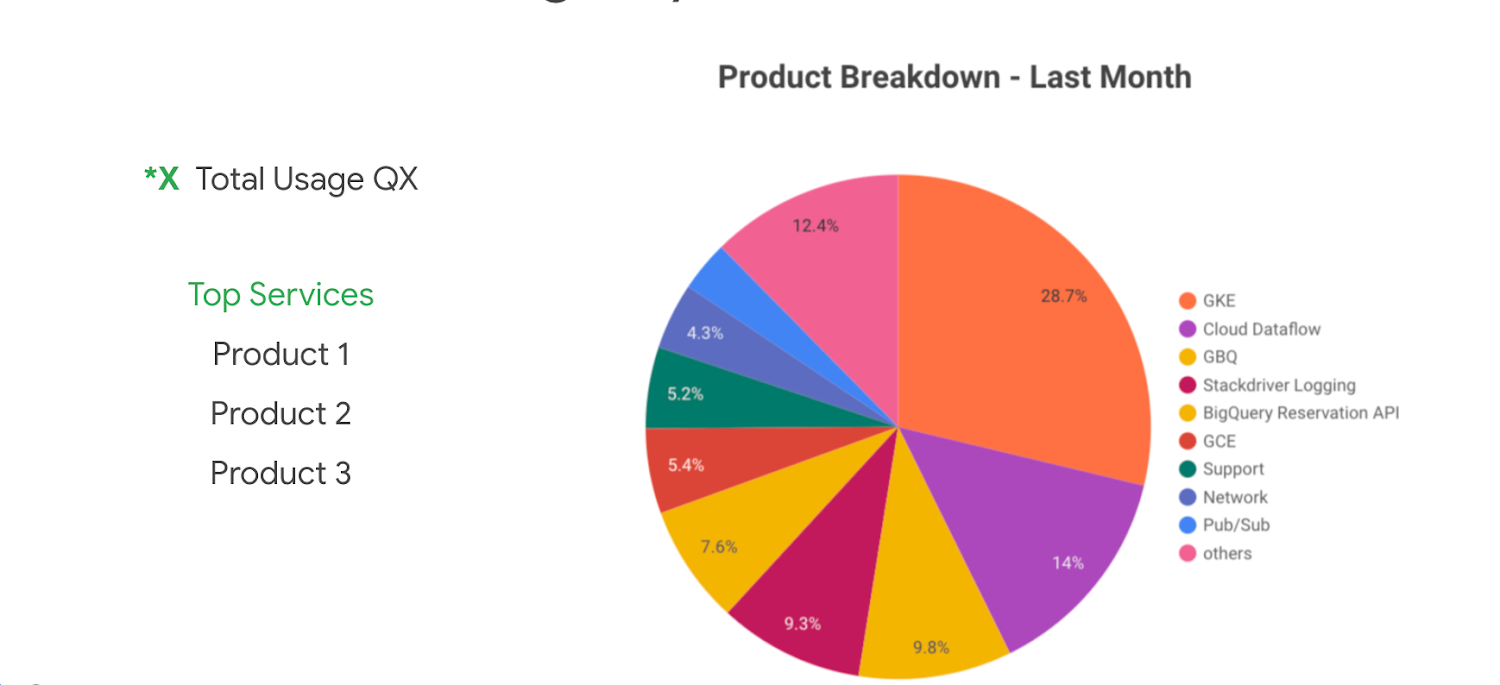
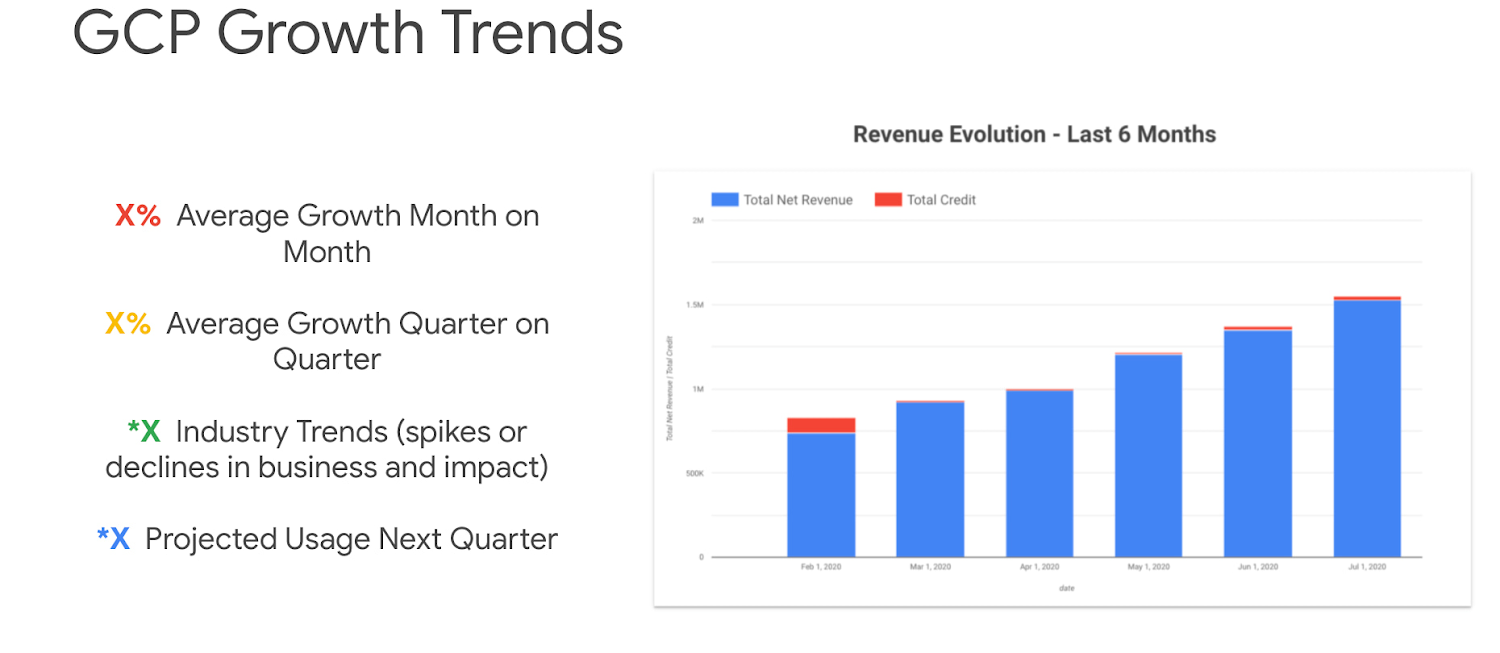
This part of the OHR is meant to provide the customer with a holistic view of their overall Google Cloud usage. The purpose is to provide understanding around what products are being used on Google Cloud and also where cost is generally being allocated for overall cost management and budget tracking purposes. This can help customers with their overall cost optimization efforts. Some of the metrics we may cover in this section are:
- Current Google Cloud usage by service
- Google Cloud growth trends
- Google Cloud growth trends by service
- Google Cloud growth trends by project
- Review of used and available service credits
Feature request review and advocacy
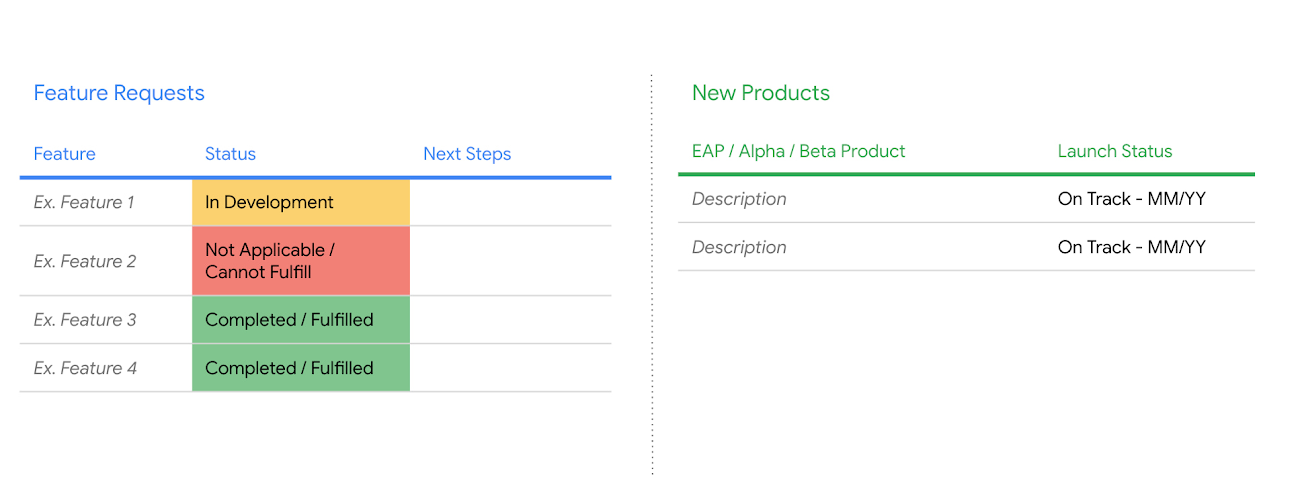
TAMs will work with customers to help identify product needs and advocate for feature requests with Google Product Management and Engineering teams. While feature request advocacy is an ongoing activity, during the OHR, the TAM will review any high priority feature requests that have previously been submitted, providing updates on status including potential release dates.
When a feature is coming up for the release, the TAM can help the customer prepare for implementation (providing early Preview access, coordinating a meeting with the Product Manager to review the feature, etc.) and then continue to provide support until the feature is successfully implemented in the customer environment. Similarly, if a high priority or technical blocking feature is not yet coming available, the TAM can help offer an alternative solution that can unblock the customer in the short term.
The OHR is also a great time for the TAM to work with the customer to ensure they have early access to new and exciting features that are in Alpha or Beta, and that would be beneficial to the customer and their environment.
Training strategy
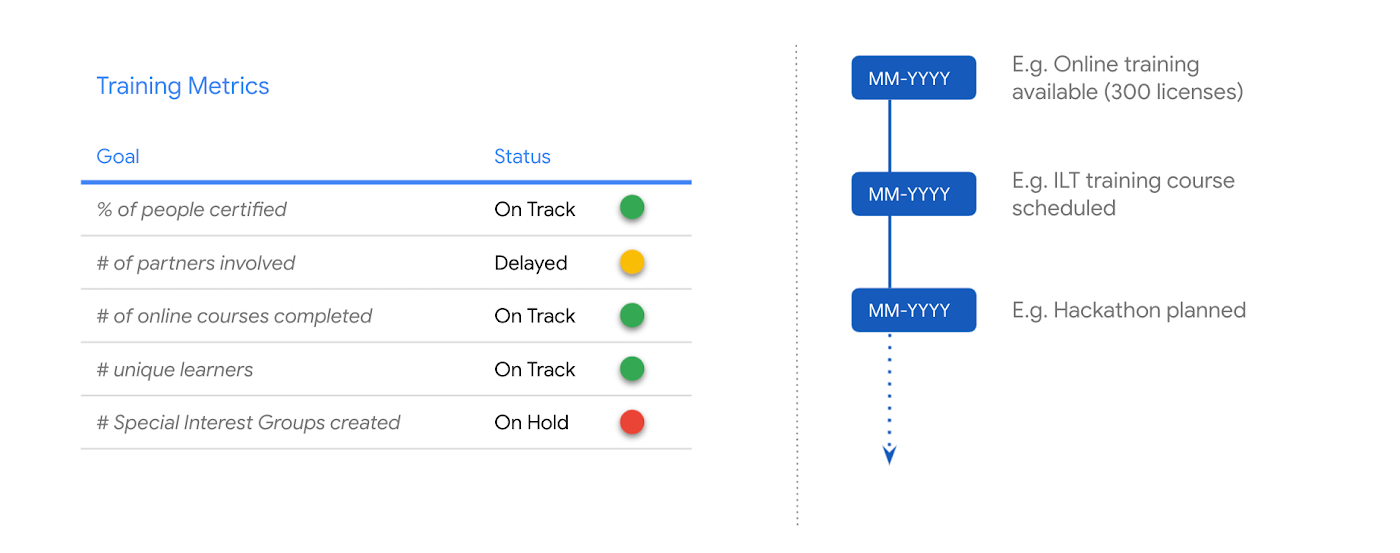
Training is a primary component to ensuring the overall success in adopting Google Cloud. During the OHR, a review of training metrics will be provided. This may include tracking metrics to determine how the customer is tracking towards an initially agreed upon learning plan or coming up with additional upskilling strategies as necessary. Additionally, throughout an engagement, the customer’s TAM will provide opportunities for both free and paid Google Cloud training.
Conclusion
PSO is the voice of customer health, maintaining priority to proactively and strategically guide large enterprise customers to operate effectively and efficiently in the cloud, both during and after the migration process. The OHR is an efficient and effective way to maintain alignment, ensure expectations and objectives are being met, manage risk, and overall ensure the success of the customer.
Learn more about our methodology and get started with Google Cloud by completing a free discovery and assessment of your migration. Alternatively, if you’d like to engage directly with our PSO team on your migration, contact us!
More Relevant Stories for Your Company

Autonom8: Achieving growth and profits for businesses with Google Cloud
With Google Cloud, Autonom8 can run a platform that accelerates and streamlines customer journeys in a scalable, reliable, cost-effective infrastructure, while using advanced optical character recognition to enable intelligent document processing. Google Cloud results: Increased margins by up to 30% by switching from a home-grown OCR system to Cloud Vision


Target Leverages Google Cloud to Create Market-defining Online Experience
In the hyper-competitive world of online retail sales, ease-of-use and transaction speed can make or break business outcomes. However, a few years ago US Retail giant Target was going through a period of uncertainty. While the company had over 1800 stores across the US with an estimated 85% of US

Google Introduces ML-based Predictive Autoscaling to Forecast Capacity and Match Scaling Demands
At Google Cloud, we believe you get most benefits from the cloud when you scale infrastructure based on changing demand. Compute Engine allows you to configure autoscaling to save costs during periods of low demand, and add capacity to support peak loads. When you use a managed instance group (MIG), you can have an autoscaler

Bharat Light & Power’s CEO Says Enough! It’s Time to Leverage AI and IoT
As community and business concern over global warming, sustainability, and energy security continues to rise, companies such as Bharat Light & Power (BLP) are working on answers. Founded in 2010 and located in Bangalore and Delhi, BLP is one of the leading clean energy generation companies in India. According to Tejpreet Singh
