





Autonom8: Achieving growth and profits for businesses with Google Cloud

3015
Of your peers have already read this article.
3:30 Minutes
The most insightful time you'll spend today!
With Google Cloud, Autonom8 can run a platform that accelerates and streamlines customer journeys in a scalable, reliable, cost-effective infrastructure, while using advanced optical character recognition to enable intelligent document processing.
About Autonom8
Headquartered in the United States and India, Autonom8 has built a low-code SaaS platform that allows businesses to digitize customer-facing workflows. The business aims to help clients reduce costs and improve interactions with their customers through automation and enablement of customer journeys.

Google Cloud results:
- Increased margins by up to 30% by switching from a home-grown OCR system to Cloud Vision AI
- Enables one DevOps team member to manage up to 30 customers
- Provides real-time information about customer journeys to enable businesses to respond quickly and accurately
- Ensures use of its platform with containerization in customers’ private data centers
- Reduced operating costs by up to 20% with localized scalability and architecture through GKE
Just as cars are evolving to become autonomous, smart and self-driving, enterprises can gain self-awareness, an ability to learn and an ability to adapt. This is the value proposition put forward by Autonom8, an India- and United States-based enterprise workflow management software business. “We provide a low-code, high-intelligence customer journey automation SaaS platform,” explains Ranjit Padmanabhan, Co-founder and Chief Technology Officer (CTO), Autonom8.
The Autonom8 platform includes components, such as A8Studio, a drag and drop location from which clients can create customer journeys, a chat platform that enables clients to create chatbots, and an analytics module. “With our platform and services, businesses can reduce costs and improve interactions with their customers by applying automation to accelerate and provide better customer journeys,” adds Padmanabhan.
Demand for Autonom8 is being driven by the changing customer demands of enterprises, including the expectation to interact with them over multiple channels, and the rising cost of building software with experienced developers. These trends place enterprises under growing pressure to increase the productivity of the people they do have, particularly those who are less technically inclined. In addition, changing consumer habits, regulations and the emergence of new technologies mean customer journeys cannot remain static and need to evolve.
Developing a microservices-based SaaS platform
From the start, Autonom8 planned to deliver a SaaS platform and initially deployed on a multinational cloud service, chosen due to the team’s familiarity with its products and the availability of credits. However, the company’s decision to opt for a microservices architecture that enables individual services to scale independently while running in a containerized environment, demanded high-quality container orchestration. To optimize cost, scalability and performance, Autonom8 began evaluating Google Kubernetes Engine (GKE).
The business then completed a side-by-side comparison between Google Cloud and its incumbent provider of compute, storage and other services. Google Cloud fared favorably, with Vision AI in particular providing powerful machine learning and optical character recognition (OCR) functionality, supporting a key use case for Autonom8.
In addition, many of Autonom8’s clients at the time are financial institutions in India, and legally required to retain data within the country’s borders. Google Cloud’s global network and local presence means the business could fulfill this requirement easily.
“We decided to evaluate Google Cloud, particularly GKE, from two perspectives. One, from a security perspective, as we sell to banks that audit our platform, and two, as a failover between regions because downtime costs money. We found it a compelling solution.”
— Ranjit Padmanabhan, Co-founder and Chief Technology Officer (CTO), Autonom8
A seamless move to Google Cloud
Autonom8 began deploying on Google Cloud in 2018, with its architecture comprising storage, compute, serverless, container management and orchestration, and Vision AI. “We looked at our scripting with the previous provider, and using the Google Cloud documentation available online, educated ourselves over a few weeks before moving pieces of our architecture step by step to Google Cloud,” says Padmanabhan. “We did not run into any major issues. It was pretty simple, with our experienced engineers training others in the product.”
According to the CTO, the business had two options when moving to Google Cloud. Autonom8 could either install raw virtual machines and effectively create its own virtualized data center, or rely on managed services for functions such as memory store, registration and authentication to save time and resources over the long term. Autonom8 opted for the latter and has transitioned fully to Google Cloud, with the number of cloud products and services in its architecture rising from five to about 15. While each product and service performs a key role in the delivery of Autonom8’s products and services, Padmanabhan nominates GKE, Vision AI and Cloud SQL as providing the greatest value to the business.
Scalability, real-time monitoring and intelligent document processing at low cost
With GKE, the business can now scale the nodes or containers specific to each microservice in the event traffic to a particular client surges, due to a rebate or promotion. “Through the combination of the architecture and localized scalability we achieve with GKE, we are reducing our operating costs by up to 20%,” says Padmanabhan.
Running an open source TimescaleDB on Postgres in Cloud SQL enables Autonom8 to give its clients the ability to monitor customer journey information in real time. An example of a journey is applying for a bank loan. The customer must take steps including providing income, tax and other financial details that the bank then appraises to help make a decision on the application. “The moment someone applies for a loan, for example, a bank knows about it and can monitor for fraud, bottlenecks, or other abnormalities, and immediately route to a remediation workflow,” explains Padmanabhan. “Cloud SQL enables us to maintain transactional logging and provide real-time data to our dashboards.”
After evaluating alternative services, including developing a home-grown OCR engine, the business turned to Cloud Vision AI to manage the intelligent document processing that comprises much of its transactional volume. “Vision AI is significantly better than the alternatives and the cost of maintaining our version did not make sense, because Google Cloud continues to make improvements over time that enable us to deliver more and more accurate results to our customers,” says Padmanabhan. “Switching from our home-grown service to Vision AI has enabled us to increase our profit margins by up to 30%.”
“Through the combination of the architecture and localized scalability we achieve with Google Kubernetes Engine, we are reducing our operating costs by up to 20%.”
—Ranjit Padmanabhan, Co-founder and Chief Technology Officer (CTO), Autonom8
Supporting client demands and improving developer efficiency
Google Cloud also enables Autonom8 to meet the demands of businesses that want to run its platform within their own private data centers. “We can undertake the build within Google Cloud and ship our containers to compatible hosts within those clients’ data centers,” explains Padmanabhan. “With our previous provider, we could create containers, but these would not run properly within those data centers.”
Furthermore, Google Cloud documentation and online resources help Autonom8 reduce the training needed for new developers to become productive, with the Google Cloud learning curve taking up just 10% of the overall onboarding cycle.
The organization spends the equivalent of just 3% of its overall annual revenue on DevOps, measured as DevOps Utility Ratio, while the cloud cost of revenue is about USD 1 for every USD 6 in annual recurring revenue, measured as Cloud Utility Ratio. “These two metrics are about what we can do with the people we have,” explains Padmanabhan. “Our current ratio implies that one DevOps person can handle approximately 30 customers. This is made possible by the tools we have, and the comprehensive support from Google Cloud in terms of security patches, intelligent alerts, resource overloading, and more.”
Google Cloud also provides the flexibility for Autonom8 to accommodate the varying service levels required by individual customers based on factors, such as the impact of downtime, as the business can failover seamlessly between regions to mitigate the impact of any issues that may occur.
“Our current ratio implies that one DevOps person can handle approximately 30 customers. This is made possible by the tools we have, and the comprehensive support from Google Cloud in terms of security patches, intelligent alerts, resource overloading, and more.”
—Ranjit Padmanabhan, Co-founder and Chief Technology Officer (CTO), Autonom8
Integrating Google Workspace with Autonom8 to deliver new capabilities
Autonom8 relies on Google Workspace for communication, collaboration and other workplace productivity requirements, growing its footprint from Gmail when the employee population was four or five, to a range of products including Sheets and Drive as the business grew. “It became natural to use the capabilities in Google Workspace as we matured,” says Padmanabhan. “One of the most interesting capabilities was our ability to integrate Google Workspace into our platform. For example, when someone is running a workflow, they can add data from a Sheet. We’ve added Google Workspace authentication capabilities into our products as well.”
“Everyone is using shared links to Drive and I really like the granular permissions structure,” he adds. “I can open up folders to clients while keeping an internal space within the business to ensure security and privacy.”
With Google Cloud, Autonom8 is now poised to continue growing its business and adding new features and capabilities for clients. “We are extremely excited at the opportunity to step up our offering to clients with Google Cloud,” concludes Padmanabhan.

3522
Of your peers have already downloaded this article
6:30 Minutes
The most insightful time you'll spend today!
A well-executed digital transformation should do much more than keep you competitive… it should also position you to excel by untethering IT staff from low value, labor-intensive tasks, allowing them to focus on innovation and high-impact projects.
Also, replacing (or supplementing) legacy systems with modern technologies can reduce complexity and cost, while also positioning you to leverage cloud-native tools to achieve enhanced business intelligence and key strategic insights.
Finally, with nearly unlimited scalability at your fingertips, applications can scale up and scale down on demand, while you pay only for what you consume. This allows you to maintain a continuously right-sized cost profile, while also accelerating development and reducing procurement cycles.
Download this whitepaper to get a simple, prescriptive guidance to assist with the most important part of your digital transformation: the beginning.

3143
Of your peers have already downloaded this article
10:00 Minutes
The most insightful time you'll spend today!
FinOps is a concept similar to DevOps, but with a different set of goals. Cloud FinOps is an operational framework and cultural shift that brings together technology, finance and business to drive financial accountability and accelerate business value realization. In layman terms, FinOps aims to help companies achieve most out of every dollar invested on cloud technology. It includes a broad set of existing and net-new processes or frameworks that breaks silos across functions, and build a better working model to achieve collaboration, agility, ownership and value.
Rest your anxieties about the changes in mindset and organizational behavior around current financial management practices while taking full flexibility benefits of cloud. Ease your cloud migration journey and value realization as experts at Google Cloud have shared best-practices, insights and action items to implement FinOps on Google Cloud in this whitepaper. Download now!
Google Cloud and StartEd Join Forces to Boost EdTech Startups

1332
Of your peers have already read this article.
2:00 Minutes
The most insightful time you'll spend today!
Over the past few years, as the education sector was going through transformative change, EdTech startups rose to meet the demand of learners and help address some of the biggest challenges in education. At Google Cloud, we’re inspired by how EdTech startups continue to solve challenges with agility, innovative technology, and determination. We’re proud to help EdTechs make learning more personal, safe, and accessible, and we’re working to connect EdTech startups with the right people, products, and best practices that will help them grow
Announcing a new partnership with StartEd
Google Cloud is excited to announce a partnership to offer mentor-based programming for EdTechs with StartEd — an organization that accelerates education innovators addressing Early Childhood, K-12, HigherEd, Workforce, and Adult Learning.
Founded by entrepreneurs nearly ten years ago, StartEd is on a mission to attract and develop a network of innovators working to ensure equitable, quality education and lifelong learning opportunities for all. The company trains and connects thousands of diverse entrepreneurs, educators, and investors at for-profit and not-for-profit organizations each year, working alongside corporations, foundations, and higher education institutions across the United States.
StartEd has helped grow more than 2,500 companies and built a mentor network of over 800 senior leaders with deep expertise in early-stage EdTech companies. The StartEd community now numbers more than 25,000 members.
“I am thrilled to embark on this transformative partnership with Google Cloud,” said Ash Kaluarachchi, StartEd CEO and managing director. “This alliance not only amplifies our mission to empower and nurture the world’s education innovators at every point in their journey, but it also unlocks unprecedented potential for the entire EdTech ecosystem. Together, we’re poised to redefine the future of education and work and to create lasting, positive impact for generations to come.”
Mentoring and networking opportunities for EdTech startups
Through this partnership, U.S.-based EdTech startups can apply to a new program, StartEd sponsored by Google Cloud. The program offers startups access to personal coaching, hands-on training, business support, and a large network of industry experts to help them accelerate their growth and transform education. Beyond the benefits from StartEd, startups will gain access to cloud credits, technical support from Google Cloud, and coaching from Google’s education leadership.
Impact of Cloud FinOps on Your Business Can be Measured with Five Key Metrics!

3095
Of your peers have already read this article.
6:00 Minutes
The most insightful time you'll spend today!
Value of Establishing a Baseline for Metrics
As organizations continue to leverage cloud investments to drive their business growth and top line revenue, business, finance, and technology executives need to become increasingly connected in their efforts to deliver strong business outcomes. More than ever before, executives need to quantify the value of their investments in business and technology capabilities. As such, business and IT leaders need a set of value metrics that cover both operational and strategic outcomes, as well as risks and opportunities. Nevertheless, operational IT metrics are often disconnected from business outcomes, and executives need to establish the connection between technology and business outcomes to facilitate a meaningful dialogue between IT and business leaders.
Like many aspects of IT operations, metrics and KPIs are commonly a journey. Organizations typically start this journey with unit metrics focusing on cloud costs and eventually progress toward a set of clearly defined business value metrics.
As we define the set of metrics across the five key building blocks of Cloud FinOps, which include Accountability & Enablement, Measurement & Realization, Cost Optimization, Planning & Forecasting, and Tools & Accelerators, we ensure that these metrics are easily measurable and commonly attainable across the organizations that are on the journey of digital transformation.
Accountability and Enablement Metric
The Accountability and Enablement pillar is foundational to building a culture of cost and value awareness and charts the course for both the process and cultural transformation journey in cloud FinOps. The primary goal is to help drive financial accountability and accelerate business value realization by streamlining IT financial processes and enabling frictionless cloud governance. Enablement empowers IT, finance, and business teams with training to better understand cloud resources and strategies to efficiently deploy and manage them. Driving accountability and enablement starts with a charter and core governance policies, and then guides the transformation of processes that link finance, IT, and business owners.
We recommend adopting Cloud Enablement % as the standard metric for the accountability and enablement pillar, measured by the # of business leaders trained and certified / total # of business leaders in the organization.

This is an important metric as many organizations fail to adopt Cloud FinOps because of lack of awareness and training. This cloud enablement metric will help business leaders better understand the value of cloud and how it can be an enabler to drive sustainable business outcomes.
The cloud enablement metric can easily be implemented through a set goal based on the number of identified business leaders across the organization. With that said, it is important to utilize the Pareto principle of 80/20 rule here and identifying the key business leaders who are extensively consuming services on the cloud should be the primary focus. Google Cloud recently published a new Cloud Digital Leader certification that is aimed for business leaders and executives. By obtaining the Cloud Digital Leader certification, it ensures the individual is well-versed in basic cloud concepts and can demonstrate a broad application of cloud computing knowledge in a variety of applications and how Google Cloud services can help achieve desired business goals. In addition, the FinOps Foundation also provides training and certification to practitioners in a large variety of cloud, finance and technology roles to validate their FinOps knowledge and enhance their professional credibility.

Ultimately, we see that a target goal of over 70% of business leaders achieving the Cloud Digital Leader certification can significantly drive alignment and adoption of Cloud FinOps across the organization and leverage cloud technologies as an enabler to create sustainable business outcomes.
Measurement and Realization Metric
Foundational to any good process is accurate data and effective metrics, which starts with the notion of cloud costs visibility and traceability. This is driven by proper resource hierarchy and project structure standards and supported by a labeling and tagging data architecture behind your organization’s use of cloud resources. While many common tags include IT-driven designators such as application, environment, and project, it is important to design a direct connection to your P&L into your labeling and tagging architecture, by including cost centers or the chart of accounts as tags. Furthermore, automation of tagging ensures that all taggable resources are deployed with consistent and accurate labels and feed FinOps metrics with reliable data.
Establishing consistent and detailed tagging is essential to attributing cloud resources not only to specific products and projects, but also to detailed cost centers aligned with lines of business and associated P&Ls. In order to establish a full chargeback of typical cloud services, customers will need to attribute costs associated with 3 types of cloud resources. The first and most straightforward will be attributing taggable resources (compute instances, databases, and storage buckets) that are aligned to a specific P&L, such as where a given application is solely consumed by one line of business.
The second situation is where taggable resources are shared across multiple lines of business. Many customers will resort to using traditional P&L allocation models, such as using business revenue or headcount of the associated business units to divy up the costs. In order to more accurately allocate shared application costs, leading-edge customers use elements in their cloud microservices architecture, such as API calls, to specifically measure the relative consumption of shared applications.
The third type of cloud resources are those that cannot be tagged. Common examples include support, networking costs, and third party Marketplace costs. Here, traditional P&L allocation models as described above (using headcount or revenue) are commonly used. Some customers will use the relative distribution of their taggable resource allocations to appropriate non-taggable costs to their business units, while some types of costs, such as networking, are allocated based on API calls.
To measure the effectiveness of the Measurement & Realization pillar of cloud FinOps across these three types of cloud resources, we recommend adopting Cloud Allocation % as the lead metric. This metric is measured as the percentage of total cloud costs (taggable resources consumed by individual business units, taggable resources shared across multiple business units, and non-taggable resources) allocated to responsible business owners.

This metric can be used to support both Showback (cloud costs held in a central IT P&L but reported to business units) and Chargeback models (cloud costs fully charged to business unit P&Ls), and reflects the underlying effectiveness and accuracy of resource tagging and cost attribution to business units. Cloud Allocation % can be implemented in two ways. The basic implementation would qualify costs apportioned by any P&L metric (either by consumption or by traditional P&L allocation such as by revenue or headcount). The more advanced implementation of this metric would only qualify those resources (both specific and shared) that use either tagging or API calls to measure consumption and attribute associated costs to business units.

Customers evolving from a Crawl to a Walk stage of implementation will seek to allocate 70% or more of their total cloud costs, while those moving to a Run state will achieve 90% or greater cost attribution based on direct consumption measures.
Cost Optimization Metric
Cloud cost optimization is not just about cutting costs—it’s about knowing where to spend your money to maximize the business value. It is an iterative and continuous process that provides a consistent methodology to visualize and manage cloud consumption in a most cost effective way. Success in cost optimization can result not only in significant reductions of cloud spend, but sometimes also in improved application performance to manage higher traffic (user requests per seconds or transaction processed) within the same cost envelope.
It is important for an organization to automate reports generated by ingesting billing usage and cost data as well as recommendations generated for optimizations. These optimizations reflect the potential savings (also known as unrealized savings) which allows the team to prioritize implementations to realize the cost savings.
Typically potential savings contains adoption of:
- Pricing optimizations like Committed Use Discounts (resource-based and spend-based), BigQuery reservations, etc.
- Resource optimizations of wasteful resources (including aged snapshots, idle instances, and over-sized databases) that don’t provide any business value.

Capturing this metric is important as it allows the organization to keep a pulse on inefficiencies that exist in the organization and allows businesses to focus on achieving cost savings thereby capturing true value of running their workloads in the cloud.
The cost optimization metric can be implemented by integrating Recommendation Hub in your FinOps workflows. Recommendations Hub is part of Active Assist that contains a portfolio of intelligent tools and capabilities to help you optimize your workloads with minimal effort. It surfaces a summary of all recommendations across your projects along with potential cost savings ($) so you can prioritize your cost optimization effort. We have seen customers realize savings by taking action on recommendations generated by idle VM recommender, Committed Use Discount recommender, VM machine type recommender and many more.

Ultimately we see customers achieving realized savings of over 90% on total cloud service optimizable. We have seen customers reinvest these savings into creating differentiated products and offerings and improving their customer experience, thus accelerating business value realization from the cloud.
Planning and Forecasting Metric
Financial planning is a foundational capability within finance organizations that will directly influence each company’s capabilities of cloud computing forecast accuracy. Financial planning focuses on accurately forecasting financial metrics that are set on an annual basis to guide the company’s financial objectives. The annual plans are measured on a quarterly basis and adjusted based on performance throughout the year; the forecast performance is monitored on a monthly basis to help influence operational results.
Planning and forecasting cloud computing costs is typically the responsibility of the team responsible for cloud operations. Operational forecast planning is based on consumption workload plans, historical trajectory, seasonality and leading indicators. Transformational projects also create material risks to forecast accuracy.
Establishing accurate financial forecasting in the cloud spend requires rethinking traditional approaches to asset depreciation run-outs and trend-based forecasting of maintenance and licensing costs. Using workload-specific forecasting models that leverage a combination of trend-based models for steady-state workloads, driver-based models for scaling applications, as well as monthly variance analysis can greatly improve the accuracy of dynamic cloud needs.
Capturing and measuring forecast accuracy enables companies to understand if they do what they plan. Companies get what they measure and so by measuring and discussing variances to forecast accuracy it enables better control of cloud spend allocations.
Cloud computing forecast accuracy should be included as a topic that Finance and Cloud operations teams discuss at least monthly. The cloud operations team should monitor forecast trajectory during the month and evaluate adjustments when they identify unexpected shifts.
An effective forecast accuracy is one that avoids surprises to company executives and investors. Cloud computing often has more variability and seasonality than depreciation of capex from on prem environments. Coordinating project and sprint agile management can help avoid surprises. If a development change creates an unexpected jump in spending then change management processes should be reviewed to avoid future surprises.
Tools and Accelerators Metric
Employing proper tools and accelerators are important to fully benefiting from FinOps practices. In earlier stages, companies may have limited their ability to report detailed analysis of cloud spend. As practices mature and improve, labeling and tagging of resources proves valuable to understanding costs for specific projects/teams and for building unit cost metrics.
These capabilities can become even more powerful through automated monitoring of resources that offers insights on spend, value, compliance and recommendations.
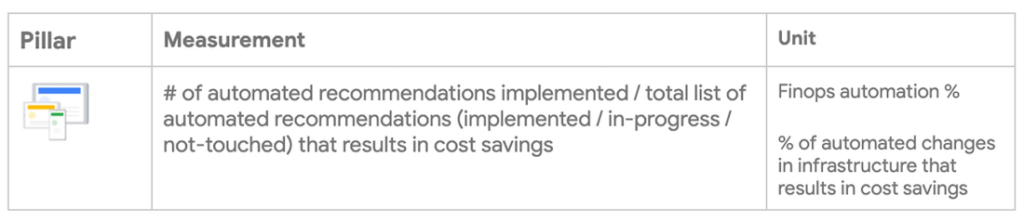
Therefore the recommended measure of Tools & Accelerators maturity is to evaluate the # of automated recommendations that have been implemented as a % of total list of automated recommendations generated that results in cost savings
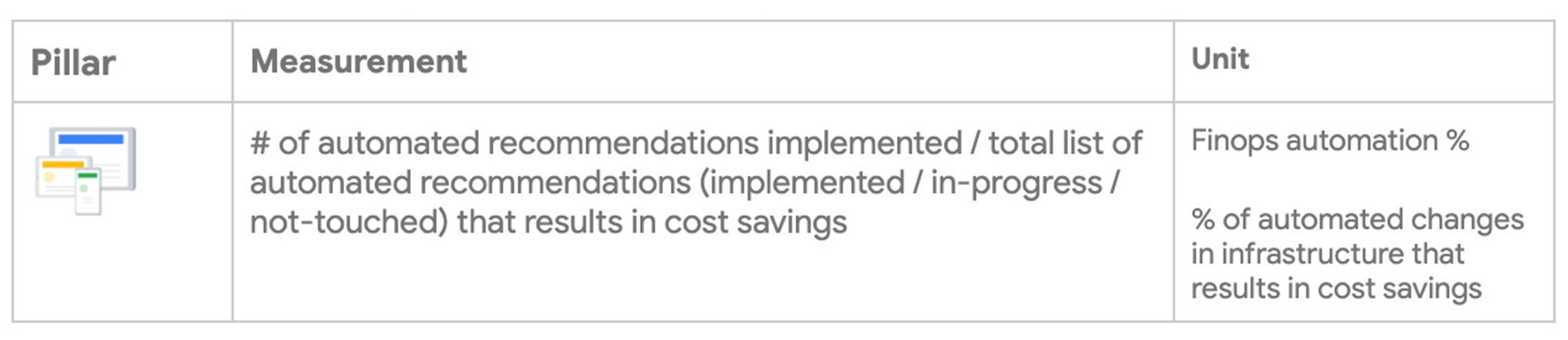
This is an important metric because as the organization onboards newer workloads to the Cloud environment, lack of robust actionable recommendations and monitoring can lead to increased cloud waste. This has been a key component prohibiting organizations from realizing the total value of their cloud investment.
Customers starting on their tool maturity journey can leverage Google’s out of the box recommendations Hub to get started. The Recommendation Hub is a place in the Google Cloud Console where you can view, prioritize, and apply these recommendations. Some examples include VM right sizing recommendations, BQ slot optimizations, Committed use Discount etc, Idle resource recommendations. This can further be integrated into any existing enterprise tooling using the recommendations API. As organizations mature, they can leverage Cloud Monitoring to create advanced recommendations based on custom business logic.
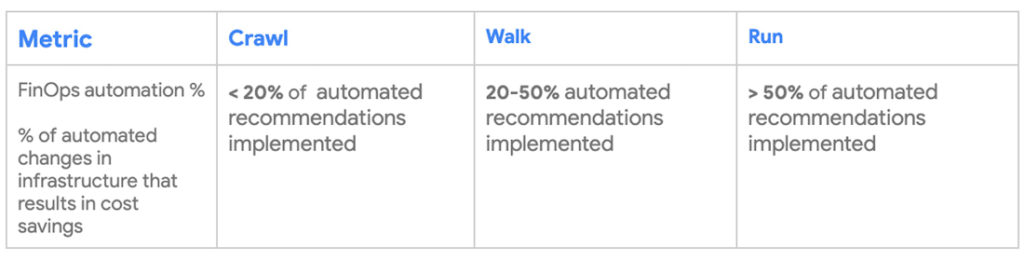
Ultimately, we see that a target goal of over 50% of automated recommendations implemented as the tooling for surfacing recommendations matures and this will ensure that the organization can minimize and eliminate cloud waste to maximize value from cloud investment.
Bringing this together with a Cloud FinOps Dashboard
As technology and business goals continue to evolve over time, it is essential to establish a process where the Cloud FinOps metrics are continuously reviewed whenever the goals change. Furthermore, it is important to note that not all organizations need to achieve the “Run” state of the identified metrics target. The metrics are means to achieve the business outcomes based on the organization’s priorities. By collaborating with cross-functional teams to quantify and measure the impact of the Cloud FinOps metrics, executive leaders can quickly obtain buy-in, highlight common-shared goals, and move fast.
At Google Cloud, we have developed solutions to help our customers build a Cloud FinOps Dashboard to capture these metrics to drive a culture of change and equip the transformation and business leaders with the tools to share and track the results of the key metrics. Successful adoption of the Cloud FinOps metrics enable organizations to focus on the business outcomes and the dashboard provides a meaningful feedback loop to report on the impact and drive visibility across the organization.
So, where are you now in your FinOps journey, and how do you move beyond the challenges ahead? Google can help you start the conversation and accelerate your path to maximizing business value with the cloud.
No matter where you are on the cloud transformation journey, through an interactive session with Google, we can bring executives across the organization together to work toward a shared vision and a plan to accelerate and realize business value in the cloud. If you are interested in more information, please contact us.
Special thanks to Daniel Pettibone, Amitai Rottem, Bruce Warner, Jon Naseath, and Nihar Jhawar for co-authoring and contributing to this blog post and the members of the FinOps Foundation including J.R. Storment, Vas Markanastasakis, Anders Hagman, John McLoughlin, Mike Bradbury, and Rich Hoyer for providing their domain expertise and continuous support to this important cloud FinOps topic.
Manhattan Associates and Google Cloud: How the Partnership Accelerates Future of Digital Retail

4956
Of your peers have already read this article.
1:30 Minutes
The most insightful time you'll spend today!
While the shift to digital business and the cloud has been well under way for some years now, organizations today have a new sense of urgency due to COVID-19. Delivering digital transformation is no longer a ‘nice to have’ option, rather, it is an operational imperative. Taking advantage of the infrastructure, platform and solution gains that cloud and microservices architecture provide is a must for brands today.
At Google Cloud, we understand the pressures and challenges organizations of all sizes, across all industries are facing. The pandemic has dramatically impacted global commerce at-large, exposing (for many organizations across multiple sectors) gaps in omnichannel capabilities, business continuity and forecasting plans, not to mention spots in supply chain agility, resilience and responsiveness.
A rapidly evolving consumer-driven commerce landscape has put innovation squarely in the spotlight for supply chain teams all over the world, with the effects of the global pandemic making it increasingly difficult for manufacturers, wholesalers, third party logistics providers and retailers (in particular) to weather the perfect storm of fast-moving consumer trends and a need for ‘always on’ digital innovation.
These same effects have driven increasing interest and uptake of technology like the Manhattan Active® suite of solutions, as well as our own cloud platform; both of which afford organizations the levels of agility, flexibility and scalability needed to insulate their people, processes and long-term business strategies against unforeseen future obstacles such as global pandemics or international trade disputes.
An excellent example of this agility, flexibility and scalability in action is PVH’s response to the global pandemic. One of the most admired fashion and lifestyle companies with such iconic brands as Calvin Klein, TOMMY HILFIGER, Van Heusen, and IZOD, PVH was forced to temporarily close its physical stores and, as a result, experienced a sudden massive increase in online sales. The retailer was able to quickly pivot by adjusting its business rules in Manhattan Distributed Order Management (part of Manhattan Active Omni) to expose store inventory to online consumers and reroute its fulfillment processes. Thanks to Manhattan’s solution delivered through Google Cloud, in a matter of days, PVH was able to leverage both its distribution centers and vast store network to fulfill its online orders.
“The events of 2020 have accelerated retail and ecommerce operations forward,” said David Herridge, executive vice president of Global Value Chain Technologies for PVH. “With quick, creative thinking and the right partner, we were able to pivot operations, satisfy our customers and prepare for the future.”
Manhattan’s products have been recognized for their ability to solve real-world challenges through innovation, and used by many of the world’s top brands to solve some of their most complex commerce and supply chain challenges: the latest recognition is Manhattan’s position as sole leader in the 2021 Forrester Wave™ for Order Management Solutions.
Since December 2018, Google Cloud has been collaborating closely with the team at Manhattan and its ‘always on’, versionless approach to innovation. And, during the last two and a half years, Manhattan has significantly accelerated its cloud-first solutions and market adoption, resulting in tremendous growth in its overall cloud business efforts.
By building cloud native solutions on Google Cloud, the teams at Manhattan continue to deliver the high-performance, elastic, high-redundancy, secure solutions their customers rely on. Moreover, it means both Google Cloud and Manhattan continue to innovate and push the boundaries of what is possible in terms of the supply chain and omnichannel innovations that underpin global commerce – innovation that is needed more now than maybe ever before.
Our commitment to distributed cloud solutions and ongoing innovation, not to mention the fact Google Cloud operates a net carbon-neutral cloud, means that the working partnership between both industry leading teams continues to be a perfect match of brand values; not just from a technology perspective, but also a long-term sustainability and environmental one too.
More information on the partnership can be found here.
More Relevant Stories for Your Company
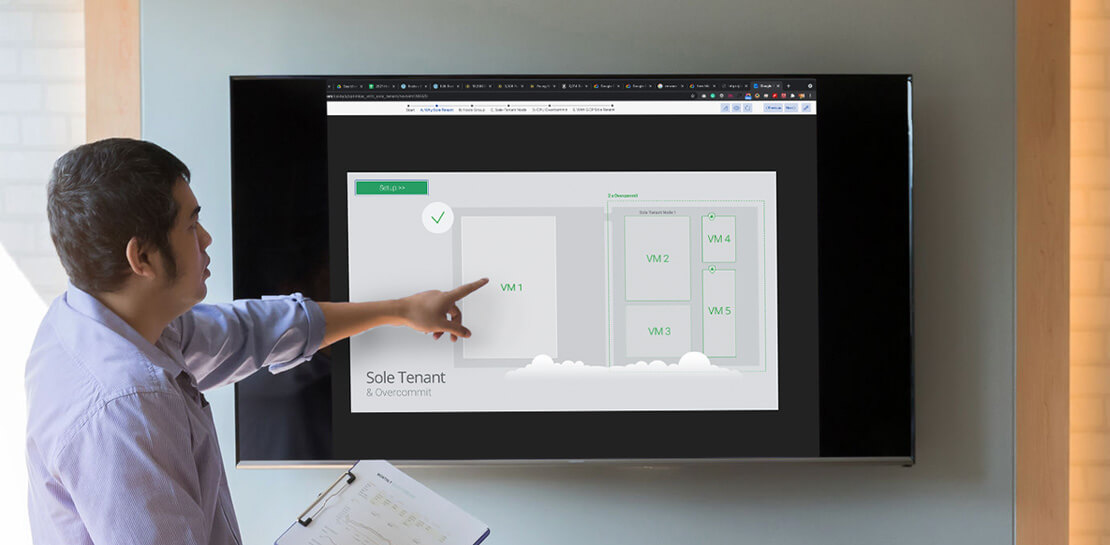
Ease Your Migration and Modernization Journey with Microsoft and Windows on Google Cloud Demo Center
If you’re looking to migrate and modernize your Microsoft and Windows workloads, Google Cloud is your premiere destination. No matter what migration strategy you’ve selected or what value you’re looking to achieve, with Google Cloud you’re able to: simplify your migration and modernization journeyreduce your on-prem footprint and increase agilityoptimize license

Enable Specialized Workloads with Bare Metal Solution from Google Cloud
Enterprises want to embrace the pace of innovation and an operational business model of the modern-day cloud, but they don’t want to disrupt their existing IT landscape or upgrade all their legacy applications. This presents a conundrum, as most legacy applications were not designed to run in the cloud, and


Metro Consolidates 100 SAP Instances on Google Cloud
German retailer Metro, with operations in 25 countries across Europe and Asia and employing over 150,000 people, decided to consolidate its 100 SAP instances into one SAP S/4HANA system running on the Google Cloud Platform. This helped the company lower costs, increase efficiency, and improve customer experience. In addition, the

Google Cloud Announces Improvements in Private Catalog to Drive Terraform Deployments
As an enterprise admin, when you choose to use Google Cloud Private Catalog to enable curated, self-serve Google Cloud infrastructure provisioning, you need the ability to manage your organization’s deployments. Today, we’re pleased to announce support for several improvements to Terraform driven deployments through Private Catalog. With this new release, you can
