






Upgrade Your Contact Center with Knowlarity’s AI-powered Speech Analytics for Higher CX
READ FULL INTRODOWNLOAD AGAIN6207
Of your peers have already downloaded this article
7:00 Minutes
The most insightful time you'll spend today!
3091
Of your peers have already watched this video.
21:00 Minutes
The most insightful time you'll spend today!
Google Cloud’s AI Adoption Framework: Helping You Build a Transformative AI Capability
AI can help organizations improve the decision-making process across most business functions. However, building an effective AI capability encompasses more than just creating a technology platform.
To do this effectively requires alignment to business objectives, strong executive sponsorship, and collaboration between skilled employees and strategic partners.
Additionally, you need your initiatives to be powered by secure data management and cloud-native services to scale and automate ML workloads, and ensure all of this is underpinned by responsible AI principles.
Successfully adopting AI in your business is determined by your practices in these areas. Learn more about the AI journey and how you can gain value every step of the way.
Innovate Faster & More Flexibly: How Our Commitment to Open Source Unlocks AI and ML Innovation

2665
Of your peers have already read this article.
2:30 Minutes
The most insightful time you'll spend today!
At Google, we believe anyone should be able to quickly and easily turn their artificial intelligence (AI) idea into reality. Open source software (OSS) has become increasingly important to this goal, heavily influencing the pace of innovation in AI and machine learning (ML) ecosystems. Over the last two decades, ML has transformed Google services including Search, YouTube, Assistant, and Maps, and the basis for this transformation has always been our “open first” approach through investments in projects and ecosystems like TensorFlow, Jax, and PyTorch.
These OSS efforts are important because many AI technologies rely on closed or exclusive approaches. This wall-garden approach creates high barriers to entry for developers; limits efforts to make AI explainable, ethical, equitable; and stunts innovation. We’re committed to open ecosystems, as we firmly believe no one company should own AI/ML innovation. In this blog post, we’ll explore some of Google’s most significant OSS AI and ML contributions from recent years, as well as how our commitment to open technologies can help organizations innovate faster and more flexibly.
Openness is the way to operate as an ecosystem, not a single project
Google’s OSS initiatives extend and enable AI initiatives according to three pillars:
- Access — OSS allows developers, researchers and organizations of all sizes to leverage the latest ML technology. It is a key part of democratizing innovation in ML, fostering software diversity and choice for customers, and lowering operating cost while accelerating scale for everyone.
- Transparency — Open source datasets, ML algorithms, training models, frameworks, and compilers ensure due diligence and validation by the larger community. This is paramount when it comes to ML as it bolsters reproducibility, interpretability, ensures equity, and boosts security.
- Innovation — With more access and transparency, more innovation comes naturally. Our customers and partners take advantage of open source ML toolsets and frameworks to create more innovation in the field by contributing their own OSS.
Google’s ongoing commitment to open source AI
Google’s commitment to open standards spans over two decades of OSS contributions like TensorFlow, JAX, TFX, MLIR, KubeFlow, and Kubernetes, as well as sponsorship for critical OSS data science initiatives like Project Jupyter and NumFOCUS. Initiatives like these have helped Google become the leading Cloud Native Computing Foundation (CNCF) contributor—and by building on these efforts, Google Cloud seeks to be the best platform for the OSS AI community and ecosystem.
The perils of closed technologies can emerge at many points across ML pipelines, which is why Google’s OSS strategy encompasses the entire “idea-to-production” lifecycle, from acquiring data, to training models, to managing infrastructure, to facilitating experimentation and model refinement:
Data acquisition: starting the journey from idea to production-ready ML model
The journey from an idea to a production ML model starts with data. TensorFlow Datasets not only help users acquire ready-to-use, customizable, and highly-optimized datasets (including image, audio, and text), but also provides a set of helpful APIs that make it easy for users to organize their own datasets, regardless of whether they build with TensorFlow, Jax, or other ML frameworks.
Model development and training: shortening the path from data to useful ML
OSS libraries help developers and researchers design, implement, train, test, and debug ML algorithms. Our contributors on this front include:
- The TensorFlow core framework, which offers APIs to help data scientists and developers build and train production-grade ML models on distributed and accelerated infrastructure powered by GPUs or TPUs;
- Google’s founding membership of the PyTorch Foundation, which positions us to increase adoption of ML by building an ecosystem of open-source projects with PyTorch;
- Keras, a simple and powerful ML framework, well integrated with TensorFLow, that makes it easy for developers to quickly build and train ML models, or to leverage pre-trained AI applications;
- Model Garden, which provides implementations of many state-of-the-art computer vision and natural language processing models, maintained by Google and accessible to all, alongside APIs to accelerate training and experiments;
- Jax, a lean, intuitive, and composable system that brings together automatic differentiation (Autograd) and the Accelerated Linear Algebra (XLA) optimizing compiler to offer high-performance ML for fast research and production;
- TensorFlow Hub, a repository of trained ML models ready for fine-tuning and deployment; and,
- MediaPipe open source cross-platform, which lets users leverage customizable ML solutions for live and streaming media, including text and video.
ML infrastructure management: scaling valuable models with powerful backends
Accessing and managing infrastructure for ML, especially at scale, can be a blocker for many organizations, which is why Google has invested in initiatives including:
- The TFX (or TensorFlow Extended) platform, which offers software frameworks and tooling for full MLOps deployments, helping developers with data automation, model tracking, performance monitoring, and model retraining;
- Kubeflow, which makes deployments of ML workflows on Kubernetes simple, portable and scalable; and,
- TRC (TPU Research Cloud), which gives access to a cluster of more than 1,000 Cloud TPU devices at no charge to selected researchers who publish peer-reviewed papers and/or open source code.
Experimentation and model optimization: encouraging discovery and iteration
Data, tools for model training, and infrastructure can achieve only so much without strong processes for experimentation and optimization—which is why we’ve contribution to projects like xManager, which enables anyone to run and keep track of ML experiments locally or on Vertex AI and Tensorboard, which simplifies tracking and visualizing of model performance metrics.
These areas of focus will help not only our customers but the open-source AI community as a whole, and we’re excited to share more OSS news in coming days and months. To start exploring why many organizations choose Google Cloud for their open-source AI needs, visit our “open cloud” page and be sure to register for Google Cloud Next ‘22 for all our latest news.
Thanks to all the contributors to this blog post: Matt Vasey, George Elissaios, Warren Barkley, Manvinder Singh, James Rubin, Abhishek Ratna, Thea Lamkin, Amin Vahdat, Andrew Moore, Max Sapozhnikov, Gandhi, Vikram Kasivajhula
ESG Did the Math: It’s Cheaper and Smarter to Migrate Enterprise Data Warehouses to Google BigQuery. Way Smarter
DOWNLOAD WHITEPAPER6475
Of your peers have already downloaded this article
11:30 Minutes
The most insightful time you'll spend today!
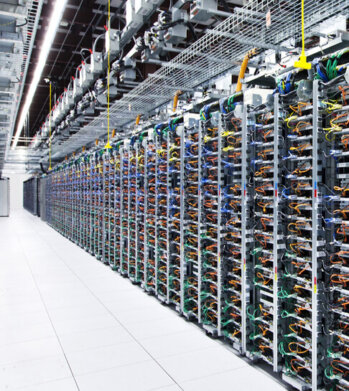
Enterprise data warehouses (EDWs) are often deemed the most valuable asset in the data center, serving as the backbone of the business. The ongoing insight gained from these solutions has justified the significant up-front capital investments and ongoing operational costs, but the rigidity of the traditional EDW is forcing organizations to reevaluate their approach to analytics and business intelligence.
While legacy EDW solutions were all about throwing as much computational power as possible at a relatively static data set, with the inflow of new and valuable sources of data and the emergence of all-encompassing analytics initiatives, the success of today’s EDW solutions depends more on operational and resource agility than raw horsepower.
Being able to dynamically adjust to the needs of the business, integrate into operational processes, and quickly react to emerging opportunities can place an organization at a distinct competitive advantage.
Today’s EDW solutions must act as a global repository of information, provide the agility to scale up or down on demand, and seamlessly integrate with other analytics tools and services used throughout a data-driven organization.
Over the last two years, ESG has conducted detailed studies quantifying the economic value of Google data analytics services. The first evaluated Google BigQuery compared to on-premises Hadoop and AWS redshift. The second focused on Google DataProc compared to DIY Spark and Hadoop approaches. Here’s the next iteration of our economic analysis, extending the BigQuery study to incorporate a comparison to legacy enterprise data warehouses, both on-premises and in the cloud.
Through publicly available pricing and in-depth qualitative customer interviews, ESG was able to assert a base set of assumptions that power a dynamic model, incorporating up-front capital investments, deployment and migration costs, expected monthly cloud costs, administrative costs, and operational costs associated with legacy on-premises EDWs, cloud-based EDWs, and Google BigQuery.
The crux of the results show organizations can save up to 52% by using BigQuery over on-premises EDWs and up to 41% over cloud-based EDWs. Unlike legacy on-premises EDWs, BigQuery provides organizations with the key abilities that are essential to delivering a modern EDW solution, most notably the ability to integrate across other Google Cloud Platform services, including its market leading AI-based solutions and services.
Although not called t out directly in the published report, ESG’s models indicate that the savings achieved by migrating an on-premises EDW solution to Google BigQuery may actually be more cost effective than simply continuing to operate an existing on-premises EDW solution.
What Drives Your Organization to be Data-driven?

4875
Of your peers have already read this article.
4:00 Minutes
The most insightful time you'll spend today!
Every organization has its own unique data culture and capabilities. Yet each is expected to use technology trends and solutions in the same way as everyone else. Your organization may be built on years of legacy applications, you may have developed a considerable amount of expertise and knowledge, yet you may be asked to adopt a new approach based on a technology trend. On the other hand, you may be on the other side of the spectrum, a digitally native organization built with engineering principles from scratch without legacy systems but expected to follow the same principles as process driven, established organizations. The question is, should we treat these organizations in the same way when it comes to data processing? In this series of blogs and papers this is what we are exploring: how to set up an organization from the first principles from data analyst, data engineering and data science point of view. In reality, there is no such organization that is solely driven by one of these but it is likely to be a combination of multiple types. What type of organization you become is then driven by how much you are influenced by each of these principles.
When you are considering what data processing technology encompasses, take a step back and make a strategic decision based on your key goals. This can be whether you optimize for performance, cost, reduction in operational overhead, increase in operational excellence, integration of new analytical and machine learning approaches. Or perhaps you’re looking to leverage existing employees’ skills while meeting all your data governance and regulatory requirements. We will be exploring these different themes and will focus on how they guide your decision-making process. You may be coming from technologies which are solving some of the past problems and some of the terminologies may be more familiar, however they don’t scale your capabilities. There is also the opportunity cost of prioritizing legacy and new issues that arise from a transformation effort, and as a result your new initiative can set you further behind on your core business while you play catch up to an ever changing technology landscape.
Data value chain
The key for any ingestion and transformation tool is to extract data from a source and start acting on it. The ultimate goal is to reduce the complexity and increase the timeliness of the data. Without data, it is impossible to create a data driven organization and act on the insights. As a result, data needs to be transformed, enriched, joined with other data sources, and aggregated to make better decisions. In other words, insights on good timely data mean good decisions.
While deciding on the data ingestion pipeline, one of the best approaches is to look into the volume of data, the velocity of the data, and type of data that is arriving. Other considerations include the number of different data sources you are managing, whether you need to scale to thousands of sources using generic pipelines, whether you want to create one generic pipeline but then apply data quality rules and governance. ETL tools are ideal for this use case as generic pipelines can be written and then parameterized.
On the other hand, consider the data source. Can the data be directly ingested without transforming and formatting the data? If the data does not need to be transformed and can be ingested directly into the data warehouse as a managed solution. This not only reduces the operational costs but also allows for more timely data delivery. If the data is coming in through an unstructured format such as XML or in a format such as EBCDIC and needs to be transformed and formatted, then a tool with ETL Capabilities can be used depending on the speed of the data arrival.
It is also important to understand the speed and time of arrival of the data. Think about your SLAs and time durations/windows that are relevant for your data ingestion plans. This would not only drive the ingestion profiles but would also dictate which framework to use. As discussed above, velocity requirements would drive the decision-making process.
Type of Organization
Different organizations can be successful by employing different strategies based on the talent that they have. Just like in sports, each team plays with a different strategy with the ultimate goal of winning.
Organizations often need to decide on what’s the best strategy to take in respect to data ingestion and processing – whether you need to hire an expensive group of data engineers, or exploit your data wizards and analysts to enrich and transform data that can be acted on, or whether it would be more realistic to train the current workforce to do more functional/high value work rather than to focus on building generally understood and available foundational pieces.
On the other hand, the transformation part of ETL pipelines as we know it, dictates where the load will be. All of these are made a reality in the cloud native world where data can be enriched, aggregated, and joined. Loading data into a powerful and modern data warehouse means that you can already join and enrich the data using ELT. Consequently, ETL isn’t really needed in its strict terms anymore if the data can be loaded directly into the data warehouse.
All of the above was not possible in the traditional, siloed, and static data warehouses and data ecosystems whereby systems would not talk to each other or there were capacity constraints in respect to both storing and processing the data in the expensive Data Warehouse. This is no longer the case in the BigQuery world as storage is now cheap and transformations are now much more capable without constraints of virtual appliances.
If your organization is already heavily invested into an ETL tool, one option is to use them to load BigQuery and transform the data initially within the ETL tool. Once the as-is and to-be are verified to be matching, then with the improved knowledge and expertise one can start moving workloads into BigQuery SQL, and effectively do ELT.
Furthermore, if your organization is coming from a more traditional data warehouse that extensively relies on stored procedures and scripting, then the question that one may ask is, do I continue leveraging these skills and expertise and use these capabilities that are also provided in BigQuery? ELT with BigQuery is more natural, similar to what’s already in Teradata BTEQ, Oracle PL/SQL but migrating from ETL to ELT requires changes. This change then enables exploiting streaming use cases, such as real-time use cases in retail. This is because there is no preceding step before data is loaded and made available.
Organizations can be broadly classified under 3 types as Data Analyst Driven, Data Engineering driven, and Blended organization. We will be covering a Data Science driven organization within the Blended category.
Data Analyst Driven
Analysts understand the business and are used to using SQL/spreadsheets. Allowing them to do advanced analytics through interfaces that they are accustomed to enables scaling. As a result, easy to use ETL tooling to bring data quickly into the target system becomes a key driver. Ingesting data directly from a source or staging area then also becomes critical as it allows analysts to exploit their key skills using ELT and increases timeliness of the data. This is commonplace with traditional EDWs and realized by extended capabilities of using Stored Procedures and Scripting. Data is enriched, transformed, and cleansed using SQL and ETL tools act as the orchestration tools.
The capabilities brought by cloud computing on separation of data and computation changes the face of the EDW as well. Rather than creating complex ingestion pipelines, the role of the ingestion becomes, bringing data close to the cloud, staging on a storage bucket or on a messaging system before being ingested into the cloud EDW. This then releases data analysts to focus on looking into data insights using tools and interfaces that they are accustomed to.
Data Engineering / Data Science Driven
Building complex data engineering pipelines is expensive but enables increased capabilities. This allows creating repeatable processes and scaling the number of sources. Once complemented with cloud it enables agile data processing methodologies. On the other hand, data science organizations allow carrying out experiments and producing applications that work for specific use cases but are not often productionised or generalized.
Real-time analytics enables immediate responses and there are specific use cases where low latency anomaly detection applications are required to run. In other words, business requirements would be such that it has to be acted upon as the data arrives on the fly. Processing this type of data or application requires transformation done outside of the target.
All the above usually requires custom applications or state-of-the-art tooling which is achieved by organizations that excel with their engineering capabilities. In reality, there are very few organizations that can be truly engineering organizations. Many fall into what we call here as the blended organization.
Blended org
The above classification can be used on tool selection for each project. For example, rather than choosing a single tool, choose the right tool for the right workload, because this would reduce operational cost, license cost and use the best of the tools available. Let the deciding factor be driven by business requirements: each business unit or team would know the applications they need to connect with to get valuable business insights. This coupled with the data maturity of the organization would be the key to making sure the right data processing tool would be the right fit.
In reality, you are likely to be somewhere on a spectrum. Digital native organizations are likely to be closer to being engineering driven, due to their culture and business that they are in. However, brick and mortar organizations would be closer to being analyst driven due to the significant number of legacy systems and processes they possess. These organizations are either considering or working toward digital transformation with an aspiration of having a data engineering / software engineering culture like Google.
The blended organization with strong skills around data engineering, would have built the platform and built frameworks, to increase reusable patterns would increase productivity and then reduce costs. Data engineers focus on running Spark on Kubernetes whereas infrastructure engineers focus on container work. This in turn provides unparalleled capabilities as application developers focus on the data pipelines and even the underlying technologies or platforms changes code stays the same. As a result, security issues, latency requirements, cost demands and portability are addressed at multiple layers.
Conclusion – What type of organization are you?
Often an organization’s infrastructure is not flexible enough to react to a fast changing technological landscape. Whether you are part of an organization which is engineering driven or analyst driven, organizations frequently look at technical requirements that inform which architecture to implement. But a key, and frequently overlooked, component needed to truly become a data-driven organization is the impact of the architecture on your data users. When you take into account the responsibilities, skill sets, and trust of your data users, you can create the right data platform to meet the needs of your IT department as well as your business.
To become a truly data-driven organization, the first step is to design and implement an analytics data platform that meets your technical and business needs. The reality is that each organization is different and has a different culture, different skills, and capabilities. Key is to leverage its strengths to stay competitive while adopting new technologies when it is needed and as it fits to your organization.
To learn more about the elements of how to build an analytics data platform depending on the organization you are, read our paper here.
Google Cloud Celebrates Journey of 3 Inspiring Founders for the Asian Pacific American Heritage Month

8136
Of your peers have already read this article.
1:30 Minutes
The most insightful time you'll spend today!
May is Asian Pacific American Heritage Month —a time for us to come together to celebrate and remember the important people and history of Asian and Pacific Island heritage. This feature highlights three AAPI founders from the Google For Startups community.
Read on to learn how these three founders built their businesses, leverage Google tech, and suggestion they have for aspiring entrepreneurs.
CultivatePeople
Founder: Lola Han
Description: CultivatePeople’s compensation software, Kamsa, provides global market pay rate data and helps companies make data-driven salary decisions so they can attract and retain their most valuable asset: employees.
Why GCP: “CultivatePeople began using GCP when integrating SSO/SAML authentication after our SaaS product became a high priority. We were able to exceed our clients’ expectations and increase their level of trust in our platform’s capabilities. We’re currently investigating additional machine learning products, such as Cloud AutoML, that will allow us to quickly deliver exciting features.”
Note from the Founder: “I grew up with immigrant parents who value stability and are risk-averse. My parents discouraged me from starting my own company because they didn’t want to see me struggle financially or see my health suffer (due to stress). I felt strongly about what CultivatePeople could do, so I started the company as a sole founder in 2017 and watched it double in size year over year since. While the ones I love most may not have cheered me on initially, it was important for me to hang on to the encouraging words of former bosses, executives, and founders to keep me focused on my mission.
My advice for other AAPI founders is to be a “silent assassin” and believe in the mission and values of your organization. Always remember to stop along the way and:
1) Enjoy the journey by celebrating wins and giving yourself credit;
2) Follow your intuition—it’s (almost) always right;
3) Recognize and invest in your people regularly (ie. give increases more than once a year, if warranted);
4) Give regular words of affirmation to employees on even small achievements.”

Swit
Founder: Josh Lee and Max Lim
Description: Swit is a team collaboration platform that seamlessly combines team chat with task management by allowing teams to turn their conversations into trackable tasks and share tasks to chat with simple drag-and-drop functionality, ensuring everyone is on the same page and projects get done faster.
Why GCP: “Swit is a cross-category hybrid work tool for chat and tasks. This functionality requires more complicated and heavier architecture for performance. So, configuring and managing virtual machines was really challenging to scale up our systems, while handling occasional unexpected traffic surges and frequent updates. Eventually we divided our monolithic architecture into 35 microservices when we launched our official product. The migration to GKE took around one month, and it turned out to be well worth the effort—our systems became able to offer high scalability and enough resilience to keep its uptime no matter what happened. Now we’re operating 84 workloads and 252 microservices with high stability with remarkably low downtime – less than 0.00001%/year.”
Note from the Founder: “As an AAPI founder based in Silicon Valley, I feel proud of the work ethics and diligence fellow Korean American entrepreneurs and professionals have long demonstrated here. Especially with K-pop breaking into the mainstream, I feel even more proud of our culture that strives toward an absolute perfection molded through years of training and dedication. The mission-driven culture of Silicon Valley coupled with Google’s edging technology and creativity really helped us build a product that not only encompasses verticals but also transcends cultures. Swit is growing at an unprecedented rate, and we hope to join the long list of successful AAPI entrepreneurs here. Swit’s close network with the AAPI community wouldn’t have been possible without Google support. We are grateful for this collaborative environment, and we hope to become the next-generation ambassador for collaboration after Google.”
Check out more from Swit in their founder story.

WISY
Founder: Min Chen
Description: Wisy develops technology to bring digital efficiency into the physical world, supporting consumer products businesses and making them thrive in the new economy. All of us have a bad experience when we can’t find the product we want to buy. That is a $1.9T problem in the consumer-packaged goods industry that Wisy is solving with AI and analytics to help manufacturers and retailers sell more by reducing out-of-stocks and waste at a global scale.
Why GCP: “GCP has an intuitive, easy to use interface, was lower cost, and offered preemptible instances with flexible compute options. Some of the reasons why Wisy decided to use GCP include instance and payment configurability, privacy and traffic security, cost-efficiency, and Machine Learning.
Wisy has been able to advance quickly with product development, as well as collaborate better and iterate faster in the creation of our AI models, while reducing costs by 40%. At Wisy, we are solving a problem that affects everyone who shops at a store.“
Note from the Founder: “Two years ago, I moved to San Francisco to expand my second startup, Wisy. This is when I learned that my name ‘Min’ stands for ‘minority.’ I was born in China, raised in a Black community in Panama, received scholarships to attend both Carnegie Mellon and UC Berkeley. I worked for 20 years in several countries, but I have never felt so discriminated against due to my race, ethnicity, gender and age than during my time in Silicon Valley. However, this is also the place I learned that my diverse life experience is my competitive advantage. My background enables me to recruit and relate to people in different countries, create scalable and flexible products for multinational customers, and run global operations efficiently.
My recommendation to AAPI founders is to find strength in their multicultural background. Don’t hide what makes you unique, do not limit yourselves, and do not let others limit you. You will lose your edge when trading authenticity for validation. Be proud and own your story.”
If you want to learn more about how Google Cloud can help your startup, visit our Startup Program application page here and sign up for our monthly startup newsletter to get a peek at our community activities, digital events, special offers, and more.To learn more about how you can help #StopAsianHate during Asian Pacific American Heritage Month and beyond, visit their website here.
More Relevant Stories for Your Company

Master AI Prompt Engineering with 6 Proven Tips
As AI-powered tools become increasingly prevalent, prompt engineering is becoming a skill that developers need to master. Large language models (LLMs) and other generative foundation models require contextual, specific, and tailored natural language instructions to generate the desired output. This means that developers need to write prompts that are clear,

Goal for Google: AI for everyone
Alphabet CEO Sundar Pichai has compared the potential impact of artificial intelligence (AI) to the impact of electricity—so it may be no surprise that at Google Cloud, we expect to see increased AI and machine learning (ML) momentum across the spectrum of users and use cases. Some of the momentum
Apache and Dataflow Help with Real-time Indices Processing for Financial Institutions
Financial institutions across the globe rely on real-time indices to inform real-time portfolio valuations, to provide benchmarks for other investments, and as a basis for passive investment instruments including exchange-traded products (ETPs). This reliance is growing—the index industry dramatically expanded in 2020, reaching revenues of $4.08 billion. Today, indices are calculated and distributed by

Combining IoT and Analytics to Warn Manufacturers of Line Break Downs and Increase Profitability
Oden Technologies is using the Internet of Things (IoT) to improve the factories of today. The giant network of “things” (including people) connected to each other via the Internet has the potential to reduce waste, increase efficiency, and improve safety across all walks of life. Oden is leading IoT innovation in
