





4027
Of your peers have already watched this video.
54:30 Minutes
The most insightful time you'll spend today!
Quick Tips to Get the Most Out of Cloud Spanner
Today, IT Admins and DBAs are inundated with thankless tasks. But they no longer have to deal with that. With Cloud Spanner, they can focus on value-add and innovation instead of maintenance. Creating or scaling a globally replicated database for mission-critical apps now takes a handful of clicks.
Industry-leading high-availability and Google-grade security as defaults, not expensive add-ons, help ensure your apps stay online and more secure.
Cloud Spanner is a powerful product, but many users do not maximize its benefits.
It is the first scalable, enterprise-grade, globally-distributed, and strongly consistent database service built for the cloud specifically to combine the benefits of relational database structure with a non-relational horizontal scale.
This combination delivers high-performance transactions and strong consistency across rows, regions, and continents with an industry-leading 99.999% availability SLA, no planned downtime, and enterprise-grade security. Cloud Spanner revolutionizes database administration and management and makes application development more efficient.
This video highlights best practices, strategies for optimizing applications and workloads, and ways to improve performance and scalability. This live demos shows real-time speed-ups of transactions, queries, and overall performance.
Additionally, this talk explores techniques for monitoring Cloud Spanner to identify performance bottlenecks. Watch now to learn more.
2022 Healthcare Trends: Healthcare Data, M&As, Better Patient Care, AI in Drug Development & Strategic Partnerships

6619
Of your peers have already read this article.
3:00 Minutes
The most insightful time you'll spend today!
The COVID-19 pandemic continues to push the healthcare and life sciences industry in entirely new ways. In record time, we’ve witnessed public health officials, vaccine developers, equipment manufacturers, and essential workers take life saving actions—regularly putting their own lives at risk—to respond to the exceptional challenges of our time.
Yet after all the turmoil and uncertainty of the pandemic, record breaking levels of investment continue to come into the market to fuel innovations.
Vaccine development is now measured in weeks rather than years; providers are leveraging telehealth technologies to improve the physician and patient experience; and individuals have embraced a variety of devices to assume greater ownership and control of their personal health.
With that in mind, here are five of the many innovations I see driving healthcare and life sciences for at least the next 12 months:
1. Unleashing the power of healthcare and life sciences data
People have arguably never had as much access and understanding to their personal health data than they can in 2022. They have the ability to understand their genetic makeup, medical history, family history, and activity levels to ensure they are living a healthy lifestyle. Taken together, this longitudinal profile can become the basis for more personalized medicine. Add wearable devices to the mix and patients gain real- or near-real-time updates on their health status.
Further, global regulatory agencies have continued to mandate the need for providers to maintain a longitudinal health record that provides a holistic view of the patient across all the encounters they have had with a health system. Physician surveys conducted by the The Harris Poll and Google Cloud show that a 360-degree view of the patient, across all provider encounters, leads to faster, more accurate diagnosis, and better outcomes.
If secure data access and interoperability can begin to include insurers, researchers, public health officials, and others in the field, the powerful network effects benefiting patients will only grow. When combined with those longitudinal phenome profiles, the opportunities for personalized and preventative medicine enter a whole new era.
2. Healthcare and life sciences M&A boom continues
Although the pandemic initially slowed activity on mergers and acquisitions in the early part of 2020, the healthcare and life sciences industry has seen a rapid rebound and acceleration of deals ever since. The success of COVID-19 vaccines, the importance of telehealth, and the focus on molecular modeling and genomic-based drug development have all boosted investment as organizations look to enter new markets, develop new therapies, and leverage low interest rates while they last.
In 2021, the total funding of US digital health startups surpassed $29 billion across 729 deals, according to advisory Rock Health. That’s almost double the levels of 2020, which itself set records. Analysts at PWC meanwhile estimate M&A investments in biopharmaceutical and life sciences could approach $400 billion this year across all sub-sectors
Clearly, the pandemic has been a primary driver of investment as the focus on healthcare has dramatically increased. Yet the increased activity also reflects changing business models and emerging technologies that are now required to compete in the rapidly evolving space. For organizations to capitalize on these investments, it will take not only great vision and intellectual property but also the right technologies—like cloud—and the right data interoperability models, to make partnerships and acquisitions more scalable, feasible, and seamless.
3. Transforming the patient experience at a new rate
The pandemic has shined a spotlight on the inefficiencies and complexities that exist in healthcare markets across the globe. As wave after wave has surged, global healthcare systems remain overwhelmed on most every aspect of patients’ treatment journeys. Even before COVID-19, healthcare was already one of the largest spend areas for governments around the world. The pandemic has only exacerbated the known issues.
Clearly, administrators, regulators, physicians, nurses, and patients would agree that the processes and models need to change. There’s a need to maintain this momentum and even increase the tempo to achieve lasting change.
Take telehealth. Within months of the start of the pandemic, providers moved to provide more remote capabilities so physicians could still meet with patients virtually to ensure health and safety on all sides. Payers recognized the importance of telehealth and began to update reimbursement rules. And organizations are now reimagining policies in areas such as prior authorization, submission, and adjudication to reduce complexity and bureaucracy while improving responsiveness.
Looking beyond the system, organizations are also recognizing and deepening their understanding of the structural and social determinants of health that impact patient care and health outcomes, especially for historically underserved communities. Private and public sectors are learning from, and increasingly partnering with, the social sciences, public health, biomedical informatics, computer science, public policy and community groups around how to build a mI’ore equitable and inclusive consumer products and Health IT strategies.
The newfound levels of transparency, visibility, and accountability that patients, caregivers, and organizations are achieving will ultimately increase competition and provide a more effective, equitable, efficient and, above all, healthier marketplace for all patients. As we move past the worst of the pandemic, regulators and organizations should keep fighting for progress over business as usual.
4. AI is now a core competency for Drug Development
The ability of organizations like Pfizer, Moderna, Johnson & Johnson, and Astrazeneca to develop COVID-19 vaccines has been a remarkable accomplishment—particularly the historic speed with which they were created and deployed. This innovation acceleration was largely enabled by the use of new drug development platforms that allow researchers to use artificial intelligence and machine learning to model protein and cellular interactions to rapidly advance the science.
No longer must researchers rely on traditional laboratory testing (and retesting). With their improved understanding of the molecular and genetic structure of a patient and, for example, their tumor, researchers can use AI to enable simulations on computers rather than testing in live conditions. This technology can process thousands, even millions of simulations to help identify high-potential candidates for treatment consideration and subsequent analysis.
AI-enabled drug discovery models can eliminate months and years from the research process, which can reduce the time to develop a drug and accelerate the time to treatment for an individual patient. As just one example, consider the work on AlphaFold2 by Google’s DeepMind unit who leverages AI to predict effective protein shapes for new drugs. Healthcare and life sciences organizations already recognize the potential of AI. Now comes the investments to leverage this rapidly evolving technology to support their efforts now and in the future.
5. Ecosystem partnerships tackle complexity and spur innovation
As the importance and growth of the healthcare and life sciences industry continues, we will see even more new players and partnerships emerging to address old problems in new ways. This trend will touch all aspects of the healthcare value chain and will, increasingly, see three- and four-player partnerships emerge to address the complex challenges of today’s healthcare marketplace.
Technology will continue to play a key role as capabilities and platforms will transform all aspects of the marketplace. Cell phones, wearable devices, and other technologies will provide real-time updates and notifications to patients on everything from glucose levels to payments for healthcare services. Voice recognition software will document physician and patient discussions to reduce the burden of record keeping. Real-world data will be used to simplify and confidentially recruit patients for participation in clinical trials.
New players will continue to enter the market to improve health outcomes and reduce costs. Major retailers are among the companies extending their pharmacies to provide additional diagnostic and concierge services, saving patients from additional appointments while boosting prevention. Community organizations are emerging to help identify and care for underserved communities whose health outcomes are significantly lower than the average patient.
For all the exhausting and heart-wrenching challenges of the past two years, the opportunities the pandemic has laid bare cannot be overlooked. We owe it to those who have worked and fought so hard for every life to forge even more new partnerships—and make it easier to do so—so that the next crisis, when it does arise, will never be as bad as the one we’re now conquering. Technology can be the enabler in this effort and help bring us together to continue to conquer the challenges that lie ahead.

How Intelligent and Trusted Data Cloud is Pivotal for Digital Disruption
DOWNLOAD WHITEPAPER4735
Of your peers have already downloaded this article
6:00 Minutes
The most insightful time you'll spend today!
Businesses that are dependent on legacy systems find it real hard to derive desired business results and unlock value from their ever-growing volume of siloed data, as a major chunk of their efforts and resources are invested in its extensive maintenance and management. Even with the adoption of latest tools and best practices, organizations struggle to integrate them with their current infrastructure and workflows, leaving very little time for actual data analysis. Download Google Cloud’s Whitepaper on Why Intelligent Data Cloud is the Key to Digital Transformation to understand how your business’ intelligent and secure cloud initiatives can support value generation and adapt to the inevitable future disruption.
Fortress Vault Joins Forces with Google Cloud: Launches Private Data Storage for NFTs

2966
Of your peers have already read this article.
2:30 Minutes
The most insightful time you'll spend today!
Over the past two years, the general population has become more acquainted with cryptocurrencies and the first iterations of NFTs, which were among the earliest use cases for blockchain technology. This public awareness and participation has led to a growing interest in, and demand for, Web3 technology at the enterprise level.
But building trust in a new wave of technology, especially in large organizations, doesn’t happen overnight. That is why it’s critical for Web3 technologists to bring the broader benefits, use cases, and core capabilities of blockchain to the forefront of the conversation. If businesses don’t understand how this new technology can help them, how can they prioritize it among competing tech plans and resources? And without baseline protocols that account for privacy, confidential data, and IP, how can they future-proof a business?
Answering these questions and delivering trustworthy infrastructure is exactly why Scott Purcell and I founded Fortress Web3 Technologies — to bring about the next wave of Web3 utility. The company’s goal is to provide infrastructure that eliminates barriers to Web3 adoption with RESTful APIs and widgetized services that enable businesses to quickly launch and scale their Web3 initiatives.
Our tools include embeddable wallets for NFTs and fungible rewards tokens; NFT minting engines; and core financial services. These include payments, compliance, and crypto liquidity via our wholly-owned financial institution, Fortress Trust. Being overseen by a chartered, regulated entity ensures privacy, compliance and business continuity.
Fortress chose Google Cloud to help usher in this new-wave technology because no other cloud provider is better suited to helping regulated industries get up to scale on our Web3 infrastructure and blockchain technology. I’ll get into more specifics below, but at the highest level: IPFS (the current standard distributed storage) is going to face major resistance when it comes to industries that are heavily regulated or deal in ownership rights. By leveraging Google Cloud, which has critical certifications such as HIPPA, Department of Defense, ISO, and Motion Picture, we’re striking the appropriate balance between decentralization and centralization, using the best of both technologies.
The Fortress Vault on Google Cloud is a huge and necessary step forward as the first ever NFT-database solution to protect intellectual property, confidential documents, and other electronic records. It represents the first technology that marries privately stored content with the accessibility, privacy, portability, and provenance that blockchain provides.
Understanding Non-Fungible Tokens (NFTs)
An NFT is not an expensive jpeg. From a technical point of view, an NFT is a unique key stored in a distributed and trustless ledger we call a blockchain. This blockchain token is uniquely identifiable from any other token and acts as a digital key to authenticate ownership and unlock data held in a database.
While different blockchains have adopted different standards, Ethereum standards are a good proxy to represent overall concepts. Going back to the primitives, if you read the EIP 721 proposal, metadata is explicitly optional. While today’s NFT hype has indeed leveraged that technology to monetize and distribute digital art, the potential of blockchain is in the ability to digitally represent ownership of a wide variety of different asset classes on a decentralized ledger.
Unique, non-fungible tokens are not a new concept. We use them every day in technical systems for things like authentication, database keys, idempotency, and much more. Now, thanks to blockchain technology, you can take those out of their walled gardens and into an open platform that can lead to transformational utility and applications.
Take real estate, for example. Instead of a paper-based title documenting you as the owner of your home, imagine that the title is tokenized with an NFT on a blockchain. Any platform could cryptographically verify the authenticity of that form of title along with its provenance in real time and confirm that you’re the rightful owner of that property.
But, perhaps you don’t want the title of your property visible to others, nor the associated permits, tax documents, architectural drawings, contractor lists, and other documents. Maybe you just want banks, insurance companies, and others to be able to confirm that you are indeed the owner without revealing the details of those records. The NFT metadata records immutable public-facing provenance, while the underlying data remains private and protected using Fortress Vault on Google Cloud.
Apply that same utility to other sensitive information such as medical records, intellectual property, estate documents, corporate contracts, and other confidential information and it’s easy to see how enterprises are just now exploring how to hold traditional assets as NFTs.
Fortress Vault: Intellectual Property, Confidential Documents, and Other Electronic Records
What NFTs and Web3 have been lacking is the ability to make the tokenized data accessible exclusively by the owner — and only the owner. NFTs are a digital key to unlock everything ranging from music and event tickets, to real estate deeds and healthcare records, to estate documents, and to everything in the world that’s digital.
This is why we created the Fortress Vault. When building it, we had to make a fundamental decision: Either go with a distributed and permissionless storage protocol like IPFS, filecoin, or other blockchain-based database offerings, or work with an industry-leading cloud platform that understands data integrity and is establishing itself as the leader in the space.
Ultimately, we chose Google Cloud for its industry-leading object storage, professional management, fault tolerance, and myriad of certifications for architecture and data integrity.
Some of the challenges faced when vaulting a vast variety and quantity of digital content at scale include:
- Balancing data availability versus cost of storage
- Data redundancy
- Long term archival needs
- Business continuity
- Flexibility to meet current and future needs of the rapidly evolving Web3 industry.
Google Cloud is the clear leader across all of these pain points. The object lifecycle management of Google Cloud Storage enables efficient transition between storage classes when either the data matures to a certain point or it’s updated with newer files. Content in the Fortress Vault can range from on-demand data to long-term uses, such as estate planning documents that won’t be accessed for 30 years.
When storing NFT data, robust disaster recovery is table stakes. We quickly gravitated to the automatic redundancy options and multi-region storage buckets that let us customize where we store our data without massive devops and management overhead. By leveraging Google Cloud, we can offer industry leading retention, redundancy, and integrity for our customers’ NFT content.
Working with a leader in data storage was key to making this a reality. Additionally, Google Cloud shares our vision of bringing every industry forward into the world of Web3. We are both focused on building the critical infrastructure that allows everyone from Web3 native companies to Fortune 500 brands navigate the strategic shift to blockchain technology.
Why Web3 Matters
“Web3” is shorthand for the “third wave” of the internet and the technological innovation that brought us here.
Web 1 — the earliest internet — democratized reading and access to information, opening the doors to mass communication. Web 2 expanded on that with the ability to read and “write.” It democratized publishing by letting people directly engage in producing information through blogs, social media, gaming, and contributions to collective knowledge.
Web 3 expands our technological capabilities even more with the ability to read, write, and “own.” With blockchain, we can now establish clear provenance with visibility into the origination of ownership of any tokenized asset, and we can see the chain of ownership. We can rely on this next-generation technology to track, authenticate, protect, and keep a ledger of our assets.
With the Fortress Vault on Google Cloud, we have the capability to ensure the integrity of non-public data while making it accessible via NFTs. This is a game changer for Web3 adoption, particularly in industries like music, event ticketing, gaming, finance, transportation, real estate, and healthcare. Every industry can benefit from the ability to tokenize assets on blockchain technology without leaving the trusted safety of Google Cloud data storage.
The market for NFTs is everyone. And the Fortress Vault on Google Cloud is the technology evolution that makes it possible for Web3 innovators to confidently build, launch, and scale their initiatives across every industry imaginable.
Google Cloud Tools Help U.S. Forest Department Generate Years of Insights into Earth’s Natural Resources

5022
Of your peers have already read this article.
3:00 Minutes
The most insightful time you'll spend today!
For 117 years, the U.S. Department of Agriculture’s Forest Service has been a steward of America’s forests, grasslands, and waterways. It directly manages 193 million acres and supports sustainable management on a total of 500 million acres of private, state, and tribal lands. Its impact reaches far beyond even that, offering its research and learning freely to the world.
At Google, we’re big admirers of the Forest Service’s mission. So we were thrilled to learn in 2011 that its scientists were using Google Earth Engine, our planetary-scale platform for Earth Science data and analysis, to aid its research, understanding, and effectiveness. In the years since, Google has worked with the Forest Service to meet its unique requirements for visual information about the planet. Using both historical and current data, the Forest Service built new products, workflows, and tools that help more effectively and sustainably manage our natural resources. The Forest Service also uses Earth Engine and Google Cloud to study the effects of climate change, forest fires, insects and disease, helping them create new insights and strategies.
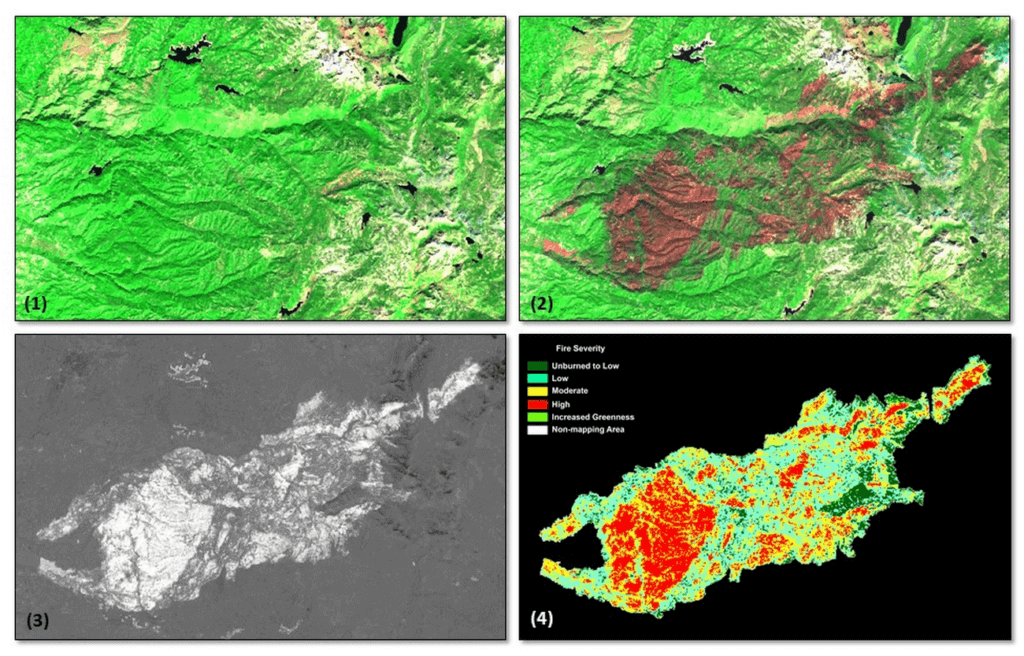
Besides gaining newfound depths of insight, the Forest Service has also sped up its research dramatically, enabling everyone to do more. Using Google Cloud and Earth Engine, the Forest Service reduced the time it took to analyze 10 years worth of land-cover changes from three months to just one hour, using just 100 lines of code. The agency built new models for coping with change, then mapped these changes over time, in its Landscape Change Monitoring System (LCMS) project.
Emergency responders can now work better on new threats that arise after wildfires, hurricanes, and other natural disasters. Forest health specialists can detect and monitor the impacts of invasive insects, diseases, and drought. More Forest Service personnel can use new tools and products within Earth Engine, thanks to numerous training and outreach sessions within the Forest Service.
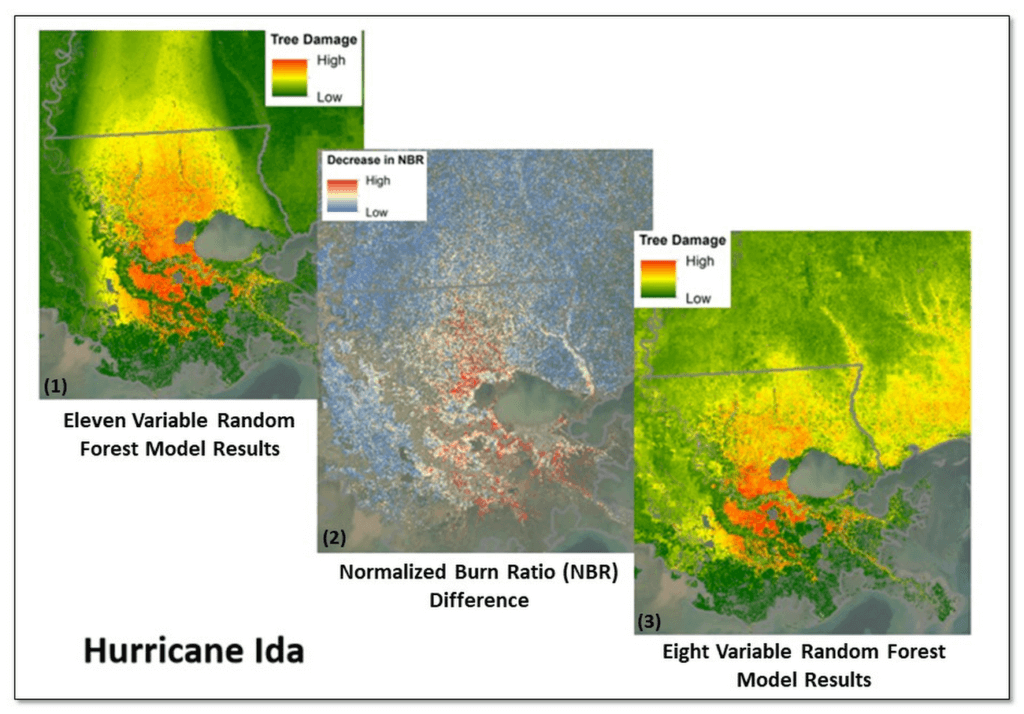
Researchers elsewhere also benefited when the Forest Service created new toolkits, and posted them to GitHub for public use. For example, there’s geeViz, a repository of Google Earth Engine Python code modules useful for general data processing, analysis, and visualization.
This is only the start. Recently, the Forest Service started using Google Cloud’s processing and analysis tools for projects like California’s Wildfire and Forest Resilience Action Plan. Forest Service researchers also use Google Cloud to better understand ecological conditions across landscapes in projects like Fuelcast, which provides actionable intelligence for rangeland managers, fire specialists, and growers, and the Scenario Investment Planning Platform for modeling local and national land management scenarios.
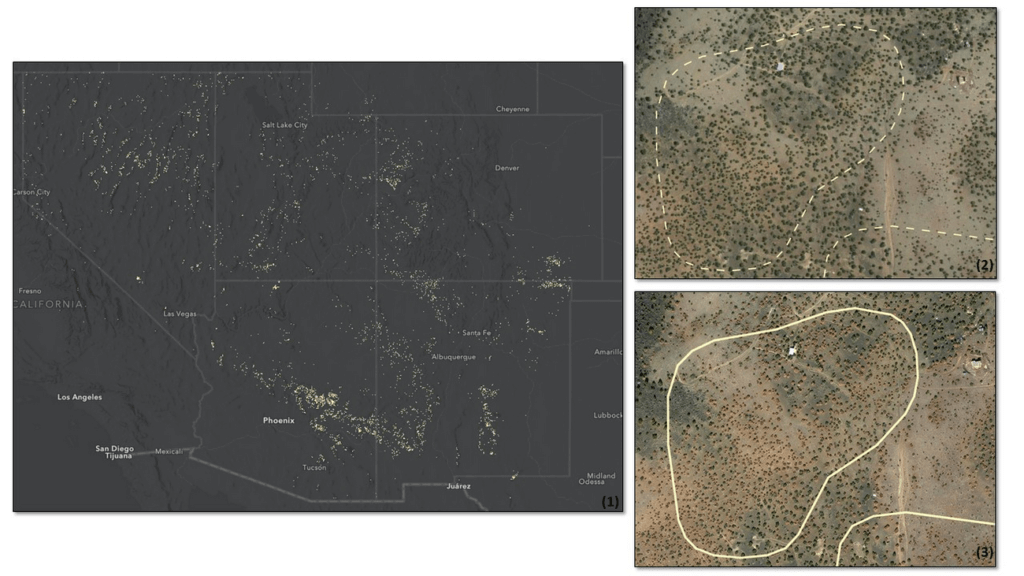
The Forest Service is a pioneer in building technology to help us better understand and care for our planet. With more frequent imaging, rich satellite data sets, and sophisticated database and computation systems, we can view and model the Earth as a large-scale dynamic system.
We are honored and excited to respond to the unique set of requirements of the scientists, engineers, rangers, and firefighters of the USFS, and look forward to years of learning about — and better caring for — our most precious resources.
*Image 1: The USDA Forest Service (USFS) Geospatial Technology and Applications Center (GTAC) uses science-based remote sensing methods to characterize vegetation and soil condition after wildland fire events. The results are used to facilitate emergency assessments to support hazard mitigation, to inform post-fire restoration planning, and to support the monitoring of national fire policy effectiveness. GTAC currently conducts these mapping efforts using long-established geospatial workflows. However, GTAC has adapted its post-fire mapping and assessment workflows to work within Google Earth Engine (GEE) to accommodate the needs of other users in the USFS. The spatially and temporally comprehensive coverage of moderate resolution multispectral data sources (e.g., Landsat, Sentinel 2) and analytical power provided by GEE allows users to create geospatial burn severity products quickly and easily. Box 1 shows a pre-fire Sentinel-2 false color composite image. Box 2 shows a post-fire Sentinel-2 false color composite image with the fire scar apparent in reddish brown. Box 3 shows a differenced Normalized Burn Ratio (dNBR) image showing the change between the pre- and post-fire images in Boxes 1 and 2. Box 4 shows a thresholded dNBR image of the burned area with four classes of burn severity (unburned to high severity), which is the final output delivered to forest managers.
*Image 2: Leveraging Google Earth Engine (GEE), the USDA Forest Service (USFS) Geospatial Technology and Applications Center (GTAC) and USFS Region 8, developed the Tree Structure Damage Impact Predictive (TreeS-DIP) modeling approach to predict wind damage to trees resulting from large hurricane events and produce spatial products across the landscape. TreeS-DIP results become available within 48 hours following landfall of a large storm event to allow allocation of ground resources to the field for strategic planning and management. Boxes 1 and 3 above show TreeS-DIP modeled outputs with varying data inputs and parameters. Box 2 shows changes in greenness (Normalized Burn Ratio; NBR) that was measured with GEE during the recovery from Hurricane Ida and is shown as a visual comparison to the rapidly available products from TreeS-DIP.
*Image 3: Severe drought conditions across the American West prompted concern about the health and status of pinyon-juniper woodlands, a vast and unique ecosystem. In a cooperative project between the USDA Forest Service (USFS) Geospatial Technology and Applications Center (GTAC) and Forest Health Protection (FHP), Google Earth Engine (GEE) was used to map pinyon pine and juniper mortality across 10 Western US States. The outputs are now being used to plan for future work including on-the-ground efforts, high-resolution imagery acquisitions, aerial surveys, in-depth mortality modeling, and planning for 2022 field season work.
Box 1 contains remote sensing change detection outputs (in white) generated with GEE, showing pinyon-juniper decline across the Southwestern US. Box 2 shows NAIP imagery from 2017 with, with box 3 showing NAIP imagery from 2021. NAIP imagery from these years shows trees changing from healthy and green in 2017 to brown and dying in 2021. In addition, box 2 and box 3 show change detection outputs from Box 1 for a location outside of Flagstaff, AZ converted to polygons (in white). The polygon in box 2 is displayed as a dashed line to serve as a reference, while the solid line in box 3 shows the measured change in 2021. Converting rasters to polygons allows the data to be easily used on tablet computers, as well as the ability to add information and photographs from field visits.
BURGER KING Germany: Serving Up Marketing Insights and Supply Chain Visibility Easily

13971
Of your peers have already read this article.
8:30 Minutes
The most insightful time you'll spend today!
Do hamburgers really come from Hamburg? This may still be a matter of debate, but the popularity of American-style burger joints not just in Hamburg but all over Germany, is clear. Germany’s top two fast food companies are both burger chains. One of them is BURGER KING®, a global brand that welcomes more than 11 million customers worldwide every day. The company arrived in Germany in 1976, when its first restaurant opened in Berlin. It now operates more than 100 restaurants across Germany, with franchisees operating more than 600 restaurants of their own.
“In the fast food industry, being able to move quickly is very important. That means delivering the right promotion to our app or launching a viral campaign within days. To do that across more than 700 restaurants, we need the support of the right technology.”
—Oliver Mielentz, IT Manager, BURGER KING® Deutschland GmbH
Previously a subsidiary of the U.S. business, BURGER KING® Germany became an independent company in 2015. As a result, it needed to develop its own IT infrastructure, and the changeover needed to happen fast. “We had to put in place systems that would work for the entire network of franchisees and enable us to easily roll out campaigns,” explains Oliver Mielentz, IT Manager at BURGER KING® Deutschland GmbH.
With the help of Google Cloud Premier partner Cloudwürdig, BURGER KING® Germany chose Google Cloud and G Suite as the right combination to suit its needs.
“In the fast food industry, being able to move quickly is very important,” says Oliver. “That means delivering the right promotion to our app or launching a viral campaign within days. To do that across more than 700 restaurants, we need the support of the right technology.”
Building a franchisee platform in just three months
When a business has multiple franchisees, it’s important to make sure everyone is on the same page, especially in the fast-paced fast food environment. “We have to collate data from all our franchisees and produce reports quickly in order to react to changes in customer behavior,” explains Oliver. “That means processing every transaction that takes place in our restaurants.” Following the restructure, BURGER KING® Germany also needed to build a secure invoicing system with data storage and optimize its communication channels.
“Using Tableau with BigQuery, we’re able to produce reports very quickly. Previously, it took much longer, as data had to be fetched manually. Our reaction time is now almost a business day faster.”
—Oliver Mielentz, IT Manager, BURGER KING® Deutschland GmbH
With support from Witter-IT, BURGER KING® Germany chose Cloudwürdig to build its BKD Connect internal platform on Google Cloud. Thanks to the ready-to-go tools on Google Cloud, it was able to put its invoicing system and data warehouse in place in just three months.
For the BURGER KING® Germany data warehouse, Cloudwürdig built an ETL pipeline that channels ticket data for every sale into BigQuery. “Data is gathered from the restaurants,” says Oliver, “and using Tableau with BigQuery, we’re able to produce reports very quickly. Previously, it took much longer, as data had to be fetched manually. Our reaction time is now almost a business day faster.”
As the ticket data for every transaction is stored in BigQuery, the marketing team can easily see exactly which products are selling well. That’s crucial for tweaking promotions as well as monitoring the supply chain to make sure enough produce is delivered to restaurants in response to changes in demand.
“Thanks to BigQuery, we have a speedy data pipeline that enables us to react on the same day to changes in the market and eliminate bottlenecks in production,” says Oliver.
Switching to G Suite to improve communication
To enable franchisees to sign in to its BKD Connect Platform, BURGER KING® Germany needed a secure authentication system. To solve that problem, it chose to provide franchisees with G Suite accounts. “It’s really easy to set up a new franchisee on the platform. I just create a new G Suite account and Drive folder for it, and it’s ready to go,” says Oliver. G Suite also helps the franchise network to run efficiently, as daily reports are automatically saved to Drive and shared to the appropriate regional network. “Thanks to that system, it’s much easier for any team at headquarters to access the information it needs,” Oliver explains.
BURGER KING® Germany also recently extended its use of G Suite across the whole company. “Following an evaluation of our previous email and productivity software, I made the decision to switch solely to G Suite,” says Oliver. BURGER KING® Germany employees now use Gmail, Calendar, and Drive for their day-to-day productivity needs. “We only just completed the migration, but already, everyone’s happy,” says Oliver. “It’s so easy to share a file using Drive or set up a meeting on Calendar.”
“We’re big fans of Hangouts Meet, and we have two rooms here at our Hanover headquarters equipped with Hangouts Meet hardware,” Oliver adds. “The speech quality is good, and it’s helpful to be able to see every participant, especially when you’re running a meeting with multiple franchisees.”
Optimizing infrastructure to power innovative campaigns
The BURGER KING® app, available for iOS and Android, helps the company to deliver a great customer experience. Through their MyBK accounts, guests can access coupons and special promotions. “We had a really interesting campaign for Easter: guests used the app to hunt for virtual Easter eggs,” explains Oliver. “We knew it was going to be big, and our previous back end wouldn’t have been able to handle the traffic.”
To enable the marketing campaign to go ahead, BURGER KING® Germany moved the back end of the app, along with its website, to Google Cloud. For developing and running its web and app back ends, it now uses App Engine and virtual machines on Compute Engine, as well as Memorystore and Cloud Functions. For monitoring and logging, it uses Stackdriver, and Cloud CDN and Cloud DNS to easily handle its traffic.
“We ran the campaign without any performance issues, even though we were receiving several million hits a day,” says Oliver. Since migrating the back end to Google Cloud, the marketing team also launched the popular “Escape the Clown” campaign. “That campaign blew our minds!” says Oliver. “It wouldn’t have been possible without Google Cloud, because it required a lot of back end capacity.”
To develop the app infrastructure it needs, BURGER KING® Germany relies on Cloudwürdig. “Working with Cloudwürdig is great because the team has the same agile mindset as us,” says Oliver. “When we have a new idea, we just set up a meeting, and in a couple of days the new infrastructure is in place. For Escape the Clown, it only took a few weeks to get everything ready to launch.”
Leveraging integrated tools to grow the business
Using Google Cloud together with G Suite enables BURGER KING® Germany to run its franchise network efficiently, while keeping its IT team lean. “Google Cloud and G Suite are the perfect fit for the way of working at BURGER KING® Germany,” says Oliver. “Many of the company’s operatives are often on the road, visiting restaurants and franchisees. With these tools, they can work flexibly and react quickly to the situation on the ground.”
“In order to grow the business, we need to use the data we receive every day to understand exactly what is happening in our restaurants. With the tools provided by Google Cloud, we can get more guests through the door and offer them a better experience.”
—Oliver Mielentz, IT Manager, BURGER KING® Deutschland GmbH
It also helps to keep infrastructure costs under control. “With Google Cloud, we only pay for what we use, which is really important for us,” Oliver explains. “It means we can scale up quickly if we see an opportunity to react to a trend in customer behavior and launch a new marketing campaign that resonates with the moment. When it’s finished, we can then scale down again, and that definitely saves us money.”
BURGER KING® is now working with Cloudwürdig to add more functionality to the BURGER KING® app using Google Kubernetes Engine. “We like to work with customers long-term to support their digital transformation. BURGER KING® Germany is a great example of how one project can develop into a great collaboration,” says Benny Woletz, Managing Director of Cloudwürdig.
BURGER KING® also plans to expand its presence in Germany and gain a greater market share by further tailoring both its marketing and the way it runs its restaurants to answer its guests’ needs. “In order to grow the business, we need to use the data we receive every day to understand exactly what is happening in our restaurants,” says Oliver. “With the tools provided by Google Cloud, we can get more guests through the door and offer them a better experience.”
More Relevant Stories for Your Company

Enhancing Data Governance through Automation with Dataplex and BigLake
Unlocking the full potential of data requires breaking down the silo between open-source data formats and data warehouses. At the same time, it is critical to enable data governance team to apply policies regardless of where the data happens, whether - on file or columnar storage. Today, data governance teams

Real-time analytics for on-time delivery: Mercado Libre
Iteration and innovation fuel the data-driven culture at Mercado Libre. In our first post, we presented our continuous intelligence approach, which leverages BigQuery and Looker to create a data ecosystem on which people can build their own models and processes. Using this framework, the Shipping Operations team was able to

Firestore Cheatsheet to Unlock Application Innovation
Your product teams might ask - “Why does it take so long to build a feature or application?” Building applications is a heavy lift due to the technical complexity, which includes the complexity of backend services that are used to manage and store data. Every moment focused on this technical

How Vertex AI Helps Coca-Cola Bottlers Japan Analyze Billions of Data Records
Japan is home to millions of vending machines installed on streets and in buildings, sports stadiums and other facilities. Vending machine owners and operators, including beverage manufacturers, stock these machines with different product combinations depending on location and demand. For example, they primarily display coffee and energy drinks in machines
