





ANZ Bank Trusts Apigee to Deliver Secure and Compliant API Strategy

3049
Of your peers have already read this article.
3:30 Minutes
The most insightful time you'll spend today!
ANZ Bank is one of Australia’s top four banks and the largest bank in New Zealand by market capitalization. Headquartered in Melbourne, Victoria, we operate in more than 32 markets across Australia, New Zealand, Asia, Pacific, Europe, America and the Middle East. Our Payment team deals with all payment transaction types by providing highly secure, mission critical payment services to retail, institutional and international customers. The core payment platform is based on microservices architecture to support discreet payment processing requirements such as continuous volume growth, industry service level agreement (SLA) and complex payment orchestration and more. The API platform leverages APIs to perform specific business functions under the payment orchestration layer, which need to be resilient, scalable and heavy on security controls.
Simplifying our technology landscape
At ANZ, our mission is to improve the financial wellbeing and sustainability of our customers through reliable payment services. Over the past 12 months, we looked to simplify our technology landscape, to free up time so we could focus on implementing more customer-focused banking services. We needed an API management solution that would align to our API-first strategy, while also maintaining our high performance, security, and regulatory standards.
Specifically, the solution needed to:
- Simplify channel interactions with our platform;
- Improve developer experience and enable self-service;
- Ensure resilient fault tolerance;
- Improve our payment API security posture;
- Enable API-first digital enablement for both our internal and external payments customers;
- Have a scalable and transparent pricing model that ensured sustainable API programme growth.
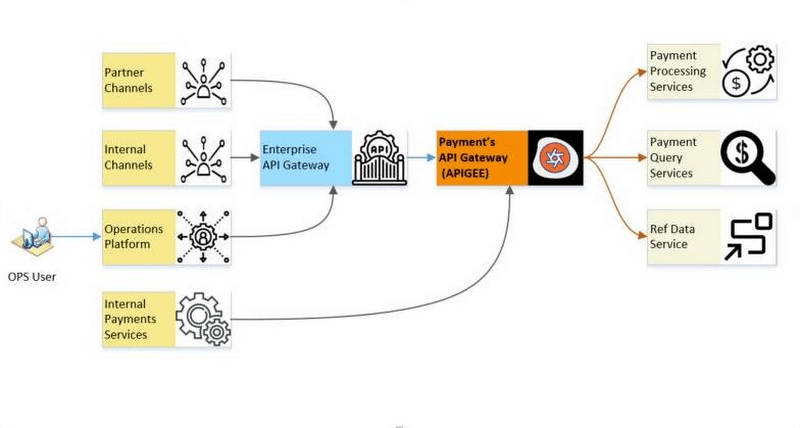
Core focus on security and compliance
To meet our security and regulatory compliance standards an API solution would need to offer functionality including:
- Providing coarse-grained and fine-grained authorization and domain specific entitlements for API requests;
- Bundling APIs based on the nature of the channel;
- Integrating easily with established identity providers;
- Establishing patterns for connecting trusted upstream and downstream systems;
- Providing support for the industry standard OAuth 2.0 authorization protocol as per enterprise security standards.
We reviewed Apigee against other API management solutions and gateways, and determined it was the best fit for our needs. Not only did Apigee deliver on all our mission-critical requirements, but it also provided strong ease of use, feature-completeness and support for multiple coding languages.
Enabling smooth developer onboarding, processes and troubleshooting
Using Apigee has greatly improved developer onboarding and reduced the tedious steps involved in knowledge transfer and upskilling. The platform is easy for developers to use, and is backed by great documentation and video resources. These resources provide clear guidance about how to execute certain processes and troubleshoot as needed.
Overall, Apigee has delivered the features we need to manage the publication and consumption of APIs efficiently. We are now running eighteen APIs in production, including two APIs that enable payments through connection to our transaction database, and others that enable supporting services in the payment services platform team.
Our engineers and testers have found it easy to use the interface and Apigee API Management to deploy and test proxies. In addition, out of the box policies allow for fine-grained access control to handle and build proxies of varying degrees of complexity. These policies allow us to control security, manage traffic, mediate transformations and implement custom functionality via scripts.
We can now implement our fine-grained entitlement-based access control requirements, onboard new customers to the cloud and streamline payment channel onboarding. With Apigee, we are also integrating with other API management tools at the bank, in part to enable self-service for API providers and consumers by building a developer portal.
Thanks to Apigee, we are well positioned to adopt a decentralized API team model that will see different teams within payments and beyond create APIs, and ramp up to full production of our API-centric model in the near future. This is a key component of the bank’s broader cloud and API-first strategy that is designed to help ANZ become a more agile and adaptive technology organization. With the right components in place, can we help ANZ create opportunities and propositions that colleagues and customers love, ultimately helping ANZ realize its vision across Australia, New Zealand and international markets.

3702
Of your peers have already downloaded this article
2:30 Minutes
The most insightful time you'll spend today!
In today’s connected digital world, people expect their various applications to work together seamlessly. The key to making this happen is APIs. A robust library of APIs allows developers to connect applications and deliver new services quickly and easily. But to get the most out of APIs, companies need an API management platform that will deliver manageability and security.
However, as the Citrix team looked to quickly expand its API library, it realized that the company needed a leading API platform. “We researched every API platform and the clear leader was Apigee Edge,” says Adam Brancato, Senior Manager of Customer Applications at Citrix. “With Apigee Edge, we expanded our API support from 10 APIs to more than 50 APIs in a year.”
As a result, Citrix now supports a wide range of APIs for both internal and external use, including email, support cases, single sign- on, licensing, accounts, assets management, contacts, Salesforce integration, order validation, and more.
Download this case study to understand how the Citrix team leveraged Apigee to save time and boost productivity.
5219
Of your peers have already watched this video.
24:03 Minutes
The most insightful time you'll spend today!
How to Manage Complexity While Going Multi-Cloud with Anthos
Today’s success depends more than ever on making the most of both on-premises investments and the various cloud offerings available to you. Come learn about how Google Cloud is bringing to you simplified operations everywhere to help you succeed in a world of hybrid, multi cloud and edge scenarios that could otherwise threaten to fragment your deployment. Use Anthos to take an uncompromising stand on quality infrastructure everywhere for your applications.

Upgrade Your Contact Center with Knowlarity’s AI-powered Speech Analytics for Higher CX
DOWNLOAD E-BOOK6226
Of your peers have already downloaded this article
7:00 Minutes
The most insightful time you'll spend today!
Did you know, everyday about 56 million hours worth of phone conversations, equalling to 420 billion spoken words are handled by contact centers? Knowlarity, a renowned cloud business communication service provider with nearly 6,000 customers and over a million virtual users, leverages AI-powered speech analytics that offer insights to gauge customer preferences and emotions, campaign performance, agent’s effectiveness and much more. Knowlarity’s programmatic speech analytics platform is built with Google Cloud to optimize contact center performance by transcribing and analyzing millions of calls to impact savings, operations, CX, customer loyalty and retention, and revenue generation.
Download the e-Book to learn more about Knowlarity’s speech analytics for your business’ contact centers and elevate your agents’ performance by leveraging ML, natural language processing (NLP) and AI capabilities.
DueDil Chooses Apigee to Leverage APIs for Customers’ Risk Monitoring with Better Insights

4846
Of your peers have already read this article.
1:30 Minutes
The most insightful time you'll spend today!
As their name reflects, DueDil provides due diligence services ranging from customer-specific risk evaluations and selections to customer onboarding and real-time risk monitoring for leading financial services, high-growth tech and insurance companies. Founded in 2009, the company helps more than 3,000 enterprise users from over 400 clients to not only understand with whom they’re doing business, but to do so with increased efficiency and in compliance with regulatory requirements.
Due diligence services have evolved in recent years, both because of new regulations and new technologies supplanting legacy systems and processes, many of which relied until recently on pen-and-paper workflows or exhaustive spreadsheet work. DueDil knew this technology transformation represented an opportunity to replace manual processes with automation–but it also recognized a second opportunity: to not merely process data but also activate it by connecting information in disparate IT systems and generating data-driven insights delivered at scale.
To capitalize on this opportunity, the company built its Business Information Graph, or B.I.G., a platform that maps approximately 300 million connections among companies. B.I.G. ingests billions of data points, and is refreshed multiple times per day, to surface unique insights about business’s relationships, such as fraud risks. The results that B.I.G. drives often speak for themselves: some DueDil customers onboard partners up to 80% faster, perform risk verification up to 18 times faster, and reduce time spent on manual portfolio checks by up to 80%.
What powers all of this transformation? Application Programming Interfaces (APIs).
“From a go-to-market standpoint, our product is an API,” said Denis Dorval, DueDil COO, in a recent webcast, explaining that customers can directly tap B.I.G.’s resources for themselves, and build atop them for their own needs, via DueDil’s API.
Choosing an API management platform to deliver fast, secure, and scalable APIs
To execute on their vision of connecting B2B ecosystems for better insights and efficiency, DueDil looked for a cloud provider that could fulfill several specific criteria. They needed robust management for the APIs with which their internal developers leverage different systems for new use cases and process automations, as well as for the productized API they offer to customers. They needed sophisticated analytics and abundant processing power to crunch through billions of data points. And, they needed enterprise-grade security, scalability, and agility to underpin it all. Last but not least, the company prioritized a smooth transition; DueDil did not want the user experience to suffer as it switched providers.
“The stability of Google Cloud’s Apigee API management platform and the strength of its services stood out”, said DueDil’s Engineering Manager, Robert Cicero.
“Apigee is a resilient and agile platform, fulfilling our need to build APIs quickly, safely, and at scale,” he remarked, noting that he appreciated that many of Apigee’s API security defense tools and policies work out-of-the-box. For instance, Apigee’s JSON threat detection policies, custom policies, and authentication and authorization processes can be deployed instantly and add minimal latency, meaning DueDil can stop security threats before they enter its network while still avoiding the risk of service lags.
Today, DueDil has five internal services that facilitate business due diligence, all exposed via Apigee. They also use Apigee’s monetization feature to drive API consumption. This said, because DueDil’s go-to-market strategy is fast-paced and client-oriented, they most often use Apigee to rapidly prototype APIs for their clients, so they can understand what a specific API would look like and how it would behave. This allows DueDil, its partners, and its customers to spend more time delivering value from insights rather than getting bogged down in building backend systems.
Moreover, Apigee made it simpler to also connect to other Google Cloud services, such as BigQuery, Google Data Studio, and Google Cloud Storage. Apigee acts as a central nervous system among systems, giving DueDil not only the ability to connect systems and automate processes but also insight and visibility into how its B.I.G. services are being used by partners and customers.
Plus, added Cicero, “the migration to Apigee was seamless, with arguably our biggest win being that no one knew that we had switched API management providers to Apigee.”
Leveraging APIs to provide self-service while enforcing security and governance policies
Moving forward, DueDil plans to leverage Apigee to give staff members and clients more privileges, visibility, and opportunity to create and edit apps in a self-service manner, without needing to rely on an IT department or endure long approvals processes. Harnessing APIs to open up B.I.G. and other capabilities to more teams across the company will also allow DueDil to move faster and include more people in the innovation process. Leveraging Apigee API management capabilities, DueDil also intends to dive deeper and experiment with other Google Cloud products and services, including Cloud Function, Cloud Pub/Sub, and more.
“At the end of the day, every company goes about due diligence a little differently. The only way that we at DueDil are able to provide something that is configurable and dynamic to diverse businesses is if we use platforms that can adapt, too,” said Cicero. “Apigee gives us the agility required to create and deliver for a wide variety of businesses.”
Google Cloud, today, works across banking, capitalmarkets, insurance, and payments worldwide to solve their most challenging problems. Click here to learn more about how Google Cloud Apigee API management can help you design, secure, analyze, and scale APIs anywhere with visibility and control. To try Apigee API management for free, click here.
Maximizing API Potential: A Look at 7 Prominent API Management Use Cases

2709
Of your peers have already read this article.
4:30 Minutes
The most insightful time you'll spend today!
Paper currency — which started gaining prominence in the 1600s — changed the face of global economics and ushered in a new era of international monetary regulation. The primary reason currency created such disruption was its ability to standardize the “medium of exchange”. APIs created a similar effect in the world of technology and digitalization by creating a standardized, reusable, and secure way to exchange information.
Modern web APIs took shape in the early 2000s and played a key role in “.com”mercializing every business. APIs started as a connective tissue primarily relegated to a technical context and quickly evolved into a gateway to new business models, revenue streams, and ecosystems. In 2017, McKinsey estimated a total of $1 Trillion in profit could be up for grabs in the API economy. And in 2022, GGV Capital created an index of API-first startups — a generation of stylistically divergent SaaS companies with leaner operating cost structures and organic usage growth. Just as currency is going through an evolution from banknotes to digital wallets, the world of API management is also on the brink of change.
With more than 15 years of experience managing APIs at Google-scale, we’ve got a unique vantage point from which to observe that change. In today’s post, we will spotlight seven API management use cases that we see growing in prominence — and how you can take advantage of these trends to future-proof your architecture.
1 “Shift left” in API security
As a gateway to a wealth of information, APIs have also quickly become the primary attack vector in security incidents. When we surveyed 500 technology leaders, we learned that more than 50% of organizations experienced an API security incident in the last 12 months. Adding to the increasing magnitude of attacks, there are an increasing number of vectors for potential API security incidents like misconfigurations, outdated APIs/data/components, and bots/spam/abuse.
These security issues aren’t just in production APIs, but at every stage in the API lifecycle. Notably, we found that 67% of the issues are discovered during testing as part of the release management process. This trend ushers in the need for forward-thinking organizations to “shift left with security” — moving controls earlier into the production workflow — by bringing security teams and API teams closer. To stay ahead of security threats, many organizations are actively looking for solutions that allow them to be proactive while minimizing the burden on their security teams. According to our research, integrating capabilities that proactively identify security threats (60%) is top of mind for most IT leaders for the next year.
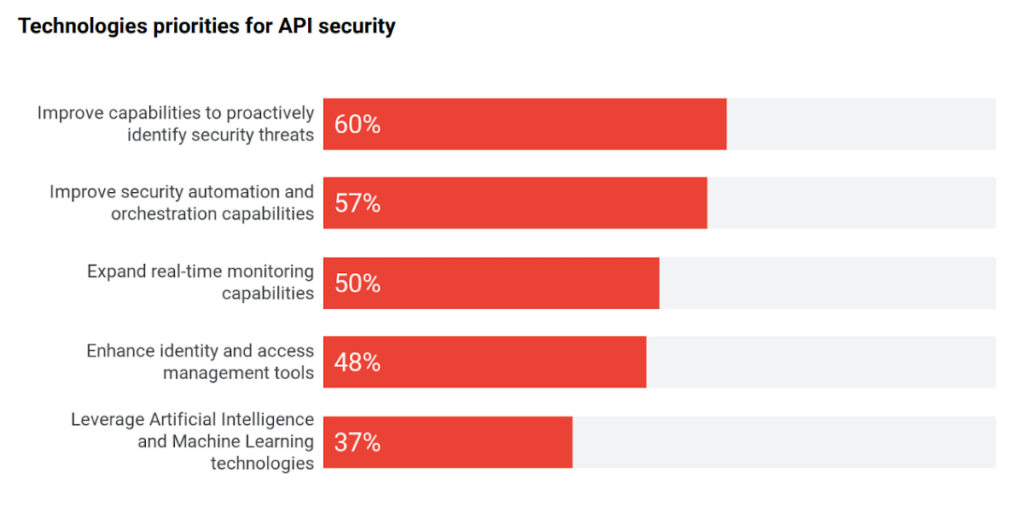
Source: 2022 API Security Research Report
2 “Knowledge graph” for your enterprise APIs
It comes as no surprise that every organization is relying on APIs to expand and even ground their digital ecosystem — a network of partners, developers, and customers facilitated by modern, cloud-first technologies. There is a growing magnitude and variety of middleware assets, contributing to the growth of IT complexity.
As the number of APIs continues to increase, there is a need to simplify consumption for internal and external developers. Even the most objectively useful APIs remain unseen by most of the organization. In turn this results in redundant code, reduced developer productivity, or worse — turned into a potential security attack vector. This complexity is shifting focus towards consolidation of all middleware assets, growing adoption, and improving education (see below) to improve developer efficiency and de-mystify the IT complexity.
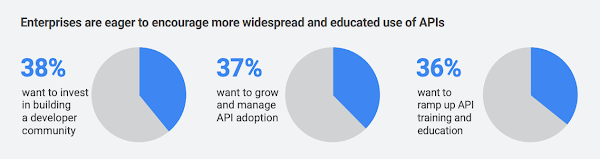
This sprawl is a growing problem in the world of APIs, but it has a lot in common with an age-old phenomenon in the world of web pages and content—search. Google was born out of this problem to help organize the world’s information. Similar to Google’s knowledge graph for web pages, there is a need to index, organize, and instantly present API information for developers that need it. Although it is an emerging practice, we see an increasing number of digital leaders and security teams in larger organizations with mature API programs invest in solutions that help consolidate all APIs, organize their information, and manage their lifecycle.
3 The imminent need for “omni” control planes
APIs have taken on such a vital role in the modern application stack that they have slowly become the neural links across the entire enterprise architecture — bridging legacy and modern applications, shifting architectures towards microservices, and enabling operations across heterogeneous environments. To support all these technological decisions without sacrificing speed, organizations adopted multiple API gateways and fragmented API management solutions. However, this led to a lack of universal visibility, consistent governance, comprehensive security, and meaningful analytics across ALL the enterprise APIs (not just the ones within the confines of a given API management solution). And it increases the maintenance costs — fundamentally undercutting the value of APIs. With this evolution there is a growing need for an omni control plane — analogous to the brain in a human body — across all enterprise APIs.
4 API governance rising through the priority ranks
Despite the clear need for governance, there is still no unified understanding on a good (or right) approach to API governance. With the rapid adoption of APIs without appropriate standardization or quality standards, API governance is top of mind for IT leaders, again.
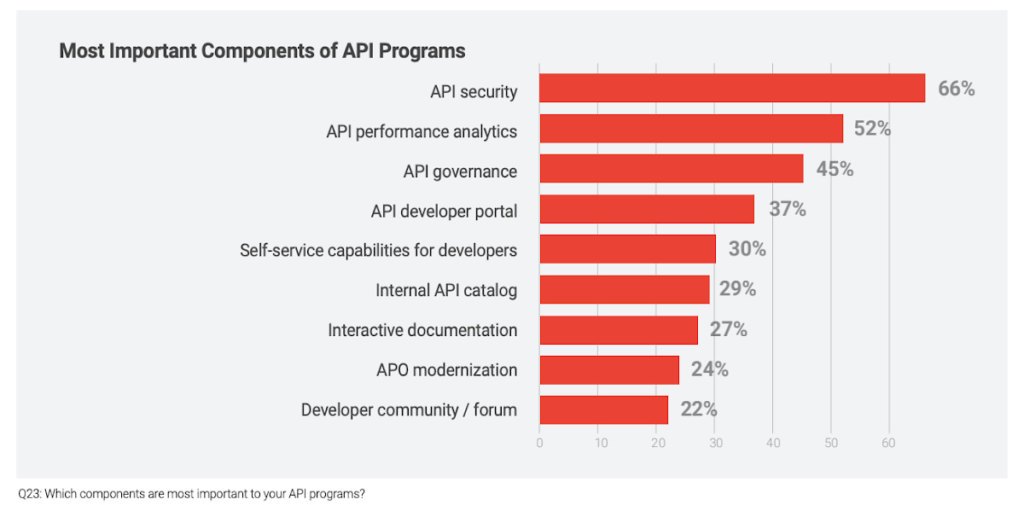
According to our research, 45% of IT leaders identified API governance as a critical component of their API program. The top three components of API security, performance analytics, and governance demonstrate the critical need for visibility, quality, and security across all APIs.
As digital consumers, we have seen this phenomenon across many industries and digital products. For example AirBnB disrupted the short-term rental market by providing standardized listings, detailed information, and high-resolution photos. In fact, the same governance phenomenon is ubiquitous in the world of e-commerce where there is a clear correlation between a high-quality website or product listing and increasing sales.
The same analogy holds true in the world of APIs, as ~90% of developers use APIs in their work there is a direct correlation between the use of APIs and developer productivity. Digital officers and CIOs need to add appropriate governance controls to standardize API design and improve reuse without adding friction to development timelines.
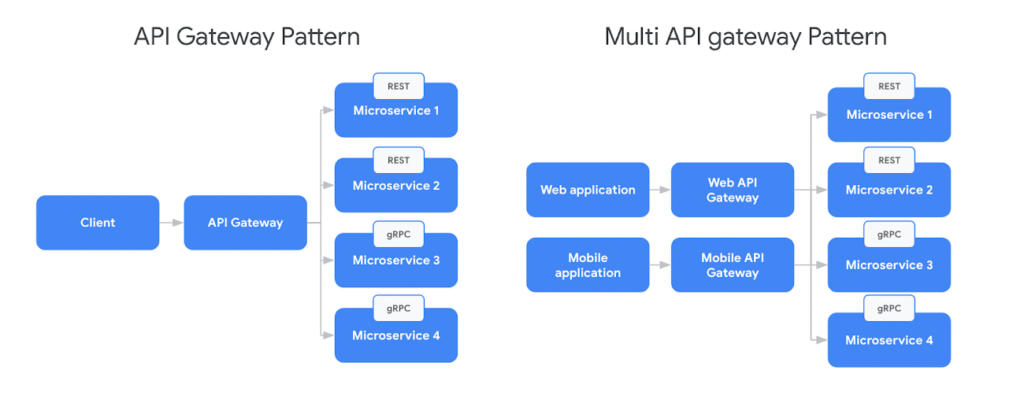
5 Evolution of design patterns with multiple API gateways
Adoption of new API architectural styles and microservices increased the complexity of the modern application stack. Our research found that 54% of organizations use a service mesh and API management in conjunction today to support the API gateway design pattern. In parallel, there is broad adoption of new protocols like GraphQL or AsyncAPI, outpacing the innovation in API gateways. For example, in a recent survey from DZone found that GraphQL accounted for 22.7% of application integrations.
In response to this challenge IT teams are adopting multiple API gateways — by design — which is creating the need for complex communication patterns for future scalability. But the existing design patterns were mostly sufficient when client applications used homogeneous API protocols (Ex: REST). Although patterns like Backend For FrontEnd (BFF) intended to provide specific API interactions that are relevant on a per-client basis, they still did not account for complexities from multiple gateways and protocols. In response to the adoption of new protocols, there is a need to evolve the existing BFF pattern to account for multiple API gateways and protocols.
6 Driving green value chains with digital twins
A digital twin is an effectively indistinguishable virtual representation of a physical object, system, or a process. For example the digital twin of a wind turbine (the object being studied) might be used to capture data like performance, rpm (revolutions per minute), or output captured by various sensors outfitted on the turbine. Digital twin adoption is growing and McKinsey estimates investments in digital twins will reach $58 billion by 2026 with a 58% CAGR. Every digital twin uses APIs to monitor, engage, and possibly control the physical asset. For example, Google created the Digital Buildings project — an open source, Apache-licensed effort to manage applications and analyses between a large heterogeneous portfolio of buildings.
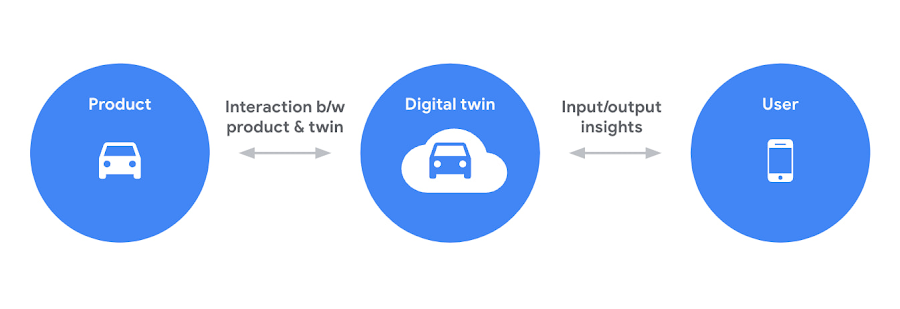
Sustainability is one of the driving forces behind the increased use of digital twins. As the need to reach net zero emissions accelerates, many organizations are tying performance (and in some cases even executive pay) to environmental, social, and governance goals. APIs help connect the dots between digital twins and sustainability. For example, an organization operating a manufacturing process could build a digital twin with APIs to collect behavioral data from sensors, monitoring systems, or other sources — which can eventually be integrated into the organization’s digital platform or applications. These digital twins could be used to analyze and optimize the use of materials and energy, to minimize waste and emissions. Additionally, digital twins could be used to monitor and analyze the performance of systems over time, to identify opportunities for continuous improvement.
Overall, APIs play a valuable role in supporting sustainability efforts by enabling digital twins, effectively driving more efficient operation of systems, and providing insights to improve environmental impact. For further examples, check out this video about driving a green value chain with APIs.
7 Commercializing access to data products
The growing use of data-rich services (like IoT, ML models, remote access services, and web scraping, etc.) coupled with massive ingestion of data everyday is creating massive growth in data delivery paradigms like data lakehouses, data marketplaces, and data streaming systems (global data marketplaces alone are poised to reach $3.5 billion by 2028). Unfortunately, most of these systems are fragmented with almost no relationship or interoperability.
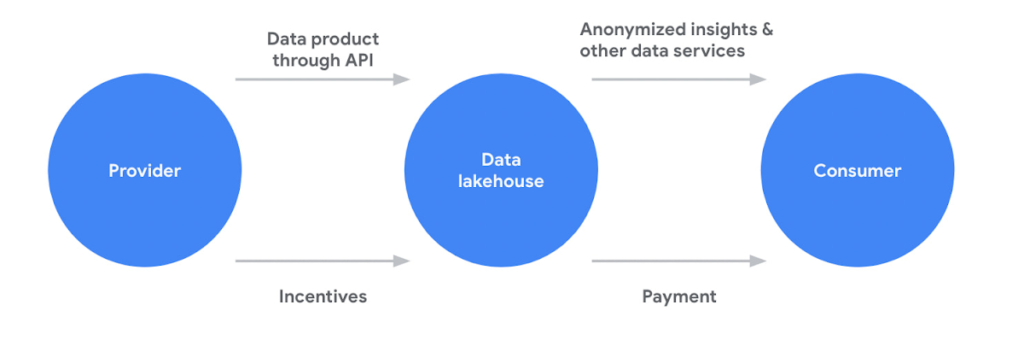
APIs are filling this critical gap for organizations in two critical ways. First, APIs are providing standard and easy access to systems like data lakehouses or analytics hubs. Second, APIs are a key enabler of data products (digital products or services built using data as a core value proposition), a core component of any data sharing system. APIs provide a standardized way for different applications to interact with the data product. For example, an API could be used to allow a mobile app to access data from a weather forecast or a recommendation engine data product. Beyond data products, APIs also provide easy and standardized access various data management platform
APIs continue to play a critical role in every application, experience, and ecosystem. Robust API strategies help organizations adapt to any architecture, business model, or environment in the face of changing technology landscape. Learn more about how Apigee is driving innovation and helping companies future proof their architectures to stay ahead of the top API trends.
More Relevant Stories for Your Company

A Road to Possibilities: Google Maps Platform Website
For more than 15 years, developers have used Google Maps Platform to deliver location-based experiences to their end users and used location intelligence to optimize their businesses. Along this journey, we’ve made a variety of changes to better support our community as needs have changed and new industries and technologies



AppSheet is Useful for Schools & Universities to Custom-build Apps
AppSheet, Google Cloud's no-code platform that eases application development and automation process without writing even a line of code. In the education space, AppSheet can come in handy easily as a unified platform to build custom applications that also integrates seamlessly with Workspace, allowing schools and universities to save on

The Digital Transformation Journey
Aspiration is easy, but execution is hard. Few concepts illustrate this as well as digital transformations. Most businesses today are at some phase of their digital transformation journey. While some are evaluating strategies and solutions, many companies have already embarked on full-scale project implementations. However, one thing is clear. While

Apigee: Unlock Innovation by Managing APIs for SAP Workloads
Businesses migrating their SAP environments to Google Cloud do so for a number of reasons. Most cite the agility, scalability and security advantages of migrating SAP workloads to Google Cloud; many also focus on improved uptime and performance. At some point, most businesses also want to explore the idea that
