





Partnering for Stronger Security: Google and Mandiant Join Forces

2795
Of your peers have already read this article.
2:30 Minutes
The most insightful time you'll spend today!
Over the past two decades, Google has innovated to build some of the largest and most secure computing systems in the world. This scale requires us to deliver pioneering approaches to cloud security, which we pass on to our Google Cloud customers. We are committed to solving hard security problems like only Google can, as the tip of the spear of innovation and threat intelligence.
Today we’re excited to share the next step in this journey with the completion of our acquisition of Mandiant, a leader in dynamic cyber defense, threat intelligence and incident response services. Mandiant shares our cybersecurity vision and will join Google Cloud to help organizations improve their threat, incident and exposure management.
Combining Google Cloud’s existing security portfolio with Mandiant’s leading cyber threat intelligence will allow us to deliver a security operations suite to help enterprises globally stay protected at every stage of the security lifecycle. With the scale of Google’s data processing, novel analytics approaches with AI and machine learning, and a focus on eliminating entire classes of threats, Google Cloud and Mandiant will help organizations reinvent security to meet the requirements of our rapidly changing world.
We will retain the Mandiant brand and continue Mandiant’s mission to make every organization secure from cyber threats and confident in their readiness.
Context and threat intelligence from the frontlines
Our goal is to democratize security operations with access to the best threat intelligence and built-in threat detections and responses. Ultimately, we hope to shift the industry to a more proactive approach focused on modernizing Security Operations workflows, personnel, and underlying technologies to achieve an autonomic state of existence – where threat management functions can scale as customers’ needs change and as threats evolve.
Today Google Cloud security customers use our cloud infrastructure to ingest, analyze and retain all their security telemetry across multicloud and on-premise environments. By leveraging our sub-second search across petabytes of information combined with security orchestration, automation and response capabilities, our customers can spend more time defending their organizations.
The addition of Mandiant Threat Intelligence—which is compiled by their team of security and intelligence individuals spread across 22 countries, who serve customers located in 80 countries—will give security practitioners greater visibility and expertise from the frontlines. Mandiant’s experience detecting and responding to sophisticated cyber threat actors will offer Google Cloud customers actionable insights into the threats that matter to their businesses right now. We will continue to share groundbreaking Mandiant threat research to help support organizations, even for those who don’t run on Google Cloud.
Advancing shared fate for security operations
Google Cloud operates in a shared fate model, taking an active stake in the security posture of our customers. For security operations that means helping organizations find and validate potential security issues before they become an incident.
Detecting, investigating and responding to threats is only part of better cyber risk management. It’s also crucial to understand what an organization looks like from an attacker’s perspective and if an organization’s cybersecurity controls are as effective as expected.
By adding Mandiant’s attack surface management capabilities to Google Cloud’s portfolio, organizations will be able to continually monitor assets for exposures, enabling intelligence and red teams to move security programs from reactive to proactive to understand what’s vulnerable, misconfigured and exposed.
Once an organization’s attack surface is understood, validating existing security controls is critical. With Mandiant Security Validation, organizations will be able to continuously validate and measure the effectiveness of their cybersecurity controls across cloud and on-premise environments.
Transforming security operations and incident response
Security leaders and their teams often lack the resources and expertise required to keep pace with today’s ever changing threats. Organizations already harness Google’s security tools, expert advice and rich partner ecosystem to evolve their security program. Google’s Autonomic Security Operations also serves as a prescriptive solution to guide our customers through this modernization journey.
With the addition of Mandiant to the Google Cloud family, we can now offer proven global expertise in comprehensive incident response, strategic readiness and technical assurance to help organizations mitigate threats and reduce business risk before, during and after an incident.
In addition, Google Cloud’s security operations suite will continue to provide a central point of intelligence, analysis and operations across on-premise environments, Google Cloud and other cloud providers. Google Cloud is also deeply committed to supporting our technology and solution partners, and this acquisition will enable system integrators, resellers and managed security service providers to offer broader solutions to customers.
Comments on the news
“The power of stronger partnerships across the cybersecurity ecosystem is critical to driving value for clients and protecting industries around the globe. The combination of Google Cloud and Mandiant and their commitment to multicloud will further support increased collaboration, driving innovation across the cybersecurity industry and augmenting threat research capabilities. We look forward to working with them on this mission.” – Paolo Dal Cin, Global Lead, Accenture Security
“Google’s acquisition of Mandiant, a leader in security advisory, consulting and incident response services will allow Google Cloud to deliver an end-to-end security operations suite with even greater capabilities and services to support customers in their security transformation across cloud and on-premise environments.” – Craig Robinson, Research VP, Security Services, IDC
“Bringing together Mandiant and Google Cloud, two long-time cybersecurity leaders, will advance how companies identify and defend against threats. We look forward to the impact of this acquisition, both for the security industry and the protection of our customers.” – Andy Schworer, Director, Cyber Defense Engineering, Uber
We welcome Mandiant to the Google Cloud team, and together we look forward to helping security teams achieve so much more in defense of their organizations. You can read our release and Kevin Mandia’s blog for more on this exciting news.
8420
Of your peers have already watched this video.
21:00 Minutes
The most insightful time you'll spend today!
Journey to Transformation and Modernization with Google’s Distributed Cloud
Google Cloud has been leading the way of helping businesses make most from their cloud investments to drive digital transformation through modern application platforms that cater to today’s customer needs. Watch the video from the Next ’21 to explore three areas where companies are supported by Google Cloud throughout their cloud evolution journey–cloud migration and modernization, extension of services and engineering practices to hybrid and multicloud environments, and delivery of high performance with planet scale distributed infrastructure. Also, learn how Google Cloud is equipped for more complex and unique use cases, from datacenter to the edge. Hear the strategies and customer stories that can help your business modernize people, processes, and applications to fully leverage Google’s distributed cloud!
Case Study: How Exabeam Unlocked its Ability to Scale for Storage & Ingest Data from More Than 500 Security Vendors

3094
Of your peers have already read this article.
2:30 Minutes
The most insightful time you'll spend today!
Editor’s note: The post is part of a series highlighting our awesome partners, and their solutions, that are Built with BigQuery.
Exabeam, a leader in SIEM and XDR, provides security operations teams with end-to-end Threat Detection, Investigation, and Response (TDIR) by leveraging a combination of user and entity behavioral analytics (UEBA) and security orchestration, automation, and response (SOAR) to allow organizations to quickly resolve cybersecurity threats. As the company looked to take its cybersecurity solution to the next level, Exabeam partnered with Google Cloud to unlock its ability to scale for storage, ingestion, and analysis of security data.
Harnessing the power of Google Cloud products including BigQuery, Dataflow, Looker, Spanner and Bigtable, the company is now able to ingest data from more than 500 security vendors, convert unstructured data into security events, and create a common platform to store them in a cost-effective way. The scale and power of Google Cloud enables Exabeam customers to search multi-year data and detect threats in seconds
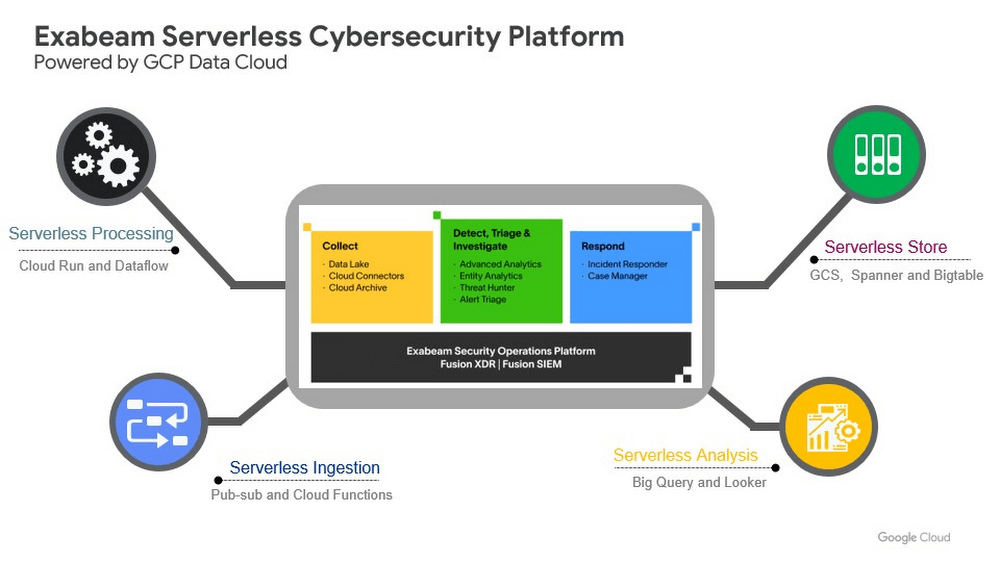
Google Cloud provides Exabeam with three critical benefits.
- Global scale security platform. Exabeam leveraged serverless Google Cloud data products to speed up platform development. The Exabeam platform supports horizontal scale with built-in resiliency (backed by 99.99% reliability) and data backups in three other zones per region. Also, multi-tenancy with tenant data separation, data masking, and encryption in transit and at rest are backed up in the data cloud products Exabeam uses from Google Cloud.
- Scale data ingestion and processing. By leveraging Google’s compute capabilities, Exabeam can differentiate itself from other security vendors that are still struggling to process large volumes of data. With Google Cloud, Exabeam can provide a path to scale data processing pipelines. This allows Exabeam to offer robust processing to model threat scenarios with data from more than 500 security and IT vendors in near-real time.
- Search and detection in seconds. Traditionally, security solutions break down data into silos to offer efficient and cost-effective search. Thanks to the speed and capacity of BigQuery, Security Operations teams can search across different tiers of data in near real time. The ability to search data more than a year old in seconds, for example, can help security teams hunt for threats simultaneously across recent and historical data.
Exabeam joins more than 700 tech companies powering their products and businesses using data cloud products from Google, such as BigQuery, Looker, Spanner, and Vertex AI. Google Cloud announced the Built with BigQuery initiative at the Google Data Cloud Summit in April, which helps Independent Software Vendors like Exabeam build applications using data and machine learning products. By providing dedicated access to technology, expertise, and go-to-market programs, this initiative can help tech companies accelerate, optimize, and amplify their success.
Google’s data cloud provides a complete platform for building data-driven applications like those from Exabeam — from simplified data ingestion, processing, and storage to powerful analytics, AI, ML, and data sharing capabilities — all integrated with the open, secure, and sustainable Google Cloud platform. With a diverse partner ecosystem and support for multi-cloud, open-source tools, and APIs, Google Cloud can help provide technology companies the portability and the extensibility they need to avoid data lock-in.
To learn more about Exabeam on Google Cloud, visit www.exabeam.com. Click here to learn more about Google Cloud’s Built with BigQuery initiative.
The Tech Tightrope: How the U.S. State & Local Agencies Strive to Balance between Innovation and Budget

5025
Of your peers have already read this article.
1:30 Minutes
The most insightful time you'll spend today!
State and local government (SLG) agencies are reeling from a combination of unbudgeted COVID-related expenses and reduced tax revenue caused by unemployment and business closures. Any way you look at it, the situation is challenging. To understand how SLG agencies are coping, Google Cloud collaborated with MeriTalk to survey 200 SLG IT and program managers, uncovering some revealing trends in SLG technology innovation. Unsurprisingly, approximately 84% of SLG organizations report making budgetary tradeoffs to bridge funding the gaps the ongoing pandemic has created.
However, researchers discovered a silver lining: The pandemic has also been a catalyst to modernize the legacy infrastructure in states and cities. The majority of survey respondents (88%) reported that their agency made greater modernization progress this past year than in the prior 10 years.
Walking a tightrope between innovation and budget pressure
According to 89% of state and local leaders, now is the time to invest in technology modernization. But 80% are experiencing a funding gap due to unbudgeted expenses related to the pandemic and declining tax revenue, which makes finding that balance between innovation and budget a serious challenge.
Some agencies are achieving the impossible, though. For example, the City of Pittsburgh Department of Innovation and Performance is working with Google Cloud to migrate and modernize its legacy IT infrastructure. By decommissioning their data center and moving to Google Cloud, the city can build new data analytics tools to drive smart city initiatives and create entirely new applications to improve digital service delivery for its residents. As a result, the city will save costs, abandon its brittle legacy IT structure, and create a cloud-based technology platform for the future—becoming the region’s leader in cloud-native software development.
Google Cloud is enabling the city’s IT team by curating and delivering our certification training at no cost. The program includes live training sessions as well as on-demand training.
Bridging funding gaps
In their drive to modernization, many SLG leaders are turning to grants as an important source of funding. Approximately 84% of those surveyed report making tradeoffs to bridge funding gaps, such as moving resources away from operations and maintenance (37%), increasing reliance on pandemic-related funding (31%), and delaying internal modernization efforts to enable remote work for employees (29%). One way that states are dealing with this tension between budget gaps and the need for innovation is to turn to Google Cloud for cost savings and improved capabilities.
For example, Google Cloud is helping the State of West Virginia innovate and enhance IT security despite decreased state funding. The state entered a multi-year agreement to ensure full access to enterprise-level Google Workspace capabilities for 25,000 state employees, keeping the state at the forefront of technology advancements at a projected cost savings of $11.5 million.
Similarly, Google Cloud helped build the Rhode Island Virtual Career Center to help the state’s constituents get back to work. Using familiar productivity tools within Google Workspace, employees can access new career opportunities quickly, while employers can reach more candidates. Skipper, the CareerCompass RI bot, uses data and machine learning to connect Rhode Islanders with potential new career paths and reskilling opportunities.
Enhancing services
Google Cloud is also helping agencies enhance services, including working with the State of Illinois to get unemployment funding to constituents in need.The state is using Contact Center AI to rapidly deploy virtual agents that help more than 1 million out of work citizens file unemployment claims faster. Capable of engaging in human-like conversations, these intelligent agents provide constituents with 24/7 access and enable government employees to focus on more complex, mission-critical tasks—such as combating fraud. In summer 2020, the virtual agents handled more than 140,000 phone and web inquiries per day, including 40,000 after-hours calls every night. The state anticipates an estimated annual savings of $100 million from the solution, which was deployed in just two weeks.
Working with Google, Ohio also uncovered $2 billion in fraudulent unemployment claims. We will continue to partner with the state to find fraudulent claims, and prioritize the processing of legitimate claims.
Focusing on cybersecurity
Despite expanding security threats topping NASCIO’s list of 2021 State CIO priorities, more than one in three IT managers (35%) say their organization reduces security measures to expedite timelines. Partnering with Google Cloud has enabled many agencies to enhance their security measures while modernizing and staying within budget, investing in support for remote work devices, digital services for residents, and cybersecurity.
NYC Cyber Command works with city agencies to ensure systems are designed, built, and operated in a highly secure manner. NYC3 followed a cloud-first strategy using the Google Cloud Platform. The virtual operations demanded by the pandemic have increased the importance of security and compliance in SLG. Google Cloud is committed to act as a security transformation partner and be the trusted cloud for public sector agencies.
Finally, to strengthen public and private partnerships, SLG organizations told MeriTalk that they need vendor partners to support modernization efforts for flexibility and collaboration (46%), need innovation-focused leadership groups to help balance technology needs with budget constraints (41%), and they expect significant returns on investments in cloud computing (38%), and data management/analytics (33%).
Google Cloud is helping SLG customers across the country invest in innovation to walk the tech tightrope—balancing innovation and budgets—and helping to build a more resilient future. Visit the State and Local Government solutions page to learn more.
Macy’s Migration to Cloud: How Google Cloud NAT Upheld Security
921
Of your peers have already read this article.
2:30 Minutes
The most insightful time you'll spend today!
Macy’s is well known for its high-end fashion worldwide. What is not as well known are the strong measures it takes to ensure its customers’ data remains secure. When Macy’s decided to move its infrastructure from on-premises to Google Cloud, it required the move be done without sacrificing security or degrading the user experience.
Migrating from on-premises to the cloud isn’t always a simple feat, especially when one of Macy’s key requirements was a managed solution that could secure their workloads’ internet access without impacting throughput and latency.
Implementing Cloud NAT at scale
Applying security safeguards without creating additional friction can be difficult, especially for Macy’s and its more than 40 million active users. Macy’s needed a way to perform network address translation to ensure its clusters could create outbound connections to the internet without needing public IP addresses. Every use case led back to Cloud NAT.
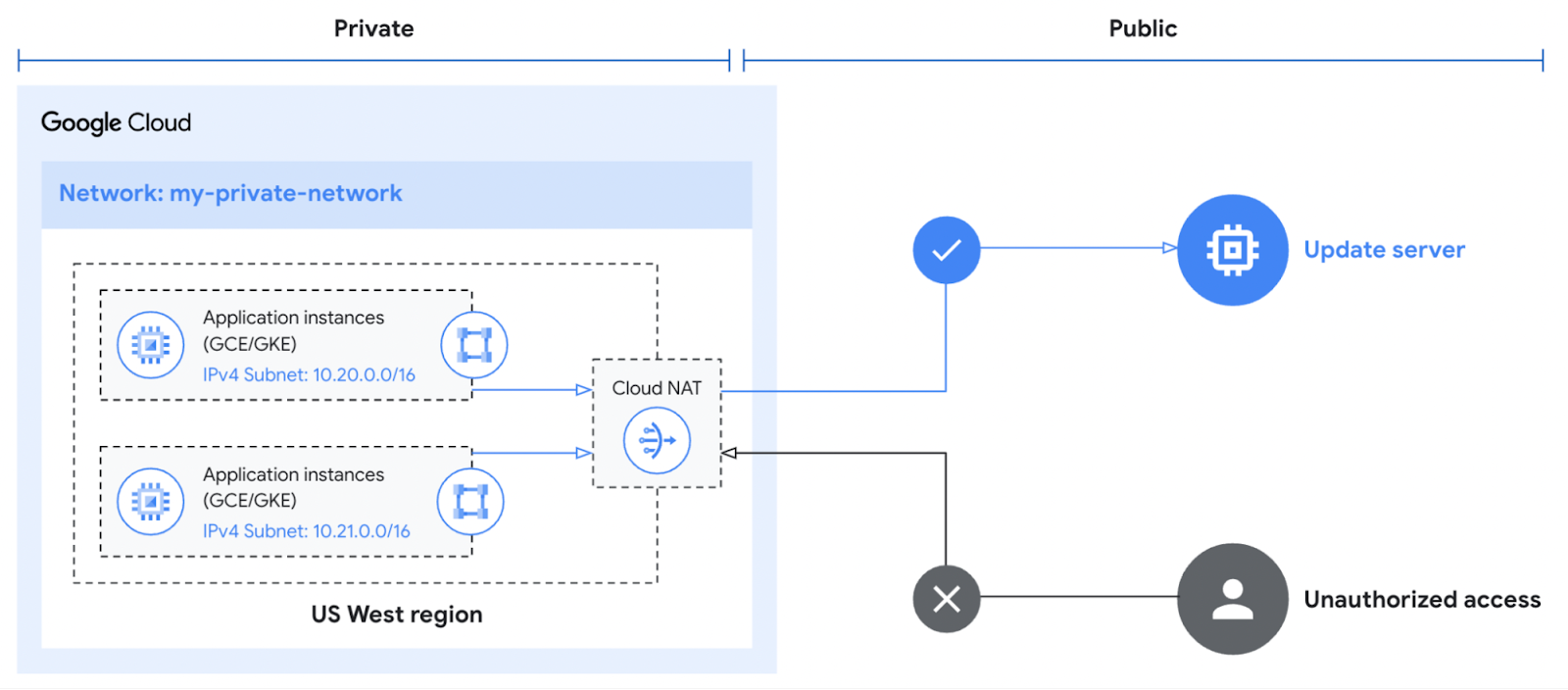
Cloud NAT is a distributed, cloud-first service that provides network address translation for workloads without external IP addresses. These workloads typically access the internet to download updates or interact with SaaS services.
Cloud NAT provided a means for Macy’s workloads to initiate outbound connections by translating the associated private IP addresses to one or more shared public IP addresses. This enabled Macy’s to reach the outside world while preventing the outside world from initiating a connection to it. What was even better for Macy’s was that Cloud NAT simplified the configuration and maintenance with no additional networking, forwarding, or routing configuration required.
Ensuring continued high performance
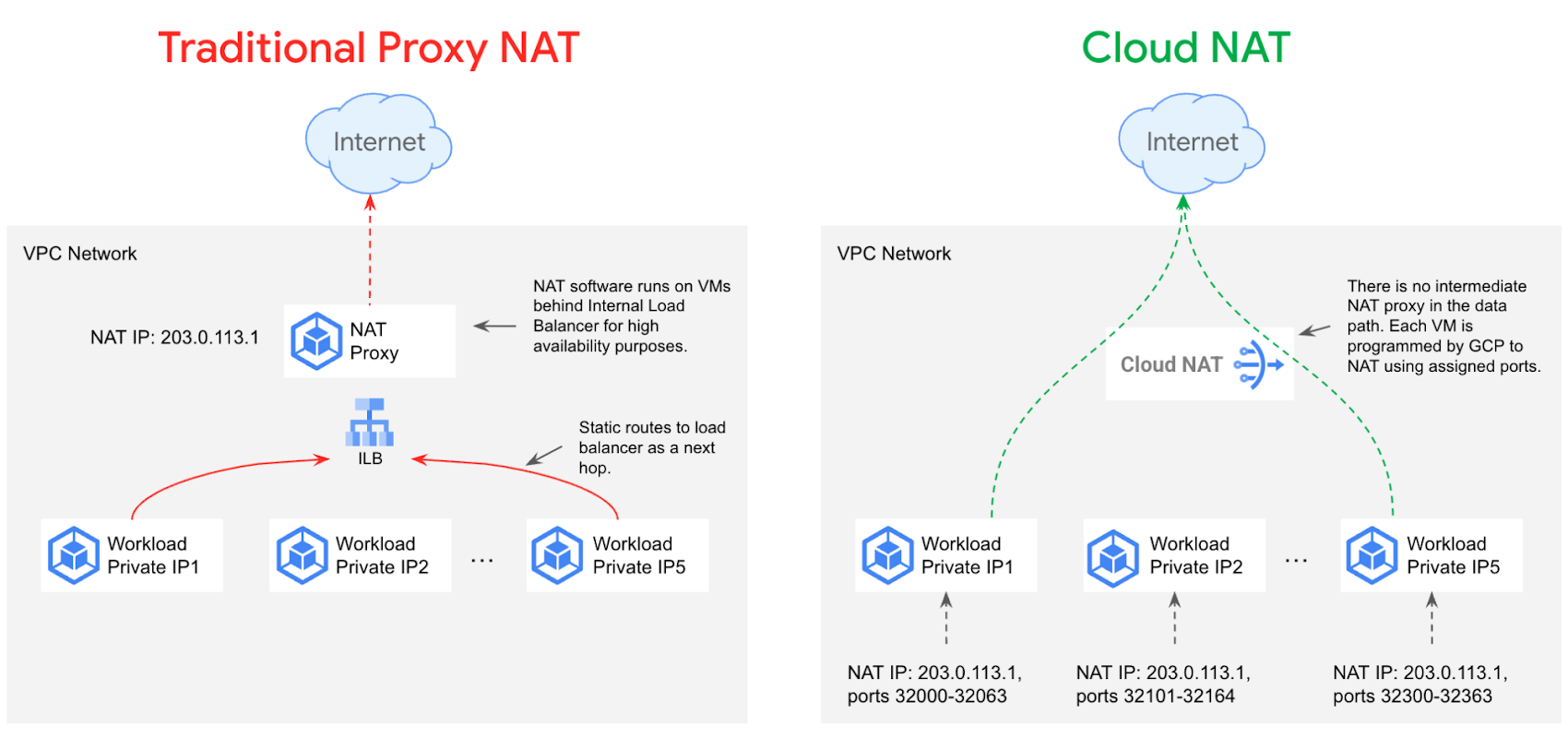
The software-defined networking that underpins Cloud NAT equipped Macy’s with more than just the benefit of simplified management. High availability is built into the product since it doesn’t depend on any virtual machine or physical gateway device, and it is available across different regions if a zone goes down. With an uptime SLA of 99.99%, Macy’s could feel confident that their operations would run without disruption.
Cloud NAT can also be configured to automatically scale the number of NAT IP addresses used. The proxyless architecture enables a chokepoint-free NAT operation so that workloads’ throughput and latency are minimally impacted. The myriad of benefits associated with using Cloud NAT over a traditional proxy are depicted below.
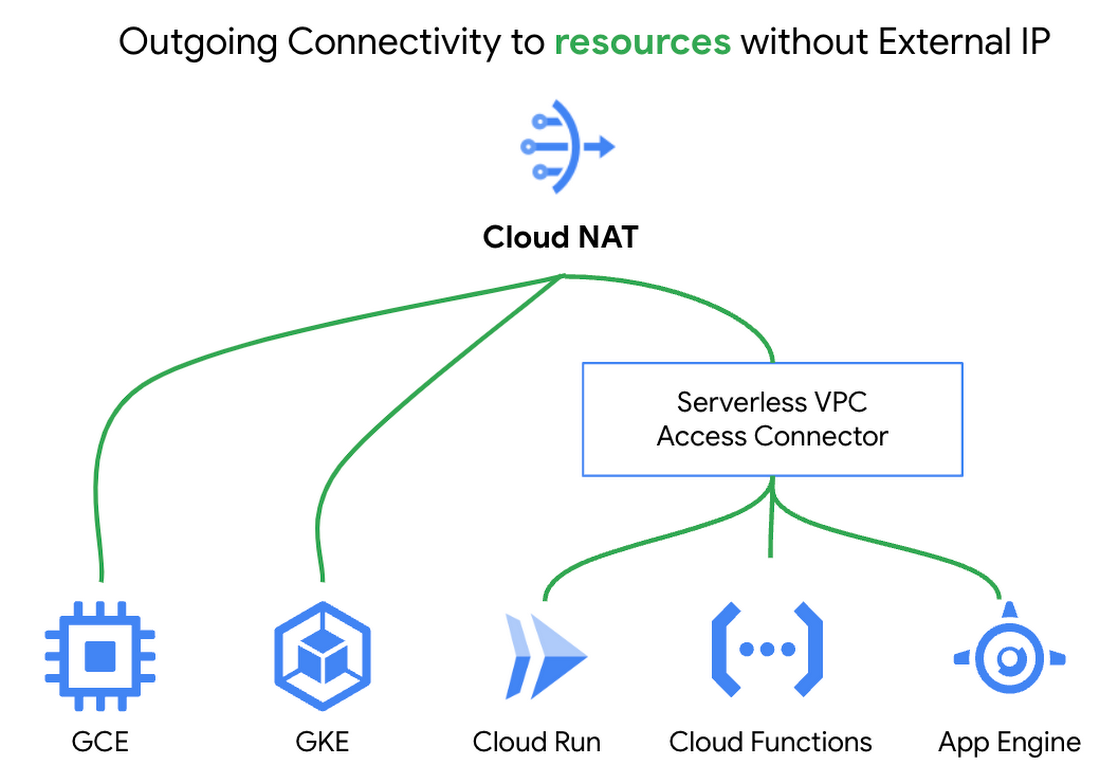
Lastly, Cloud NAT works with Google Compute Engine, Google Kubernetes Engine, and Serverless VPC Access connectors to support Cloud Functions, Cloud Run, and Google App Engine Standard. The built-in cloud integrations helped give Macy’s the confidence to deploy Cloud NAT knowing it met all the predefined requirements.
Upholding the highest security standards
Macy’s took advantage of Cloud NAT’s built-in logging and monitoring capabilities. NAT logs are automatically forwarded to a SIEM tool for transformation and analysis. This innate functionality provides greater insight into Macy’s environment and allows the security team to take action if any anomalous behavior is detected.
Cloud NAT’s inherent security and extensive benefits made it a straightforward decision for Macy’s. However, Cloud NAT is only one component of Macy’s defense-in-depth strategy, as illustrated below. It works with the existing Cloud Firewall rules to ensure only appropriate traffic is entering and exiting workloads.
None of the Cloud Firewall rules previously established needed to be reconfigured since Cloud NAT sits in front of the firewall. Existing egress firewall rules are evaluated for each packet before it hits the NAT, and ingress firewalls rules are evaluated after the packet hits the NAT. Cloud NAT does not permit any unsolicited inbound requests from the internet even if firewall rules would otherwise permit those requests.
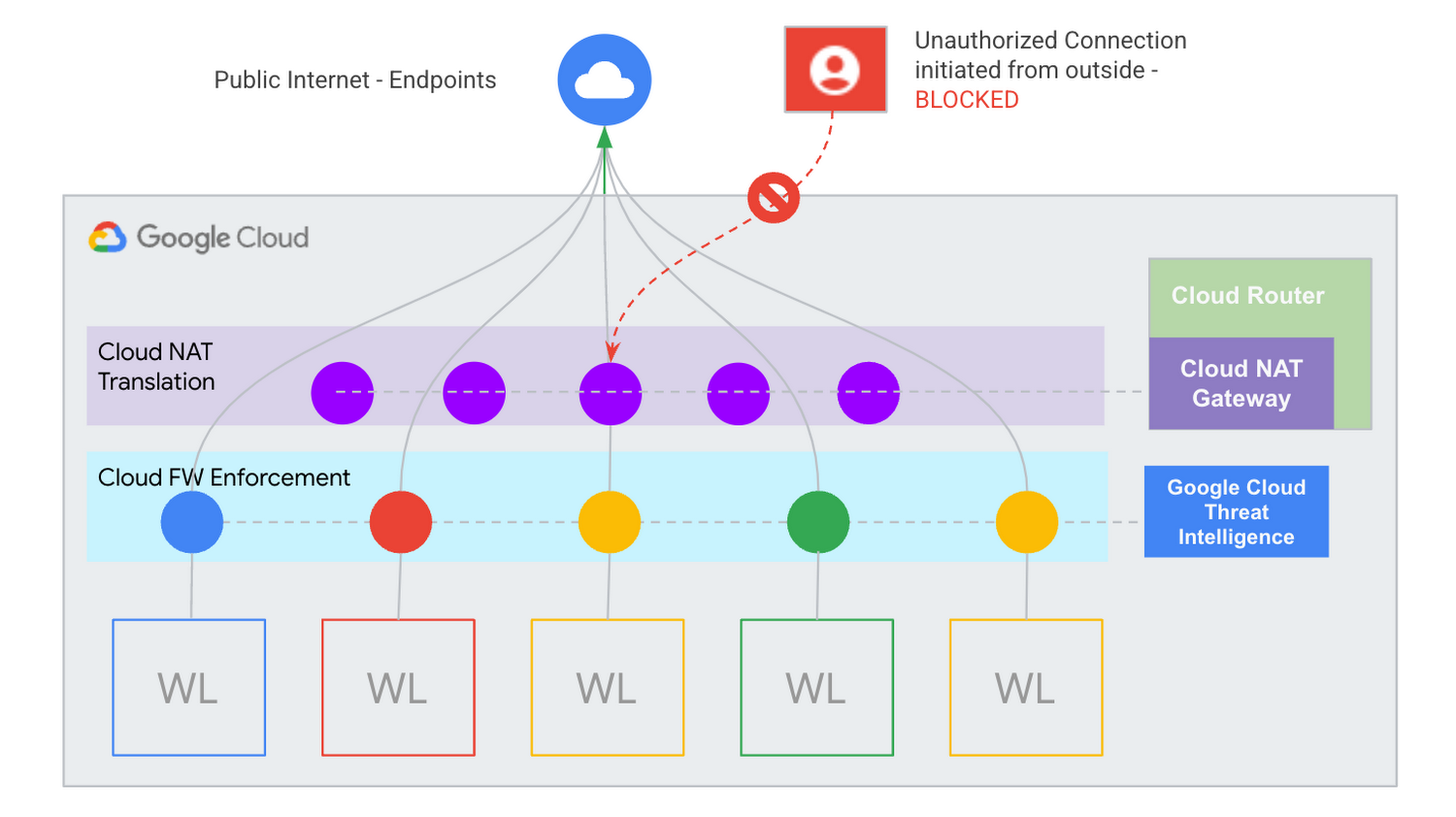
Macy’s continues to prove that security will never go out of style.
Learn more about Cloud NAT
Cloud NAT provides a path to help ensure your private resources stay private. Please watch this video on protecting your network with Cloud NAT to learn more about how it can help secure your environment. You can also get started using our quick start guide.
Towards Superior Cybersecurity: How SLSA and SBOM Help Build a Resilient Healthcare Industry

2945
Of your peers have already read this article.
3:30 Minutes
The most insightful time you'll spend today!
Taking prescription medication at the direction of anyone other than a trained physician is very risky—and the same could be said for selecting technology used to run a hospital, to manage a drug manufacturing facility and, increasingly, to treat a patient for a medical condition.
To pick the right medication, physicians need to carefully consider its ingredients, the therapeutic value they collectively provide, and the patient’s condition. Healthcare cybersecurity leaders similarly need to know what goes into the technology their organization’s use to manage patient medical records, manufacture compound drugs, and treat patients in order to keep them safe from cybersecurity threats.
Just like prescription medication, careful vetting and selection of the technology is required to ensure patient safety and establish visibility and awareness into the technology modern healthcare depends on to create a resilient healthcare system.
In this and our next blog, we focus on two topics critical to building resilience – software bill of materials (SBOM) and Google’s Supply chain Levels for Software Artifacts (SLSA) framework – and how to use them to make technology safe. Securing the software supply chain, or where the software we depend comes from, is a critical security priority for defenders and something Google is committed to helping organizations do.
Diving deeper into the technology we rely on
Cybersecurity priorities for securing healthcare systems usually focus only on protecting sensitive healthcare information, like Protected Health Information (PHI). Maintaining the privacy of patient records is an important objective and securing data and systems plays a big role in this regard.
Healthcare system leadership and other decision makers often depend on cybersecurity experts to select technologies and service providers that can meet regulatory rules for protecting data as a first (and sometimes only) priority. Trust is often placed on the reputations and compliance programs of the vendors who manufacture the technology they buy without much further inspection. Decision makers need to approach every key healthcare and life science technology or service provider choice as a high-risk, high-consequence decision, but few healthcare organizations have the skills, resources, and time to “go deep” in vetting the security built into the technology they buy before it enters a care setting.
Vetting needs to include penetrating analysis of all aspects of software and hardware, their architecture and engineering quality, the provenance of all parts that they’re made of, and assessing each component for risk. Doing this can sometimes require deep technical skills and advanced knowledge of medical equipment threats that may not be easy to acquire. Instead of making additional investments to help secure their networks and systems, many organizations choose simpler paths.
The failure to properly assess technological susceptibility to risk has exposed healthcare organizations and their patients to a variety of safety and security issues that may have been preventable. PTC (formerly Parametric Technology Corporation, which makes medical device software) disclosed seven vulnerabilities in March that impacted equipment used for robotic radiosurgery. In October 2019, the VxWorks Urgent 11 series of vulnerabilities was announced, affecting more than 1 billion connected devices, many used throughout healthcare and life sciences. More examples of medical devices and software found to have vulnerable components can be found on the FDAs cybersecurity website and in its recall database.
How a physician understands, selects, and prescribes medication parallels how we address these concerns when selecting technology. Recent FDA guidance suggests manufacturers must soon provide increased levels of visibility into the technologies they market and sell in the healthcare industry. Here’s where the SBOM, a key visibility mechanism, comes in.
What SBOMs do well, and how Google is helping make them better
The National Telecommunications and Information Administration defines the SBOM as a “nested inventory for software, a list of ingredients that make up software components.”
The concept of a SBOM appears to have found its start in enabling software makers back in the 1990s, although it originally stems from ideas popularized by visionary engineer and professor W. Edwards Deming. SBOM as a concept has advanced since then, with multiple standards for generating and sharing them now in use.
Thanks to the continued focus on improving and using SBOMs, we expect it will be much easier for defenders to use SBOMs to track software and its components, where they come from, what security vulnerabilities they contain, and equip protectors with their ability to stop those vulnerabilities from being exploited, at scale, and before they impact patient care.
“Software bills of materials help to bridge the knowledge gap created by running unknown, unpatched software and components as too many healthcare organizations currently do,” says Dan Walsh, chief information security officer at VillageMD, a tech-driven primary-care provider. “For security leaders, SBOM should be an extension of their asset inventory and management capability, regardless of whether that software was bought or built. At VillageMD, we are asking our vendors that store, transmit, receive or process PHI for an SBOM as part of our third-party vendor assessment program.”
Today’s SBOMs are most often basic text files generated by a software developer when the creation of software is complete and a product is assembled (or application is created from source code.) The text file contains information about the product’s software components and subcomponents, where those components and subcomponents came from, and who owns them. But unlike a recipe used to make a pharmaceutical, for example, an SBOM also tracks the software versions of components and subcomponents. SBOMs often capture:
- Supplier Name
- Component Name
- Version of the Component
- Other Unique Identifiers
- Dependency Relationship
- Author of SBOM Data
- Timestamp
Here’s the format of a SBOM generated using the SPDX v2.2.1 standard:
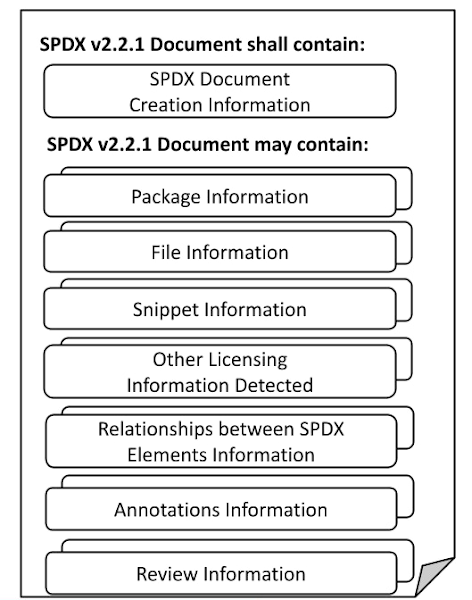
Technology producers, decision makers, and operators in any industry can use this information to deeply understand the risks the products pose to patients and the health system. An SBOM, for example, can show a reader if the software used on a medical device is merely out of date, or vulnerable to a cyber attack that could affect its safe use.
Google sponsors a number of initiatives focused on securing the software supply chain, including how to use SBOMs, through our work with U.S. government agencies, the Open Source Security Foundation, and Linux Foundation, including a project focused on building and distributing SBOMs. Learn about the SPDX project and Cyclone DX, read the ISO/IEC 5962:2021 standard (for SPDX), ISO ISO/IEC 19770-2:2015 (for SWID; another artifact that provides a SBOM), and other training resources from the Linux Foundation.
As an additional measure, healthcare organizations which use SBOM need to make sure they can trust that the SBOMs they rely on haven’t been changed since the manufacturer produced it. To defend against this, software makers can cryptographically sign their SBOMs making it easier to identify if a SBOM has been maliciously altered since it was first published.
While U.S. Executive Order 14028 created a federal mandate for the SBOM, and although many organizations have begun to incorporate that mandate into their software production workflows, many issues and roadblocks remain unresolved. At Google, we think the use of SBOM will help organization’s gain important visibility into the technologies that are entering our healthcare facilities and enable defenders to more capably protect both patient safety and patient data privacy.
Digging into the SLSA
We believe resilient organizations have resilient software supply chains. Sadly no single mechanism, like SBOM, can achieve this outcome. It’s why we created the SLSA framework, and services like Assured Open Source Software. SLSA was developed following Google’s own practices for securing its software supply chain.
SLSA is guidance for securing software supply chains using a set of incremental, enforceable security guidelines that can automatically create auditable metadata. This metadata will then result in a “SLSA certification” to a particular package or build platform. It’s a verifiable way to assure consumers that the software they use hasn’t been tampered with, something which doesn’t exist broadly today. We’ve recently explained more about how the SLSA works in blog posts on SLSA basics and more in-depth SLSA details.
Similarly, Assured Open Source Software gives organizations the ability to use the same regularly tested and secured software packages Google uses to build its software. Used in combination with a SBOM, technology makers can build reliable, safe, and verifiable products. Most technology buyers, such as those who run your local healthcare system, can use those same mechanisms to gain visibility into a technologies’ safety and fitness for use.
Where do we go from here?
Visibility into the components that make up the technology we use to care for patients is critically necessary. We can’t build a resilient healthcare system if our only priority is privacy of data. We must add resilience and safety to the list of our top priorities. Gaining deep visibility into the technology that decorates health system networks is a critical shift we must make. SBOM and SLSA help us make this shift. But remember, it’s not one or the other. As Dan Walsh from VillageMD says, the SBOM has a way to go:.
“It won’t solve all of your problems,” he cautions, but adds that when used correctly, “SBOM will help you improve visibility into the software that runs on the critical systems that keep societies safe and we’re excited to see it get traction.”
But when complemented with SLSA and topics we’ll cover next, such as a Vulnerability eXploitability Exchange (VEX), we are on a path to greater resilience.
More Relevant Stories for Your Company



Application Development with Kpt
Learn how to create and customize configuration packages with Kpt to build applications and adhere to configuration-as-data philosophy.

Building a Stronger Software Supply Chain: Five Essential Steps
Today, we published a new Google research report on software supply chain security because we’ve seen a sharp rise in software supply chain attacks across almost every sector —and expect these trends to continue for the foreseeable future. We urge all organizations to act now to improve their software supply

What’s in Line for Google Cloud’s Europe Customers in Regards to the E.U.-U.S. Data Transfer Framework
Last week, the European Commission and U.S. Government agreed on a new E.U.-U.S. data transfer framework. Earlier today, Google shared that it welcomes these efforts by the U.S. government to enhance privacy protections for E.U. data and facilitate trusted transatlantic data flows. For our Google Cloud customers, we intend to

How to overcome the 5 most common SecOps challenges
The success of the modern security operations center, despite the infusion of automation, machine learning, and artificial intelligence, remains heavily dependent on people. This is largely due to the vast amounts of data a security operations center must ingest—a product of an ever-expanding attack surface and the borderless enterprise brought
