





How Air Asia’s CIO Ensures Its 22,000 Employees Service Customers Efficiently and Preserve Security

3518
Of your peers have already read this article.
2:48 Minutes
The most insightful time you'll spend today!
At AirAsia, we operate a fleet of more than 270 aircraft across 23 markets, fly to more than 150 destinations and carry 100m guests each year. We’ve also been named the world’s best low-cost carrier for 11 years running. To accomplish all of this, we rely heavily on our 22,000 Allstars (employees). As AirAsia co-founder Tony Fernandes likes to say, “it has always been about the people.”
In my role as CIO, it’s critical that I give our Allstars the tools and technology they need to get their jobs done, while at the same time ensuring that our company’s data is protected and secure. While this is challenging enough in normal circumstances, we’re also in the midst of rapidly moving from legacy on-premises technologies to the cloud. Google Cloud has been a critical partner for us on this journey.
Identity challenges
AirAsia, like many other enterprises, has relied on a legacy on-premises directory for many years. As our company has quickly grown and expanded to new markets and regions, we’ve had to manage multiple servers across a number of on-premises data centers and the public cloud, which has proved costly and time-consuming.
Our Allstars, located all across Asia, need to easily access a number of legacy on-premises apps in addition to a growing number of SaaS apps. As a business, we also needed a more seamless integration between our HR system of record and our identity solution for user provisioning and lifecycle management. Solving these challenges with our existing on-premises directory was simply not feasible for us.
In recent years, we partnered with Google Cloud to help drive our digital transformation, including moving dozens of workloads and apps to Google Cloud Platform (GCP), deploying G Suite as our collaboration and productivity solution for all of our employees, and replacing thousands of Windows laptops with fast and secure Chromebooks.
We brought up our identity concerns with the Google Cloud team, and after a number of conversations, we decided to deploy Cloud Identity, Google’s cloud-based identity, and access management solution, to help address the identity challenges we were facing.
Why Cloud Identity for AirAsia?
We ended up choosing Cloud Identity for a few key reasons. Here at AirAsia, we are eager to move to the cloud as quickly as possible, and moving identity management to the cloud is a key enabler of this and our broader digital transformation. Managing identities from the cloud also enables us to have a single identity and set of credentials for each employee, which they can use to access all of the applications they need to be productive, both in the cloud and on-premises.
In addition, deploying Cloud Identity is a key step towards enabling the BeyondCorp (or zero trust) security model, which we feel is the best approach to strengthen our security posture and fight modern threats. Cloud Identity also integrates seamlessly with our existing technologies, which includes not only Google Cloud products like GCP, G Suite, and Chrome OS, but also third-party tools like Citrix, Papercut, and others.
And finally, Cloud Identity offered us significant cost and resource savings. With Cloud Identity in place, our IT department can spend less time worrying about managing multiple on-premises directory servers and can instead focus on delivering value to our Allstar employees.
Aiming for successful cloud security transformations to help CISOs prepare for future threats

2940
Of your peers have already read this article.
3:30 Minutes
The most insightful time you'll spend today!
Many security leaders head into the cloud armed mostly with tools, practices, skills and ultimately the mental models for how security works that were developed on premise. This leads to cost and efficiency problems that can be solved by mapping their existing mental models to those of the cloud.
When it comes to understanding the differences between on-premises cybersecurity mental models and their cloud cybersecurity counterparts, a helpful place to start is by looking at the kinds of threats each one is attempting to block, detect, or investigate.
Traditional on-premise threats focused on stealing data from databases, file storage, and other corporate resources. The most common defenses of these resources rely on layers of network, endpoint, and sometimes application security controls. The proverbial “crown jewels” of corporate data were not made accessible with an API to the outside world or stored in publicly accessible storage buckets. Other threats aimed to disrupt operations or deploy malware for various purposes, ranging from outright data theft to holding data for ransom.
There are some threats that are specifically aimed at the cloud. Bad actors are always trying to take advantage of the ubiquitous nature of the cloud. One common cloud-centered attack vector that they pursue is constantly scanning IP address space for open storage buckets or internet-exposed compute resources.
As Gartner points out, securing the cloud requires significant changes in strategy from the approach we take to protect on-prem data centers. Processes, tools, and architectures need to be designed using cloud-native approaches to protect critical cloud deployments. And when you are in the early stages of cloud adoption, it’s critical for you to be aware of the division of security responsibilities between your cloud service provider and your organization to make sure you are less vulnerable to attacks targeting cloud resources.
Successful cloud security transformations can help better prepare CISOs for threats today, tomorrow, and beyond, but they require more than just a blueprint and a set of projects. CISOs and cybersecurity team leaders need to envision a new set of mental models for thinking about security, one that will require you to map your current security knowledge to cloud realities.
As a way to set the groundwork for this discussion, the cloud security transformation can start with a meaningful definition of what “cloud native” means. Cloud native is really an architecture that takes full advantage of the distributed, scalable, and flexible nature of the public cloud. (To be fair, the term implies that you need to be born in the cloud to be a native, but we’re not trying to be elitist about it. Perhaps a better term would be “cloud-focused” or doing the security “the cloudy way.”)
However we define it, adopting cloud is a way to maximize your focus on writing code, creating business value, and keeping your customers happy while taking advantage of cloud-native inherent properties—including security. One sure way to import legacy mistakes, some predating cloud by decades, into the future would be to merely lift-and-shift your current security tools and practices into the public cloud environment.
Going cloud-native means abstracting away many layers of infrastructure, whether it’s network servers, security appliances, or operating systems. It’s about using modern tools built for the cloud and built in the cloud. Another way to think about it: You’ll worry less about all these things because you’re going to build code on top of that to help you move more quickly. Abandoning legacy security hardware maintenance requirements is part of the win here. To put another way, security will follow in the steps of IT that has been transformed by the SRE and DevOps revolution.
You can extend this thinking to cloud native security, where some of your familiar tools combine with solutions provided by cloud service providers to take advantage of cloud native architecture to secure what’s built and launched in the cloud. While we talked about the differences between on-prem targeted threats compared to threats targeting cloud infrastructure, here are other vital areas to re-evaluate in terms of a cloud security mental model.
Network security
Some organizations practice network security in the cloud as if it were a rented data center. While many traditional practices that worked reasonably well on-premise for decades, along with many traditional network architectures, are either not applicable in the cloud or not optimal for cloud computing.
However, concepts like a demilitarized zone (DMZ) can be adapted to today’s cloud environments. For example, a more modern approach to DMZ would use microsegmentation and govern access by identity in context. Making sure that the right identity, in the right context, has access to the correct resource gives you strong control. Even if you get it wrong, microsegmentation can limit a breach blast radius.
Becoming cloud native also drives the adoption of new approaches to enterprise network security, such as BeyondProd. It also benefits organizations because it gets them away from traditional network perimeter security to focus on who and what can access your services—rather than where requests for access originated.
Although network security changes driven by cloud adoption can be enormous and transformational, not all areas shift in the same way.
Endpoint security
In the cloud, the concept of a security endpoint changes. Think of it this way: A virtual server is a server. But what about a container? What about microservices and SaaS? With software as a service cloud model, there’s no real endpoint there. All along your cloud security path, users only need to know what happens where.
Here is a helpful mental model translation: An API can be seen as sort of an endpoint. Some of the security thinking developed for endpoints applies to cloud APIs as well. Securing access, permissions, privileged access thinking can be carried over, but the concept of endpoint operating system maintenance does not.
Even with automation of service agents on virtual machines in the cloud, insecure agents may increase risks because they are operating at scale in the cloud. Case in point: This major Microsoft Azure cross-tenant vulnerability highlighted a new type of risk that wasn’t even on the radar of many of its customers.
In light of this, across the spectrum of endpoint security approaches, some disappear (such as patching operating systems for SaaS and PaaS), some survive (such as the need to secure privileged access,) and yet others are transformed.
Detection and response
With a move to the cloud comes changes to the threats you’ll face, and changes to how you detect and respond to them. This means that using on-prem detection technology and approaches as a foundation for future development may not work well. Copying all your on-premises detection tools and their threat detection content won’t reduce risks in the way that most cloud-first organizations will need..
Moving to the cloud provides the opportunity to rethink how you can achieve your security goals of confidentiality, integrity, availability, and reliability with the new opportunities created by cloud process and technology.
Cloud is distributed, often immutable, API-driven, automatically scalable, and centered on the identity layer and often contains ephemeral workloads created for a particular task. All these things combine to affect how you handle threat detection for the cloud environment and necessitate new detection methods and mechanisms.
There are six key domains where threats in the cloud can be best detected: identify, API, managed services, network, compute, and Kubernetes. These provide the coverage needed related to network, identity, compute, and container infrastructure. They also provide specific detection mechanisms for API access logs and network traffic captures.
As with endpoint security, some approaches become less important (such as network IDS on encrypted links), others can grow in importance (such as detecting access anomalies,) while others transform (such as detecting threats from the provider backplane).
Data security
The cloud is changing data security in significant ways, and that includes new ways of looking at data loss prevention, data encryption, data governance, and data access.
Cloud adoption sets you on a path to what we at Google call “autonomic data security.” Autonomic data security means security has been integrated throughout the data lifecycle and is improving over time. At the same time, it makes things easier on users, freeing them from having to define and redefine myriad rules about who can do what, when, and with which data. It lets you keep pace with constantly evolving cyberthreats and business changes, so you can keep your IT assets more secure and make your business decisions faster.
Similar to other categories, some data security approaches wane in importance or disappear (such as manual data classification at cloud scale), some retain their importance from on-prem to cloud unchanged, while others transform (such as pervasive encryption with effective and secure key management).
Identity and access management
The context for identity and access management (IAM) in the cloud is obviously different from your on-premise data center. In the cloud, every person and service has its own identity and you want to be able to control access.
Within the cloud, IAM gives you fine-grained access control and visibility for centrally managing cloud resources. Your administrators authorize who can act on specific resources, giving you full control and visibility to manage cloud resources centrally. What’s more, if you have complex organizational structures, hundreds of workgroups, and a multitude of projects, IAM gives you a unified view into security policy across your entire organization.
With identity and access management tools, you’re able to grant access to cloud resources at fine-grained levels, well beyond project-level access. You can create more granular access control policies to resources based on attributes like device security status, IP address, resource type, and date and time. These policies help ensure that the appropriate security controls are in place when granting access to cloud resources.
The concept of Zero Trust is strongly in play here. It’s the idea that implicit trust in any single component of a complex, interconnected system can create significant security risks. Instead, trust needs to be established via multiple mechanisms and continuously verified. To protect a cloud-native environment, a zero trust security framework requires all users to be authenticated, authorized, and validated for security configuration and posture before being granted or keeping access to cloud-based applications and data.
This means that IAM mental models from on premise security mostly survive, but a lot of underlying technology changes dramatically, and the importance of IAM in security grows significantly as well.
Shared fate for greater trust in cloud security
Clearly, cloud is much more than “someone else’s computer.” That’s why trust is such a critical component of your relationship with your chosen cloud service providers. Many cloud service providers acknowledge shared responsibility, meaning that they supply the underlying infrastructure but leave you responsible for many seemingly inscrutable security tasks.
With Google Cloud, we operate in a shared fate model for risk management in conjunction with our customers. We believe that it’s our responsibility to be active partners as our customers deploy securely on our platform, not delineators of where our responsibility ends. We stand with you from day one, helping you implement best practices for safely migrating to and operating in a trusted cloud.
Get ready to go cloud native
We offer you several great resources to help you prepare for cloud migration, and guide you as you review your current security approaches for signs of on-prem thinking.
Listen to our podcast series where Phil Venables, Vice President, CISO at Google Cloud, and
Nick Godfrey, Director, Financial Services Security & Compliance and member of Office of the CISO at Google Cloud, join me in a discussion on preparing for cloud migration (Podcast 1, Podcast 2). You can deepen your cloud native skills by earning a Professional Cloud Security Engineer certification from Google.
Google Workspace to Extend Digital Sovereignity for EU Organizations in Later Part of 2022

4792
Of your peers have already read this article.
2:00 Minutes
The most insightful time you'll spend today!
European organizations are moving their operations and data to the cloud in increasing numbers to enable collaboration, drive business value, and transition to hybrid work. However, the cloud solutions that underpin these powerful capabilities must meet an organization’s critical requirements for security, privacy, and digital sovereignty. We often hear from European Union policymakers and business leaders that ensuring the sovereignty of their cloud data, through regionalization and additional controls over administrative access, is crucial in this evolving landscape.
Today, we’re announcing Sovereign Controls for Google Workspace, which will provide digital sovereignty capabilities for organizations, both in the public and private sector, to control, limit, and monitor transfers of data to and from the EU starting at the end of 2022, with additional capabilities delivered throughout 2023. This commitment builds on our existing Client-side encryption, Data regions, and Access Controls capabilities.
Offering enhanced customer controls, including Client-side encryption
Encryption is an important technical control that limits a cloud provider’s access to customer data. Google Workspace already uses the latest cryptographic standards to encrypt all data at rest and in transit between our facilities. The European Data Protection Board recommendations include encryption as part of the supplementary measures to protect data. Google Workspace is leading the way on such measures with our Client-side encryption feature that allows customers to continue benefiting from the powerful innovations of Google Cloud while retaining complete confidentiality and control over their data.
Google Workspace’s unique approach to client-side encryption provides our customers with authoritative privacy control over their data through encryption keys that they can hold on site, within a nation’s borders, or within any other boundary they define. Google never has access to the keys or key holders, which means the data is indecipherable to us and we have no technical ability to access it. We deliver this level of encryption without the need for legacy desktop clients, while maintaining the same high-quality experience for your users such as online co-authoring.
Organizations can choose to use Client-side encryption pervasively across all their users, or create rules that apply to specific users, organizational units, or shared drives. Client-side encryption is now generally available for Google Drive, Docs, Sheets, and Slides, with plans to extend the functionality to Gmail, Google Calendar, and Meet by the end of 2022.
Expanding data location controls
Data regions already allow our customers to control the storage location of their covered data at-rest. We will enhance this capability by the end of 2023 through expanded coverage of data storage and processing in-region along with an in-country copy.
As employees and organizations adopt new ways of working in a hybrid world, they need secure access to data to drive key business outcomes. But this trend, combined with complex technical architectures, presents significant challenges to retaining control over where data resides.
Our cloud-native architecture means that Google Workspace functions fully within a browser, without requiring caches or installed software on employee devices. We adopt a zero-trust approach, with built-in security that provides controls to geo-fence devices and users through Context Aware Access. Moreover, admins can set sharing boundaries and define rules that govern user communication.
In short, we empower admins with critical capabilities that can give them granular control over the flow of their data without hindering the modern collaboration capabilities that form the foundation of Google Workspace. We are enabling organizations to strike the right balance between data location and collaboration across teams, partners, and customers.
Control and transparency for administrative access
When moving to a cloud-based service, organizations need greater visibility and control over all forms of administrative access to their systems, including who has access, the nature and circumstances of that access, and the ability to specify that only certain personnel—in designated countries or regions—have access. These capabilities are core to our approach for meeting evolving digital sovereignty standards.
Building on this approach, we will implement a series of new Access Controls by the end of 2023 that will enable customers to:
- Restrict and/or approve Google support access through Access Approvals.
- Limit customer support to EU-based support staff through Access Management.
- Ensure round-the-clock support from Google Engineering staff, when needed, with remote-in virtual desktop infrastructure .
- Generate comprehensive log reports on data access and actions through Access Transparency, which is already available in GA.
Sovereign Controls for Google Workspace will deliver digital sovereignty through a comprehensive set of capabilities for organizations working in and across EU regions. In parallel, Google Cloud will continue to provide customers with legal mechanisms for international data transfer, which will include making the protections offered by the new EU data transfer framework available once it is implemented.
We remain committed to equipping our customers in Europe and across the globe with powerful technical solutions that help them adapt to, and stay on top of, a rapidly evolving regulatory landscape. We’ve designed and built Google Workspace to operate on a secure foundation, providing capabilities to keep our users safe, their data secure, and their information private. Digital sovereignty is core to our ongoing mission in Europe and elsewhere, and a guiding principle that customers can rely on now and into the future.

The Many Risks of Ignoring the Impact of a Tighter Cloud Security Framework
DOWNLOAD WHITEPAPER3232
Of your peers have already downloaded this article
3:30 Minutes
The most insightful time you'll spend today!
The perimeter has disappeared and access to company data is no longer limited to your physical office or your employees. Instead, in today’s transformed workforce – increasingly connected, collaborative and in the cloud – the security perimeter has become dispersed and elastic, wrapped around each user and device.
Moreover, ‘users’ no longer refers to simply employees, but also vendors, partners, contractors, and customers. Each of these groups has its own requirements – access to different information and applications, from different locations and different devices. In this ever-evolving ecosystem of users, apps, and devices, traditional approaches to identity and access management aren’t ready for this new environment.
Time-consuming and complex, these approaches were built for the on-premise world (think cumbersome VPNs, limited device access and inconvenient authentication), instead of today’s cloud-first world.
Organizations are also facing increased pressure for digital transformation, higher compliance standards to prevent the loss of company data, and more sophisticated cyber-attacks – it’s no wonder organizations are grappling with these unprecedented pressures. Clearly, a new approach to identity management is needed.
That’s where Cloud Identity can help – an identity, access and device management (IAM/EMM) platform that helps organizations maximize user and IT efficiency, protect company data with Google-grade security, and transition to a digital workspace at their own pace.
Public Cloud’s Zero Trust Architecture Keeps Enterprise Data Safe

4611
Of your peers have already read this article.
5:00 Minutes
The most insightful time you'll spend today!
Over the past decade, cybersecurity has posed an increasing risk for organizations. In fact, cyber incidents topped the recent Allianz Risk Barometer for only the second time in the survey’s history. The challenges in combating these risks only continue to grow. Adversaries tend to be agile and are consistently looking for new ways to land within your digital environments. They also drive attack vectors that work, which means enterprise risk leaders are now forced to look for new ways of securing infrastructure and data.
Cloud comes of age in the modern day cybersecurity threat landscape
When cloud, in its various delivery models, was first introduced, it didn’t fit neatly into the security frameworks that had seemingly protected networks for many decades. Public cloud was the answer to ongoing IT challenges: scale, resources, security capabilities, and budget cycle limitations. Now, public cloud is meeting the increasing challenge of implementing cybersecurity controls and frameworks that are capable of protecting today’s global enterprise.
Cloud adoption – with all its scale and redistribution of longstanding security paradigms – is the optimal choice for infrastructure and security, particularly as organizations grapple with the need to engage in digital transformation. We assert that successful digital transformation is impossible without incorporating the use of the scale, security architecture, and resiliency of the cloud.
Consequently, cloud adoption becomes a necessary component of roadmap discussions and planning as your organization looks to reduce overall risk. Risk leaders and enterprise cybersecurity leaders must consider that moving data, digital processes, and priority workloads to the public cloud is a crucial step for meeting the current and future digital needs of the enterprise. Going forward, this digital transformation increasingly will include hybrid infrastructure environments composed of a combination of on-premises and cloud solutions.
Pinpointing where threats thrive
As digital environments become more complex within a given organization, proactively countering adversaries becomes all the more difficult. It’s harder to implement, scale, and adhere to existing security and control frameworks. It’s also increasingly challenging to apply framework guidance to new applications, build and support infrastructure within a secure foundation, and maintain good cyber hygiene through the digital lifecycle.
As reported by TechTarget, the 2020 hack of the SolarWinds Orion IT performance monitoring system is a prime example. It grabbed headlines “not because a single company was breached, but because it triggered a much larger software supply chain incident.” This vulnerability in popular, commercially available, and widely utilized software compromised the data, networks, and systems of thousands of companies when a routine software update turned out to be backdoor malware.
A close look at the root problems behind high-profile security breaches reveals that it’s a lack of agility and an inability to scale resources that prohibit the modern security organization’s ability to respond quickly enough to counter new challenges. Look even closer and you’ll often find an insufficient implementation of best practices and ineffective solutions, leaving an organization continually chasing the next tool or solution and scrambling to stay ahead of emerging threats.
While the cost to individual businesses is high, most organizations struggle with the needed skills and resources to rigorously maintain data security basics and ensure readiness for inevitable attacks. The previous sentence is especially true when you consider that maintaining an effective state of cybersecurity readiness is a costly practice that requires the continual development of expertise, the evaluation of new tools, and an ongoing element of vigilance.
Threat visibility is a big part of the problem. You can’t protect your company from what you can’t see. For individual enterprises – with critical data workloads housed in a combination of on-premises servers, a variety of endpoints, and both private and public cloud instances – staying ahead in the ongoing battle requires a new approach.
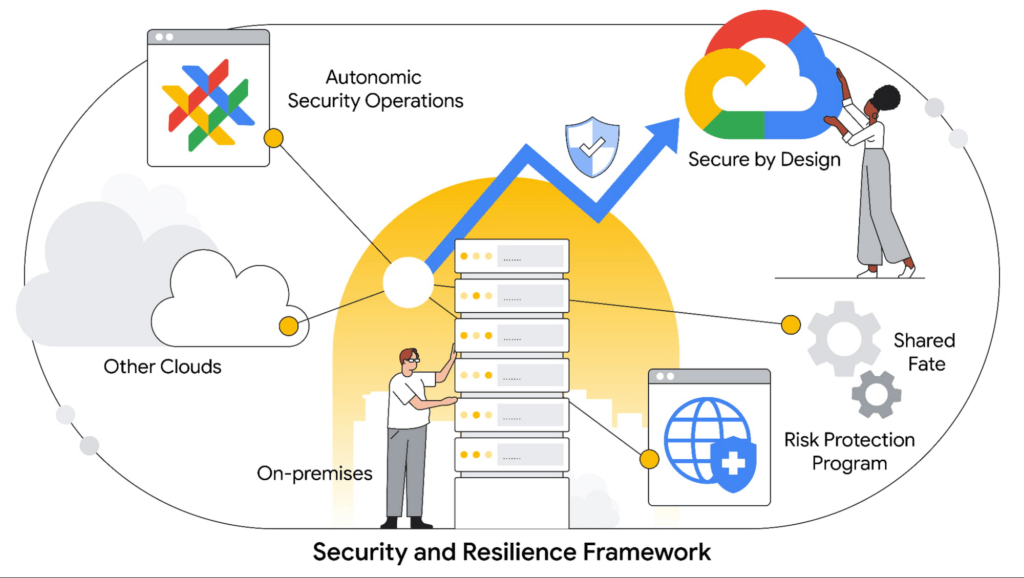
The identification of actionable alerts and other data contributes to a better overall state of readiness. Thought leadership and discussions related to Autonomic Security Operations provide a promising outlook for security organizations willing to lean into the changing technology landscape – a landscape that now benefits from leveraging automation and machine learning currently used in security stacks. Reducing the chance of introducing vulnerabilities or missing-critical alerts starts with ensuring full visibility into an increasingly expanding and complex environment.
The evolution of a shared responsibility to a shared fate
Industry megatrends are driving cloud adoption and with it a path to improved cybersecurity. Among these trends is the concept of shared fate as an evolution of the historical shared-responsibility model. Shared fate drives a flywheel of increasing trust which develops as more enterprises transition to the cloud. This compels an even higher security investment and a more vested interest from cloud service providers.
At Google Cloud, shared fate means we take an active stake in our customers’ security posture, offering capabilities and defaults that help ensure secure deployments and configurations in the public cloud. We also offer experience-based guidance on how to configure cloud workloads for security, and can assist with risk management, reduction, and transfer.
The Google Cloud Risk Protection Program represents the continuing evolution of the shared-fate model. The program offers a practical solution that provides the modern enterprise a snapshot comparison of its current security state against well-adopted cloud-security frameworks. It also give you an opportunity to explore cyber insurance designed to meet your needs from our partners Allianz and Munich Re.
When performed with diligence, cloud adoption can help increase your overall cybersecurity effectiveness. Using a hybrid approach – and steadily reducing which data assets remain on premises – can strengthen your overall security posture and reduce risks to the organization.
Cloud security and the ability to reduce risk
In comparison to the enterprise-by-enterprise security scramble to protect data and workloads in individual private clouds, global public cloud solutions like Google Cloud can be a force multiplier when adhering to established best practices. By that, we mean, quite literally, that you get more security at every touchpoint – from infrastructure and software to access and data security.
Strong security in the public cloud starts with the foundational pieces: the hardware and design elements. At Google, for example, we take a security-by-design approach within both the data center and purpose-built components themselves. Within Google Cloud, data is encrypted by default – both at rest and in transit. Google’s baseline security architecture adheres to the zero trust principles, meaning that every network, device, person, or service initially cannot be trusted.
Embarking on a zero trust architecture journey gives modern security practitioners the ability to methodically shut down traditional attack vectors. Zero trust also provides more granular visibility and control of rapidly expanding environments. The recent emphasis of its benefits, as the U.S. White House set forth through an executive order on increasing cybersecurity resilience, is an example of the wide-scale recognition by both government and industry on the benefits of this approach.
Since adopting a zero trust approach more than a decade ago, Google has achieved a recognizable level of maturity, reflected by our internal infrastructure and multiple enterprise offerings, enabling different aspects of the zero trust security journey.
Compliance and privacy drive critical elements of the cloud adoption cycle
Privacy frameworks, regulatory compliance, and data sovereignty are driving critical elements of the cloud adoption cycle. Cloud providers must ensure they have the necessary controls, attestations, and abilities to audit in order to provide organizations with the tools to preemptively satisfy regulatory and compliance mandates across the globe.
Now consistently expected to be part of a design feature that’s built into the cloud journey, it cannot simply be an add-on capability. The direction of this evolution promises to play more of a role in the future of cloud adoption, not less. Because this is an ongoing component of enterprise risk evaluation, your business must consider cloud providers that can partner on this critical aspect of the journey – and not leave you without the resources to respond to this growing critical need.
Building trust into your digital transformation journey
Digital transformation is difficult because the modern enterprise must build and design for both today and tomorrow. From a security perspective, the challenge has often been that security industry practitioners cannot always predict what the future will look like. That said, there are clear steps you can take to mitigate all-around risk throughout the process.
How you approach the cloud is, of course, integral to your journey, but it doesn’t need to be an all-or-nothing proposition. And although technology debt continues to persist with legacy systems, that doesn’t mean you shouldn’t begin to move forward.
Google Cloud enables you to modernize at your own pace and understand what’s realistic. We recommend you move what data you can to a more secure public cloud today, followed by a phased approach to move more in the months and years that follow. The key tenets of our approach to security in the public cloud include:
- The security-by-design posture of Google Cloud can help modern-day enterprises scale security capabilities and reduce risk with an architecture built on zero trust principles.
- The Google Cloud approach to security and resiliency includes a framework to help you protect against adverse cyber events by using our comprehensive suite of solutions.
- Google Cloud can help ensure your organization adheres to the requirements of a growing and increasingly complex regulatory and compliance environment.
- The ideal model of a future organization is one where cloud plays a major role in infrastructure design and architecture. Your organization should begin to view public cloud as an enabler of the business and a core component of digital transformation.
As you transition more data to the public cloud, it’s paramount that trust is ingrained in every step you take with your cloud service provider. Many service providers readily take on a shared responsibility with your organization when it comes to security. At Google, we take it several steps further with our shared fate model to help ensure data security in the public cloud. Your future and our’s are part of the same data security journey.
Improving Your Security Posture: Integrating Cloud DLP with Security Command Center

1195
Of your peers have already read this article.
4:00 Minutes
The most insightful time you'll spend today!
Our Cloud Data Loss Prevention (Cloud DLP) discovery service can monitor and profile your data warehouse to bring awareness of where sensitive data is stored and processed. Profiling is also useful for confirming that data is not being stored and processed where you don’t want it.
But how can you make use of this intelligence within your existing security and governance workflows so you can reduce risk? Starting today, we have integrated Cloud DLP’s sensitive-data discovery service with Security Command Center, our platform-native security and risk management solution. By bringing together sensitive data intelligence with your security controls, security teams can identify and act quickly on the vulnerabilities and help address threats that matter for your organization.
Data sensitivity and risk prioritization
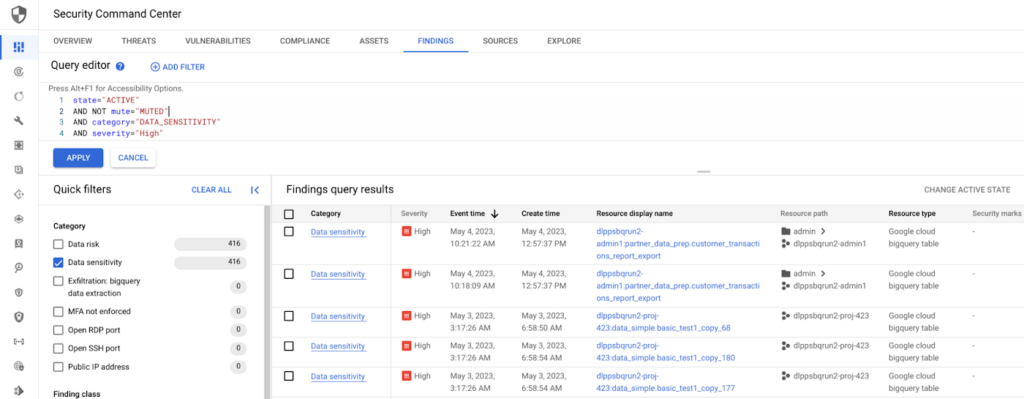
Not all security threats, vulnerabilities, and misconfigurations generate an equal degree of risk. Some affect only test data or development environments. But others can place your organization’s sensitive information at risk of exposure or misuse. Understanding what to prioritize is often a big challenge for security professionals.
When this awareness is fed into Security Command Center, it allows your team to prioritize the Security Command Center findings that are driving greater security and compliance risk, and to help make informed decisions as to how to address those issues.
Understanding BigQuery data exfiltration threats
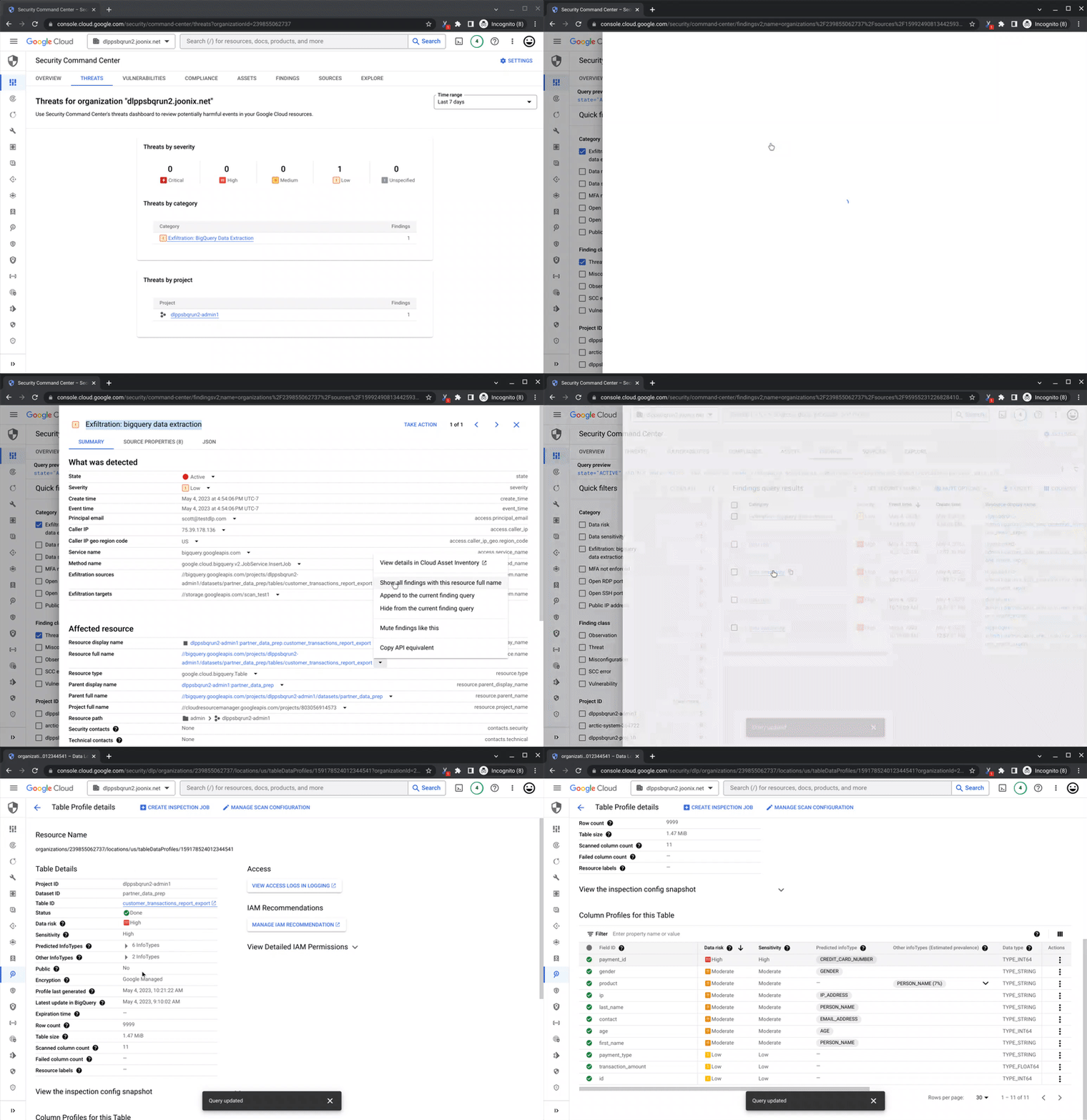
Security Command Center’s threat detection capability can analyze access and copy behavior of BigQuery data to help detect potential risk of exfiltration. With Cloud DLP intelligence on where sensitive data lives in BigQuery tables and datasets, you can now focus and prioritize on the exfiltration findings tied to your sensitive assets.
Remediation and data security posture management
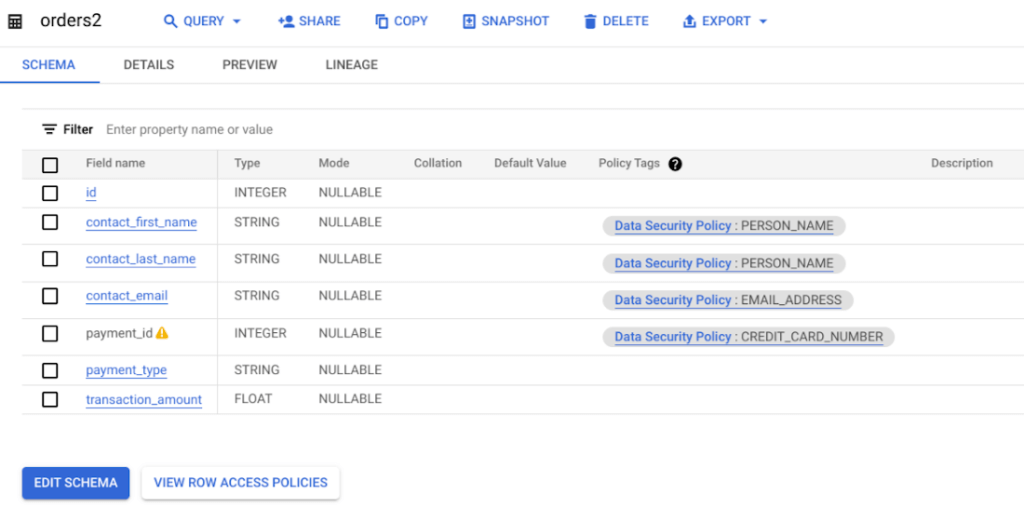
The intelligence from Cloud DLP’s sensitive-data discovery service helps you take a data-first approach to securing your assets. Use insights like Cloud DLP’s predicted infoType to apply column-level, fine-grained access or dynamic masking policies and consider de-identification to further help reduce the risk of data use operations and improve your overall security, privacy, and compliance posture.
Get started
To get started with richer sensitive data intelligence, enable the connection between Cloud DLP’s discovery service and Security Command Center. There is no additional cost to enable the integration for users of both products.
As soon as it’s enabled, you can begin to use your sensitive data intelligence to supercharge your security and support your compliance teams’ work.
Read more about how the sensitive data discovery service can meet your organization’s needs, and how you can get started managing your security posture with Security Command Center.
More Relevant Stories for Your Company

Securing apps using Anthos Service Mesh
Hi there! I'm David Challoner from Access Site Reliability Engineering (SRE), here with Anthony Bushong from Developer Relations to talk about how Corp Eng is adopting Anthos Service Mesh internally at Google. Corp Eng is Google's take on "Enterprise IT". A big part of the Corp Eng mission is running

Highmark & Google’s Secure-by-design Technique to Bring the Living Health Solution to Life
In an industry as highly regulated as healthcare, building a single secure and compliant application that tracks patient care and appointments at a clinic requires a great deal of planning from development and security teams. So, imagine what it would be like to build a solution that includes almost everything

The Right Datawarehouse Helps Fight Climate Change, While Improving Customer Experience
When you think about climate change, you might not consider a daily commute to work or a drive around town as big contributing factors. And yet, transport is the fastest growing source of CO2 emissions from fossil fuel, which in turn is the largest contributor to climate change. This is the key insight

Why CISOs Need to Know This to Protect Users From Unsafe Websites
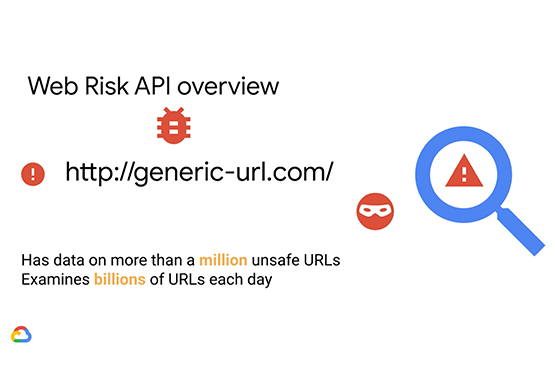
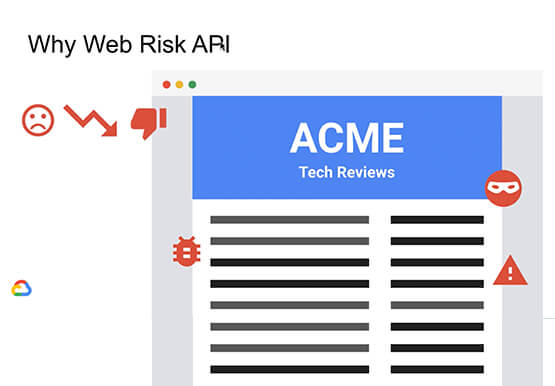
Unsafe web resources include social engineering sites—such as phishing and deceptive sites—and sites that host malware or unwanted software. For CISOs and their teams, this can quickly become an insurmountable challenge if it's not nipped in the bud. But there's a way to enable companies to find unsafe URLs before their
