





4106
Of your peers have already watched this video.
10:00 Minutes
The most insightful time you'll spend today!
HSBC Looks to Google Cloud to Transform Banking
HSBC, a global bank that is a central part of global commerce with a presence in 67 countries, serving 38 million customers ranging from individuals to small businesses to corporations and governments, and having over $2.5 trillion assets in its balance sheet, had a vision of being a cloud first company and wanted to transform the banking experience for its customers.
The bank wanted to glean valuable insights from its huge data asset of about 100 petabytes and wanted to use those insights to manage its business better. What it needed was a managed service with elastic capability so that HSBC can focus on the data science and management, which enables better customer experience.
For many years HSBC had, like most large corporations, tried to build its own data centers, provision the infrastructure, and run it. However, to realize its ambition of focussing on customer experience, the bank decided to partner with Google Cloud.
However, the journey wasn’t an easy one. Being a globally systemically important financial institution, it had to convince regulators across the world that moving customer data to the cloud is a good thing. Towards that end, it formed a joint team to work through all the challenges and created a cloud framework for banking describing the controls needed.
The results have been quite stunning. Able to calculate the global liquidity for a country in minutes rather than hours, run better financial crime analytics with speeds that are 10 times faster with a higher level of precision and accuracy have been some of the benefits that the bank has derived.
See how HSBC and Google Cloud are bringing a new level of security, compliance and governance capabilities to one of the world’s leading banking institutions.
There are 2 Key Traits You Need to Battle the Slowdown. FM Logistic Know How to Enable Them

6383
Of your peers have already read this article.
4:30 Minutes
The most insightful time you'll spend today!
FM Logistic provides its international customers with complete logistics solutions that cover everything from warehousing and handling, to transport and distribution, co-packing and co-manufacturing, and supply chain optimization. Operating in 14 countries including France, Russia, Poland, India, Vietnam, Brazil, and China, FM Logistic supports its clients by offering specialized services across a number of markets including consumer goods, retail, cosmetics, and health.
“We are in the process of transforming all our tools and integrating new solutions to be able to work faster and more efficiently. Two main IT priorities are mobility and openness, in terms of working from anywhere and being able to interact with other information systems.”
– Communication Manager, FM Logistic
As a business that has existed since 1967 and in 2018 achieved a turnover of €1.178 billion with 9.5% annual growth, FM Logistic is always looking to help secure the company’s position within an evolving sector. To better serve its customers, FM Logistic decided to launch an innovation project in 2017 to transform the internal digital tools of the company and replace its intranet, email, and productivity software. The company looked for an integrated solution that would enable more collaborative ways of working and bring its international operations closer together. The company found that implementing G Suite and LumApps social intranet was the perfect combination.
“We are in the process of transforming all our tools and integrating new solutions to be able to work faster and more efficiently,” says the Communication Manager at FM Logistic. “Two main IT priorities are mobility and openness, in terms of working from anywhere and being able to interact with other information systems.”
A global transformation
For large international companies with global operations, implementing a single integrated solution to enable collaboration across regions while respecting regional variations can be a real challenge.
“We have 26,000 employees spread across a broad geography, with a variation in cultures and technological maturity. There was an aspiration to work in collaboration, but the necessary tools were not in place,” says FM Logistic’s Communication Manager. FM Logistic looked for a solution to enable new, more collaborative work practices, which were flexible in terms of usage and that, most importantly, would work as part of an integrated solution.
To do that, FM Logistic worked with Google Partner Devoteam G Cloud to implement G Suite alongside the LumApps intranet portal. It took six months to complete the migration of 7,000 accounts, with employees accessing the Business or Basic G Suite edition according to their needs. “Before, with our physical infrastructure we found ourselves buying additional hard drives as we ran out of storage,” says the Technical Project Manager at FM Logistic. “That’s no longer a problem, and we can tailor access depending on whether or not employees need unlimited storage .”
“It’s a real advantage to be able to access your account from any device and work from anywhere. Hangouts Meet has been really transformational in that respect: it has reduced the need for travel significantly, even in the few months we’ve been using it so far.”
– Communication Manager, FM Logistic
“We followed Google’s G Suite migration advice and had early adopter ambassadors in every country. By the time we got around to the final country, very little input was needed as they were ready to go!” says the Technical Project Manager. “Many of them were already familiar with the product, so it was very intuitive. Our feedback surveys gave a satisfaction rating of almost 4.5 out of 5 in relation to the transition. We also had significant executive support, with two members of the executive committee on the steering board. That really helped the project to move quickly.”
As a result, employees were quick to understand the benefits of the new system. “It’s a real advantage to be able to access your account from any device and work from anywhere. That was clear from the start,” says the Communication Manager. “Hangouts Meet has been really transformational in that respect: it has reduced the need for travel significantly, even in the few months we’ve been using it so far.”
LumApps: a fully-integrated enterprise hub
One of FM Logistic’s main reasons for choosing G Suite was the seamless integration with LumApps’ intranet portal. LumApps adds value to G Suite, thereby boosting and sustaining employee adoption. FM Logistic chose LumApps to create a hub for its enterprise, where everything is centralized from internal communications to business apps.
“We didn’t want a patchwork of solutions, we needed a platform that worked as an integral whole,” says the Technical Project Manager. “With LumApps, employees access the intranet using their Google authentication and can access all their G Suite tools through the intranet. Moreover, LumApps is Google native, so the integration is seamless and we know that it will evolve to accommodate any changes that might take place.”
“The main advantages we see are communication and knowledge sharing,” says the Communication Manager. “With LumApps, all 26,000 of our employees are now able to access the portal in their own language and access local news.”
For the next step, FM Logistic is considering integrating social communities so that employees can express themselves and be more engaged in the corporate culture.
Supporting digital maturity
Thanks to Drive, employees can now work from wherever they are, and are able to work more efficiently and more collaboratively. “From an administrative point of view, users can benefit from automatic updates, so there is less pressure on the IT department,” says the Technical Project Manager. “And we’re seeing many innovative uses of the tools to work in more efficient ways: many services have gone paperless with Forms, so less time is wasted; commercial agents are using Drive to work together on tenders simultaneously; and with Sheets, tasks are automatically sent from the team manager’s file to employee’s Calendar.”
“G Suite and LumApps are the first step of our digital transformation, in terms of collaboration and moving into the cloud. We have real confidence in our partners LumApps and Google, and we’re investing in those relationships for the long-term benefit of the company.”
– Communication Manager, FM Logistic
Now, FM Logistic wants to further support its employees in exploring all the tools G Suite has to offer. “We are embarking on a second phase to give our employees the skills they need for advanced uses of Docs, Sheets, and Forms,” says the Communication Manager. “It’s a learning curve, but it’s key to our goal of transforming our everyday processes.”
“G Suite and LumApps are the first step of our digital transformation, in terms of collaboration and moving into the cloud. We have real confidence in our partners LumApps and Google, and we’re investing in those relationships for the long-term benefit of the company.”
IndiaMART: Delivering a Compelling Experience for B2B Buyers and Suppliers with Google Cloud

3896
Of your peers have already read this article.
3:30 Minutes
The most insightful time you'll spend today!
B2B marketplace IndiaMART aims to help businesses escape the restrictions of traditional supply chains. By providing access to a digital platform optimized for access from desktops and mobile devices, businesses can improve their operations and generate more revenue. IndiaMART’s suite of services includes web storefront, enquiry support, priority listings, premium number services, a lead management system, and payment facilitation.
IndiaMART also provides “behavior-based matchmaking” that identifies the supplier best equipped to meet buyer needs by product or service, category and location. IndiaMART then matches the designated suppliers with the buyers. Finally, IndiaMART operates as a “horizontal marketplace”—enabling suppliers to market to a large number of potential buyers—presenting a compelling offering for both groups.
Amarinder S. Dhaliwal, Chief Product Officer of IndiaMART, says once IndiaMART grew to a certain size, it benefited from a network effect—as more buyers used the marketplace, more suppliers came on board, prompting yet more buyers to access the service and so on. Suppliers becoming buyers and using IndiaMART to purchase products is another growth driver. “There is not just a network effect, but a community effect as well, as a supplier becomes a buyer,” says Dhaliwal. “This increases affinity, and supplier and buyer ‘lock-in’ to the marketplace increases multifold.”
Positioned to address challenges
IndiaMART’s proactive approach positioned the business well to address the challenges presented by new trends and market conditions. Traffic from mobile devices to its business-to-business marketplace has grown from about 30% to 75% over the last four years.
“Mobile traffic has grown at a compound annual growth rate of almost 100% over the same period,” says Dhaliwal. “The proliferation of smartphones and other mobile devices has brought a considerable number of new users onto the internet and these users look for value—the right price from the right supplier,” he adds. “Furthermore, they can connect at any time and from any location they can access a network.”
The mobility revolution also challenged IndiaMART to provide a user interface and experience optimized for devices of various types and sizes—and that incorporated screens much smaller than the screens incorporated in desktops. The organization also had to help users overcome issues such as inconsistent network coverage and quality—particularly in remote areas.
Becoming a mobile-first organization
IndiaMART is responding by becoming, for buyers, a “mobile-first” organization that meets the group’s technical and user experience requirements.
IndiaMART is also adapting its marketplace to support two key trends:
• Buyers using long, conversational sentences to conduct online searches rather than simply typing in keywords
• Non English-users—the vast majority of people in India—stepping up their use of the marketplace
“We expect that, within a few years, we will have more non-English users than English users on IndiaMART,” says Dhaliwal.
IndiaMART is also benefiting from Indian government measures to reform taxation and stimulate the digital economy. “There has been a huge focus on areas such as digital payments and the digitization of identity,” says Dhaliwal. “We have embraced elements of this agenda by implementing a digital payment platform and are continuing to look at ways of providing new digital services to suppliers.
“Meanwhile, the Indian government’s recent implementation of GST allows us to validate suppliers’ businesses and bring more qualified, more verified suppliers on our platform—improving the experience for buyers and suppliers.”
Speed and reliability an issue
IndiaMART had started operations with servers, storage, networking, and associated systems co-located in a data center in the United States. However, as buyers and suppliers increasingly used mobile devices—over occasionally unreliable networks—to access the marketplace, access speeds and reliability became an issue. With most requests traveling between India and the United States, network latency was unacceptably high. Furthermore, business growth meant IndiaMART needed an environment that could scale to meet demand for the next five to 10 years.
IndiaMART opted for a multi-cloud architecture and established criteria for cloud providers to win its business. “We required an infrastructure that could scale and meet our demand for fast response time without putting our business at risk,” says Dhaliwal. “This meant taking a phased rather than one-shot approach to the migration. We also needed to minimize any wasteful duplication of infrastructure and reduce latency. In addition, as we scaled, we needed to protect our systems, transactions and information, including the details of buyers and suppliers.”
Google Cloud team’s high-quality support
The organization performed proof of concept with the three largest multinational cloud services providers and found Google Cloud was best positioned to act as the cornerstone of its multi-cloud architecture. “The Google Cloud team gave us considerable support in helping us run a proof of concept of its services,” says Dhaliwal.
“The proof of concept also illustrated that Google Cloud was superior to the other cloud services we looked at.
“We could run our marketplace across multiple geo-locations under a single IP address, avoiding duplication, and users in India could connect to Google Cloud via the closest access point, with their traffic passing quickly across the Google network.
“In addition, Google Cloud’s load balancing service would enable encryption between load balancing layers and back ends to ensure security, while all communication would move across Google’s own protected network.”
Being one of India’s early users of G Suite, the organization was also familiar with Google Cloud applications and services.
IndiaMART then opted to work with the Google Cloud team and a certified partner on a step-by-step implementation that minimized any risk of disruption.
Deep engagement from Google
“We engaged very deeply with both Google and the partner to complete this migration,” says Dhaliwal. “The Google team worked very hard to understand our requirements and provide a solution that catered to our needs and could be deployed in a phased manner.” The team ran workshops and technical sessions with IndiaMART and, at a Google Summit, connected the marketplace provider to Google experts in databases and infrastructure.
“These discussions really helped us formulate a strategy moving forward,” says Dhaliwal.
Based on input from Google and its own evaluation, IndiaMART developed an architecture comprising virtual machine instances delivered through Compute Engine, Google Cloud’s infrastructure-as-a-service offering; Cloud Load Balancing to support cloud resources distributed across multiple locations; Cloud Pub/Sub to provide enterprise messaging; and Cloud Dataflow to transform and enrich data.
Cloud Armor works with Cloud Load Balancing to defend against distributed denial of service (DDoS) attacks; and Geocoding API helps the organization convert geographic coordinates into readable addresses and vice versa. Cloud AutoML allows IndiaMART to train machine learning models to meet its requirements. With Geocoding API, IndiaMART can matchmake buyers and suppliers based on location—providing a high quality experience for both parties. Finally, AutoML Translation allows the organization to create a custom machine learning model that converts product names from English into Hindi and other languages, effectively opening up new markets for buyers and suppliers.
Phase one complete
IndiaMART has completed phase one of the migration that involved moving its web properties across to Google Cloud. The organization is now experimenting with moving its APIs and databases to the service and anticipates completing the exercise over the coming year.
Average page load time down
The initial phase of the project has already delivered considerable benefits to IndiaMART. The organization has cut average page loading time from five seconds to three seconds, and Dhaliwal attributes close to one second of that reduction to the move to Google Cloud. “With Google Cloud, buyers and suppliers can access our marketplace much faster than previously,” says Dhaliwal. “This impacts positively on engagement, time spent on our marketplace, and the user’s entire journey with us.”
DDoS attack repelled
Google Cloud’s security features have already passed their first test. As IndiaMART undertook stage one of the migration, the business experienced a DDoS attack that generated request loads more than 400 times greater than normal. “Because we were on Google Cloud infrastructure, we could develop a solution to combat this severe DDoS attack,” says Sunil Parolia, Sr. VP at IndiaMART. “From a security perspective, this really justified our decision to go with Google Cloud.”
Google Cloud is also helping deliver the availability required by IndiaMART and the scalability to support growing demand. “As the number of people in India who access the internet grows from about 500 million to 700-800 million over the next couple of years, we will continue to build our traffic and be the dominant business-to-business platform,” says Dhaliwal. “On the supplier side, we expect to see more and more businesses come onto our marketplace—ranging from small-to-medium businesses up to larger brands. Google Cloud will enable us to accommodate this traffic without compromising the experience we provide.”
6452
Of your peers have already watched this video.
1:30 Minutes
The most insightful time you'll spend today!
Value Realization with Google Cloud for Retail SAP Data
Retail engagements have changed drastically over the last few years, and by the virtue of COVID-19 pandemic, retail data and customers’ expectations plummeted. To drive value and transformation across the entire value-chain retailers can make most of Google Cloud’s secure, reliable IaaS by migrating their SAP systems and taking advantage of integrations, insights and innovations. In times of change retail companies can gain maximum visibility of SAP data unlocking Google Cloud’s infrastructure modernization and Big Data and analytics capabilities. Watch the video to understand how Google Cloud and SAP partnership is a golden handshake for retail businesses’ future.

Why Indian Enterprises Need to Embrace The Cloud-First Imperative to Accelerate Digital Transformation
DOWNLOAD WHITEPAPER3795
Of your peers have already downloaded this article
3:30 Minutes
The most insightful time you'll spend today!
Digital transformation is rewriting the rules of business both in India and worldwide. Digital customer experiences deliver easy, effective, and emotional touchpoints that focus operations on what the customers value. Around half of Indian decision makers prioritize the improvement of CX and the simplification of operations, as top priorities in their business agenda, according to a Forrester Consulting study of 360 business and technology decision makers of Indian enterprises.
According to the study, forward-thinking enterprises are increasingly turning to cloud to support their business as they attempt to keep pace with evolving customer needs. As a result, cloud has become a strategic priority, and ensuring its support in the marketplace will only enable digital business and accelerate innovation.
The study reveals that:
- Public cloud is a key enabler for the transformation of digital business.
- Security, inconsistent monitoring tools, and legacy applications are top barriers to public cloud expansion.
- Enterprises are expanding their adoption of the public cloud and want to gain a competitive edge.
Download this study to understand why more and more organizations are moving applications to the cloud in order to take advantage of scalability, lower capital costs, ease of operations, and the resilience offered by the public cloud.
Start-up Paves Way for More Inclusive Clinical Research: Honoring Black Founders of Acclinate with Google Cloud

8429
Of your peers have already read this article.
4:00 Minutes
The most insightful time you'll spend today!
Editor’s note: February is Black History Month—a time for us to come together to celebrate the diverse set of experiences, perspectives and identities that make up the Black experience. Over the next few weeks, we will highlight Black-led startups and how they use Google Cloud to grow their businesses. Today’s feature highlights Acclinate and its founders, Del and Tiffany.
As patients, as caregivers, and as parents taking our own children to the doctor, we want recommended medications to be safe and effective. It’s a right everyone deserves.
It’s known that certain medications don’t work in the same way in all populations. For example, Albuterol, a medication often prescribed for asthma, is less effective in 67% of all Puerto Ricans and 47% of Black Americans. These problems—which can have deadly consequences—result from historically limited diversity in pharmaceutical clinical trials.
We founded our startup Acclinate to integrate culture and technology to achieve more inclusive clinical research. Help pharmaceutical companies and healthcare organizations access and engage communities of color so research is more inclusive.
Bridging the health equity gap by building trust
It’s important that health research organizations access and engage communities of color so their efforts reflect all the people they serve. Take a disease like diabetes, which affects a significantly higher proportion of Black Americans. When you look at even recent clinical trials for diabetic drugs, the representation of Black Americans among participants is only in the low single digits, despite comprising 13 percent of the U.S. population and more than 40 percent of diabetes patients in this country. Industry leaders have been aware of the lack of diversity issue, but some have chosen to ignore it or brush it aside. The biggest problem, in our opinion, is that there have been no penalties for not achieving higher diversity figures in clinical trials, and only minor financial repercussions to pharma/biotech companies when their treatments either do not work across all groups once approved, or there is a lack of uptake by all groups due to the lack of testing in those groups. The lack of clinical trial diversity has adversely impacted the reputation of the industry and the ability to recruit diverse populations in the future.
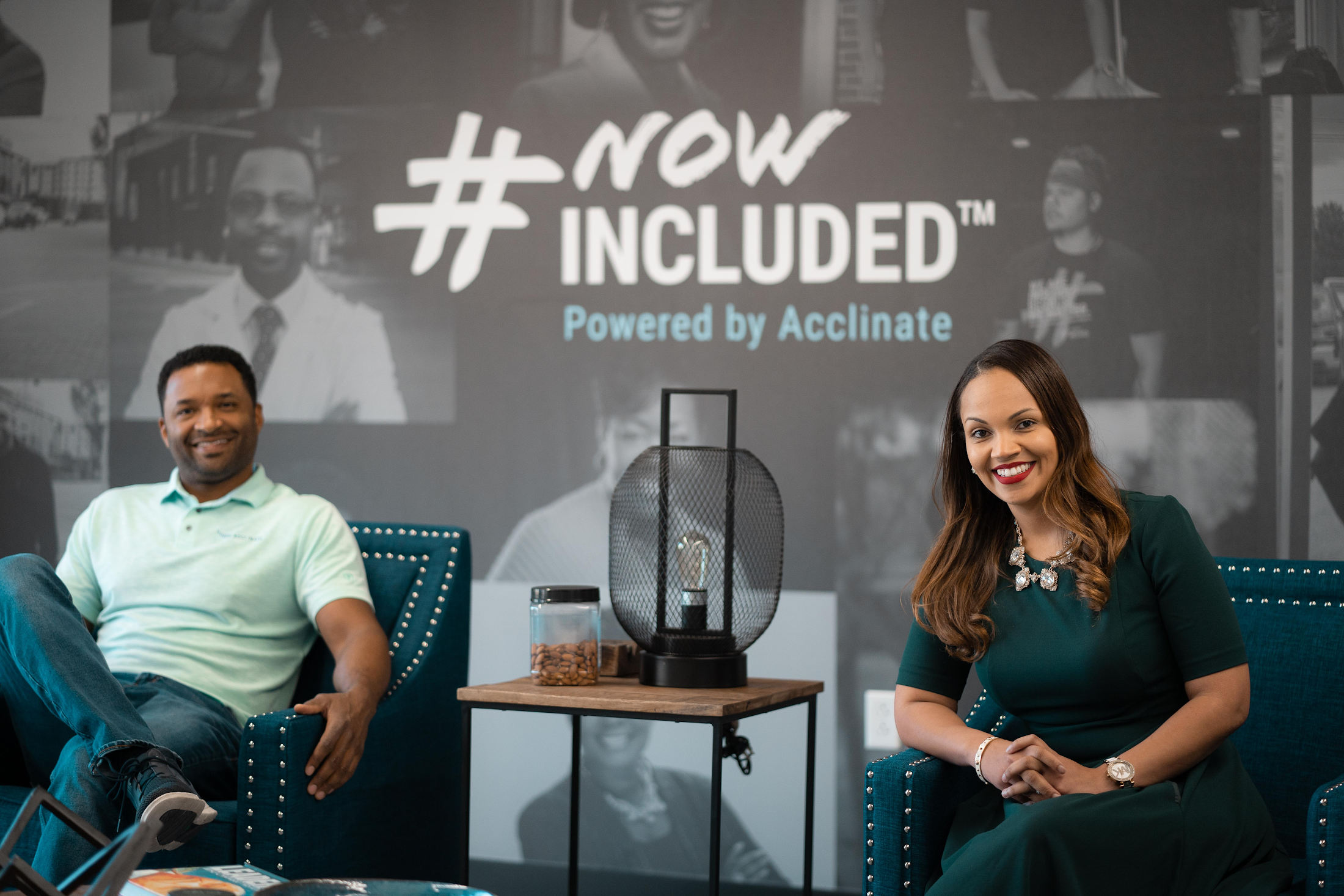
Acclinate integrates culture and technology to promote diverse patient representation in medical research. Our approach is not transactional. We build trust through our #NOWINCLUDED community, which is an ongoing, ever-expanding digital platform that educates and engages with communities of color on health issues.
#NOWINCLUDED includes a website app, and social media presence where members can learn information about diseases, particularly those with greater negative impacts on people of color, such as cancer, diabetes, and cardiovascular diseases. Members can share stories and ask questions. By providing access to trusted resources about these health issues and the latest clinical research, we empower Black people to take control of their health and consider participating in research that is shaping the future of healthcare.
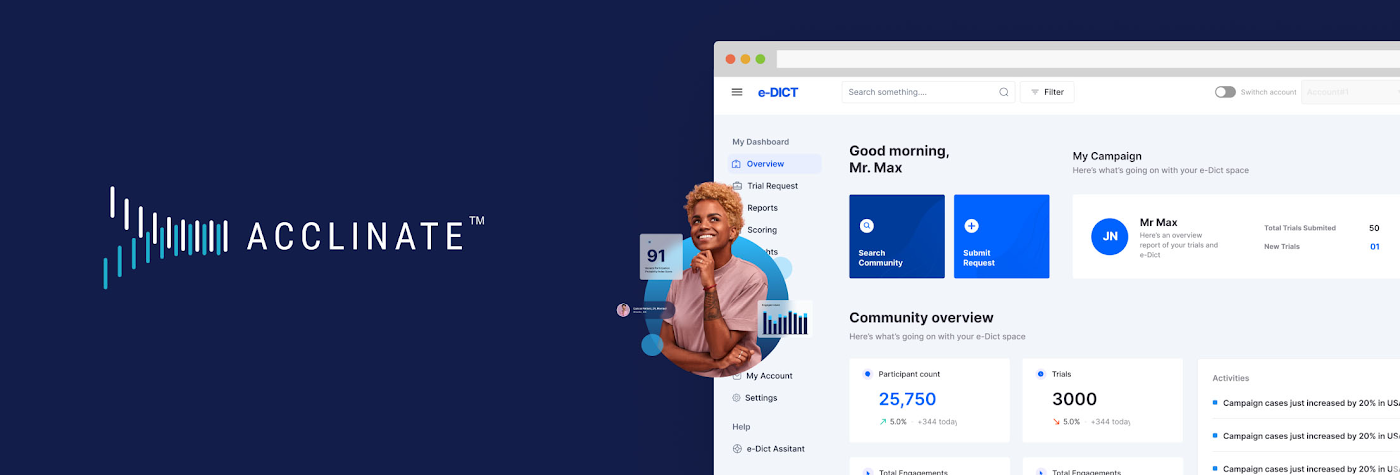
For healthcare-related organizations, we offer the opportunity to better understand the attitudes, aspirations, and unmet needs of underrepresented minority communities. Data from #NOWINCLUDED feeds our HIPAA-compliant SaaS platform, e-DICT™ (Enhanced Diversity in Clinical Trials), which uses predictive analytics and machine learning to identify individuals matching the requirements and most likely to be receptive to participation in a particular clinical trial.
Acclinate scales its platform with Google Cloud
We rely on Google Cloud services, including Vertex AI, to know whom to ask, when to ask, and how to ask for clinical trial participation. With Vertex AI, we enjoy a unified platform for developing our artificial intelligence models, including tools for preparing and storing our datasets. We can easily train and compare models using AutoML, which requires minimal ML expertise or effort with its intuitive graphical interface. This allows us to leverage more than ten ordinal and categorical data points to determine in real time a community member’s likelihood to enroll, which we call our Participation Probability Index (PPI). Our models evolve in an iterative process the more we interact with, and learn about, our community members.
We follow the pay-per-use Google Cloud Platform architecture model using serverless technology, which helps reduce infrastructure management costs and lets us focus on product development and engaging with communities across the U.S.
CloudSQL, a fully managed relational database service, integrates easily with BigQuery so we can glean insights for our clients in real time, all with Google Cloud’s robust security, governance, and reliability controls. Virtual Private Cloud (VPC) gives us scalable and flexible networking for our cloud-based resources and services. We also use Identity and Access Management (IAM) to simplify oversight of Google Cloud resource permissions for different user groups and roles, with appropriate security protections.
API Gateway manages our APIs using Cloud Functions, which both use consumption-based pricing, plus give our developers consistent and highly secure access to our services through a well-defined REST API. We use Memorystore for Redis to reduce platform latency. This is done with a fully managed service powered by the Redis in-memory data store, which builds application caches for fast data access. All of this comes together to provide an outstanding experience for our platform’s users and contributors.
- DSC00049.JPG
- DSC00010 (2).JPG
- pitch del tiff.jpg
Expanding influence with the Google for Startups Accelerator for Black Founders
Three months of one-on-one Google support and mentorship as part of the most recent Google for Startups Accelerator : Black Founders cohort not only helped us build our product, but also helped us earn external credibility. People use Google every day, so whether we’re trying to engage in conversations with industry experts or with somebody in a rural community, it is helpful to have the buy-in of a globally-recognized brand as we take on a historically difficult, systemic issue with challenges around trust. Getting access to the products, best practices, and people we need to build and grow through the Accelerator program has been priceless. For example, working with the Google AdWords team helped us generate important traffic from people interested in learning more about #NOWINCLUDED or sharing their story with us. Jason Scott, who leads the Google for Startups Accelerator: Black Founders program, is still connecting us to people in his network and identifying key opportunities for us months after the program wrapped. He continues to demonstrate that he is invested in seeing us succeed.
Our company has made great progress against our goals, in part thanks to receiving capital from the Google for Startups Black Founders Fund. We received $100K in non-dilutive funding along with Google Cloud credits, Google.org Ads grants, and hands-on support. We used the funds to pay for the transition and development costs associated with moving to Google Cloud. The Google support and accountability has been incredible. After receiving the Google for Startups Black Founders Fund award, we’ve gone on to raise another $1M and moved our cloud from Salesforce to Google Cloud.
We also had the amazing opportunity to be selected as one of six companies to take part in a face-to-face web conference with Sundar Pichai, Google’s CEO. We were thrilled to hear him explain his vision around health equity and the role Google plays. Ultimately, for us, it’s not just about the funding we get, but we are also gratified to receive support from an entity that truly believes in addressing this issue. We know Google is aligned with our mission of health and racial equity.
Championing diversity in clinical trials
Our 2022 looks bright. We expanded our presence to Washington, D.C. as part of the Johnson & Johnson Innovation JLABS ecosystem. We were also selected to take part in the BLUE KNIGHT initiative created between Johnson & Johnson Innovation and the Biomedical Advanced Research and Development Authority (BARDA) under the U.S. Department of Health and Human Services.
Acclinate is also on track to have contracts with five of the top 25 largest biopharmaceutical companies in the U.S this year. They’ve taken note, as has the Food and Drug Administration (FDA), that the lack of diversity in clinical trials represents a significant health concern—to the extent that the FDA has provided strong guidance for pharmaceutical companies to diversify their clinical trials. At the same time, the industry is also responding to pressure from communities of people of color to make equitable representation a priority.
Today, we are in the fortunate but challenging position to have significant inbound opportunities coming our way. In response, we continue to recruit and hire talented people to join our team. On the technology side, we are happy to be aligned with Google Cloud to have powerful cloud infrastructure that will scale with us, as well as high-caliber champions united in partnership. With people’s lives at stake, we are passionate in our commitment to helping ensure medications do what they are supposed to do: heal and improve the quality of life for everyone who takes them.
Hear Acclinate cofounders Del Smith and Tiffany Whitlow chat with Google’s Head of Startup Developer Ecosystem Jason Scott and fellow Black Founders Fund recipient Bobby Bryant about building on Google Cloud in a recent Google for Startups Instagram Live.
If you want to learn more about how Google Cloud can help your startup, visit our page here to get more information about our program, and sign up for our communications to get a look at our community activities, digital events, special offers, and more
More Relevant Stories for Your Company

Expanding Google Cloud Ready – Sustainability Program with 12 New Partners
We introduced the Google Cloud Ready – Sustainability designation earlier this year to showcase those partners committed to help global businesses and governments accelerate their sustainability programs. These partners build solutions that enhance the capabilities and ease the adoption of powerful Google Cloud technologies, such as Google Earth Engine and

Three Typical Connectivity Use Cases to Pick the Right Option for Your Enterprise
Enterprises today have a very broad mix of networks — from SD-WANs, dedicated WANs such as MPLS, cloud interconnects, to VPNs. At the same time, they’re moving those WANs to the cloud to take advantage of faster turn-up, lower cost, and increased feature velocity. As workloads migrate to the cloud

EyecareLive Sees a Brighter Future in the Cloud with Enhanced Support
EyecareLive transforms the healthcare ecosystem with Enhanced Support, a support service from the Google Cloud Customer Care portfolio. Telemedicine is now mainstream. It exploded during the COVID-19 pandemic. A 2022 survey by Jones Lang Lasalle (registration required) found that 38% of U.S. patients were using some form of telemedicine. This




Journey to Transformation and Modernization with Google’s Distributed Cloud
Google Cloud has been leading the way of helping businesses make most from their cloud investments to drive digital transformation through modern application platforms that cater to today's customer needs. Watch the video from the Next '21 to explore three areas where companies are supported by Google Cloud throughout their
