





3638
Of your peers have already watched this video.
1:30 Minutes
The most insightful time you'll spend today!
How McKesson Gains Insights by Running SAP on Google Cloud
McKesson, a 185-yeal old, $200 billion, Fortune 6 pharmaceuticals and health information technology company, with over 80,000 employees migrated their SAP solution to Google Cloud for advanced healthcare analytics.
With changing consumer expectations, the company needed to change its architecture to be able to better serve its customers. And the old on-premise infrastructure was hindering the company from being able to meet those expectations.
Watch this video as Andrew Zitney, SVP and CTO at McKesson, explains how SAP on GCP helps the 180-year old company modernize and meet the changing expectations.
2022 is a Big Year for the Gaming Industry!

3871
Of your peers have already read this article.
2:00 Minutes
The most insightful time you'll spend today!
Editor’s note: This post was originally published in TechPulse Belgium, where Jack Buser, Google Cloud’s Director of Game Industry Solutions, shared his trends for the industry this year.
The year 2022 will hold many surprises (with a few already dropping!), but there’s one near certainty: By this time next year there will be millions more gamers worldwide. It’s thanks to the industry’s little-noted technology growth drivers, which are getting stronger.
Games are no longer a niche hobby; it’s global, mainstream entertainment. There were 3.1 billion gamers worldwide in 2020. It’s estimated that by 2024 there will be another 500 million. With a global population of 7.7 billion, that’s nearly half the planet. Revenues in 2021 may reach $175 billion—likely more than movies, music, and books combined.
It’s a strength unique to the games industry, driven by the way its creators deploy new technology. Advances we see in everything from pricing and emerging markets, to backend computing and delivery suggests it will grow from here, on things like artificial intelligence and planet-scale networks.
Games forever, game better
It’s no surprise that videogames have become a huge business. Playing games is one of our deepest human expressions. There is a 4,500 year old board game that people still play, a testimony to the human love of testing cleverness, honing reactions, building trust, or just enlivening a day.
Video games do all that and for decades game makers have taken the most cutting-edge computing tech to make things better. We’ve seen electronic ping pong become shooting asteroids, to simple (yet iconic) 2D sprites evolve into believable, expressive 3D characters, all leading to today’s immersive worlds hosting tens of millions of players worldwide.
There’s more to come. I work at technology’s cutting edge for games, offering the world’s leading game creators access to powerful cloud computing, a low-latency global network, Machine Learning and AI, and much more. As usual, game innovators are taking up all these tools, building new narratives, new ways to play, new markets, and new jaw-dropping moments.
And game creators aren’t just thinking about players; they’re also thinking about viewers. More and more people are watching eSports, and creators are using the games medium to engage their viewers in increasingly immersive ways.
Streaming like never before
AI and ML are sharpening games and attracting new players in other ways. These technologies increasingly power everything from network performance to global player matching. The delicate but essential work of encouraging newcomers and discouraging bad actors, optimizing monetization, or building and scaling up new player environments.
Another important area we’re seeing cloud tools being put to use is in coordinating the workflows of global teams of developers. It’s not just a question of building faster anymore, but of collaborating and responding more effectively. The distributed work trends that featured so strongly during the pandemic had already featured in much of the game industry, increasingly it’s an industry standard. This will likely mean even faster and more diverse game development, addressing the needs of new markets where we’re seeing double-digit growth.
Tools like cloud streaming, 5G, and edge computing are likely to accelerate the use of Game Streaming, Augmented Reality, and other types of immersive gameplay. If my metaverse doesn’t have games, count me out! We’re looking at some exciting new developments in coming months with some major industry players. Stay tuned.
A big year for the games industry
As a premier provider of solutions, tools and services to games companies, our engineering job is complex and global. Fortunately, our mission is simple: Help game companies transform to meet new global opportunities with planet scale solutions. Technology has brought the gaming industry to astonishing heights, and is the perfect compliment to great storytelling and creative ingenuity.
As a decades-long industry veteran, I’ve never been more impressed with what technology can do for our industry. Looking past 2022, when we’ll see more compute, more AI, more AR, and more innovation around healthy and exciting game play, there is just one near certainty: More growth.
Simplifying Payments for SMBs: Helcim’s Transformational Approach
1467
Of your peers have already read this article.
6:00 Minutes
The most insightful time you'll spend today!
Small and medium-sized businesses and enterprises are the backbone of the US economy generating more than 44% of GDP1. Yet these organizations are still underserved when it comes to online financial tools—and dealing with payments is no exception. Complaints include hidden fees, limited capabilities, long-term lease agreements, and poor customer service.
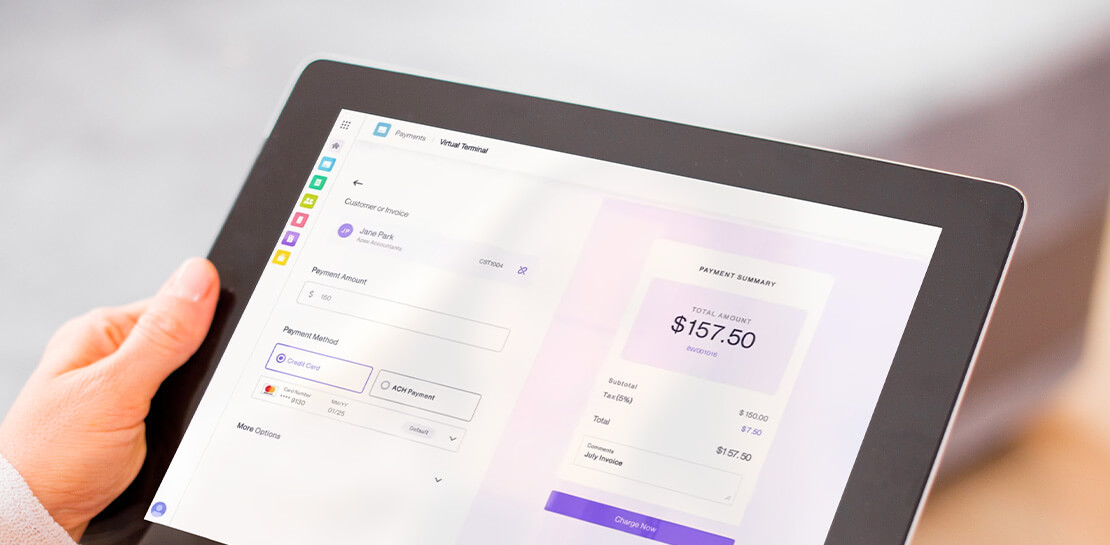
These are the issues that we wanted to solve when we launched Helcim in 2020 in Calgary (Alberta, Canada). We provide a payment service that offers low rates through our interchange plus pricing model, no monthly fee for the core payments offering, and numerous payment options, as well as simple, affordable hardware such as card readers.
Our digital-first approach makes it easy for owners of small and medium-sized businesses to get started. Online sign-up means no paperwork and near instant access to Helcim’s software and all-in-one platform experience. Merchants can choose from a range of payment solutions from the Helcim app including in-person payments, SMS payment requests, online invoices with pay now buttons, and more.
To achieve our goals, we built most of the business systems and processes in-house including our technology stack, financial partnerships, marketing, and everything in between. This is something that few startups would dare to do, but it enabled us to build a payments platform offering the rich capabilities and performance SMBs really need.
Taking control with the cloud
Before migrating our infrastructure to Google Cloud, it was hosted at two colocation data centers in Calgary. This model served us well, but as we grew, most of our hardware needed to be replaced to maintain service security and performance.
A successful round of Series A funding also impacted our trajectory. Giving us the fuel we needed to scale and innovate faster. When we considered the choice between making a large capital investment in our existing environment, or to transition to the cloud, the decision was clear: The cloud was the way to go.
We looked at other big names in cloud hosting and tested another platform. But Google Cloud is by far the best environment for us. It’s much easier for a lean technology team to manage, as we embark on our first cloud strategy. It also offers all the tools and advanced machine learning capabilities we need.
Google Cloud also comes with the backing of Alphabet, a business that in the past five years has spent more on research and development than any other organization in the S&P 5002. The ability to engage the Google Workspace account team for guidance to improve our everyday processes was another bonus.
A variety of investment and training programs from Google Cloud also influenced our decision. We participated in Google for Startups Accelerator Canada which gave us access to Google Cloud experts across all our technology domains. This helped accelerate our infrastructure migration while ensuring we optimized every service from day one. We were also eligible for $100,000 USD of Google Cloud credits, covering our Google Cloud costs which helped us get everything up and running cost-effectively. The partnership with the wider Google team has been extremely impactful as we stand everything up for our business.
But ultimately, it’s the sheer depth and breadth of the Google Cloud environment that makes the difference. Here are the Google Cloud tools we currently have at Helcim.
We chose BigQuery because it is easy to aggregate new data and apply the right access controls. It also delivers outstanding performance running our analytics workloads.
Vertex AI makes the deployment of new models exponentially faster, and with Google Cloud, we can do most of the work through containers instead of proprietary tooling.
GKE has enabled us to migrate to a fully managed cloud service and avoid a lift-and-shift exercise that would have prevented us from getting the full benefits of a containerized infrastructure. Running a new GKE environment also enabled us to significantly reduce platform latency by 20%-50%. We can now deploy projects in hours instead of days.
We updated our centralized file system to use Cloud Storage, which is faster and more scalable.
All of our software today is built on top of MySQL, so CloudSQL was the natural choice for cloud database management.
Cloud Run is more flexible than other serverless tools and was an easy way to reduce the burden of managing some of our services.
Boosting performance across the business
By migrating to Google Cloud, we transformed our application performance. We were able to decouple the infrastructure between systems and use modern server hardware for our compute and database instances. With very little change to our code, we saw a 50%+ increase in the speed of our entire platform.
Giving developers more control of the technology running their systems via containers means that they can enhance systems through more frequent language updates and by deploying new technologies to optimize workloads.
We can more closely monitor our systems to diagnose issues and fix their root cause faster. Being able to quickly add resources gives us further options if we experience platform latency or increased traffic.
Maintaining momentum with machine learning
Leveraging Vertex AI has significantly reduced the time it takes the team to build and deploy new machine learning models. Greater agility in our data stack has also freed up time for exploratory work in the data team. For instance, by creating low fidelity proxy data for human behavior in the application process, we created a new model that will reduce the number of manually reviewed batches by more than 10%.
We’ve also been able to improve our deployment process and the time to rollback. As a result, breaking changes in production have been reduced from more than five minutes to less than 30 seconds.
Thanks to BigQuery, we can make better use of data to support key business decisions. Previously it was hard to aggregate data from different sources and while maintaining our strict requirements for customer data confidentiality. We also needed specialist SQL knowledge to consume it. By investing in a more modern data stack, the availability of trusted data across the organization has increased exponentially.
We’ve also overcome the constraints imposed by static hardware environments especially when maintaining a high-availability configuration between two locations. With Google Cloud, we’re no longer constrained by such a rigid arrangement and the deployment velocity of new infrastructure tooling has been reduced from months to days.
Security is another area where Google Cloud excels. From hackers and fraudsters to bots and web attacks, it protects our users, applications, and data, while facilitating compliance with local and regional authorities. We can also integrate more easily with our security partners ensuring that we can empower our team to stay ahead of cyber criminals and other external threats.
Building the payments platform for the future, today
When we look to the future, Google Cloud opens the door to dozens of opportunities to widen our appeal to SMBs while remaining competitive. Its advanced infrastructure for cloud computing, data analytics and ML supports our roadmap to profitability and will help us attract future rounds of funding.
Above all it provides a foundation for growth. We grew 400% in 2021 and raised more capital in the spring of 2022 to grow even faster. In 2022 we were also listed as one of the top payments processors by industry publications such as Nerdwallet and Merchant Maverick. With Google Cloud, we can build on this success, continue to innovate, and help our SMB customers take their payments and e-commerce strategies to the next level.
If you want to learn more about how Google Cloud can help your startup, visit our page here to get more information about our program, and sign up for our communications to get a look at our community activities, digital events, special offers, and more.
To learn more about Google for Startups Accelerators and to apply to a program in your region, visit the website here.
1. Small Businesses Generate 44 Percent Of U.S. Economic Activity
2. Alphabet: Big Value In Big Tech
Google is named a Leader in 2020 Magic Quadrant for Cloud Infrastructure and Platform Services
3567
Of your peers have already read this article.
10:30 Minutes
The most insightful time you'll spend today!
The capability gap between hyperscale cloud providers has begun to narrow; however, fierce competition for enterprise workloads extends to secondary markets worldwide. Infrastructure and operations leaders should evaluate cloud providers with a broad range of use cases and a wide market presence.
Market Definition/Description
Cloud computing is a style of computing in which scalable and elastic IT-enabled capabilities are delivered as a service using internet technologies. Cloud infrastructure and platform services (CIPS) are defined as standardized, highly automated offerings, in which infrastructure resources (e.g., compute, networking and storage) are complemented by integrated platform services. These include managed application, database and functions as-a-service offerings. The resources are scalable and elastic in near-real time and are metered by use. Self-service interfaces are exposed directly to the customer, including a web-based user interface (UI) and an API. The resources may be single-tenant or multitenant, and can be hosted by a service provider or on-premises in the customer’s data center.The scope of this Magic Quadrant has changed, compared with its predecessor, the “Magic Quadrant for Cloud Infrastructure as a Service.” Gartner has developed this Magic Quadrant to reflect the changing dynamics of cloud services offered and the ways that enterprise customers adopt them. Ultimately, hyperscale cloud providers, and the broad array of services they offer beyond infrastructure as a service (IaaS), have found strategic importance in Gartner’s enterprise clients and the Magic Quadrant needed to evolve to reflect as much.The scope of the Magic Quadrant for CIPS includes IaaS and integrated platform as a service (PaaS) platforms. These include application PaaS (aPaaS), functions as a service (FaaS), database PaaS (dbPaaS), application developer PaaS (adPaaS) and industrialized private cloud offerings that are often deployed in enterprise data centers.
Understanding the Vendor Profiles, Strengths and Cautions
CIPS providers that target enterprise and midmarket customers generally offer high-quality service, with excellent availability, good performance, high security and good customer support. Exceptions will be noted in this Magic Quadrant’s evaluations of individual providers. When we say “all providers,” we specifically mean “all the evaluated providers included in this Magic Quadrant,” not all CIPS providers in general. Keep the following in mind when reading the vendor profiles:
- All the providers have public cloud IaaS and PaaS offerings. Most also offer, or are in the process of building, industrialized private cloud offerings, in which every customer is on standardized infrastructure and cloud management tools. In some cases, the provider’s industrialized, on-premises offering may share similarities to hyperconverged infrastructure (HCI), but tethered to the cloud. However, this may not resemble the provider’s public cloud service in architecture or quality. A single architecture and feature set and cross-cloud management, for both public and private CIPS, make it easier for customers to combine and migrate across service models as their needs dictate. They also enable the provider to use its engineering investments more effectively. Gartner is beginning to describe the notion of cloud-provider-managed infrastructure, wherever it may exist, as “ distributed cloud.”
- All the providers target midmarket businesses and enterprises, as well as other companies that use technology at scale. Some of the providers may also target small businesses and startups. Just because a provider targets a segment, however, does not necessarily mean that it is well-suited to that segment’s needs. Furthermore, not all providers have the capacity to serve very-large-scale customers, and some have capacity constraints in particular regions.
- All the providers offer basic cloud IaaS — compute, storage and networking resources as a service. They also offer additional value-added capabilities, notably cloud software infrastructure services — typically middleware and databases as a service — including PaaS capabilities. These services, along with IT operations management (ITOM) capabilities as a service (especially DevOps-related services), are a vital differentiator in the market, especially for Mode 2 agile IT buyers.
- All the providers claim to have high security standards. However, the extent of the security controls provided to customers varies significantly. All the providers evaluated can offer solutions that will meet common regulatory compliance needs, unless otherwise noted. All the providers have undergone SOC 1, SOC 2 and SOC 3 audits, as well as SSAE 16, ISO/IEC 27001, ISO/IEC 27017 and ISO/IEC 27018 audits. This provides a relatively high level of assurance that the providers are adhering to generally accepted practices for the security of their systems, but it does not address the extent of controls offered to customers.
- Security is a shared responsibility. Customers need to correctly configure controls, and they may need to supply additional controls beyond what their providers offer. Furthermore, providers vary in their degree of transparency as to how services are architected, although customers typically have access to third-party assessment reports under a nondisclosure agreement (NDA).
- Monthly compute availability service-level agreements (SLAs) of 99.95% and higher are generally the norm. They are typically higher than availability SLAs for managed hosting. Service credits for outages in a given month are typically capped at 100% of the monthly bill; however, some providers have caps as low as 25%. This availability percentage is typically non-negotiable, because it is based on an engineering estimate of the underlying infrastructure reliability.
- Single-instance compute SLAs have become common for providers in this Magic Quadrant. It might be more accurate to say that there are usually two SLAs — one for the compute service, and one for individual instances. Some providers have a compute availability SLA that requires customers to use compute capabilities in at least two fault domains (sometimes known as “availability zones” or the like).
- Many providers have additional SLAs. These cover network availability and performance, customer service responsiveness and other service aspects.
- Infrastructure resources are not normally automatically replicated into multiple data centers. Customers are responsible for their own business continuity. Some providers offer optional disaster recovery solutions.
- All providers offer per-second metering of virtual machines (VMs). Some can offer shorter metering increments, which can be more cost-effective for short-term batch jobs. Unless otherwise noted, providers charge on a per-VM basis.
- Providers are increasingly offering bare-metal physical servers on a dynamic basis. These are priced by the second. Providers with a bare-metal option are noted as such.
- All the providers partner with carrier-neutral colocation exchanges. This enables customers to obtain connectivity from a variety of carriers that are located in these facilities. In addition, many customers require a small amount of supplemental colocation in low-latency proximity with their cloud provider. For example, they may have a large-scale database, specialized network equipment or legacy equipment, such as a mainframe.
- Some providers offer software marketplaces. In these marketplaces, software vendors specially license and package their software to run on that provider’s cloud IaaS offering. Marketplace software can be automatically installed, and can be billed through the provider, although the software vendor often provides support.
- All providers offer enterprise-class support with 24/7 customer service. This is provided via phone, email and chat, along with an account manager. Some offer a lower level of support, but allow customers to pay extra for enterprise-class support.
- All the providers will sign contracts with customers, can invoice and can consolidate bills from multiple accounts. All providers offer online sign-up and credit card billing, because they recognize that enterprise buyers prefer contracts and invoices. Some will sign “zero dollar” contracts that do not commit a customer to a certain volume.
- Some providers will sign a U.S. Health Insurance Portability and Accountability Act Business Associate Agreement (HIPAA BAA).
- Unless otherwise noted, all providers will sign the following contract addendums:
- An EU Data Protection Directive (95/46/EC) data-processing agreement (DPA), which includes the model clauses
- An EU General Data Protection Regulation (GDPR) DPA
- Managed and professional services are an optional but important accelerator for customer success. Almost all providers rely heavily on managed service providers (MSPs) and system integration (SI) partners for these services. However, most providers offer their own first-party professional services and some also offer first-party managed services offerings.
- All of the evaluated providers offer a portal, documentation, technical support, customer support and contracts in English. Some can provide one or more of these in languages other than English. Most providers can conduct business in local languages.
The service provider descriptions are accurate as of the time of publication. Our technical evaluation of service features took place between January 2020 and March 2020.
Format of the Vendor Descriptions
When describing each provider, we first summarize the nature of the company, then provide information about its industrialized cloud IaaS offerings in the following format:
- Locations: Cloud data center locations by country, languages in which the company does business and languages in which technical support can be conducted.
- Recommended Uses: These are the circumstances under which we recommend the provider. They are not the only circumstances in which it may be a useful provider, but they are the scenarios for which, in Gartner’s opinion, the provider is well-suited.
For a detailed technical description of CIPS offerings, along with a use-case-focused technical evaluation, see “Critical Capabilities for Cloud Infrastructure and Platform Services, Worldwide.”We also provide a detailed list of evaluation criteria in “Solution Criteria for Cloud Integrated IaaS and PaaS.” A detailed assessment of each provider against these criteria can be found in the Solution Scorecards. The results are also available in Gartner’s Cloud Decisions portal (see “Cloud Decisions’ Cloud Compare: Perform Real-Time IaaS Pricing and Performance Analysis”).
Magic Quadrant
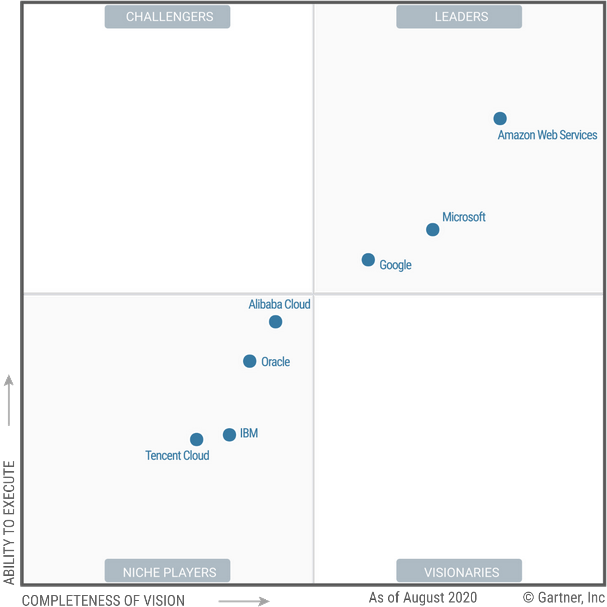
Figure 1. Magic Quadrant for Cloud Infrastructure and Platform Services
Vendor Strengths and Cautions
Google is a Leader in this Magic Quadrant.
Locations: Google has multiple regions across Japan and the U.S., as well as a presence in Belgium, Singapore, Finland, Germany, the Netherlands, the U.K., India, Australia, Brazil, Canada and, Switzerland, as well as the Hong Kong and Taiwan markets.
Recommended Uses: Google has evolved by enhancing its strengths and attacking its limitations to providing a strong offering in every use case, other than the edge use case. Google has a future focus on building out hybrid capabilities and partnerships with telco providers.
Strengths
- Google’s open-source contributions, such as Kubernetes and TensorFlow, have been market-moving innovations that have changed the course of enterprise IT. Such innovations have served to enable other cloud service providers, but also brought developer “mind share” to Google Cloud Platform (GCP). Google’s long-term strategy is to bring additional open-source-focused partners into GCP as managed services.
- During the past year, GCP has experienced a noticeable increase in year-over-year market share in terms of IaaS and dbPaaS, albeit from a lower base, relative to other providers in this Magic Quadrant. Google has also made significant gains by closing a number of critical capability gaps between GCP and Microsoft Azure, its nearest competitor in terms of market share and capabilities.
- Gartner clients continue to associate GCP with its big data and data science capabilities, stemming from the use of services such BigQuery and Dataproc. However, the company is pressing into new territory with Anthos, GCP’s container and Kubernetes-based middleware layer, which is designed to support the development and deployment of cloud applications in a hybrid and multicloud model.
Cautions
- Some of Gartner’s clients remain cautious about Google’s commitment to serving the needs of enterprise clients when put in the context of SAP’s preference for Microsoft Azure, and GCP’s slowness in executing on some highly touted partnerships. GCP lacks enterprise-focused aPaaS capabilities and support for Oracle, and it continues to struggle with having an enterprise mindset in the field.
- From a financial perspective, GCP’s revenue is a small fraction of overall Google revenue and GCP’s criticality to the overall business is not as clear as its competitors. Furthermore, GCP’s success may erode the company’s overall healthy gross margins.
- Google’s much-vaunted network capabilities have been the source of a number of GCP outages during the last year, with devastating impact on customers. One outage was multiregional in scope, affecting GCP customers and Google consumer services, such as G Suite and YouTube. This resulted in complete GCP network unavailability for some customers.
Scope for Tech Adoption and Advancements in Healthcare are Still High: Google Cloud Research

5710
Of your peers have already read this article.
3:00 Minutes
The most insightful time you'll spend today!
Since the start of the COVID-19 pandemic, there’s been a rapid acceleration of digital transformation across the entire healthcare industry. Telehealth has become a more mainstream and safe way for patients and caregivers to connect. Machine learning modeling has helped speed up innovation and drug discovery. And new levels of integration and data portability have helped enable greater vaccine availability and equitable access to those who need it.
Data has been at the crux of this digital transformation — helping people stay healthy, accelerating life sciences research and delivering more personalized and equitable care. We recently unveiled partial results from our research with The Harris Poll, which revealed that nearly all physicians (95%) believe increased data interoperability will ultimately help improve patient outcomes. Today, we’re unveiling the second part of that research.
In February 2020, we commissioned The Harris Poll to survey 300 physicians in the U.S. about their biggest pain points — this was just before the COVID-19 pandemic strained the entire healthcare system and made us all hyper-aware of the risks we take in going to the hospital. In June 2021, we followed-up with those same questions and more. What it unveiled was just how much COVID-19 reshaped technology’s role in the healthcare field and how it’s changing day-to-day operations for physicians.
Here are some of the highlights:
Healthcare organizations accelerated technological upgrades over the course of the pandemic. After a year shaped primarily by the COVID-19 pandemic, use of telehealth saw substantial YOY growth, jumping nearly threefold from 32% in February 2020 to 90% this year. Forty-five percent of physicians say the COVID-19 pandemic accelerated the pace of their organization’s adoption of technology. In fact, more than 3 in 5 physicians (62%) say the pandemic has forced their healthcare organization to make technology upgrades that normally would have taken years. For example, 48% of physicians would like to have access to telehealth capabilities in the next five years. Before the COVID-19 pandemic, about half of physicians (53%) say their healthcare organization’s approach to the adoption of technology would best be described as “neutral” (i.e., willing to try new technologies only if they have been in the market for awhile or others have tried and recommended them).
Despite the technological leaps this year, most physicians still believe the industry lags behind in technology adoption but recognize the opportunity for technological support and advancement. The majority of physicians don’t view the healthcare industry as a leader when it comes to digital adoption. More than half of physicians describe the healthcare industry as lagging behind the gaming (64%), telecommunications (56%), and financial services industries (53%). However, the healthcare industry is not seen to be trailing as much as it was last year behind retail (54% in 2020; 44% in 2021); hospitality and travel (53% in 2020; 43% in 2021); and the public sector (39% in 2020; 26% in 2021).
Better interoperability alleviates physician burnout, improves health outcomes and speeds up diagnoses. The majority of physicians say increased data interoperability will cut the time to diagnosis for patients significantly (86%) and will ultimately help improve patient outcomes (95%.) In addition to better patient experiences and outcomes, more than half of physicians (54%) believe increased access to data via technology has had a positive impact on their healthcare organization overall. A majority believe that technology can alleviate the likelihood of physician “burn-out” (57%) and that efficient tools help decrease friction and stress (84%). And, as a result, 6 in 10 physicians say access to better technology and clinical data systems would allow them to have better work/life balance (60%) and that better access to/more complete patient data would reduce administrative burdens (61%). It is therefore not surprising that nearly 9 in 10 physicians (89%) say they are increasingly looking for ways to bring together all patient data into a single place for a more complete view of health.
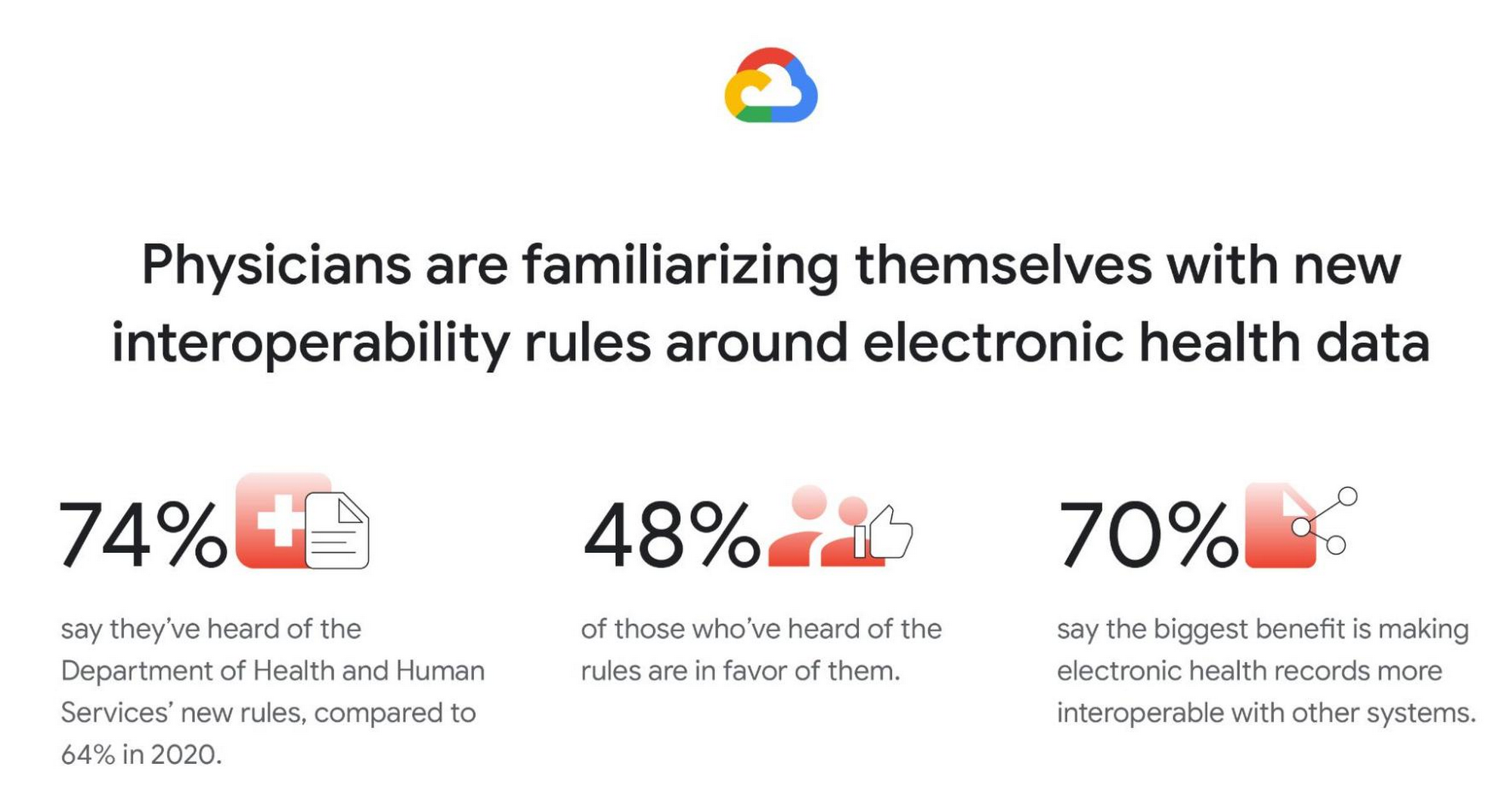
Familiarity with new Department of Health and Human Services (DHHS) interoperability rules grows, and many physicians are in favor. Most physicians (74%) say they have at least heard of the new DHHS rules (launched in 2019) to improve the interoperability of electronic health information. This is a clear rise from 2020 (64%), but deeper knowledge is fairly low. Only 30% of physicians say they are somewhat or very familiar with the new rules (though, again, this is a rise from 2020, when only 18% said they were very/somewhat familiar). Similar to in 2020, among those who have heard of the new rules, nearly half are in favor (48% in 2021; 45% in 2020) but a similar proportion remain unsure (46% in 2021; 50% in 2020). And like in 2020, by far the top potential benefit of the rules is thought to be forcing EHRs to be more interoperable with other systems (70%).
Google was founded on the idea that bringing more information to more people improves lives on a vast scale. In healthcare, that means creating tools and solutions that make data available in real time to help streamline operations and improve quality of care and patient outcomes. For example, our recently announced Healthcare Data Engine makes it easier for healthcare and life sciences leaders to make smart real-time decisions through clinical, operational, & groundbreaking scientific insights. To find out more about the Healthcare Data Engine, click here.
Survey methodology: The 2021 survey was conducted online within the United States by The Harris Poll on behalf of Google Cloud from June 9 – 29, 2021 among 303 physicians who specialize in Family Practice, General Practice, or Internal Medicine, who treat patients, and are duly licensed in the state they practice. The 2020 survey was conducted from February 18 – 25, 2020 among 300 physicians who specialize in Family Practice, General Practice, or Internal Medicine, who treat patients, and are duly licensed in the state they practice. Physicians practicing in Vermont were excluded from the research. This online survey is not based on a probability sample and therefore no estimate of theoretical sampling error can be calculated. For complete survey methodology, including weighting variables and subgroup sample sizes, please contact press@google.com.
Dual Run: A Proven Solution for Secure Mainframe Modernization

960
Of your peers have already read this article.
4:30 Minutes
The most insightful time you'll spend today!
CIOs are again evaluating their mainframe investments, balancing rising operational costs and difficulty finding talent with the perceived costs and risks of moving critical applications to the cloud. Increased business agility, technical innovation, computing elasticity, customer insights, and a growing talent pool all encourage CIOs to migrate and modernize from “Big Iron” onto public cloud platforms.
Google Cloud recently announced Dual Run, a new mainframe modernization solution, to help customers mitigate the risk involved in mainframe migrations and accelerate their migration to the cloud. Leaders can leverage Dual Run in their quest to ensure their mainframe modernization projects will succeed and pay off so let’s dive a little deeper into what Dual Run is, how it works, and how it can help you.
Mainframe modernization with a proven technology
Since so many businesses still run mainframes, we decided to partner with Banco Santander—one of the largest banks in the world—to bring Dual Run to our enterprise customers, since they had already built a solution. In fact, Dual Run was built on top of Banco Santander’s unique technology which has already demonstrated proven results in the regulated financial services industry. Now that Dual Run is available, Banco Santander has been using it to bring their data and workloads onto Google Cloud’s trusted infrastructure.
The concept is not new, but the solution is unique
Dual Run enables you to run a parallel production system, allowing you to simultaneously run workloads on your mainframes and on Google Cloud. While many enterprises running mainframes have thought about parallel production concept and a few even tried before, Google Cloud is unique among the hyperscalers to provide such a solution as an offering to its customers.
With a parallel production run, you can perform real-time testing of your applications on Google Cloud and quickly gather data on performance and stability with no disruption to your business. Once you’re satisfied with the functional and performance equivalence of the two systems, you can make the new Google Cloud environment your system of record, while existing mainframe systems can be used as a backup or decommissioned.
In addition to the transformative benefits you get from moving to Google Cloud–such as AI-based scalability, speed, and security–migrating mainframes with Dual Run offers you even more benefits:
Mitigate migration risk: Dual Run reduces risk during the migration by running your business critical systems in parallel with powerful reporting to track the difference between your current and target systems. This ensures there is no impact or risk to your existing mainframes while migrating to Google Cloud.
Secure migration investments: Avoid costly migration mistakes by basing your decisions and actions on empirical data acquired from your production system.
Reduce business testing effort: Compare the functional equivalence of outcomes in the current and target system with production data and drastically reduce the testing cycles of your migrated workload.
Accelerate migration: Speed up the entire mainframe migration process with a well-defined framework, automation components, predefined dashboards, and a tested approach. Empirical reporting available in Dual Run also enables customers in regulated industries to more readily respond to regulator reviews and requests for information.
Your migration journey with Dual Run
Dual Run is packaged with several automation components to aid your migration journey, from assessment all the way through to production.
This chart shows how Dual Run plays a key role throughout your mainframe modernization journey:
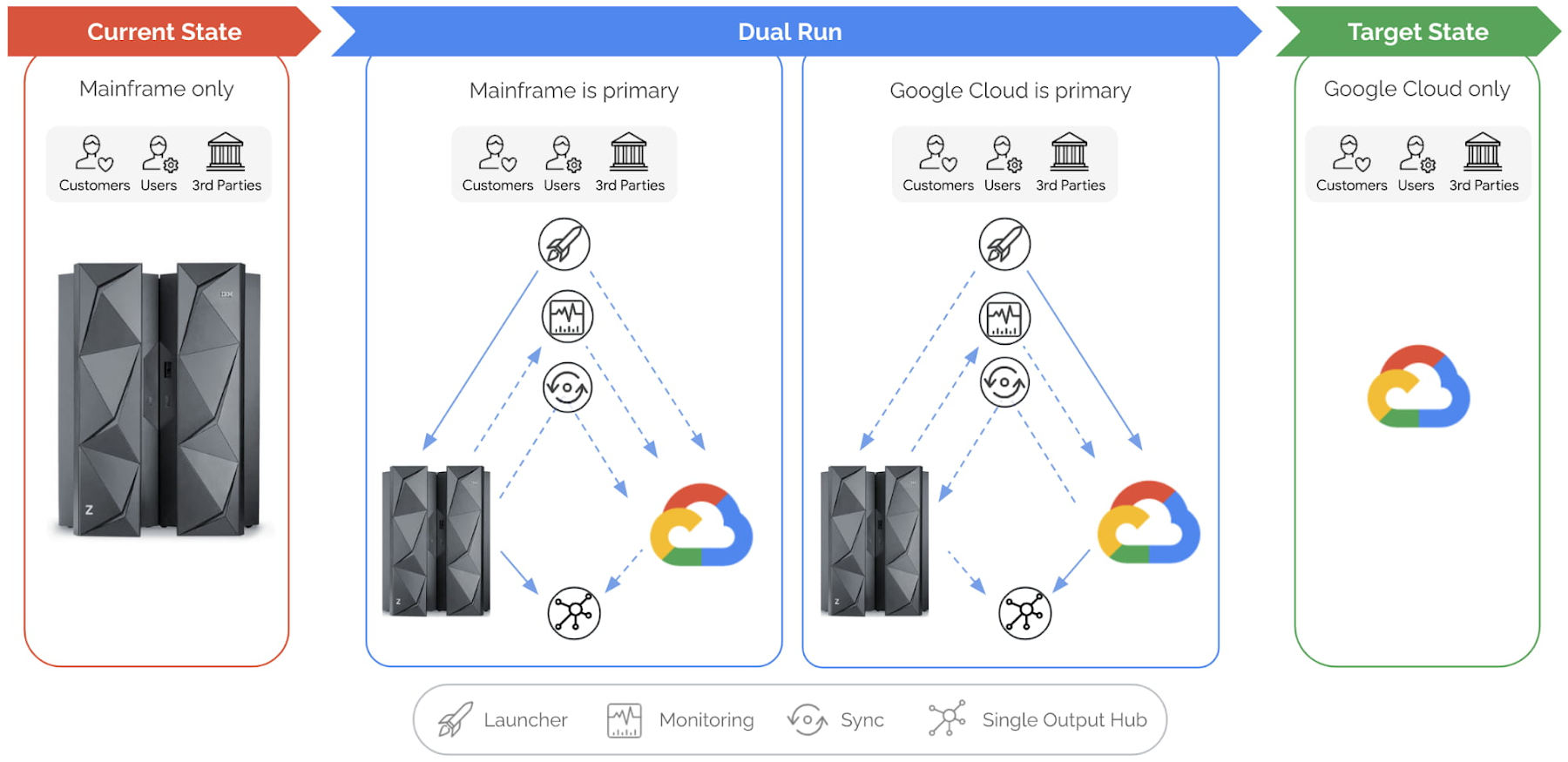
Let’s explore this illustration in a bit more detail, phase by phase:
Current state: This is your starting point, when your production workloads are still running in your mainframe. Dual Run helps you assess your mainframe workload for compatibility on Google Cloud.
After this assessment, Dual Run’s conversion engine helps address the incompatibilities in your current application and then migrates the application and data to Google Cloud. At this stage, you have your current application executing on the mainframe and your migrated application is ready to be executed or tested on Google Cloud.
Dual Run state: In this state, the migrated workload will be executed in two stages.
Dual Run stage 1:
In the first stage of Dual Run, your mainframe will remain as the “primary” system — meaning the response and outputs to other systems are sent from your mainframe — while the migrated workload will be executed in parallel in Google Cloud as “secondary.”
Dual Run performs the following actions as a cyclical process, repeated until you reach your desired migrated application quality is achieved:
- All workloads — batch & transactions — executed in the mainframe are replicated in Google Cloud
- The outcomes from both systems are validated to report any differences, enabling you to take corrective actions in migrated applications
- The functional and performance differences between the two systems will be observed, and the mainframe and Google Cloud data are periodically synchronized to bring both the systems in sync
Typically, most of your migration time will be spent in the first stage of Dual Run until you are satisfied with the results. The key goal for this stage is that your primary, business-critical mainframe workload is not disturbed while your migrated application is tuned to provide the exact same results as your current application.
Dual Run stage 2:
When the Dual Run reporting and results confirm that the migrated application matches your mainframe system, Google Cloud then becomes the “primary” system, while your mainframe will still be executed in parallel as “secondary.” Dual Run will enable you to do a smooth switch between primary and secondary systems through a configuration management system.
Target state: In this final state, the mainframe can be decommissioned while the Dual Run components are removed, enabling an optimal and efficient business execution with Google Cloud.
Summary
For any business or organization that has to migrate or modernize their mainframes, Dual Run offers a unique solution to achieve this with reduced risk and time. In fact, what we’re seeing from our customers is that Dual Run offers the right combination of proven experience, engineering, and strategic partnership that is essential for mainframe migration success. If you would like to learn more, check out our mainframe modernization website.
More Relevant Stories for Your Company


Predict User Churn on Gaming Apps with Google Analytics Data using BigQuery ML
User retention can be a major challenge for mobile game developers. According to the Mobile Gaming Industry Analysis in 2019, most mobile games only see a 25% retention rate for users after the first day. To retain a larger percentage of users after their first use of an app, developers can

Google Migration and BigQuery Brings PedidosYa Closer towards its Goal of Becoming Data-driven
Editor’s note: PedidosYa is the market leader for online food ordering in Latin America, serving 15 markets and over 400 cities. It’s also one of the largest brands within the German multinational company Delivery Hero SE. With over 20 million app downloads, PedidosYa provides the best online delivery experience through

ShareChat Builds its Diverse, Hyperlocal Social Network. Thanks to Google Cloud
Editor’s note: Today’s guest post comes from Indian social media platform ShareChat. Here’s the story of how they improved performance, app development, and analytics for serving regional content to millions of users using Google Cloud. How do you create a social network when your country has 22 major official languages and

Vodafone Leverages Google Cloud to Aid COVID-19 Frontline with Anonymized Insights on Population Mobility
Editor’s note: When Europe’s largest mobile communications company, Vodafone, was asked by the European Commission to help understand population movement across the European Union and the UK to help fight COVID-19, it was able to provide anonymized mobile network-based insights to answer the call. Here’s how Vodafone, with the support
