






5837
Of your peers have already downloaded this article
4:23 Minutes
The most insightful time you'll spend today!
WayFair and Google Cloud Get Together to Raise the Bar on World-class Experience!

3011
Of your peers have already read this article.
2:00 Minutes
The most insightful time you'll spend today!
On Dec 9th and 10th, Wayfair and Google Cloud came together for the inaugural Wayfair-Google Cloud Machine Learning Hackathon. Wayfair firmly believes that hackathons are a great way to fuel a culture of collaboration and experimentation. To fuel Wayfair’s incredible pace of innovation at scale, it’s team of more than 3,000 technologists is constantly experimenting and taking smart risks. It’s test-and-learn culture empowers everyone to think critically and creatively, and take big swings to raise the bar on its world-class experience.
The Wayfair-Google Cloud Machine Learning Hackathon was all about getting Wayfairians excited about and enabled on new technology. More specifically, this event was a contained test environment for Wayfair innovators to validate AI and ML tools in order to understand how to get better insight from their data. The projects worked on during this hackathon will help Wayfair build new use cases that could impact the business and the end customer in new and productive ways. Google Cloud’s focus for this Hackathon was to enable Wayfairains to harness the power of Machine Learning and AI to enable their own goals around continual improvement and relentless customer focus.
Prior to the event, Wayfair Data Scientists and Machine Learning Engineers who signed up and submitted ideas for the Hackathon were invited to optional Google Cloud enablement and training sessions. Google Cloud set up classrooms in Qwiklabs on topics including, but not limited to, BigQuery, Vertex AI, and Natural Language AI, so that all Hackathon participants could try out new technologies and tools in a learning environment. Google Cloud subject matter experts were available to field any questions Wayfairians had about the use cases they were hacking on.
The Hackathon was a hybrid virtual & physical event that hosted 67+ innovators, 49 of which registered for Google Cloud supported ideas. 15 judges from both Google Cloud and Wayfair oversaw the event. The esteemed list of judges included Steven Conine, Wayfair’s Co-Founder and Co-Chairman who has helped pave the way for the development of practical applications of next-generation technologies like augmented reality. The judges measured and evaluated the success of a project based on the following criteria:
- “Wow Factor”: How innovative is the project?
- Impact: How impactful is the project to Wayfair?
- Polish: How complete is the project?
- Presentation Quality: How clear and consistent is the demo?
The theme of the Hackathon was Machine Learning and AI. Teams were able to collaborate with participants globally, either in-person or virtually, and work together on projects in five categories: Relentless Customer Focus, Always Improving, Google’s Choice, People’s Choice, and Hackers’ choice.
At the end of the two days there were winners in all 5 categories. The Google’s Choice award went to “Entity Extraction for Order Matching”. Team “Project Clippy” was named both Hackers’ Choice and the winners of the Relentless Customer Focus category. See below for the results of the 5 categories:
- Relentless Customer Focus and Hackers’ Choice
- Winning Team: Project Clippy
- Hackers: Misha Balyasin, Alex Saad, Leo Smerling, and Gabriele Lanaro
- This project provided a gamified experience to make the process of leaving a product review even more seamless.
- Always Improving
- Winning Team: Customer Causal MetaLeaners
- Hackers: Colin Gray, Irene Wang, Huy Vo Tran, Wenhao Xu, and Santiago Velez Ferro
- Team Customer Causal MetaLeaners worked to build lightweight procedure(s) for computationally distributed, multi-target, customized loss functions to make causal meta-learners more applicable to real-world Wayfair problems.
- Google’s Choice Award:
- Winning Team: Entity Extraction for Order Matching
- Hackers: Roger Bock, Bradley West, Sina Moeini, and Jonathan de Melker Worms
- This team built out a solution to use text models to extract and identify the products that customers purchased from user reviews.
- People’s Choice:
- Winning Team: KNN and ANN on Vertex AI
- Hackers: Santosh Jhingade, Ashrith Marpaka, Nikhil Bhaip, Adam Schulze, and Brandon Sanders
- This team used Vertex AI to expand the impact they can have on suppliers and customers by providing accurate and real-time information of products that match either description or image.
Wayfair leaders reflected on the two days and shared their input. Matt Ferrari, Head of Ad Tech, Customer Intelligence, and Machine Learning; Engineering and Product at Wayfair said, “Wayfair has a lot of vendors, but very few strategic partners, and Google is that. Our Partner.” “Thank you all for the participation! I’m grateful to Google, and the many others for helping lead a successful event.”
Wayfair partners with Google Cloud to optimize performance and resiliency, support scaling data-driven decisions, and Increase employee productivity. “Our category is ripe for innovation, and our partnership with Google Cloud helps us ensure that great ideas can come from anywhere by empowering our technologists with cutting-edge products and solutions,” said Ferrari. “We’re proud to partner on efforts like hackathons that align with our team’s eagerness to work on complex, rewarding problems that push the envelope and challenge us to always think big.”
At first Google Cloud won Wayfair over with the speed, reliability and performance of their technology. Hackathons like this one exemplify that what is equally as important is Google Cloud’s willingness to work side-by-side with Wayfair at every level to enable a culture of innovation. Learn more about the Wayfair-Google Cloud partnership here.
Transforming the Contact Center Experience with Artificial Intelligence

2502
Of your peers have already read this article.
1:30 Minutes
The most insightful time you'll spend today!
We meet daily with contact center owners and customer experience (CX) execs across all industries, geographies, and business sizes. Looking back at these conversations, it’s crystal clear that 2022 was a high-stakes year for call centers, with three primary challenges trending across all customers and continuing in 2023:
- Many organizations feel pressure to rapidly scale up their call center operations in response to macroeconomic changes. Uncertain conditions are forcing Contact Centers to be ever more cost-effective, and to find ways to generate revenue for the business.
- End users are increasingly demanding and less forgiving when it comes to CX. Users have a choice, and they expect brands to meet them where they are with superior experiences. Connecting with customers where they engage is one of the key components of superior CX—customers should not have to go through elaborate processes or unhelpful phone trees to get help but should rather have service available quickly and easily in their preferred channels. Consumers demand more intimate ways of connecting with brands and Conversational AI can create that critical interaction medium.
- Organizations understand that AI can help address these challenges. However, many business leaders remain unsure how to successfully make the journey. A growing number of offerings are on the market, but many don’t deliver on their promise, with long and expensive integration requirements and unpredictable and underwhelming outcomes.
Helping our customers successfully address these challenges and opportunities was one of our top priorities last year and will continue to be a significant focus in coming months. In this blog post, we’ll review our Contact Center AI (CCAI) news from last year, as a primer for 2023.
Looking back: Why 2022 was a big year for Contact Center AI
In 2022, we increased our strategic investment in CCAI, including expanding it to include a comprehensive, end-to-end contact center solution suite that is user-first, AI-first, and cloud-first. We launched Contact Center AI Platform, our Contact Center as a Service (CCaaS) offering, as part of the CCAI product suite that offers a modern, turnkey solution, designed with user-first, AI-first, and cloud-first design. During Google Cloud Next ‘22, we shared lots of great content on how organizations can use CCAI to improve customer experiences, including these breakout sessions:
- Delight customers in every interaction with Contact Center AI
- Power new voice enabled interfaces with applications with Google Cloud’s speech solutions
We also got a chance to hear how customers are using CCAI to better reach their own customers, including Wells Fargo and TIAA. We partnered with CDW to discuss Providing Better Customer Experiences and with Quantiphi in a webinar called “Elevating the Banking Experience with CCAI Platform.” Just recently, our customer Segra shared their success story.
Through these customer interactions, three key priorities have surfaced as we look forward to 2023: Elevate the customer experience, bring new forms of AI to drive new automation and accelerate time to value.
Looking forward: Elevate CX, integrate new forms of AI, accelerate time to value
1. User-first: Meet them where they are with elevated Customer Experience.
As we have learned, users expect that brands meet them where they are and on their own terms and expectations. To do that, brands must integrate with and adopt the latest user-centric technologies and product best practices from consumer mobile and web apps. Enterprise B2C can’t exist anymore in a parallel world of different and often inferior user experience. Google has over 20 years of experience in building such consumer experiences, with multiple products successfully serving billions of users. Bringing these capabilities and experiences from our consumer products and research teams to our cloud offerings was a key component for our product offerings in 2022 and is a big part of our key investments in 2023. Moreover, a vast majority of CX user journeys start with a query on Google Search or YouTube. Connecting with the users at that point, even before they reach out directly to the contact center is a win-win, saving money for the brand and delivering immediate value to the user. By focusing on the user we created a superior integrated omnichannel experience.
2. AI-first and cloud-first: Quality contact center growth depends on transforming to modern, Cloud, AI solutions.
For contact centers to evolve, they need to transform from cost centers to revenue generators. That requires modern Cloud and AI solutions. Conversational data spans across all parts of the contact center, opening new ways to generate value. Cloud capabilities of privacy, security and scale can enable personalized CX across channels, enabling key omnichannel experiences. From a study by McKinsey: “Cross-channel integration and migration issues continue to hamper progress. For example, 77 percent of survey respondents report that their organizations have built digital platforms, but only 10 percent report that those platforms are fully scaled and adopted by customers. Only 12 percent of digital platforms are highly integrated, and, for most organizations, only 20 percent of digital contacts are unassisted.” Traditional telephony technologies are becoming commoditized and struggle to keep up with ever more complex rule based systems. Leaders in applicative AI and Cloud technology are stepping up as the new partners for brands who understand they need to take the leap to the next generation CX solutions. .
3. Accelerating time to value while future proofing investments with predictable and measurable value
Reducing upfront implementation investment and accelerating time to value can be a challenge for contact center solutions. Scaling Cloud and AI can provide a faster path advanced conversational AI, can help address these challenges. Let’s look at three examples:
- Out of the Box(OOTB) integrated transcription, chat and voice summarization, and topic modeling — This saves customers money by reducing agent handling time for every chat and call, as well as providing valuable insights that can be used for quality management, contact center optimization and automation, agent and user churn prediction, business insights, and revenue opportunities.
- AI based chat and voice calls steering paired with info-seeking virtual agents — Together these deliver higher Customer Satisfaction at scale while reducing cost – by significantly reducing waiting queues and being routed to the wrong agent, as well as automating away total handling time.
- Reduced time to full automation — Reduce the complexity of conversation modeling, prebuilt components and APIs for shorter time to value and more predictable outcomes, and metrics driven ML-Dev & QA tools and playbooks.
With these new capabilities, our customers can now see results as soon as they implement CCAI. We’re excited to get our customers to where they want to be faster!
And there you have it: a quick overview of CCAI and its progress in 2022 and what’s coming in 2023. For more details, check out the documentation or our CCAI solutions page.
KLM’s Doubles Bookings With the Same Spend With Machine Learning

3942
Of your peers have already read this article.
4:30 Minutes
The most insightful time you'll spend today!
GOALS
- Develop smarter, more effective media buying models through data
- Drive relevant advertising
- Scale predictive modelling across all touchpoints in the customer journey
APPROACH
Combined contextual data to create a predictive model with granular layers
Activated data in real-time
RESULTS
- 40% lower cost per booking
- More than twice as many bookings at same spend
- 1.4 times higher click-through rate for test group than control
KLM partnered with Relay42, whose data management platform (DMP) empowers marketers to achieve data-driven personalisation at scale.
The Relay42 DMP works by stitching together all touchpoints and data sources (including all Google solutions), orchestrating customer journeys in real-time and then activating the unified data to drive business and user experience results.

Relay42 and KLM created a data flow setup with the Relay42 DMP at the core. Thanks to Relay42’s tag management system, all customer interactions on KLM’s website and app, as well as relevant indicators from other channels and data sources such as email, social, CRM, call center and affiliates can be tracked and synced in Google Analytics 360.
Data gathered via Relay42’s own tags and DoubleClick Floodlight tags can also be sent from the DMP to the DoubleClick platform so that relevant ads can be targeted to appropriate audiences.
In order to perform deep-dive analyses, KLM simply exports raw-level data (from DoubleClick using Data Transfer and from Google Analytics 360 through seamless integration) to BigQuery. BigQuery can then correlate site behaviour with ad impressions, which enables Relay42 to activate the data and inform the build of predictive models.
“We believe that data in combination with technological innovation is bound to make advertising smarter and more relevant on every touchpoint. By combining data sources, leveraging first-party data and activating this in real-time, advertising can turn into a personal dialogue, a rewarding one-to-one interaction instead of one-to-many push messaging.”
– Kevin Duijndam, Cross Channel Marketing Manager, KLM
A Predictive Model to Improve Display Remarketing
KLM decided to test a new approach to remarketing.
“Our goal was to get rid of irrelevant ads, as they are simply annoying”, explains Kevin Duijndam, the airline’s Cross Channel Marketing Manager.
“Our assumption was that people who fly with us often already know us, so it would be irrelevant to tell them about flying with us again. However, we were wondering when exactly someone is a ‘frequent flyer’. The more we thought about it, the more complex the set of business rules became, so in the end we realized we couldn’t just focus on frequent flyers, but instead should use machine learning to understand when ads are irrelevant.”
KLM developed a real-time buying setup to include predictive modelling. In this setup, website and app interactions are tracked in the DMP thanks to the Relay42 tag management system.
Relevant consumer behaviour can be streamed in real-time to a prediction engine developed by KLM in the Google Cloud Platform, with the outputs then streamed straight back to the DMP. From here, the DMP can activate rule-based segments based on the prediction outcome. And by syncing this with DoubleClick, ads can be served and targeted to maximise relevance.

The team tested their new predictive model to assess any gains in performance. KLM deliberately chose to measure the results in an A/B setup within a defined period rather than measuring the differences year over year or month over month. Such comparisons are less reliable due to rapid changes relating to seasonality, internal capacities and external factors caused by competitors.
Business Gains and Customer Experience Wins
In the test, KLM linked the Relay42 DMP customer interaction data to their predictive model to predict how relevant their ads would be. The setup enabled a decision to be made in real-time whether or not to serve a specific ad to a user.
Through the A/B tests it became clear that the new model in fact did generate a significant uplift in bookings. With the cost per booking 40% lower during the test period, KLM was able to achieve more than twice as many bookings at the same spend.
The test produced wins in terms of customer experience, too. The click-through rate for the test group was more than 1.4 times higher than for the control group, indicating that the new model was successfully reaching users with messages they found to be relevant rather than annoying.
The success goes beyond improving KLM’s display remarketing efforts, though.
“Even more importantly, we’ve laid the IT data flow foundation in such a way that KLM is now able to execute on our data through all of our digital marketing channels and apply our prediction models at scale”, Kevin says. “So we can be flexible to plug in other models but can also now scale through other online media channels like search or video.”
6344
Of your peers have already watched this video.
2:00 Minutes
The most insightful time you'll spend today!
Google Cloud’s ML-based Image Classification App: A Key to Global Wildlife Conservation
Wildlife provides critical benefits to support nature and people. Unfortunately, wildlife is slowly but surely disappearing from our planet and we lack reliable and up-to-date information to understand and prevent this loss. By harnessing the power of technology and science, we can unite millions of photos from [motion sensored cameras] around the world and reveal how wildlife is faring, in near real-time…and make better decisions
wildlifeinsights.org/about
How Google Cloud Helps RecruitMilitary Connect More Veterans to Jobs

3028
Of your peers have already read this article.
3:30 Minutes
The most insightful time you'll spend today!
Editor’s note: Today’s post is by Mike Francomb, Senior Vice President of Technology, RecruitMilitary and a U.S. Army Veteran. RecruitMilitary is a wholly owned subsidiary of Bradley-Morris, Inc. (BMI), the largest military-focused recruiting company in the United States. RecruitMilitary uses Google Cloud Talent Solution to power its job search experience and connect more organizations with veteran talent.
For seven years, I served in the U.S. Army as a Field Artillery Officer, Military Occupation Code 13A. My time in service included a deployment to Operation Desert Shield / Desert Storm with the 24th Infantry Division out of Fort Stewart, GA, and a variety of front line artillery leadership roles, serving as a logistics officer for my unit and as an instructor teaching new officers how to be professional artillerymen. My day-to-day entailed leading teams of highly trained soldiers and managing logistics and materials to help those soldiers perform at a high level in stressful, fast-paced environments. It was my job to ensure we were ready to handle any circumstance.
The hardest part about transitioning out of the Army in May 1996 as a highly trained artillery veteran was the fact that, though I felt prepared for any challenge ahead, I wasn’t sure I was making the right choice. I made a common mistake of transitioning veterans, I jumped right into an entrepreneurial venture. Looking back, I wish I’d had access to resources that displayed career options that would help translate my skills for the corporate world, it would have helped me be better prepared and know what my options were. I wasn’t ready to jump from the Army into running a business, and it was a long two years.
Though my first job out of the Army was challenging, it taught me that I loved the start-up environment, and I joined RecruitMilitary in October 1998 when it was five months old. For the past 21 years, I have been fortunate enough to play an important role in helping RecruitMilitary grow to what it is today, the industry leader in connecting military veterans with organizations.
RecruitMilitary connects organizations with veteran talent through over 30 products and services, all of which are fueled by our job board. Our job board, with over 1,400,000 members, is core to our business. In fact, if we don’t have an active and growing job board population, we don’t have the supply of veteran talent we need to deliver to our clients across our suite of services.
With veteran unemployment at a 50-year low, it became increasingly challenging for RecruitMilitary to grow our veteran job seeker database and keep those veterans actively applying to client jobs. Being a data-driven company, we saw our existing search functionality was no longer producing the desired results for clients and began to receive client feedback about decreased candidate activity.
It was clear to us that we needed to begin adopting machine learning and more advanced search capabilities into our products and operations. The HR Tech space is shifting that way fast, and we want to be at the forefront. As we researched paths to take and learned of Google’s operating philosophy leading with AI, and that they were developing a tool for veteran job search, it made a lot of sense to go with a leader.
When Grow with Google announced its commitment to support veterans, we learned that we could add their military occupation code (MOS) translation feature to our job board through Cloud Talent Solution. This feature lets transitioning service members enter their military occupation codes (MOS, AFSC, NEC, or rating) directly into our search bar to see relevant civilian jobs available at client companies. We’re also using Cloud Talent Solution’s remote work functionality to provide an improved job search experience that allows our customers to make remote work opportunities in the U.S. more discoverable on their career sites. We’re excited about this feature, as it enhances our ability to deliver meaningful jobs to important members of our military community, military spouses, and veterans with limited mobility.
The results of Cloud Talent Solution compared to our previous search are tremendous. Our job seekers are getting a much better experience, and to us that means more veterans are connected to jobs with our clients. We know this because our number of daily job applications has grown by 78 percent. And knowing that we now have a tool that’s going to learn and get better as more of our job seekers use it means that we will reap benefit for work done over time, and so will our clients and veterans who use our job board. That’s tremendous ROI to receive for a lean development staff.
These are just a few of the types of tools I wish I’d had access to when I was considering my transition in 1996. With the help of technology and resources, like those from RecruitMilitary and Grow with Google, people in the military community, including veterans like myself, can prepare for and build meaningful careers.
More Relevant Stories for Your Company

Harnessing the Power of Data and AI to Transform Life Science Supply Chains
Global life science supply chains are lengthy and complex with many moving parts. One small disruption can create serious delays and affect your ability to deliver therapeutics for patients. Supply chain disruptors Over the last few years, healthcare organizations have encountered a range of obstacles, from both internal and external

Geospatial Data for Business Apps Drive Sustainable and Accurate Decision-making
Organizations that collect geospatial data can use that information to understand their operations, help make better business decisions, and power innovation. Traditionally, organizations have required deep GIS expertise and tooling in order to deliver geospatial insights. In this post, we outline some ways that geospatial data can be used in

How the City of Memphis Uses Technology to Identify 75 Percent More Potholes
At 340 square miles, the City of Memphis is among the largest in the United States in terms of land area. Memphis has over 6,800 lane-miles of city streets, enough to drive back and forth to Los Angeles four times. Keeping these streets well maintained and safe for citizens and visitors is

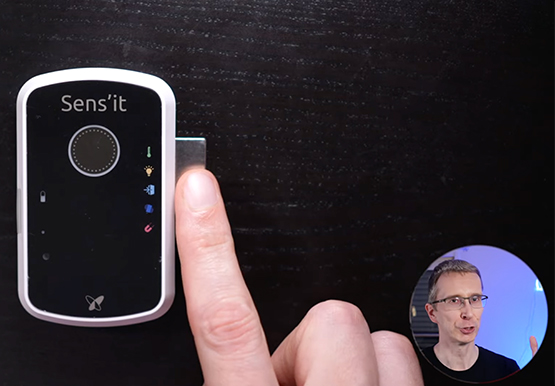
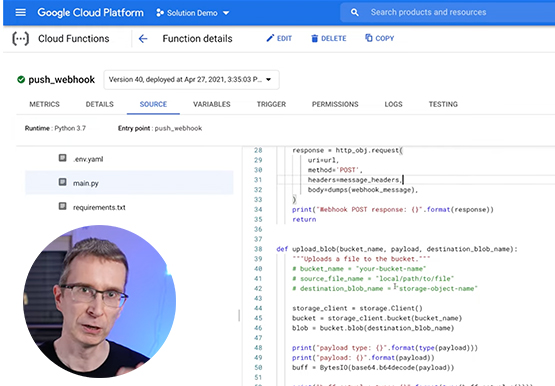

AI-powered Cameras Help You Serve Your Pets Better. Learn How
Watch the video to learn how you can leverage Google Cloud platform and AI functions to build pet-detection cameras that can capture and send image-based alert messages on your phone to notify when your pets arrive or leave.
