






3145
Of your peers have already downloaded this article
10:00 Minutes
The most insightful time you'll spend today!
Beyond Traditional Learning: AI-based Online Learning Platform and Google Cloud Solutions Push Learners to Get Ahead

10330
Of your peers have already read this article.
1:30 Minutes
The most insightful time you'll spend today!
The combination of a vital need for IT experts among businesses and a digital skills gap is making lifelong learning increasingly critical. Beyond professional development, learning new skills offers additional rewards from building peer connections to boosting your creativity. That’s why in 2020 Krishna Deepak Nallamilli and I launched KIMO.ai to reimagine how people approach learning, especially in developing markets. Our team is building the artificial intelligence needed to generate individual learning paths through a wide range of quality digital learning content.
Google Cloud and its Startup Program have been instrumental in connecting our team with the tools, people, processes, and best practices to grow our business.
Existing learning platforms lack engagement
Outside of traditional education settings, massive open online learning courses (MOOCs)—often modeled after university courses—can provide a flexible and affordable way to upskill or reskill. But the vast majority of people who participate in MOOC programs fail to complete courses. Based on our research, the challenge with existing learning platforms is a lack of engagement, primarily caused by limited direction on which skills to learn, whether AI, fintech, blockchain, or other in-demand disciplines.
We’ve also received feedback that many corporate learning management systems–developed as online training systems to upskill employees–tend to be poorly designed and time-consuming to use.
Overall, a significant challenge with most existing learning platforms is that they’re generic. For example, suppose you’re interested in learning about AI. In that case, you need AI-related coursework that applies to your industry and the job you want because AI in medicine is vastly different from AI in financial services. Today’s online learning options typically take a one-size-fits-all approach and fail to capture the nuances of what learners really need to get ahead.
Building a future-proof learning platform
The commitment to highly personalized, accessible learning inspired KIMO.ai, a platform that we believe is the future of education. Depending on your goals, current skills, location, and other factors, our AI-based platform will identify which coursework (and where to find those classes) to build the skills you need. The more personalized, relevant learning recommendations even take into account people’s preferences for podcasts, MOOCs, books, articles, videos, courses, publications, and more.
In a mix of cooperation and competition we call “coopetition,” KIMO.ai will regularly recommend courses from other established online learning systems if, based on our automated assessment, it’s the best option for a learner. There’s also the option to access free content only.
Google cultural alignment fosters trust
Our platform started with one developer exploring NLP models and Google APIs. As we’ve grown our team and launched our beta to 110,000 users in developing markets, we discovered there is a lot of interest in our platform, and we believe we can make a significant impact. In feedback forums, we also learned that we need to focus our efforts on the mobile experience to improve engagement since 99% of the beta testers use mobile devices.
Beyond our team’s high level of trust in Google Cloud solutions, our team also appreciates the cultural alignment with Google. We value Google’s developer-centric approach and rely on tools like Dataflow for batch data processing and Cloud TPU to reliably run machine learning models with AI services on Google Cloud. We also build all of our deployments on Google Kubernetes Engine (GKE), which makes it easy to manage all our containerized workloads
On the front end, Google App Engine makes it easy to deploy apps and experiment, and it integrates seamlessly with Firebase for authentication and more. BigQuery is our serverless data warehouse that efficiently scales to support the millions of articles, videos, and other learning resources we need to analyze to provide the targeted coursework recommendations our learners require.
As we grow our business having a network of trusted advisors is also extremely valuable. By working closely with DoIT International, the 2020 Google Cloud Global Reseller Partner of the Year, our team has access to their cloud, Kubernetes, and machine learning expertise. DoIT has already helped us quickly resolve IT issues and create analytics dashboards that give us insights to continually enhance our services.
Building for a growing industry
The dynamic edtech market is growing rapidly and estimated to become an $11B industry by 2025. We’re proud to be part of the next wave of personalized education that has the potential to empower people in developing markets and beyond to grow their skills with coursework tailored to their exact needs and how they like to learn. This year, we will deliver our platform to at least 400,000 more people. We’re excited to see how they use it and where it takes them.
If you want to learn more about how Google Cloud can help your startup, visit our Startup Program application page here to get more information about our program, and sign up for our communications to get a look at our community activities, digital events, special offers, and more.
How Retailers Can Beat Inflation Like a Pro With These 5 Tips

2840
Of your peers have already read this article.
3:30 Minutes
The most insightful time you'll spend today!
Budget concerns and inflation shock are causing noticeable shifts in consumer behavior, a head-spinning turnabout since the pandemic days of 2020. We went from not having access to enough goods to now not having the right goods at the right price points. Heading into the holiday season, retailers will need to look sharp and be able to deliver value to the increasingly cost-conscious consumer — with frictionless product discovery and digital shopping experiences, relevant inventory, and personalization.
Those are a few of the insights gleaned from a recent eMarketer webcast on how retailers can better combat the effects of inflation, with pragmatic recommendations from experts including Amy Eschliman, managing director of retail solutions strategy and industry engagement at Google Cloud; Alexis Hoopes, vice president and head of e-commerce and direct-to-consumer (DTC) at Mattel Inc; and Elissa Quinby, head of retail insights at Quantum Metric. We’d like to share five key takeaways that retailers can adopt.
1. Be prepared for earlier holiday planning. Budget-conscious buyers are planning their purchases earlier than ever. According to our partner Quantum Metric’s latest Retail Benchmarks research, 40% of U.S. consumers and 30% in the UK have already started their holiday shopping1. At Mattel, Alexis noted, “We’ve learned to be nimble and early for our consumers, and to have products available for them when they’re ready to shop.” With higher prices, she added, “Consumers are preplanning and researching more, viewing product detail pages multiple times to check a higher-price item before adding it to their basket.”
Quantum Metric’s same research also shows that while average cart values grew between January to July 2022 — larger than they were at the same time last year1 — consumers were shopping less frequently. Because of higher prices, 37% of shoppers are now pre-planning and purchasing items all at once to help keep to their budget1. Amy observed. “That means retailers need to make it super easy for customers to find what they want to avoid shopping-cart abandonment.”
Retailers who make it easier for shoppers to find the right products, by providing Google-quality search and recommendations, can help reduce cart abandonment and increase conversions.
2. Get a handle on out-of-stock issues. While many of the supply-chain issues that surfaced during the pandemic have cleared up, inventory continues to be a challenge in retail. During the 2021 holiday season, Google/Ipsos research shows that consumers saw a 253% increase in “out of stock” messages versus pre-pandemic2. Elissa further pointed out that a great majority of both U.S. and UK consumers experience out-of-stock issues several times a month. It’s a fluid situation, however, with retailers facing bloated inventory as consumer demands quickly pivot from, for example, branded goods to generic or white-label items. “In the next six months or so, you really need to make sure you have the right inventory to meet consumer demands,” she advised.
The need for end-to-end visibility and the ability to act in real-time across the supply chain has never been more pressing. Google Cloud and our partners are tackling the top supply chain issues head on with solutions that enable end-to-end visibility, analytics and alert-driven event management as well as AI solutions and automation to streamline processes like procurement, fulfillment, and delivery.
3. Introduce value: communicate the quality of the product and the experience. While rising prices are paramount for many shoppers, it’s a common misconception that consumers are making purchase decisions based solely on price. Alexis remarked, “In e-commerce, we talk about price, product, service, and experience. Price is only one of the pillars for consumers. At Mattel, we are fully focused on product and experience. What makes this special? How do we connect directly in new ways to the consumer? Create ‘wow’ moments and deeper connections. When we think about value for our consumers, it’s the strength of the products that will drive the purchase.”
Elissa also noted that while consumers are doing a lot of comparison shopping, it’s really about value, whether a high-quality product or a high-quality experience. Quantum Metric’s Continuous Product Design solution, which is built with BigQuery, ingests data across multiple digital touchpoints, including from mobile and web applications, and connects customer signals to every stage of the product lifecycle to help deliver the products and experiences that customers actually want.

4. Ensure consistent experiences across channels. Today, consumers crave the cross-channel shopping experience. “The channel experience has gone from online to in-store to now everywhere,” Amy commented. “We call it ubiquitous digital shopping.” Elissa added that 75% of consumers do most of their shopping digitally. However, mobile drives 67% of digital traffic, but just 49% of sales.1 “Recent trends in traffic and conversion rates by device show that we can expect the most traffic for the big sale days on mobile,” she said. “People are looking for discovery and awareness, maybe even adding items to the cart as a placeholder or reminder. But they prefer to complete a sale on a desktop. It will be critical for retailers to offer a consistent experience, especially on major sale days like Black Friday and Cyber Monday.” Elissa also advised wrapping up any experiments with product and site design early, making sure to understand the customer experience holistically across the organization and prioritizing efforts to eliminate friction.
Consumers now expect to be able to shop wherever and whenever best fits their needs, whether in a store, on your website, through your app, or from within a social media ad, and have it be a consistently good experience no matter how they first entered or exited your commerce site. Google’s 2022 Retail Marketing Guide provides useful insights and tips on how to grow your online and in-app sales.
5. Personalize touchpoints to build loyalty. Connecting with your customer base and making sure they understand the value of your offering is essential. Alexis noted that the key is to keep your messages fresh as the holiday shopping season expands, providing new messages as they keep coming back to your store. “We need to engage them by helping them find what they are looking for at the right time,” she said. “Recognize that they are doing more planning and wish-list building early, then buying last-minute gifts at lower prices towards the end. Make sure those are front and center.”
Alexis also pointed out that today, consumers are providing more data points with the products they view or the items sitting in their carts. “What’s so great about e-commerce is that we can use all of this to create more personalized, direct messages targeted to those consumers,” she commented.
Amy recommended continuing to focus on conversion with product discovery and personalization, harnessing customer data to drive insights and action. “Any company’s biggest asset is their data. Using it in as many ways possible and activating it across the company is incredibly important,” she remarked. “Take advantage of your first-party data to activate everything from marketing campaigns to a more efficient supply chain. For every customer who comes to one of your digital properties, make sure your product discovery is as easy as possible. Pay attention to your recommendations, driving personalization to make that experience as unique and fruitful for the customer as possible.”
Achieving these objectives requires a modern cloud data warehouse and activation of a customer data platform. Retailers can explore how Google Cloud’s advanced data capabilities and our ecosystem of partners can power a customer data platform that supports more personalized marketing, shopping experience, and customer service.
While these are our key takeaways, we invite you to register to watch the on-demand webinar, “5 Ways Retailers Can Combat the Effects of Inflation,” for even more insights.
- Quantum Metric Retail Benchmarks, “Adjusting for Inflation.” The report is based on aggregated browsing behavior from January to July 2022, paired with a survey of 3,400 consumers in the U.S. and UK.
- Google/Ipsos, Holiday Shopping Study, Oct 2021 – Jan 2022, Online survey, US, n=7,253, Americans 18+ who conducted holiday shopping activities in past two days
The Future of Retail: Automated Customer Journeys Powered by Technology

3680
Of your peers have already read this article.
1:30 Minutes
The most insightful time you'll spend today!
Editor’s note: To kick off the new year and in preparation for NRF The Big Show, we invited partners from across our retail ecosystem to share stories, best practices, and tips and tricks on how they are helping retailers transform during a time that continues to see tremendous change. Please enjoy this entry from our partner.
If you put a pot of water on the stove, it doesn’t heat up instantly. It simmers slowly at first, eventually picking up steam to reach a rolling boil. The retail landscape is not so different. Capgemini’s research shows the sector has evolved over four generations, from the early days of fragmented outlets to omnichannel and customer-centric focuses, with a fifth generation on the horizon that promises to be centered on consumption.
- Generation 1: Fragmented outlets
- Generation 2: Chain concentration
- Generation 3: Omnichannel
- Generation 4: Consumer-centric
- Generation 5: Consumption-centric
Although incremental change allows companies to experiment and iterate during their digital journeys, the COVID-19 pandemic rapidly accelerated the evolution of online and contactless shopping. Evolution became a revolution, with most Consumer Product and Retail (CPR) companies still mastering the omnichannel generation of their digital transformation to create a seamless shopping experience. Companies that are more digitally mature are already aspiring to the consumer-centric phase, embracing opportunities made possible by technology such as personalization and automation.
What consumers want
Customers have more choices in how they shop and engage with brands. This has made it harder for brands to predict and anticipate needs across customer journeys. And that’s convincing some companies to innovate more quickly as consumer demand drives the need for speed and scale.
Think about your own online behavior. Say you’re shopping for an item and searching online for the closest store in your neighborhood. Google is likely your go-to for finding that information. Looking to troubleshoot an issue with a product or seek out a service? Again, you’ll likely hit up Google first, not even considering going directly to a brand’s website for answers.
Both scenarios point to a disconnect between virtual and physical worlds, a gap technology can bridge in numerous ways such as breaking down silos and integrating fragmented media channels. Interestingly, though, not everything will be centered online all the time. In our recent study on consumer behavior, The great consumer reset, Capgemini discovered 57 percent of shoppers plan to return to brick-and-mortar stores post-pandemic, which is basically unchanged from the 59 percent who often interacted with physical stores before.
But business as usual? Not even close. Consumers have come to expect a frictionless shopping experience (buy online, pick up in store) or an immersive one (products displayed online using augmented reality), and are not content to return to in-store lineups, empty shelves, or a one-size-fits-all approach. Moreover, customers want personalized interactions while ensuring their data and privacy are protected.
So the role of the store is changing. In fact, many online-only brands are opening brick-and-mortar establishments to drive customer experience. In our research on “smart stores,” we found the majority of consumers (66 percent) believe automation can improve their shopping experience by solving the challenges they face at retail stores.
From personalization to serendipity
Retailers must recognize that they have to win consumer trust and confidence. Many consumers believe retailers’ use of tech is focused on reducing costs rather than easing friction. And they’re right. That same Capgemini research found that only one-third (35 percent) of retailers consider “solving customer pain points” as the most important criteria when deciding which automation use cases to implement.
“Retailers are largely in the early stages of adopting automation, and that’s an opportunity to rethink how they’re using technology, not just to smooth out friction and engender consumer trust but to build unexpected consumer benefits,” says Neerav Vyas, Head of Customer First, Co-Chief Innovation Officer, Insights & Data, North America, Capgemini. “We’re trying to move towards this idea of delivering serendipitous experiences to bridge the physical and digital divide.”
The focus is not solely on shoppers seeking out a specific product. “When consumers are in an exploratory mood, retailers can recommend products and services customers didn’t even know they wanted,” says Vyas. For example, business teams that use personalization platforms as part of an integrated media strategy can optimize algorithms against outcomes such as improving conversion and driving engagement.
Vyas says the elevated experience from “personalization to serendipity” fosters trust in the ability of recommendation architectures to persuade and influence consumers’ choices in beneficial ways. A case in point: our research found that half (52 percent) of spending by millennials goes towards experience-related purchases. As always, the key is to meet consumers where they are. Even better, according to Vyas, is to anticipate and understand when signals like customer intent are changing.
How to create value throughout the customer journey
One solution companies can implement right now is an integrated media spend platform that incorporates reporting, planning, and strategy across the entire customer journey. This offers value throughout the customer journey by using technology to reduce friction along the way. Think of it as starting with the customer looking for a product (search and discovery), moving on to the purchase (omnichannel basket, “shoppable” screens) and pick up/delivery (QR code scan in store), and through to post-purchase engagement with the retailer (Google Contact Center AI).
Such a holistic approach also accelerates data acquisition, integration, and reporting using advanced analytics to break down silos and emphasize the importance of privacy and first-party data. This in turn guides end-to-end interventions across customer journeys that enable optimized media spend, empowers businesses to analyze their spend distribution, fine-tunes owned and paid tactics with agencies, and promotes stewardship to support audit efficacy.
A culture of experimentation
With this data-driven focus, CPRs can create a 360-degree perspective of the customer. That intelligence can be used to enhance and humanize automated shopping experiences by putting the customer in control, whether online, in store, or across company brands. Moreover, by using Google Cloud’s emerging technologies such as artificial intelligence (AI), we help companies accelerate value across the spectrum, from supply-chain optimization and customer innovation to consumer experience.
Building a culture of experimentation is a team effort. “It’s not ever just one person who had a big idea. It’s all incremental steps,” says Jennifer Marchand, Google Cloud COE Leader, Capgemini. “Finding the right use case and timing is everything.” Take Google Glass Enterprise, she continues. For greater consumer experience, it can enable in-store associates to better serve with hands-free checkout, customer personalization and recommendations, and special offers. At the same time, Computer Vision and Smart Shelves can help prioritize tasks for employees, notifying them of low stock or a spill in the store.
Marchand points out that companies and consumers alike might not be ready to fully adopt some technology like facial recognition, but since almost everyone has a smartphone these days, they can benefit from automation with ease. “What’s interesting,” she adds, “is the way Google thinks about these types of problems, solving them for the long term.”
The store of tomorrow
Imagine a truly frictionless shopping experience, where state-of-the-art computer vision and AI identifies the products you pick up, put back, and keep, allowing you to head home, completely bypassing the checkout, with a 99 percent accuracy rate and receipts sent directly to your mobile app. That utopian experience is already taking shape at CornerShop, Capgemini’s live experimental store in London, UK.
Jamie MacLoud, Transformation & Strategy Consultant at frog, part of Capgemini, describes the retail space, which runs on Google Cloud, as the store of tomorrow, and not the distant future. It’s an experiential space where retailers and brands can explore, develop, and test technological shopping innovations in real-time. The outcome is a clearer understanding of how digital innovation can enable new ways to progress the customer experience, improve in-store operations, and help consumers to rediscover the joy of in-person retail through new ways to shop and engage with brands.
“We build, test, and learn about store concepts of tomorrow that we believe could be implemented into actual stores in the next one to two years. Getting these experiences in front of real customers in the CornerShop allows us to generate tangible learnings that we can share with our clients and use to shape future store strategy” says MacLeod. CornerShop was opened to the public in two eight-week stints, which allowed real-time testing to see what technologies resonated with customers, which brands can adapt and scale. Frictionless checkout, not surprisingly, was a big win for customers, but the technology underpinning the “virtual try-on” of clothing was deemed more suitable for the store of the future.
So, unlike an innovation lab, CornerShop lets companies experiment risk free, speeding up the process from hypothesis to full-scale implementation. It’s also another step toward solving the challenges customers face, while delivering those serendipitous experiences that build brand loyalty and longevity.
Learn more about how Capgemini is partnering with Google Cloud to help retailers create next-generation shopping experiences today.
We would like to acknowledge Jamie MacLoud, Transformation & Strategy Consultant at frog, part of Capgemini and Neerav Vyas, Head of Customer First, Co-Chief Innovation Officer, Insights & Data, North America at Capgemini who supported with invaluable insights and subject matter expertise in the writing of this blog post.
4543
Of your peers have already watched this video.
3:30 Minutes
The most insightful time you'll spend today!
Strategies for Migrating to the Cloud
What are the technologies that are helping enterprises scale, adapt, and modernize? Are there any strategies that enterprises can adopt for moving to the cloud?
What this webinar to find out the different migration patterns to the cloud and learn how enterprises can choose the right strategies based on their business and technical environments, and the tooling that can help them get there.
4 Steps to a Successful Cloud Migration

3947
Of your peers have already read this article.
2:00 Minutes
The most insightful time you'll spend today!
Digital transformation and migration to the cloud are top priorities for a lot of enterprises. At Google Cloud, we’re working hard to make this journey easier. For example, we recently launched Migrate for Compute Engine and Migrate for Anthos to simplify cloud migration and modernization. These services have helped customers like Cardinal Health perform successful, large-scale migrations to GCP.
But we understand that the migration journey can be daunting. To make things easier, we developed a whitepaper on application migration featuring investigative processes and advice to help you design an effective migration and modernization strategy. This guide outlines the four basic steps you need to follow to migrate successfully and efficiently:
- Build an inventory of your applications and infrastructure: Understanding how many items, such as applications and hardware appliances, exist in your current environment is an important first step.
- Categorize your applications: Analyze the characteristics of all of your applications and evaluate them across two dimensions: migration to cloud, and modernization.
- Decide whether or not to migrate an application to the cloud: Not all applications should move to the cloud quite yet. The whitepaper lists the questions to ask to determine whether or not to migrate a given application.
- Pick your migration strategy: For the applications you decided to migrate, decide on your ideal strategy—pure lift and shift, containers, cloud managed services, or a combination thereof.
There’s a lot to consider when you start thinking about digital transformation, and every cloud modernization project has its nuances and unique considerations. The secret to success is understanding the advantages and disadvantages of the options at your disposal, and weighing them against what you want to transform and why. To learn how to migrate and modernize your applications with Google Cloud, download this whitepaper.
More Relevant Stories for Your Company

Explore The New Era of Flexibility: Streamlined AWS-to-Google Cloud Migration
As an IT leader, you’re asked to do it all: innovate and optimize your tech stack for business outcomes — all while being secure and compliant. It takes heroic efforts to achieve innovation and progress while also tightening budgets and teams. This is why many of you are considering migrating applications
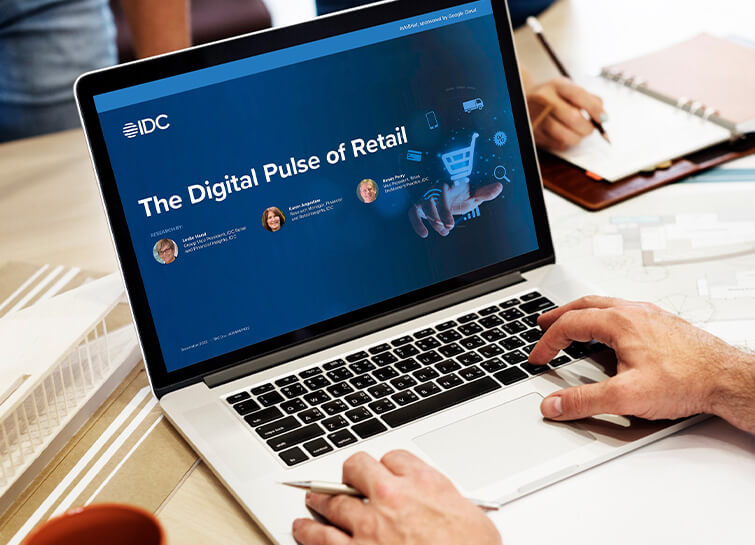
IDC Retail Insights: The Digital Pulse of Retail
Google partnered with IDC Retail Insights to conduct a survey of retailers across the globe to assess the state of transformation and develop an index of digital maturity. Learn more about the changes in digital resilience over the last year and the areas of innovation over the next 12 months.
3 Important Factors to Consider for Moving Large-scale On-prem Data to Cloud with Storage Transfer Service
Organizations have been moving their on-premises data and applications to the cloud for the past several years, driven by reasons as varied as application modernization and content delivery to archival. In particular, we have seen migration momentum pick up in sectors like media and entertainment, where customers are rethinking how

New Capabilities in Cloud Asset Inventory Allow Better Visibility into Google Cloud Environments
Businesses that operate in complex cloud environments, large fleets, or sophisticated security operations all require visibility into their cloud assets in order to keep their teams nimble and their data secure. Cloud Asset Inventory (CAI) helps these teams understand their Google Cloud and Anthos environments by providing complete visibility, real-time monitoring, and
