





Zeotap Uses Big Data to Enable Personalized, Precision Marketing at Scale

3351
Of your peers have already read this article.
5:30 Minutes
The most insightful time you'll spend today!
Customers today expect brands to know what they want. In fact, Forbes cited that 71% of customers feel frustrated when the shopping experience is impersonal. From interests to purchase habits, companies need to target customers effectively in order to stand out from the plethora of competitors in the online marketplace.
“Our mission is to help brands engage customers with the most appropriate marketing messages at the right place and at the right time while respecting consumer privacy and ensuring regulatory compliance. The experience of Google Cloud in working with large-scale datasets makes the platform an excellent fit for us.”
—Projjol Banerjea, co-founder and Chief Product Officer, Zeotap
Leveraging first-, second-, and third-party data, Zeotap’s Customer Intelligence Platform (CIP)—a CDP with additional identity resolution and third-party data enrichment capabilities—allows brands to engage with their known and unknown users with tailored marketing messages and next best offers or actions. It also offers out-of-box algorithms for standard marketing use cases such as promoting a specific product that will resonate with audiences and custom algorithms for very niche and specific use cases.
“Our mission is to help brands engage customers with the most appropriate marketing messages at the right place and at the right time while respecting consumer privacy and ensuring regulatory compliance. The experience of Google Cloud in working with large-scale datasets makes the platform an excellent fit for us,” says Projjol Banerjea, co-founder and Chief Product Officer at Zeotap.
“With BigQuery, we are able to operate more efficiently, removing 80% of the operation load that we would otherwise have to manage on a different cloud provider. As a result, we get to build and deliver products faster.”
—Sathish K S, VP Engineering, Zeotap
Improving data processing to deliver products faster
The cloud-native company migrated from its previous provider to Google Cloud in October 2019 because it was attracted to the benefits of BigQuery as a serverless cloud data warehouse. This was a feature that wasn’t available with its previous provider.
Sathish K S, Engineering Vice-President at Zeotap says, “With BigQuery, we are able to operate more efficiently, removing 80% of the operation load that we would otherwise have to manage on a different cloud provider. As a result, we get to build and deliver products faster.” Since coming onboard BigQuery, Zeotap has been able to increase the speed of its product delivery by 40%.
BigQuery also offers a much higher query limit, which is helpful because Zeotap can converge all of its previous operation load across different platforms into one data warehouse without worrying about it being overloaded.
One of the key services Zeotap offers is customer relationship management (CRM) platform integration. Using Dataflow, Zeotap can easily stream first-party data into BigQuery at scale.
The data integration capabilities of Cloud Data Fusion also complements Dataflow to help Zeotap enhance its API offerings. To illustrate, an ecommerce company may use Zeotap’s internal API to understand their customer’s cart and check-out habits and add Zeotap’s extra layer of data intelligence to it, so they can improve their marketing efforts. Cloud Data Fusion enables a seamless flow of real-time data so that the company can deliver the relevant ads or suggest products just before they make a purchase, which increases the likelihood of them buying more.
Zeotap uses Dataproc and Pub/Sub to manage the large flow of data that goes in and out of its database. Because many of its customers are pushing data in real time, Pub/Sub acts as a queuing engine that feeds them into Dataflow. Likewise, the data from Dataflow is also being channeled back smoothly to the customer endpoints using Pub/Sub.
Being able to automate all of its processes benefitted the DevOps team, as they now have time to focus on developing and improving Zeotap’s product offerings instead of spending time and energy on operations.

Managing a full migration seamlessly
Today, all of Zeotap’s data is hosted on Google Cloud. The company began its lift and shift migration in October 2019 and was complete by April 2020. “We have close to 405 data pipelines, and even after the migration, we had to verify the right datasets. We had terabytes of data to move, and despite this, our operations were not affected,” says Aditya Chandra, Vice-President of Infrastructure and Security at Zeotap.
Apart from the BigQuery capabilities, there were other major things Zeotap looked out for in its decision to move to a new cloud provider. The functional parity of Google Cloud was important so that it did not have to rebuild many of its existing structures. Zeotap also didn’t want any drop in performance during and after the move to a new cloud provider. Finally, as a multi-region company, it used to have to spot instance problems and run them on demand, which had cost implications. With the move, it no longer had to face such issues.
“Whatever Spark code that was already running on our existing system had to be lifted and shifted into Dataproc without any library changes because 60% of our codebase is out of there. We’re glad that this was possible,” says Ameya Agnihotri, Chief Technology Officer.
Managing business continuity with a trusted partner
Zeotap now works with Rackspace Technology (Rackspace) as it continues to optimize its infrastructure operations. As a marketing and technology company, Zeotap needs niche expertise to manage big data processing issues.
Ameya Agnihotri shares, “Given its global expertise in dealing with on-premises as well as cloud solutions, Rackspace can really add value because they are better equipped to troubleshoot and handle complex data operations.” Zeotap has plans to explore more of Google Cloud’s artificial intelligence (AI) and machine learning (ML) capabilities, so having a partner in this journey will be valuable to the team.
With so much data on hand, security is paramount to Zeotap. It does a lot of internal security assessments daily. This is one of the areas where the team works with Rackspace to ensure that it adopts best practices and stays on top of the latest updates. With its ability to handle big data operations, Rackspace also acts as an extension of the Zeotap team that supports the infrastructure side of the business.
“The level of engagement from Google Cloud has been excellent, particularly the ability to bring in expertise from different parts of the organization. The personal touch meant we could reach product owners and managers of specific products. This kind of support is what we really value and appreciate.”
—Ameya Agnihotri , Chief Technology Officer, Zeotap
Future plans and collaboration with Google Cloud
Zeotap is currently exploring Cloud Bigtable and API Gateway as it continues to grow the business and explore new types of services to offer to its customers. Although it has a software-as-a-service (SaaS) offering for customers to self-serve, some may prefer to do a server-to-server integration so that they do not have to worry about the back end at all. For this reason, Zeotap is exploring the possibility of integrating these customers’ APIs in the back end of its API, using Google Cloud’s API Gateway features that are available out of the box. The company is also looking forward to the new features being released on BigQuery, as well as exploring more of the alerting and monitoring capabilities of Google Cloud.
“The level of engagement from Google Cloud has been excellent, particularly the ability to bring in expertise from different parts of the organization,” says Ameya. He shares that the team has had many fortnightly calls when there were issues to address, and the Google Cloud team would help to fix the problems. “The personal touch meant we could reach product owners and managers of specific products. This kind of support is what we really value and appreciate.”
With big plans ahead for Zeotap that include becoming a Google Cloud Technology Partner in the near future, Swapnasarit Sahu, Chief Data and Analytics Officer, is confident that the company has chosen the right cloud solution. “We see Google as one of the frontrunners in the space of AI and ML solutions, which can really help data scientists in developing new and more innovative products and solutions, and we look forward to building great products with them,” he says.

4314
Of your peers have already watched this video.
20:00 Minutes
The most insightful time you'll spend today!
The New and Upcoming Infrastructure for Google Cloud’s AI and ML Solutions
How does Google manage to provide its customers a differentiated compute platform experience and define ways to fully leverage its infrastructure supporting its cutting-edge AI and ML offerings? Easy-to-use, scalable and ability to create innovative products and services to end-users at low cost of ownership is the narrative behind Google Cloud’s AI and ML solutions. Explore Google Cloud’s ML infrastructure and accelerator innovation for 2021.
Watch the video to find out how Google Cloud’s leadership in AI through Google research, Deep Mind and also practical application of AI within Google Products drive innovative platforms and offerings that cater to customers’ AI and ML use cases!
ESG Did the Math: It’s Cheaper and Smarter to Migrate Enterprise Data Warehouses to Google BigQuery. Way Smarter
DOWNLOAD WHITEPAPER6473
Of your peers have already downloaded this article
11:30 Minutes
The most insightful time you'll spend today!
Enterprise data warehouses (EDWs) are often deemed the most valuable asset in the data center, serving as the backbone of the business. The ongoing insight gained from these solutions has justified the significant up-front capital investments and ongoing operational costs, but the rigidity of the traditional EDW is forcing organizations to reevaluate their approach to analytics and business intelligence.
While legacy EDW solutions were all about throwing as much computational power as possible at a relatively static data set, with the inflow of new and valuable sources of data and the emergence of all-encompassing analytics initiatives, the success of today’s EDW solutions depends more on operational and resource agility than raw horsepower.
Being able to dynamically adjust to the needs of the business, integrate into operational processes, and quickly react to emerging opportunities can place an organization at a distinct competitive advantage.
Today’s EDW solutions must act as a global repository of information, provide the agility to scale up or down on demand, and seamlessly integrate with other analytics tools and services used throughout a data-driven organization.
Over the last two years, ESG has conducted detailed studies quantifying the economic value of Google data analytics services. The first evaluated Google BigQuery compared to on-premises Hadoop and AWS redshift. The second focused on Google DataProc compared to DIY Spark and Hadoop approaches. Here’s the next iteration of our economic analysis, extending the BigQuery study to incorporate a comparison to legacy enterprise data warehouses, both on-premises and in the cloud.
Through publicly available pricing and in-depth qualitative customer interviews, ESG was able to assert a base set of assumptions that power a dynamic model, incorporating up-front capital investments, deployment and migration costs, expected monthly cloud costs, administrative costs, and operational costs associated with legacy on-premises EDWs, cloud-based EDWs, and Google BigQuery.
The crux of the results show organizations can save up to 52% by using BigQuery over on-premises EDWs and up to 41% over cloud-based EDWs. Unlike legacy on-premises EDWs, BigQuery provides organizations with the key abilities that are essential to delivering a modern EDW solution, most notably the ability to integrate across other Google Cloud Platform services, including its market leading AI-based solutions and services.
Although not called t out directly in the published report, ESG’s models indicate that the savings achieved by migrating an on-premises EDW solution to Google BigQuery may actually be more cost effective than simply continuing to operate an existing on-premises EDW solution.

3851
Of your peers have already listened to this podcast
25:30 Minutes
The most insightful time you'll spend today!
Cloud Dataprep: The Easiest Way to Cleanse Data
Customers today expect brands to know what they want. In fact, Forbes cited that 71% of customers feel frustrated when the shopping experience is impersonal. From interests to purchase habits, companies need to target customers effectively in order to stand out from the plethora of competitors in the online marketplace.
“Our mission is to help brands engage customers with the most appropriate marketing messages at the right place and at the right time while respecting consumer privacy and ensuring regulatory compliance. The experience of Google Cloud in working with large-scale datasets makes the platform an excellent fit for us.”
—Projjol Banerjea, co-founder and Chief Product Officer, Zeotap
Leveraging first-, second-, and third-party data, Zeotap’s Customer Intelligence Platform (CIP)—a CDP with additional identity resolution and third-party data enrichment capabilities—allows brands to engage with their known and unknown users with tailored marketing messages and next best offers or actions. It also offers out-of-box algorithms for standard marketing use cases such as promoting a specific product that will resonate with audiences and custom algorithms for very niche and specific use cases.
“Our mission is to help brands engage customers with the most appropriate marketing messages at the right place and at the right time while respecting consumer privacy and ensuring regulatory compliance. The experience of Google Cloud in working with large-scale datasets makes the platform an excellent fit for us,” says Projjol Banerjea, co-founder and Chief Product Officer at Zeotap.
“With BigQuery, we are able to operate more efficiently, removing 80% of the operation load that we would otherwise have to manage on a different cloud provider. As a result, we get to build and deliver products faster.”
—Sathish K S, VP Engineering, Zeotap
Improving data processing to deliver products faster
The cloud-native company migrated from its previous provider to Google Cloud in October 2019 because it was attracted to the benefits of BigQuery as a serverless cloud data warehouse. This was a feature that wasn’t available with its previous provider.
Sathish K S, Engineering Vice-President at Zeotap says, “With BigQuery, we are able to operate more efficiently, removing 80% of the operation load that we would otherwise have to manage on a different cloud provider. As a result, we get to build and deliver products faster.” Since coming onboard BigQuery, Zeotap has been able to increase the speed of its product delivery by 40%.
BigQuery also offers a much higher query limit, which is helpful because Zeotap can converge all of its previous operation load across different platforms into one data warehouse without worrying about it being overloaded.
One of the key services Zeotap offers is customer relationship management (CRM) platform integration. Using Dataflow, Zeotap can easily stream first-party data into BigQuery at scale.
The data integration capabilities of Cloud Data Fusion also complements Dataflow to help Zeotap enhance its API offerings. To illustrate, an ecommerce company may use Zeotap’s internal API to understand their customer’s cart and check-out habits and add Zeotap’s extra layer of data intelligence to it, so they can improve their marketing efforts. Cloud Data Fusion enables a seamless flow of real-time data so that the company can deliver the relevant ads or suggest products just before they make a purchase, which increases the likelihood of them buying more.
Zeotap uses Dataproc and Pub/Sub to manage the large flow of data that goes in and out of its database. Because many of its customers are pushing data in real time, Pub/Sub acts as a queuing engine that feeds them into Dataflow. Likewise, the data from Dataflow is also being channeled back smoothly to the customer endpoints using Pub/Sub.
Being able to automate all of its processes benefitted the DevOps team, as they now have time to focus on developing and improving Zeotap’s product offerings instead of spending time and energy on operations.
Managing a full migration seamlessly
Today, all of Zeotap’s data is hosted on Google Cloud. The company began its lift and shift migration in October 2019 and was complete by April 2020. “We have close to 405 data pipelines, and even after the migration, we had to verify the right datasets. We had terabytes of data to move, and despite this, our operations were not affected,” says Aditya Chandra, Vice-President of Infrastructure and Security at Zeotap.
Apart from the BigQuery capabilities, there were other major things Zeotap looked out for in its decision to move to a new cloud provider. The functional parity of Google Cloud was important so that it did not have to rebuild many of its existing structures. Zeotap also didn’t want any drop in performance during and after the move to a new cloud provider. Finally, as a multi-region company, it used to have to spot instance problems and run them on demand, which had cost implications. With the move, it no longer had to face such issues.
“Whatever Spark code that was already running on our existing system had to be lifted and shifted into Dataproc without any library changes because 60% of our codebase is out of there. We’re glad that this was possible,” says Ameya Agnihotri, Chief Technology Officer.
Managing business continuity with a trusted partner
Zeotap now works with Rackspace Technology (Rackspace) as it continues to optimize its infrastructure operations. As a marketing and technology company, Zeotap needs niche expertise to manage big data processing issues.
Ameya Agnihotri shares, “Given its global expertise in dealing with on-premises as well as cloud solutions, Rackspace can really add value because they are better equipped to troubleshoot and handle complex data operations.” Zeotap has plans to explore more of Google Cloud’s artificial intelligence (AI) and machine learning (ML) capabilities, so having a partner in this journey will be valuable to the team.
With so much data on hand, security is paramount to Zeotap. It does a lot of internal security assessments daily. This is one of the areas where the team works with Rackspace to ensure that it adopts best practices and stays on top of the latest updates. With its ability to handle big data operations, Rackspace also acts as an extension of the Zeotap team that supports the infrastructure side of the business.
“The level of engagement from Google Cloud has been excellent, particularly the ability to bring in expertise from different parts of the organization. The personal touch meant we could reach product owners and managers of specific products. This kind of support is what we really value and appreciate.”
—Ameya Agnihotri , Chief Technology Officer, Zeotap
Future plans and collaboration with Google Cloud
Zeotap is currently exploring Cloud Bigtable and API Gateway as it continues to grow the business and explore new types of services to offer to its customers. Although it has a software-as-a-service (SaaS) offering for customers to self-serve, some may prefer to do a server-to-server integration so that they do not have to worry about the back end at all. For this reason, Zeotap is exploring the possibility of integrating these customers’ APIs in the back end of its API, using Google Cloud’s API Gateway features that are available out of the box. The company is also looking forward to the new features being released on BigQuery, as well as exploring more of the alerting and monitoring capabilities of Google Cloud.
“The level of engagement from Google Cloud has been excellent, particularly the ability to bring in expertise from different parts of the organization,” says Ameya. He shares that the team has had many fortnightly calls when there were issues to address, and the Google Cloud team would help to fix the problems. “The personal touch meant we could reach product owners and managers of specific products. This kind of support is what we really value and appreciate.”
With big plans ahead for Zeotap that include becoming a Google Cloud Technology Partner in the near future, Swapnasarit Sahu, Chief Data and Analytics Officer, is confident that the company has chosen the right cloud solution. “We see Google as one of the frontrunners in the space of AI and ML solutions, which can really help data scientists in developing new and more innovative products and solutions, and we look forward to building great products with them,” he says.
Analytics Hub for Secure Data Sharing and Analytics Unlocks True Data Value and Insights

6732
Of your peers have already read this article.
2:30 Minutes
The most insightful time you'll spend today!
Customers tell us that sharing and exchanging data with other organizations is a critical element of their analytics strategy, but it’s hamstrung by unreliable data and processes, and only getting harder with security threats and privacy regulations on the rise.
Furthermore, traditional data sharing techniques use batch data pipelines that are expensive to run, create late arriving data, and can break with any changes to the source data. They also create multiple copies of data, which brings unnecessary costs and can bypass data governance processes. These techniques do not offer features for data monetization, such as managing subscriptions and entitlements. Altogether, these challenges mean that organizations are unable to realize the full potential of transforming their business with shared data.
To address these limitations, we are introducing Analytics Hub, a new fully managed service, available in Q3, in preview, that helps you unlock the value of data sharing, leading to new insights and increased business value. With Analytics Hub you get:
- A rich data ecosystem by publishing and subscribing to analytics-ready datasets.
- Control and monitoring over how your data is being used, because data is shared in one place.
- A self-service way to access valuable and trusted data assets, including data provided by Google. For example, a unique dataset from Google Search Trends will be available, that you can query and combine with your own data.
- An easy way to monetize your data assets without the overhead of building and managing the infrastructure.
Built on a decade of cross-organizational sharing
While Analytics Hub is a new service, it builds on BigQuery, Google’s petabyte-scale, serverless cloud data warehouse. BigQuery’s unique architecture provides separation between compute and storage, enabling data publishers to share data with as many subscribers as you want without having to make multiple copies of your data. With BigQuery, there are no servers to deploy or manage, which means that data consumers get immediate value from shared data. Data can be provided and consumed in real-time using the streaming capabilities of BigQuery and you can leverage the built in machine learning, geospatial, and natural language capabilities of BigQuery or take advantage of the native business intelligence support with tools like Looker, Google Sheets, and Data Studio.
BigQuery has had cross-organizational, in-place data sharing capabilities since it was introduced in 2010. We took a look at usage metrics in BigQuery and found that over a 7 day period in April, we had over 3,000 different organizations sharing over 200 petabytes of data. These numbers don’t include data sharing between departments within the same organization.
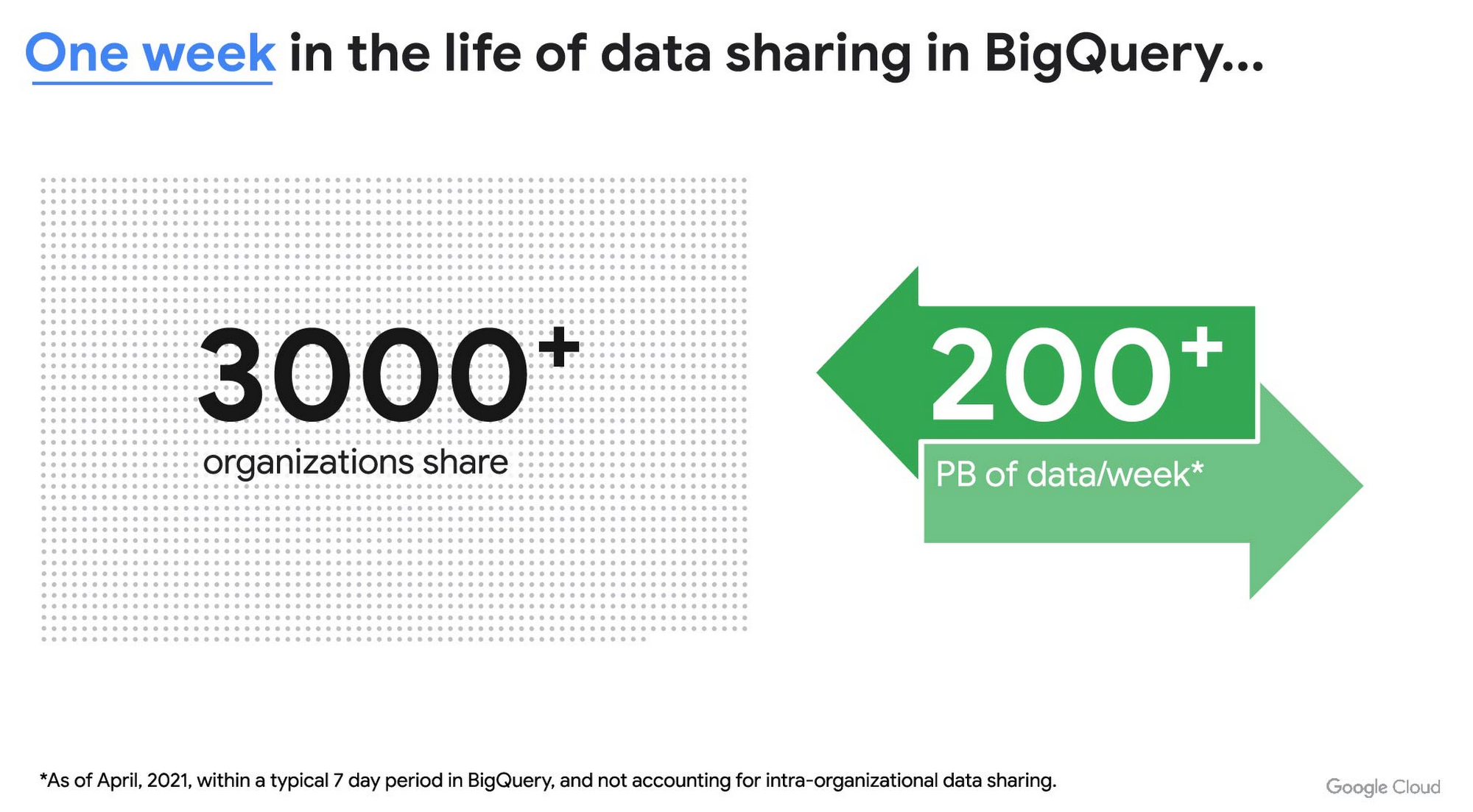
As you can see, data sharing in BigQuery is already popular. But we want to make it easier and even more scalable.
Raising the bar on data sharing
To make data sharing easier and more scalable in BigQuery, Analytics Hub introduces the concepts of shared datasets and exchanges. As a data publisher, you create shared datasets that contain the views of data that you want to deliver to your subscribers. Next, you create exchanges, which are used to organize and secure shared datasets. By default, exchanges are completely private, which means that only the users and groups that you give access to can view or subscribe to the data. You can also create internal exchanges or leverage public exchanges provided by Google. Finally, you publish shared datasets into an exchange to make them available to subscribers.
Data subscribers search through the datasets that are available across all exchanges for which they have access and subscribe to relevant datasets. This creates a linked dataset in their project that they can query and join with their own data. Subscribers pay for the queries that they run against the data while the publisher pays for the storage of the data. Data providers can add new data, new tables, or new columns to the shared dataset and these will be immediately available to subscribers. In addition, the publisher can track subscribers, disable subscriptions, and see aggregated usage information for the shared data.
Analytics Hub makes it easy for you to publish, discover, and subscribe to valuable datasets that you can combine with your own data to derive unique insights. Here are some types of data that will be available through Analytics Hub:
- Public datasets: Easy access to the existing repository of over 200 public datasets, including data about weather and climate, cryptocurrency, healthcare and life sciences, and transportation.
- Google datasets: Unique, freely-available datasets from Google. One example of this is the COVID-19 community mobility dataset. Another example is the forthcoming Google Trends dataset, which will provide the top 25 search terms and top 25 rising search terms over a 5 year window in 210 distinct locations in the US. Trends data can be used by everyone in the organization to gain insights into what customers care about.
- Commercial (paid for) datasets: We are working with leading commercial data providers to bring their data products to Analytics Hub. If you are interested in delivering your data via Analytics Hub, we’re also introducing Data Gravity, an initiative that provides storage benefits and new distribution paths for data published through Analytics Hub.
- Internal datasets: We know that data sharing can be challenging in larger organizations. Analytics Hub can be used for internal data, for example, to share standardized customer demographics with your sales engineering and data science teams.
Customers and partners using Analytics Hub

“Google Search Trends data has always been an important tool for our WPP agency data teams. At WPP we believe that data variety is a superpower which is why we are excited to use the new Trends dataset availability within BigQuery, plus the launch of Analytics Hub. The best creativity in the world is informed by data insights, and influenced by what people search for, so the operational efficiencies we’ll gain via the Analytics Hub and the insights we can drive with Trends data are just phenomenal.”
—Di Mayze Global Head of Data and AI, WPP

“Equifax Ignite is our shared data analytics environment within our Equifax data fabric. We are excited to partner with Google to leverage Analytics Hub and BigQuery to deliver data to over 400 statisticians and data modelers as well as securely sharing data with our partner financial institutions.”
—Kumar Menon, SVP Data Fabric and Decision Science, Equifax

“The flow of data and insights between our teams at Deloitte and our clients is paramount for building truly transformational data cultures. With its purpose-built architecture for secure data exchanges and sharing analytics resources, Google Cloud’s Analytics Hub can help provide significant operational efficiencies for how Deloitte teams support our clients’ data-driven initiatives within their industry ecosystems. It will also help minimize the worries about scale, privacy and security, or the administrative burden associated with each.”
—Navin Warerkar, Managing Director, Deloitte Consulting LLP, and US Google Cloud Data & Analytics GTM Lead

“Crux Informatics is proud to partner with Google to support the launch of Analytics Hub, removing friction for those who need access to analytics-ready data. With thousands of datasets from over 140 sources, Crux Informatics will accelerate access to data on Analytics Hub and together provide a more efficient and cost effective solution to deliver datasets in Google Cloud’s ecosystem.”
—Will Freiberg, CEO, Crux Informatics
Next steps for Analytics Hub
This is just the beginning for Analytics Hub. As we get to preview and general availability, we will be adding additional capabilities, including workflows for publishing and subscribing, publishing analytics assets (Looker Blocks, Data Studio reports, Connected Google Sheets) along with the shared data, the ability for data publishers to specify query restrictions on the usage of their data, and making it easy for data publishers to create sandbox environments for subscribers to work with their data, even if they are not yet on Google Cloud. We will provide features in Analytics Hub for monetization of data, including managing subscriptions, data entitlements, and billing.
Please sign up for the preview, which is scheduled to be available in the third quarter of 2021. In the meantime, you can learn more about BigQuery and how to leverage its built-in data sharing capabilities. Please go to g.co/cloud/analytics-hub to register your interest in Analytics Hub.
Geospatial Data for Business Apps Drive Sustainable and Accurate Decision-making

4347
Of your peers have already read this article.
1:30 Minutes
The most insightful time you'll spend today!
Organizations that collect geospatial data can use that information to understand their operations, help make better business decisions, and power innovation. Traditionally, organizations have required deep GIS expertise and tooling in order to deliver geospatial insights. In this post, we outline some ways that geospatial data can be used in various business applications.
Assessing environmental risk
Governments and businesses involved in insurance underwriting, property management, agriculture technology, and related areas are increasingly concerned with risks posed by environmental conditions. Historical models that predict natural disasters like pollution, flooding, and wildfires are becoming less accurate as real-world conditions change. Therefore, organizations are incorporating real-time and historical data into a geospatial analytics platform and using predictive modeling to more effectively plan for risk and to forecast weather.
Selecting sites and planning expansion
Businesses that have storefronts, such as retailers and restaurants, can find the best locations for their stores by using geospatial data like population density to simulate new locations and to predict financial outcomes. Telecom providers can use geospatial data in a similar way to determine the optimal locations for cell towers. A site selection solution can combine proprietary site metrics with publicly-available data like traffic patterns and geographic mobility to help organizations make better decisions about site selection, site rationalization, and expansion strategy.
Planning logistics and transport
For freight companies, courier services, ride-hailing services, and other companies that manage fleets, it’s critical to incorporate geospatial context into business decision-making. Fleet management operations include optimizing last-mile logistics, analyzing telematics data from vehicles for self-driving cars, managing precision railroading, and improving mobility planning. Managing all of these operations relies extensively on geospatial context. Organizations can create a digital twin of their supply chain that includes geospatial data to mitigate supply chain risk, design for sustainability, and minimize their carbon footprint.
Understanding and improving soil health and yield
AgTech companies and other organizations that practice precision agriculture can use a scalable analytics platform to analyze millions of acres of land. These insights help organizations understand soil characteristics and help them analyze the interactions among variables that affect crop production. Companies can load topography data, climate data, soil biomass data, and other contextual data from public data sources. They can then combine this information with data about local conditions to make better planting and land-management decisions. Mapping this information using geospatial analytics not only lets organizations actively monitor crop health and manage crops, but it can help farmers determine the most suitable land for a given crop and to assess risk from weather conditions.
Managing sustainable development
Geospatial data can help organizations map economic, environmental, and social conditions to better understand the geographies in which they conduct business. By taking into account environmental and socio-economic phenomena like poverty, pollution, and vulnerable populations, organizations can determine focus areas for protecting and preserving the environment, such as reducing deforestation and soil erosion. Similarly, geospatial data can help organizations design data-driven health and safety interventions. Geospatial analytics can also help an organization meet its commitments to sustainability standards through sustainable and ethical sourcing. Using geospatial analytics, organizations can track, monitor, and optimize the end-to-end supply chain from the source of raw materials to the destination of the final product.
What’s next
Google Cloud provides a full suite of geospatial analytics and machine learning capabilities that can help you make more accurate and sustainable business decisions without the complexity and expense of managing traditional GIS infrastructure. Get started today by learning how you can use Google Cloud features to get insights from your geospatial data, see Geospatial analytics architecture.
Acknowledgements: We’d like to thank Chad Jennings, Lak Lakshmanan, Kannappan Sirchabesan, Mike Pope, and Michael Hao for their contributions to this blog post and the Geospatial Analytics architecture.
More Relevant Stories for Your Company


The Strange Phenomenon AI Revealed at Ride-Hailing Company Go-Jek
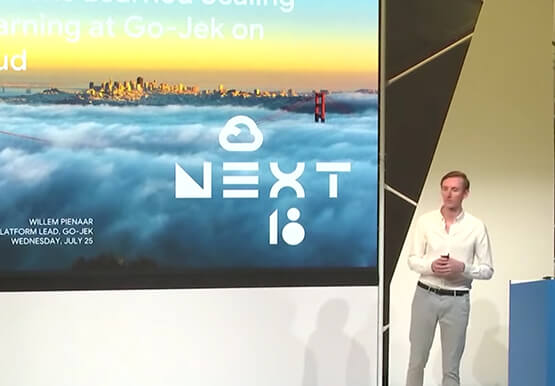
Go-Jek, Indonesia’s first billion-dollar startup, has seen an incredible amount of growth in both users and data over the past two years. Many of the ride-hailing company's services are backed by machine learning models hosted on Google Cloud Platform. Models range from driver allocation, to dynamic surge pricing, to food

How Ather Energy is leveraging the Cloud to build and scale smart mobility solutions for India
In 2013, long before the world was discussing clean energy and sustainable practices, two IIT Madras graduates — Swapnil Jain and Tarun Mehta — had an idea to develop India’s first-ever electrical scooter. This was at a time when auto manufacturers were still focusing on fossil-fuel-driven vehicles and ‘eco-friendly’ mobility

Google Cloud Helps Northwell Health to Boost Caregiver Productivity and Access to Right Care Using AI
Lung cancer is the leading cause of cancer death in the United States and like any cancer, early detection is crucial to survival. Screening at-risk populations is an important part of reducing mortality, and if concerning nodules are found on imaging, further testing may be required. Today, we’ll share how

What’s New in Retail: Bits from Google Cloud’s Retail & Consumer Goods Summit
Today we’re hosting our Retail & Consumer Goods Summit, a digital event dedicated to helping leading retailers and brands digitally transform their business. For me, this is a personally exciting moment, as I see tremendous opportunities for those companies that choose to focus on their customers and leverage technology to elevate
