





What’s Google Cloud Firestore Database and What are it’s Benefits for Business and Developers?
5960
Of your peers have already read this article.
2:30 Minutes
The most insightful time you'll spend today!
Cloud Firestore is a NoSQL document database that simplifies storing, syncing, and querying data for your mobile and web apps at global scale.
Cloud Firestore is a fast, fully managed, serverless, cloud-native NoSQL document database that simplifies storing, syncing, and querying data for your mobile, web, and IoT apps at global scale.
Its client libraries provide live synchronization and offline support, while its security features and integrations with Firebase and Google Cloud Platform (GCP) accelerate building truly serverless apps.
Here’s other stuff it’s good at:
Sync data across devices, on or offline
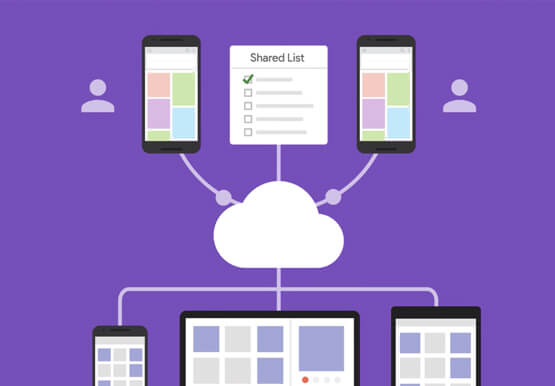
With Cloud Firestore, your applications can be updated in near real time when data on the back end changes. This is not only great for building collaborative multi-user mobile applications, but also means you can keep your data in sync with individual users who might want to use your app from multiple devices.
With Firebase Realtime Database, we felt we had built the best force-plate testing software on the market. Thanks to Cloud Firestore, in only two weeks, we built a system that’s significantly better and includes features we never thought possible to ship on Day 1.
Chris Wales, CTO, Hawkin Dynamics
Cloud Firestore has full offline support, so you can access and make changes to your data, and those changes will be synced to the cloud when the client comes back online. Built-in offline support leverages local cache to serve and store data, so your app remains responsive regardless of network latency or internet connectivity.
Simple and effortless
Cloud Firestore’s robust client libraries make it easy for you to update and receive new data while worrying less about establishing network connections or unforeseen race conditions. It can scale effortlessly as your app grows. Cloud Firestore allows you to run sophisticated queries against your data. This gives you more flexibility in the way you structure your data and can often mean that you have to do less filtering on the client, which keeps your network calls and data usage more efficient.
Enterprise-grade, scalable NoSQL
Cloud Firestore is a fast and fully managed NoSQL cloud database. It is built to scale and takes advantage of GCP’s powerful infrastructure, with automatic horizontal scaling in and out, in response to your application’s load. Security access controls for data are built in and enable you to handle data validation via a configuration language.
How Google Classroom Helps State of Iowa Employees Serve the Public Better

5575
Of your peers have already read this article.
1:30 Minutes
The most insightful time you'll spend today!
Organizations are pressed with the need to engage, retain, and upskill employees with many positions staying fully or partially remote as the pandemic continues. The Center for Digital Government (CDG) reports that 74% of state and local governments believe they will continue hybrid operations for the long-term. This transition is the latest in a long list of reasons agencies are looking for solutions to help train their workforce digitally. Some have found Google Classroom to be the perfect solution.
The State of Iowa knew about the advantages of digital classrooms even before the pandemic. They were already successfully using Google Classroom for in-person training, making the transition to digital seamless when the state closed down. Jessica Van Heuveln, a Google support specialist for the State of Iowa CIO’s Office, says the switch to digital doesn’t deprive workers of hands-on training. “You can use Google Classroom for many different environments, so if you’re doing self-taught, in-person or virtual training, it’s going to work with all those approaches.”
The logistics of a digital classroom
Iowa uses Google Classroom to onboard and upskill employees as well as train volunteers. When the pandemic shifted the state’s workforce to 70% working from home, they needed a platform that could not only handle a vast range of topics and teaching styles to support remote workers but also scale to meet their demand. Van Heuveln notes that Google Classroom was particularly helpful for handling compliance training, especially with its integration with Google Meet. These trainings often require an entire sector of the workforce to attend a single class with more than 100 attendees, according to Van Heuveln. The logistics of these larger sessions cuts down on the number of total sessions the state needs to host. Iowa also found that employees were less apprehensive about learning when they could do it from the comfort of their own homes.
Iowa follows a train-the-trainer model to train employees expected to instruct using Google Classroom. Trainers working in departments across the state learn to use Google Classroom to create and host virtual learning experiences specific to their own departments.
Collaborative classrooms made simple
Google Classroom meets many needs for Iowa, such as setting up training, managing attendance, reviewing uploaded coursework, and communicating with attendees. Both course attendees and trainers have everything they need in one place, and robust engagement tools help attendees stay focused while giving trainers the feedback they need from their lessons. Built-in survey options let trainers gauge attendee knowledge, and the chat function ensures no one ever misses a question. The reporting dashboard gives trainers access to analytics to track engagement and attendance, providing insights that can improve future training sessions.
Google Classroom also makes it easier to ensure attendees stay on board throughout the training program. Coursework can be uploaded directly into Google Classroom, and training sessions can be recorded and archived. This feature allows employees to work at their own pace or lets them catch up when a scheduling conflict means they might miss a session.
The enterprise version of Google Classroom Iowa uses interfaces with other Google Workspace tools such as Google Meet, Google Calendar, Google Drive, and Gmail, which streamlines training and leads to more collaboration between employees and trainers. It can also interface with applications from other providers, further boosting its utility as an effective virtual classroom. Google Drive stores training materials securely. Lastly, Google Classroom enterprise comes with 24/7 support to make sure agencies always have everything they need for success.
Helping employees be better prepared to serve
Google Classroom can be a powerful part of any training program, whether it be digital or in-person. Building virtual connections empowers organizations to deliver better experiences. Google Classroom is helping the State of Iowa accomplish this for their constituents. Designed to scale and be accessible from anywhere, the platform helps public employees better serve the public. Virtual training strategies are essential for agencies that are looking to grow their workforce and build employee skill levels. The most important thing, however, is that training programs enable employees to further your agency’s mission. To learn more about Google Classroom and see more solutions designed with government in mind, check out the Google Cloud for government page.
Telehealth Improves Patient and Clinical Experiences across Continuum of Care

4899
Of your peers have already read this article.
1:30 Minutes
The most insightful time you'll spend today!
According to a National Academy of Medicine discussion paper, social determinants of health (SDoH) account for upwards of 80% of a population’s health outcomes. Breaking this down further, 50% come just from socioeconomic and physical environment factors such as education, employment, income, family and social support, community safety, air and water quality, and access to housing and transit. SDoH determine access to and quality of healthcare, and are contributors to a system of disparate access to care.

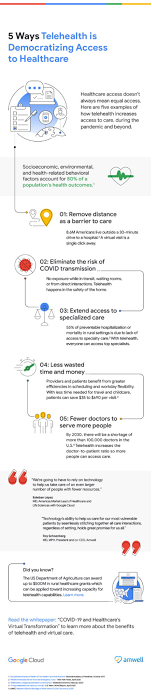
We believe that to more efficiently provide comprehensive healthcare access to more people, providers will leverage technology to blend in-person and virtual modes of care delivery.
In this article, Amwell and Google Cloud examine five ways telehealth – as part of a provider’s overall care model – can help democratize access to healthcare. (graphic url)
Remove distance as a barrier to care
8.6 million Americans live more than 30 minutes from their nearest hospital. Long drives can deter patients from seeking care or maintaining routine visits. On the flip side, 92% of Americans nationwide have access to wired broadband in the home or through mobile broadband. Therefore, having a virtual visit just a click away can help remove barriers to care, like distance.
Eliminate the risk of unnecessary exposure
Virtual care means that patients don’t have to worry about potential exposure in transit, while sitting in waiting rooms, or from direct interactions during in-person health visits. This is particularly relevant when it comes to those with chronic diseases or underlying conditions. Telehealth provides patients who may be more susceptible to diseases with access to continuous healthcare without putting them at higher risk for developing more severe symptoms. Virtual visits can occur in the comfort –and safety– of patients’ homes.
Extend access to specialized care
55% of preventable hospitalization or mortality in rural settings is due to lack of access to specialty care. With telehealth, physical proximity to specialized services–typically in urban areas–can be reduced as a limiting factor. Virtual solutions grant everyone access to top specialists, regardless of location.
Save time and money
By augmenting in-person visits with telehealth applications, providers can benefit from greater efficiencies in scheduling, helping to improve their bottom line, and add more flexibility to their workday. Meanwhile, patients can spend less on travel and childcare, limit time taken off work, and save on other costs associated with in-person visits — for a savings of $35 to $690 per visit. In a survey by the COVID-19 Healthcare Coalition, 76% of the 2,000+ patients surveyed across the US responded that transportation was removed as a barrier, 65% reported they no longer had to take time off from work for an appointment, and 67 percent reporting lower costs than an in-person visit.
Combat physician shortage and fatigue
Research shows there will be a shortage of more than 100,000 doctors by 2030. In the midst of a physician shortage, telehealth can help improve care delivery and make it more efficient, ensuring more people can still have their healthcare needs addressed. Additionally, by integrating intelligence such as case triaging along with telehealth into a virtual care model, providers can help reduce clinician burnout.
Amwell and Google Cloud are partnering to deliver transformative telehealth solutions that will make it easier for more patients to receive care and improve patient and clinician experiences across the continuum of care. One example includes embedding real-time captioning and translation services powered by Google Cloud’s AI and NLP technologies within the Amwell platform to increase health access and understanding for more people.
As physicians, we are excited that the future of healthcare will continue to blend cloud technologies like EHR-integrated telehealth platforms, AI, healthcare-trained virtual agents along with in-person care to create an integrated hybrid care model that will improve patient outcomes and unburden providers, all while expanding access to broader patient populations.
To learn more, download the whitepaper “Healthcare’s Virtual Transformation,” written in conjunction with Becker’s Hospital Review.
1: “Social Determinants of Health 101 for Health Care: Five Plus Five,” National Academy of Medicine, October 2017
Multicloud Mindset: Thinking About Open Source and Security in a Multicloud World

2772
Of your peers have already read this article.
1:30 Minutes
The most insightful time you'll spend today!
There’s never been a better time to talk about multicloud, and the Google Cloud Multicloud Mindset series on Twitter Spaces was created to do just that! This series takes place once every two weeks and features live conversations with top experts about the latest multicloud topics. You can join the 15-minute Q&A to ask your top questions and listen to episodes later offline for up to 30 days after we chat.
If you happened to miss our last few episodes, we recommend checking out our introduction blog to the series for what you missed. Let’s dive into our latest episodes, discussing the impact of open source and novel security challenges in multicloud environments.
Episode #5: ‘The intersection of open source and multicloud’
Open source technology has been an integral part of computing since its earliest era, predating even the birth of technology hubs like Silicon Valley. Open source projects have been responsible for giving us some of the most popular software in the world, such as Mozilla Firefox and the operating system Linux.
In the fifth episode, we sat down with Mike Coleman, Cloud Developer Advocate at Google Cloud, and took a closer look into the history of open source technologies, the role they play in a multicloud world, and the developer perspective on using these technologies to do their work.
The concept of multicloud anchors on the ability to run workloads across clouds and being able to pick the providers that are best suited for specific parts of workloads. Adopting open source technologies and languages empower companies to use the tools they need, regardless of cloud provider, without the fear of getting locked into a specific provider.
“As you think about moving across different environments, whether that be cloud to cloud, or developer desktop to ultimate destination, whether that be your data center or the cloud. Open source software allows you to do that…and multicloud is just an extension of that. This idea that I need to run the same software wherever I go.” — Mike Coleman, Cloud Developer Advocate at Google Cloud
If you’ve ever wanted a developer’s take on the impact of multicloud and the influence of open source in software development and digital transformation trends, you’ll want to tune into this episode.
You can access the full conversation on Twitter Spaces.
Episode #6: ‘Novel challenges in security with multicloud’
In the sixth episode of the series, we chatted with Dr. Anton Chuvakin, Security Advisor at Office of the CISO at Google Cloud, about how security leaders and architects are shifting away from traditional security models, which are increasingly insufficient for multicloud environments.
As more organizations adopt multicloud approaches, the question of how to maintain security in these complex environments and the increasing burden on SecOps teams is top of mind. As Dr. Chuvakin noted, the challenges in the cloud facing more traditional teams range from types of telemetry and logs to volumes and lack of clarity on detection use cases. However, these issues intensify when extended to include multiple clouds, where learning how to do something on one provider may be completely different on another.
“If you end up multicloud, you need to know public cloud and how it works at a better level than you would if you’re going to a single provider. Just like if you’re trying to repair three cars, you need to first learn how to repair cars. You need to have more cloud knowledge to do multicloud, not less. You need to have more powerful superpowers in the public cloud computing area because you can’t just learn one provider and call it a day.” — Dr. Anton Chuvakin, Security Advisor at Office of the CISO at Google Cloud
During the discussion, he offered three tips for tackling multicloud security:
- Learn cloud more, not less if you’re going multicloud. Multicloud requires more cloud knowledge because you can’t learn a single provider and call it a day. You’ll need to understand the differences in order to be able to secure multiple cloud environments.
- Focus on learning cloud identity management and how it compares to your traditional identity management service functions. Start with identifying the differences and similarities in what you see in one cloud and then continue with other clouds you use.
- Explore where your threat areas change in cloud environments when you plan detection and response activities to understand if your detection is covered across clouds.
If your organization is embracing multicloud, this is a great episode to listen and learn more about cloud security, the primary considerations and challenges facing security teams, and some helpful best practices for thinking about security in multicloud environments.
We’ll be sharing the latest topics and episodes with you every month in this blog series. Until next time.
Google Cloud & Optiva Partnership Cements the Future of Telecom for Driving Strong Customer Experience

3177
Of your peers have already read this article.
3:00 Minutes
The most insightful time you'll spend today!
Editor’s note: Coming out of Mobile World Congress 2022, we are excited to share key learnings from our partner ecosystem on how to leverage advancements in 5G technologies to power customer experiences that seamlessly blend our physical and virtual world into one. The original version of this blog was published by Optiva, Inc. Please enjoy this updated entry from our partner.
Telecom operators and communications service providers (CSPs) are elevating customer experiences (CX) across the customer lifecycle. Today’s digital customers’ expectations, needs, usage behaviors and choices are growing and evolving exponentially. Therefore, it is critical to deliver superior and personalized digital customer experiences at each customer lifecycle touchpoint.
To succeed, you need to deliver a dynamic customer experience. Operators are embracing the mantra — next-level CX is the new currency — from onboarding and instant offer provisioning to delivering enhanced self service and supporting subscription renewals, queries and billing actions, and in-session improved experiences. There are commercial benefits to adapting to this paradigm, too, as key customer segments may see added value in enhanced experiences. With 5G, the Ericsson “5G consumer potential” report found that half of early adopters would be willing to pay 32% more for 5G services. Consider the advanced experiences that 5G is able to support, such as:
- Low-latency connectivity and real-time network slicing capabilities, delivering an immersive yet reliable augmented and virtual reality (AR/VR) experience. Imagine a soccer match with a rich 360-degree stadium experience from the customer’s choice of location that immerses a fan in the game excitement.
- AI-driven insights enabling operators to predict customer behavior patterns in real time and leveraging available network capacity to provide customers with personalized, just-in-time discounts and offers that can increase ARPU, enhance the customer experience and reduce churn.
- Proactive action, such as instantly optimizing 5G connectivity network slice bandwidth when the quality of service does not meet its promised level. This could include delivering assured, lag-free network performance to an online gamer for next-level gaming intensity or it could be about providing proactive, transparent reimbursements to end customers on the fly, preventing dissatisfaction complaints. Further, 5G with dedicated network slices also enables business applications that exceed an end-to-end SLA essential to a business-to-business (B2B) subscriber.
- Enabling immersive experiences across all services and touchpoints by redefining how consumers interact with offerings from anywhere, whether that’s a smartphone or tablet. What’s more, it’s about feeding intelligence gleaned from those customer interactions into a single view across all ecosystems in real time to gain a full picture of the customer.
How cloud shapes the future of telecom customer experience
Through cloud technology and cloud-native architectures, telecom operators and service providers have the opportunity to deliver such 5G use cases and differentiated offerings. Cloud maximizes the benefits and enables delivery, thereby dramatically improving and reimagining the possibilities for CX. This includes how customers connect, consume and buy services, and it strengthens customer affinity and loyalty.
Cloud and the technologies it maximizes, such as 5G, also present a wide range of innovative monetization opportunities beyond traditional telecom revenue streams and beyond connectivity. Thus, the highest priority for telecom must be on effectively and efficiently harnessing the potential capabilities for launching personalized service offerings for consumer and enterprise at a high velocity. As a result, the new customer engagement model requires agility, responsiveness and reliability to deliver these services across all touchpoints of the customer’s journey.
As such, Optiva and Google Cloud are engaging in a multi-year partnership to help CSPs enable faster time to innovation, flexible 5G monetization and operational cost savings, while driving strong customer experience. Leveraging the Google Cloud platform enabled by Anthos, which supports the deployment and operation of business support system (BSS) applications across public clouds, on-premises data centers and at the network edge, Optiva’s distributed solution deployment offers telecom operators new ways to monetize 5G networks through use cases such as private 5G, IoT and ultra-low latency edge solutions.
Gaining a competitive edge on the new playing field
The solution to these new BSS and monetization requirements lies in the cloud’s unique advantages. For example, to achieve agility, an essential cloud tool, the sandbox, allows operators to accelerate iterations to find optimal solutions. The sandbox shortens product cycles to a fraction of traditional timelines and empowers operators to reinvent their functionalities and service capabilities — lowering business risk and driving dramatic cost savings.
As a result, operators can increasingly explore, experiment, learn, launch and relaunch rapidly. This allows for the fast introduction of new and differentiated offerings, increased service velocity and cost-effective go-to-market opportunities. For that reason, a new competitive playing field is emerging and making the days of traditional and full digital transformations a thing of the past.
Instead, by leveraging cloud technologies, customer lifecycle opportunities and possibilities are born, such as:
- End-to-end digital onboarding experiences: Hassle-free digital customer onboarding in little time by leveraging next-gen BSS with embedded automation across the different modules. This digitizes the customer registration and ordering process, including customer verification, SIM allocation, and the selection and activation of a user’s choice of plans and more.
- Real-time offer optimization based on customer insights: On-the-fly optimization of offers based on AI-driven real-time insights to predict usage behavior.
- Handling ultra-low latency service quality with distributed systems: Delivering and charging for ultra-fast services from the edge rather than sending and processing them at a central cloud. This enables new business opportunities by leveraging new private 5G offerings.
- Assured service quality and complaint reduction through automated real-time network configuration: By consistently monitoring the network quality and application and taking corrective actions to match the SLA requirements, we can boost the user experience (e.g., if a user subscribes to an 8K video plan). Thus, if the bandwidth level drops below the agreed-upon resolution level, the service can push an update to the user and potentially offer them a complimentary added data bundle leveraging analytics, churn prediction models and insights.
- Maintaining a real-time single source of truth for customer data: Having a single, distributed repository of real-time updated customer data allows CSPs to deliver customer services more smoothly across all touchpoints.
- Expanding product catalog with a partner ecosystem: Leveraging open APIs to build and expand partner ecosystems to launch new products and services that enable CSPs to expand the services they provide customers and help increase their market relevance.
Cloud momentum accelerates, enabling revolutionized BSS and revenue models
Service providers are forging their paths and investing in and adopting cloud technologies. Cloud empowers operators beyond connectivity and volume offerings on data, text and voice. The technology offers more and unlocks the operator’s ability to meet specific user segment experience requirements in real time and differentiate offerings based on latency, capacity, throughput, speed and device type.
As a result, operators can shift to new product-driven monetization capabilities, allowing them to configure their BSS without heavy customizations or necessitating the expertise of their IT teams. Instead, they can now empower, for example, marketing teams — with minimal steps and product-specific expertise needed — to optimize rate plans in real time based on usage and experience analytics, roll out promotions and satisfy customer demand for a delightful experience.
The new currency across the customer lifecycle — next-level telecom BSS and CX
Operators need the capability to learn fast, fail fast, launch, and relaunch in quick cycles. This capability is growing more critical as Capex and Opex become challenged and protecting ARPU and increasing subscribers becomes harder in a cloud economy. Telecom operators are picking up speed for cloudification and reimagining the potential of their BSS systems. And with 5G, innovation driven by cloud-native capabilities and automation via machine learning, operators have a genuine opportunity to revolutionize customer engagement and deliver a next-level hyper-personalized CX — the new currency of 5G cloud.

6556
Of your peers have already downloaded this article
5:30 Minutes
The most insightful time you'll spend today!
What’s behind the rising confidence in cloud security? First hand experience, and careful, systematic assessments that tap multiple sources such as detailed audits and comparisons. The most frequent driver of increased confidence was the direct experience of the quality of security in the cloud versus on-premises.
As a result, the use of Cloud is expected to rise to 65 percent of workloads by 2019, according to a recent survey of more than 500 global CIOs conducted on behalf of Google Cloud in association with MIT SMR Custom Studio. Increased confidence in cloud security along with the increased need for agility and speed are driving this growth in cloud adoption.
Download this exclusive report and understand why CIOs have a growing confidence in cloud security, how they are basing their hosting decisions on the flexibility and integration offered by the cloud, and their plans to use the cloud for future workloads.
More Relevant Stories for Your Company

A Pro’s Tip on Choosing the Right Google Cloud Compute Options
Where should you run your workload? It depends...Choosing the right infrastructure options to run your application is critical, both for the success of your application and for the team that is managing and developing it. This post breaks down some of the most important factors that you need to consider
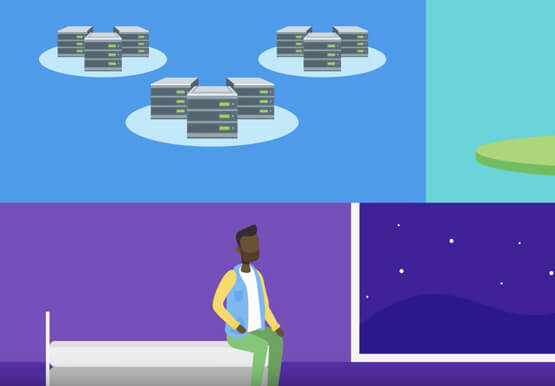

What’s Google Cloud Firestore Database and What are its Benefits for Business and Developers?
Cloud Firestore is a NoSQL document database that simplifies storing, syncing, and querying data for your mobile and web apps at global scale. Cloud Firestore is a fast, fully managed, serverless, cloud-native NoSQL document database that simplifies storing, syncing, and querying data for your mobile, web, and IoT apps at

The Pathway to Innovation: Migrating SAP to the Cloud
While innovation remains a top priority across all industries, many companies are not achieving the results they want from their innovation efforts. As companies migrate their SAP enterprise resource planning (ERP) systems to the cloud, technology leaders see this as an opportunity to reimagine business processes and propel their innovation

Google Introduces Cloud Career Jump Start Certification for the U.S. Underrepresented Communities
It’s no question that the cloud computing industry is booming and cloud experts are in high demand. In 2020, 67 percent of organizations surveyed in the IDG Cloud Computing Report added new cloud roles and functions (source). So there are plenty of cloud jobs out there, but if you don’t
