





Time-series Model on Google Cloud Allows Better Transparency on Fishing and Marine Activities

4389
Of your peers have already read this article.
3:30 Minutes
The most insightful time you'll spend today!
Who would have known that today technology would enable us with the ability to use machine learning to track vessel activity, and make pattern inferences to help address IUU (illegal, unreported, and unregulated) fishing activities. What’s even more noteworthy is that we now have the computing power to share this information publicly in order to enable fair and sustainable use of our ocean.
An amazing group of humans at the nonprofit Global Fishing Watch took on this massive big data challenge and succeeded. You can immediately access their dynamic map on their website globalfishingwatch.org/map that is bringing greater transparency to fishing activity and supporting the creation and management of marine protected areas throughout the world.
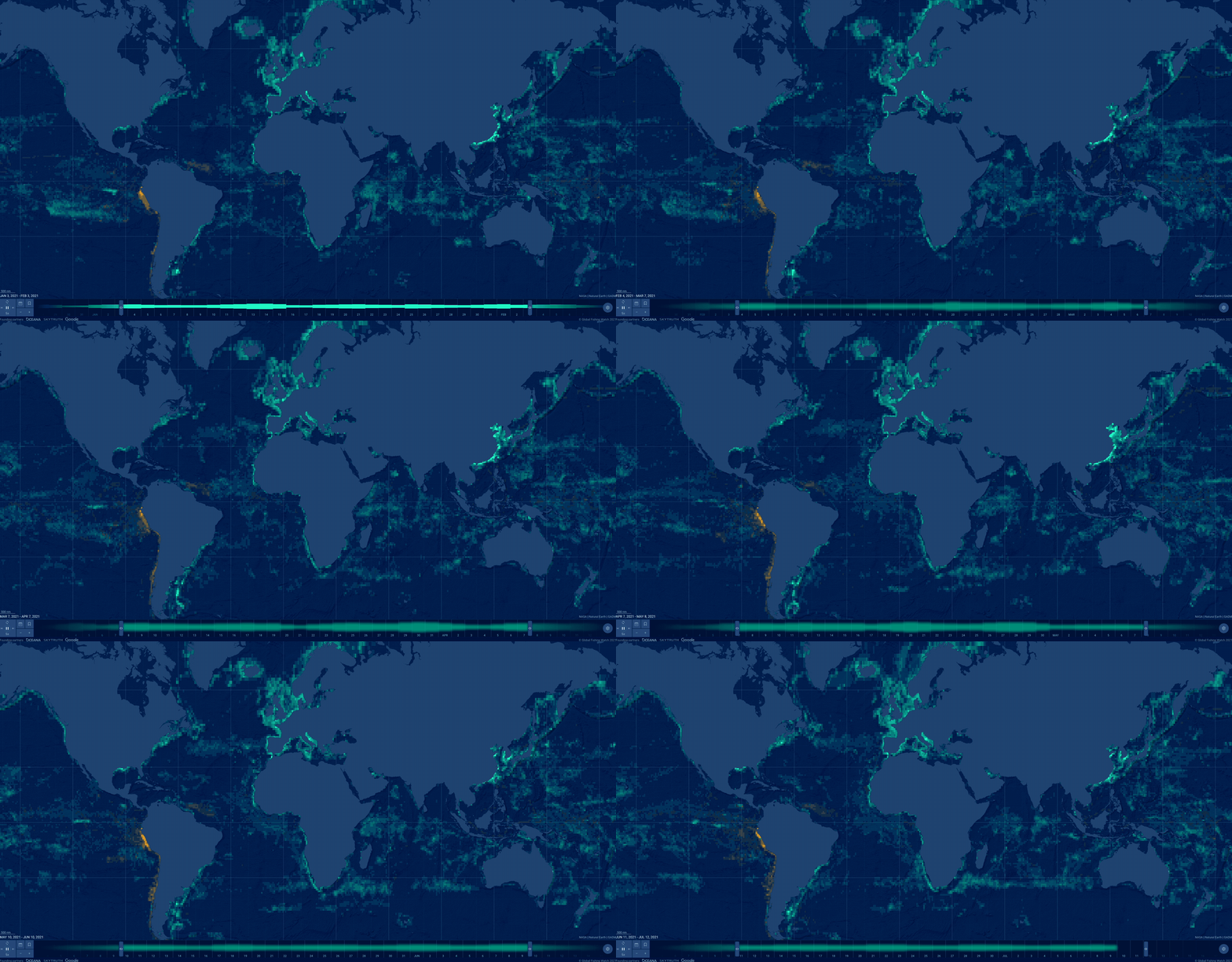
In our second episode of our People and Planet AI series we were inspired by their ML solution to this challenge, and we built a short video and sample with all the relevant code you need to get started with building a basic time-series classification model in Google Cloud, and visualize it in an interactive map.
Architecture
These are the components used to build a model for this sample:
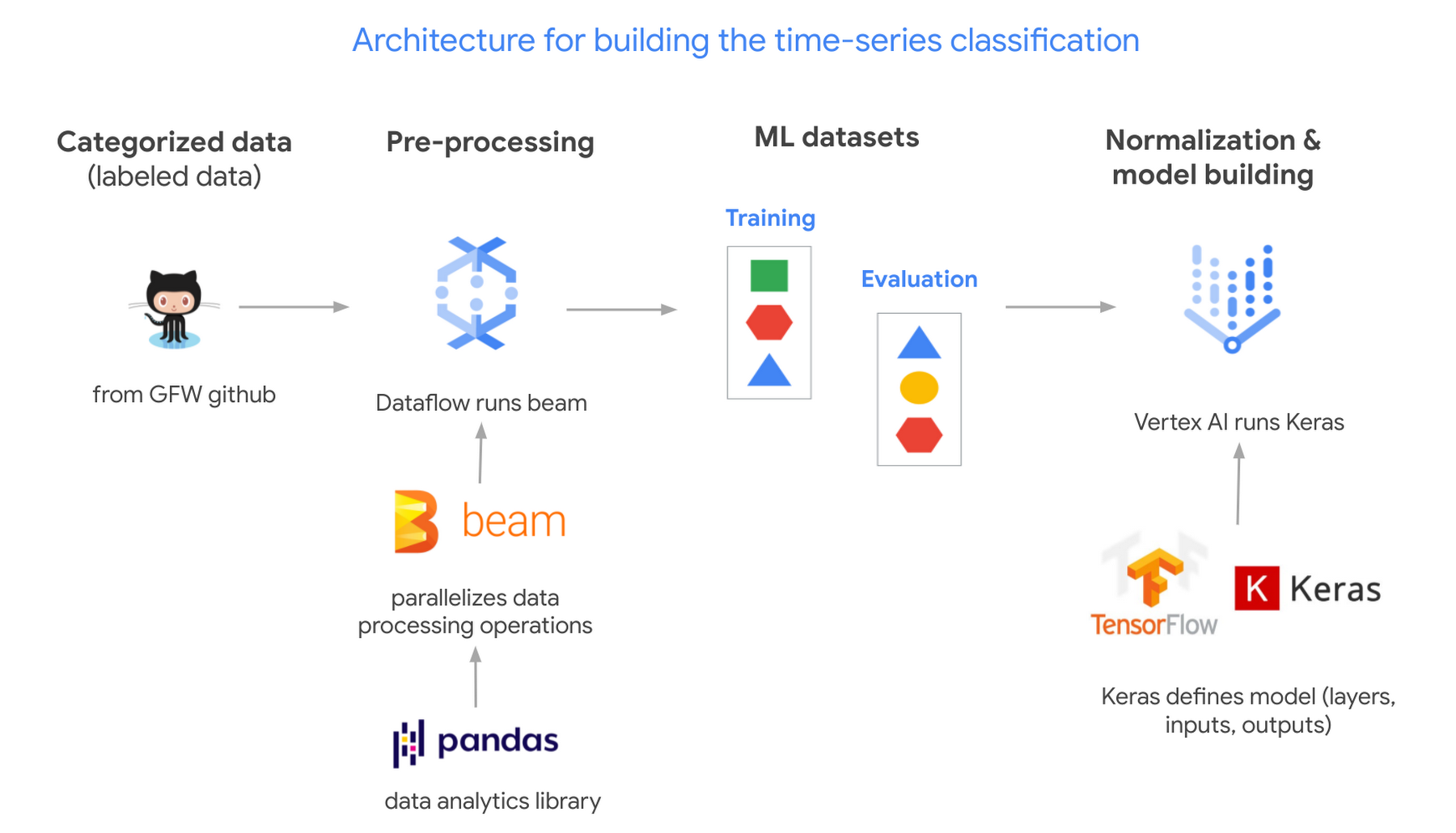
- Global Fishing Watch GitHub: where we got the data
- Apache Beam: (open source library) runs on Dataflow.
- Dataflow: (Google’s data processing service) creates 2 datasets; 1 for training a model and the other to evaluate its results.
- TensorflowKeras: (high level API library) used to define a machine learning model, which we then train in Vertex AI.
- Vertex AI: (a platform to build, deploy, and scale ML models) we train and output the model.
Pricing and steps
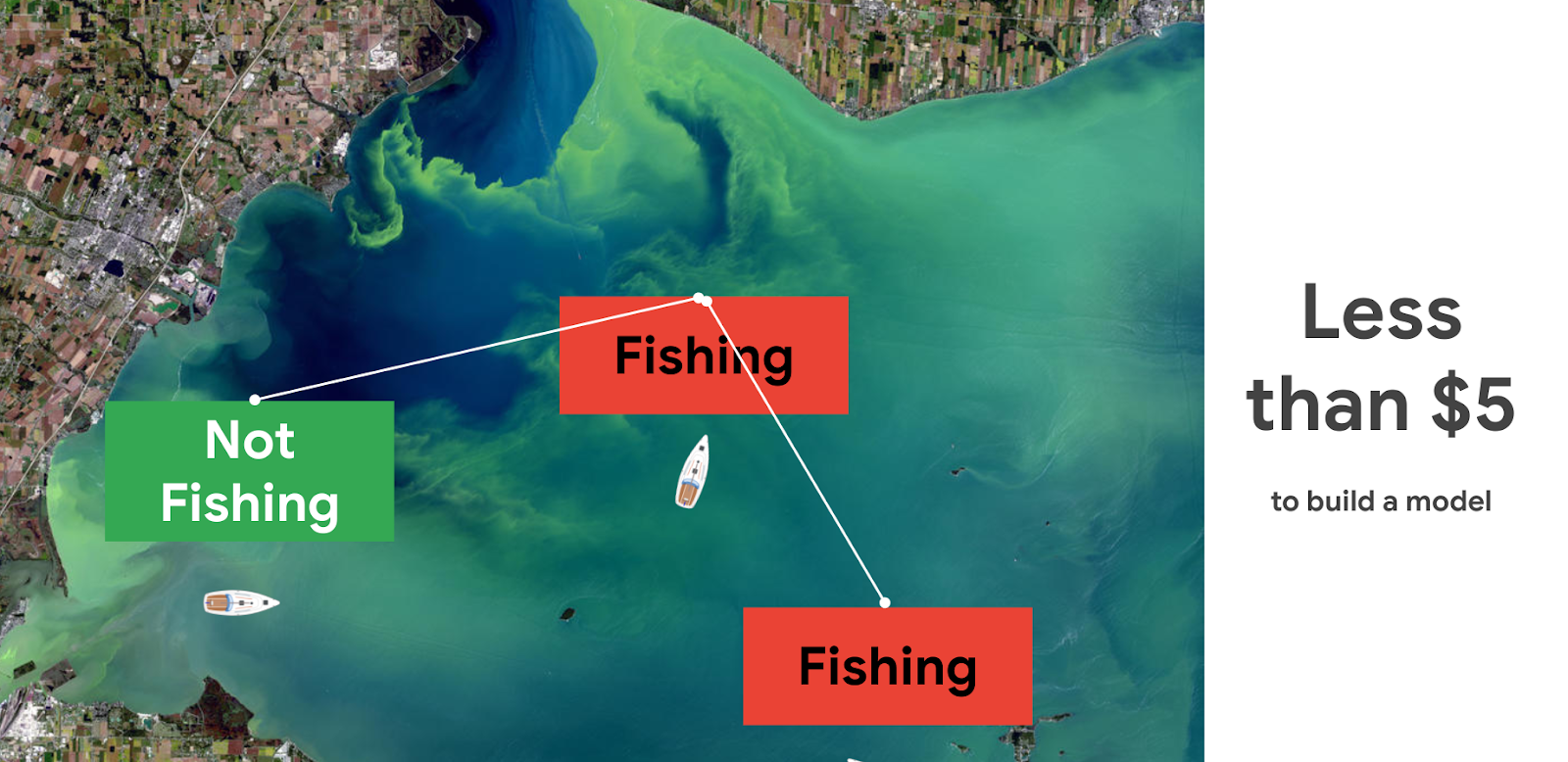
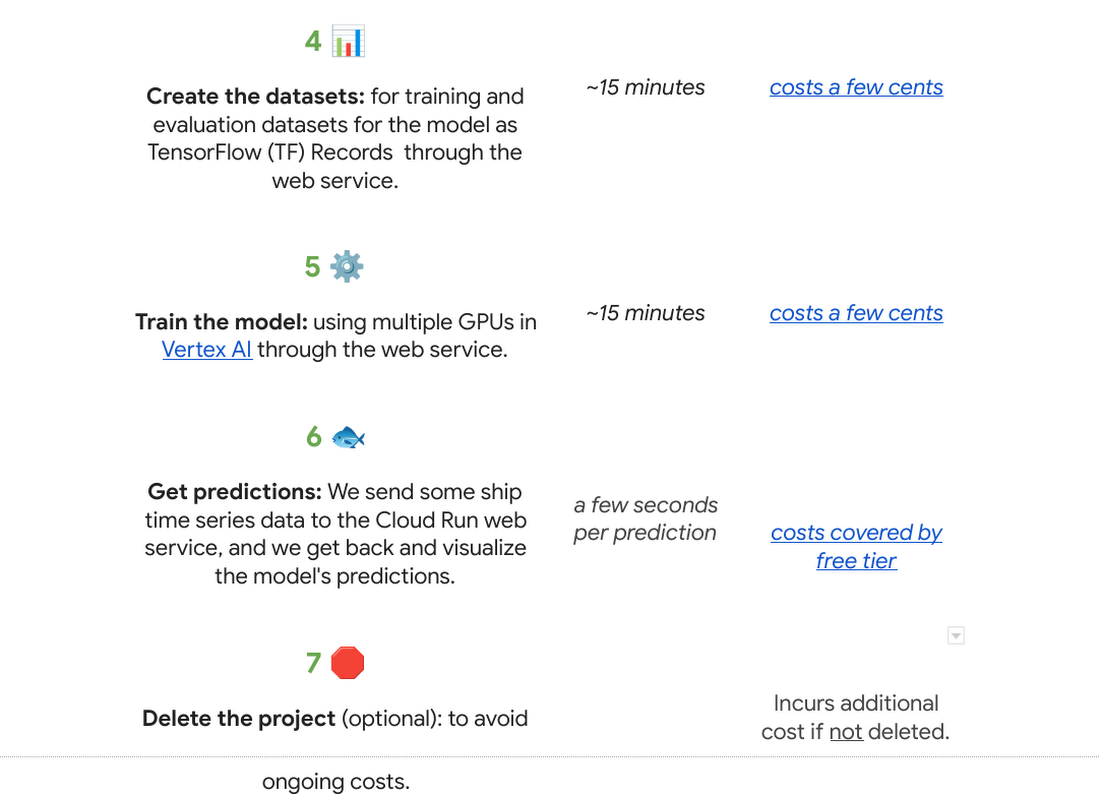
The total cost to run this solution was less than $5.
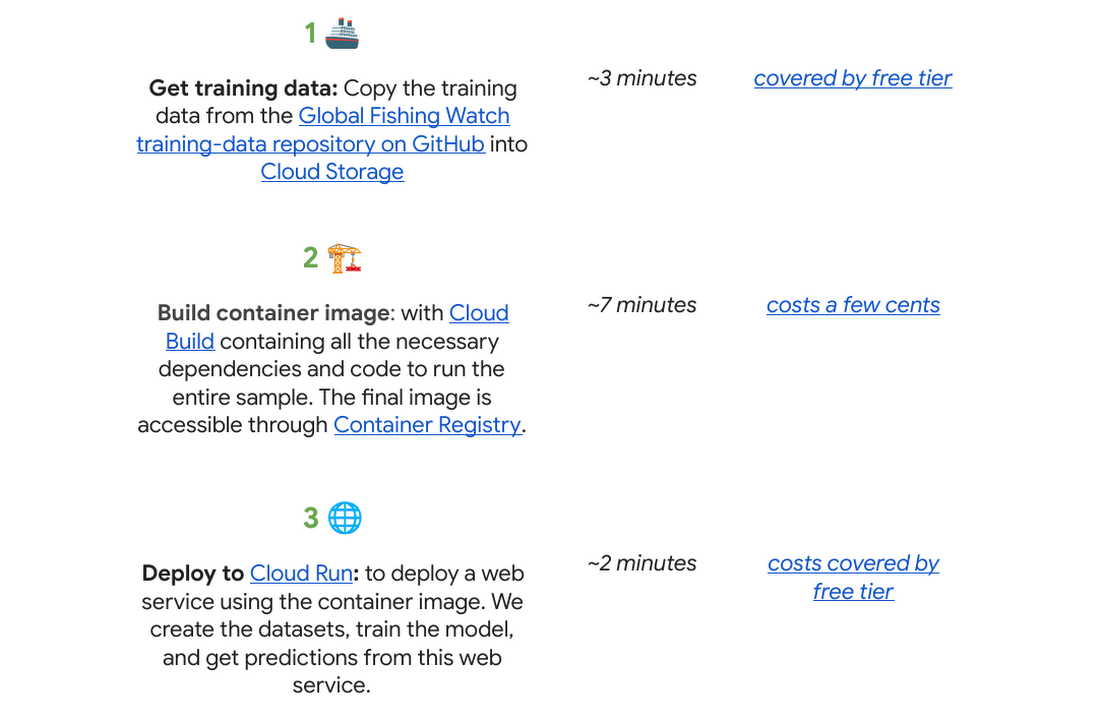
There are seven steps we went through with their approximate time and cost:
Why do we use a time series classification model?
Vessels in the ocean are constantly moving, which creates distinctive patterns from a satellite view.
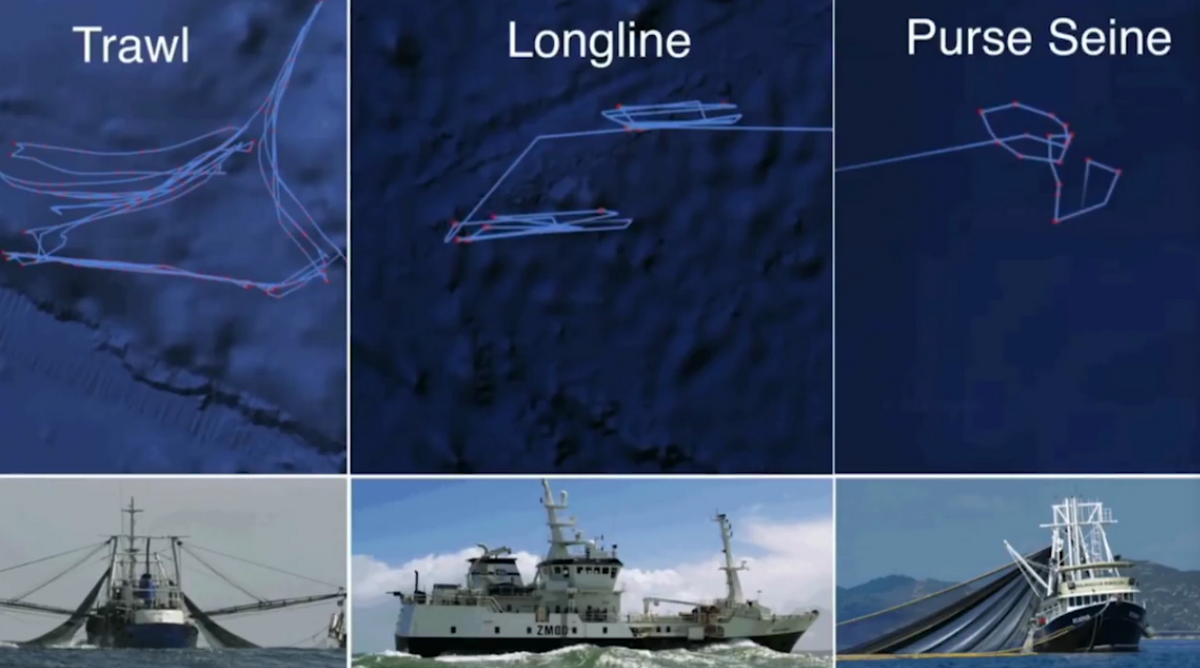
We can train a model to recognize the shapes of a vessel’s trajectory. Large vessels are required to use the automatic identification system, or AIS. The GPS-like transponders regularly broadcast a vessel’s maritime mobile service identity, or MMSI, and other critical information to nearby ships, as well as to terrestrial and satellite receivers. While AIS is designed to prevent collisions and boost overall safety at sea, it has turned out to be an invaluable system for monitoring vessels and detecting suspicious fishing behavior globally.

One tricky part is that the MMSI data location signal (which includes a timestamp, latitude, longitude, distance from port, and more) is not emitted at regular intervals. AIS broadcast frequency changes with vessel speed (faster at higher speeds), and not all AIS messages that are broadcast are received – terrestrial receivers require line-of-sight, satellites must be overhead, and high vessel density can cause signal interference. For example, AIS messages might be received frequently as a vessel leaves the docks and operates near shore, then less frequently as they move further offshore until satellite reception improves. This is challenging for a machine learning model to interpret. There are too many gaps in the data, which makes it hard to predict.
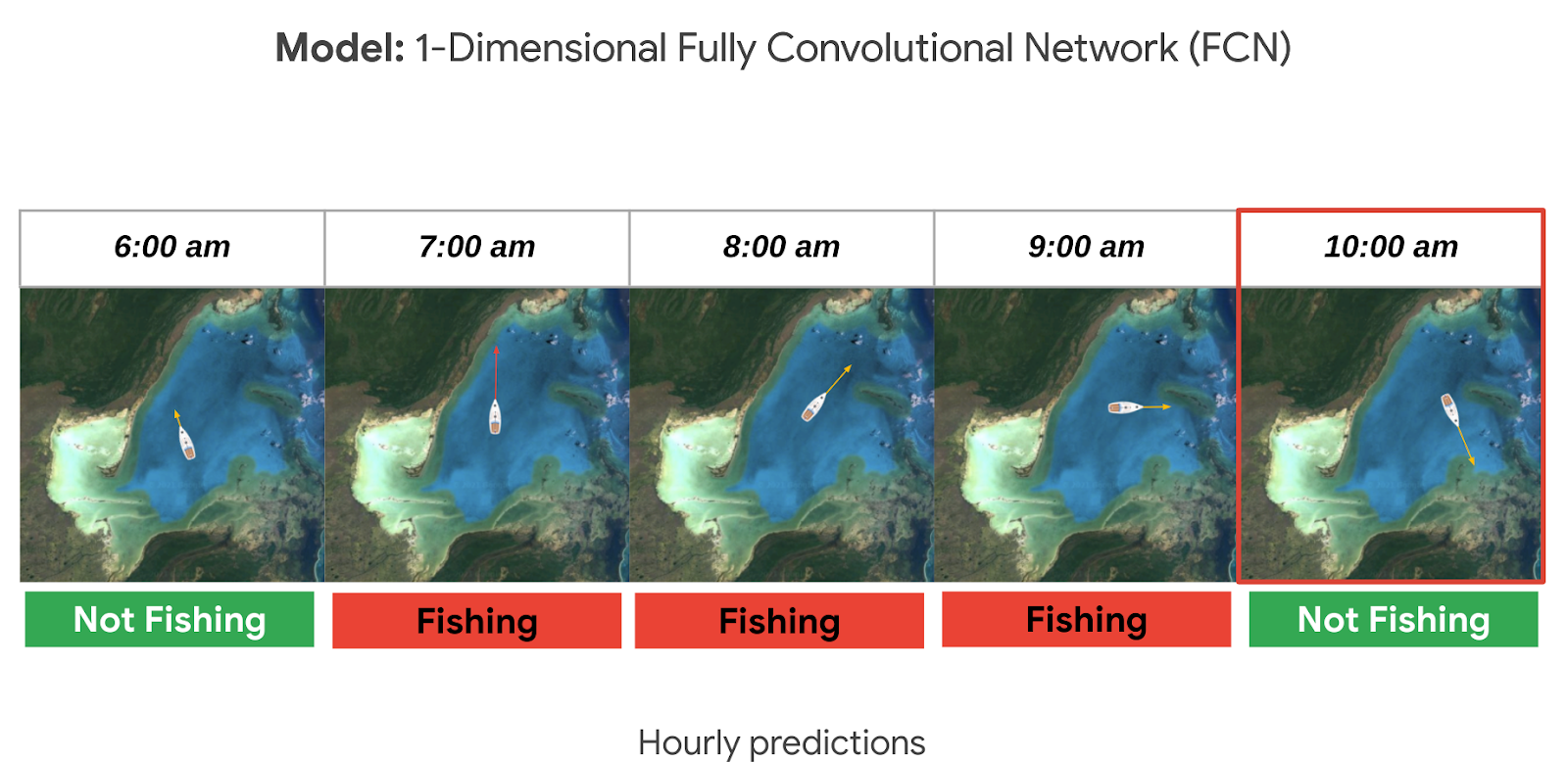
A way to solve this is to normalize the data and generate fixed-sized hourly windows. Then the model can predict if the vessel is fishing or not fishing for each hour.

It could be hard to know if a ship is fishing or not by just looking at its current position, speed, and direction. So we look at the data from the past as well, looking at the future could also be an option if we don’t need to do real time predictions. For this sample, it seemed reasonable to look 24 hours into the past to make a prediction. This means we need at least 25 hours of data to make a prediction for a single hour (24 hours in the past + 1 current hour). But we could predict longer time sequences as well. In general, to get hourly predictions, we need (n+24) hours of data.
Options to deploy and access the model
For this sample specifically we used Cloud Run to host the model as a web app so that other apps can call it to make predictions on an ongoing basis; this is our favorite in terms of pricing if you need to access your model from the internet over an extended period of time (charged per prediction request). You can also host it directly from Vertex AI where you trained and built the model, just note there is an hourly cost for using those VMs even if they are idle. If you do not need to access the model over the internet, you can make predictions locally or download the model onto a microcontroller if you have an IoT sensor strategy.

Want to go deeper?
If you found this project interesting and would like to dive deeper either into the specifics of the thought process behind each step of this solution or even run through the code in your own project (or test project); we invite you to check out our interactive sample hosted on Colab, which is a free Jupyter notebook. It serves as a guide with all the steps to run the sample, including visualizing the predictions on a dynamically moving map using an open source Python library called Folium.
There’s no prior experience required! Just click “open in Colab” which is linked at the bottom of GitHub.
You will need a Google Cloud Platform project. If you do not have a Google Cloud project you can create one with the free $300 Google Cloud credit, you just need to ensure you set up billing, and later delete the project after testing the desired sample.
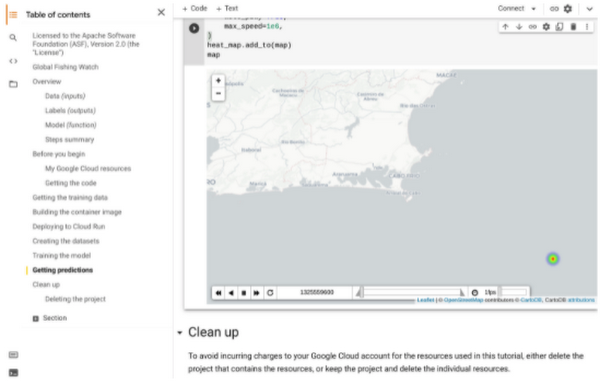
🌏🌎🌍 We hope to inspire you to build other beautiful climate-related solutions.

4891
Of your peers have already downloaded this article
1:30 Minutes
The most insightful time you'll spend today!
Artificial intelligence and machine learning are already transforming the technological landscape. From digital assistants to image-recognition software to self-driving cars, what was once the stuff of science fiction is now becoming a reality. But what exactly does it mean for marketing and advertising executives?
It could get us closer to one of advertising’s most-sought goals: relevance at scale. Before then, we’re going to see changes to the way we do business.
Technological advances have always created new opportunities for storytelling and marketing. Just as the advent of TV brought an era of truly mass advertising and reach, and the internet and mobile brought a new level of targeting and context, AI will change how people interact with information, technology, brands, and services.
A big part of the opportunity for marketers is how AI will help us fully realize personalization—and relevance—at scale. With platforms like Search and YouTube reaching billions of people everyday, digital ad platforms finally can achieve communication at scale. This scale, combined with customization possible through AI, means we’ll soon be able to tailor campaigns to consumer intent in the moment. It will be like having a million planners in your pocket.
Find out how you can achieve relevance at scale. Download now!
Download the Forrester Study to Explore the Benefits of AI for IT Operations in Cloud Environment

7093
Of your peers have already read this article.
1:30 Minutes
The most insightful time you'll spend today!
Organizations are currently modernizing their businesses in order to meet the increasing complexity of today’s business landscape. In effect, business leaders must evaluate the best way to mitigate the challenges which plague their cloud operations, all while meeting customers’ growing expectations around digital experience (DX) through agility, automation, and proactive incident avoidance.
In this commissioned study, “Modernize With AIOps To Maximize Your Impact”, Forrester Consulting surveyed organizations worldwide to better understand how they’re approaching artificial intelligence for IT operations (AIOps) in their cloud environments, and what kind of benefits they’re seeing.
Within this July 2021 study, you’ll see that AIOps systems and principles are here to help. It covers how AIOps increases efficiency and productivity across day-to-day operations, and how businesses are taking note. In fact, 91% of respondents have implemented AIOps to address at least one cloud operations issue, and expansion is set to skyrocket. Those that wait to act, risk losing out on the efficacy of their cloud investment and falling behind their more efficient competitors.
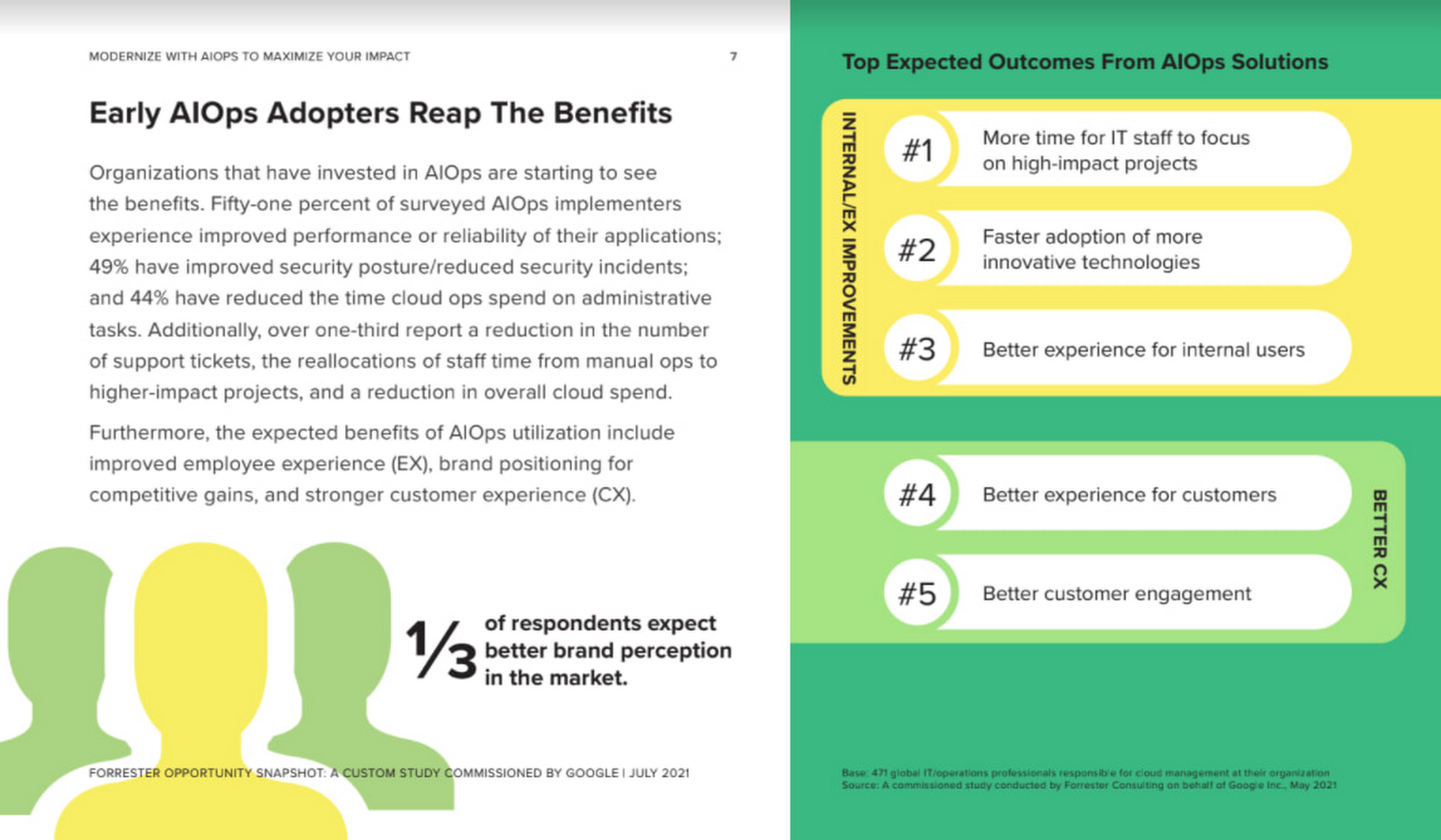
As you can see in the image above, there is a plethora of great information in this complimentary study. So, if you’re looking to enhance your cloud operations and/or adopt AIOps within your organization, be sure to download this free study today.
Special Identity Parsers in Document AI eases Customer Verification and KYC Processes

2959
Of your peers have already read this article.
2:00 Minutes
The most insightful time you'll spend today!
If you’ve opened an account at a bank, applied for a government benefit, or provided a proof of age document on an ecommerce website, chances are you’ve had to share a physical or digital copy of a Driver’s License or a passport as proof of your identity. For businesses or public sector organizations that need this information to provide services, processing images of identity documents has long been a time- and resource-intensive process that requires extensive human intervention. Solutions exist to help digitally capture the data, but they require extensive human intervention that impacts the speed and cost of processing and ultimately the time to service customers.
The Google Cloud Document AI family of solutions has been designed to help solve some of the hardest problems for data capture at scale by extracting structured data from unstructured documents to help reduce processing costs and improve business speed and efficiency. Today, we’re announcing the general availability of identity parsers that bring the power of Document AI to customer verification, KYC, and other identity-based workflows.
With Document AI for Identity, businesses can leverage automation to extract information from identity documents with a high degree of accuracy, without having to bear the cost and turnaround time of manual tasks by a service provider. Document AI for Identity leverages artificial Intelligence to provide a set of pre-trained models that can parse identity and supports US driver’s licenses (generally available), US passports (generally available), French driver’s licenses (preview) and French National ID cards (preview), with more documents to be added from around the world over the coming months.
When our customers process high-volume workloads or complex workflows, they need a high degree of accuracy, since getting the first step wrong can derail the entire workflow. The introduction of special parsers for Identity processing can help solve one of the most commonly required document processing needs that our financial services and public sector customers face.
Along with the identity parsers, Google Cloud is also offering its “Human in the Loop” service, in which verification for a subset of identity documents can be automatically assigned to a pool of humans (internal or external) for manual review, based on confidence scores.
While there are multiple industries and applications that could benefit from Document AI for Identity, we’ve seen two main kinds of applications being adopted during the solution’s preview. One is around processing ID cards uploaded as unstructured images at scale, so that enterprises can have IDs on file. The second use case is to perform advanced checks on identity documents to validate their authenticity and / or to detect fraud. Google Cloud’s fraud detector API (which is currently in preview) can complement Document AI for Identity and apply an extra layer of normalization to help validate the identity as a government-issued ID by checking for suspicious words, image manipulation, and other common issues with forged identity documents. With new versions of driver’s licenses being frequently released, Document AI for identity uses specialized models and constantly-updated training data to help make sure the parsers can offer a high degree of accuracy. For all use cases, Document AI does not retain any customer data after completing the processing request (successfully or with an error).
Check out this demo and visit the Document AI for Identity landing page for more information on how Document AI can help solve your identity processing needs, and ask your Google Cloud account team to help you integrate Identity Document AI into your workflows.
For practitioners who’re interested in trying out Identity DocAI, check out our companion practitioner blog for step by step instructions on how to get started.
4349
Of your peers have already watched this video.
7:00 Minutes
The most insightful time you'll spend today!
Baking Gets Sweeter: Build ML Models that Help Predict the Best Recipe!
Baking recipes and ML models have one thing in common—they follow a pattern. Machine Learning is all about finding pattern in data sets, you can predict what you are baking based on the core ingredients and their respective amounts! Bread, cake or cookies, watch the video to make you make your baking experiences and learning with ML sweeter.
AutoML Tables, a no-code Google Cloud tool for ML models analyzes data from the databases and spreadsheets to help creates an automatic stats and dashboard with lists of ingredients and their values to predict a new recipe. Watch more episodes from Making with Machine Learning.
3553
Of your peers have already watched this video.
2:30 Minutes
The most insightful time you'll spend today!
Google’s AutoML Vision Helps AES Fight Climate Change
Global warming is one of the big challenges of our times; if not the biggest challenge of our times, says Andres Gluski, President and CEO, AES, a Fortune 500 company that generates and distributes renewable energy in 15 countries to help end climate change.
AES relies on Google’s AutoML Vision to assess damage to its hundreds of wind turbines. It uses drones to inspect and photograph its turbines, but these drones typically take 30,000 images, and each one must be examined–which can be extremely time-taking.
With Google Cloud’s AutoML Vision, AES can use machine learning to auto-detect damage so that engineers can spend less time identifying damage and more time repairing it.
More Relevant Stories for Your Company

Smart analytics: Deep dive on roadmap
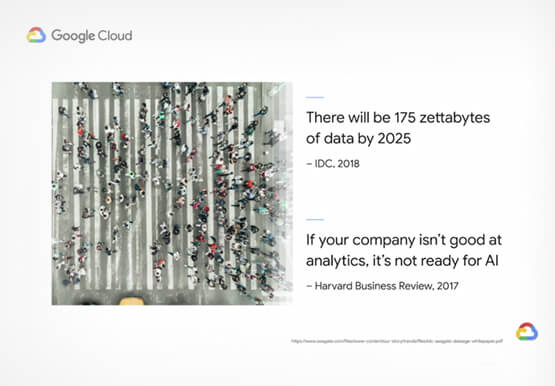
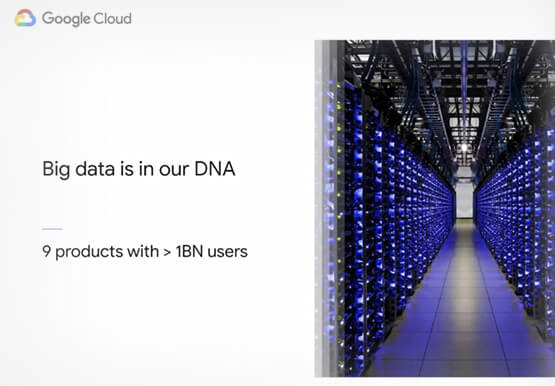
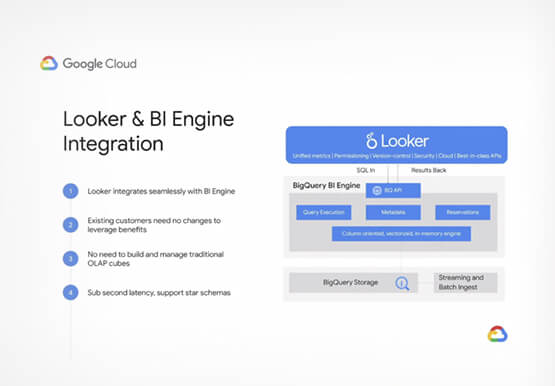
Data across organizations is growing and that organizations need a very strong analytics platform to leverage this data create insights and make real-time decisions on top of this data. That’s driving the advent of three large trends. First is the convergence of data lakes and data warehouses, that’s enable organizations

AI-as-a-Service is Here. It’s Really Almost Plug-and-Play
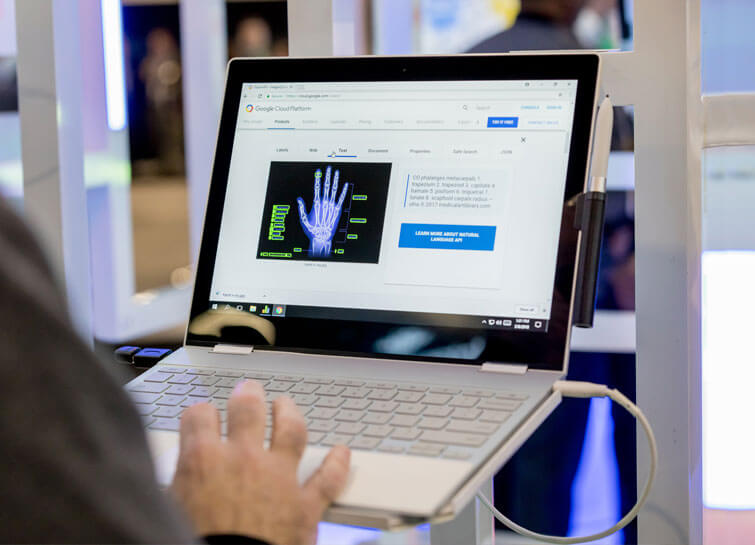
What is the one thing that enterprises want providers to do vis-à-vis AI? To decomplexify it. Today, the path to AI adoption is confusing, and requires skills that are out of reach for most enterprises. That’s what Google Cloud is addressing. “It used to be—still is true—that AI's a pretty

How Kinguin Notched Up Shopping Experience with Google Recommendations AI
Over 2.14 billion people worldwide are expected to buy online this year, according to Statista. Online retail sales will account for 22% of all purchases by 2023. But in a competitive retail landscape, positive interactions can mean the difference between a sale and an abandoned shopping cart. One of the leading global

How Vertex AI Helps Coca-Cola Bottlers Japan Analyze Billions of Data Records
Japan is home to millions of vending machines installed on streets and in buildings, sports stadiums and other facilities. Vending machine owners and operators, including beverage manufacturers, stock these machines with different product combinations depending on location and demand. For example, they primarily display coffee and energy drinks in machines
