





How Mailjet Sends 1.5 billion Emails a Month with Google Cloud
5740
Of your peers have already read this article.
3:30 Minutes
The most insightful time you'll spend today!
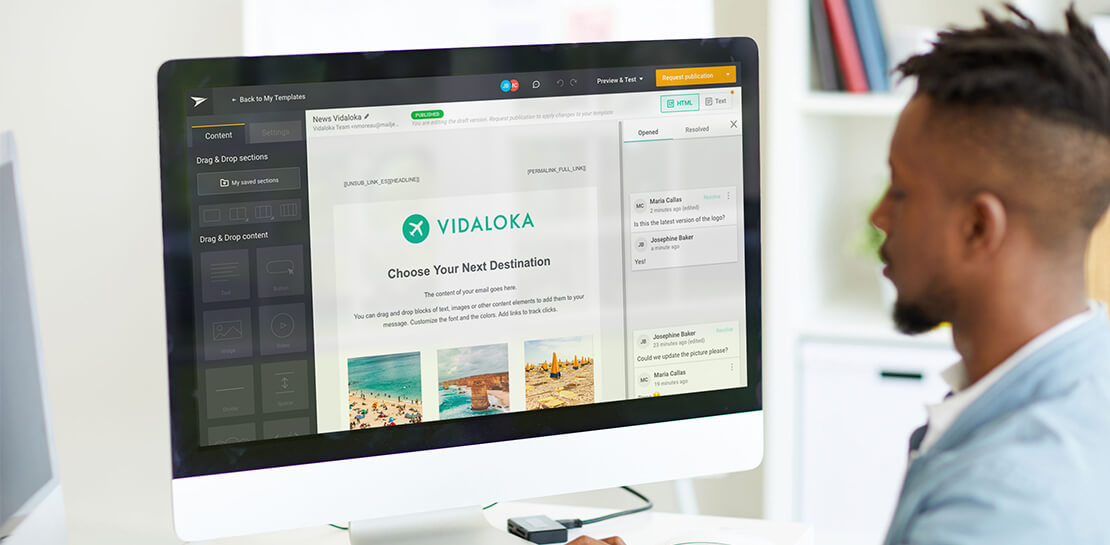
Mailjet allows companies to create, send, and track millions of emails to their customers and prospects around the world each month. The company’s offerings range from routing these emails to tailor-made tools that allow clients to design and send marketing campaigns with messages related to sales, user clubs, coupons and discounts, and promotions, as well as transactional emails such as purchase confirmations, shipping confirmations, e-tickets, or password resets.
“All of our services are accessible through programming interfaces. We use the same APIs for ourselves and for our customers. This is part of our unique selling point, which is to make life easier for developers and marketers,” explains François Fanuel, IT Operations Manager at Mailjet.
Google Cloud Results
- Provides development, testing, and distribution infrastructure for Mailjet
- Smoothly absorbs up to 20X normal computing power
- Offers technical and economic flexibility on a pay-per-use basis, depending on the computing power consumed
The company scrupulously monitors its service quality to help ensure that emails sent on behalf of its customers don’t trigger spam filters, and that they obtain the best possible open and click rates.
From hosting to the cloud
In its early years, Mailjet used hosted servers. This model had several disadvantages. It was impossible to instantly activate or deactivate computing power; the company could not be charged for actual, to-the-minute usage; and it lacked the flexibility to add disk space or scale servers in real time.
At the beginning of 2016, Mailjet decided to switch to the public cloud in order to improve technical and economic flexibility. “This two-year evolution required us to review our developments. If we use a virtual machine even for just one hour, our computer code must be able to support it in order to preserve the consistency and integrity of the data and processes,” says Fanuel.
“We needed a way to port our IP addresses to Google Compute Engine. In less than a month, the feature had been developed by Google engineers. This reactivity really impressed us and was definitely a deciding factor.”
—François Fanuel, IT Operations Manager, Mailjet
Mailjet and Google were already partners. The marketing and transactional email specialist is one of only three providers in the world, and the only one in Europe, accredited by Google to send bulk emails through Google Cloud Platform. The choice—based on three main factors—was obvious.
Financial and technical considerations
Factor 1: the right price proportionality. “We are able to activate Google Compute Engine virtual machines on demand, without needing to reserve these instances. While the machine remains active, a sliding-scale price is applied, which is particularly attractive to us,” explains Fanuel.
Factor 2: the quality and level of technical communication. Mailjet has direct access to Google Cloud Platform engineers when required. The company has its own IP addressing infrastructure, which is the foundation of its service quality. “We needed a way to port our IP addresses to Google Compute Engine. In less than a month, the feature had been developed by Google engineers. This reactivity really impressed us and was definitely a deciding factor.” Since then, via specific tunnels, Mailjet IP addresses have been ported directly into Google Compute Engine.
Factor 3: conformity to international data regulations. Mailjet is the only email service provider to be ISO 27001 certified and GDPR-ready, enabling the company to offer its clients the highest level of data security and privacy. Google Cloud Platform is also ISO 27001 certified, which was an important factor for Mailjet.
Power through minimalism
In mid-2016, Mailjet replaced its 30 or so email sending servers installed at a hosting company with smaller Google Compute Engine virtual machines, using the automatic load-balancing function. “Using smaller virtual machines—but more of them—optimized our computing power.” This precision mechanism accompanied an increase in activity for the company, with the number of emails sent doubling every year. As for the company’s some 300 TB of data, this is stored in Google Cloud Storage.
The flexibility and power of Google Cloud Platform helps ensure that Mailjet can adapt to peaks in activity that can reach up to 20 times the normal flow—our customers usually send their messages at the same times and during the same peak periods. “Previously, we had to reserve a lot of computing power with our hosting company, equivalent to 150 servers. Moving to an on-demand infrastructure means we can avoid paying a disproportionate fixed annual cost.”
Google Cloud Platform also provides Mailjet with the infrastructure needed to process events centrally, which facilitates technical support. A new analytics dashboard in the making will provide customers access to their campaigns’ key metrics in real time—a circulation report, open rates, and click-through rates, as well as invalid email addresses— regardless of the volume of emails at stake.
From distribution to development
Following routing operations, the development environment is currently being ported to Google Cloud Platform, and will eventually represent 100 virtual servers. “The addition of any new code is iteratively tested in Google Cloud Platform. We benefit from machines that are custom made for our needs, from machines with one core and 3 gigabytes of memory, up to machines with 64 cores.”
Mailjet uses the Google Cloud Interconnect virtual private network to tailor sending flows by geographical location. “For customers who only use our routing service, we will soon have worldwide load balancers. This will help ensure their API requests are received and their emails are sent to Europe and America from one single IP point, thus avoiding transatlantic latency issues.”
Mailjet also uses the Google Identity Aware Proxy authentication tool. All its employees around the world benefit from unique, more secure access, whether they use Google Sites intranets, or the development, or production environment. “Google Cloud Platform delivers on all the promises of a public cloud: service customization, real-time computing power adjustment during periods of high and low demand, and instant activation of computing resources. For us, it’s the best possible ratio between price, performance, availability, and quality,” concludes Fanuel.
An Insider’s Guide on the Future of Collaboration and Productivity

4322
Of your peers have already read this article.
1:00 Minutes
The most insightful time you'll spend today!
As Google’s productivity adviser, I’ve been closely following the evolving discussion around the future of work. Long before the pandemic, employees, business leaders, and analysts were already thinking about how work needed to evolve, but the crisis brought the future cascading into the present. Virtually overnight, millions of companies and workers went remote and stayed that way for over a year, pushing their collaboration and productivity tools to the test across living rooms and time zones. While some organizations were able to launch new solutions or adapt existing ones to keep their people connected and productive, many struggled.
The organizations that struggled quickly discovered their tools weren’t complete, scalable, secure, or built for the cloud era. Meanwhile, across all industries and business types, employees reported spikes in burnout, feelings of disconnection, and frustration with finding the latest information or using unfamiliar tools.
With many businesses headed into a hybrid model, the world of work has been transformed, possibly forever. There’s a fresh and fast-moving conversation about how organizations can succeed within the evolving future of work.
But at the center of that discussion are two familiar topics: collaboration and productivity. How will they evolve in an era of distributed teams and surging employee demand for flexibility? And how will businesses meet expectations to innovate quickly and deliver on rising customer expectations while navigating the new future of work?
Although 2020 was a major inflection point, a closer look reveals that many of the technologies, trends, and cultural norms shaping the future of work have been around for some time. For years, forward-thinking organizations have been wrestling with how to maximize collaboration, productivity, and wellbeing among their employees, and they’ve been developing the tools to make it happen at scale. By that measure, the future of work has been here for some time; it just hasn’t been evenly distributed or easily visible.
With this context in mind, we’re sharing our new guide Create what’s next: The future of collaboration and productivity, which highlights three areas of focus for organizations wanting to catch up with those leading the charge to empower the future of work.
- Making work-from-anywhere a reality with flexible solutions
- Giving people helpful tools to maximize their impact
- Enabling knowledge sharing and human connection
Armed with these three strategies, businesses can improve productivity and encourage innovation while better meeting the needs of their customers and their employees—now and in the years ahead.
We share some highlights from the guide in the infographic below (click to enlarge). You can also download the full guide now.

8395
Of your peers have already watched this video.
21:00 Minutes
The most insightful time you'll spend today!
Journey to Transformation and Modernization with Google’s Distributed Cloud
Google Cloud has been leading the way of helping businesses make most from their cloud investments to drive digital transformation through modern application platforms that cater to today’s customer needs. Watch the video from the Next ’21 to explore three areas where companies are supported by Google Cloud throughout their cloud evolution journey–cloud migration and modernization, extension of services and engineering practices to hybrid and multicloud environments, and delivery of high performance with planet scale distributed infrastructure. Also, learn how Google Cloud is equipped for more complex and unique use cases, from datacenter to the edge. Hear the strategies and customer stories that can help your business modernize people, processes, and applications to fully leverage Google’s distributed cloud!
3966
Of your peers have already watched this video.
22:21 Minutes
The most insightful time you'll spend today!
Boosting Chrome OS adoption with effective change management
Can you remember the last time you asked a child to do something how did you convince them to do what you wanted? How many times did they ask you why probably more than once, right? So we know change is hard when we ask someone to make a change we’re asking a lot from them. Very often with IT projects we expect people to change, we don’t really think through the implications of this.
The purpose of this video is to guide you to migrate to Chromebooks and help you understand the reason why. When putting together your change management plan there’s a much larger chance of your project being able to deliver on its business objectives.
Introducing new technology into your organization is an exciting step. However, change management and workforce adoption of the new technology can be challenging. Get insights from Google’s Chrome Enterprise expert on change management strategies and best practices for increasing Chromebook adoption in your organization.
How Google Maps Platform Boosts Domino’s Operations and Fast Growing Franchise across Indonesia

3864
Of your peers have already read this article.
5:00 Minutes
The most insightful time you'll spend today!
Editor’s note: Today’s blog post is from Mayank Singh, Chief Digital Officer and VP Marketing and IT at pizza delivery group Domino’s Indonesia. He explains how Google Maps Platform is enabling their business to optimize their operations and supporting the franchise’s ambitious expansion strategy in one of the world’s most exciting emerging markets.
When I was developing India’s first hyper local on-demand food delivery digital commerce platform for Domino’s Pizza India, I never imagined life would take me to a country with such a different culture to my own.
But in 2018, when Domino’s Indonesia invited me to drive its expansion strategy as Senior General Manager to lead Digital, IT and Marketing functions, I jumped at the chance to try my hand in another gigantic emerging nation that brims with entrepreneurial hunger and innovative energy.
Indonesia is a massive archipelago of more than 17,500 islands and 270 million people, one of the world’s most promising developing markets. Here, the opportunities for a global brand, such as Domino’s, are almost boundless. At the same time, we’re extremely cautious. We want to make sure that any new store we open has the correct demographic profile to be profitable.
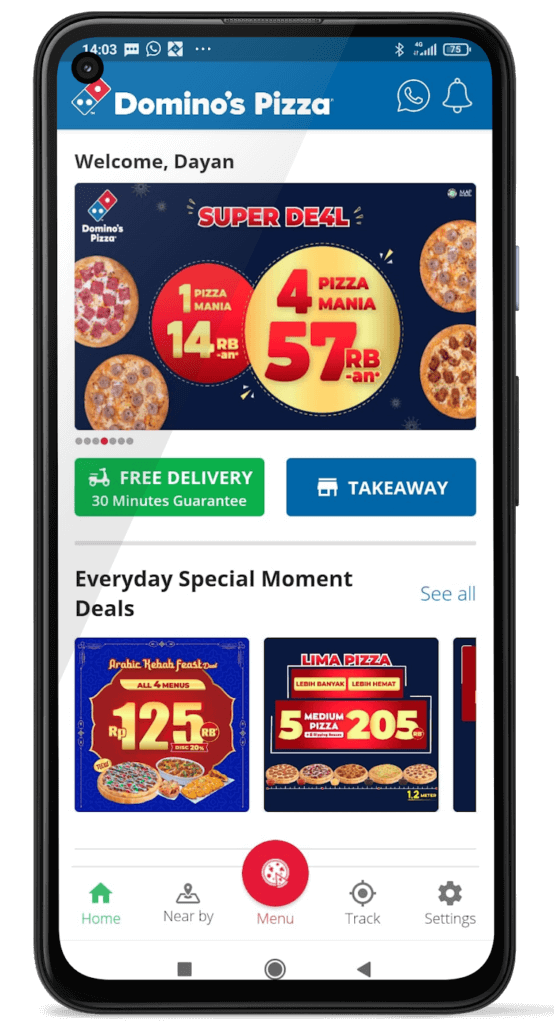
This is one of the key areas in which Google Maps Platform enables us to satisfy the hunger of a vibrant, fast-moving society. The Google Maps Platform APIs empower us with much more than the ability to maintain Domino’s 30-minute delivery pledge. They play an instrumental role in our value chain before a store even begins selling pizzas, providing vital insights in our hunt for new shop locations.
Mapping the dizzying pace of change in one of Asia’s fastest growing economies
Under the Domino’s Indonesia model, every outlet has a defined territory and can only take orders from that zone. Instead of customers picking a store, we assign them one based on their location. That’s why selecting zones that have the highest profit potential (due to factors such as population, income, education, and business activity) is essential to our success.
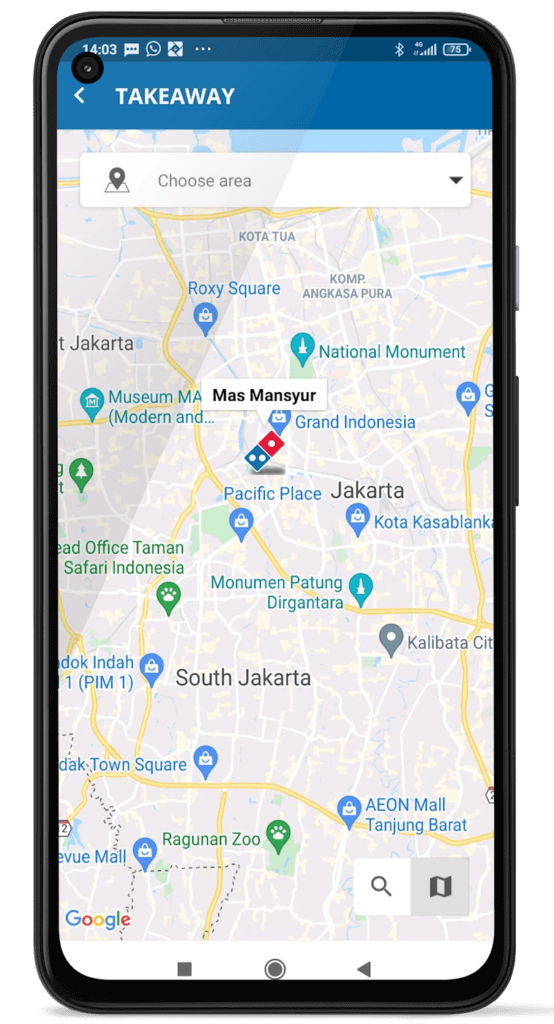
The first step is casting a net around the test location that covers anywhere within a nine-minute drive to any point in the proposed zone. This is enabled by the Google Maps Platform APIs, including Distance Matrix API.
Things become really interesting and complicated when considering Indonesia’s dizzying pace of change. Social, economic, and infrastructure transformation in Indonesia literally unfolds before your eyes, meaning the map in any area can change overnight.
A place that had little to no development yesterday might be tomorrow’s next desirable suburb—populated by families drawn to new schools, but also increased traffic congestion caused by community growth. By overlaying our data, such as population, average income, and age range onto Google Maps, our team can better visualize the revenue potential in that zone compared to neighboring stores. Since the definition of a profitable zone is in constant flux, we need our local insights to be ahead of the game.
Charting Indonesia’s transformation with speed and accuracy is crucial in our mission to carve out delivery zones that serve communities that need our service most while maximizing our revenues.
Retrofitting Indonesian delivery zones to optimize Domino’s success
Expansion is just one side of the story. Just as important, we must keep an eye on existing outlets to make sure that traffic conditions, road configurations, prominent sites, public infrastructure, and more, hit the sweet spot for timely delivery and revenue optimization.
A successful delivery area, for example, might fall victim to its own popularity, causing congestion that prevents timely delivery to once viable addresses. In such cases, the specified drive time in the delivery matrix shrinks. We accordingly must downsize the service zone, while adding micro-zones to satisfy demand. Google Maps Platform features such as Traffic Layer in Maps JavaScript API enable the real-time traffic intelligence that helps us make precision calls in the evolving mission of zone optimization.
Conversely, we might want to expand a store territory thanks to a new highway or roadworks that improve traffic circulation. Here, too, Google Maps Platform is the fastest in mapping such shifts in the urban landscape. We’re even planning to experiment with a new feature whereby delivery zones change in size over the course of a day, based on factors such as peak traffic and roadworks. This new project will be enabled by Google Maps Platform real-time road intelligence.
Enabling Indonesia’s pandemic support with contactless delivery and support for frontline healthcare
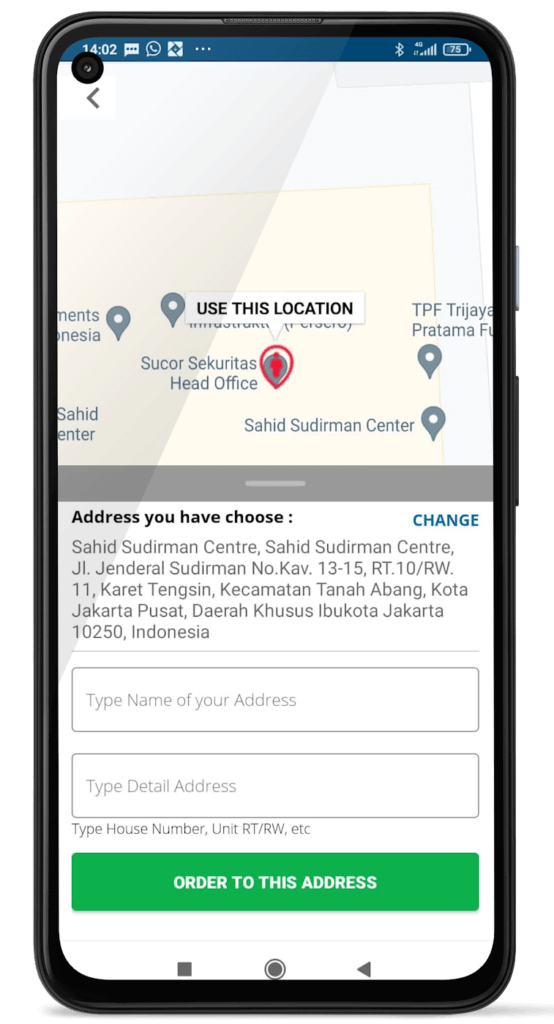
Google Maps Platform also helps us respond quickly to societal changes. When the pandemic hit Indonesia, for example, our team was all hands on deck developing ways to deliver pizzas in the safest possible way. We overhauled our order system to make contactless delivery and contactless takeaway the default method of connecting customers to their pizzas. This was done to reassure customers how safe it is to order with Domino’s. Customers can locate us using the map UI, view the ordering options and have a contactless takeaway experience.
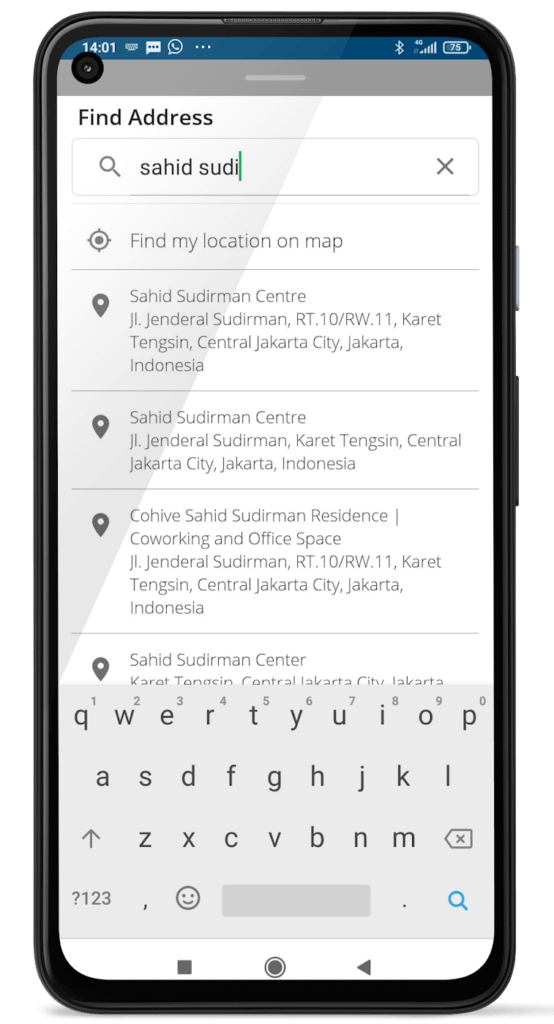
Google Maps Platform products such as Places API, which provides rich places details and location information as well as the Static Street View API which provides a more accurate visual of the location, now enable our drivers to pinpoint a drop spot, such as ‘the porch with the red roof’ with precision accuracy.
Our team is also proud of how we supported healthcare workers at the frontline of the pandemic. Google Maps Platform was an invaluable solution in enabling us to deliver pizzas to these vital frontline workers. It gave all of us at Domino’s Pizza Indonesia great satisfaction to see smiles on the faces of heroes working hard to keep people safe and well in this immense nation.
For more information on Google Maps Platform, visit our website.

6648
Of your peers have already downloaded this article
4:30 Minutes
The most insightful time you'll spend today!
Today’s modern workers are redefining organizations as we know it. They are no longer tied to a work desk or bound by geographies.
And that’s how they ensure that your business is always-on, all the time, everywhere. This, in turn, points to the fact that today’s organizations need to ensure they create conducive environments to help employees collaborate and work no matter where they are.
A Forrester Research study has found that today’s employees see their responsibilities changing and demand flexible, collaborative, data-rich work environments in return.
Four in five employees (80%) agree that they need instant access to information to succeed in their jobs. Two-thirds (66%) also say that their employers expect them to get work done wherever they are. However, modern workers see this as an opportunity rather than a burden; 77% prefer technologies that provide flexibility in where they can do their jobs and 69% say that being able to access company resources gives them a better work-life balance.
The ability to collaborate with colleagues in-person or remotely is still key, and 71% of workers agree that technologies that help them do this are critical to success.
Download the report to find out what impact this has on your business and why you need to listen to your new-age cloud workers.
More Relevant Stories for Your Company

Chrome OS Helped Ocwen Achieve Remote Workplace in Just 2 Weeks during the 2020 Pandemic
Editor’s note: Today’s post is by Parveen Chander Aery, CIO, and Rishi Gupta, Head of Global IT Infrastructure, of Ocwen, a provider of residential and commercial mortgage loan services. The U.S.-based company adopted Chrome OS devices to help global contact center teams work productively together. We’re used to deployments of new

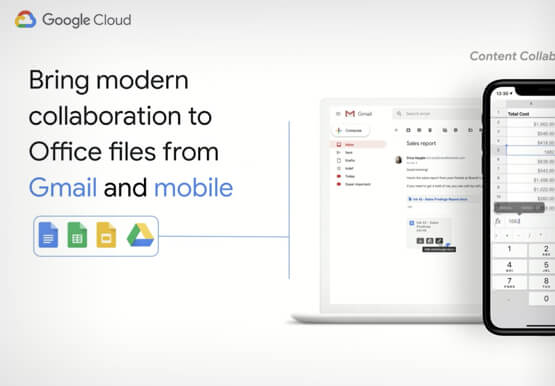
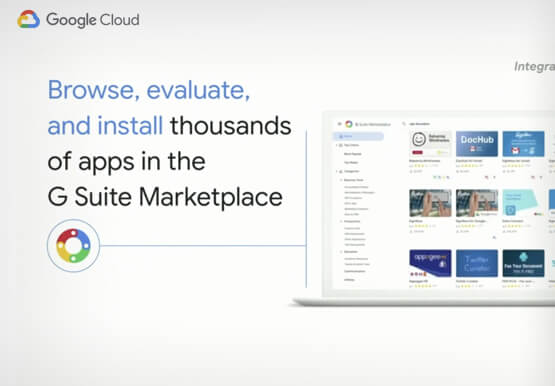

Work beyond borders: How to use G Suite with Microsoft and your favorite third-party applications
The average enterprise uses 129 different applications on a day to day basis. These applications enable critical workflows that drive businesses forward. But when these apps don't work well together that leads to lost time, frustration, and missed opportunities. Professionals have access to dozens of applications in their organization. Apps

IT Team Figures Out Easiest Way to Build Data Pipelines and Create ML Models
Building a strong brand in today's hyper-competitive business environment takes vision. It also requires a flexible, easily managed approach to digital asset management (DAM), so marketing professionals and other stakeholders can easily share, store, track, and manipulate assets to build the brand. Many of today's leading companies, including JetBlue, Slack,

Go Green with Google’s Latest Tool and Pick the Most Sustainable Cloud Region
As a Google Cloud customer, your carbon footprint is already carbon neutral: Google first achieved carbon neutrality in 2007, and has been purchasing enough solar and wind energy to match 100% of its global electricity consumption since 2017. Now, Google is targeting a new sustainability goal: operating on carbon-free energy (CFE) 24/7,
