





Google Submits Two Large Language Model Benchmarks into the Open Division

2921
Of your peers have already read this article.
3:00 Minutes
The most insightful time you'll spend today!
Recently, models with billions or trillions of parameters have shown significant advances in machine learning capabilities and accuracy. For example, Google’s LaMDA model is able to engage in a free-flowing conversation with users about a large variety of topics. There is enormous interest within the machine learning research and product communities in leveraging large models to deliver breakthrough capabilities. The high computational demand of these large models requires an increased focus on improving the efficiency of the model training process, and benchmarking is an important means to coalesce the ML systems community towards realizing higher efficiencies.
In the recently concluded MLPerf v1.1 Training round1, Google submitted two large language model benchmarks into the Open division, one with 480 billion parameters and a second with 200 billion parameters. These submissions make use of publicly available infrastructure, including Cloud TPU v4 Pod slices and the Lingvo open source modeling framework.
Traditionally, training models at these scales would require building a supercomputer at a cost of tens or even hundreds of millions of dollars – something only a few companies can afford to do. Customers can achieve the same results using exaflop-scale Cloud TPU v4 Pods without incurring the costs of installing and maintaining an on-premise system.
Large model benchmarks
Google’s Open division submissions consist of a 480 billion parameter dense Transformer-based encoder-only benchmark using TensorFlow and a 200 billion-parameter JAX benchmark. These models are architecturally similar to MLPerf’s BERT model but with larger dimensions and number of layers. These submissions demonstrate large model scalability and high performance on TPUs across two distinct frameworks. Notably, these benchmarks, with their stacked transformer architecture, are fairly comparable in terms of their compute characteristics with other large language models.
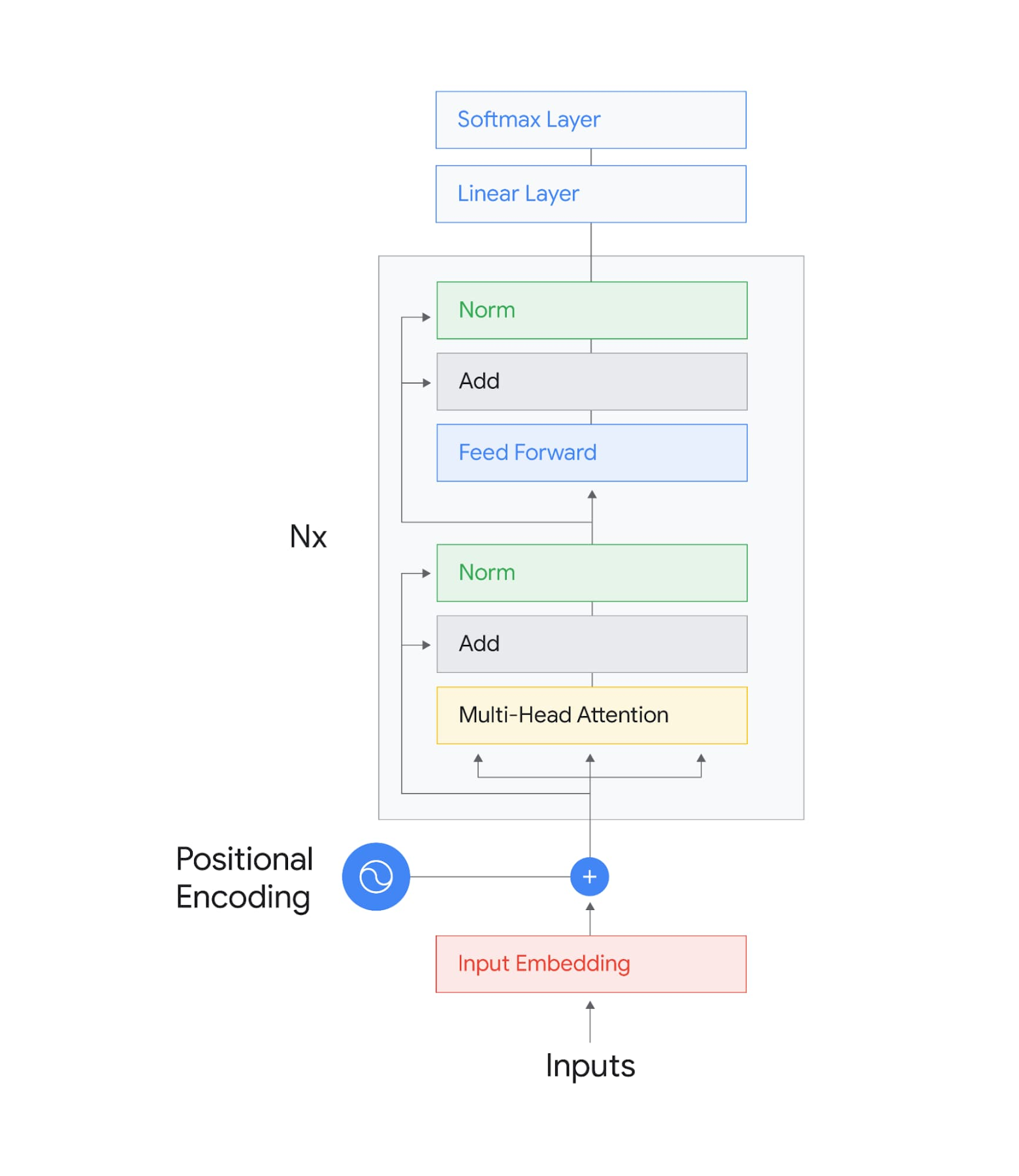
Our two submissions were benchmarked on 2048-chip and 1024-chip TPU v4 Pod slices, respectively. We were able to achieve an end-to-end training time of ~55 hours for the 480B parameter model and ~40 hours for the 200B parameter model. Each of these runs achieved a computational efficiency of 63%- calculated as a fraction of floating point operations of the model together with compiler rematerialization over the peak FLOPs of the system used2.
Next-generation ML infrastructure for large Model training
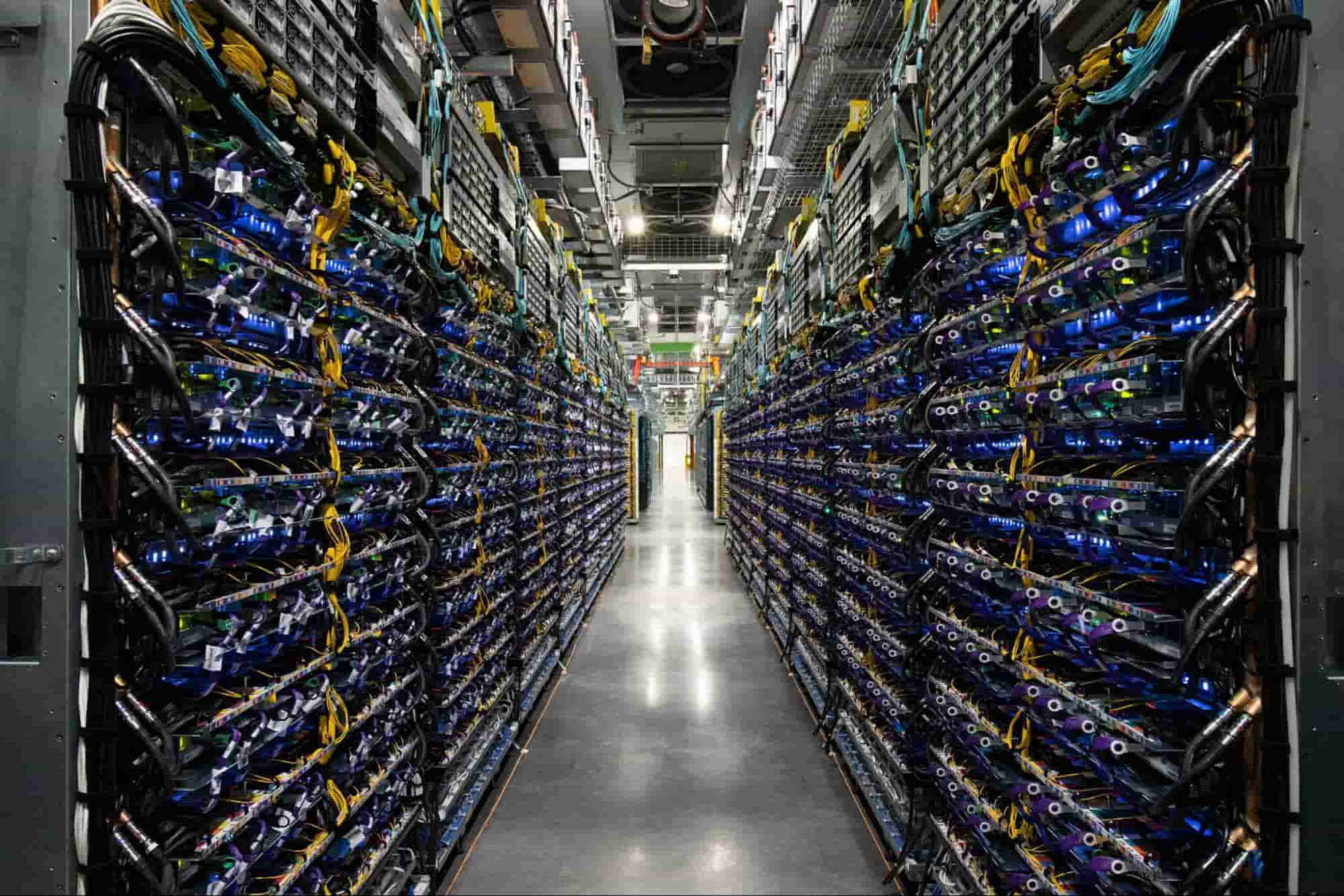
Achieving these impressive results required a combination of several cutting edge technologies. First, each TPU v4 chip provides more than 2X the compute power of a TPU v3 chip – up to 275 peak TFLOPS. Second, 4,096 TPU v4 chips are networked together into a Cloud TPU v4 Pod by an ultra-fast interconnect that provides 10x the bandwidth per chip at scale compared to typical GPU-based large scale training systems. Large models are very communication intensive: local computation often depends on results from remote computation that are communicated across the network. TPU v4’s ultra-fast interconnect has an outsized impact on computational efficiency of large models by eliminating latency and congestion in the network.
The performance numbers demonstrated by our submission also rely on our XLA linear algebra compiler and leverage the Lingvo framework. XLA transparently performs a number of optimizations, including GSPMD based automatic parallelization of many of the computation graphs that form the building blocks of the ML model. XLA also allows for reduction in latency by overlapping communication with the computations. Our two submissions demonstrate the versatility and performance of our software stack across two frameworks, TensorFlow and JAX.
Large models in MLPerf
Google’s submissions represent an important class of models that have become increasingly important in ML research and production, but are currently not represented in MLPerf’s Closed division benchmark suite.
We believe that adding these models to the benchmark suite is an important next step and can inspire the ML systems community to focus on addressing the scalability challenges that large models present.
Our submissions demonstrate 63% computational efficiency, cutting edge in the industry. This high computational efficiency enables higher experimentation velocity through faster training. This directly translates into cost savings for Google’s Cloud TPU customers.
Please visit the Cloud TPU homepage and documentation to learn more about leveraging Cloud TPUs using TensorFlow, PyTorch, and JAX.
1. The MLPerf name and logo are trademarks of MLCommons Association in the United States and other countries. All rights reserved. Unauthorized use is strictly prohibited. See www.mlcommons.org for more information.
2. Computational efficiency and end-to-end training time are not official MLPerf metrics
How Cleartrip.com is leveraging Google Cloud to survive the slump in the travel industry
5167
Of your peers have already read this article.
5:30 Minutes
The most insightful time you'll spend today!
With the novel coronavirus COVID-19 sweeping across continents and fatalities climbing every day, it was only a matter of time before countries closed their borders to contain its spread.
In the wake of this decision, travel and tourism, the linchpins of many economies, were among the worst affected.
According to the United Nations World Tourism Organization (UNWTO), the COVID-19 pandemic caused a 22 percent fall in international tourist arrivals during the first quarter of 2020, and could see an annual decline of between 60 percent and 80 percent when compared with 2019.
The impact on the economy and to livelihoods that are dependent on tourism and hospitality has been significant. Prior to the pandemic, the outlook was quite different. Research by UNWTO in 2018 estimated that India would have 50 million outbound tourists by 2020.
Technology was also set to play a huge part in that growth. A Google Travel study showed that 74 percent of travellers were planning their trips on the Internet, and technologies like AI, IoT and VR were all set to be key trends this year.
Now, as borders slowly reopen and travel restrictions are gradually lifted, technology could once again be the game-changer. Manoj Sharma CTO, Cleartrip.com spoke to YourStory about the industry’s road to recovery and how technology will aid that journey.
Read the Full Story on YourStory
Advance Your Cloud Career: Seven New No-Cost Generative AI Training Courses

1174
Of your peers have already read this article.
4:30 Minutes
The most insightful time you'll spend today!
Editor’s note: This blog has been updated since it originally published to reflect the total number of generative AI courses that have become available since the publish date.
An AI/ML (artificial intelligence/machine learning) career path can be a great specialty area within the cloud—and one of the most accessible! Because this area is constantly developing, most recently with the rise of generative AI, I want to share some recommendations to help you chart a sustainable career as AI/ML continues to evolve.
Generative AI falls under the overall category of AI and offers a new and exciting way of interacting with information, brands, and other people. Let’s talk about how these disciplines work together and about materials available to help you upskill in these areas.
To this end, we are happy to announce a new set of generative AI training content available at no cost. So, whether you are just getting started or already have a more advanced role, read on to find ways to help reach your desired position.
ML compared to AI
While the terms ML and AI are often used interchangeably, there are distinct differences. AI is an umbrella concept wherein machines are taught to perform tasks normally associated with human intelligence, such as decision-making and language interaction. ML is a subset of AI dedicated to taking data from the past and training algorithms to create models that can perform highly complex tasks without being explicitly programmed. It’s the basis for most forms of AI that people interact with, like virtual assistants, music recommendations, and chatbots.
Data engineers and ML engineers work with data scientists to get insights from data. They are needed to create software models and get clear results, and develop deployable applications. These skilled roles are needed in every industry!
Change the world for the better with generative AI
I recently wrote about four key pillars of technology trends expected in the next decade, including the role of AI/ML in the cloud environment as one of those pillars, and how you can bridge the skills gap and build your career.
Generative AI is a new type of ML that has made a lot of headlines recently. Research from CIO Dive finds that seven in 10 executives say their companies are investigating or exploring generative AI. Now is a great time to become an expert, while we are at the cusp of this technology becoming more widely adopted.
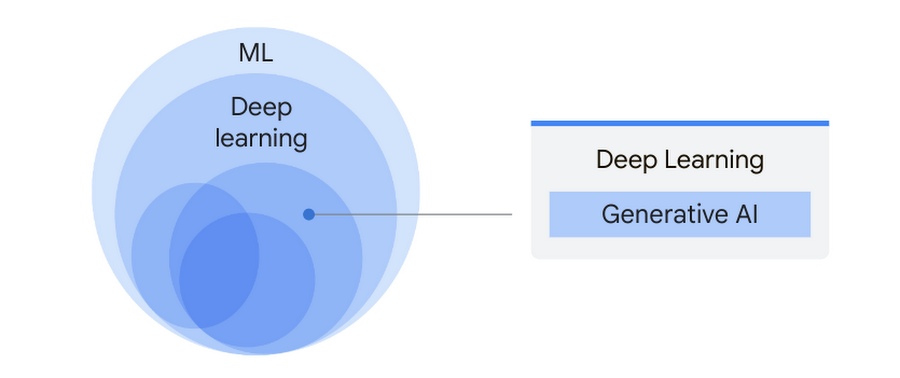
To get to generative AI, we need to talk first about deep learning. Deep learning is a subset of ML that uses artificial neural networks to process more complex patterns than traditional ML. Generative AI sits still further down the funnel, as a subset of deep learning that typically involves the Transformer architecture. Essentially, it’s a type of AI that can map long-range dependencies and patterns in large training sets, then use what it learns to produce new content, including text, imagery, audio, and synthetic data.
Generative AI relies on large models, such as large language models (LLMs) that can classify and generate text, answer questions, and summarize documents. For more detail about how this works, check out the video below from Google I/O 2023, which features great information from Dr. Gwendolyn Stripling, Artificial Intelligence Technical Curriculum Developer for Google Cloud.
How Google is offering generative AI
Here at Google, we’ve been heavily invested for decades in research and innovation aimed at helping businesses, governments, and developers maximize the potential of AI. Our vision is to empower builders, innovators, developers, and doers to use AI in unique, responsible, productive ways.
To deliver on this, we recently announced a variety of solutions to bring generative AI into our offerings, beginning with Generative AI support on Vertex AI and Gen App Builder.
Vertex AI is Google Cloud’s ML platform for training and deploying ML models and AI applications. With Generative AI support on Vertex AI, data science teams and developers can access foundation models from both Google and other sources, helping them to quickly build, customize, and deploy models for their own use cases.
As part of generative AI support on Vertex AI, Model Garden and Generative AI Studio are now in preview, including access to PaLM 2 for Text and Chat and Embeddings API for Text, while other features and services are available to select trusted testers. If you’d like early access to Google Cloud’s AI products, join the waitlist here.
We announced our latest PaLM model in production at I/O 2023: PaLM 2. Today, it powers more than 25 products! Additionally, we’ve fine-tuned PaLM 2 for specific use cases, including security and medical domains. You’ve probably also heard of Bard, our experiment for conversational AI, which is fully running on PaLM 2.
Our Gen App Builder aims to make customer, partner, and employee interactions more effective and helpful. With it, developers — even those with limited data science expertise — can quickly create bots, chat apps, digital assistants, custom search engines, and more. Gen App Builder even makes it possible to create some generative AI apps without any coding skills.
Now, let’s bring these products to life! Not sure exactly the use case or in need of a little inspiration? Check out this blog from Google Cloud CEO Thomas Kurian to see how customers and partners in the ecosystem are bringing ideas to life with generative AI. And watch this video to see generative AI in action!
Build your AI/ML skills and validate your knowledge to grow your career
There is a lot of excitement around generative AI—it’s truly a brand new path to consider for your AI/ML career! Check out my recommendations below for training options for AI/ML roles. These will help you gain critical skills as generative AI becomes more widely available.
*NEW* training materials, specific to generative AI technologies
Generative AI Learning Path – no cost training
- [Course] Introduction to Generative AI (1 day)
- [Course] Introduction to Large Language Models (1 day)
- [Course] Attention Mechanism (1 day)
- [Course] Transformer Models and BERT Model (1 day)
- [Course] Introduction to Image Generation (1 day)
- [Course] Create Image Captioning Models (1 day)
- [Course] Encoder-Decoder Architecture (1 day)
Additional AI/ML training – varying learning credits required to complete on Google Cloud Skills Boost
Introductory level
- [Course with completion badge] How Google Does Machine Learning (1 day)
- [Course with completion badge] MLOps: Getting Started (1 day)
- [Skill badge] Get started with TensorFlow on Google Cloud (8 hours)
- [Skill badge] Perform foundational ML, AI and data tasks in Google Cloud (7 hours)
- [Course with completion badge] Language, Speech, Text, and Translation with Google Cloud APIs (5 hours)
Intermediate/Multi-level
- [Learning Path] Machine Learning Engineer (Collection of 15 video courses and labs)
- [Skill badge] Build and Deploy Machine Learning Solutions on Vertex AI (1 day)
Advanced
- [Training + certification exam] Google Cloud Professional ML Engineer Certification (varied time)
- [Skill badge] Machine Learning with TensorFlow in Vertex AI (90 minutes)
- [Course with completion badge] Natural Language Processing in Google Cloud (1 day)
You can also catch up on hands-on demos in our most recent Cloud OnBoard: From Data to AI with BigQuery and Vertex AI. In it, we guide you through all steps of the data-to-AI solution.
Coming up on June 29, we are hosting Getting Started with Vertex Generative AI as part of Innovators Live. Register now!
I also encourage you to consider an Innovators Plus subscription. You get access to over 700 labs, skill badges and courses (including many that are specific to AI/ML), a certification exam voucher, and up to $1,000 in Google Cloud credits. You’ll also get access to live learning events and technical briefings with Google Cloud experts, plus 1:1 consultations (talk with us about your upcoming generative AI project!). It’s a $1,500 package for only $299. Learn more!
3744
Of your peers have already downloaded this article
8:30 Minutes
The most insightful time you'll spend today!
Automation and machine learning technologies are changing the way marketers drive results for their customers and brands. But there’s still a significant gap between those who are just talking about machine learning and those who are taking action.
For marketers looking to become leaders in their field, this is an exciting time. It’s a chance to make your mark, get ahead of competitors, and drive real results.
To explore this shifting landscape, Google partnered with the Massachusetts Institute of Technology Sloan Management Review (MIT SMR) to conduct a global survey and interview over a dozen executives and academics about their use of automation and machine learning technology and the results they’re seeing.
The survey’s findings show there are clear opportunities for marketers to get ahead of the pack.
While nearly three-quarters of the survey’s respondents believe their organization’s current goals would be better achieved with greater investment in machine learning and automation, only half the surveyed organizations have any incentives to make such investments.
View the survey results and unearth ways your organization can embrace machine learning and grasp the opportunity. Download the whitepaper now!
Google Unveils New Cloud Region in Delhi NCR to Power India’s Digitization

8356
Of your peers have already read this article.
2:00 Minutes
The most insightful time you'll spend today!
In the past year, Google has worked to surface timely and reliable health information, amplify public health campaigns, and help nonprofits get urgent support to Indians in need. Now, we are continuing to focus on helping India’s businesses accelerate their digital transformation, deepening our commitment to India’s digitization and economic recovery. To support customers and the public sector in India and across Asia Pacific, we’re excited to announce that our new Google Cloud region in Delhi National Capital Region (NCR) is now open.
Designed to help both Indian and global companies alike build highly available applications for their customers, the Delhi NCR region is our second Google Cloud region in India and 10th to open in Asia Pacific.
What customers and partners are saying
Navigating this past year has been a challenge for companies as they grapple with changing customers demands and economic uncertainty. Technology has played a critical role, and we’ve been fortunate to partner with and serve people, companies, and government institutions around the world to help them adapt. The Google Cloud region in Delhi NCR will help our customers adapt to new requirements, new opportunities and new ways of working, like we’ve helped so many companies do in the region:
- InMobi scaled a personalized AI platform to support 120+ million active users. “With the arrival of the Google Cloud Delhi NCR, InMobi Group sees the opportunity to continue closing the gap between our users and products,” says Mohit Saxena, Co-founder and Group CTO of Inmobi. “Glance, especially, has been serving AI-powered personalised content to over 120 million active users. We can’t wait to continue giving them truly meaningful experiences that are speedy, scale well, and are relevant to them, by expanding the use of our current tools working on Google Cloud with the opening of a new region.”
- Groww now supports a sizable user base. “Google Cloud provides great technology that enables us to build and scale infrastructure to millions of users, and the new Google Cloud region in Delhi NCR will continue to help more businesses and startups in India access powerful cloud-based infrastructure, products and services,” says Neeraj Singh, Co-founder and Chief Technology Officer, Groww.
- HDFC Bank is positioned for the future. “At HDFC Bank, we are harnessing technology platforms to both run and build the bank. As we progress to be future ready, the objective is to invest in future technologies that give us scale, efficiency and resiliency. Towards this the Google Cloud region in Delhi NCR will enable us to enhance our resiliency and help us in building an active-active design framework for our new generation applications on cloud,” says Ramesh Lakshminarayanan, CIO, HDFC Bank.
- Dr. Reddy’s Lab built a modern data platform with Google Cloud. “At Dr Reddy’s, we pride ourselves in helping patients regain good health, acting quickly to provide innovative solutions to address patients’ unmet needs and in accelerating access to medicines to people worldwide. Our Google Cloud-powered data platform is helping us realize these objectives and we welcome Google’s investment in the new Delhi NCR region as helping us and other businesses in India make further contributions to our social and economic future,” says Mukesh Rathi, Senior Vice President & CIO, Dr. Reddy’s Laboratories.
- “To survive the disruption caused by the pandemic and to succeed in the long term, organizations need to become digital natives, so they can be more agile, explore new business models and build new capabilities that boost resilience. A cloud-first strategy plays a key role in enabling businesses to do this,” said Piyush N. Singh, Lead – India market unit & lead – Growth and Strategic Client Relationships, Asia Pacific and Latin America, Accenture. “Harnessing the potential of cloud requires the right data infrastructure and this expansion by Google Cloud will undoubtedly help Indian enterprises in their digital transformation journeys.”
A global network of regions
Delhi NCR joins 25 existing Google Cloud regions connected via our high-performance network, helping customers better serve their users and customers throughout the globe. As the second region in India, customers benefit from improved business continuity planning with distributed, secure infrastructure needed to meet IT and business requirements for disaster recovery, while maintaining data sovereignty.
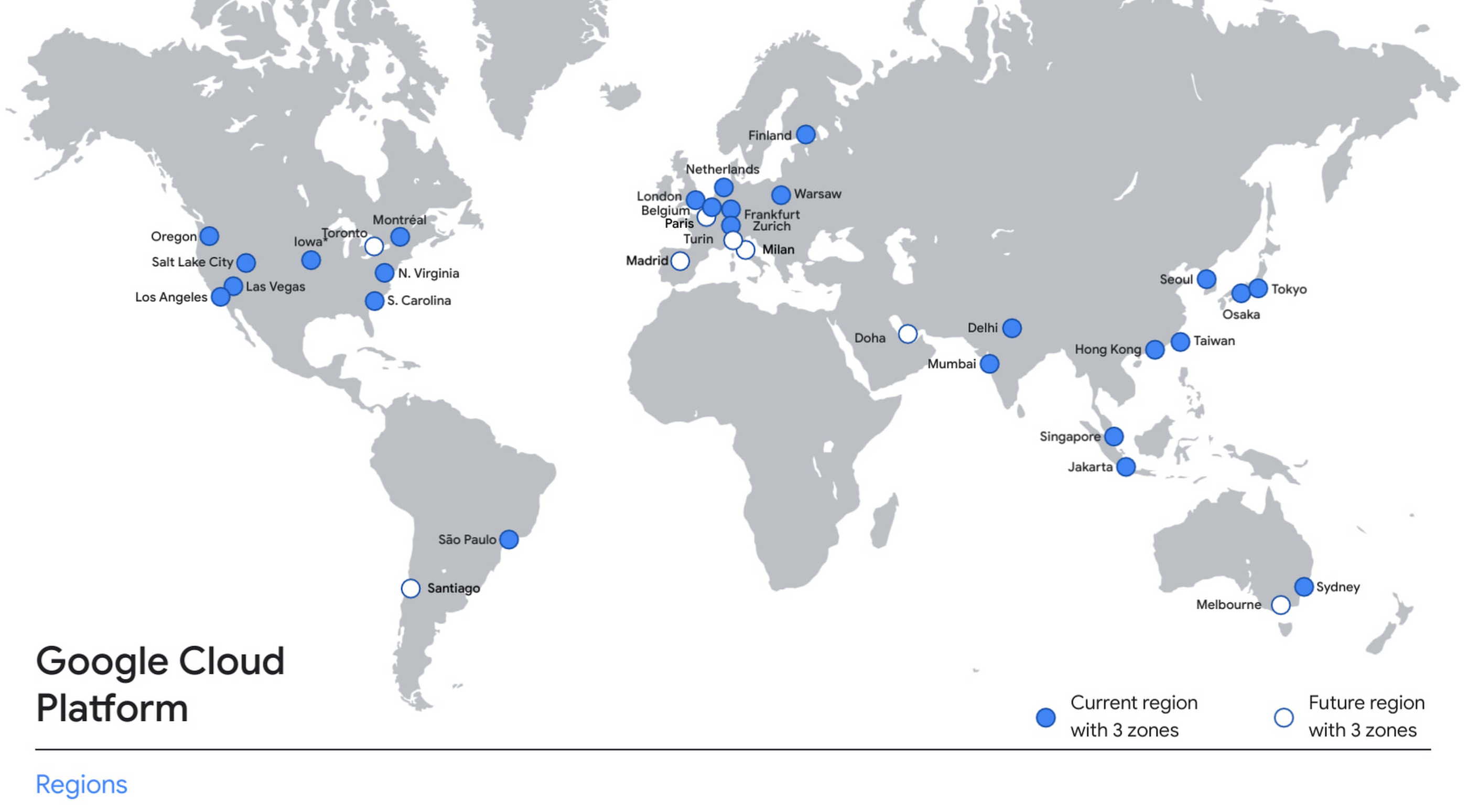
With this new region, Google Cloud customers operating in India also benefit from low latency and high performance of their cloud-based workloads and data. Designed for high availability, the region opens with three availability zones to protect against service disruptions, and offers a portfolio of key products, including Compute Engine, App Engine, Google Kubernetes Engine, Cloud Bigtable, Cloud Spanner, and BigQuery.
Supporting India’s recovery with training and education
Google and Google Cloud will also continue to support our customers with people and education programs. We’re investing in local talent and the local developer community to help enterprises digitally transform and support economic recovery.
Through the India Digitization Fund, we expanded our efforts to support India’s recovery from COVID-19—in particular, through programs to support education and small businesses. In addition to expanding internet access, and investments to help start-ups accelerate India’s digital transformation, we’ve grown our Grow with Google efforts. Businesses can access digital tools to maintain business continuity, find resources like quick help videos, and learn digital skills—in both English and in Hindi.
Helping customers build their transformation clouds
Google Cloud is here to support businesses, helping them get smarter with data, deploy faster, connect more easily with people and customers throughout the globe, and protect everything that matters to their businesses. The cloud region in Delhi NCR offers new technology and tools that can be a catalyst for this change. To learn more, visit the Google Cloud locations page, and be sure to watch the region launch event here.
Medical Data Breakthrough: Google Aids PicnicHealth’s Growth

4900
Of your peers have already read this article.
3:30 Minutes
The most insightful time you'll spend today!
In the fragmented world of U.S. healthcare, patients often have to wait in line or on hold, navigate multiple patient portals, and fill out numerous request forms—all in pursuit of their own medical history. Healthcare technology startup PicnicHealth is on a mission to put control back with the patient, where it belongs.
PicnicHealth’s growth, from closing successful venture rounds to winning machine learning (ML) competitions, speaks to not only improvements and opportunities in healthcare, but also how startups are leveraging Google Workspace and Google Cloud services to accelerate momentum.
The company does the heavy lifting of collecting records and leverages human-in-the-loop ML to transcribe and validate them with an abstraction team of medical professionals. The records are then structured into a complete medical history that patients can access and share with providers to get better care.
But PicnicHealth helps to improve patient health on more than one front. It allows patients to contribute their data to de-identified medical research, building high-quality, anonymized datasets that researchers and life sciences companies can use to better understand disease progression and treatment in the real world.
Google Workspace has been part of PicnicHealth from day one, helping the founders collaborate and shape the company’s vision using cloud-synced documents and spreadsheets to collaborate and model predictions. “I’ve had a Gmail account since 2006, and in college 100% of people worked out of Google Docs. Workspace continues to be the best choice for online collaboration, and that’s why it’s still the default standard for startups,” said Troy Astorino, CoFounder & CTO of PicnicHealth. “When we started PicnicHealth, my co-founder Noga Leviner was in San Francisco and I was in Southern California, and of course we used Workspace.”
Today, Google Workspace continues to play a central role in the company’s collaboration. “We create design documents in Google Docs, primarily for engineering and product changes, and get really healthy, vibrant discussions through comments,” noted Astorino. “This practice has grown beyond engineering and is used for everything from how the company operates to communication norms.”
Google Workspace offers everything the team needs to collaborate, no matter where employees are. PicnicHealth’s team has spread from San Francisco to being distributed across the country and around the world. Instant collaboration is crucial.
“We work in a complex domain where people need a lot of information to make good decisions,” said Astorino. “Google Workspace allows us to operate in a mode of default transparency, where people can easily get the information they need even if it wasn’t intentionally or directly shared with them. Whether it’s working in Docs or scheduling in Calendar, we can operate much more effectively than we could otherwise.”
By any measure, PicnicHealth’s trajectory is one of record success. The startup is a 2014 alumni of Y Combinator, a program that helped launch household names like Airbnb, DoorDash, and Dropbox. Three years later, the team went on to win the $1 million grand prize at Google’s Machine Learning Competition. And the momentum has continued— PicnicHealth has recently announced a $60 million Series C round, bringing the amount raised to date to over $100 million. With the Series C, PicnicHealth is investing in expanding its reach to more patients across over 30 diseases.
As a healthcare startup, PicnicHealth faced a very particular set of challenges, especially when working with and accessing data. Data fragmentation and interoperability are only some of the challenges of realizing the value of big data in the cloud. The healthcare industry is notoriously difficult to navigate due to sensitive data protection laws and regulations like the Health Insurance Portability and Accountability Act (HIPAA).
PicnicHealth started in the cloud on Amazon Web Services (AWS). However, after migrating over to Kubernetes and facing an expanding list of requirements for HIPAA compliance, the company started to explore alternatives.
“We needed to be HIPAA compliant, which was going to be painful on AWS, and we wanted to get away from managing and operating our own Kubernetes clusters,” recalled Astorino. “We had heard good things about GKE (Google Kubernetes Engine). And particularly valuable for us, — many technical requirements you need for HIPAA compliance are configured by default on Google Cloud.”
PicnicHealth would have had to implement a lot of changes and get specialized instance types to get their existing configuration to work. So, they began experimenting with Google Cloud and discovered a much smoother experience.
“It was a lot easier to manage in terms of product setup and developer experience,” said Astorino. “There is a sane product hierarchy of resources you can access and use through Google Cloud and the relationships between them, from coordinated IAM (identity and access management) to using Google Groups for granting permissions. Overall, it’s cleaner.”
Astorino added that the move has also opened the doors to taking advantage of other services in the Google Cloud ecosystem like Cloud SQL, BigQuery, and Cloud Composer. PicnicHealth also uses Security Command Center because it easily integrates with everything but also helps meet various compliance frameworks’ requirements, providing visibility, near-real-time asset discovery, and security information and event management.
But most importantly, the integrated ecosystem has simplified the work needed for PicnicHealth to create a secure environment for employees to use when working with sensitive medical records while still providing all the tools they need. For example, abstractors not only use Google Workspace but also have Chromebooks because they are easy to manage and secure.
Altogether, Google Cloud helps form a technology stack that has enabled the startup to build a massive labeled dataset containing over 100 million labeled medical data concepts. In turn, it accelerates PicnicHealth’s ability to generate highly-performant AI models and feed other ML pipelines, which has been vital for processing and reviewing data at scale.
To learn more about how Google Workspace and Google Cloud help startups like PicnicHealth accelerate their journey, visit our startups solutions pages for Google Workspace and Google Cloud.
More Relevant Stories for Your Company



How Google Cloud is Fortifying the Social Safety Net
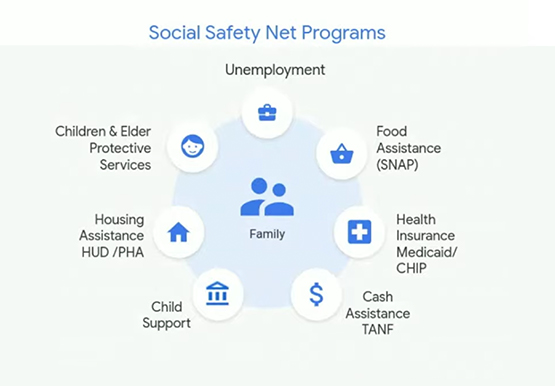
The COVID-19 crisis is triggering both immediate and longer-term challenges for state and local governments. In this video, Denise Winkler, Strategic Business Executive, Google Cloud and Jennifer Ricker, Assistant Secretary - Illinois Department of Innovation & Technology (DoIT), discuss a number of challenges and solutions around the pandemic. First, they



Swarovski’s Journey towards Online and Offline Conversion with Predictive Analytics
Luxury brand and leader in crystals and glass production, Swarovski has charmed customers with its exquisite collections for over 125 years. To understand their customers better and map their online behaviors, Swarovski had to overcome prediction hurdles as majority of the purchases are not frequent or habitual. They are mostly

What’s New in Retail: Bits from Google Cloud’s Retail & Consumer Goods Summit
Today we’re hosting our Retail & Consumer Goods Summit, a digital event dedicated to helping leading retailers and brands digitally transform their business. For me, this is a personally exciting moment, as I see tremendous opportunities for those companies that choose to focus on their customers and leverage technology to elevate

Quick Recap on Google Cloud: Latest News, Launches, Updates, Events and More
Want to know the latest from Google Cloud? Find it here in one handy location. Check back regularly for our newest updates, announcements, resources, events, learning opportunities, and more. Tip: Not sure where to find what you’re looking for on the Google Cloud blog? Start here: Google Cloud blog 101: Full list
