





Expect 40 Percent Higher Price-performance than General Purpose VM with Google TAU VMs!

3268
Of your peers have already read this article.
3:00 Minutes
The most insightful time you'll spend today!
In November 2021, we announced the general availability of Tau VMs. Since then, Google Cloud’s Tau VMs with Google Kubernetes Engine (GKE) have unlocked value for many customers who are now using Tau VMs for their production workloads, such as: Ascend, who achieved over 125% higher performance; Nylas, who gained over 40% higher price-performance; and OpenX, who achieved 40% better price-performance while at the same time reducing their application latency by 62%.
T2D is the first instance type in the Tau VM family and is built on the latest 3rd generation AMD EPYCTM processors, offering 42% higher price-performance compared to general-purpose VMs from any of the leading public cloud vendors. Tau VMs offer a leading combination of performance, price, and full x86 compatibility, offering customers the lowest cost solution for scale-out workloads. Tau VMs are available in predefined shapes, with up to 60vCPUs per VM, 4GB of memory per vCPU, networking up to 32 Gbps and a slew of storage options including Standard, Balanced and Performance PD. Tau VMs are also available as Spot VMs, offering an over 60% discount compared to on-demand pricing.
For customers looking for advanced container orchestration, GKE delivers high levels of reliability, security, and scalability, and has supported Tau VMs since the day they became available on Google Cloud. Tau VMs are ideal for CPU-bound workloads such as web-serving with encryption, video encoding, compression/decompression, image processing and horizontally-scaled applications. Using Tau VMs along with GKE’s cost-optimization best practices can help lower your total cost of ownership. You can add Tau VMs to new or existing GKE clusters by specifying the Tau T2D machine type in your GKE node-pools through the Cloud console or by using –machine-type in gcloud.
Here is what some of our customers have to say about Tau VMs:

Ascend provides a unified analytics and data engineering platform, and chose Tau VMs along with GKE to run their data-intensive workload — primarily because of Tau’s absolute performance and price-performance advantage.
“Our core capability at Ascend is bringing together data ingestion, transformation, delivery, orchestration and observability into a single platform. To operate at scale and keep pace with our telemetry data production rates, high single-threaded performance is critical. With Google Cloud’s Tau VMs with Google Kubernetes Engine (GKE), we are able to achieve over 125% higher performance than previous generation families. This has completely changed our ability to query historical metrics. Where previously metric queries against historical data over ranges longer than a couple hours were difficult, we can now easily query data ranges of multiple weeks.” – Joe Stevens, Tech Lead – Infrastructure, Ascend.io

Nylas is a pioneer and leading provider of productivity infrastructure solutions for modern software. In the past year, Nylas has been using GKE in their journey to reinvent their architecture and provide their enterprise customers with a bi-directional universal email sync, security compliance with the highest enterprise standards, and industry-specific machine learning services.
“For our core application, Google’s Tau VMs with Google Kubernetes Engine delivers over 40% better price-performance than Amazon’s Graviton-based VMs. Further, Tau VMs maintain x86 compatibility and eliminate the need to maintain a separate stack for ARM. We are moving our workload from Amazon Web Services to Google Cloud to take advantage of these benefits.” – David Ting, SVP of Engineering, Nylas

OpenX operates an independent ad exchange. Operating 100% on Google Cloud has enabled OpenX to achieve improved performance, scalability, speed and global reach.
“At OpenX, our ad-exchange services over 200 billion requests every day. Getting the best combination of performance and price from the infrastructure is critically important for us. We use multiple Google Kubernetes Engine (GKE) clusters across geographic regions with autoscaling to power our ad-delivery components. Running Google Cloud’s Tau VMs with GKE has enabled over 40% better price-performance and 62% latency reduction for our application as compared to the prior generation family. We have made the move to Tau VMs for our application to take advantage of these benefits.” – Paul T.Ryan, CTO, OpenX
We are excited to see Tau VMs adding value for so many of our customers by enabling industry leading price-performance for a variety of workloads.
If you haven’t tried Tau VMs yet, give them a try today in our Iowa, Netherlands and Singapore regions and move your production workloads to Tau VMs. Tau VMs will be arriving in additional regions and zones in the coming weeks. You can provision GKE node pools based on Tau VMs and explore how you can take advantage of improved price-performance for your scale-out containerized workloads.
To get started, go to the Google Cloud Console, select Google Kubernetes Engine, and choose Tau T2D for your GKE nodes. To learn more about Tau VMs or other Compute Engine VM options, check out our machine types and our pricing pages.
VMware Engine’s Exciting New Updates: A Google Cloud Journey

1343
Of your peers have already read this article.
2:30 Minutes
The most insightful time you'll spend today!
IT leaders today are being asked to simultaneously support their company’s infrastructure, find opportunities for growth, and meet their goals with fewer resources and smaller budgets than before. Recently we highlighted three customers who are leveraging Google Cloud VMware Engine to achieve these goals while lowering their TCO and transforming their organization.
It’s because of these successful customer outcomes that we have been awarded the 2023 VMware Cloud Innovation and SaaS Transformation partner achievement award for delivering solutions that accelerate customers’ digital transformation journey. We’re honored to receive this award and continue to stay focused on delivering tremendous value to our customers.
In the past few months, we’ve also made several updates to Google Cloud VMware Engine. Today’s post provides a recap of the latest milestones that make it easier for you to migrate and run your vSphere workloads in a cloud-first, enterprise-class VMware environment in Google Cloud.
Back in September 2022, we announced a number of updates including the preview of API/CLI support (which is now available). In February 2023, we also talked about how to use NetApp CVS as datastores for VMware Engine.
Key updates this time around include:
Availability of VMware Engine in Delhi, Santiago and Milan regions: This brings the availability of VMware Engine to 17 regions worldwide, each supporting 4 9’s of uptime SLA for clusters 5 or more, serving the needs of our regional and multi-national customers. In addition, we have also added a second zone in the London region.
Filestore datastore support for VMware Engine: Generally Available in all VMware Engine regions, you can use Filestore High Scale and Enterprise tier instances as external NFS datastores for VMware Engine nodes. Filestore is VMware certified as an NFS datastore with VMware Engine. You can size compute and storage capacity independently to meet your workload requirements for your storage-intensive VMs. You can also leverage vSAN for low-latency VM requirements and scale Filestore from TBs to PBs for the capacity hungry VMs. If interested in this feature, please contact your Google account team.
Stretched private clouds: These private clouds stretch across two data zones and a witness zone all within the same Google Cloud region. Stretched private clouds use vSphere and vSAN stretched clusters to provide compute and storage high availability against zone-level failures. This capability is now available in Frankfurt and Sydney regions. Learn more here.
Zerto solution version 9.5u1 support: This recovery solution allows critical infrastructure and application virtual machines (VMs) to be replicated continuously from your on-premises vCenter to your private cloud. Learn more about setting up Zerto here.
Google Cloud Backup and Disaster Recovery (GCBDR): GCBDR is available to protect applications running in VMware Engine, and can be managed within the Google Cloud Console. We recently launched GCBDR under Google Cloud Platform Terms of Service simplifying customers’ purchasing and support experience.
vTPM support: Google Cloud VMware Engine private clouds now support the addition of a Trusted Platform Module (TPM) 2.0 virtual cryptoprocessor to a virtual machine. You can add vTPMs to VMs by following VMware instructions or upgrading your existing VMs to include a vTPM. You can read more about this in the VMware blog.
This brings us to the end of our updates this time. For the latest updates to the service, please bookmark our release notes.
Know the Leaders of Google Cloud Public Sector Community

5020
Of your peers have already read this article.
1:30 Minutes
The most insightful time you'll spend today!
At Google Cloud, being a strategic partner is part of our DNA. Whether it’s listening closely to our customers, helping to build team skills for innovation or simply being there (since we know the cloud is 24/7), we get excited about working hands-on with customers to deliver new solutions.
As we look to solve decades-old challenges with new technologies in workforce productivity, cybersecurity, and artificial intelligence/machine learning, we know that we are only as good as the people behind the technology. Today, we’re proud to spotlight a few of the inspiring folks behind Google Cloud Public Sector and celebrate their recognition in the industry.
Melissa Adamson, Head of Government Channels at Google Cloud, has been named to the highly respected Women of the Channel list for 2021. This annual list recognizes the unique strengths, leadership and achievements of female leaders in the IT channel. The women honored this year pushed forward with comprehensive business plans, marketing initiatives and innovative ideas to support their partners and customers.
Melissa was brought on to build the Public Sector channel from scratch. The initial focus was building the channel for the US government team and has since expanded to include education, Canada and Latin America.
Having a career background at both Microsoft and Accenture, Melissa leveraged her extensive professional network to build the organic partnerships needed to accelerate the Public Sector partner ecosystem. This helped her drive two key wins (US Postal Service and PTO) and personally recruit top cloud partners in the industry. Melissa loves card games and is learning a new language.
Todd Schoeder, Director of Global Public Sector Digital Strategy, was recently featured in the “Top 20 Cloud Executives to Watch in 2021” by Wash Exec. Recognized for his work in helping customers navigate through the impact of COVID-19 and developing innovative solutions to meet mission challenges, he says: “New partnerships are required to solve for the problems of the future. Challenges that were previously thought of as insurmountable, too risky or expensive, are actually quite the opposite — as long as you have the right partner that is working in your best interest with you.”
Josh Marcuse, Head of Strategy & Innovation, received his second Wash100 Award for leading a digital transformation team that works to drive the development of public sector solutions, including cyber defense, smart cities, and public health.
Josh has launched services to support collaborative team operations including Workspace for Government and an artificial intelligence-based customer service platform to support remote work needs. His work also includes leading Google Cloud’s partnerships with organizations to improve data sharing in the public health community, contact tracing activities, and supporting research efforts across national laboratories.
Like Melissa, Josh was brought on to build a new team dedicated to strategy and innovation. This team’s purpose is to bring an intense focus to public sector mission outcomes and the public servants who own them. Josh spent a decade pushing digital modernization and workforce transformation at the U.S. Department of Defense, and co-founded the Federal Innovation Council at the Partnership for Public Service, and now brings that domain expertise to supporting government workers who are driving digital transformation.
Join us in celebrating these folks for their leadership and contributions!
Google is named a Leader in 2020 Magic Quadrant for Cloud Infrastructure and Platform Services
3565
Of your peers have already read this article.
10:30 Minutes
The most insightful time you'll spend today!
The capability gap between hyperscale cloud providers has begun to narrow; however, fierce competition for enterprise workloads extends to secondary markets worldwide. Infrastructure and operations leaders should evaluate cloud providers with a broad range of use cases and a wide market presence.
Market Definition/Description
Cloud computing is a style of computing in which scalable and elastic IT-enabled capabilities are delivered as a service using internet technologies. Cloud infrastructure and platform services (CIPS) are defined as standardized, highly automated offerings, in which infrastructure resources (e.g., compute, networking and storage) are complemented by integrated platform services. These include managed application, database and functions as-a-service offerings. The resources are scalable and elastic in near-real time and are metered by use. Self-service interfaces are exposed directly to the customer, including a web-based user interface (UI) and an API. The resources may be single-tenant or multitenant, and can be hosted by a service provider or on-premises in the customer’s data center.The scope of this Magic Quadrant has changed, compared with its predecessor, the “Magic Quadrant for Cloud Infrastructure as a Service.” Gartner has developed this Magic Quadrant to reflect the changing dynamics of cloud services offered and the ways that enterprise customers adopt them. Ultimately, hyperscale cloud providers, and the broad array of services they offer beyond infrastructure as a service (IaaS), have found strategic importance in Gartner’s enterprise clients and the Magic Quadrant needed to evolve to reflect as much.The scope of the Magic Quadrant for CIPS includes IaaS and integrated platform as a service (PaaS) platforms. These include application PaaS (aPaaS), functions as a service (FaaS), database PaaS (dbPaaS), application developer PaaS (adPaaS) and industrialized private cloud offerings that are often deployed in enterprise data centers.
Understanding the Vendor Profiles, Strengths and Cautions
CIPS providers that target enterprise and midmarket customers generally offer high-quality service, with excellent availability, good performance, high security and good customer support. Exceptions will be noted in this Magic Quadrant’s evaluations of individual providers. When we say “all providers,” we specifically mean “all the evaluated providers included in this Magic Quadrant,” not all CIPS providers in general. Keep the following in mind when reading the vendor profiles:
- All the providers have public cloud IaaS and PaaS offerings. Most also offer, or are in the process of building, industrialized private cloud offerings, in which every customer is on standardized infrastructure and cloud management tools. In some cases, the provider’s industrialized, on-premises offering may share similarities to hyperconverged infrastructure (HCI), but tethered to the cloud. However, this may not resemble the provider’s public cloud service in architecture or quality. A single architecture and feature set and cross-cloud management, for both public and private CIPS, make it easier for customers to combine and migrate across service models as their needs dictate. They also enable the provider to use its engineering investments more effectively. Gartner is beginning to describe the notion of cloud-provider-managed infrastructure, wherever it may exist, as “ distributed cloud.”
- All the providers target midmarket businesses and enterprises, as well as other companies that use technology at scale. Some of the providers may also target small businesses and startups. Just because a provider targets a segment, however, does not necessarily mean that it is well-suited to that segment’s needs. Furthermore, not all providers have the capacity to serve very-large-scale customers, and some have capacity constraints in particular regions.
- All the providers offer basic cloud IaaS — compute, storage and networking resources as a service. They also offer additional value-added capabilities, notably cloud software infrastructure services — typically middleware and databases as a service — including PaaS capabilities. These services, along with IT operations management (ITOM) capabilities as a service (especially DevOps-related services), are a vital differentiator in the market, especially for Mode 2 agile IT buyers.
- All the providers claim to have high security standards. However, the extent of the security controls provided to customers varies significantly. All the providers evaluated can offer solutions that will meet common regulatory compliance needs, unless otherwise noted. All the providers have undergone SOC 1, SOC 2 and SOC 3 audits, as well as SSAE 16, ISO/IEC 27001, ISO/IEC 27017 and ISO/IEC 27018 audits. This provides a relatively high level of assurance that the providers are adhering to generally accepted practices for the security of their systems, but it does not address the extent of controls offered to customers.
- Security is a shared responsibility. Customers need to correctly configure controls, and they may need to supply additional controls beyond what their providers offer. Furthermore, providers vary in their degree of transparency as to how services are architected, although customers typically have access to third-party assessment reports under a nondisclosure agreement (NDA).
- Monthly compute availability service-level agreements (SLAs) of 99.95% and higher are generally the norm. They are typically higher than availability SLAs for managed hosting. Service credits for outages in a given month are typically capped at 100% of the monthly bill; however, some providers have caps as low as 25%. This availability percentage is typically non-negotiable, because it is based on an engineering estimate of the underlying infrastructure reliability.
- Single-instance compute SLAs have become common for providers in this Magic Quadrant. It might be more accurate to say that there are usually two SLAs — one for the compute service, and one for individual instances. Some providers have a compute availability SLA that requires customers to use compute capabilities in at least two fault domains (sometimes known as “availability zones” or the like).
- Many providers have additional SLAs. These cover network availability and performance, customer service responsiveness and other service aspects.
- Infrastructure resources are not normally automatically replicated into multiple data centers. Customers are responsible for their own business continuity. Some providers offer optional disaster recovery solutions.
- All providers offer per-second metering of virtual machines (VMs). Some can offer shorter metering increments, which can be more cost-effective for short-term batch jobs. Unless otherwise noted, providers charge on a per-VM basis.
- Providers are increasingly offering bare-metal physical servers on a dynamic basis. These are priced by the second. Providers with a bare-metal option are noted as such.
- All the providers partner with carrier-neutral colocation exchanges. This enables customers to obtain connectivity from a variety of carriers that are located in these facilities. In addition, many customers require a small amount of supplemental colocation in low-latency proximity with their cloud provider. For example, they may have a large-scale database, specialized network equipment or legacy equipment, such as a mainframe.
- Some providers offer software marketplaces. In these marketplaces, software vendors specially license and package their software to run on that provider’s cloud IaaS offering. Marketplace software can be automatically installed, and can be billed through the provider, although the software vendor often provides support.
- All providers offer enterprise-class support with 24/7 customer service. This is provided via phone, email and chat, along with an account manager. Some offer a lower level of support, but allow customers to pay extra for enterprise-class support.
- All the providers will sign contracts with customers, can invoice and can consolidate bills from multiple accounts. All providers offer online sign-up and credit card billing, because they recognize that enterprise buyers prefer contracts and invoices. Some will sign “zero dollar” contracts that do not commit a customer to a certain volume.
- Some providers will sign a U.S. Health Insurance Portability and Accountability Act Business Associate Agreement (HIPAA BAA).
- Unless otherwise noted, all providers will sign the following contract addendums:
- An EU Data Protection Directive (95/46/EC) data-processing agreement (DPA), which includes the model clauses
- An EU General Data Protection Regulation (GDPR) DPA
- Managed and professional services are an optional but important accelerator for customer success. Almost all providers rely heavily on managed service providers (MSPs) and system integration (SI) partners for these services. However, most providers offer their own first-party professional services and some also offer first-party managed services offerings.
- All of the evaluated providers offer a portal, documentation, technical support, customer support and contracts in English. Some can provide one or more of these in languages other than English. Most providers can conduct business in local languages.
The service provider descriptions are accurate as of the time of publication. Our technical evaluation of service features took place between January 2020 and March 2020.
Format of the Vendor Descriptions
When describing each provider, we first summarize the nature of the company, then provide information about its industrialized cloud IaaS offerings in the following format:
- Locations: Cloud data center locations by country, languages in which the company does business and languages in which technical support can be conducted.
- Recommended Uses: These are the circumstances under which we recommend the provider. They are not the only circumstances in which it may be a useful provider, but they are the scenarios for which, in Gartner’s opinion, the provider is well-suited.
For a detailed technical description of CIPS offerings, along with a use-case-focused technical evaluation, see “Critical Capabilities for Cloud Infrastructure and Platform Services, Worldwide.”We also provide a detailed list of evaluation criteria in “Solution Criteria for Cloud Integrated IaaS and PaaS.” A detailed assessment of each provider against these criteria can be found in the Solution Scorecards. The results are also available in Gartner’s Cloud Decisions portal (see “Cloud Decisions’ Cloud Compare: Perform Real-Time IaaS Pricing and Performance Analysis”).
Magic Quadrant
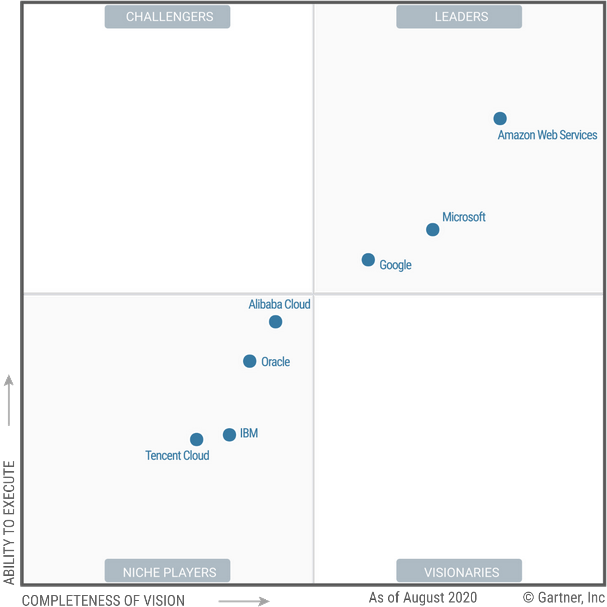
Figure 1. Magic Quadrant for Cloud Infrastructure and Platform Services
Vendor Strengths and Cautions
Google is a Leader in this Magic Quadrant.
Locations: Google has multiple regions across Japan and the U.S., as well as a presence in Belgium, Singapore, Finland, Germany, the Netherlands, the U.K., India, Australia, Brazil, Canada and, Switzerland, as well as the Hong Kong and Taiwan markets.
Recommended Uses: Google has evolved by enhancing its strengths and attacking its limitations to providing a strong offering in every use case, other than the edge use case. Google has a future focus on building out hybrid capabilities and partnerships with telco providers.
Strengths
- Google’s open-source contributions, such as Kubernetes and TensorFlow, have been market-moving innovations that have changed the course of enterprise IT. Such innovations have served to enable other cloud service providers, but also brought developer “mind share” to Google Cloud Platform (GCP). Google’s long-term strategy is to bring additional open-source-focused partners into GCP as managed services.
- During the past year, GCP has experienced a noticeable increase in year-over-year market share in terms of IaaS and dbPaaS, albeit from a lower base, relative to other providers in this Magic Quadrant. Google has also made significant gains by closing a number of critical capability gaps between GCP and Microsoft Azure, its nearest competitor in terms of market share and capabilities.
- Gartner clients continue to associate GCP with its big data and data science capabilities, stemming from the use of services such BigQuery and Dataproc. However, the company is pressing into new territory with Anthos, GCP’s container and Kubernetes-based middleware layer, which is designed to support the development and deployment of cloud applications in a hybrid and multicloud model.
Cautions
- Some of Gartner’s clients remain cautious about Google’s commitment to serving the needs of enterprise clients when put in the context of SAP’s preference for Microsoft Azure, and GCP’s slowness in executing on some highly touted partnerships. GCP lacks enterprise-focused aPaaS capabilities and support for Oracle, and it continues to struggle with having an enterprise mindset in the field.
- From a financial perspective, GCP’s revenue is a small fraction of overall Google revenue and GCP’s criticality to the overall business is not as clear as its competitors. Furthermore, GCP’s success may erode the company’s overall healthy gross margins.
- Google’s much-vaunted network capabilities have been the source of a number of GCP outages during the last year, with devastating impact on customers. One outage was multiregional in scope, affecting GCP customers and Google consumer services, such as G Suite and YouTube. This resulted in complete GCP network unavailability for some customers.

Multi-cloud Adoption Empowers GCCs to be Resilient, Scalable and Future-proof: Whitepaper
DOWNLOAD WHITEPAPER3288
Of your peers have already downloaded this article
1:30 Minutes
The most insightful time you'll spend today!
India has emerged as the Technology capital for the world – there are now at least 55 unicorns in India, nearly 600 funding rounds in just the last 30 months and 200+ GCCs expected in the next 2 years. There has been a rapid acceleration not just in the number of startups being launched, but also in the variety of technologies they are experimenting with.
India GCC’s are leading the transformation agenda for the enterprise and the pandemic has accelerated the inevitable. Technology now underpins every facet of a business: products, services, business processes, and how customers and businesses interact. As organizations are investing and progressing on their digital journey, they are increasingly relying on talent and teams across the globe to help them navigate the changes and build strategic capacity.
How is Cloud enabling this strategic change? This whitepaper compiled by ANSR and Google Cloud aims to expand on the following,
What is the cloud adoption story and how can it empower GCCs to be resilient, scalable and future-proof?
How have global teams or Global Capability Centers enabled the strategic and accelerated adoption of technology?
What are the key Cloud considerations for building an innovative, collaborative ecosystem for a thriving organization?
Mambu’s Journey: Modernizing Core Banking with Google Cloud

934
Of your peers have already read this article.
3:30 Minutes
The most insightful time you'll spend today!
When our founders began Mambu in 2011, their goal was to bring the latest digital technologies to the banking and finance world. Banking, in particular, is an industry built on decades of deep legacy technology. So initially, Mambu was embraced by microfinance — 100 organizations in 26 countries in just the first two years.
Since then, acceptance of modernizing core banking services by using composable, cloud technologies has grown across financial services institutions (FSIs). We now service top-tier banks, fintech startups, and other finance organizations across six continents, helping them deliver flexible, personalized, customer-centric banking products and services that their customers can depend upon.
One of the main reasons we’ve been able to scale the Mambu composable banking platform across the globe and at our current pace is our partnership with Google Cloud. The decision to move forward with Google Cloud happened for several reasons.
1. Flexibility and openness. Many FSIs are on hybrid and multicloud technology stacks, as they may still be transitioning from legacy systems, or have data residency requirements that have led them to use different clouds in different regions. Mambu meets customers wherever they are in their cloud journeys. We support interoperability without vendor lock-in. This need for openness, as well as the scalability benefits, led Mambu to evolve our platform on Google Kubernetes Engine (GKE). Many customers use open-source Kubernetes because, this common foundation can help streamline integration, speed up time to market, and reduce development. Just as important, the Google Cloud open cloud approach matches our company values.
2. Security and data residency. For customers in highly regulated finance industries, security isn’t just top of mind, it’s the No. 1 requirement. In addition to Google Cloud’s secure infrastructure, external audit certifications, and encryption, its wide array of regions has allowed us to expand into more countries, where we serve banks that must meet local data residency requirements. For example, Google Cloud’s Jakarta Cloud Region, has allowed us to support Bank Jago in Indonesia as it brings more financial inclusion to the unbanked in that country.
3. Availability. It’s critical for banks to maintain basic financial functionality, like accepting deposits and serving cash, even amid a service disruption. We needed a cloud partner with impeccable redundancy, failover, and disaster recovery capabilities.
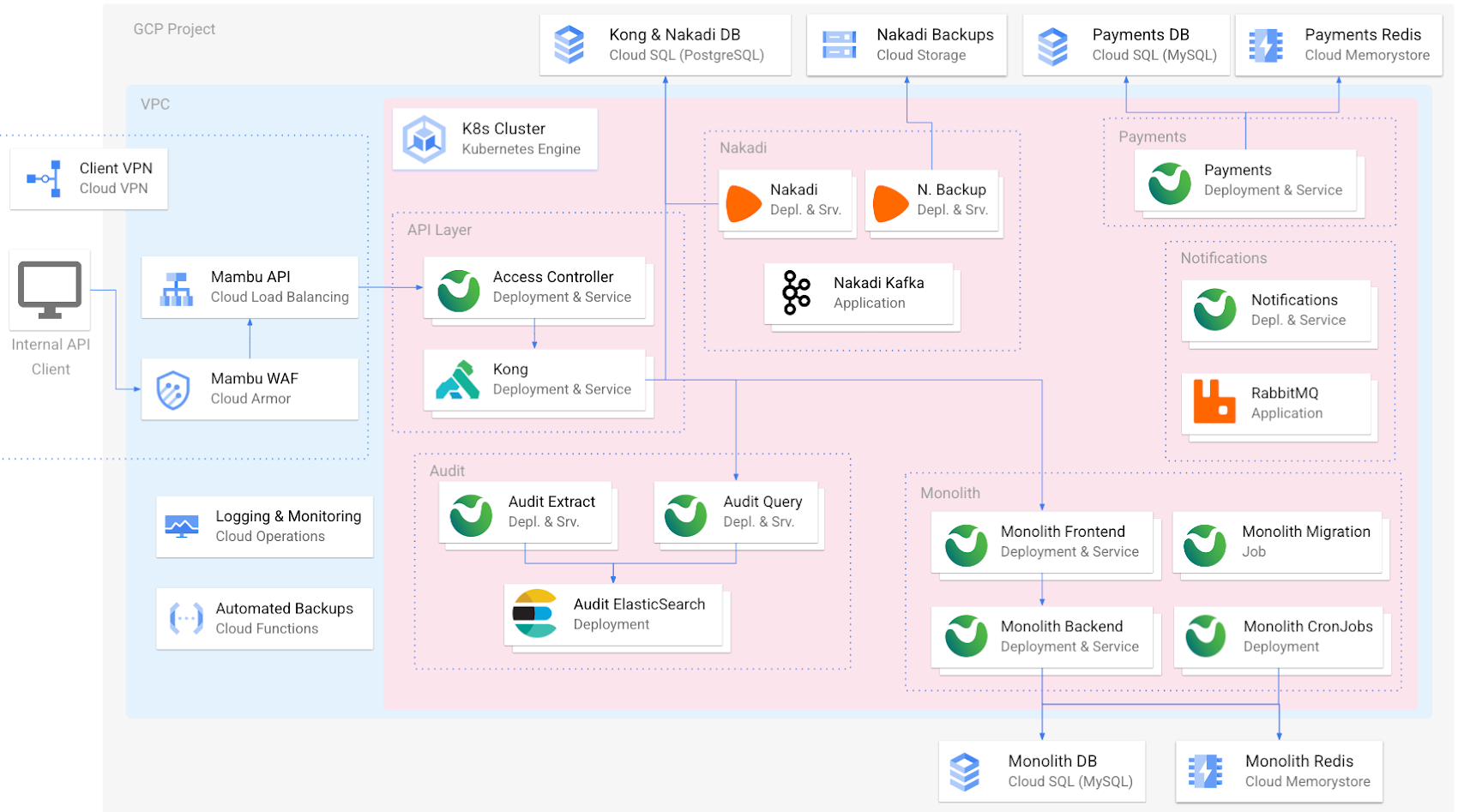
In addition to GKE, the Mambu platform uses several other Google Cloud services for specific functions, including Cloud Armor, Cloud Load Balancing, Cloud VPN, Cloud Memorystore, and Google Cloud Operations.
Another important reason we chose to partner with Google Cloud was its expansive ecosystem and commitment to innovation. We are midway into a three-year journey to modernize our own technology stack to meet customer needs.
Building a roadmap with Google Cloud
Our customers need a core banking technology platform that will grow with them as they bring to market innovative services built on the latest technology advances. For Mambu to be that platform, we need a cloud partner that supports and scales with our growth. While we originally built our cloud architecture on GKE and Compute Engine (among a few other Google Cloud services), we’re now looking to a serverless future where we can scale more easily and leverage managed services within Google Cloud and its partner ecosystem to focus on our core offerings.
These are just some of the modernization and customer-led innovations that we’re cooking up:
- More workloads in GKE: Like many companies, our cloud transformation is a work in progress. While much of our codebase is in GKE, we’re continuing to break up some larger pieces of code into microservices to increase agility and velocity, enabling us to make consistent updates to discrete areas of our platform without affecting the whole. GKE is the leader for orchestrating microservices at scale and continues to be a natural fit.
- Native BigQuery integration: Mambu customers collect a tremendous amount of data within the platform that can be used for analytics, personalization, and other use cases. We’re planning to create a seamless integration for feeding core banking data from Mambu into BigQuery so that customers can better leverage their valuable data.
- CloudSQL vs. self-managed MySQL: We have almost completed migrating from our own MySQL instances to managed Cloud SQL databases, which will open up new opportunities to implement customer-centric solutions such as BigQuery integration.
- A serverless future with Cloud Run: Compute Engine is working well for Mambu, providing the flexibility to choose the virtual machines that best balance performance and cost needs. As we seek even more time and cost efficiencies, we believe the elastic scalability of a serverless architecture built on Cloud Run will get us there, and we’re considering going serverless in the future. Doing so would abstract infrastructure for simpler management, while allowing us to fire up containers to meet our customers’ high transactions-per-second needs, spin them down when not needed, and pay only when they run. It would also boost security: Without long-running compute, there are no patches or fixes, and each new instance is isolated and fresh by default.
These are just a handful of examples of the ways we want to best leverage Google Cloud services to simplify how we manage our tech stack, as well as continue to bolster security, scalability, and performance. There are many other ideas we’re exploring: using Dataproc and Datastream to support the specific data needs of Islamic banking, Cloud Functions so that customers can run their own queries against Mambu, and AI-enabled features.
At Mambu, our mission is to empower our customers to deliver great modern financial experiences easily to everyone around the world. Every time Google Cloud opens a new data center, we can enter a new market. Every time we move to a new-to-us managed service via the Google Cloud Marketplace, we free up time to build new ways to deliver customer-centric banking solutions. And so, we look forward to continuing this partnership with Google Cloud well into the future.
More Relevant Stories for Your Company

Google Announces New Cloud Region in Toronto
For over a decade, we’ve been investing in Canada to become a go-to cloud partner for organizations across the country. Whether they’re in financial services, media and entertainment, retail, telecommunications or the public sector, a rapidly growing number of organizations located or operating in Canada are choosing Google Cloud to

Freenome’s Innovative Cancer Detection Technology and Its Integration with Google Cloud
It’s incredible to see how startups across industries are using cloud technology to help address some of our most pressing, important, and life-altering challenges. Startups and high-growth technology companies are choosing Google Cloud and using technologies like Google Compute Engine (GCE), BigQuery, Looker, Firebase and more to help businesses reduce

No More Migration Challenges: How Nine Clients of Google Cloud Achieved Success
Google Cloud's hands-on, tailored partnerships and solutions have helped many businesses around the world to ease their cloud migration journey and achieve desired outcomes! Download the E-book to observe the public cloud landscape and understand the common hurdles to cloud adoption, the benefits of multi-phased migration with Google Cloud, cloud

NVIDIA CloudXR Streaming from Cloud to Transform Gaming and Enterprise AR/VR Experience
The Opportunity for Streamed AR/VR Content What if you could get a high quality AR/VR experience without a dedicated physical computer—or even without a physical tether? In the past, interacting with VR required a dedicated, high-end workstation and, depending on the headset, wall-mounted sensors and a dedicated physical space. Complex
