





8 Must-Have Google Cloud Products for Startups

3184
Of your peers have already read this article.
2:30 Minutes
The most insightful time you'll spend today!
Startups worldwide turn to Google Cloud tools to build fast on a strong and easy to use platform that helps them get to market and launch products faster, all while building on the cleanest cloud in the industry. Startups leverage Google Cloud and our Google for Startups Cloud Program to go from idea to IPO, and there are a variety of products on Google Cloud that can help them.
Here are the 8 top products that startups use on Google Cloud to innovate and grow:
Firebase for app development
Speed up innovation with Firebase, a mobile development platform that’s fully integrated with Google Cloud. Work in a simpler cloud environment, easily pull in products or services, and build your apps faster.
Cloud SQL for database needs
Build your startup’s foundation with Cloud SQL, a fully managed relational database solution that integrates with Google Cloud services. Create and connect to your first database in minutes and scale with a single API call.
AI and machine learning products
Solve tough problems with AI and machine learning products, built with the best of Google’s technology. Train deep learning and machine learning models cost-effectively so you can iterate and innovate faster.
BigQuery for data analytics
Drive agility with BigQuery, a serverless, cost-effective, multi-cloud data warehouse. Query streaming data in real time, predict business outcomes with built-in machine learning, and share analytics with just a few clicks.
Google Kubernetes Engine (GKE) for containers
Unlock faster, more secure app development with GKE, the most scalable Kubernetes platform. Streamline operations with release channels that fit your business needs and leave cluster monitoring to Google engineers.
Looker for data visualization
Get more from your data to keep moving ahead of the competition with Looker, a trusted business intelligence and data platform. Generate real-time reports and get insights at the right time with proactive alerts.
Cloud Run for serverless computing
Create scalable containerized apps in any programming language on Cloud Run, a fully managed compute platform. Pair it with container tools like Cloud Build and Docker, and only pay when your code is running.
Cloud Armor for security
Protect your startup from Web attacks with Cloud Armor, a leading Distributed Denial-of-Service (DDOS) defense service. Use it with an HTTP Load Balancer for Managed Instance Groups across regions to keep your workloads highly available and secure.
To learn more about products best-suited to the unique demands of startups, check out our startups solution page. Our team is looking forward to discussing how these products can help you. If you’re not already in the program, you can get started here.
If you want to learn more about how Google Cloud can help your startup, visit our page here to get more information about our program, and sign up for our communications to get a look at our community activities, digital events, special offers, and more.

3525
Of your peers have already downloaded this article
5:30 Minutes
The most insightful time you'll spend today!
When moving to the cloud, many organizations concentrate their focus on the change in technology and overlook an area just as complex and impactful: cultural change. Having your people ready to embrace the change — supporting them with the right processes, equipping them with the right skills — is as important as getting the technology right.
To realize the full value of cloud technologies, many organizations are rethinking their IT organizational structure. There are a variety of potential talent implications too — from adopting agile ways of working to hiring for more cloud-centric skills to looking at redeploying current IT skills and reskilling and upskilling current teams.
As one of the organizations that pioneered hyperscale infrastructure, which led to the creation of the cloud, Google has spent years nurturing its culture and workforce to best operate in the cloud. We leverage this experience every day to help organizations ready their workforce for the change, and in this whitepaper, we aim to pass that experience along to you.
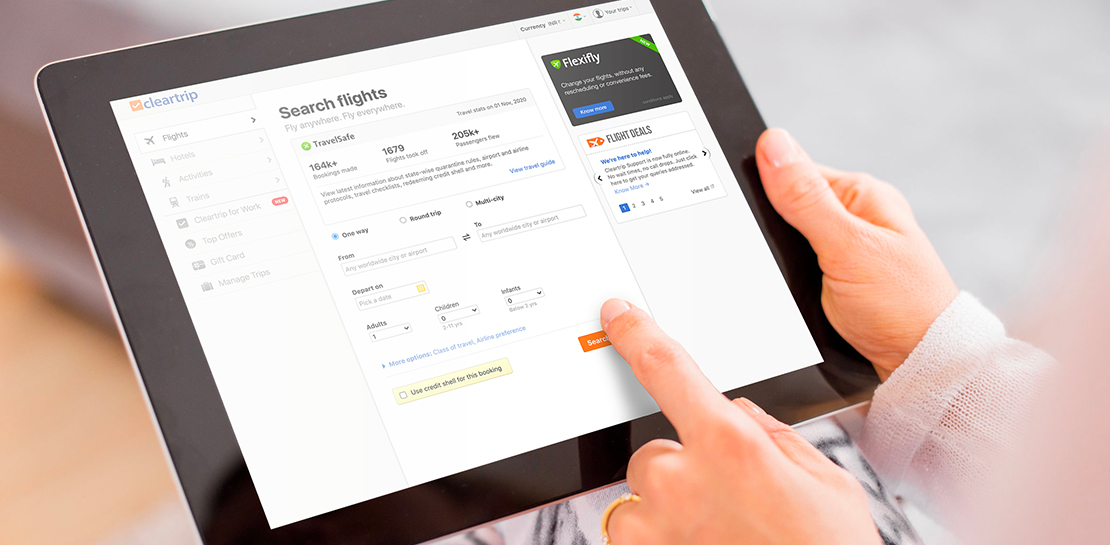
How Cleartrip.com is leveraging Google Cloud to survive the slump in the travel industry
5157
Of your peers have already read this article.
5:30 Minutes
The most insightful time you'll spend today!
With the novel coronavirus COVID-19 sweeping across continents and fatalities climbing every day, it was only a matter of time before countries closed their borders to contain its spread.
In the wake of this decision, travel and tourism, the linchpins of many economies, were among the worst affected.
According to the United Nations World Tourism Organization (UNWTO), the COVID-19 pandemic caused a 22 percent fall in international tourist arrivals during the first quarter of 2020, and could see an annual decline of between 60 percent and 80 percent when compared with 2019.
The impact on the economy and to livelihoods that are dependent on tourism and hospitality has been significant. Prior to the pandemic, the outlook was quite different. Research by UNWTO in 2018 estimated that India would have 50 million outbound tourists by 2020.
Technology was also set to play a huge part in that growth. A Google Travel study showed that 74 percent of travellers were planning their trips on the Internet, and technologies like AI, IoT and VR were all set to be key trends this year.
Now, as borders slowly reopen and travel restrictions are gradually lifted, technology could once again be the game-changer. Manoj Sharma CTO, Cleartrip.com spoke to YourStory about the industry’s road to recovery and how technology will aid that journey.
Read the Full Story on YourStory
Google Invests 1 Billion Euros on Germany to Support Growing Businesses

3549
Of your peers have already read this article.
2:00 Minutes
The most insightful time you'll spend today!
In September 2001, the first-ever German Google employee switched on their computer in Hamburg. Since then, we’ve grown to more than 2,500 employees in four offices across Germany. Berlin, Frankfurt, Hamburg and Munich have long been our home, and we continue to invest in the growth of the local economy.
Today, 20 years after the start of “Google Germany”, we are pleased to present one of our most important investment programs to date in this country. With the expansion of our Cloud Region in Frankfurt in a new Google-owned Hanau facility, a new Google Cloud region in Berlin-Brandenburg, and a broad investment plan in renewable energy, our commitment is clear: Google is investing in Germany’s potential and supporting the transition to a digital and sustainable economy. Between now (2021) and 2030, this investment in digital infrastructure and clean energy will total approximately 1 billion euros.
Expanding our Frankfurt cloud region to support growing demand from German businesses and organizations
In Hanau, only 20 kilometers from the DE-CIX Internet hub in Frankfurt, Google is proud to be nearing completion of an additional cloud facility that will be fully operational in 2022. This expansion of our existing Frankfurt Google Cloud region will serve the growing demand for Google Cloud services in Germany.
The 4-story building is 10,000 square meters and was sustainably constructed with energy efficient infrastructure and adherence to our circular economy model for waste. The symbolic handover of the keys from developer NDC-Garbe, together with local government officials, took place on site yesterday.
A new cloud region in Berlin-Brandenburg
In addition to the Hanau expansion of our Google Cloud region in Frankfurt, we are pleased to announce that a new Google Cloud region will be located in Berlin-Brandenburg, further extending our ability to meet growing demand for cloud services in the country. When open, this will be our second Google Cloud region in Germany, providing enterprise customers with faster access to secure infrastructure, smart analytics tools and an open platform. Designed and dedicated to providing enterprise services and products for Google Cloud customers of all sizes and industries in Germany, the Berlin-Brandenburg region will have three zones to protect against service disruptions and join the existing network of 27 Google Cloud regions connected via our high-performance network.
One of the cleanest clouds in the industry becomes even cleaner
Since 2017, Google has matched 100% of our global, annual electricity use with renewable energy. Last year, we set out to run our business on carbon-free energy everywhere and at all times by 2030, enabling us to offer cloud customers one of the cleanest clouds in the industry, while helping Europe achieve its ambitious climate goals.
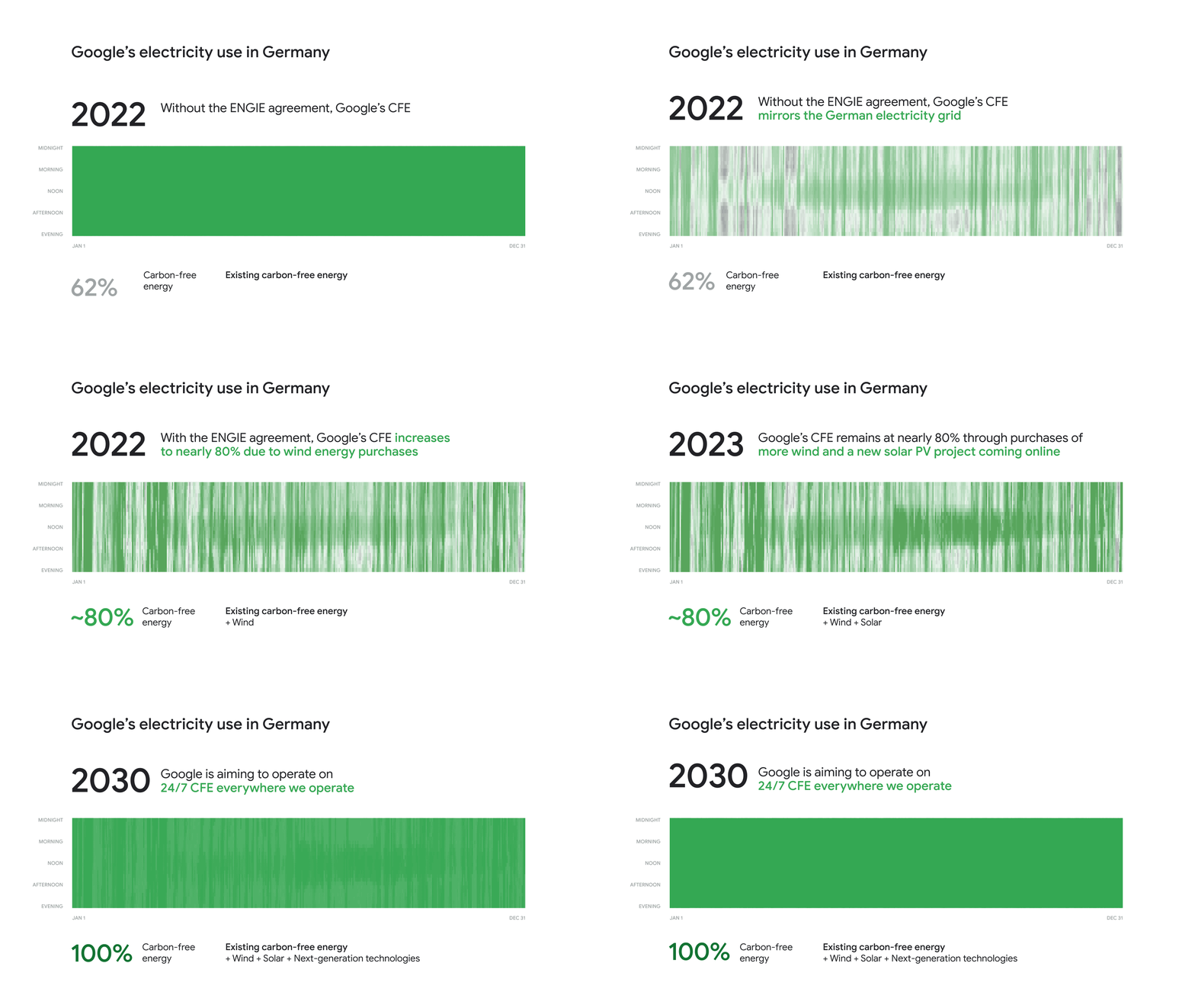
Today, we’re excited to announce that ENGIE Deutschland has been selected as Google’s carbon-free energy supplier in Germany. Under the terms of the agreement, ENGIE will assemble and develop, on Google’s behalf, a 140 megawatt (MW) carbon-free energy portfolio in Germany that has the ability to flex and grow with us as our needs change. This includes a new 39MW solar Photovoltaic system, and 22 wind parks in five federal states that will see their lives extended so they continue to produce electricity instead of being dismantled. This portfolio will ensure that the energy delivered to Google’s German facilities will be nearly 80% carbon-free by 2022 when measured on an hourly basis. This is a first but important step on Google’s journey to reach our goal of full electricity decarbonization by 2030.
This is the first energy supply of its kind in Europe, with a focus on sourcing carbon-free energy for every hour of Google’s operations. Not only will this new agreement draw the roadmap for the industry and more 24/7 carbon-free energy contracts in Europe, but it provides our cloud customers with two more regions where they can lower their carbon footprint. And importantly, by working with our energy suppliers to transform how clean energy is delivered to customers, Google is supporting the broader decarbonization of the German electricity grid.
What customers and partners are saying
As companies continue to grapple with changing customer demands, technology has played a critical role, and we’ve been fortunate to partner with and serve people, companies, and government institutions in Germany and around the world to help them adapt. The Google Cloud region in Berlin-Brandenburg and the expansion of our Google Cloud region in Hanau will help our customers — such as BMG, Delivery Hero, and Deutsche Bank — adapt to new requirements, new opportunities and new ways of working.
“We are very pleased about the symbolic handover of the keys to the building here in Hanau to Google Cloud,” said Hanau Mayor Claus Kaminsky. “With Google, we have a strong partner at our side who is supporting us in setting up Hanau’s economic future, both digitally and sustainably. The data center facility of Google Cloud embodies this transformation: We bring the cloud to us in Hanau and thus support the digital transformation of companies and public authorities. Not only in our city and Hesse, but throughout Germany and Europe. The new building meets high sustainability standards and the clean energy initiative presented today by Google is in line with our aspirations for sustainable digitalization.”
“Sustainability is a central pillar of Deutsche Bank’s strategy and we have made strong public commitments to be part of the solution,” said Bernd Leukert, Chief Technology, Data and Innovation Officer and Member of the Management Board at Deutsche Bank. “We welcome the new Google Cloud region in Germany, which will enable us to deliver additional resilience and performance for our German client base.”
Ralf Bernhard, Senior Originator Renewables, ENGIE, said: “ENGIE is excited to collaborate with Google based on a first-of-a-kind agreement which will support the company with its sustainability goals and ambitious carbon-free energy target. Thanks to our expertise in energy and risk management, we can seamlessly integrate renewable energy from existing plants and develop new assets to design a tailor made product that meets Google’s needs and plans to go even greener.”
20 years since Google first touched down in Germany, our commitment to helping Germany continue to lead in technical innovation is stronger than ever. We are excited to continue working with our partners in Hesse, Berlin and Brandenburg and across Germany to advance infrastructure and clean energy projects, help accelerate digital transformation, and secure a sustainable future for German and European companies and organizations.
Combining IoT and Analytics to Warn Manufacturers of Line Break Downs and Increase Profitability

7602
Of your peers have already read this article.
2:45 Minutes
The most insightful time you'll spend today!
Oden Technologies is using the Internet of Things (IoT) to improve the factories of today. The giant network of “things” (including people) connected to each other via the Internet has the potential to reduce waste, increase efficiency, and improve safety across all walks of life. Oden is leading IoT innovation in manufacturing by combining wireless connectivity, big data, and cloud computing.
The use of data to improve manufacturing is practically as old as manufacturing itself. But the computerization of manufacturing has resulted in broad and rapid changes to the way data is collected and processed, as well as the sheer volume of data available.
Oden’s goal is to help manufacturers tap into this data to quickly identify process trends and even warning signs of machine breakdown. Such visibility can reveal opportunities to improve manufacturing and maintenance processes that reduce waste and increase profit margins.
Oden designs and develops data collection devices that can plug into almost any kind of machine and can wirelessly transmit data with minimal complexity and setup time.
Once devices are installed, the Oden technology platform processes data to give manufacturers cutting-edge analytics that are easy to comprehend. Analysis produced by the platform provides factory engineers with data points such as detailed root-cause analysis down to the second, factory-wide performance in real-time, and trend analysis.
Improving cloud delivery
Oden’s previous cloud platform performed satisfactorily, but the company evaluated alternatives in search of potential reductions in cost and complexity and increases in performance.
When evaluating Google Cloud Platform, Oden discovered it would require fewer virtual machine (VM) instances for equivalent performance, which would cut costs. Furthermore, Oden could gain more sophisticated data analytics and machine learning capabilities compared with its existing cloud provider.
Today, Oden runs its entire platform on Google Cloud Platform including Google Compute Engine, Google Cloud Pub/Sub, Google Cloud Bigtable, Google Stackdriver, and Google Kubernetes Engine.
“In order to serve our customers, we need a cloud platform that can scale reliably while keeping costs low, perform under heavy loads, and consistently deliver sophisticated features such as machine learning,” says Willem Sundblad, CEO and Founder at Oden Technologies. “Google Cloud Platform is way ahead in all of these areas compared to our previous cloud provider.”
Capturing tens of millions of metrics a day
Using Google Cloud Platform, Oden can help an average factory capture and store approximately 10 million metrics on a single manufacturing line every day.
Metrics can include extremely granular detail, such as the amount of electricity going to machines, the amount of raw material consumed, and the volume of material produced. Sensors can also capture and transmit environmental information such as temperature, humidity, and dew point so that manufacturers can identify weather-related and seasonal impacts on production.
The updated Oden Cloud Platform uses Kubernetes Engine—powered by the open source Kubernetes system—to run application program interfaces (APIs) that capture data from Oden’s wireless devices on the factory floor.
Google Cloud Pub/Sub then sends the data in real time to Google Cloud Bigtable, where data is processed using Oden’s proprietary analytics tools. Google Stackdriver supports Google Cloud Platform monitoring, logging, and diagnostics, which help Oden deliver its cloud platform with confidence.
Oden Technologies builds dashboards powered by Kubernetes Engine, which pull analyzed data from Google Cloud Bigtable. The dashboards provide customers with real-time visibility into their manufacturing lines. Oden Factory Cloud dashboards allow customers to delve deeper into their data to fine-tune production processes or discover the root causes of production issues.
With the previous cloud provider, Oden required 80 VM instances to run the dashboards. With Google Cloud Platform that number has been cut to 45, which dramatically reduces costs and complexity.
“We migrated from our previous cloud provider to Google Cloud Platform in just one month,” says Willem. “Further, our storage and data analytics costs have decreased by 30%. Cost savings like these allow us to protect customers from rising expenses, keeping us focused on bringing the best products possible to market.”
Faster data access; more efficient factories
With Google Cloud Platform, Oden can now deliver a complete factory analytics picture to manufacturers. In environments where thousands of variables affect the bottom line, businesses can now automatically and perpetually record machine and performance measurement. Oden Factory Cloud gives customers access to comprehensive data insights and can eliminate reliance on onsite infrastructure investments to run their own analytics.
Because manufacturers have access to live data and can analyze production data quickly, they can troubleshoot and resolve problems in minutes rather than months. Such information helps improve product quality, minimize unplanned downtime, cut costs, and improve profitability.
“With the help of Google Cloud Platform, we are helping our customers to be data-driven, which wasn’t possible before,” adds Willem. “They now understand that data is their most important asset. That allows them to be more innovative and continually improve their production processes.”

3531
Of your peers have already downloaded this article
6:30 Minutes
The most insightful time you'll spend today!
A well-executed digital transformation should do much more than keep you competitive… it should also position you to excel by untethering IT staff from low value, labor-intensive tasks, allowing them to focus on innovation and high-impact projects.
Also, replacing (or supplementing) legacy systems with modern technologies can reduce complexity and cost, while also positioning you to leverage cloud-native tools to achieve enhanced business intelligence and key strategic insights.
Finally, with nearly unlimited scalability at your fingertips, applications can scale up and scale down on demand, while you pay only for what you consume. This allows you to maintain a continuously right-sized cost profile, while also accelerating development and reducing procurement cycles.
Download this whitepaper to get a simple, prescriptive guidance to assist with the most important part of your digital transformation: the beginning.
More Relevant Stories for Your Company

Wipro selects Google Cloud to advance its digital transformation strategy
Wipro has partnered with Google for migration of its enterprise-wide SAP footprint to the Cloud platform. The engagement will bring SAP applications and workloads to the cloud to support the country’s fourth-largest software services firm’s 180,000-plus employees. Bhanumurthy B.M, President and Chief Operating Officer, Wipro said that as a provider
Recommendations for Modelling SAP Data inside BigQuery
Over the past few years, many organizations have experienced the benefits of migrating their SAP solutions to Google Cloud. But this migration can do more than reduce IT maintenance costs and make data more secure. By leveraging BigQuery, SAP customers can complement their SAP investments and gain fresh insights by consolidating enterprise

Autonom8: Achieving growth and profits for businesses with Google Cloud
With Google Cloud, Autonom8 can run a platform that accelerates and streamlines customer journeys in a scalable, reliable, cost-effective infrastructure, while using advanced optical character recognition to enable intelligent document processing. Google Cloud results: Increased margins by up to 30% by switching from a home-grown OCR system to Cloud Vision

Three Typical Connectivity Use Cases to Pick the Right Option for Your Enterprise
Enterprises today have a very broad mix of networks — from SD-WANs, dedicated WANs such as MPLS, cloud interconnects, to VPNs. At the same time, they’re moving those WANs to the cloud to take advantage of faster turn-up, lower cost, and increased feature velocity. As workloads migrate to the cloud
