





4897
Of your peers have already watched this video.
4:00 Minutes
The most insightful time you'll spend today!
Application Development with Kpt
Learn how to create and customize configuration packages with Kpt to build applications and adhere to configuration-as-data philosophy.

1099
Of your peers have already downloaded this article
4:30 Minutes
The most insightful time you'll spend today!
There is no one-size-fits-all solution to cloud migration. Every approach has unique considerations, so you need to understand the trade-offs of each to execute an effective migration plan.
We’ve outlined the key things to consider when crafting your migration journey, including:
- The benefits of having your applications in the cloud.
- Finding the right migration option for your business needs.
- Getting started with your migration.
How Companies can Improve Scalability, Flexibility, and Reliability While Reducing Costs: Tips from Route4Me

3982
Of your peers have already read this article.
3:30 Minutes
The most insightful time you'll spend today!
Google Cloud Results
- Improves application performance by 8x to 12x; customers can create increasingly complex optimized driving routes in single-digit seconds
- Improves customer satisfaction via increased reliability and greater application performance
- Focuses on adding value to customers by improving software and algorithms, not infrastructure management
- Saves 5x in infrastructure costs
In 2009, Dan Khasis needed to rent an apartment. His search had him driving around the greater New York City area in unfamiliar areas, scattershot-style, often ending up where he started. The frustrating experience led the serial entrepreneur to launch Route4Me, a smartphone navigation app to help consumers create driving routes optimized for multiple stops.
Soon, business users recognized Route4Me’s value and requested enhancements specifically for them. While route optimization apps for big businesses already existed, they were almost exclusively offline desktop programs that were expensive to purchase, deploy, and get trained on. Recognizing the opportunity, Route4Me developed an affordable route optimization solution across various devices, such as smartphones, smartwatches, and telematics devices. The software was tailored to logistics-intensive businesses such as last-mile delivery services and business units conducting field sales, field service, and field marketing functions.
As Route4Me grew its user base, it became clear that its infrastructure of rented, dedicated servers from various providers wasn’t sustainable. “The hardware costs seemed low, but there were many risks and hidden costs,” says Dan Khasis, Co-founder and CEO at Route4Me. For example, “Multi-zone disaster recovery, high availability, automated failover, and on-demand surging of many nodes was simply impossible,“ he adds.
Because under the hood Route4Me’s routing optimization platform requires complex computations, the company needed a globally scalable infrastructure capable of delivering low latency and high throughput. Route4Me also needed to stay competitive by developing and delivering new services as quickly and efficiently as possible.
For these and other reasons, Route4Me moved 100% into the cloud. “Like many entrepreneurial software companies, we test all the latest technologies we can find before upgrading. Typically we go with the fastest technology, with a strong bias towards open source and open standards,” Khasis says. Based on extensive testing, Route4Me selected Google Cloud Platform (GCP). Along with the scalability, flexibility, reliability, and low-cost structure of GCP, Route4Me had already migrated its entire platform to containerized microservices, which Khasis says “are extremely stable and reliable” on Google Kubernetes Engine. While Route4Me has proprietary routing and route optimization engines, it uses Google Maps for high-precision geocoding and as the frontend.
With GCP, Route4Me has reduced its IT infrastructure costs while delivering faster route optimizations and more reliable service to customers. Because of GCP, the company is also planning to add services that will deliver the fastest possible routing simulations and calculations to customers at a price that Khasis says is “impossible without a mature cloud-based platform like GCP.”
Unexpected savings, pleasant surprises
The migration to GCP and Kubernetes Engine required Route4Me to revamp its Service-Oriented Architecture (SOA) and convert millions of lines of code into containerized microservices running on Kubernetes Engine. With more than 150 microservices and thousands of add-on modules and features offered on the Route4Me platform, the migration took several months. But the transition, which began in May 2017 and concluded toward year’s end, went smoothly. “Thanks to the reliability and open source portability of Google Kubernetes Engine, Route4Me experienced one-tenth of the problems that we’ve had when onboarding to other cloud providers,” says Khasis.
Halfway into the migration, Route4Me engineers discovered an unexpected cost savings. The ability to run preemptible virtual machine (VM) instances with Kubernetes Engine resulted in a 90% savings in infrastructure costs, according to Khasis.
The engineering team was also pleasantly surprised by the improved intra-system latency and performance between the Google network and those of third-party systems and other data centers that Route4Me connects to. Overall latency dropped from 8x to 12x. “Where it used to take 8 to 14 seconds to plan a complicated route, now it takes as little as 2 seconds,” Khasis says. Route4Me is also running most of its transactional and operational data through Google BigQuery for a variety of business use cases, including complex machine learning tasks such as geospatial analytics, geospatial pattern detection, and synthetic density.
Scaling while delivering great performance
Route4Me algorithms take into account such data as driving distance, driving time, who’s driving, the day of the week, the vehicle being used, weather conditions, and dozens of other attributes. “All those scenarios and data have to be run in near real time,” Khasis explains. The Route4Me system must access multiple internal and external databases, aggregate all the information in parallel, and deliver it using a high-speed infrastructure platform.
“Our core services and algorithms work much faster on a Google architecture, bringing the total time to solve a complex route problem down to single-digit seconds.” “Many of those steps are resource-intensive,” Khasis adds. “With Kubernetes Engine clusters, we can do much more, scaling up and down as needed, and still deliver great performance to customers around the world.”
Because of its scale, Route4Me built its own automation system for marketing, support, and communications with its customers. “Since we moved our proprietary marketing automation system to GCP, we began delivering our omni-channel marketing communications more reliably, and the correct message reached customers faster and at just the right moment,” says Khasis. “That’s translated to happier customers and increased revenue.”
Customer satisfaction has increased, too, because Route4Me’s users experience far fewer slowdowns than before due to the reliability of GCP. The reliability also means the company spends less time worrying about certain clusters or servers going down for extended periods of time. “We have zero sysadmins, which was the Achilles heel of some of my previous startups,” says Khasis. “So we can focus on software development rather than infrastructure management.”
In order to scale as needed and develop new features, Khasis had expected the company would need to hire more SysAdmin, DevOps, and SecOps staff. “But once we migrated to the modern GCP environment, we didn’t have to make those hires. We saved a lot of money by not having to hire, train, and manage more people,” explains Khasis.
Flexible GCP pricing, in which customers only pay for what they use, has saved Route4Me money on its IT infrastructure. “Preemptible server pricing on GCP is so aggressive,” Khasis says. “If servers are automatically shut off for a certain time period, we don’t pay for them for that period. And if servers are on for a certain amount of time, we get an automatic 30% discount. We’re saving money on the platform with fixed and dynamic workloads.”
Per-second billing with GCP also helps Route4Me cut costs. “If it only takes 25 seconds to do something, we only pay for those 25 seconds,” Khasis says. For the same 25 seconds, other cloud providers might charge for 10 minutes usage or even an hour.”
Road map for the future
In the coming year, Route4Me plans to offer additional add-ons as part of its self-service marketplace, providing customers with transparent pricing on highly complex route optimizations. The service will be extremely valuable to heavy users. For instance, if an organization has to visit 50,000 locations by a certain time, it might wonder if it needs to add 20 people to make that happen and how much it’s going to cost. “Because we’re on GCP, our customer can run a variety of complicated routing scenarios to see which one is the most efficient in seconds instead of minutes,” says Khasis. “As far as I know, none of our competitors can offer that kind of service, giving us an edge as well as a new revenue stream.”
Going forward, Route4Me will begin migrating a huge portion of its core routing optimization platform to Google Google Cloud Spanner. “We want to take further advantage of Cloud Spanner, which comes closest to the CAP theorem and permits us to operate an infinitely scalable and nearly indestructible platform,” Khasis says.
As one example, Route4Me receives telematics data, such as GPS coordinates, from Internet of Things (IoT) devices in smartphones and vehicles, and performs complex algorithmic analysis running on Cloud Spanner. This provides real-time return on investment (ROI) information, so customers can see how much money they’re saving by using Route4Me routing optimization services.
“In order to help as many logistics-intensive businesses as possible, we intend to migrate our proprietary mapping, routing, and route optimization services to Cloud Spanner to take advantage of its extreme reliability and redundancy, and the multi-availability zones of Google Cloud Platform,” says Khasis.
Route4Me also plans to leverage Google machine learning technology, in part to make its routing solution available for use in autonomous and drone vehicles, as well as decentralized edge computing deployments. In addition, Google security and encryption technology will help the company expand its offerings to the heavily regulated medical industry.
Over 60 Route4Me team members use G Suite for almost everything. ”We’re interested in using everything possible with G Suite. We get inspiration from G Suite, too. A lot of thinking and effort went into improving G Suite, and we use that as inspiration to improve own products.”
6563
Of your peers have already downloaded this article
5:30 Minutes
The most insightful time you'll spend today!
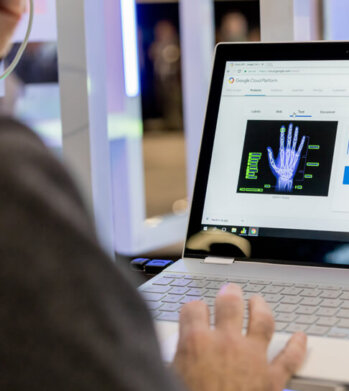
What’s behind the rising confidence in cloud security? First hand experience, and careful, systematic assessments that tap multiple sources such as detailed audits and comparisons. The most frequent driver of increased confidence was the direct experience of the quality of security in the cloud versus on-premises.
As a result, the use of Cloud is expected to rise to 65 percent of workloads by 2019, according to a recent survey of more than 500 global CIOs conducted on behalf of Google Cloud in association with MIT SMR Custom Studio. Increased confidence in cloud security along with the increased need for agility and speed are driving this growth in cloud adoption.
Download this exclusive report and understand why CIOs have a growing confidence in cloud security, how they are basing their hosting decisions on the flexibility and integration offered by the cloud, and their plans to use the cloud for future workloads.
Telus Ensures Workers’ Safety Using Edge and 5G

3193
Of your peers have already read this article.
1:30 Minutes
The most insightful time you'll spend today!
Editor’s note: In February 2021, Google Cloud and TELUS announced a 10-year strategic alliance to drive innovation of new services and solutions across data analytics, machine learning, and go-to-market strategies that support digital transformation within key industries, including communications technology, healthcare, agriculture, and connected home. By December 2021, TELUS had completed a pilot for a use case that leveraged Google Cloud AI and Machine Learning solutions and Telco Edge Anthos to increase safety in the workplace and save lives in manufacturing facilities. The use case leverages Multi-Access Edge Computing (MEC) to move the processing and management of traffic from a centralized cloud to the edge of TELUS’ 5G network, making it possible to deploy applications and process content closer to its customers, and thus yielding several benefits including better performance, security, and customization. Today, we invite Samer Geissah, Head of Technology Strategy and Architecture at TELUS, to share how the company is delivering on its promise to use this technology to drive meaningful change, starting with workers’ well-being.
Whenever a new technology buzzword comes along I think: what problems does this solve, and for whom is this going to make a real difference? That’s because at TELUS, we see innovation as a means to act on our social purpose to drive meaningful change, from modernizing healthcare and making our food supply more sustainable, to reducing our environmental footprint and connecting Canadians in need. Multi-Access Edge Computing (MEC) is a buzzword that offers an opportunity to do just this. That’s why we want to leverage cloud capabilities and optimize our network’s edge computing potential, tapping into our award-winning high-speed 5G connectivity to help solve some of industry’s most complex challenges.
The reason why this presents such a great opportunity is that companies across industries still rely on maintenance-heavy on-premises systems to manage core computing tasks. But, with cloud capabilities delivered at the edge of our 5G network, we open a new world of possibilities for them. For example, manufacturers who currently rely on IoT-enabled equipment in their facilities can deliver new experiences by running advanced AI-based visual inspections directly from 5G-enabled devices–all without the need for local processing power or extra on-site space. In fact, it’s this example that inspired our new use case, where our Connected Worker Safety solution can be applied across a range of business verticals to help improve safety, prevent injury, and save lives, demonstrating how the perfect combination of skilled people and digital technology can make the world a safer place.
Empowering intelligent decision making at the edge
Be it a farm, manufacturing facility, hospital, or a factory floor, workers should be able to work in environments where their health and safety are held as the highest priority. But how can employers ensure that their remote, frontline, and in-office employees are safe and healthy at all times? We’ve found the answer by combining Google Cloud AI/ML capabilities and Anthos as a platform for delivering workloads, with our network’s infrastructure.
Together with Google Cloud, we have been leveraging solutions with the power of MEC and 5G to develop a workers’ safety application in our Edmonton Data Center that enables on-premise video analytics cameras to screen manufacturing facilities and ensure compliance with safety requirements to operate heavy-duty machinery. The CCTV (closed-circuit television) cameras we used are cost-effective and easier to deploy than RTLS (real time location services) solutions that detect worker proximity and avoid collisions. This is a positive, proactive step to steadily improve workplace safety. For example, if a worker’s hand is close to a drill, that drill press will not bore holes in any surface until the video analytics camera detects that the worker’s hand has been removed from the safety zone area.
A few milliseconds could make all the difference when you are operating heavy equipment without guards in place. So, to power the solution’s predetermined actions with immediate response times, we worked with Accenture and hosted the application on an Anthos bare metal Google Cloud environment running on our TELUS multi-edge access computing.
Because all the conditions in our model are programmable, this solution can be replicated at scale across a variety of practical scenarios other than factory floors. The actions in response to the analysis are also programmable, which means companies can use this technology to look at workers’ conditions and decide the best course of action to educate, assist, and protect them. All this is done through a single pane of glass ecosystem, making it easy to customize this solution to meet various business needs.
Meanwhile, leveraging our existing global networks to process data and compute cycles at the edge eliminates the need to transport data to a central location for real-time computation. This means that we can offer this solution to partners while optimizing latency and lowering costs.
Powering blink-of-an-eye communication with Anthos
To put the importance of lowering speed into perspective, consider that the average latency of blinking your eye is about 300 milliseconds. From a safety point of view, preventative processes need to be much faster than that. For this use case, our machine learning models running on edge are currently processing data at a tenth of the time it takes for you to blink your eyes, and we’re aiming to lower that latency further to help build even safer systems.
Our plan is to deploy Anthos clusters on bare metal to our customers across Canada to take advantage of our existing enterprise infrastructure, making it possible for us to run our solution closer to partners and eventually enable just one millisecond of latency.
At that point, we’ll be able to power new use cases that require near real-time feedback, leaving absolutely no room for error. This could include remote surgery, platooning of fleets on autonomous vehicles, and many other cellular vehicle-to-everything (V2X) solutions that require high-speed communication for platform operators to manage remote edge fleets in far-away places.
Improving workers’ safety while enabling new sources of revenue
Although edge computing and 5G have been around for a while, we believe that use cases like this are only just starting to demonstrate the incredible speed of change and high potential that these models provide. The next step for us is to develop our workers’ safety solution and get it to market, making TELUS an early adopter of new 5G solutions at the edge that can help our business and industry partners make workplaces safer.
It’s a great win to be able to combine efforts with Google Cloud and reduce latency in a context where timing can impact and save lives, and I’m confident that workers’ safety is just the beginning of a series of industry challenges that we’ll address together.
Explore Google Cloud’s Bi-monthly Technical Learning Series for Innovators in Public Sector

3355
Of your peers have already read this article.
1:30 Minutes
The most insightful time you'll spend today!
Cloud engineers face a constant barrage of new cloud services, products, and innovations. By late 2021, Google Cloud alone had released thousands of new features across hundreds of services. Couple this with other technologies and service releases, and it quickly becomes a herculean task for engineers to navigate, consume, and stay current on the ever changing technology landscape. We have heard from engineers this often leads to anxiety and frustration as engineers struggle to keep up. They are faced with a plethora of training options but often lack the time and funding.
Google Cloud has reinvigorated technical training to make it more informative and applicable to public sector customers and partners. We aim to maximize your training experience so you can get targeted training when you need it. The Google Cloud Public Sector Technical Learning Series addresses customer feedback and provides fun and practical training. Sessions are currently running every two weeks.
“Short and sweet” technical topics geared to subjects you care about
Generic training doesn’t always resonate with public sector technologists. Our new curriculum targets specific public sector use cases, is delivered by customer engineers, and can be accomplished in less than two hours. This means participants can apply the learnings directly to real-life challenges quickly.
Easy to find, easy to enroll
Training opportunities should always be at your fingertips. Our automated training platform will ensure that you only need to enroll once. The system will automatically notify you of upcoming sessions so you can plan in advance and at your convenience. Sessions will be offered on a recurring basis to meet the needs of your organization.
Fun and engaging
Typical training sessions often include a sea of glazed eyes, unresponsive to basic prompts, falling asleep at our desks, we have all been there. But it doesn’t have to be this way. Our goal is to infuse Google culture into our training through interactive exchanges and tangible rewards to keep participants inspired and engaged.
Traditional technology training doesn’t always help you navigate the nuts and bolts of how to effectively introduce a product into an organization. But we know that technology doesn’t operate in isolation; it supports and becomes part of a living organism, managed by humans and confined by other components of an organization’s structure (e.g. existing systems or decentralized business units).
Part of a larger community of like-minded engineers
Learning with – and from – a community of peers is one way to overcome the challenges and complexities of applying new technology within a complex organization. We created the Public Sector Connect community for this very reason. It is one example of how we surface best practices for public sector innovators. During weekly “Coffee Hours” and working sessions, our community members share their journey and lessons learned with each other. We know that innovation evolves through iteration and diverse perspectives, and Public Sector Connect is committed to helping surface critical challenges and solutions, and connecting those who are solving similar problems. Join the community today.
More Relevant Stories for Your Company

Making Mothers’ Day Special: How Google Cloud Migration for 1-800-FLOWERS.COM, Inc Impacts CX
Editor’s note: In honor of Mother’s Day, we look at how 1-800-FLOWERS.COM, Inc. migrated to Google Cloud as part of its digital transformation to quickly deploy seamless and convenient customer experiences across multiple brands on Mother’s Day and every day. As a leading provider of gifts designed to help customers
Wipro selects Google Cloud to advance its digital transformation strategy
Wipro has partnered with Google for migration of its enterprise-wide SAP footprint to the Cloud platform. The engagement will bring SAP applications and workloads to the cloud to support the country’s fourth-largest software services firm’s 180,000-plus employees. Bhanumurthy B.M, President and Chief Operating Officer, Wipro said that as a provider
Sky News Looks to Google Cloud to Live Stream Election Results
Sky News live streamed the results from 150 of the 650 constituency counts in the U.K. while competitors, who did not have live video from as many counts, had to wait for slower independent data services to report the results. Sky News also delivered all the live streams over the

How AI-powered ML Models Helps Run Unemployment Claims Verification at Scale
With unemployment application submissions reaching record numbers over the past year, state and local agencies in the United States have faced the challenge of processing unprecedented numbers of claims per week. The digital infrastructure most agencies have in place is unable to handle this volume, resulting in constituents waiting longer,
