





3482
Of your peers have already watched this video.
1:30 Minutes
The most insightful time you'll spend today!
Pharma Firm Drives 80% Improvement in Speed with SAP on Google Cloud
FFF Enterprises is a leading supplier of critical-care biopharmaceuticals, plasma products, and vaccines. Their passion for patient safety and product efficacy drives their mission of Helping Healthcare Care.
For FFF Enterprises if they have to focus on ERP infrastructure, that takes away from getting products to patents. Learn why FFF Enterprises chose to deploy SAP on Google Cloud and drove an 80% improvement in speed for their SAP environment at a lower cost.
Melbourne Joins Google’s 26 Cloud Regions

5017
Of your peers have already read this article.
1:30 Minutes
The most insightful time you'll spend today!
We opened our Sydney cloud region in 2017 and, since then, we have continued to invest and expand across Australia and New Zealand to support the digital future of organizations of all sizes. In Australia, Google Cloud supports almost A$3.2 billion in annual gross benefits to businesses and consumers. This includes A$686 million to businesses using Google Workspace and Google Cloud Platform, another A$698 million to Google Cloud partners, and A$1.8 billion to consumers.1
For customers in Australia, New Zealand and across Asia Pacific, we’re excited to announce that our new Google Cloud region in Melbourne is now open. Designed to help businesses build highly available applications for their customers, the Melbourne region is our second Google Cloud region in Australia and 11th to open in Asia Pacific.
We’re celebrating the occasion with a digital event where federal minister for the Digital Economy, Jane Hume, and customers Australia Post, Trade Me, Bendigo and Adelaide Bank, The Australian Football League and Macquarie Bank will share their perspectives. Come join us!
A global network of regions
Melbourne joins the existing 26 Google Cloud regions connected via our high-performance network, helping customers better serve their users and customers throughout the globe. With this our second region in Australia, customers benefit from improved business continuity planning with distributed, secure infrastructure needed to meet IT and business requirements for disaster recovery, all the while maintaining data sovereignty in-country.

With this new region, Google Cloud customers operating in Australia and New Zealand will benefit from low latency and high performance of their cloud-based workloads and data. Designed for high availability, the region opens with three zones to protect against service disruptions, and offers a portfolio of key products, including Compute Engine, Google Kubernetes Engine, Cloud Bigtable, Cloud Spanner, and BigQuery.
We also continue to invest in expanding connectivity across the Australia and New Zealand region by working with partners to establish subsea cables and new Dedicated Cloud Interconnect locations and points of presence in major cities including Sydney, Melbourne, Perth, Canberra, Brisbane and Auckland.
Collectively, this will deliver geographically distributed and secure infrastructure to customers across Australia and New Zealand – which is especially important for those in regulated industries such as Financial Services and the Public Sector.
What customers and partners are saying
Navigating this past year has been a challenge for companies as they grapple with changing customers demands and greater economic uncertainty. Technology has played a critical role, and we’ve been fortunate to partner with and serve people, companies, and government institutions around the world to help them adapt. The Google Cloud region in Melbourne will help our customers adapt to new requirements, new opportunities and new ways of working.
“We moved to Google Cloud to improve the stability and resilience of our infrastructure and become more cloud-native as part of a digital transformation program that keeps the customer at the heart of our business. We welcome Google Cloud’s investment in ANZ and the opportunities the Google Cloud Melbourne region presents to improve Trade Me’s agility and performance. – Paolo Ragone, Chief Technology Officer, Trade Me
“We initially turned to Google Cloud to help us process parcels faster and gain deeper insights into our business and its processes. The relationship has continued to deliver benefits to our customers and our organization and we welcome Google Cloud’s opening of the Melbourne region as presenting even more opportunities for businesses to innovate and generate efficiencies.” – Munro Farmer, Chief Information Officer, Australia Post.
“We are well progressed with our multi-year strategy to grow and transform our organization to be Australia’s bank of choice. Google Cloud’s advanced data capabilities and renowned culture of innovation are strongly aligned to this strategy and will allow us to become even more innovative and agile in responding to our customers’ ever-changing needs. We were quick to run our workloads out of the Melbourne cloud region and we believe Google Cloud’s expanded investment in local infrastructure will further assist us on our business transformation journey.” – Andrew Cresp, Chief Information Officer, Bendigo and Adelaide Bank.
“We have a clear vision when it comes to innovating to deliver world-class service to our customers, and our partnership with Google Cloud is core to that strategy. The company’s continued investments in local infrastructure and technology present new opportunities for us as we advance our transformation journey in this digital-first era.” – Chris Smith, Vice President, Digital Service, Optus
Our global ecosystem of channel partners has expanded by more than 400% in the last two years, and we look forward to continuing our close relationships with partners in Australia and New Zealand as we help customers modernize, innovate, scale and grow.
“Australian companies are increasingly realising the benefits of their cloud investments and are now looking to transform their organisations at scale. We are excited about the potential and new value that the Google Melbourne Cloud region will bring to our clients as we continue to work together on delivering intelligent and innovative solutions to Australian organisations.” – Tara Brady, CEO of Accenture Australia and New Zealand
“Google Cloud has always been there for its customers for the long haul and the opening of the new Melbourne Cloud region is great news. This increased resilience and scale will empower companies of all sizes to be bold in accelerating their digital transformation plans.” – Tony Nicol, CEO of Servian
“We’re excited about the launch of the Melbourne Cloud region. It will cater to the needs of industries we work closely with including healthcare and financial services, and will further enhance how we jointly deliver on the compliance, privacy and security requirements of companies as they advance their digital transformation.” – Simon Poulton, CEO of Kasna
“The opening of the new Google Cloud region in Melbourne is fantastic news as it now enables DXC customers access to enhanced services for their mission critical application and data solutions across two regions within Australia. As our customers modernise their application estate, many are seeking dual region cloud services, and DXC is excited to partner with Google Cloud to deliver these services to customers in Australia and New Zealand.” – Tim Fraser, Google Practice Lead ANZ at DXC Technology
Helping customers build their transformation clouds
Google Cloud is here to support businesses, helping them get smarter with data, deploy faster, connect more easily with people and customers throughout the globe, and protect everything that matters to their businesses. The cloud region in Melbourne offers new technology and tools that can be a catalyst for this change. Click here to learn more about all our Google Cloud locations.
1. AlphaBeta, The Economic Impact of Google Cloud to Australia, July 2021
There are 2 Key Traits You Need to Battle the Slowdown. FM Logistic Know How to Enable Them

6398
Of your peers have already read this article.
4:30 Minutes
The most insightful time you'll spend today!
FM Logistic provides its international customers with complete logistics solutions that cover everything from warehousing and handling, to transport and distribution, co-packing and co-manufacturing, and supply chain optimization. Operating in 14 countries including France, Russia, Poland, India, Vietnam, Brazil, and China, FM Logistic supports its clients by offering specialized services across a number of markets including consumer goods, retail, cosmetics, and health.
“We are in the process of transforming all our tools and integrating new solutions to be able to work faster and more efficiently. Two main IT priorities are mobility and openness, in terms of working from anywhere and being able to interact with other information systems.”
– Communication Manager, FM Logistic
As a business that has existed since 1967 and in 2018 achieved a turnover of €1.178 billion with 9.5% annual growth, FM Logistic is always looking to help secure the company’s position within an evolving sector. To better serve its customers, FM Logistic decided to launch an innovation project in 2017 to transform the internal digital tools of the company and replace its intranet, email, and productivity software. The company looked for an integrated solution that would enable more collaborative ways of working and bring its international operations closer together. The company found that implementing G Suite and LumApps social intranet was the perfect combination.
“We are in the process of transforming all our tools and integrating new solutions to be able to work faster and more efficiently,” says the Communication Manager at FM Logistic. “Two main IT priorities are mobility and openness, in terms of working from anywhere and being able to interact with other information systems.”
A global transformation
For large international companies with global operations, implementing a single integrated solution to enable collaboration across regions while respecting regional variations can be a real challenge.
“We have 26,000 employees spread across a broad geography, with a variation in cultures and technological maturity. There was an aspiration to work in collaboration, but the necessary tools were not in place,” says FM Logistic’s Communication Manager. FM Logistic looked for a solution to enable new, more collaborative work practices, which were flexible in terms of usage and that, most importantly, would work as part of an integrated solution.
To do that, FM Logistic worked with Google Partner Devoteam G Cloud to implement G Suite alongside the LumApps intranet portal. It took six months to complete the migration of 7,000 accounts, with employees accessing the Business or Basic G Suite edition according to their needs. “Before, with our physical infrastructure we found ourselves buying additional hard drives as we ran out of storage,” says the Technical Project Manager at FM Logistic. “That’s no longer a problem, and we can tailor access depending on whether or not employees need unlimited storage .”
“It’s a real advantage to be able to access your account from any device and work from anywhere. Hangouts Meet has been really transformational in that respect: it has reduced the need for travel significantly, even in the few months we’ve been using it so far.”
– Communication Manager, FM Logistic
“We followed Google’s G Suite migration advice and had early adopter ambassadors in every country. By the time we got around to the final country, very little input was needed as they were ready to go!” says the Technical Project Manager. “Many of them were already familiar with the product, so it was very intuitive. Our feedback surveys gave a satisfaction rating of almost 4.5 out of 5 in relation to the transition. We also had significant executive support, with two members of the executive committee on the steering board. That really helped the project to move quickly.”
As a result, employees were quick to understand the benefits of the new system. “It’s a real advantage to be able to access your account from any device and work from anywhere. That was clear from the start,” says the Communication Manager. “Hangouts Meet has been really transformational in that respect: it has reduced the need for travel significantly, even in the few months we’ve been using it so far.”
LumApps: a fully-integrated enterprise hub
One of FM Logistic’s main reasons for choosing G Suite was the seamless integration with LumApps’ intranet portal. LumApps adds value to G Suite, thereby boosting and sustaining employee adoption. FM Logistic chose LumApps to create a hub for its enterprise, where everything is centralized from internal communications to business apps.
“We didn’t want a patchwork of solutions, we needed a platform that worked as an integral whole,” says the Technical Project Manager. “With LumApps, employees access the intranet using their Google authentication and can access all their G Suite tools through the intranet. Moreover, LumApps is Google native, so the integration is seamless and we know that it will evolve to accommodate any changes that might take place.”
“The main advantages we see are communication and knowledge sharing,” says the Communication Manager. “With LumApps, all 26,000 of our employees are now able to access the portal in their own language and access local news.”
For the next step, FM Logistic is considering integrating social communities so that employees can express themselves and be more engaged in the corporate culture.
Supporting digital maturity
Thanks to Drive, employees can now work from wherever they are, and are able to work more efficiently and more collaboratively. “From an administrative point of view, users can benefit from automatic updates, so there is less pressure on the IT department,” says the Technical Project Manager. “And we’re seeing many innovative uses of the tools to work in more efficient ways: many services have gone paperless with Forms, so less time is wasted; commercial agents are using Drive to work together on tenders simultaneously; and with Sheets, tasks are automatically sent from the team manager’s file to employee’s Calendar.”
“G Suite and LumApps are the first step of our digital transformation, in terms of collaboration and moving into the cloud. We have real confidence in our partners LumApps and Google, and we’re investing in those relationships for the long-term benefit of the company.”
– Communication Manager, FM Logistic
Now, FM Logistic wants to further support its employees in exploring all the tools G Suite has to offer. “We are embarking on a second phase to give our employees the skills they need for advanced uses of Docs, Sheets, and Forms,” says the Communication Manager. “It’s a learning curve, but it’s key to our goal of transforming our everyday processes.”
“G Suite and LumApps are the first step of our digital transformation, in terms of collaboration and moving into the cloud. We have real confidence in our partners LumApps and Google, and we’re investing in those relationships for the long-term benefit of the company.”
2770
Of your peers have already downloaded this article
4:30 Minutes
The most insightful time you'll spend today!
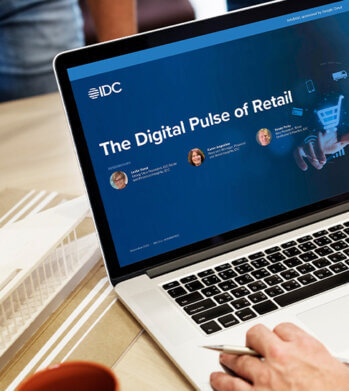
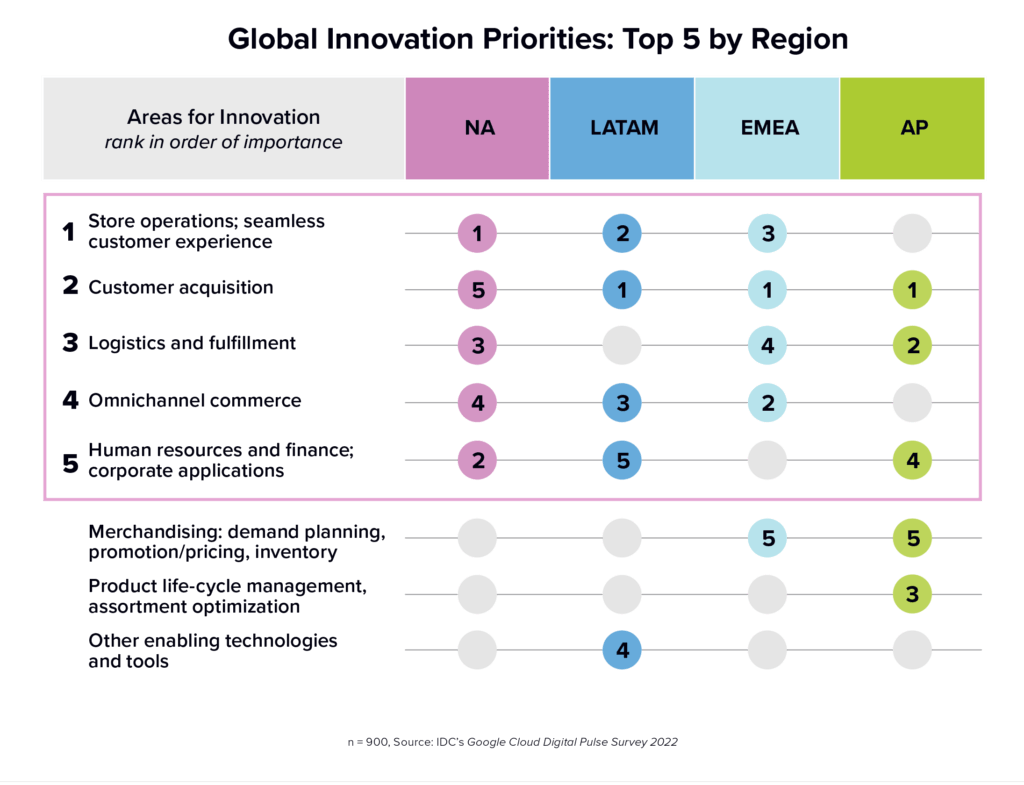
Google partnered with IDC Retail Insights to conduct a survey of retailers across the globe to assess the state of transformation and develop an index of digital maturity. Learn more about the changes in digital resilience over the last year and the areas of innovation over the next 12 months.
In this IDC Infobrief, you will learn:
- Where retailers stand on the path to digital resilience
- Top challenges retailers face with digitization and how that’s changed in the last 12 months
- Key areas for innovation and use cases among retailers at different stages of digital maturity
- How innovation can help organizations advance and respond evolving customer expectations
Army Google Workspace is Now Operational and Live

3226
Of your peers have already read this article.
1:00 Minutes
The most insightful time you'll spend today!
Soldiers can now use their CAC cards to log into the service’s newly established Google Workspace account. With it, soldiers who don’t need the full spectrum of information-sharing provided by Army365 can nevertheless find comrades, schedule meetings and coordinate other activities.
“All new entrants to the Army will be provisioned automatically with a Google Workspace account with a new email address … when they receive their CAC card,” Raj Iyer, the service’s chief information officer, said in a social-media post.
“Soldiers will retain their Google account till they fully transition to their first unit after completion of basic training and AIT [advanced infantry training], at which point their commanders will determine if they need an Army365 account.”
The directive applies to all active-duty, reserve, and National Guard soldiers.
The Future of Retail: Automated Customer Journeys Powered by Technology

3705
Of your peers have already read this article.
1:30 Minutes
The most insightful time you'll spend today!
Editor’s note: To kick off the new year and in preparation for NRF The Big Show, we invited partners from across our retail ecosystem to share stories, best practices, and tips and tricks on how they are helping retailers transform during a time that continues to see tremendous change. Please enjoy this entry from our partner.
If you put a pot of water on the stove, it doesn’t heat up instantly. It simmers slowly at first, eventually picking up steam to reach a rolling boil. The retail landscape is not so different. Capgemini’s research shows the sector has evolved over four generations, from the early days of fragmented outlets to omnichannel and customer-centric focuses, with a fifth generation on the horizon that promises to be centered on consumption.
- Generation 1: Fragmented outlets
- Generation 2: Chain concentration
- Generation 3: Omnichannel
- Generation 4: Consumer-centric
- Generation 5: Consumption-centric
Although incremental change allows companies to experiment and iterate during their digital journeys, the COVID-19 pandemic rapidly accelerated the evolution of online and contactless shopping. Evolution became a revolution, with most Consumer Product and Retail (CPR) companies still mastering the omnichannel generation of their digital transformation to create a seamless shopping experience. Companies that are more digitally mature are already aspiring to the consumer-centric phase, embracing opportunities made possible by technology such as personalization and automation.
What consumers want
Customers have more choices in how they shop and engage with brands. This has made it harder for brands to predict and anticipate needs across customer journeys. And that’s convincing some companies to innovate more quickly as consumer demand drives the need for speed and scale.
Think about your own online behavior. Say you’re shopping for an item and searching online for the closest store in your neighborhood. Google is likely your go-to for finding that information. Looking to troubleshoot an issue with a product or seek out a service? Again, you’ll likely hit up Google first, not even considering going directly to a brand’s website for answers.
Both scenarios point to a disconnect between virtual and physical worlds, a gap technology can bridge in numerous ways such as breaking down silos and integrating fragmented media channels. Interestingly, though, not everything will be centered online all the time. In our recent study on consumer behavior, The great consumer reset, Capgemini discovered 57 percent of shoppers plan to return to brick-and-mortar stores post-pandemic, which is basically unchanged from the 59 percent who often interacted with physical stores before.
But business as usual? Not even close. Consumers have come to expect a frictionless shopping experience (buy online, pick up in store) or an immersive one (products displayed online using augmented reality), and are not content to return to in-store lineups, empty shelves, or a one-size-fits-all approach. Moreover, customers want personalized interactions while ensuring their data and privacy are protected.
So the role of the store is changing. In fact, many online-only brands are opening brick-and-mortar establishments to drive customer experience. In our research on “smart stores,” we found the majority of consumers (66 percent) believe automation can improve their shopping experience by solving the challenges they face at retail stores.
From personalization to serendipity
Retailers must recognize that they have to win consumer trust and confidence. Many consumers believe retailers’ use of tech is focused on reducing costs rather than easing friction. And they’re right. That same Capgemini research found that only one-third (35 percent) of retailers consider “solving customer pain points” as the most important criteria when deciding which automation use cases to implement.
“Retailers are largely in the early stages of adopting automation, and that’s an opportunity to rethink how they’re using technology, not just to smooth out friction and engender consumer trust but to build unexpected consumer benefits,” says Neerav Vyas, Head of Customer First, Co-Chief Innovation Officer, Insights & Data, North America, Capgemini. “We’re trying to move towards this idea of delivering serendipitous experiences to bridge the physical and digital divide.”
The focus is not solely on shoppers seeking out a specific product. “When consumers are in an exploratory mood, retailers can recommend products and services customers didn’t even know they wanted,” says Vyas. For example, business teams that use personalization platforms as part of an integrated media strategy can optimize algorithms against outcomes such as improving conversion and driving engagement.
Vyas says the elevated experience from “personalization to serendipity” fosters trust in the ability of recommendation architectures to persuade and influence consumers’ choices in beneficial ways. A case in point: our research found that half (52 percent) of spending by millennials goes towards experience-related purchases. As always, the key is to meet consumers where they are. Even better, according to Vyas, is to anticipate and understand when signals like customer intent are changing.
How to create value throughout the customer journey
One solution companies can implement right now is an integrated media spend platform that incorporates reporting, planning, and strategy across the entire customer journey. This offers value throughout the customer journey by using technology to reduce friction along the way. Think of it as starting with the customer looking for a product (search and discovery), moving on to the purchase (omnichannel basket, “shoppable” screens) and pick up/delivery (QR code scan in store), and through to post-purchase engagement with the retailer (Google Contact Center AI).
Such a holistic approach also accelerates data acquisition, integration, and reporting using advanced analytics to break down silos and emphasize the importance of privacy and first-party data. This in turn guides end-to-end interventions across customer journeys that enable optimized media spend, empowers businesses to analyze their spend distribution, fine-tunes owned and paid tactics with agencies, and promotes stewardship to support audit efficacy.
A culture of experimentation
With this data-driven focus, CPRs can create a 360-degree perspective of the customer. That intelligence can be used to enhance and humanize automated shopping experiences by putting the customer in control, whether online, in store, or across company brands. Moreover, by using Google Cloud’s emerging technologies such as artificial intelligence (AI), we help companies accelerate value across the spectrum, from supply-chain optimization and customer innovation to consumer experience.
Building a culture of experimentation is a team effort. “It’s not ever just one person who had a big idea. It’s all incremental steps,” says Jennifer Marchand, Google Cloud COE Leader, Capgemini. “Finding the right use case and timing is everything.” Take Google Glass Enterprise, she continues. For greater consumer experience, it can enable in-store associates to better serve with hands-free checkout, customer personalization and recommendations, and special offers. At the same time, Computer Vision and Smart Shelves can help prioritize tasks for employees, notifying them of low stock or a spill in the store.
Marchand points out that companies and consumers alike might not be ready to fully adopt some technology like facial recognition, but since almost everyone has a smartphone these days, they can benefit from automation with ease. “What’s interesting,” she adds, “is the way Google thinks about these types of problems, solving them for the long term.”
The store of tomorrow
Imagine a truly frictionless shopping experience, where state-of-the-art computer vision and AI identifies the products you pick up, put back, and keep, allowing you to head home, completely bypassing the checkout, with a 99 percent accuracy rate and receipts sent directly to your mobile app. That utopian experience is already taking shape at CornerShop, Capgemini’s live experimental store in London, UK.
Jamie MacLoud, Transformation & Strategy Consultant at frog, part of Capgemini, describes the retail space, which runs on Google Cloud, as the store of tomorrow, and not the distant future. It’s an experiential space where retailers and brands can explore, develop, and test technological shopping innovations in real-time. The outcome is a clearer understanding of how digital innovation can enable new ways to progress the customer experience, improve in-store operations, and help consumers to rediscover the joy of in-person retail through new ways to shop and engage with brands.
“We build, test, and learn about store concepts of tomorrow that we believe could be implemented into actual stores in the next one to two years. Getting these experiences in front of real customers in the CornerShop allows us to generate tangible learnings that we can share with our clients and use to shape future store strategy” says MacLeod. CornerShop was opened to the public in two eight-week stints, which allowed real-time testing to see what technologies resonated with customers, which brands can adapt and scale. Frictionless checkout, not surprisingly, was a big win for customers, but the technology underpinning the “virtual try-on” of clothing was deemed more suitable for the store of the future.
So, unlike an innovation lab, CornerShop lets companies experiment risk free, speeding up the process from hypothesis to full-scale implementation. It’s also another step toward solving the challenges customers face, while delivering those serendipitous experiences that build brand loyalty and longevity.
Learn more about how Capgemini is partnering with Google Cloud to help retailers create next-generation shopping experiences today.
We would like to acknowledge Jamie MacLoud, Transformation & Strategy Consultant at frog, part of Capgemini and Neerav Vyas, Head of Customer First, Co-Chief Innovation Officer, Insights & Data, North America at Capgemini who supported with invaluable insights and subject matter expertise in the writing of this blog post.
More Relevant Stories for Your Company

Sainsbury’s Uses AI to Figure Out How the World Eats
Retail will forever be an industry that must constantly reinvent itself in response to, and anticipation of, ever-changing consumer demands. Digital transformation is fueling these changes and we've previously spoken about how businesses including Ulta Beauty and Kohl’s are taking advantage of Google Cloud to put data at the center of what they do

IDC: Firms Should Migrate VM-based Enterprise Workloads to Google Cloud for Optimal Price, Performance, and Security
Public cloud platforms provide the scale, elasticity, and operational efficiency that enable enterprises to both innovate and deliver more products and services to the market faster. This increased ability to innovate provides enterprises a competitive advantage and the businesses agility to stay ahead of their competition. Enterprises should leverage the

YoungCapital CIO: Why I Moved to Google Cloud and G Suite to Grow Our Business
When your business is rapidly adding new employees, expanding to new countries, and always focused on staying ahead of the competition, you have to take a hard look at the tools that are slowing you down—and swap them out for better ones that can keep pace with the company. We’re

Being Cloud-native Means Sustainability and Growth-native for Nuuly!
They say black never goes out of style. It’s something the team at Nuuly, URBN’s digital rental and resale business, know well. And it’s not just true of the company’s garments but their gadgets, too. “I was having an offhand conversation with a UX designer recently,” Rebecca Sandercock, Nuuly’s strategy
