





Are Open Banking Regulations an Effective Entry into the API Economy?

4288
Of your peers have already read this article.
3:30 Minutes
The most insightful time you'll spend today!
With stated goals of increasing competition, innovation, and financial inclusion, bank regulators across the world are mandating that banks open their systems, enabling consumers to share their financial data with third parties.
One touted benefit of this sharing is that it may create digital banking ecosystems that offer consumers more services than ever, provide banking information and capabilities in more useful and convenient contexts, expand the market reach of ecosystem participants, and boost financial participation among the unbanked and underbanked.
These benefits involve requiring that banks produce application programming interfaces (APIs) to make data and functionality easy to share with partners in a standardized way and to give consumers control over the services with which their data is shared. Because APIs enable developers to leverage and reuse software for new services and digital experiences, including by combining APIs from multiple providers, tech pundits and commentators often refer to the “API economy” — that is, to digital ecosystems in which companies symbiotically share and combine their software to create richer offerings, to complement their proprietary strengths with offerings from other organizations, to share innovation across enterprises, and to expand into new sectors.
Rather than being able to access and act on financial data only through specific channels, for example, consumers in an Open Banking world would theoretically be able to use their money across a constantly-expanding array of apps and digital experiences. Likewise, rather than being confined to one bank’s specific digital services, consumers would be able to opt into a range of services, such as better loan matching or debt reduction advice, to help them do more with their money. Banks, meanwhile, would not have to create all aspects of digital experiences themselves but could rely on external partners, which they can add at unprecedented scale via APIs, to shoulder some of the burden of attracting and creating value for customers.
The envisioned disruption is sweeping, but key questions for bank leaders and bank investors remain, notably the extent to which the Open Banking movement will exert significant, durable impacts on market dynamics — and the extent to which Open Banking compliance constitutes an effective market entry into digital ecosystems and the celebrated benefits of the API economy.
Put simply, is complying with Open Banking regulations adequate to advance a bank’s digital strategy?
Building compliant APIs vs. entering the API economy
Individual regulators are fundamentally constrained in their ability to give banks detailed instructions on how to behave in digital ecosystems. Mandatory regulations can be originally conceived with only one or two business models in mind, not the many thousands of business models that could be partially or fully enabled by the API economy. Detailed rules and specifications may threaten the functionality of services, as regulatory interventions that give highly specific guidance may not be system- and business model-agnostic.
In terms of policy, the willingness of regulators to force banks to adopt APIs is highly significant, but because these regulatory interventions do not offer a meaningful and durable market entry roadmap for banks to follow, the regulations may be an initial catalyst to prompt financial market evolution rather than a natural and enduring end-state for business activity.
Aside from the constraints at the level of the individual bank regulator, there is limited consistency among Open Banking regulations across the globe. Europe’s PSD2 was the regulatory intervention that kicked off this global wave, but there are small but significant variations in the ripple of regulatory actions around the world.
In Australia, Open Banking is part of the Consumer Data Right, an initiative to give customers the right to access their data in a machine-readable form — a right the country does not confine to banking. In Singapore, the Monetary Authority of Singapore is pushing for a lightweight regulatory framework regime. Japan’s Amended Banking Act introduced a registration system for third party providers. Korea’s Financial Services Commission has launched a Fintech Open Platform. Mexico’s recent law to regulate financial technology institutions lays groundwork for an Open Banking regime. The Central Bank of Brazil is aiming to implement the relevant regulatory reforms by the end of 2019. For the largest, internationally diversified banks, these regional differences further complicate any effort to regard mere compliance with these interventions as an effective and coherent market entry strategy.
Despite these complexities and ambiguities, I’ve observed in my work consulting with financial institutions that some banks nevertheless treat Open Banking compliance projects as a means of market entry into the API economy. This mindset could be a costly mistake and may leave these banks at a significant competitive disadvantage as we continue to accelerate into the era of digital ecosystems. In addition to compliance, banks should view a commercial entry into a foreign country as a useful reference for entering the API economy.
Entering the API economy is like entering a foreign market
Banks executing a commercial entry into a foreign country will encounter cultural differences, whether in the form of language, ethnicity, religion, social networks, values or norms. When these cultural differences are large, market entry into a foreign market is more difficult.
The practical implications of administering new business activity in a foreign country also impact the level of difficulty. The physical distance between the home country and the foreign country has to be managed. Border hardness, time zones, and climate also impact the administrative challenges posed by the foreign country. Additionally, the market landscape is foreign. New countries can significantly differ in their natural, financial, and human resources. Staff sent to build up a new division in a new country will have to cope with different levels of market Infrastructure, information, and knowledge. Finally, the economics of entering a foreign country can be heavily influenced by historical and political factors such as a shared colonial history, common memberships of trading blocs, and shared currency zones.
These patterns of differences and similarities can likewise be observed when a bank tries to enter the API economy.
Like entry into a new territory, entry into the API economy may pose sharp cultural and operational differences for banks to grapple with. In this world of APIs and software ecosystems, an API provider’s commercial aim is to make third-parties the dominant force for innovation — that is, to securely share data and services with external contributors who build new connected experiences that generate value for the provider, much as ridesharing companies have generated value by leveraging APIs such as Google Maps. Enterprises focused on ecosystem development market their APIs as products for developers so that new innovation can emerge organically, without necessarily being pre-planned. Investment decisions in the API economy are driven by a desire to help preferred ecosystems to evolve fastest. All of this may be a very sharp change in culture for many banks that historically have sought to be the dominant innovator shaping customer experiences.
The established approach to innovation in banks is highly deliberate, aiming to match bank financial products to specific customer needs and to beat the financial product offerings of peer banks. Compared to modern digital ecosystems, these legacy banks’ resources for, scope of, and receptivity to innovation may be considerably constrained. Banks that actively treat the culture of the API economy as very foreign to their traditional corporate culture have a far greater chance of acknowledging these challenges and making a successful market entry into the API economy.
Many banks may also face challenges transitioning to ecosystem administration models. In traditional banking models, the C-suite commands and controls the bank staff that distributes products. Typically, very few external business partners are involved, and those that are have generally been deliberately, if not laboriously, selected. In contrast, the API economy requires the orchestration of very large numbers of third parties that add value to a bank’s innovation and distribution capabilities. Literally thousands of partners may access a bank’s APIs to build services atop banking data, extend a bank’s functionality or insert the bank’s APIs into new business contexts. In many ways, the whole point is that partnerships don’t have to occur in slow-moving, methodically planned formal partnerships but rather can be achieved at Internet scale while preserving control over and visibility into customer data. This shift in strategy is no small departure for many banks — so again, thinking of the endeavor as entry into a foreign market, rather than something that can be jumpstarted via regulations, is wise.
Crucially, the market landscape in the API economy is also very different from what legacy financial institutions are used to. Traditionally, banks have segmented the market into very large market segments (e.g. consumer banking, corporate banking, private banking etc.). In sharp contrast, the API economy sees partners working together to serve market micro-segments that would not be reachable and profitable by each individual enterprise working in isolation. Simply put, addressing all customer needs, from mainstream use cases to niche applications, is beyond the capabilities of any single enterprise and can generally only be achieved through ecosystems and partnerships. Because partners working together in the API economy seek to serve the customer through the customer’s preferred digital interface (which may be different than bank’s preferred digital interface), ecosystem partnerships represent a massive shift in marketing management, with major implications for a bank’s business architecture, technical architecture, governance, and risk management.
Additionally, in the API economy, pricing decisions are generally driven by a desire for ecosystem growth. Partners work together to extend the customization and value that customers experience when consuming services. By design, the intellectual property in an ecosystem becomes dispersed. Banks have traditionally sought to protect the exclusivity of their intellectual property, and they have often sought economic returns via cost-plus pricing and minimal customization of financial products. Just as with other aspects of the API economy, these ecosystem dynamics and economic relationships typically fall outside a bank’s status quo operations and strategies — more akin to entering a foreign market than to simply satisfying regulatory requirements.
The C-suite should be involved
To approach entry into the API economy as they would approach market entry into a foreign country, banks should consider focusing on a small number of products or segments. They should seek complementary partners who can help them adapt their skills to the API economy and extend the reach of their core differentiating strengths. Just like entry into a foreign market requires combining elements of the home country business model with new local elements, banks will have to transform to increase the effectiveness of their ecosystem participation.
Because an Open Banking compliance project involves regulators specifying the scope and schedule for mandatory APIs, the C-suite may feel relegated to the role of budget provider, which may tempt executives to delegate the sponsorship and steering of the project. Such delegation is not an option for a foreign market entry, where all decisions on scope, cost and timetable are strategic and entirely in the hands of the bank itself — and the C-suite should not consider it an option for entry into the API economy. Bank leaders need to be involved, as the organization likely will not be able to make the necessary strategic and operational transformations if the vision is not defined and driven from the top.
Traveloka Scales Up Operations and Growth with APIs
3618
Of your peers have already read this article.
4:15 Minutes
The most insightful time you'll spend today!
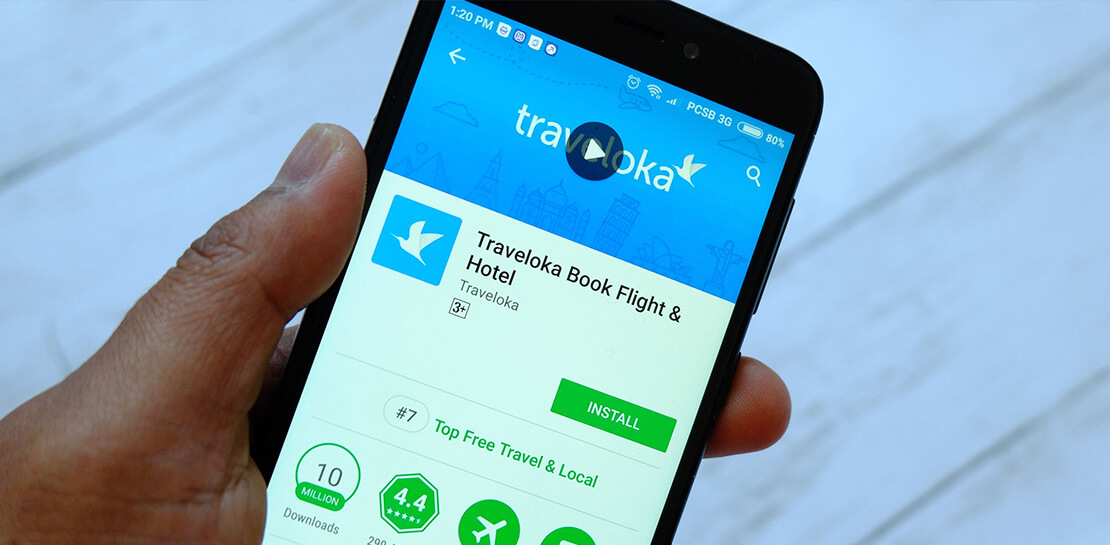
Traveloka is an Indonesian tech company currently focusing on the travel and lifestyle markets. Our customers, the majority of which come from Southeast Asia, visit the site mainly to book flights, hotels, transportation, lifestyle experiences (e.g. theme parks, movie tickets, beauty and spa treatments, and restaurant vouchers), and much more. We aim to serve more customers across the globe as part of our giant expansion plans.
In past blog posts, my colleagues have written about how Traveloka is using Google Cloud for data provisioning and stream analytics. Today, I’m sharing how we use Apigee API Management Platform from Google Cloud, a key part of my role as an engineering manager in charge of the after-sales and affiliation domain.
Extending the global footprint with Apigee
Expanding to markets globally means dealing with a lot of unique and challenging factors in each country. Thinking about different government regulations, currencies, payment systems, and customer service expectations is only the beginning.
Problems arose when partners who had connected with our flights API wanted to add another service, like accommodation. They felt like they were working with a different company. We turned to Google Cloud and found an answer.
There’s a lot of potential obstacles given how differently each country’s marketplace operates, which is why we use APIs and a partner integration approach to better distribute our inventory, thus helping us to scale our business quickly in a competitive space.
When we started Traveloka, we were serious about building a product that would be better than our competitors. Better in terms of inventories, services, and also pricing.
We also knew that we wanted to have the best strategies for increasing our exposure within and outside of Southeast Asia. With all the right features needed (security, high performance, monitoring, and low development and maintenance costs), Apigee helps us execute on our business plan, by making it quick and easy to work with the partners that make the Traveloka platform a success.
API Gateway: Make Or Buy?
When we started, we built our own API gateway with our first version of API specifications. Before that, we looked into several API gateway products (including Apigee), did some research, some POCs, and had several meetings with vendors.
However, since we were just starting to dip our toes into the API business and didn’t have enough use cases to justify the purchase, we decided to build our own system with the bare minimum requirements.
It used to take up to three months to deploy a new API for a partner. Now that we have the Apigee developer portal, it just takes a few days.
After a while, other Traveloka products that also wanted to have their API exposed rebuilt the same thing. Problems arose when partners who had connected with our flights API wanted to add another service, like accommodation. They felt like they were working with a different company. Different standards, different security practices, different formats—it wasn’t an optimal way to work.
About a year and a half after the release, we started to understand the scale, needs, and the limitations of our own platform. We were convinced that a better solution was needed to support our business growth. We then met with Apigee team again, at the Google Cloud Summit 2018 in Jakarta.
Aside from standardizing our APIs, Apigee supports benchmarking, a fantastic developer portal, a sandbox environment, and great monitoring and analytics. Apigee gives us remarkable speed and agility. It enables us to scale quickly, which is vital to executing our business plan to offer more services in more regions.
I also like the rate-limiting feature that lets us limit the throughput rate from one API to another. The fact that we can do this not only per URL, but also per partner, gives us a lot of flexibility.
For example, if partner A has a throughput of 100 calls per second, but partner B needs 500, we can easily meet those differing needs and manage our traffic efficiently. When we evaluated API gateways, Apigee was the only one that enabled us to limit to that level of granularity.
Our APIs are meant for B2B, not for the public. Because of the requirements, we need a high level of security. Apigee helps us in managing the security with its SSL handshake features as well as the authentication and authorization methods.
Aggressive Growth with Apigee
Before we had Apigee, sharing APIs with partners was a laborious process. We exposed approximately 20 APIs through a shared document that listed our APIs with the types of the requests and responses they need to handle. Partners could see what was available and how they could integrate into our staging. More work was required before they could come in and try APIs in our sandbox.
It used to take up to three months to deploy a new API for a partner. Now that we have the Apigee developer portal, it just takes a few days.
The developer portal enables our partners to view all of our APIs and try them out in the sandbox. The simplicity in creating and managing proxies is also a huge time saver. Right now, we have two B2B partners onboarded to the developer platform, and a few more still working manually through our old, in-house platform.
We expect to transition them over and add 20 new partners to the Apigee platform this year. Because it now takes us as little as two weeks to onboard a new partner from first establishment to go live, we’re ramping up quickly. We estimate that we saved at least a year of development time by deploying the Apigee platform as opposed to building one in-house.
Rapid Learning, Rapid Onboarding
Our developers are very happy with Apigee and feel the portal makes Traveloka look more professional. Equally important, the Apigee learning curve for developers and partners has been short. In just one week our partners know how to use all our APIs. If you compare that to the previous process of referring to a Google Doc and building their own servers to connect to our staging, it’s incredibly easy.
We look forward to exploring other ways that the Apigee platform can help Traveloka; we see strong potential to use even more features to help Traveloka grow and stay competitive.
BURGER KING Germany: Serving Up Marketing Insights and Supply Chain Visibility Easily

13980
Of your peers have already read this article.
8:30 Minutes
The most insightful time you'll spend today!
Do hamburgers really come from Hamburg? This may still be a matter of debate, but the popularity of American-style burger joints not just in Hamburg but all over Germany, is clear. Germany’s top two fast food companies are both burger chains. One of them is BURGER KING®, a global brand that welcomes more than 11 million customers worldwide every day. The company arrived in Germany in 1976, when its first restaurant opened in Berlin. It now operates more than 100 restaurants across Germany, with franchisees operating more than 600 restaurants of their own.
“In the fast food industry, being able to move quickly is very important. That means delivering the right promotion to our app or launching a viral campaign within days. To do that across more than 700 restaurants, we need the support of the right technology.”
—Oliver Mielentz, IT Manager, BURGER KING® Deutschland GmbH
Previously a subsidiary of the U.S. business, BURGER KING® Germany became an independent company in 2015. As a result, it needed to develop its own IT infrastructure, and the changeover needed to happen fast. “We had to put in place systems that would work for the entire network of franchisees and enable us to easily roll out campaigns,” explains Oliver Mielentz, IT Manager at BURGER KING® Deutschland GmbH.
With the help of Google Cloud Premier partner Cloudwürdig, BURGER KING® Germany chose Google Cloud and G Suite as the right combination to suit its needs.
“In the fast food industry, being able to move quickly is very important,” says Oliver. “That means delivering the right promotion to our app or launching a viral campaign within days. To do that across more than 700 restaurants, we need the support of the right technology.”
Building a franchisee platform in just three months
When a business has multiple franchisees, it’s important to make sure everyone is on the same page, especially in the fast-paced fast food environment. “We have to collate data from all our franchisees and produce reports quickly in order to react to changes in customer behavior,” explains Oliver. “That means processing every transaction that takes place in our restaurants.” Following the restructure, BURGER KING® Germany also needed to build a secure invoicing system with data storage and optimize its communication channels.
“Using Tableau with BigQuery, we’re able to produce reports very quickly. Previously, it took much longer, as data had to be fetched manually. Our reaction time is now almost a business day faster.”
—Oliver Mielentz, IT Manager, BURGER KING® Deutschland GmbH
With support from Witter-IT, BURGER KING® Germany chose Cloudwürdig to build its BKD Connect internal platform on Google Cloud. Thanks to the ready-to-go tools on Google Cloud, it was able to put its invoicing system and data warehouse in place in just three months.
For the BURGER KING® Germany data warehouse, Cloudwürdig built an ETL pipeline that channels ticket data for every sale into BigQuery. “Data is gathered from the restaurants,” says Oliver, “and using Tableau with BigQuery, we’re able to produce reports very quickly. Previously, it took much longer, as data had to be fetched manually. Our reaction time is now almost a business day faster.”
As the ticket data for every transaction is stored in BigQuery, the marketing team can easily see exactly which products are selling well. That’s crucial for tweaking promotions as well as monitoring the supply chain to make sure enough produce is delivered to restaurants in response to changes in demand.
“Thanks to BigQuery, we have a speedy data pipeline that enables us to react on the same day to changes in the market and eliminate bottlenecks in production,” says Oliver.
Switching to G Suite to improve communication
To enable franchisees to sign in to its BKD Connect Platform, BURGER KING® Germany needed a secure authentication system. To solve that problem, it chose to provide franchisees with G Suite accounts. “It’s really easy to set up a new franchisee on the platform. I just create a new G Suite account and Drive folder for it, and it’s ready to go,” says Oliver. G Suite also helps the franchise network to run efficiently, as daily reports are automatically saved to Drive and shared to the appropriate regional network. “Thanks to that system, it’s much easier for any team at headquarters to access the information it needs,” Oliver explains.
BURGER KING® Germany also recently extended its use of G Suite across the whole company. “Following an evaluation of our previous email and productivity software, I made the decision to switch solely to G Suite,” says Oliver. BURGER KING® Germany employees now use Gmail, Calendar, and Drive for their day-to-day productivity needs. “We only just completed the migration, but already, everyone’s happy,” says Oliver. “It’s so easy to share a file using Drive or set up a meeting on Calendar.”
“We’re big fans of Hangouts Meet, and we have two rooms here at our Hanover headquarters equipped with Hangouts Meet hardware,” Oliver adds. “The speech quality is good, and it’s helpful to be able to see every participant, especially when you’re running a meeting with multiple franchisees.”
Optimizing infrastructure to power innovative campaigns
The BURGER KING® app, available for iOS and Android, helps the company to deliver a great customer experience. Through their MyBK accounts, guests can access coupons and special promotions. “We had a really interesting campaign for Easter: guests used the app to hunt for virtual Easter eggs,” explains Oliver. “We knew it was going to be big, and our previous back end wouldn’t have been able to handle the traffic.”
To enable the marketing campaign to go ahead, BURGER KING® Germany moved the back end of the app, along with its website, to Google Cloud. For developing and running its web and app back ends, it now uses App Engine and virtual machines on Compute Engine, as well as Memorystore and Cloud Functions. For monitoring and logging, it uses Stackdriver, and Cloud CDN and Cloud DNS to easily handle its traffic.
“We ran the campaign without any performance issues, even though we were receiving several million hits a day,” says Oliver. Since migrating the back end to Google Cloud, the marketing team also launched the popular “Escape the Clown” campaign. “That campaign blew our minds!” says Oliver. “It wouldn’t have been possible without Google Cloud, because it required a lot of back end capacity.”
To develop the app infrastructure it needs, BURGER KING® Germany relies on Cloudwürdig. “Working with Cloudwürdig is great because the team has the same agile mindset as us,” says Oliver. “When we have a new idea, we just set up a meeting, and in a couple of days the new infrastructure is in place. For Escape the Clown, it only took a few weeks to get everything ready to launch.”
Leveraging integrated tools to grow the business
Using Google Cloud together with G Suite enables BURGER KING® Germany to run its franchise network efficiently, while keeping its IT team lean. “Google Cloud and G Suite are the perfect fit for the way of working at BURGER KING® Germany,” says Oliver. “Many of the company’s operatives are often on the road, visiting restaurants and franchisees. With these tools, they can work flexibly and react quickly to the situation on the ground.”
“In order to grow the business, we need to use the data we receive every day to understand exactly what is happening in our restaurants. With the tools provided by Google Cloud, we can get more guests through the door and offer them a better experience.”
—Oliver Mielentz, IT Manager, BURGER KING® Deutschland GmbH
It also helps to keep infrastructure costs under control. “With Google Cloud, we only pay for what we use, which is really important for us,” Oliver explains. “It means we can scale up quickly if we see an opportunity to react to a trend in customer behavior and launch a new marketing campaign that resonates with the moment. When it’s finished, we can then scale down again, and that definitely saves us money.”
BURGER KING® is now working with Cloudwürdig to add more functionality to the BURGER KING® app using Google Kubernetes Engine. “We like to work with customers long-term to support their digital transformation. BURGER KING® Germany is a great example of how one project can develop into a great collaboration,” says Benny Woletz, Managing Director of Cloudwürdig.
BURGER KING® also plans to expand its presence in Germany and gain a greater market share by further tailoring both its marketing and the way it runs its restaurants to answer its guests’ needs. “In order to grow the business, we need to use the data we receive every day to understand exactly what is happening in our restaurants,” says Oliver. “With the tools provided by Google Cloud, we can get more guests through the door and offer them a better experience.”
Google Cloud Next ’22 to Commence in October: Block Your Calendar!

7938
Of your peers have already read this article.
1:30 Minutes
The most insightful time you'll spend today!
We’re excited to announce that Google Cloud Next returns on October 11–13, 2022.
Join us for keynotes from industry luminaries and engage live with Google developers. Explore dynamic content across various learning levels, and dive deep into technologies and solutions spanning the Google Cloud and Google Workspace portfolios. Participate in breakout sessions, demos, and hands-on training. Hear from the world’s leading companies about their digital transformation journeys. You’ll have opportunities to connect with experts, get inspired, and boost your skills. We can’t wait to see you at Next ’22!
It’s too early to determine how the event experience will span the digital and physical worlds, so please stay tuned for updates as we plan with the health and safety of the attendees in mind. In the meantime, mark October 11–13 in your calendar, and visit our event site for updates. For more inspiration, rediscover Next ’21, now available on demand.
11251
Of your peers have already watched this video.
1:30 Minutes
The most insightful time you'll spend today!
Indian Retailer Figures Optimizes Hyperlocal Delivery to Increase Customer Experience
Anyone who follows the Indian e-commerce scene knows that one of the largest challenges these companies face is hyperlocal delivery.
That was a problem facing Wellness Forever, a retail chain of pharmacies with 150-plus stores across India.
“Exactly a year ago, we started our journey of hyperlocal deliveries. This optimization was a big time challenge for us to understand how to optimize this,” Palani Subbiah, CTO, Wellness Forever.
The problem in front of Wellness Forever was to identify which customer could can be sold from which store, so that a delivery could be made within 90 minutes.
“We handle a large amount of customer data and we wanted to use insights to help and improve the customer satisfaction index,” says Subbiah.
To do that Wellness Forever leveraged Google Big Query to run massive amount of data to come up with the operational insights. They also used Firebase and Google Maps.
“By 2021, we are going to have about 450 stores. Those stores are going to be not only a physical store, which is a digital store.

5822
Of your peers have already downloaded this article
1:40 Minutes
The most insightful time you'll spend today!
APIs are the foundation for digital commerce, enabling retailers to evolve from web to mobile.
APIs allow retailers to create services such as price check, compare and review products, get instant product availability, purchase, schedule pickup, and delivery, and improve customer engagement and loyalty–all from users’ mobile devices.
Evolving from traditional retail and web commerce to mobile and omnichannel business models requires APIs that can bridge traditional business processes and modern services for richer user engagement.
The most common API patterns found among the world’s leading digital commerce programs can be mapped to specific use cases that are tied to critical business initiatives for retailers.
While many retail companies have deployed more than 30 different APIs, almost two-thirds of retailers are still in the early stages of digital commerce maturity.
Digital commerce programs typically begin by implementing a core set of API patterns. Growing competition and requirements to increase margins from digital channels to drive the need for advanced API patterns that enable more sophisticated digital solutions.
Download the full report to get crucial insights on how APIs are changing the way digital commerce is being done.
More Relevant Stories for Your Company




APIs Help Cleveland Clinic Revamp their IT Infrastructure and Deliver High Quality Healthcare
Cleveland Clinic is one of the largest and most respected hospitals in the United States. Its mission is to provide better care of the sick, investigate their problems, and deliver further education of physicians. The clinic deployed electronic medical records (EMR) to help doctors deliver greater quality healthcare. But the

Why America’s Leading Mortgage Technology Provider Runs its Business on Apigee
Black Knight is a leading provider of technology, data, and analytics to the mortgage industry, catering to both large and mid-tier banks in the United States. Over the past few decades, we tended to manage customer integrations on a case-by-case basis. Whenever a bank needed to connect with a Black Knight

Amadeus: Shaping the Future of Travel with Apigee
If you’ve taken a trip in the past 30 years, then you’ve probably used Amadeus technology. Our solutions connect over 1.5 billion travellers every year to the journeys they want, linking them via travel agents, search engines, and tour operators to over 700 airlines, 110 airports, 580,000 hotel properties, 40

Headless e-Commerce is the Next Big Thing in Retail
Headless Ecommerce In the last couple of years there has been a shift in the way retailers approach ecommerce: where in the past development efforts were prioritized around building a solid foundation for backend transactions and operations now it is clear that companies in this space are focusing on differentiating
