





3440
Of your peers have already watched this video.
51:50 Minutes
The most insightful time you'll spend today!
API Design Best Practices and Common Pitfalls
The job of an API is to make the application developer as successful as possible. When crafting APIs, the primary design principle should be to maximize application developer productivity and promote adoption.
API designers and developers generally understand the importance of adhering to design principles while implementing an interface. No one wants to design or implement a bad API! Even so, it’s sometimes tempting to look for shortcuts to reach those aggressive sprint timelines, get to the finish line, and deploy an API. The result? Not so desirable!
So what are the API design principles that help optimize developer productivity?
Watch Martin Nally explore the problems and solutions of quality API design. In this webcast , Nally shares insights on topics like designing quality APIs within the limitations of legacy software and recommendations on the technology choices that best satisfy the varying goals.
Nally is a Senior Software Engineer, Apigee for Google Cloud and has almost 40 years of experience as a software developer and architect and is an expert in web APIs. He currently designs and implements systems using APIs at Google.
Bigbasket: Delivering Groceries Across 25 Cities in India

7311
Of your peers have already read this article.
1:30 Minutes
The most insightful time you'll spend today!
When Bigbasket was founded in December 2011, it guaranteed to deliver goods within a one-hour delivery slot of its customers’ choosing or it would refund them 10 percent of their orders. The company also introduced an express service, delivering groceries within 90 minutes of an order being placed.
Bigbasket needed a mapping platform that could help it meet its delivery times, and offer a familiar interface to customers. MediaAgility, a digital consulting company, recommended Google Maps Platform to Bigbasket.
When customers use the Bigbasket mobile app to place orders, they select their locations on a Google Map. The prices and availability of groceries varies according to location, so a customer’s location determines the cost of the order and what can be ordered.
Google Maps Platform Results
- Bigbasket handles more than one million orders per month, and delivers in more than two dozen cities in India
- Bigbasket now has more than four million customers
- Orders are delivered on time, increasing customer loyalty
It is also used to determine driver routes. Bigbasket used the Maps Javascript API to build a web-based app for the company’s backend that tracks all orders and delivery progress. Dispatchers use the Directions API to match drivers with orders and customers, and the Distance Matrix API to get estimate the time of arrival for deliveries. As dispatchers track the progress of deliveries on the map, they can tweak routes as necessary.
“We’ve built Bigbasket from the ground up using Google Maps Platform. It makes sure we have the right customer locations and deliver to them on time. We couldn’t have started Bigbasket without Google Maps. It helps us to be fast and efficient, and make sure our customers get what they’ve ordered quickly,” said Pramod Jajoo, Chief Technology Officer, Bigbasket

3932
Of your peers have already downloaded this article
1:30 Minutes
The most insightful time you'll spend today!
One of the great opportunities of cloud technology is the ability to combine and integrate different tools, services, and platforms. But, the question of which cloud tools and platforms to use—and how to ensure they work together seamlessly and securely still persists.
According to recent research, 82 percent of enterprises have a hybrid cloud strategy, running applications in an average of 1.5 public clouds and 1.7 private clouds; and IDC predicts increasing adoption of hybrid cloud architectures. As a result, many large organizations already depend on mixed networks composed of multiple cloud service providers, third-party cloud platform vendors, and on-premises systems.
So, how do organizations implement a successful multi-cloud strategy while deriving the full benefits of the cloud?
What enterprises need is an open-source strategy and consistent governance that will help companies use multi-clouds to compete in the digital world. Download this Harvard Business Review whitepaper to know more.
Google Cloud Helps LiveRamp Capture, Manage, Process and Visualize Data at Scale

4917
Of your peers have already read this article.
2:30 Minutes
The most insightful time you'll spend today!
Editor’s note: Today we’re hearing from Sagar Batchu, Director of Engineering at LiveRamp. He shares how Google Cloud helped LiveRamp modernize its data analytics infrastructure to simplify its operations, lower support and infrastructure costs and enable its customers to connect, control, and activate customer data safely and securely.
LiveRamp is a data connectivity platform that provides best in class identity resolution, activation and measurement for customer data so businesses can create a true customer 360 degree view. We run data engineering workloads at scale, often processing petabytes of customer data every day via LiveRamp Connect platform APIs.
As we integrated more internal and external APIs and the sophistication of our product offering grew, the complexity of our data pipelines increased. The status quo for building data pipelines very quickly became painful and cumbersome as these processes take time and knowledge of an increasingly complex data engineering stack. Pipelines became harder to maintain as the dependencies grew and the codebase became increasingly unruly.
Beginning last year, we set out to improve these processes and re-envision how we reduce time to value for data teams by thinking of our canonical ETL/LT analytics pipelines as a set of reusable components. We wanted teams to spend their time adding new features which encapsulate business value rather than spending time figuring out how to run workloads at scale on cloud infrastructure. This was even more pertinent with data science, data analyst and services teams whose daily wheelhouse was not the nitty gritty of deploying pipelines.
With all this in mind, we decided to start a data operations initiative, a concept popularised in the last few years, which aims to accelerate the time to value for data-oriented teams by allowing different personas in the data engineering lifecycle to focus on the “what” rather than the “how.”
We chose Google Cloud to execute on this initiative to speed up our transformation. Our architectural optimizations, coupled with Google Cloud’s platform capabilities simplified our operational model, reduced time to value, and greatly improved the portability of our data ecosystem for easy collaboration. Today, we have ten teams across LiveRamp running hundreds of workloads a day, and in the next quarter, we plan to scale to thousands.
Why LiveRamp Chose Google Cloud
Google Cloud provides all the necessary services in a serverless fashion to build complex data applications and run massive infrastructure. Google Cloud offers data analytics capabilities that help organizations like LiveRamp to easily capture, manage, process and visualize data at scale. Many of the Google Cloud data processing platforms also have open source roots making them extremely collaborative. One such platform is CDAP (Cask Data Application Platform), which Cloud Data Fusion is built on. We were drawn to this for the following reasons:
- CDAP is inherently multicloud. Pipeline building blocks known as Plugins define individual units of work. They can be run through different provisioners which implement managed cloud runtimes.
- The control plane is a set of microservices hosted on Kubernetes, whereas the data plane leverages the best of breed big data cloud products such as Dataproc.
- It is built as a framework and is inherently extensible, and decoupled from the underlying architecture. We can extend it both at the system and user-level through “extensions” and “plugins” respectively. For example, we were able to add a system extension for LiveRamp specific authorisation and build a plugin that encompasses common LiveRamp identity operations.
- It is open sourced, and there is a dedicated team at Google Cloud building and maintaining the core codebase as well as a growing suite of source, transform and sink connectors.
- It aligns with our remote execution and non-data movement strategy. CDAP executes pipelines remotely and manages through a stream of metadata via public cloud APIs.
- CDAP supports an SRE mindset by providing out of the box monitoring and observability tooling.
- It has a rich set of APIs backed by scalable microservices to provide ETL as a Service to other teams.
- Cloud Data Fusion, Google Cloud’s fully managed, native data integration platform is based on CDAP. We benefit from the managed security features of Data Fusion like IAM integration, customer manager encryption keys, role based access controls and data residency to ensure stricter governance requirements around data isolation.
How are teams using the Data Operations Platform?
Through this initiative, we have encouraged data science and engineering teams to focus on business logic and leave data integrations and infrastructure as separate concerns. A centralised team runs CDAP as a service, and custom plugins are hosted in a democratized plugin marketplace where any team can contribute their canonical operations.
Adoption of the platform was driven by one of our most common patterns of data pipelining: The need to resolve customer data using our Identity APIs. LiveRamp Identity APIs connect fragmented and inaccurate customer identity by providing a way to resolve PII to pseudonymous identifiers. This enables client brands to connect, control, and activate customer data safely and securely.
The reality of customer data is that it lives in a variety of formats, storage locations, and often needs bespoke cleanup. Before, technical services teams at LiveRamp had to develop expensive processes to manage these hygiene and validation processes even before the data was resolved to an identity. Over time, a combination of bash and python scripts and custom ETL pipelines became untenable.

By implementing our most used Identity APIs, a series of CDAP plugins, our customers were able to operationalise their processes by logging into a Low Code user interface, select a source of data, run standard validation and hygiene steps, visually inspect using CDAP’s Wrangler interface for especially noisy cases, and channel data into our Identity API. As these workflows became validated, they have been established as standard CDAP pipelines that can now be parameterized and distributed on the internal marketplace. These technical services teams have not only reduced their time to value but have also enabled future teams to leverage their customer pipelines without worrying about the portability to other team’s infrastructures.
What’s Next ?
With critical customer use cases now powered by CDAP, we plan on scaling out usage of the platform to the next batch of teams. We plan on taking on more complex pipelines, cross-team workloads, and adding support for the ever growing LiveRamp platform API suite.
In addition to the Google Cloud community and the external community, we have a growing base of LiveRamp developers building out plugins on CDAP to support routine transforms and APIs. These are used by other teams who push the limits and provide feedback — spinning a flywheel of collaboration between those who build and those who operate. Furthermore, teams internally can continue to use their other favorite data tools like BigQuery and Airflow as we continue to deeply integrate CDAP into our internal data engineering ecosystem.
Our data operations platform powered by CDAP is quickly becoming a center point for data teams – a place to ingest, hygiene, transform, and sink their data consistently.
We are excited by Google Cloud’s roadmap for CDAP and Data Fusion. Support for new execution engines, data sources and sinks, and new features like Datastream and Replication will mean LiveRamp teams can continue to trust that their applications will be able to interoperate with the ever evolving cloud data engineering ecosystem.
Picsart’s Apigee-powered Pivot: From B2C to B2B, Bringing Graphic Design Capabilities to Businesses

1188
Of your peers have already read this article.
3:30 Minutes
The most insightful time you'll spend today!
With 150 million users and counting, Picsart was originally founded as a photo and video editing app we use to enhance our everyday life before uploading them to various social media platforms. As its user numbers continue growing, the company began exploring options for incorporating its easy-to-use editing tools into other applications and services. Now, businesses looking for a low-lift solution to enhance their product offerings with Picsart’s award-winning software suite can do so. Thanks to Apigee, organizations from assorted markets, such as printers, t-shirt makers, and phone case designers, are benefiting from Picsart’s custom design APIs.
Picsart helps companies reach a new audience of customers by offering them graphic design capabilities at an affordable cost, avoiding the resource and time-intensive process of hiring developers and building these functions from scratch. The benefits of APIs are energizing Picsart’s business partners, too; with the addition of photo editing, keeping customers engaged, and returning to their apps.
“Eighty percent of our users are Generation Z and Millennials,” says Jinny Jung, vice-president of Picsart’s API program. “They’re the future of creators all over the globe. They want creative control.”
“Many of the businesses we serve are looking to tap into that audience. They really need solutions like this to take their business to the next level,” Jung adds. Having an API service also takes Picsart to the next level — thanks in part to Apigee.
How to turn a quick pivot
Moving from strictly business-to-consumer (B2C) services to a business-to-business (B2B) offering wasn’t easy for Picsart. The company had to adopt an entirely new business model and develop a new suite of API products — and they did so quickly.
When a prominent social media site contacted Picsart about offering its editing tools to their users via APIs, Picsart knew it couldn’t miss this opportunity. However, none of their developers knew how to manage APIs for external use, an endeavor involving multiple processes and fraught with logistical complications. Failing to configure APIs correctly allows malicious actors to effortlessly bypass cybersecurity protections, exposing network data.
The company quickly assembled an API business unit to plan and coordinate the creation of a secure API development process. This process would support marketing, sales, distribution, and other facets of the business, all while still delivering great functionality to the company’s original B2C customers. And voila! Picsart was reborn.
The API BU works as “a scrappy startup within a larger company,” as Jung puts it. Its budget is scrappy too. Among the unit’s first tasks: finding an API management platform that could simplify and streamline all the tasks the team faced at an affordable price. Jung says that Apigee was a clear choice.
“Apigee’s offerings gave us the flexibility to get off the ground without a huge budget and grow our business over time. It’s super easy to use, the dashboard is very intuitive, and the price came in well for us.”
The company had already used APIs internally, but had never provided them to customers or partners.
“We needed to lean on gateways and management platforms that already knew how to set everything up,” Jung says. “We really needed the shortcut.”
Her team did consider other API platforms, but being part of Google Cloud gave Apigee a natural edge.
“We were already Google Cloud clients. We were already part of the Google Cloud ecosystem. We really liked Apigee’s ease of use and the power of Google behind it.”
Apigee works seamlessly in tandem with its other Google Cloud services, including the Google Cloud Content Delivery Network (CDN) and BigQuery, Google Cloud’s fully-managed data warehouse.
“Apigee’s integration with the whole Google ecosystem makes our lives easier, and makes it quite natural for us to use,” says Tiberiu Stanescu, director of engineering for the Picsart API business unit. “It allows us to also meet our technical needs, including scalability and even improved performance with queries and, when we’re integrating the data, dashboards.”
Using Apigee for total API control
Picsart uses Apigee to manage all its external APIs, which include those that enable users to remove or change photo backgrounds, apply filters, and add text. Apigee also manages the API features for Picsart’s Editor SDK package.
Key ways in which Picsart uses Apigee include:
- API management. Apigee runs test/stage and production environments, can customize pre-and post-flows, and automatically authorize for services with different methods including API Keys and oAuth.
Apigee’s pre-built integrated portal has helped Picsart “greatly” in the time the company has been using it, Stanescu says. He praised its flexibility and its rate-limiting function, “which allows us to properly define and secure our products.”
- Developer support. With Apigee, Picsart now takes an “API-first” approach to developing new features by using microservice architectures. They’re exposing APIs via their developer portal, which allows them to describe precisely how developers can use each API.
- Apigee helps Picsart’s own developers use APIs to simplify the development process and save the company time and money. In conjunction with other Google products, Apigee is providing Picsart with the data and analytics it needs to view and monitor API-related productivity improvements.
- Security. Apigee’s out-of-the-box security requires no specialized knowledge or skill to implement. Picsart relies on Apigee security features such as including headers to set up security parameters, and custom rate-limiting policies and quotas, allowing the company to avoid stack overflow from API calls.
As a result, the company has experienced zero API-related security incidents, Stanescu notes. “We’re definitely grateful to Apigee for this,” he adds. Recently, Stanescu says, a company performed penetration testing on Picsart’s APIs, looking for vulnerabilities, but failed to discover any security flaws or threats. Apigee’s easy-to-use, but powerful security features are helping Picsart keep its clients and customers safe and secure.
From scrappy startup to business core
In the three years since implementing Google Apigee, Picsart’s API business unit has gone from a seemingly simple request to a critical product offering enabling new and recurring revenue.
“It’s part of the foundation of our business,” says Jinny Jung. “It powers our entire API external-facing business. We wouldn’t be able to sell APIs to developers and partners without the Apigee API gateway. We wouldn’t have gotten off the ground without Apigee.”
Apigee is helping Picsart in another key way, too: its integration with products like BigQuery, Google’s data analytics platform that lets it stay on top of which APIs are most used. That information guides every aspect of the business and helps the company develop and release new generative AI-powered products.
“The data absolutely informs what we choose to develop and where we put our resources,” Jung says. “Apigee makes it super easy for us to track API use and see the trends.”
With Apigee, Picsart is opening up a new world of creative design to audiences across all markets and demographics, while avoiding the stress that comes with a costly development process. Today, generative AI apps continue capturing imaginations, unlocking the ability to create awe-inspiring art with only a few natural language prompts. Picsart and Apigee will continue working together to provide a canvas through APIs no matter where an artist may be.
Contact Center AI (CCAI) with Agent Assist can Lower Opex and Handle 28% More Chats

4806
Of your peers have already read this article.
1:30 Minutes
The most insightful time you'll spend today!
Contact Center AI (CCAI) brings Google’s innovation in conversational AI to solve the most challenging customer service needs while lowering operational costs. More than a thousand customers have deployed CCAI and are steadily turning it on to power their production contact centers.
Today, we’re excited to announce that we’ve made CCAI even stronger with Agent Assist for Chat, now in public preview.
Agent Assist provides your human agents with continuous support during their calls and now chats by identifying the customers’ intent and providing them with real-time recommendations such as articles and FAQs as well as responses to customer messages to more effectively resolve the conversation.
Customers using Agent Assist for Chat have been able to manage up to 28% more conversations concurrently, while also driving up customer satisfaction by 10%. Additionally, we’ve seen them respond up to 15% faster to chats, reducing chat abandonment rates and solving more customer problems.
Agent Assist provides two key components to help agents manage conversations better:
- Smart Reply provides response suggestions to agents so they can quickly and appropriately respond to customer messages. These suggestions can be taken from your top performing agents as well as modified even further to ensure suggestions properly reflect the tone and voice of your brand. Agent Assist learns when and what recommendations to make by building a custom model that’s trained on your (and only your) data.
- Knowledge Assist unlocks the power of your knowledge base to provide articles and FAQ suggestions to agents in real-time as the conversation progresses. When using Knowledge Assist, agents no longer need to make the customer wait while they navigate multiple applications and data to find the resolution to the customer’s issue — the answer is delivered right to them.
“We’ve been very impressed by the chat capabilities of Agent Assist,” said Chris Smith, Vice President of Digital Service at Optus, one of the largest telecommunications companies in Australia
Optus has been using CCAI Dialogflow CX to send queries to virtual agents and sees great potential to use Agent Assist to provide recommendations to their customer support representatives. They expect Agent Assist to help minimize repetitive tasks by providing response and typeahead suggestions, helping improve the efficiency of their agents and the quality and consistency of service they provide.
Another customer, LoveHolidays, is using Agent Assist to support their agents and customers in the travel industry.
“Agent Assist has been a beneficial aid to agents and our customers alike… It gives us the power to flex our contact center staff levels in hours not weeks,” said Eugene Neale, Director of CX Engineering & Business IT at LoveHolidays
Analysts say online chat is becoming one of the most popular ways to reach out to businesses for customer support. IDC research finds that single-function contact centers worldwide are increasingly rare — in 2020, although phone/voice is still responsible for most interactions (at around 18%); email is responsible for around 13% of interactions, and live chat (without automation) is responsible for around 8% of interactions, according to IDC, Toward the AI-Powered Contact Center, Doc # EUR147017320, December 2020.
Deploying CCAI with Agent Assist for Chat
As part of Google’s Contact Center AI suite, Agent Assist provides a seamless handoff from chats managed by your Dialogflow CX virtual agents. If a conversation or customer requires a live agent, Agent Assist will help your team pick it up quickly and drive it to a satisfying resolution.
Historically, when managers saw contact center volumes increase they had two choices: allow customers to wait longer to speak to someone (lowering customer satisfaction) or bring on more agents (increasing cost to serve). Deploying CCAI provides contact center leaders with a third choice: equip agents with tools like, Agent Assist for Chat, to efficiently manage customer interactions while maintaining high quality service.
Global CCAI partners support Agent Assist for Chat
Agent Assist for Chat is a set of public APIs that your engineering team can integrate directly into an agent desktop to control the agent experience from end-to-end. For a more out-of-the-box solution, we have partnered with LivePerson and 247.ai to build Agent Assist directly into their agent desktops.
“Integrating our Conversational Cloud directly with Agent Assist means agents can leverage cutting-edge productivity AI to build even further on the massive ROI of conversational commerce, from reduced agent effort and time-to-respond to increased customer satisfaction and revenue,” said Alex Spinelli, CTO of LivePerson.
More Agent Assist resources
To learn more, check out the Agent Assist webpage. Give Agent Assist a try by training a model and then testing it using the Agent Assist simulator.
More Relevant Stories for Your Company

What’s New in Retail: Bits from Google Cloud’s Retail & Consumer Goods Summit
Today we’re hosting our Retail & Consumer Goods Summit, a digital event dedicated to helping leading retailers and brands digitally transform their business. For me, this is a personally exciting moment, as I see tremendous opportunities for those companies that choose to focus on their customers and leverage technology to elevate

Predict User Churn on Gaming Apps with Google Analytics Data using BigQuery ML
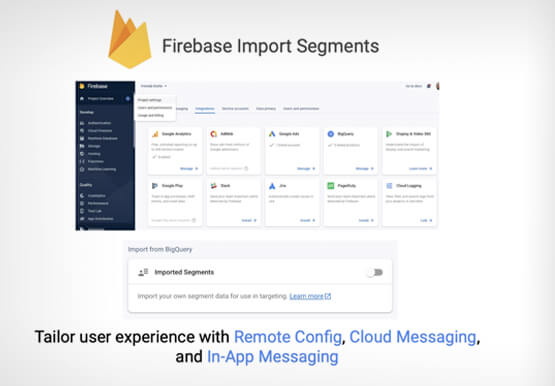
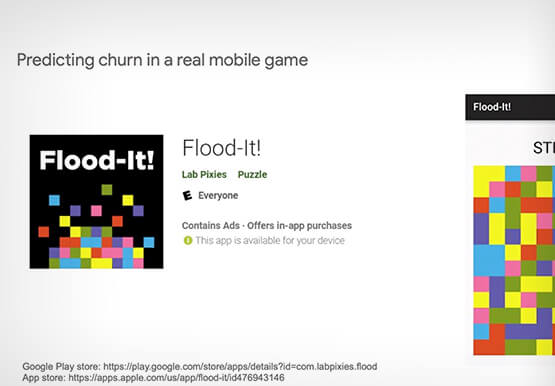
User retention can be a major challenge for mobile game developers. According to the Mobile Gaming Industry Analysis in 2019, most mobile games only see a 25% retention rate for users after the first day. To retain a larger percentage of users after their first use of an app, developers can

The Digital Transformation Journey
Aspiration is easy, but execution is hard. Few concepts illustrate this as well as digital transformations. Most businesses today are at some phase of their digital transformation journey. While some are evaluating strategies and solutions, many companies have already embarked on full-scale project implementations. However, one thing is clear. While

Cardinal Health Leads the Way in Healthcare App Modernization
Apps play a critical role in an ever-expanding range of healthcare services, as patients and providers increasingly expect streamlined, engaging digital experiences. This means that IT must become faster, more agile, and free from the constraints of everyday infrastructure management. At Cardinal Health, we are continuously enhancing our technology to
