





Google Cloud’s Journey about Building DEI into Business

3889
Of your peers have already read this article.
1:30 Minutes
The most insightful time you'll spend today!
Diversity, equity, and inclusion (DEI) are more than buzzwords, they are critical components of workplace culture that have real, tangible impacts on your entire organization. Well-executed and robust DEI initiatives ensure that every single employee feels welcomed and valued when they are at work. And that’s not all—done right, DEI will create a thriving environment that fosters increased engagement, productivity, and ultimately, new innovation.
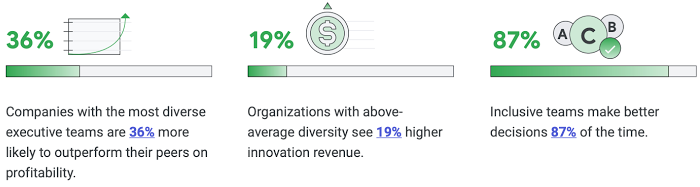
Now, more than ever there is more urgency to incorporate diversity and inclusion into every aspect of your business. Not only because it enhances your ability to be responsive to users and customers, but because it builds trust and a sense of belonging for your employees.
So, how do you build a representative workforce and inclusive teams?
Read our short eBook to learn steps you can take to build DEI into your business along with insights from our own journey at Google Cloud.
Start-up Paves Way for More Inclusive Clinical Research: Honoring Black Founders of Acclinate with Google Cloud

8443
Of your peers have already read this article.
4:00 Minutes
The most insightful time you'll spend today!
Editor’s note: February is Black History Month—a time for us to come together to celebrate the diverse set of experiences, perspectives and identities that make up the Black experience. Over the next few weeks, we will highlight Black-led startups and how they use Google Cloud to grow their businesses. Today’s feature highlights Acclinate and its founders, Del and Tiffany.
As patients, as caregivers, and as parents taking our own children to the doctor, we want recommended medications to be safe and effective. It’s a right everyone deserves.
It’s known that certain medications don’t work in the same way in all populations. For example, Albuterol, a medication often prescribed for asthma, is less effective in 67% of all Puerto Ricans and 47% of Black Americans. These problems—which can have deadly consequences—result from historically limited diversity in pharmaceutical clinical trials.
We founded our startup Acclinate to integrate culture and technology to achieve more inclusive clinical research. Help pharmaceutical companies and healthcare organizations access and engage communities of color so research is more inclusive.
Bridging the health equity gap by building trust
It’s important that health research organizations access and engage communities of color so their efforts reflect all the people they serve. Take a disease like diabetes, which affects a significantly higher proportion of Black Americans. When you look at even recent clinical trials for diabetic drugs, the representation of Black Americans among participants is only in the low single digits, despite comprising 13 percent of the U.S. population and more than 40 percent of diabetes patients in this country. Industry leaders have been aware of the lack of diversity issue, but some have chosen to ignore it or brush it aside. The biggest problem, in our opinion, is that there have been no penalties for not achieving higher diversity figures in clinical trials, and only minor financial repercussions to pharma/biotech companies when their treatments either do not work across all groups once approved, or there is a lack of uptake by all groups due to the lack of testing in those groups. The lack of clinical trial diversity has adversely impacted the reputation of the industry and the ability to recruit diverse populations in the future.
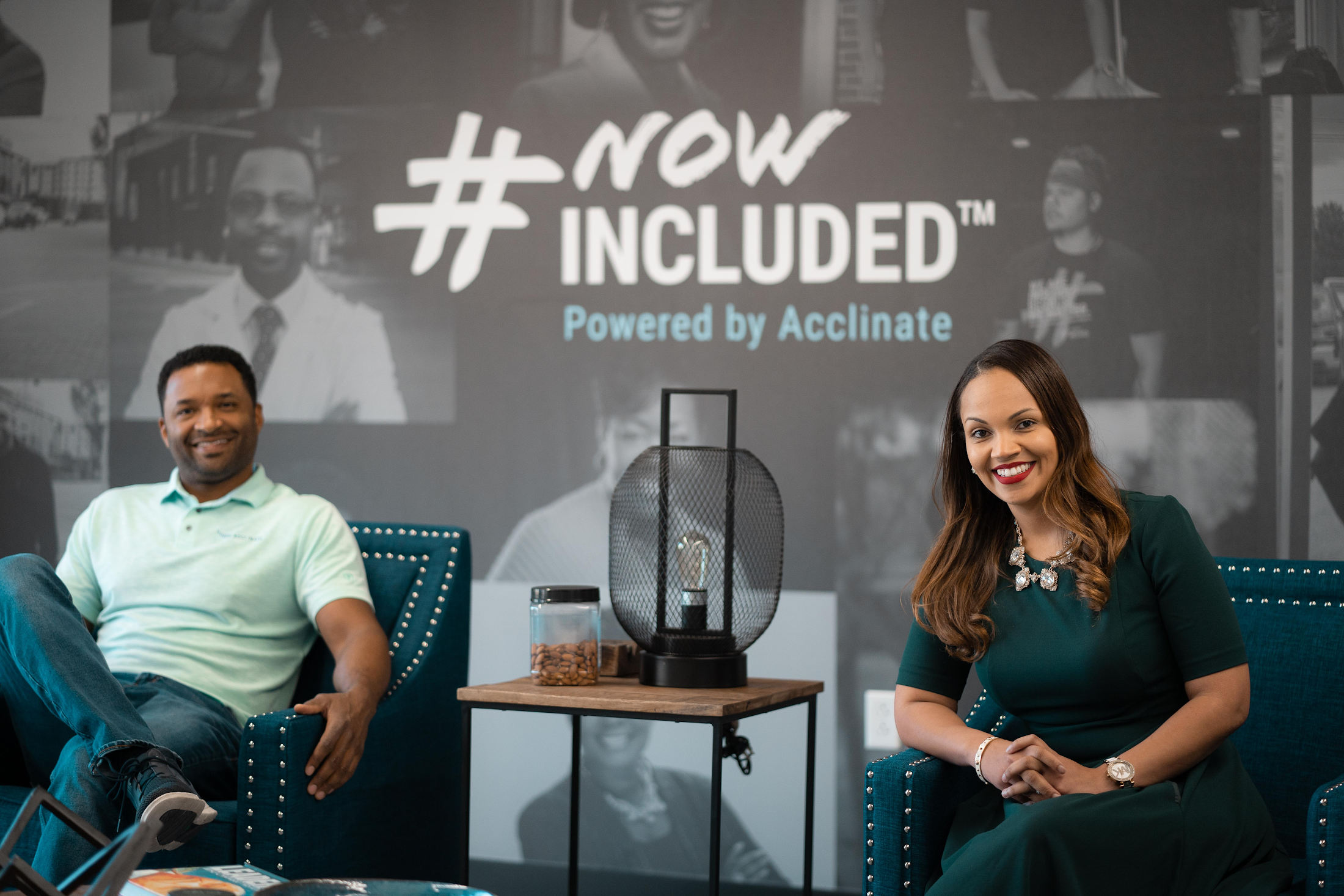
Acclinate integrates culture and technology to promote diverse patient representation in medical research. Our approach is not transactional. We build trust through our #NOWINCLUDED community, which is an ongoing, ever-expanding digital platform that educates and engages with communities of color on health issues.
#NOWINCLUDED includes a website app, and social media presence where members can learn information about diseases, particularly those with greater negative impacts on people of color, such as cancer, diabetes, and cardiovascular diseases. Members can share stories and ask questions. By providing access to trusted resources about these health issues and the latest clinical research, we empower Black people to take control of their health and consider participating in research that is shaping the future of healthcare.
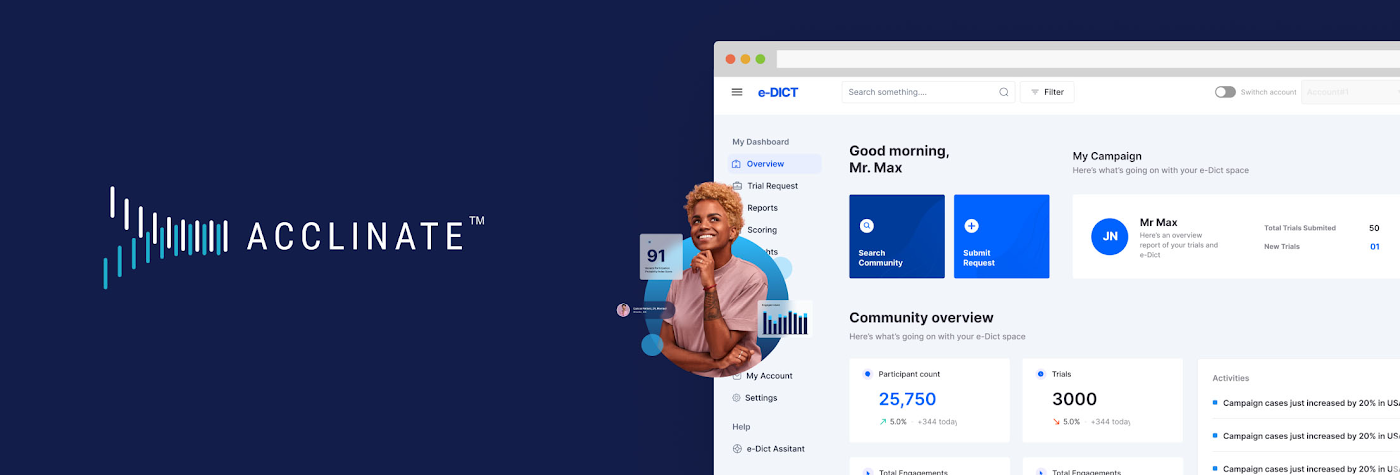
For healthcare-related organizations, we offer the opportunity to better understand the attitudes, aspirations, and unmet needs of underrepresented minority communities. Data from #NOWINCLUDED feeds our HIPAA-compliant SaaS platform, e-DICT™ (Enhanced Diversity in Clinical Trials), which uses predictive analytics and machine learning to identify individuals matching the requirements and most likely to be receptive to participation in a particular clinical trial.
Acclinate scales its platform with Google Cloud
We rely on Google Cloud services, including Vertex AI, to know whom to ask, when to ask, and how to ask for clinical trial participation. With Vertex AI, we enjoy a unified platform for developing our artificial intelligence models, including tools for preparing and storing our datasets. We can easily train and compare models using AutoML, which requires minimal ML expertise or effort with its intuitive graphical interface. This allows us to leverage more than ten ordinal and categorical data points to determine in real time a community member’s likelihood to enroll, which we call our Participation Probability Index (PPI). Our models evolve in an iterative process the more we interact with, and learn about, our community members.
We follow the pay-per-use Google Cloud Platform architecture model using serverless technology, which helps reduce infrastructure management costs and lets us focus on product development and engaging with communities across the U.S.
CloudSQL, a fully managed relational database service, integrates easily with BigQuery so we can glean insights for our clients in real time, all with Google Cloud’s robust security, governance, and reliability controls. Virtual Private Cloud (VPC) gives us scalable and flexible networking for our cloud-based resources and services. We also use Identity and Access Management (IAM) to simplify oversight of Google Cloud resource permissions for different user groups and roles, with appropriate security protections.
API Gateway manages our APIs using Cloud Functions, which both use consumption-based pricing, plus give our developers consistent and highly secure access to our services through a well-defined REST API. We use Memorystore for Redis to reduce platform latency. This is done with a fully managed service powered by the Redis in-memory data store, which builds application caches for fast data access. All of this comes together to provide an outstanding experience for our platform’s users and contributors.
- DSC00049.JPG
- DSC00010 (2).JPG
- pitch del tiff.jpg
Expanding influence with the Google for Startups Accelerator for Black Founders
Three months of one-on-one Google support and mentorship as part of the most recent Google for Startups Accelerator : Black Founders cohort not only helped us build our product, but also helped us earn external credibility. People use Google every day, so whether we’re trying to engage in conversations with industry experts or with somebody in a rural community, it is helpful to have the buy-in of a globally-recognized brand as we take on a historically difficult, systemic issue with challenges around trust. Getting access to the products, best practices, and people we need to build and grow through the Accelerator program has been priceless. For example, working with the Google AdWords team helped us generate important traffic from people interested in learning more about #NOWINCLUDED or sharing their story with us. Jason Scott, who leads the Google for Startups Accelerator: Black Founders program, is still connecting us to people in his network and identifying key opportunities for us months after the program wrapped. He continues to demonstrate that he is invested in seeing us succeed.
Our company has made great progress against our goals, in part thanks to receiving capital from the Google for Startups Black Founders Fund. We received $100K in non-dilutive funding along with Google Cloud credits, Google.org Ads grants, and hands-on support. We used the funds to pay for the transition and development costs associated with moving to Google Cloud. The Google support and accountability has been incredible. After receiving the Google for Startups Black Founders Fund award, we’ve gone on to raise another $1M and moved our cloud from Salesforce to Google Cloud.
We also had the amazing opportunity to be selected as one of six companies to take part in a face-to-face web conference with Sundar Pichai, Google’s CEO. We were thrilled to hear him explain his vision around health equity and the role Google plays. Ultimately, for us, it’s not just about the funding we get, but we are also gratified to receive support from an entity that truly believes in addressing this issue. We know Google is aligned with our mission of health and racial equity.
Championing diversity in clinical trials
Our 2022 looks bright. We expanded our presence to Washington, D.C. as part of the Johnson & Johnson Innovation JLABS ecosystem. We were also selected to take part in the BLUE KNIGHT initiative created between Johnson & Johnson Innovation and the Biomedical Advanced Research and Development Authority (BARDA) under the U.S. Department of Health and Human Services.
Acclinate is also on track to have contracts with five of the top 25 largest biopharmaceutical companies in the U.S this year. They’ve taken note, as has the Food and Drug Administration (FDA), that the lack of diversity in clinical trials represents a significant health concern—to the extent that the FDA has provided strong guidance for pharmaceutical companies to diversify their clinical trials. At the same time, the industry is also responding to pressure from communities of people of color to make equitable representation a priority.
Today, we are in the fortunate but challenging position to have significant inbound opportunities coming our way. In response, we continue to recruit and hire talented people to join our team. On the technology side, we are happy to be aligned with Google Cloud to have powerful cloud infrastructure that will scale with us, as well as high-caliber champions united in partnership. With people’s lives at stake, we are passionate in our commitment to helping ensure medications do what they are supposed to do: heal and improve the quality of life for everyone who takes them.
Hear Acclinate cofounders Del Smith and Tiffany Whitlow chat with Google’s Head of Startup Developer Ecosystem Jason Scott and fellow Black Founders Fund recipient Bobby Bryant about building on Google Cloud in a recent Google for Startups Instagram Live.
If you want to learn more about how Google Cloud can help your startup, visit our page here to get more information about our program, and sign up for our communications to get a look at our community activities, digital events, special offers, and more
Ulta Beauty: Managing Holiday Surges and Architecting Innovation

2743
Of your peers have already read this article.
3:30 Minutes
The most insightful time you'll spend today!
As we enter the holiday season, retailers are working behind the scenes to ensure they can provide the best experiences for customers, in store and online. Challenges in retail do not begin or end during the holiday season as sudden shifts in customer preferences, supply chain nuances, and overall demand ebbs and flows take place year round and retailers must be prepared to adapt swiftly.
Google Cloud’s retail customers globally, in total, saw more online traffic in the first six months of 2022 than all of 2019. This year, retailers can expect an early launch to holiday shopping activities, as 50% of consumers plan to start purchasing goods before the traditional Black Friday kick-off.
The very same improvements made to automate and improve retail infrastructure can prepare it for holiday surges and support year-round innovation. Let’s take a look at how Ulta Beauty, the largest beauty retailer in the U.S., is partnering with Google Cloud, MongoDB Atlas, commercetools, and HCLTech to cover these two areas and more.
Architecting for innovation
Creating personalized shopping experiences in stores and online is key to Ulta Beauty’s success. This commitment is best demonstrated through Ulta Beauty’s Virtual Beauty Advisor. Built on Google Cloud, this tool enhances shoppers’ experiences with personalized recommendations in addition to the ability to try on makeup virtually with GLAMLab.
As innovators in support of the best possible guest experience, Ulta Beauty needed to re-architect its infrastructure for greater agility and stability.
To start, Ulta Beauty chose to use Google Kubernetes Engine (GKE) as the backbone and orchestrator to build and deploy cloud-native applications. The Google Cloud deployments coincided with an organizational move from end-to-end application development to one that focuses on individual features, specific modules, and micro-applications.
This strategic change allowed Ulta Beauty to fix bugs, experiment with new offerings, and drive customer experiences faster and more efficiently. Thanks to the transformation and GKE, Ulta Beauty’s developer team now accelerates time to market for new products and services, and delivers new ways to engage with customers more quickly. These efforts all ladder to create ‘WOW’ experiences for the retailers’ guests who have emotional and personal connections to beauty and wellness. They can now discover and experience products that are served to them based on individual preferences.
Adapting to the new environment comes with its own set of challenges. “Microservices are not a silver bullet,” says Sethu Madhav Vure, IT Architect, Ulta Beauty. “For Ulta Beauty, the biggest challenge was how to break up a monolithic environment into multiple applications. We had to evolve our core systems—without impacting today’s services—and address what was needed for the future.”
Google Cloud partner HCLTech provided expert guidance throughout the re-architecting process, defining the solution blueprint and cloud-native deployment architecture through cross-functional workshops. HCLTech then assisted with the actual migration and platform setup, paving the way for fully automated, continuous integration and continuous delivery (CI/CD) pipelines to support faster rollouts and deployment architecture to drive higher availability and scalability.
Ulta Beauty took a domain-driven design approach to identify operations that could be grouped together to reduce complexity and improve scalability. Now, the applications are based on multiple domains, such as Commerce, Promotions, Catalog, Order, Customer, and Inventory. The new architecture prompted a fresh look at storage requirements to scale dynamically alongside its modernized applications.
For Ulta Beauty, MongoDB Atlas proved to be the best database solution for dynamic scaling, ease-of-use, and integrations with Google Cloud. The company also leveraged an entry-level plan to prove the value of MongoDB Atlas before investing in the technology.
“MongoDB Atlas offers a free tier that gave us an opportunity to quickly demonstrate tangible benefits of a proof of concept,” says Vure. “Once we proved the value of MongoDB Atlas, we benefited from the straightforward resource allocation supported by Google Cloud and MongoDB.”
Integrations between MongoDB Atlas and Google Cloud allow Ulta Beauty to take an iterative approach to new projects. The company creates new clusters in an existing project, then piggybacks them onto an existing Private Service Connect setup between a MongoDB project and Google Cloud project.
By removing complexities within infrastructure management, Ulta Beauty can manage its incredible amount of data, such as member preferences and purchases, that fuels its event-driven architecture. The much more agile infrastructure enables Ulta Beauty to deploy and scale offerings faster than ever.
“We recently had an unplanned traffic surge that impacted our domain services. It took less than an hour for MongoDB Atlas to scale up to the next level of the cluster and manage that traffic,” says Vure. “The on-demand, dynamic scaling, plus GKE, has saved the day more than once.”
Preparing for a happy holiday season
This holiday season, Ulta Beauty has a stronger technical foundation to manage demand surges and provide customers seamless shopping experiences. Previously, the company used 50 pods in a cluster, each with 6 GB of RAM without domain stores, to handle about 100 transactions each second. With domain stores, the same 6 GB of RAM with just 20 GKE pods was able to scale up to 2,400 transactions per second.
With Google Cloud as its technology foundation, Ulta Beauty partnered with Google Cloud partner commercetools to evolve its application APIs as products and properly separate interfaces and capabilities.
Ulta Beauty uses event-based integrations within commercetools to identify how best to leverage Cloud Pub/Sub middleware on top of MongoDB Atlas integrations. Patterns established here were extended into MongoDB change streams and in turn improved business processes.
“Working with the right technology partners has helped us to avoid analysis paralysis that can happen when developer teams spend a lot of time trying to understand and manage every detail,” says Vure. “Instead, we convert a proof of concept into a working solution, and quickly bring it to market. It’s been a major shift in our IT culture as we try out new things weekly and see incredible support from leadership.”
The improvements enable Ulta Beauty to maintain a high level of innovation, performance, and customer service year-round. Now, when the holiday shopping season begins, Ulta Beauty is prepared to handle surges in traffic through auto-scaling with Google Cloud and MongoDB Atlas. Customers get what they want, when they want, free from the frustrations of outages.
“With these changes, we are ready for a holiday season that everyone–even those of us in IT—gets to enjoy. We’re positioned to continuously focus on new, better ways to serve our guests,” says Vure.
Check out MongoDB and commercetools on Google Cloud Marketplace to learn more about what these partners can do for your business.
Mambu’s Journey: Modernizing Core Banking with Google Cloud

943
Of your peers have already read this article.
3:30 Minutes
The most insightful time you'll spend today!
When our founders began Mambu in 2011, their goal was to bring the latest digital technologies to the banking and finance world. Banking, in particular, is an industry built on decades of deep legacy technology. So initially, Mambu was embraced by microfinance — 100 organizations in 26 countries in just the first two years.
Since then, acceptance of modernizing core banking services by using composable, cloud technologies has grown across financial services institutions (FSIs). We now service top-tier banks, fintech startups, and other finance organizations across six continents, helping them deliver flexible, personalized, customer-centric banking products and services that their customers can depend upon.
One of the main reasons we’ve been able to scale the Mambu composable banking platform across the globe and at our current pace is our partnership with Google Cloud. The decision to move forward with Google Cloud happened for several reasons.
1. Flexibility and openness. Many FSIs are on hybrid and multicloud technology stacks, as they may still be transitioning from legacy systems, or have data residency requirements that have led them to use different clouds in different regions. Mambu meets customers wherever they are in their cloud journeys. We support interoperability without vendor lock-in. This need for openness, as well as the scalability benefits, led Mambu to evolve our platform on Google Kubernetes Engine (GKE). Many customers use open-source Kubernetes because, this common foundation can help streamline integration, speed up time to market, and reduce development. Just as important, the Google Cloud open cloud approach matches our company values.
2. Security and data residency. For customers in highly regulated finance industries, security isn’t just top of mind, it’s the No. 1 requirement. In addition to Google Cloud’s secure infrastructure, external audit certifications, and encryption, its wide array of regions has allowed us to expand into more countries, where we serve banks that must meet local data residency requirements. For example, Google Cloud’s Jakarta Cloud Region, has allowed us to support Bank Jago in Indonesia as it brings more financial inclusion to the unbanked in that country.
3. Availability. It’s critical for banks to maintain basic financial functionality, like accepting deposits and serving cash, even amid a service disruption. We needed a cloud partner with impeccable redundancy, failover, and disaster recovery capabilities.
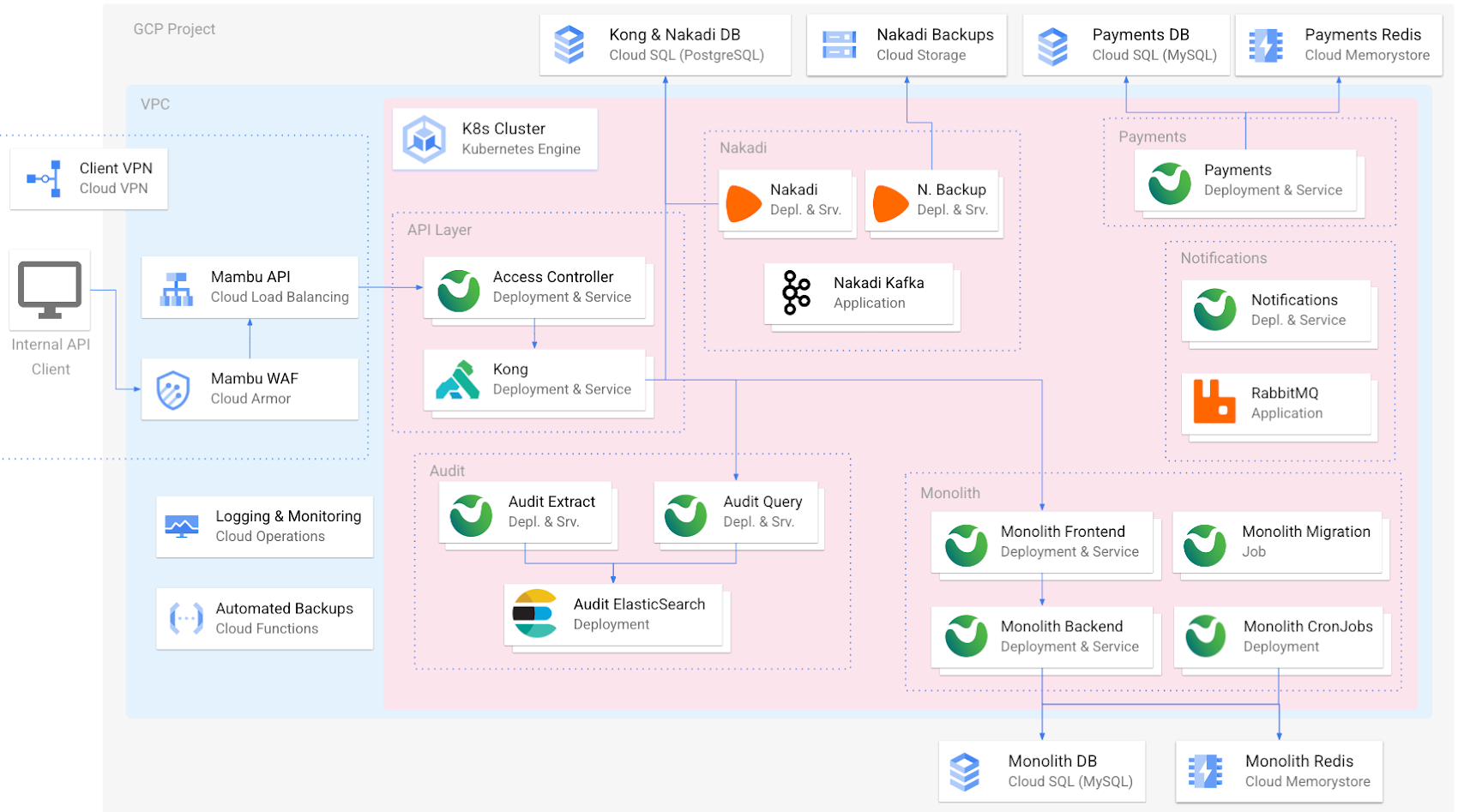
In addition to GKE, the Mambu platform uses several other Google Cloud services for specific functions, including Cloud Armor, Cloud Load Balancing, Cloud VPN, Cloud Memorystore, and Google Cloud Operations.
Another important reason we chose to partner with Google Cloud was its expansive ecosystem and commitment to innovation. We are midway into a three-year journey to modernize our own technology stack to meet customer needs.
Building a roadmap with Google Cloud
Our customers need a core banking technology platform that will grow with them as they bring to market innovative services built on the latest technology advances. For Mambu to be that platform, we need a cloud partner that supports and scales with our growth. While we originally built our cloud architecture on GKE and Compute Engine (among a few other Google Cloud services), we’re now looking to a serverless future where we can scale more easily and leverage managed services within Google Cloud and its partner ecosystem to focus on our core offerings.
These are just some of the modernization and customer-led innovations that we’re cooking up:
- More workloads in GKE: Like many companies, our cloud transformation is a work in progress. While much of our codebase is in GKE, we’re continuing to break up some larger pieces of code into microservices to increase agility and velocity, enabling us to make consistent updates to discrete areas of our platform without affecting the whole. GKE is the leader for orchestrating microservices at scale and continues to be a natural fit.
- Native BigQuery integration: Mambu customers collect a tremendous amount of data within the platform that can be used for analytics, personalization, and other use cases. We’re planning to create a seamless integration for feeding core banking data from Mambu into BigQuery so that customers can better leverage their valuable data.
- CloudSQL vs. self-managed MySQL: We have almost completed migrating from our own MySQL instances to managed Cloud SQL databases, which will open up new opportunities to implement customer-centric solutions such as BigQuery integration.
- A serverless future with Cloud Run: Compute Engine is working well for Mambu, providing the flexibility to choose the virtual machines that best balance performance and cost needs. As we seek even more time and cost efficiencies, we believe the elastic scalability of a serverless architecture built on Cloud Run will get us there, and we’re considering going serverless in the future. Doing so would abstract infrastructure for simpler management, while allowing us to fire up containers to meet our customers’ high transactions-per-second needs, spin them down when not needed, and pay only when they run. It would also boost security: Without long-running compute, there are no patches or fixes, and each new instance is isolated and fresh by default.
These are just a handful of examples of the ways we want to best leverage Google Cloud services to simplify how we manage our tech stack, as well as continue to bolster security, scalability, and performance. There are many other ideas we’re exploring: using Dataproc and Datastream to support the specific data needs of Islamic banking, Cloud Functions so that customers can run their own queries against Mambu, and AI-enabled features.
At Mambu, our mission is to empower our customers to deliver great modern financial experiences easily to everyone around the world. Every time Google Cloud opens a new data center, we can enter a new market. Every time we move to a new-to-us managed service via the Google Cloud Marketplace, we free up time to build new ways to deliver customer-centric banking solutions. And so, we look forward to continuing this partnership with Google Cloud well into the future.
5174
Of your peers have already watched this video.
24:00 Minutes
The most insightful time you'll spend today!
BK Medical’s Lift and Shift of SAP Environs on Google Cloud Results in Real-time Success
BK Medical is known for designing active imaging systems to help care providers visualize anatomy and provide real-time guidance to aid surgical interventions. After becoming an entity independent of the parent company, Analogic corporation, BK Medical decided to separate its SAP environs from the latter, and move into cloud. After assessing cloud vendors with Managecore, BK Medical chose Google Cloud as its managed service provider that could serve as a single source of truth and also help walk through the lift and shift of SAP ECC systems to the cloud. Watch the video to learn how the migration impacted BK Medical’s goals.
Rethinking retail with Google Cloud Retail Search

2819
Of your peers have already read this article.
3:30 Minutes
The most insightful time you'll spend today!
Cloud Retail Search, part of Discovery Solutions For Retail portfolio, helps retailers significantly improve the shopping experience on their digital platform with ‘Google-quality’ search. Cloud Retail Search offers advanced search capabilities such as better understanding user intent and self-learning ranking models that help retailers unlock the full potential of their online experience.
Google Cloud’s Discovery Solutions For Retail are a set of services that can help retailers improve their digital engagement and are offered as part of our industry solutions.
Executive Summary
Retailers are always working on trying to keep up with the ever changing consumer expectations and trying to forecast the next trend that can impact sales and revenue.
The pandemic brought its own (and largely new) set of challenges which further complicated the issue over the last two years. The retailers were forced to adapt to the new consumer (low physical touch) behavior in which the browsing and product research was largely digital (endless aisle) and accelerated other trends such as buy online and pick up in stores (BOPIS), curbside pick up and pick up lockers. According to a McKinsey Global Survey from early last year, the pandemic has accelerated the pace of digital transformation by several years.
The National Retail Federation (NRF) estimates that retail sales are expected to grow between 6% and 8% in 2022 (slower growth rate than in 2021), as consumers spend more on services instead of goods, deal with inflation and higher food & gas prices due to geopolitical disruptions in the world.
And the competition continues to be fierce as ever. Amazon continues its dominance in the U.S. retail world and new PYMNTS data shows that Amazon’s share of US Ecommerce sales hit an all-time high of 56.7% in 2021.
Customers now have more choices than ever on how they want to engage with the retailers, where they want to spend the money and make their purchase. They also have increased expectations from the retailers around providing a high quality product discovery experience, which is forcing the retailers to invest heavily on improving customer engagement on their digital platforms to boost conversion rate and overall customer loyalty.
This is where Retail Search can help by providing an enhanced search experience that uses Google-quality search models to understand the customer intent and takes into account the retailer’s first party data (such as promotions, available inventory and price) for ranking results.
How is Google Cloud Retail Search Different
The Ecommerce platform on-site search use case is not new and retailers have been trying to solve it effectively for the last two decades. Most retailers recognize that search is a critical service on the platform and have spent countless resources to improve and fine tune it over the years. Yet the challenge remains. According to a Baymard Institute study in late as 2019, 61% of sites still required their users to search by the exact product type jargon the site uses.
However, users now expect the same robust and intuitive search features as is offered by Google.com and other popular web platforms, who seem to have the uncanny ability to intelligently interpret and yield relevant results to complex search queries.
Google’s decades of experience and research in search technology benefits Cloud Retail Search solution and that is what differentiates it from the competition.
- Advanced Query Understanding: Retail Search can provide more relevant results for the same query due to better query understanding features and knowing when to broaden or narrow the query results. While most search engines still rely largely on keyword based or matching tokens results, Retail Search has the advantage of being able to leverage Google search algorithms to return highly relevant results for product listings and category pages.
- Semantic Search: Intent recognition is a key requirement for semantic search and identifying what the customers mean when they enter the query is a key strength of Retail Search. This is critical for retailers since this has a direct impact on Clickthrough rate, Conversion rate and the Bounce Rate.
- Personalized Search Results: Another key differentiator for Retail Search is its ability to leverage user interaction data and ranking models to provide hyper personalized search results. Retailers are able to optimize search performance to deliver desired outcomes: better engagement, revenue, or conversions.
- Self-Learning and Self-Managed Solution: Retail Search models get better over time because of the self-learning capabilities built into the solution. In addition, the service is fully managed, which saves precious resources needed to keep it running and managing its set up.
- Strong Security Controls: The service runs on Google Cloud and follows security best practices to keep our customers’ data secure. Google never shares model weights or customer data across customers using the Retail API or other Discovery Solution products. For more details about this data use, see a description of Retail API data use.
High Level Conceptual View
Here is a simplified high-level view of Retail Search API. Retailers can call the API for the given search query and get back the results which can then be displayed on their digital properties.
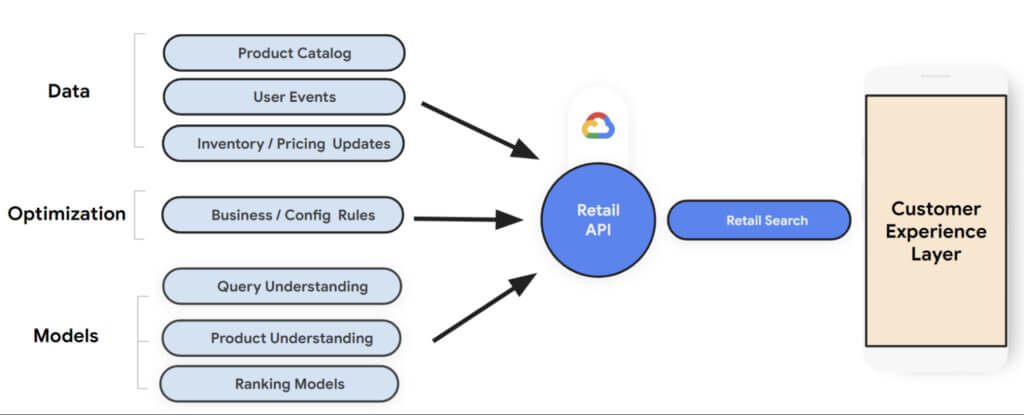
The returned results contains two types of information:
- Search results: Query search results including product listings and category pages based on advanced query understanding and semantic search.
- Dynamic faceted search attributes: Faceted Search is a feature that allows further refinement of the search by providing ways to apply additional filters while returning results.
Retail Search needs the following datasets as input to train its machine learning models for search:
- Product Catalog: Information about the available products including product categories, product description, in-stock availability, and pricing.
- User Events: This is the clickstream data that contains user interaction information such as clicks and purchases.
- Inventory / Pricing Updates: Incremental updates to in-stock availability and pricing as that information is updated.
(Keeping the product catalog up to date and recording user events successfully is crucial for getting high-quality results. Set up Cloud Monitoring alerts to take prompt action in case any issues arise).
Retailers also have the ability to set up business/config rules to customize their search results and optimize for business revenue goals such as Clickthrough rate, Conversion rate, Average size order etc.
How to get started
Retail Search is generally available now and anyone with a Google cloud account can access it. If you don’t already have an account, you can start with a trial account for free here.
Establish a Success Criteria: It’s important to establish a success criteria for measuring the effectiveness of Retail search. Get a consensus on which factor(s) you want to include in scope for measuring the effectiveness of Retail Search. This could include one or two from the following: Search Conversion Rate, Search Average Order Value, Search Revenue Per Visit and Null Search Rate (No Results Found).
- Initial Set Up: Create a Google Cloud Project and set up the Retail API. When you set up the Retail API for a new project, the Google Cloud Console displays the following three panels to help you configure your Retail API project:
- Catalog: displays product catalog and a link to import catalog.
- Event: displays user events and a link to import historical user events.
- Serving configs: contains details on serving configuration and a link to create a new serving configuration.
- Measuring Performance: Retail dashboards provide metrics to help you determine how incorporating the Retail API is affecting the results. You can view summary metrics for your project on the Analytics tab of the Monitoring & Analytics page in Cloud Console.
- Set up A/B Experiments: To measure the performance of Retail Search with another search solution, you can set up A/B tests using a third-party experiment platform such as Google Optimize.
Summary:
As retailers try to navigate through the post-pandemic world where supply chain failures and digital transformation acceleration are major focus areas, they now also have to keep a close eye on the recent geopolitical challenges resulting in rising inflation and costs.
While we can all agree that in-store shopping will continue to be a major source of revenue, it is also important for retailers to tweak the in-store experience for the digital world. Trends such as buy online and pick up in stores (BOPIS), curbside pick up and pick up lockers are here to stay.
Given all the above, consumer engagement and digital experience is more important now than ever before. The cost of search abandonment is way too high and has both short and longer term impact. Retail Search is a great solution to help reduce churn, improve conversion and retention. It provides Google-quality search models to help understand customer intent and the retailers have the ability to set up business/config rules to optimize search results for business revenue goals such as Clickthrough rate, Conversion rate and Average size order.
More Relevant Stories for Your Company

Google and Fervo Agreement to Shape-up Plans for 24/7 Carbon-free Energy by 2030
When Google announced our plan to go beyond purchasing renewable power for 100% of our energy usage and operate on 24/7 carbon-free energy by 2030, we noted that achieving this goal will require new transaction structures, advancements in clean energy policy, and innovative new technologies. Today, we’re pleased to announce that one of

Encryption in Transit: The Next Level in Cloud Security
Security is often a deciding factor when choosing a public cloud provider. At Google Cloud, security is of the utmost importance and the security strategy encompass authentication, integrity, and encryption, for both data at rest and in transit. Hence, Google Cloud encrypts and authenticates all data in transit at one

The Future of Retail: Automated Customer Journeys Powered by Technology
Editor’s note: To kick off the new year and in preparation for NRF The Big Show, we invited partners from across our retail ecosystem to share stories, best practices, and tips and tricks on how they are helping retailers transform during a time that continues to see tremendous change. Please

Go Green with Google’s Latest Tool and Pick the Most Sustainable Cloud Region
As a Google Cloud customer, your carbon footprint is already carbon neutral: Google first achieved carbon neutrality in 2007, and has been purchasing enough solar and wind energy to match 100% of its global electricity consumption since 2017. Now, Google is targeting a new sustainability goal: operating on carbon-free energy (CFE) 24/7,
