





What’s New in Retail: Bits from Google Cloud’s Retail & Consumer Goods Summit

7961
Of your peers have already read this article.
3:00 Minutes
The most insightful time you'll spend today!
Today we’re hosting our Retail & Consumer Goods Summit, a digital event dedicated to helping leading retailers and brands digitally transform their business. For me, this is a personally exciting moment, as I see tremendous opportunities for those companies that choose to focus on their customers and leverage technology to elevate experiences.
Our event includes breakout sessions to help retailers and brands become customer centric, embrace the digital moment and transform their operations. Some of my favorite sessions include:
- Why Search Abandonment is the metric that matters, highlighting Retail Search, and featuring a conversation with Macy’s
- Driving Consumer Closeness in a Privacy-Centric World, discussing how retailers and brands can create a successful first party data strategy, featuring a conversation with P&G
- The Modern Store: 7 Innovation Hotspots, sharing how retailers and brands can approach store transformation to unlock the most value from technology, featuring a conversation with The Home Depot.
I’ll be speaking in our Retail Spotlight session, discussing the current retail landscape and our industry approach, followed by conversations with Albert Bertilsson, Head of Engineering – Edge at IKEA Retail (Indga Group) and Neelima Sharma, Senior Vice President, Technology Ecommerce, Marketing and Merchandising at Lowe’s.
Let me share a bit more about the topics we’ll discuss in that session.
In retail specifically, digital-first shopping journeys are blurring the lines between the physical and digital brand experience. Shoppers want to know what’s available before they visit your stores, and they expect fulfillment options like curbside pickup. We see this when tracking trends for interest in curbside pickup or in-stock items.

This has left many retailers asking how they can get smarter with their data, tackle the $300 billion dollar problem of “search abandonment,” move faster to create new customer experiences, and do a better job of connecting their employees and customers – with confidence.
Our team has been spending time thinking about how we can rise and succeed in this new era together. We continue to focus on areas where we can bring the best of our capabilities to our retail customers around the world. And we’re focused on ways we can bring the best of what Google has to offer through cloud integrations.
Our goal is to help retailers become customer-centric and data-driven, capture digital and omni-channel revenue growth, create the modern store and drive operational improvement.

Let’s dig into each of these strategic pillars in a bit more detail.
Become customer centric and data driven
Customers today expect experiences that are timely, targeted, and tailored for them and their needs, and reject experiences that can’t deliver these features. Data modeling, legacy technology, and siloed systems often prevent retailers from providing that level of personalized experience.
At Google Cloud, we work with global retailers and our ecosystem partners to activate and bring value from first-party data, particularly in the field of customer data platforms (CDPs). This includes integrations from Google Cloud, such as our business intelligence platform Looker and other popular platforms to power one source of customer data through the organization. We also help retailers modernize their data warehouse with Looker for gathering business intelligence across their organization. This is important not just for consumer data, but inventory, supply chain, and store operations as well.
Capture Digital and Omnichannel Growth
We power some of the largest e-commerce sites in the world, helping them scale for Black Friday, Cyber Monday, and other holiday events. While scale is critically important, it’s also important to consider the quality of the online experience. How do your customers find products? How can you help deliver seamless online and omnichannel experiences?
To help, we’re building product discovery solutions that bring together the best of our technologies that help retailers drive engagement with their consumers. Retail Search, for example, gives retailers the ability to provide Google-quality search on their own digital properties – search that is customizable for their unique business needs and built upon Google’s advanced understanding of user intent & context.
The imperative is clear. Recent research found that retailers lose more than $300 billion to search abandonment — when purchase intent is not converted into a sale due to bad search results — every year in the US alone.
Today, we announced that Retail Search is available to a larger set of retailers. If you are interested in learning more about Retail Search you can contact your sales representative for additional details.
Create the modern store
With the rise of buying trends like curbside pickup and proximity-based search, our Google Maps Platform team is working on new products and features to help raise inventory awareness for your shoppers. We want to help you make it easier for them to understand what’s available to purchase in their channel of choice.
With Product Locator, each product page connects customers with information they need for local pickup and delivery options. This ensures customers are aware of pickup and delivery options throughout the buying journey—not just checkout.
Awareness of local inventory can boost a wide range of key metrics for your business. Shopify recently shared that shoppers who opt for local pickup over delivery had a +13% higher conversion rate and that 45% of local pickup customers make an additional purchase upon arrival.
This is just one quick example of how our Google Maps Platform team can improve experiences for your shoppers.
Operational improvement
It can be challenging to operate in a world and at a time when consumer behavior and supply chains are so disrupted and volatile, and where entire retail teams had to go remote during the pandemic and beyond.
We’re working with retailers to leverage artificial intelligence (AI) to improve consumer experience through chat bots or conversational commerce that solves problems for customers from anywhere. You can learn more about these offerings in our Conversational Commerce with Google breakout session, featuring Albertsons.
As the need for digital transformation continues to accelerate, Google Cloud is helping retailers stay ahead of the curve with solutions for digital and omnichannel growth, data-driven and customer-focused experiences, and operational improvement. For every era of cloud technologies, from the past into the future, Google Cloud is committed to providing solutions to retailers.
Read more about our solutions for retail, and check out additional sessions, including the CPG Industry Spotlight Session How To Grow Brands in Times of Rapid Change – Featuring L’Oréal at our Retail & Consumer Goods Summit.
Explore the Complete Startups’ Technical Guide on Google Cloud Tech Channel

3373
Of your peers have already read this article.
1:30 Minutes
The most insightful time you'll spend today!
Bootstrap your Startup with our technical guided series
At Google Cloud, we want to provide you with the access to all the tools you need to grow your business. Through the Google Cloud Technical Guides for Startups, leverage industry leading solutions with how-to video guides and resource handbooks curated for startups.
This multi-series contains 3 chapters: Start, Build and Grow, which matches your startup’s stage of growth:
- The Start Series: Begin by building, deploying and managing new applications on Google Cloud from start to finish.
- The Build Series: Optimize and scale existing deployments to reach your target audiences.
- The Grow Series: Grow and attain scale with deployments on Google Cloud.
Kick off with The Start Series
The Start Series is designed to help your startup begin building, deploying and managing new applications on Google Cloud from start to finish. The series contains 12 videos and is dedicated to those who are starting out their cloud journey with Google Cloud. From setting up your project, to choosing the right compute option, to configuring your networking to managing your databases, and understanding support and billing – the Start Series guides you at every step of the journey.
Check out our website and our Google Cloud Technical Guides for Startups full playlist.
Coming up next – The Build Series
Launch into the next part of the journey continuing from the Start Series, with the upcoming Build Series, where we will be focusing on the optimization and scaling of existing deployments to help your startups reach your target audiences.
Join us by checking out the video series on the Google Cloud Tech channel, and subscribe to stay up to date.
See you in the cloud!
Highnote Build the First Flexible, End-to-end Embedded Finance Platform on Google Cloud

3257
Of your peers have already read this article.
3:00 Minutes
The most insightful time you'll spend today!
The ability to quickly introduce and evolve payment options for products or services is essential for businesses, as nearly 50% of consumers who can’t use a preferred payment method abandon their purchase. At the same time, gift cards, branded credit cards and rewards programs are critical tools that companies rely on to build more loyal and lasting customer relationships. With Highnote, companies have an all-in-one embedded platform to quickly create payment cards and wallets, offer innovative rewards programs and credit, and provide sustainable wage access. It is the first platform that allows enterprises to make card issuance an embedded capability of their product without creating an entirely new (and costly) organization.
Creating an exciting fintech future with Google Cloud
When thinking about building the industry’s first end-to-end embedded finance platform, we quickly realized Highnote would only be successful if it enabled companies to truly innovate and quickly roll out new programs. To do so, the platform would have to be built on scalable infrastructure capable of securely delivering services with speed and reliability while offering easy access to actionable Big Data analytics.
Working closely with the team at the Google for Startups Cloud Program, we successfully implemented Google Cloud as a versatile, future-proof foundation of our platform—and built Highnote from the ground up in just one year. Highnote’s GraphQL-based API platform reinvents the card issuance process. Utilizing the developer-friendly Highnote platform, product and engineering teams at digital enterprises of all sizes can easily and efficiently embed virtual and physical payment cards (commercial and consumer prepaid, debit, credit, and charge), ledger, and wallet capabilities into their existing products. This creates compelling value while growing revenue and building a unique and differentiated brand.
We leverage Cloud Spanner, BigQuery, and Google Kubernetes Engine (GKE) to create a unified and highly secure PCI DSS-compliant platform with GraphQL APIs that provide rapid and flexible money transfers. This gives us a reliable platform to deliver and test customer experiences, respond to outcomes, and make better business decisions. Powered by Google Cloud, our data models and application domains are architected to support configurations and customizations that unlock a diverse set of new use cases across industries, including retail, travel, logistics, healthcare, and sustainable wage access programs.
We are especially proud to highlight our enablement of sustainable wage access, as this program helps the 50% of Americans living paycheck to paycheck. Embedding this program within payroll systems provides a viable alternative to payday lenders who often charge exorbitant fees and interest rates. In real world terms, this means Highnote helps people access earned wages before payday at no cost.
The other customer we just went live with was Tillful, and their Tillful card helps small businesses build their business credit. This program will help new and emerging businesses as well as underrepresented owners of small businesses by making the credit ecosystem accessible. Highnote’s platform is designed to support multiple use cases across many industries. For example, we also help the trucking and logistics companies to develop fleet and fuel cards, and spend management companies who are looking to uplevel offerings.
Delivering high-performance transactions with Cloud Spanner
Building one of the world’s most modern card platforms would not have been possible without Cloud Spanner. We needed a solution that would keep our massive petabyte databases from buckling and more securely deliver data anywhere in the U.S. Cloud Spanner does all this and more, as it routinely connects purchases from millions of customers to tens of thousands of vendors. We also wanted to reduce overhead by 80% by eliminating manual sharding, partitioning, and optimization of data. These processes are automatic with Cloud Spanner so we can operate at maximum efficiency.
We specifically selected Cloud Spanner as our distributed SQL database management and storage solution because of its outstanding availability, zero plan maintenance downtime, security certifications, and the highest consistency guarantees of any scale-out database. We continue to optimally scale without any downtime or compromises to the integrity or security of our data. This is key for us because we can address unexpected spikes, long-term growth, and new services without costly rearchitecting.
Highnote is designed to perform over billions of transactions on Cloud Spanner, and the average latency of less than 250 ms is a testament to the robustness of Google Cloud services.
Enabling actionable customer insights at scale
BigQuery is another key Google Cloud solution that we rely on to deliver deep insights and visibility for our customers on a highly secure and scalable platform. When building Highnote, we knew we needed a cost-effective solution that excelled at data analytics. This is particularly critical for accurately measuring the performance—whether profitability or efficacy—of any program or card.
Using BigQuery, we successfully run analytics at scale with as much as a 34% lower three-year TCO than cloud data warehouse alternatives. Over the past year, BigQuery has enabled our customers to unlock data-rich capabilities with a ledger that tracks money in real time and serves up complete debit and credit entries for every event across their accounts. Companies also access real time balances for revenue, fees, customer accounts, and available funds management without complicated spreadsheets.
To quickly and efficiently roll out Highnote to our customers, we needed a simple way to automatically deploy, scale, and manage Kubernetes. When selecting a Kubernetes management tool, our top priorities were rapidly spinning up and securely scaling across multiple sites. As part of Google Cloud’s expansive ecosystem, Google Kubernetes Engine (GKE) was the top choice due to seamless and automatic Kubernetes scaling and management.
We quickly got off the ground with single-click clusters and scaled up by using the high-availability control plane—including multi-zonal and regional clusters—to easily accommodate multiple active-active regions (which other solutions cannot do). As an embedded finance platform, stringent security protocols were obviously a key consideration for us. GKE is secure by default and runs routine vulnerability scans of container images and data encryption. Further security assistance was provided by Google Cloud partners 66degrees and DoiT International to help us rapidly validate VPC PCI compliance and ensure the uninterrupted performance of thousands of transactions per second.
Winning in fintech with Google for Startups
Building the industry’s first end-to-end embedded finance platform would have been extremely challenging without the extensive Google Cloud support. By working closely with our Startups team and Google partners, we had access to Google Cloud services to more easily validate VPC PCI compliance and address most issues before we exited stealth. Their responsiveness is incredible and stands out compared to support services we’ve seen from other technology providers.
Our participation in the Google for Startups Cloud program has been instrumental to our success. With Google Cloud, we are making embedded payments accessible to our customers without a big budget price tag. By doing so, we help unleash the creativity of emerging enterprises by enabling them to innovate with payment services and rewards programs to reach new markets and customers. If companies can dream, we can enable them to realize it on Highnote. Our platform really is that flexible. We’re excited where we can go and grow with Google Cloud.
If you want to learn more about how Google Cloud can help your startup, visit our page here to get more information about our program, and sign up for our communications to get a look at our community activities, digital events, special offers, and more.
4431
Of your peers have already watched this video.
15:00 Minutes
The most insightful time you'll spend today!
HSBC Leverages Google Cloud to Deliver Exceptional Cx for 37 Million Customers
HSBC is the world’s largest international bank that has been in existence for 150 years. HSBC is present in 70 countries, has 37 million customers and is the number one bank in trade finance or cross-border finance. HSBC is a systemically important financial institution that is heavily regulated.
Rapid growth in data and aggressive adoption of digital channels by customers drove HSBC to make a significant transformation in their existing IT infrastructure.
The existing IT infrastructure at HSBC has been around for 30 to 40 years and with the growing need to analyze, store and process massive amounts of data it gradually became redundant. To overcome these challenges and balloon the organizations’ compute capacity HSBC decided to adopt a cloud-first strategy.
“Our existing systems are robust, scalable and can do a great job, but they do not have the database structure that allows us to run analytics and machine learning,” says Darryl West, Group CIO, HSBC.
“We are a bank at the core of our business, but we also have a significant technology company embedded within the organization. I asked the management team do we really want to compete with cloud providers, like Google, are we really going to try and do what they do, as well as they do it? Our conclusion was it was better for our business if we do a cloud-first strategy,” says West.
HSBC has been working with Google on some of the most critical business problems. The initial uses cases are typically characterized by business problems that have very large data sets and require very intense computing capability in short bursts. These include anti-money laundering, finance liquidity reporting, risk analytics, risk reporting, valuation services and more.
Watch the full video to understand how HSBC is leveraging Google Cloud Platform to enhance customer experience and deliver continuous innovations.

Multi-cloud Adoption Empowers GCCs to be Resilient, Scalable and Future-proof: Whitepaper
DOWNLOAD WHITEPAPER3283
Of your peers have already downloaded this article
1:30 Minutes
The most insightful time you'll spend today!
India has emerged as the Technology capital for the world – there are now at least 55 unicorns in India, nearly 600 funding rounds in just the last 30 months and 200+ GCCs expected in the next 2 years. There has been a rapid acceleration not just in the number of startups being launched, but also in the variety of technologies they are experimenting with.
India GCC’s are leading the transformation agenda for the enterprise and the pandemic has accelerated the inevitable. Technology now underpins every facet of a business: products, services, business processes, and how customers and businesses interact. As organizations are investing and progressing on their digital journey, they are increasingly relying on talent and teams across the globe to help them navigate the changes and build strategic capacity.
How is Cloud enabling this strategic change? This whitepaper compiled by ANSR and Google Cloud aims to expand on the following,
What is the cloud adoption story and how can it empower GCCs to be resilient, scalable and future-proof?
How have global teams or Global Capability Centers enabled the strategic and accelerated adoption of technology?
What are the key Cloud considerations for building an innovative, collaborative ecosystem for a thriving organization?
3439
Of your peers have already downloaded this article
1:30 Minutes
The most insightful time you'll spend today!
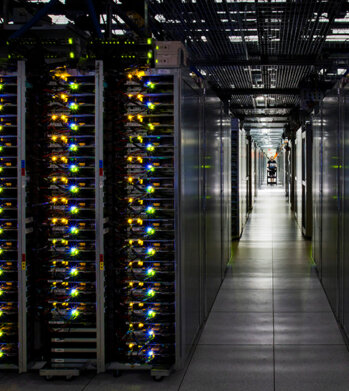
Enterprises developing digital leadership are increasingly moving out of their data centers to focus on core business innovation, and save on complex infrastructure costs. This puts challenges related to demand peaks and business continuity under a magnifying glass.
Many CIOs are under pressure to complete migrations quickly — 68% of CIOs are seeking to migrate existing applications to the cloud, according to Forrester. Motivations range from cost or risk reductions, to refocusing on agility and speed.
As they assess their options, many enterprises face an enormous challenge of balancing the function of their existing infrastructure with a new operating model in the cloud. This involves thousands of variables, different technologies, different processes and skills, disparate teams, and competing interests.
Download this guide and see hoo to craft a strategy out of the data center and into public cloud. It surfaces typical industry patterns, key dimensions to be taken into account while designing the journey, as well as Google’s capabilities and approach to executing a successful modernization, to help you drive lower costs and increased agility.
More Relevant Stories for Your Company
How Eventrac and Workflows Integration Helps Implement Hybrid Architecture in Google Cloud
I previously talked about Eventarc for choreographed (event-driven) Cloud Run services and introduced Workflows for orchestrated services. Eventarc and Workflows are very useful in strictly choreographed or orchestrated architectures. However, you sometimes need a hybrid architecture that combines choreography and orchestration. For example, imagine a use case where a message to a Pub/Sub topic

Intel-Google Collaboration Brings Edge Computing on Factory Floors: Hannover Messe 2022
The typical smart factory is said to produce around 5 petabytes of data per week. That’s equivalent to 5 million gigabytes, or roughly 20,000 smartphones. Managing such vast amounts of data in one facility, let alone a global organization, would be challenging enough. Doing so on the factory floor, in

Trading and Investment Companies will Increase Consumption of Cloud Services: Study Confirms
While some traditional financial services companies have more slowly transitioned to the cloud, capital markets firms have embraced cloud computing across their entire value chains — front-, middle-, and back-office. We wanted to understand the dynamics behind this rapid adoption, the most common use cases, and the types of technology

Melbourne Joins Google’s 26 Cloud Regions
We opened our Sydney cloud region in 2017 and, since then, we have continued to invest and expand across Australia and New Zealand to support the digital future of organizations of all sizes. In Australia, Google Cloud supports almost A$3.2 billion in annual gross benefits to businesses and consumers. This includes A$686
