






The Cloud-First Imperative To Accelerate Digital Transformation
READ FULL INTRODOWNLOAD AGAIN3549
Of your peers have already downloaded this article
1:30 Minutes
The most insightful time you'll spend today!
AI-powered Business Messages for Timely, Engaging and Helpful Conversations with Customers

9373
Of your peers have already read this article.
2:00 Minutes
The most insightful time you'll spend today!
Over the last two years, we’ve seen a significant uptick in the number of people using messaging to connect with businesses. Whether it was checking hours of operation, verifying what was in stock, or scheduling a pick-up, the pandemic caused a significant shift in consumer behavior.
- 45% of users are spending more time on messaging services because of the pandemic
- 85% of consumers would like to message brands directly
With the rise in demand for messaging, consumers expect communication with businesses to be speedy, simple, and convenient. For businesses, keeping up with customer inquiries can be a labor-intensive process, and offering 24/7 support outside of store hours can be costly.
To help businesses seamlessly deliver helpful, timely, and engaging conversations with customers when and where they need help, we introduced AI-powered Business Messages.
https://youtube.com/watch?v=fcgP3RHjBLY%3Fenablejsapi%3D1%26
What is AI-powered Business Messages?
With AI-powered Business Messages, you can connect with your customers in their moment of need, in the places they’re looking for answers—such as Google Search, Google Maps, or any brand-owned channel. For instance, check out how Walmart customers in the US are able to receive real-time information on product availability, straight from a search results page.
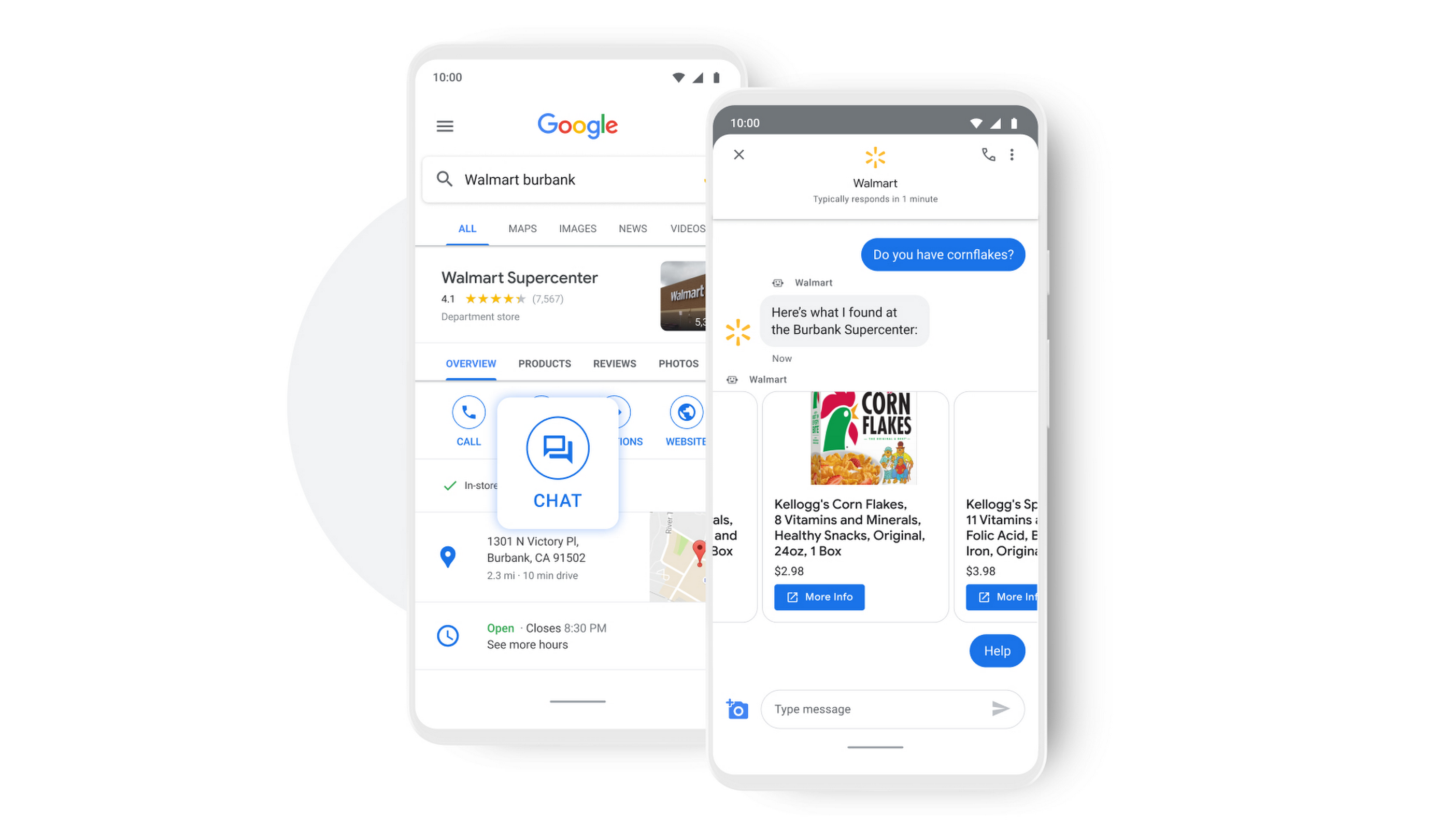
People turn to Google when they are searching for answers to their questions, looking to buy something, or trying to accomplish a particular task with one of our many tools. In fact, 68% of all online experiences begin with a search engine.
At Google, we know how important it is for interactions with a brand to be personalized, helpful, and simple. With AI-powered Business Messages, customers are able to chat with virtual agents that understand, interact, and respond in natural ways.
We are also combining smart automation with the ability for customers to chat with live agents when it’s really needed. This approach saves your customers precious time, while also saving you money. And with Business Messages automatically handling many customer inquiries in the background, businesses have the option to distribute their human customer service agents to address other needs.
Getting started with conversational AI is easy with Bot-in-a-Box
We know it can be difficult to get started with AI. That’s why we are utilizing existing Google AI tools like Dialogflow—part of Google Cloud Contact Center AI—to create the capability within Google’s Business Messages called Bot-in-a-Box, which makes getting started with Conversational AI easy. Bot-in-a-Box allows for fast and effective adoption of automation for businesses of all sizes.
Enabling Business Messages with Bot-in-a-Box can be as simple as leveraging an existing customer FAQ document you already have, whether it’s from a web page or an internal document. And since the conversational AI is powered by Business Messages and Dialogflow working together, your chat bot is able to understand and respond to customer questions automatically without the need to write code.
Bot-in-a-Box also supports other critical journeys like “Custom Intents.” That means that your bot is able to understand the different ways customers express a similar question and respond accurately by using machine learning capabilities.

Finding success
In April 2021, Wake County courthouses in North Carolina partnered with Tango Technology to implement Business Messages when it became apparent that being able to provide the public and attorneys with around-the-clock access to information would significantly reduce the pressure on courthouse staff. Using Bot-in-a-Box, Tango Technology was able to customize a solution for Wake County Courthouse, Justice Center, and Clerk of Superior Court in just four days.
“With the combination of Google’s Business Messages, GCP, and Dialogflow, we were able to spin up an AI-driven bot for the courts in days. And the technology stack allows us to continually improve by adding functionality in an agile process.”— Mike Lotz, Co-Founder, Tango Technology
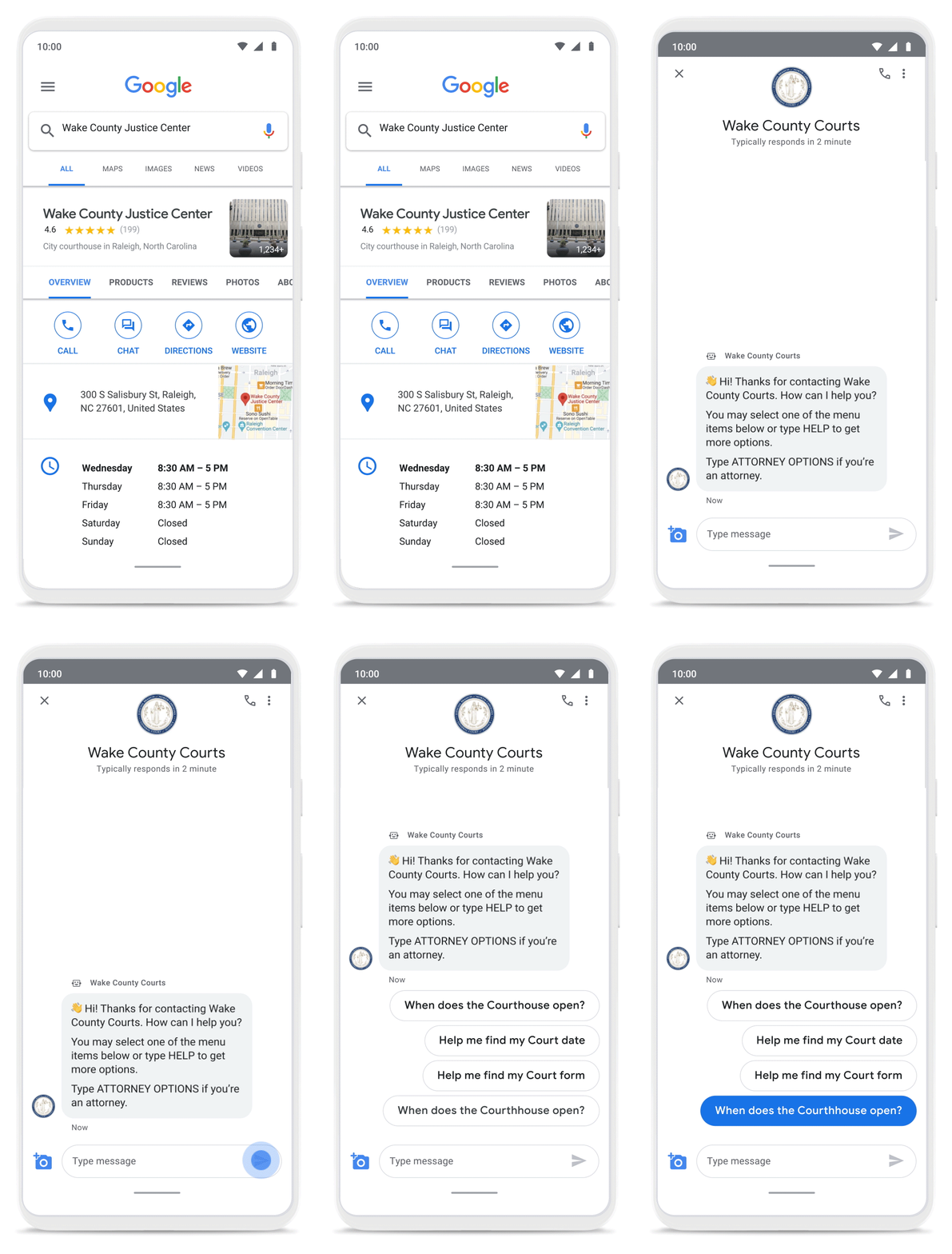
With Business Messages, North Carolina courthouses saw a 37% decrease in the call volume handled by courthouse staff. With 398,298 fewer phone calls during the first year of operation, the AI-based messages helped Wake County Courthouse work more efficiently and productively.
We’ve seen many brands benefiting from AI-powered Business Messages. For instance, Levi’s saw a 30% increase in off-hours shoppers and surpassed 85% customer satisfaction scores after implementing Business Messages. They also drove 30x more store-related questions than Levi’s website chat.
Bring Google’s conversational AI to your storefront with Business Messages
Google’s Business Messages makes it easier for businesses of all sizes to engage their existing or potential customers in a virtual conversation, when and where they need it.
To learn more, watch our Cloud Next session here or visit us at g.co/businessmessages. We have specialized services to help you get started and can share the wisdom of our channel partners and dedicated experts who specialize in unleashing the potential of conversational AI.
Connected Data is the Lifeblood of Today’s Retailers: IDC’s 2022 Research

4690
Of your peers have already read this article.
4:00 Minutes
The most insightful time you'll spend today!
For a look ahead at the trends that will animate the retail industry this year, let’s take a look back at the 2022 National Retail Federation (NRF) “Big Show” in NYC.
Attendees at January’s event were treated to tangible examples of how retail challenges are being solved today, including new solutions to help them parse customer expectations and buying patterns, adapt stores into omni-channel experience hubs, and improve data visibility and actionability.
NRF 2022 also took the “omni-channel everything” theme of last year’s show to the logical next level: Enabling the best hybrid experiences. The message came through loud and clear of the importance of integration and interoperability in this new hybrid world – making everything work well together.
The need for modern digital infrastructure to enable this blending of physical and digital retail smoothly is paramount. To that end, technology vendors demonstrated how digital transformation initiatives, such as contactless and real time IoT and mobile applications, need to be built on cloud, edge, and secure connectivity to allow retailers to achieve the modern seamless hybrid retail that today’s consumer wants.
Other prominent themes and technologies highlighted at NRF included: extending engagement in the metaverse, sustainability, physical and digital security, and the agility and adaptability imperative.
The Metaverse and Hybrid (Omni-channel) Experiences
Today, the metaverse is an extension of our lives, enhanced by technology, which exists as a series of virtual worlds. In the future, the metaverse will be an interconnected, endless world where digital and physical lives fully converge. Imagine waiting for an appointment at a real booth on the NRF show floor while your avatar roams a fully fleshed-out digital NRF, meeting other virtual attendees, stopping for coffee at the digital Starbucks, and paying for a coffee that an in-the-flesh Starbucks employee brings to them. Digital and physical selves merge seamlessly in the metaverse, as the worlds draw closer together.
In the metaverse, brands have a digital presence, too. Nike filed seven trademarks late last year, including those for “Nike,” “Just Do It,” and its swoosh logo, and posted openings for virtual designer roles, indicating its intent to make and sell virtual branded sneakers and apparel. It subsequently purchased RTFKT Studios, a company that already makes and sells NFTs and digital sneakers. (In one collaboration with teenage artist FEWOCiOUS, the company sold 600 pair/NFTs of sneakers in just six minutes to the tune of more than $3.1 million.)
The metaverse also opens possibilities for gathering data about consumers and product demand. Imagine a sneaker drop in the virtual world. Certain styles of new kicks sell like gangbusters, giving the brand insight into what might sell IRL, intelligence that leads to trend-right production and less inventory headed for markdown or landfills. The metaverse can be a vehicle for more sustainable operations.
The metaverse further bridges the narrowing gap between digital worlds and physical worlds. Most consumers aren’t outfitting an avatar, but they are moving between online and offline and expect retailers to accommodate those hybrid omni-channel journeys seamlessly. Those demands have accelerated around last-mile delivery and experiences such as buying online and picking up in store (BOPIS) or at curbside, shopping in store and returning merchandise online, adding items to a BOPIS purchase when at the store, or communicating a substitution to the third-party grocery delivery service
Hybrid experiences open opportunities to please the consumer in new ways, but they also add expense and complexity. The need to meet this demand while enabling profitability was a major theme behind many of the technologies discussed at NRF. These included artificial intelligence (AI) for recommending the right product, return logistics software for defining and guiding product-specific reverse logistics workflows, order orchestration and fulfillment applications for omni-channel shopping, and last-mile delivery visibility for optimizing customer experience, to name a few. Also on display were task management applications help to improve and optimize in-store employee engagement, as well as touch-free applications to allow for faster payments and customer self-service checkout. RFID continues to improve inventory accuracy and inventory locating on the shelf, throughout the store, and the supply chain.
Sustainability
NRF 2022 saw a strong focus on sustainability. An NRF/IBV study released at the show highlighted the significant embrace of sustainable shopping by consumers. According to the survey, 62% of shoppers are “willing to change their purchasing habits to reduce environmental impacts.” About half indicated a willingness to pay a premium – on average a 70% premium – for sustainable products and brands.
Retailers are working to improve sustainability and reduce carbon footprint across operations by using sustainable sourcing through the supply chain, the store, and even returns. Tech vendors unveiled a variety of solutions enabled by cloud/edge, AI, computer vision, and IoT/RFID to allow retailers to effectively measure and record their environmental efforts, with the goal of reducing their impact.
Several cloud and digital infrastructure providers showcased sustainability clouds and other technology aimed at asset management with the goal of reducing energy consumption, water usage, waste. Examples included using IoT sensors to reduce water usage, optimizing re-use of store assets, and dashboards that allow retailers to accurately monitor and measure carbon output. However, such sustainability solutions can be most successful when running on the next-generation digital infrastructure that helps retailers better compete and differentiate in today’s omni-channel world.
Physical and Digital Security
According to a 2021 NRF survey, 57% of U.S. retailers reported the pandemic led to an increase in organized retail crime, while 50% reported an increase in shoplifting. When IDC’s Future Enterprise Resiliency & Spending Survey, Wave 10 (November 2021) asked retailers which digital infrastructure investments would provide the greatest strategic advantage in 2022, their #1 response was “cybersecurity and recovery investments.”
A wide range of technology vendors acknowledged retailer concerns with regards to security, fraud, and loss prevention:
- Networking, connectivity, and edge vendors highlighted multilayer security solutions that promise to protect data from a range of IoT applications that utilize customer and associate data. Many offer security consulting services to address varied threats including ransomware, retail crime, and loss prevention.
- Security and e-commerce security vendors showcased solutions to prevent fraud and abuse in e-commerce applications as well as omni-channel applications such as BOPIS and curbside pickup, using AI-based analysis for identifying “bad”/risky customers and mitigating risk.
- Cloud vendors highlighted how retail clouds provide consistent, reliable identity management and data security.
- POS/payments/store technology vendors emphasized their ability to handle payments securely from any platform with multifactor tokenization, improved identity techniques such as biometrics and voice authentication, as well as AI-enabled and computer vision solutions for loss prevention at checkout and at the door.
The Agility and Adaptability Imperative
On display at the show were multiple flavors of the digital infrastructure technology that retailers need to achieve agile, personalized, data-driven, integrated seamless operations across the many channels of today’s retail landscape. The emphasis was apt. More than half of retailers plan to boost investment in business agility and operational agility over the next 12 months, according to IDC’s Future Enterprise Resiliency & Spending Survey, Wave 10 (November 2021).
Technology vendors highlighted their connectivity investments to enable business and operational agility and their technology investments for better ease of integration, scalability, and the ability to more easily swap out or mix and match applications with integrated platforms, open systems, hybrid cloud, and retail industry clouds.
Vendors also showed off infrastructure to better harness data while enabling its visibility, maximizing its value, and providing the data-driven personalization essential for competitive advantage and differentiation. Highlights included fast, secure connectivity, 5G and Wifi-6, and edge- and cloud-enabled data and AI platforms to generate real-time insights – all designed to enable today’s omni-channel retail.
Advice for the technology buyer
Retailers should consider these key themes from NRF 2022 when making technology investment decisions for 2022 and beyond. To avoid lagging behind those retailers already moving toward thriving into the future, take action to:
- Enable the seamless, contactless omni-channel approach that today’s consumers want and expect.
- Replace legacy infrastructure that was not built to handle the modern retail environment that requires the agility and adaptability to seamlessly connect rapidly increasing volumes of data securely and more quickly than ever.
Whether sustainability, adaptability, the metaverse, or security are top concerns, addressing business needs holistically and strategically should be job #1.
Continue the conversation by downloading our Transforming retail and CPG markets whitepaper today.
4698
Of your peers have already watched this video.
10:30 Minutes
The most insightful time you'll spend today!
How Google’s Customer Data Platform Helps Retail Brands Offer Data-driven , Personalized CX
Retail companies need customer insights to deliver personalized experiences that impact revenue generation and cost savings. Watch how Google Cloud’s customer data platform helps brands integrate and build holistic view of data in silos to drive marketing and customer service success.
3301
Of your peers have already watched this video.
1:30 Minutes
The most insightful time you'll spend today!
Fitbit’s Zero-Downtime Migration to GCP
In 2019, Fitbit moved all of its production operations from managed hosting to Google Cloud Platform without any downtime. The Fitbit experience is provided by a monolithic application backed by 200+ data stores, making the task of moving service by service impossible.
So, Fitbit decided to run services in both hosting environments and move user by user. This is the story of Fitbit’s migration to GCP, which was tested and executed mostly in production, without any effects to the users.
The tale starts with a review of goals and requirements for the migration. What should the user experience be during this period? How would we know if we are meeting that benchmark and can push forward? How would we slow or reverse migration if things weren’t going well? Answering these questions led us to a migration plan that started with the movement of internal users, followed by the careful transplant of a small number of real customers, and concluded with a mass migration of the majority of our users.
This migration path required significant new additions to Fitbit’s architecture, including new testing, routing, and caching techniques. As the journey approached its conclusion, we recognized that these methods were not merely allowing us to migrate; they were allowing Fitbit to operate in multiple hosting environments simultaneously. The lessons from this migration have provided the foundation for a mutli-region architecture that will unlock the full potential of life in Google Cloud Platform.
Towards The Next Wave of Google Cloud Infrastructure Innovation: New C3 VM and Hyperdisk
2793
Of your peers have already read this article.
3:00 Minutes
The most insightful time you'll spend today!
Meeting the rapidly growing demands of our customers’ high performance computing and data-intensive workloads requires deep innovation — at Google Cloud, we know we can’t rely on ever-faster CPUs alone, like Moore’s Law has enabled in the past. Customers can either optimize their workloads for a given platform, or we can offer them a platform that is optimized for their specific needs. At Google Cloud, we choose the latter.
Today, we have an exciting new release resulting from these efforts: the new C3 machine series powered by the 4th Gen Intel Xeon Scalable processor and Google’s custom Intel Infrastructure Processing Unit (IPU). Along with the recently announced Hyperdisk block storage which offers 80% higher IOPS per vCPU for high-end database management system (DBMS) workloads when compared to other hyperscalers. C3 machine instances can deliver strong performance gains to enable high performance computing and data-intensive workloads. Customers such as Snap, for example, have seen approximately a 20% increase in performance for a key workload over the previous generation C2.
The C3 machine series is just the latest example of this architectural approach. For over two decades, Google has purpose-built and designed some of the world’s most efficient and scalable computing systems to meet the needs of our customers. We built the Tensor Processing Unit (TPU) to power real-time voice search, photo object recognition, and interactive language translation; unveiled Titan, a secure, low-power microcontroller to help ensure that every machine boots from a trusted state; and launched Video Coding Units (VCUs) to enable video distribution that addresses a range of formats and client requirements. We engineer golden paths from silicon to the console, using a combination of purpose-built infrastructure, prescriptive architectures, and an open ecosystem to deliver what we term workload-optimized infrastructure.
Getting to know the C3 machine series
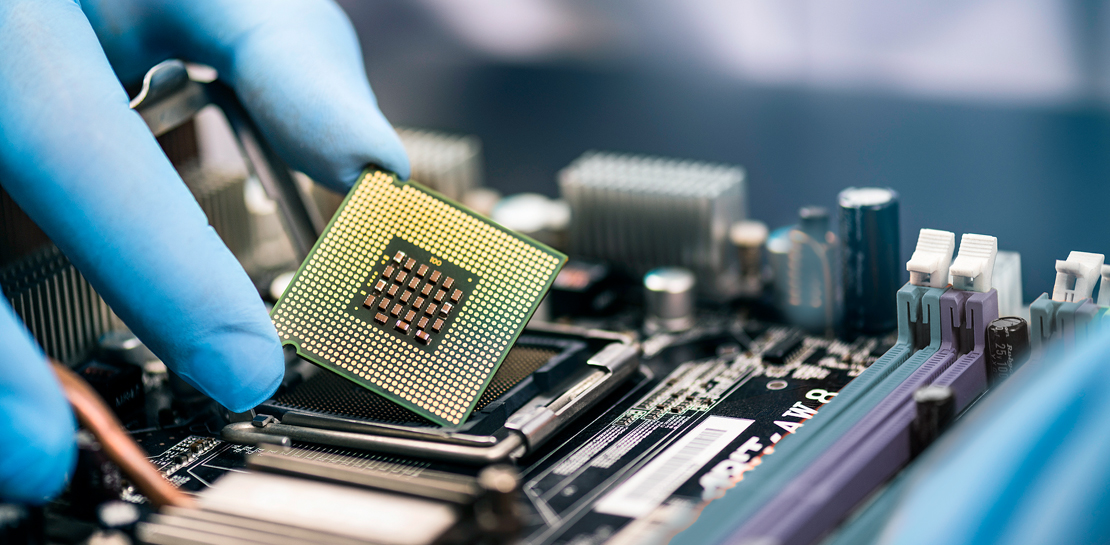
The Compute Engine C3 machine series, now available in Private Preview, is the first VM in the public cloud with the 4th Gen Intel Xeon Scalable processor and with Google’s custom Intel IPU. C3 machine instances use offload hardware for more predictable and efficient compute, high-performance storage, and a programmable packet processing capability for low latency and accelerated, secure networking.
“We are pleased to have co-designed the first ASIC Infrastructure Processing Unit with Google Cloud, which has now launched in the new C3 machine series. A first of its kind in any public cloud, C3 VMs will run workloads on 4th Gen Intel Xeon Scalable processors while they free up programmable packet processing to the IPUs securely at line rates of 200Gb/s. This Intel and Google collaboration enables customers through infrastructure that is more secure, flexible, and performant.” – Nick McKeown, Senior Vice President, Intel Fellow and General Manager of Network and Edge Group
The System on a Chip hardware architecture introduced in C3 VMs can enable better security, isolation, and performance. In the future, this purpose-built architecture will also allow us to offer a richer product portfolio, such as support for native bare-metal instances.
Hyperdisk block storage and 200 Gbps networking
Block storage and VMs go hand in hand. Last month, we announced the Preview release of Hyperdisk, our next-generation block storage. The new architecture decouples compute instance sizing from storage performance to deliver 80% higher IOPS per vCPU than other leading hyperscale cloud provider. And compared with the previous generation C2, C3 VMs with Hyperdisk deliver 4x higher throughput and 10x higher IOPS. Now, you don’t have to choose expensive, larger compute instances just to get the storage performance you need for data workloads such as Hadoop and Microsoft SQL Server.
To enable high performance computing workloads, C3 VMs also feature 200 Gbps low-latency networking powered by our custom IPU, as well as line-rate encryption using the open source PSP protocol.
What our customers and partners are saying

“We were pleased to observe a 20% increase in performance over the current generation C2 VMs from Google Cloud in testing with one of our key workloads. These continued performance improvements enable better end user experience and application cost efficiency.” – Aaron Sheldon, Sr. Software Engineer, Snap Inc.

“Based on the initial performance data, running weather research and forecasting (WRF) on C3 clusters can deliver as much as 10x quicker time to results for about the same computational cost. This will significantly accelerate R&D for our customers in weather, environment, and engineering domains.” — Michael Wilde, CEO, Parallel Works Inc.

“In early testing with our flagship products, including Ansys Fluent, Mechanical and LS-DYNA, on the new Google Cloud C3 VM, we’re seeing up to 3x performance gains over C2 VMs due to higher memory bandwidth and lower network latency.” – Shane Emswiler, Senior Vice President of Products, Ansys
Where we are headed
With the exponential rise in the complexity of cloud infrastructure, we as an industry must turn to automation to manage these platforms efficiently at scale. Along with Infrastructure as Code, custom chips like the Titan, the TPU and the IPU, pave the way for a not-so-distant future where we’ll automate over half of all infrastructure decisions, configuring systems dynamically in response to usage patterns. At Google Cloud, we are committed to continuing our long history of hardware innovation with a focus on workload optimization and automation.
To learn more about C3 VMs and Hyperdisk, check out our session at NEXT ‘22, How Google Cloud optimizes infrastructure for your workloads. To request access to the C3 VMs or Hyperdisk, please reach out to your sales representative or account manager.
More Relevant Stories for Your Company

Turning the Tide: How PrestaShop Regained Trust in Data
Since 2007, PrestaShop has helped companies unlock the power of e-commerce through its open-source platform. Over 300,000 merchants worldwide use the PrestaShop platform to grow their business and serve online shoppers. "Our open-source strategy to ecommerce enablement sets us apart," says Rémi Paulin, Ph.D., Data Architect at PrestaShop. "Customization is

Go Green with Google’s Latest Tool and Pick the Most Sustainable Cloud Region
As a Google Cloud customer, your carbon footprint is already carbon neutral: Google first achieved carbon neutrality in 2007, and has been purchasing enough solar and wind energy to match 100% of its global electricity consumption since 2017. Now, Google is targeting a new sustainability goal: operating on carbon-free energy (CFE) 24/7,




Google Cloud Helps DSW Engage Over 28M Shoe Lovers in Real Time
DSW Shoes turned to Google Cloud and Google Cloud Partner – Slalom to develop a realtime, engaging loyalty program that serves more than 28 million active members instantly. The major move from on premise to a cloud-based, data-driven platform that offers speed, flexibility, and scalability has helped increase DSW's new

Revolutionizing Cloud Computing: Introducing G2 VMs with NVIDIA L4 GPUs
Organizations across industries are looking to AI to turn troves of data into intelligence, powered by the latest advances in generative AI. Yet for many organizations, there is a barrier to adopting the latest models because they can be costly to train or serve. A new class of cloud GPUs
