






Takeaways from Forrester’s Cloud Data Warehouse Q1 2021 Report
READ FULL INTRODOWNLOAD AGAIN5146
Of your peers have already downloaded this article
20:00 Minutes
The most insightful time you'll spend today!
4709
Of your peers have already watched this video.
10:30 Minutes
The most insightful time you'll spend today!
How Google’s Customer Data Platform Helps Retail Brands Offer Data-driven , Personalized CX
Retail companies need customer insights to deliver personalized experiences that impact revenue generation and cost savings. Watch how Google Cloud’s customer data platform helps brands integrate and build holistic view of data in silos to drive marketing and customer service success.
Google Cloud & Optiva Partnership Cements the Future of Telecom for Driving Strong Customer Experience

3185
Of your peers have already read this article.
3:00 Minutes
The most insightful time you'll spend today!
Editor’s note: Coming out of Mobile World Congress 2022, we are excited to share key learnings from our partner ecosystem on how to leverage advancements in 5G technologies to power customer experiences that seamlessly blend our physical and virtual world into one. The original version of this blog was published by Optiva, Inc. Please enjoy this updated entry from our partner.
Telecom operators and communications service providers (CSPs) are elevating customer experiences (CX) across the customer lifecycle. Today’s digital customers’ expectations, needs, usage behaviors and choices are growing and evolving exponentially. Therefore, it is critical to deliver superior and personalized digital customer experiences at each customer lifecycle touchpoint.
To succeed, you need to deliver a dynamic customer experience. Operators are embracing the mantra — next-level CX is the new currency — from onboarding and instant offer provisioning to delivering enhanced self service and supporting subscription renewals, queries and billing actions, and in-session improved experiences. There are commercial benefits to adapting to this paradigm, too, as key customer segments may see added value in enhanced experiences. With 5G, the Ericsson “5G consumer potential” report found that half of early adopters would be willing to pay 32% more for 5G services. Consider the advanced experiences that 5G is able to support, such as:
- Low-latency connectivity and real-time network slicing capabilities, delivering an immersive yet reliable augmented and virtual reality (AR/VR) experience. Imagine a soccer match with a rich 360-degree stadium experience from the customer’s choice of location that immerses a fan in the game excitement.
- AI-driven insights enabling operators to predict customer behavior patterns in real time and leveraging available network capacity to provide customers with personalized, just-in-time discounts and offers that can increase ARPU, enhance the customer experience and reduce churn.
- Proactive action, such as instantly optimizing 5G connectivity network slice bandwidth when the quality of service does not meet its promised level. This could include delivering assured, lag-free network performance to an online gamer for next-level gaming intensity or it could be about providing proactive, transparent reimbursements to end customers on the fly, preventing dissatisfaction complaints. Further, 5G with dedicated network slices also enables business applications that exceed an end-to-end SLA essential to a business-to-business (B2B) subscriber.
- Enabling immersive experiences across all services and touchpoints by redefining how consumers interact with offerings from anywhere, whether that’s a smartphone or tablet. What’s more, it’s about feeding intelligence gleaned from those customer interactions into a single view across all ecosystems in real time to gain a full picture of the customer.
How cloud shapes the future of telecom customer experience
Through cloud technology and cloud-native architectures, telecom operators and service providers have the opportunity to deliver such 5G use cases and differentiated offerings. Cloud maximizes the benefits and enables delivery, thereby dramatically improving and reimagining the possibilities for CX. This includes how customers connect, consume and buy services, and it strengthens customer affinity and loyalty.
Cloud and the technologies it maximizes, such as 5G, also present a wide range of innovative monetization opportunities beyond traditional telecom revenue streams and beyond connectivity. Thus, the highest priority for telecom must be on effectively and efficiently harnessing the potential capabilities for launching personalized service offerings for consumer and enterprise at a high velocity. As a result, the new customer engagement model requires agility, responsiveness and reliability to deliver these services across all touchpoints of the customer’s journey.
As such, Optiva and Google Cloud are engaging in a multi-year partnership to help CSPs enable faster time to innovation, flexible 5G monetization and operational cost savings, while driving strong customer experience. Leveraging the Google Cloud platform enabled by Anthos, which supports the deployment and operation of business support system (BSS) applications across public clouds, on-premises data centers and at the network edge, Optiva’s distributed solution deployment offers telecom operators new ways to monetize 5G networks through use cases such as private 5G, IoT and ultra-low latency edge solutions.
Gaining a competitive edge on the new playing field
The solution to these new BSS and monetization requirements lies in the cloud’s unique advantages. For example, to achieve agility, an essential cloud tool, the sandbox, allows operators to accelerate iterations to find optimal solutions. The sandbox shortens product cycles to a fraction of traditional timelines and empowers operators to reinvent their functionalities and service capabilities — lowering business risk and driving dramatic cost savings.
As a result, operators can increasingly explore, experiment, learn, launch and relaunch rapidly. This allows for the fast introduction of new and differentiated offerings, increased service velocity and cost-effective go-to-market opportunities. For that reason, a new competitive playing field is emerging and making the days of traditional and full digital transformations a thing of the past.
Instead, by leveraging cloud technologies, customer lifecycle opportunities and possibilities are born, such as:
- End-to-end digital onboarding experiences: Hassle-free digital customer onboarding in little time by leveraging next-gen BSS with embedded automation across the different modules. This digitizes the customer registration and ordering process, including customer verification, SIM allocation, and the selection and activation of a user’s choice of plans and more.
- Real-time offer optimization based on customer insights: On-the-fly optimization of offers based on AI-driven real-time insights to predict usage behavior.
- Handling ultra-low latency service quality with distributed systems: Delivering and charging for ultra-fast services from the edge rather than sending and processing them at a central cloud. This enables new business opportunities by leveraging new private 5G offerings.
- Assured service quality and complaint reduction through automated real-time network configuration: By consistently monitoring the network quality and application and taking corrective actions to match the SLA requirements, we can boost the user experience (e.g., if a user subscribes to an 8K video plan). Thus, if the bandwidth level drops below the agreed-upon resolution level, the service can push an update to the user and potentially offer them a complimentary added data bundle leveraging analytics, churn prediction models and insights.
- Maintaining a real-time single source of truth for customer data: Having a single, distributed repository of real-time updated customer data allows CSPs to deliver customer services more smoothly across all touchpoints.
- Expanding product catalog with a partner ecosystem: Leveraging open APIs to build and expand partner ecosystems to launch new products and services that enable CSPs to expand the services they provide customers and help increase their market relevance.
Cloud momentum accelerates, enabling revolutionized BSS and revenue models
Service providers are forging their paths and investing in and adopting cloud technologies. Cloud empowers operators beyond connectivity and volume offerings on data, text and voice. The technology offers more and unlocks the operator’s ability to meet specific user segment experience requirements in real time and differentiate offerings based on latency, capacity, throughput, speed and device type.
As a result, operators can shift to new product-driven monetization capabilities, allowing them to configure their BSS without heavy customizations or necessitating the expertise of their IT teams. Instead, they can now empower, for example, marketing teams — with minimal steps and product-specific expertise needed — to optimize rate plans in real time based on usage and experience analytics, roll out promotions and satisfy customer demand for a delightful experience.
The new currency across the customer lifecycle — next-level telecom BSS and CX
Operators need the capability to learn fast, fail fast, launch, and relaunch in quick cycles. This capability is growing more critical as Capex and Opex become challenged and protecting ARPU and increasing subscribers becomes harder in a cloud economy. Telecom operators are picking up speed for cloudification and reimagining the potential of their BSS systems. And with 5G, innovation driven by cloud-native capabilities and automation via machine learning, operators have a genuine opportunity to revolutionize customer engagement and deliver a next-level hyper-personalized CX — the new currency of 5G cloud.
Guide to Google’s Underwater Infrastructure
5669
Of your peers have already read this article.
1:00 Minutes
The most insightful time you'll spend today!
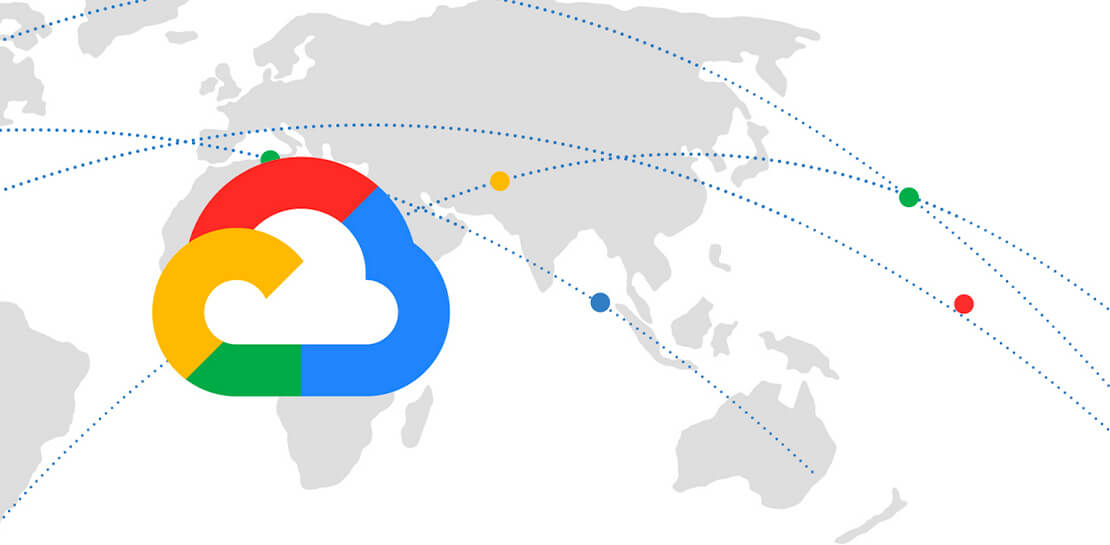
From data centers and cloud regions to subsea cables, Google is committed to connecting the world. Our investments in infrastructure aim to further improve our network—one of the world’s largest—which helps improve global connectivity, supporting users and Google Cloud customers. Our subsea cables play a starring role in this work, linking up cloud infrastructure that includes more than 100 network edge locations and over 7,500 edge caching nodes.
As it turns out, readers of this blog seem to find what happens under the sea just as fascinating as what’s going on in the cloud. Posts on our cables are consistently among our most popular, which is why we brought them together for you here so you can take a deeper dive (pun intended).
Here’s a list our most popular posts on our underwater infrastructure:
2021
- Hola, South America! Announcing the Firmina subsea cable
- This bears repeating: Introducing the Echo subsea cable
- The Dunant subsea cable, connecting the US and mainland Europe, is ready for service
2020
2019
- Introducing Equiano, a subsea cable from Portugal to South Africa
- A quick hop across the pond: Supercharging the Dunant subsea cable with SDM technology
- Curie subsea cable set to transmit to Chile, with a pit stop to Panama
2018
- Expanding our cloud network for a faster, more reliable experience between Australia and Southeast Asia
- Delivering increased connectivity with our first private trans-Atlantic subsea cable
2017
2016
- New undersea cable expands capacity for Google APAC customers and users
- Google Cloud customers run at the speed of light with new FASTER undersea pipe
- A journey to the bottom of the internet
Our cable systems provide the speed, capacity and reliability Google is known for worldwide, and at Google Cloud, our customers can make use of the same network infrastructure that powers Google’s own services. To learn more, you can view our network on a map, or read more about our network.
AI in Manufacturing Already A Mainstream: Google Cloud Study

5683
Of your peers have already read this article.
3:00 Minutes
The most insightful time you'll spend today!
While the promise of artificial intelligence transforming the manufacturing industry is not new, long-ongoing experimentation hasn’t yet led to widespread business benefits. Manufacturers remain in “pilot purgatory,” as Gartner reports that only 21% of companies in the industry have active AI initiatives in production.
However, new research from Google Cloud reveals that the COVID-19 pandemic may have spurred a significant increase in the use of AI and other digital enablers among manufacturers. According to our data—which polled more than 1,000 senior manufacturing executives across seven countries—76% have turned to digital enablers and disruptive technologies due to the pandemic such as data and analytics, cloud, and artificial intelligence (AI). And 66% of manufacturers who use AI in their day-to-day operations report that their reliance on AI is increasing.

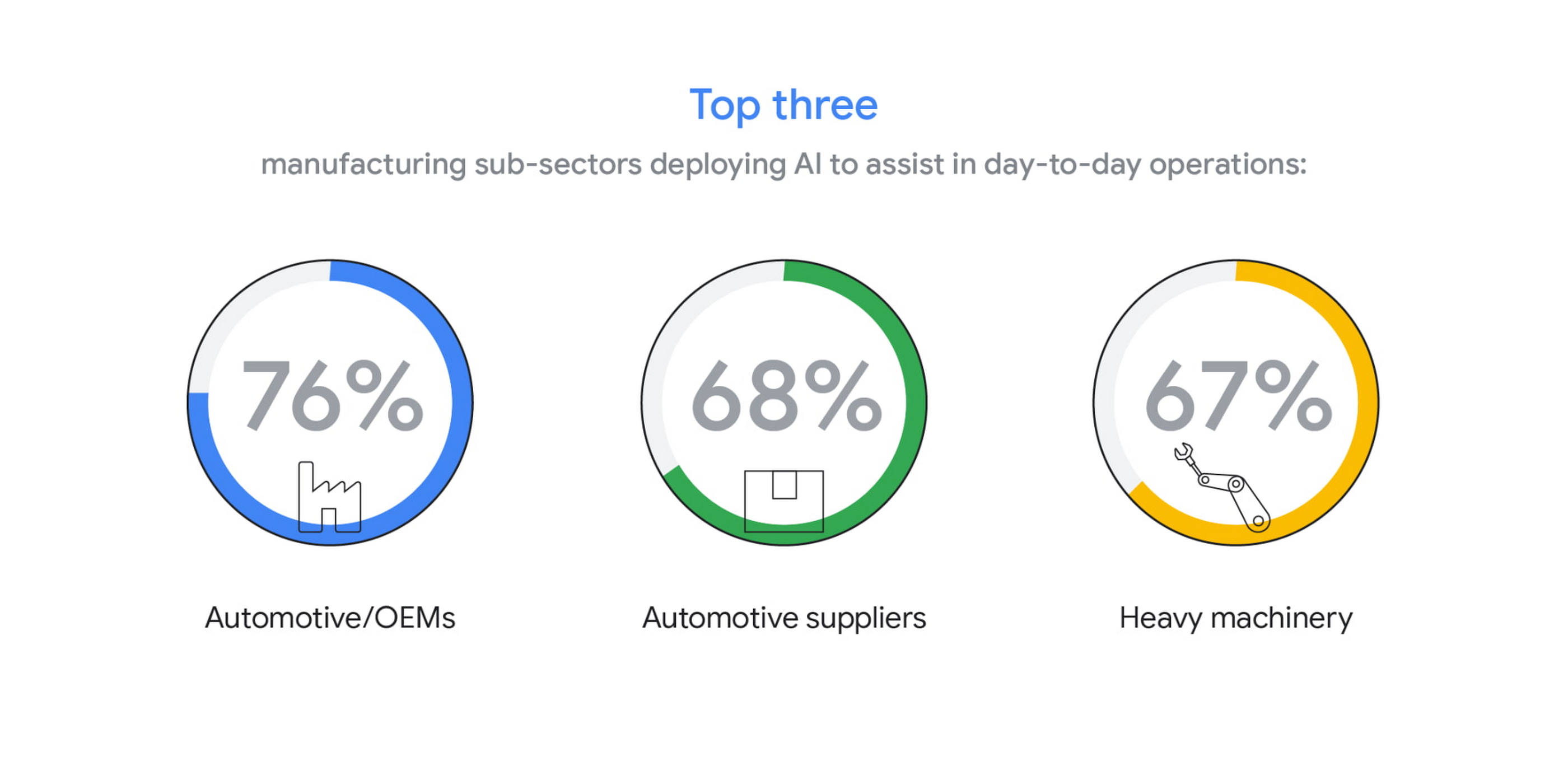
The top three sub-sectors deploying AI to assist in day-to-day operations are automotive/OEMs (76%), automotive suppliers (68%), and heavy machinery (67%).
In fact, Bryan Goodman, Director of Artificial Intelligence and Cloud, Ford Global Data & Insight and Analytics shares, “Our new relationship with Google will supercharge our efforts to democratize AI across our business, from the plant floor to vehicles to dealerships. We used to count the number of AI and machine learning projects at Ford. Now it’s so commonplace that it’s like asking how many people are using math. This includes an AI ecosystem that is fueled by data, and that powers a ‘digital network flywheel.’”
Moving from edge cases to mainstream business needs
Why are manufacturers now turning to AI in increasing numbers? Our research shows that companies who currently use AI in day-to-day operations are looking for assistance with business continuity (38%), helping make employees more efficient (38%), and to be helpful for employees overall (34%). It’s clear that AI/ML technology can augment manufacturing employees’ efforts, whether by providing prescriptive analytics like real-time guidance and training, flagging safety hazards, or detecting potential defects on the assembly line.

In terms of specific AI use cases called out by the research, two main areas emerged: quality control and supply chain optimization. In the quality control category, 39% of surveyed manufacturers who use AI in their day-to-day operations use it for quality inspection and 35% for product and/or production line quality checks. At Google Cloud, we often speak with manufacturers about AI for visual inspection of finished products. Using AI vision, production line workers can spend less time on repetitive product inspections and can instead focus on more complex tasks, such as root cause analysis.
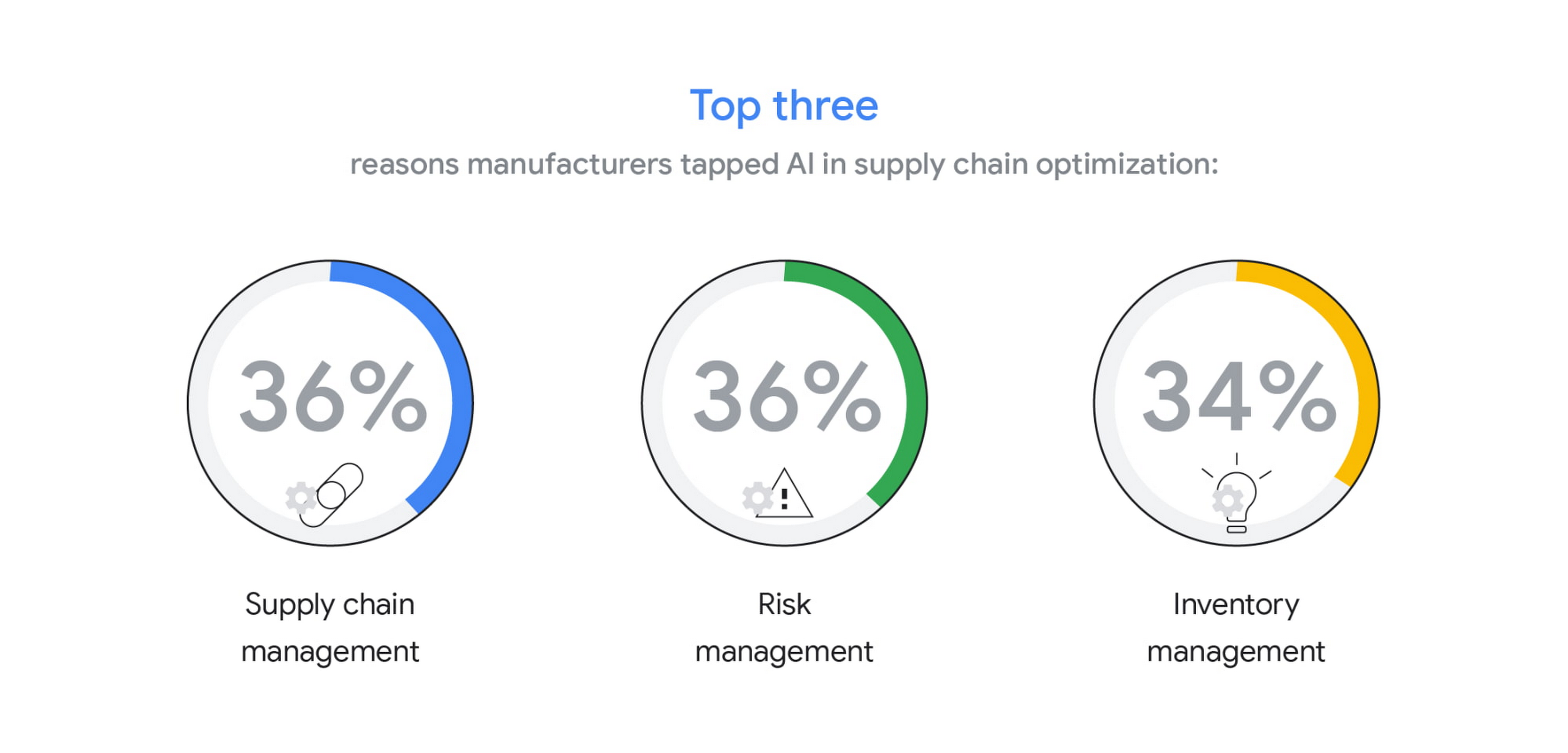
In the supply chain optimization category, manufacturers said they tapped AI for supply chain management (36%), risk management (36%), and inventory management (34%).
In our day-to-day work, we’re seeing many manufacturers rethink their supply chains and operating models to better accommodate for the increased volatility that has been brought about by the pandemic and support the secular trend of consumers asking for increasingly individualized products. We’ll share more on deglobalization in the third installment of our manufacturing insights series.
AI use differs by geography, but not for the reasons you may think
The extent to which AI is already being used today varies quite strongly between geographies, according to our research. While 80% and 79% of manufacturers in Italy and Germany respectively report using AI in day-to-day operations, that percentage plummets in the United States (64%), Japan (50%) and Korea (39%).

It’s tempting to state this disparity is due to an “AI talent gap.” Although the most common barrier, just a quarter (23%) of manufacturers surveyed believe they don’t have the talent to properly leverage AI. Cost, too, does not appear to be a roadblock (21% of those surveyed). Rather, from our observations, the missing link appears to be having the right technology platform and tools to manage a production-grade AI pipeline. This is obviously the focus of our efforts and others in the space, as we believe the cloud can truly help the industry make a step change.
Looking ahead: The Golden Age of AI for manufacturing
The key to widespread adoption of AI lies in its ease of deployment and use. As AI becomes more pervasive in solving real-world problems for manufacturers, we see the industry moving away from “pilot purgatory” to the “golden age of AI.” The manufacturing industry is no stranger to innovation, from the days of mass production, to lean manufacturing, six sigma and, more recently, enterprise resource planning. AI promises to bring even more innovation to the forefront.
To learn more about these findings and more, download our infographic here and our full report here.
Research methodology
The survey was conducted online by The Harris Poll on behalf of Google Cloud, from October 15 – November 4, 2020, among 1,154 senior manufacturing executives in France (n=150), Germany (n=200), Italy (n=154), Japan (n=150), South Korea (n=150), the UK (n=150), and the U.S. (n=200) who are employed full-time at a company with more than 500 employees, and who work in the manufacturing industry with a title of director level or higher. The data in each country were weighted by number of employees to bring them into line with actual company size proportions in the population. A global post-weight was applied to ensure equal weight of each country in the global total.
FAQs: Everything Your Need to Know About Cloud Computing
6620
Of your peers have already read this article.
1:30 Minutes
The most insightful time you'll spend today!
There are a number of terms and concepts in cloud computing, and not everyone is familiar with all of them. To help, we’ve put together a list of common questions, and the meanings of a few of those acronyms. You can find all these, and many more, in our learning resources.
What are containers?
Containers are packages of software that contain all of the necessary elements to run in any environment. In this way, containers virtualize the operating system and run anywhere, from a private data center to the public cloud or even on a developer’s personal laptop. Containerization allows development teams to move fast, deploy software efficiently, and operate at an unprecedented scale. Read more.
Containers vs. VMs: What’s the difference?
You might already be familiar with VMs: a guest operating system such as Linux or Windows runs on top of a host operating system with access to the underlying hardware. Containers are often compared to virtual machines (VMs). Like virtual machines, containers allow you to package your application together with libraries and other dependencies, providing isolated environments for running your software services. However, the similarities end here as containers offer a far more lightweight unit for developers and IT Ops teams to work with, carrying a myriad of benefits. Containers are much more lightweight than VMs, virtualize at the OS level while VMs virtualize at the hardware level, and share the OS kernel and use a fraction of the memory VMs require. Read more.
What is Kubernetes?
With the widespread adoption of containers among organizations, Kubernetes, the container-centric management software, has become the de facto standard to deploy and operate containerized applications. Google Cloud is the birthplace of Kubernetes—originally developed at Google and released as open source in 2014. Kubernetes builds on 15 years of running Google’s containerized workloads and the valuable contributions from the open source community. Inspired by Google’s internal cluster management system, Borg, Kubernetes makes everything associated with deploying and managing your application easier. Providing automated container orchestration, Kubernetes improves your reliability and reduces the time and resources attributed to daily operations. Read more.
What is microservices architecture?
Microservices architecture (often shortened to microservices) refers to an architectural style for developing applications. Microservices allow a large application to be separated into smaller independent parts, with each part having its own realm of responsibility. To serve a single user request, a microservices-based application can call on many internal microservices to compose its response. Containers are a well-suited microservices architecture example, since they let you focus on developing the services without worrying about the dependencies. Modern cloud-native applications are usually built as microservices using containers. Read more.
What is ETL?
ETL stands for extract, transform, and load and is a traditionally accepted way for organizations to combine data from multiple systems into a single database, data store, data warehouse, or data lake. ETL can be used to store legacy data, or—as is more typical today—aggregate data to analyze and drive business decisions. Organizations have been using ETL for decades. But what’s new is that both the sources of data, as well as the target databases, are now moving to the cloud. Additionally, we’re seeing the emergence of streaming ETL pipelines, which are now unified alongside batch pipelines—that is, pipelines handling continuous streams of data in real time versus data handled in aggregate batches. Some enterprises run continuous streaming processes with batch backfill or reprocessing pipelines woven into the mix. Read more.
What is a data lake?
A data lake is a centralized repository designed to store, process, and secure large amounts of structured, semistructured, and unstructured data. It can store data in its native format and process any variety of it, ignoring size limits. Read more.
What is a data warehouse?
Data-driven companies require robust solutions for managing and analyzing large quantities of data across their organizations. These systems must be scalable, reliable, and secure enough for regulated industries, as well as flexible enough to support a wide variety of data types and use cases. The requirements go way beyond the capabilities of any traditional database. That’s where the data warehouse comes in. A data warehouse is an enterprise system used for the analysis and reporting of structured and semi-structured data from multiple sources, such as point-of-sale transactions, marketing automation, customer relationship management, and more. A data warehouse is suited for ad hoc analysis as well custom reporting and can store both current and historical data in one place. It is designed to give a long-range view of data over time, making it a primary component of business intelligence. Read more.
What is streaming analytics?
Streaming analytics is the processing and analyzing of data records continuously rather than in batches. Generally, streaming analytics is useful for the types of data sources that send data in small sizes (often in kilobytes) in a continuous flow as the data is generated. Read more.
What is machine learning (ML)?
Today’s enterprises are bombarded with data. To drive better business decisions, they have to make sense of it. But the sheer volume coupled with complexity makes data difficult to analyze using traditional tools. Building, testing, iterating, and deploying analytical models for identifying patterns and insights in data eats up employees’ time. Then after being deployed, such models also have to be monitored and continually adjusted as the market situation or the data itself changes. Machine learning is the solution. Machine learning allows businesses to enable the data to teach the system how to solve the problem at hand with machine learning algorithms—and how to get better over time. Read more.
What is natural language processing (NLP)?
Natural language processing (NLP) uses machine learning to reveal the structure and meaning of text. With natural language processing applications, organizations can analyze text and extract information about people, places, and events to better understand social media sentiment and customer conversations. Read more.
Learn more
This is just a sampling of frequently asked questions about cloud computing. To learn more, visit our resources page at cloud.google.com/learn.
More Relevant Stories for Your Company

How One Company Improved Security Significantly–Without Increasing Staff
Quanta Services is the leading specialty contractor with the largest and highly-skilled trained workforce in North America. It provides fully-integrated solutions for the electric power pipeline industrial and telecommunications industries the company's geographic footprint which includes North America Latin America and Australia. It’s network of companies ensures world-class execution with

Google Cloud Garners Highest Score in Forrester New Wave for Computer Vision Platforms
In Forrester's evaluation of the emerging market for computer vision platforms, it identified the 11 most significant providers in the category — Amazon Web Services, Chooch AI, Clarifai, Deepomatic, EdgeVerve, Google, Hive, IBM, Microsoft, Neurala, and SAS — and evaluated them. Its report details its findings about how well each

IDC Survey: Why 95% of CEOs Have a Digital-first Strategy
When IDC recently asked CEOs what single word most reflects what their organization needs to thrive in 2022, the overwhelming response was “technology.” CEOs want to acquire greater digital know-how as they recognize that technology will underpin the business model of the future. Digital transformation, already well underway, is becoming digital first.




Why Enterprises Should Choose Google Cloud for their SAP Workloads
Change is a constant for SAP customers. Now more than ever, SAP customers need solutions that provide them business agility, rock solid availability and security and true economic value. Learn how Google Cloud can guide your SAP journey to the cloud with simple and no cost migrations, powerful infrastructure and
