





2764
Of your peers have already downloaded this article
4:30 Minutes
The most insightful time you'll spend today!
6352
Of your peers have already watched this video.
2:00 Minutes
The most insightful time you'll spend today!
Google Cloud’s ML-based Image Classification App: A Key to Global Wildlife Conservation
Wildlife provides critical benefits to support nature and people. Unfortunately, wildlife is slowly but surely disappearing from our planet and we lack reliable and up-to-date information to understand and prevent this loss. By harnessing the power of technology and science, we can unite millions of photos from [motion sensored cameras] around the world and reveal how wildlife is faring, in near real-time…and make better decisions
wildlifeinsights.org/about
TVG Network Turns to Google Cloud and Saves $0.5 Million a Year

3630
Of your peers have already read this article.
2:30 Minutes
The most insightful time you'll spend today!
Google Cloud Results
- Maximizes revenue by allowing customers to place bets faster and more confidently
- Scales for major racing events with 80% less IT involvement and up to $500,000 annual savings
- Improves time to market for new product releases by more than 30x
- Helps enable richer mobile experiences to keep fans engaged
- Processes up to 6,000 bets per minute
The first Saturday of May is the biggest horse racing event in North America each year. Minutes before the race, millions of dollars in online bets will flow in through advanced deposit wagering (ADW) operators such as TVG Network. For TVG’s IT team, it’s a high-stakes game: If wagering systems can’t handle thousands of requests per second, revenue and customers will be lost.
To avoid downtime before a major race, TVG used to bombard its systems with ad-hoc load tests a month in advance. Before each big race event, a team of seven people spent eight hours a week deploying new infrastructure and testing various scenarios. But with complex legacy systems and manual processes, the team’s efforts could only go so far. If an unexpected system issue or undetected bottleneck was found during the run-up to the big race, all bets were off.
After a brush with downtime in 2016, TVG decided to move its ADW application to the cloud, taking the opportunity to rewrite the application to take advantage of modern, container-based architectures. After a short period of development on a different cloud services provider, TVG moved to Google Cloud Platform using Google Kubernetes Engine to automate container management and orchestration.
“We chose Google Cloud Platform because it was the most reliable, cost-effective, and automated cloud solution available,” says Tim Morrow, CTO at TVG Network. “We get better security, strong compliance, and the peace of mind that when the biggest race day rolls around, we won’t have any downtime.”
Placing the right bet
Moving to Google Cloud Platform gives TVG a variety of options in different regions and availability zones to satisfy regulatory requirements. Google Cloud Platform offers continuous availability and transparent maintenance, with no scheduled downtime or patching requirements.
“For our online wagering site, we prefer Google’s philosophy of continuous availability and live migration,” says Tim. “Having to plan for scheduled downtime of cloud instances just seems ridiculous in this day and age. And with Google Cloud Platform, we get much more consistent performance as we scale.”
To keep its IT team focused on value-added tasks, TVG uses Google Cloud managed services such as Cloud Bigtable, a highly scalable NoSQL database, as well as Cloud Storage for backups and Cloud Pub/Sub for real-time messaging between applications.
“We like the software-defined nature of Google Cloud Platform,” says Saeid Vafaeisefat, Vice President of IT, TVG Network. “The managed services are so easy to use. Google Cloud Platform even helps us mitigate and absorb distributed denial of service attacks with its global load balancing features, which we don’t pay extra for.”
TVG worked with SADA Systems, a Google Cloud Premier Partner, for consulting and deployment assistance. “SADA Systems helped us gain a deeper understanding of the advantages of Google Cloud Platform so we could make better decisions about how our application would perform and scale,” says Saeid. “They provided the facilitation, follow-up, and expert advice we needed to make our deployment a success.”
Scaling with 80% less work
With an active-active cloud architecture spanning multiple regions and the ability to conduct continuous, automated load tests, TVG no longer worries about downtime during major racing events—or any time, for that matter. Infrastructure and tools that used to be required to scale and provide resiliency are no longer needed, reducing CapEx. And with autoscaling replacing human intervention, accidental downtime is much less of a concern.
“With Google Cloud Platform, we can scale for major racing events with 80% less IT involvement and up to $500,000 annual CapEx savings,” says Tim. “Google Cloud Platform gives us faster deployment—we’re releasing new enhancements to our wagering site four times a week instead of every two months.”
More profitable user journeys
TVG’s success is being driven by ongoing modernization made possible in part by Google Cloud Platform, with TVG becoming the first U.S. operator to launch native iPhone and iPad apps. Lower latency means that stale data is never an issue, allowing customers to place bets faster and more confidently from anywhere they happen to be—which generates more revenue for TVG.
“Being on Google Cloud Platform has allowed us to develop our customer-facing channel faster while focusing on automated deployment and immutable infrastructure,” says Tim. “We have far greater confidence in our platform, and last year we broke records on our major race days while delivering an excellent customer experience.”
The Total Economic Impact of SAP on Google Cloud Gives Businesses a Transformation Accelerator: Forrester
DOWNLOAD WHITEPAPER3597
Of your peers have already downloaded this article
10:00 Minutes
The most insightful time you'll spend today!
By using Google Cloud, organizations can quickly and easily migrate their SAP applications and data to Google Cloud with minimal disruption to the business, reduce hardware and maintenance costs, and eliminate the complexities and risks of managing SAP applications on-premises. Because of Google Cloud’s pure-cloud infrastructure, organizations can host large instances in a pure-cloud environment, rather than relying on bare-metal servers as part of their public cloud strategies.
Google Cloud commissioned Forrester Consulting to conduct a Total Economic Impact™ (TEI) study and examine the potential return on investment (ROI) enterprises may realize by migrating and deploying SAP on Google Cloud. To better understand the benefits, costs, and risks associated with this investment, Forrester interviewed several customers with years of experience using SAP on Google Cloud and conducted a survey of customers who migrated SAP to Google Cloud, as well as customers who migrated SAP to a different public cloud.
After migrating their SAP infrastructure to Google Cloud, organizations found that they had more flexibility to spin up new SAP instances; reduced cost and effort to maintain SAP systems; and improved reliability, processing speeds, and uptime for SAP applications.
Download this Forrester report to find out the total economic impact of migrating your SAP workloads to Google Cloud.
Transformation Cloud: A New Wheel of Innovation and Digital Transformation

3369
Of your peers have already read this article.
1:30 Minutes
The most insightful time you'll spend today!
Looking back on the past year, I see challenges—but also reinvention. Reinvention in how children are educated. Reinvention in how medical professionals provide care. Reinvention in how customers purchase products. This reinvention was made possible by all of the IT leaders around the world who had a vision about what could be possible with technology.
Technology has allowed people to work and complete critical activities safely outside of their standard locations. But, it has also enabled transformation in ways we have not seen before: in how people collaborate, in how businesses operate, and most important to me, in how organizations innovate.
Rethinking what it means to transform
The leading indicator for organizations that are accelerating their innovation during this time is how they are thinking about transformation. Instead of asking infrastructure questions about where their apps and services should run, they are asking transformation questions about how to build an environment that enables every person, process, and technology to adapt in order to bring the highest level of innovation to the business.
Innovative companies have moved beyond migrating their data centers to the cloud, changing not only where their business is done but, more importantly, how it is done. For example, Papa John’s recently announced they are building a digital platform that looks at real-time data across the business to improve its loyalty programs, website, and customer and partner experiences. Albertsons Companies is transforming itself by reinventing grocery shopping, both the digital and physical aisle, through shoppable maps, AI-powered conversational commerce, and predictive grocery list building. Airbus is reimagining their work environment to embrace the hybrid work reality. And Siemens is partnering with Google Cloud to reinvent industrial manufacturing with AI to empower employees, automate mundane tasks, and improve product quality.
Here, transformation is made possible with technologies that enable new innovations for their customers versus decisions about where infrastructure should be run. And this aligns with a recent study by Forrester that states the top two IT initiatives for the next 12 months are to increase innovation and to invest in technology that helps employees do their jobs better.1
Some of the best conversations I’ve had with customers are focused on how to:
- Accelerate transformation while also maintaining the freedom to adapt to market needs.
- Make every employee—data scientists to sales associates—smarter with real-time data to make the best decisions.
- Bring people together and enable them to communicate, collaborate, and share with each other when they can not meet in person.
- Protect everything that matters to us—our people, our customers, our data, our customers’ data, and each transaction we undertake.
This new customer thinking is driving new technology requirements—requirements that can be solved through a transformation cloud. A transformation cloud accelerates an organization’s digital transformation through app and infrastructure modernization, data democratization, people connections, and trusted transactions. The result is an organization – and its workers – that can take advantage of all of the benefits of cloud computing to drive innovation.
The new requirements for innovation
Organizations want to work with multiple cloud providers to choose the best technology for each of their apps and services while also mitigating against inevitable cloud outages and vendor lock in. They value the flexibility of open source based solutions and look to our multicloud platforms like Google Kubernetes Engine and Anthos to instill freedom in how they innovate and drive differentiated customer experiences. It is no surprise that, in a recent Google-commissioned IDG research study, 78% of Global IT leaders stated that multi/hybrid cloud support is a major consideration when selecting a cloud provider and 74% preferred open source cloud solutions.2 Customers like MLB, DenizBank, and Macquarie Bank understand the necessity of a multicloud strategy and are taking advantage of Google Cloud’s open, hybrid architecture to give them the maximum flexibility to run their business how and where they want.
These organizations also want to use data to better understand their customers, enhance their products, and improve inventory accuracy in order to make real-time decisions—and bring it together into a cohesive data cloud. They value how analytics solutions democratize access to data for all employees and how embedded AI helps them predict and automate the future. The Forrester study mentioned above also shows that companies focused on improving their use of data for better decision-making, are taking actions to improve data self-service capabilities and make access to data and insights more democratic.3 Customers like Twitter, PayPal, The Home Depot, HSBC, and Stanford Medicine, unify their data across their organizations to power deeper AI-driven business insights, make better real-time decisions, and build and run their data-driven applications.
And while technology is driving many of the transformations we see, so are an organization’s people. Workers are finding new ways to strengthen human connections, deepen their impact, and serve customers while transforming how work happens—as shown in the fact that 59% of organizations in the IDG study accelerated or newly introduced remote working and collaboration capabilities in 2020.4 Customers like Kia Motors, Cambridge Health Alliance, and PwC are using Google Workspace to enable teams of all sizes to connect, create, collaborate, and to drive innovation from any device, and any location.
Finally, the innovation that we see in every digital transaction is matched with new ways to protect and secure the business. Organizations want to protect their employees, customers, and partners against emerging threats, analyze massive amounts of data to secure infrastructure, and build a long term strategy for strategic governance of their assets regardless of their location. Getting this right is essential as organizations see security as a top pain point impeding innovation.5 Customers like Equifax and Evernote are using Google Cloud’s secure platform and security products to extend customer confidence anywhere their systems may operate.
Google Cloud technologies are already powering customers’ transformation clouds
Supporting our customers’ reinventions are our top priority and we believe that together, we can pave the way for what is next. With our investments in multicloud and AI/ML, to sustainable infrastructure, industry solutions, and technology that improves our communities, such as COVID-19 vaccine distribution, we are proud that our customers trust Google Cloud solutions to digitally transform their business.
We have lots more to tell you about in the coming months, starting with our Data Cloud Summit on May 26th. Between this event, and the multiple other events we have this summer, you will learn about how our industry leadership and collaboration with our partners are enabling our customers to build powerful transformation clouds to support their continued reinvention.
1. Forrester Analytics Business Technographics® Priorities And Journey Survey, 2021
2. IDG Communications, Inc: “No Turning Back: How the Pandemic Has Reshaped Digital Business Agendas”, 2021
3. Of the companies that prioritize data in decision making, 37% are improving data self-service capabilities and 30% are making access to data and insights more democratic (Forrester Analytics Business Technographics® Priorities And Journey Survey, 2021)
4. IDG Communications, Inc, “No Turning Back: How the Pandemic Has Reshaped Digital Business Agendas”, 2021
5. 33% of organizations stated Security risks & concerns as a top pain point impeding innovation (IDG Communications, Inc, “No Turning Back: How the Pandemic Has Reshaped Digital Business Agendas”, 2021)
Vodafone Leverages Google Cloud to Aid COVID-19 Frontline with Anonymized Insights on Population Mobility

11197
Of your peers have already read this article.
1:30 Minutes
The most insightful time you'll spend today!
Editor’s note: When Europe’s largest mobile communications company, Vodafone, was asked by the European Commission to help understand population movement across the European Union and the UK to help fight COVID-19, it was able to provide anonymized mobile network-based insights to answer the call. Here’s how Vodafone, with the support of Google Cloud, rapidly mobilized the COVID-19 frontline, while respecting its customers’ privacy.
With the emergence of COVID-19 in early 2020, the European Commission—the executive branch of the European Union (EU)—knew that technology would be instrumental in its fight to control the pandemic. With various lockdowns imposed across its member states, the Commission was keen to predict and prevent the spread of COVID-19 and to manage the related social, political and financial impacts.
Mobile network data helps track COVID-19 across the EU
Mobile networks produce location data, which can be turned into useful anonymous insights to understand population movement within a geographic area. The European Commission, working with mobile industry association GSMA (Groupe Speciale Mobile Association), asked Europe’s major mobile phone operators for help in producing insights to support the fight against COVID-19. As the largest mobile network operator within the EU, Vodafone saw this as a critical opportunity to participate.
Vodafone had previous experience of using mobile network data to support pandemic research. For example, in 2019, Vodafone provided mobility pattern analysis to help track the spread of Malaria in Mozambique. And, during the early stages of the COVID-19 pandemic (prior to working with the European Commission), Vodafone assisted the Italian and Spanish governments in understanding their citizens’ mobility patterns. Vodafone had also previously offered anonymized and aggregated population mobility insights to support public transport and tourism authorities and retail organizations in a number of countries. Consequently, Vodafone was perfectly placed to play a greater role in supporting the European Commission’s response to the pandemic.
When asked to assist the European Commission, Vodafone first considered how it could safely share its data with the governing body without providing details on the individual movements of its customers. It realized it could achieve this through an elaborate set of anonymization and aggregation techniques. Insights are aggregated from a minimum of 50 users and Vodafone only shared these anonymous insights and never the actual raw data with the Commission. As specified by the EU, these insights are then presented onto a large geographical region, typically a city or a county with thousands of people living in that area.
These insights illustrate how people move, helping to determine how lockdowns and self-isolation measures were impacting behaviors.
Using Google Cloud to collate and store population mobility data
In April 2020, Vodafone began migrating its operations, including its mobile data, to Google Cloud on servers in Europe and the UK with elaborate security safeguards, including encryption, building on a previous partnership.
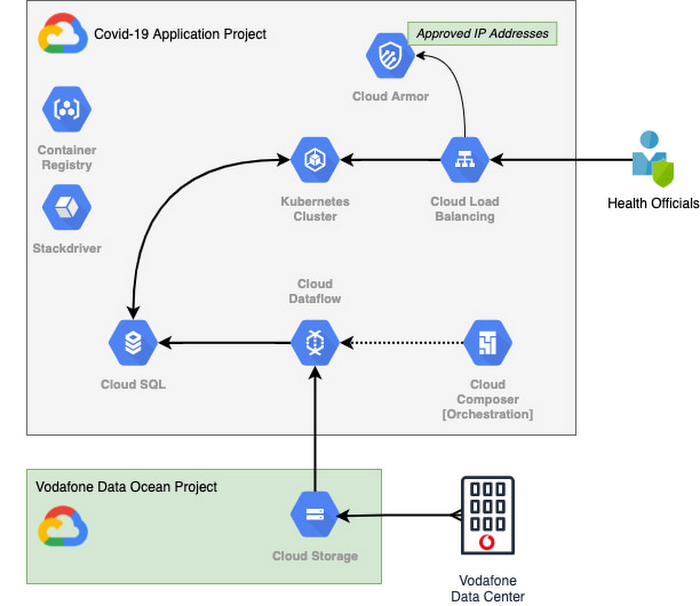
With the data residing in EU and UK data centers and not the United States, Vodafone could then retrieve anonymous insights from Google Cloud Storage instantaneously. Before supplying any information to the European Commission, however, Vodafone used Dataflow to validate the data and run a series of tests to ensure the database had accurate data, before ingesting and archiving the relevant metrics. For instant access, the data was then made available to the European Commission using a Redis database on Google Kubernetes Engine.
To ensure aggregate Vodafone customer data was always safe, secure, and anonymous, all entry points to the front-end were protected behind Google Cloud Armor, where only specific IP addresses were allowed. Using these tools, seamless data pipelines fed in predefined key performance indicators from each specified European market. While data quality measures ensured the definitions for metrics across markets were consistent and could be accurately compared.
The architecture (pictured below) shows how Vodafone integrated and anonymized its data on Google Cloud.
Live interactive dashboard shows population mobility in real-time
With its data integrated on Google Cloud, Vodafone created a live, interactive dashboard to track mobility patterns and share relevant information with the European Commission in real-time.
The European Commission Joint Research Center (JRC) was able to gather valuable information from these insights, which enabled them to see where population mobility was aiding the spread of the disease, when cross-referenced with health data. It could also assess the implications of lockdowns on different populations and forecast cross-country spreading.
Mobile data aids disease modeling for multiple stakeholders
The Vodafone data became instrumental in modeling the likely course of the disease too. For example, the University of Southampton in the UK used it to predict the outcome of different coordinated COVID-19 exit strategies across Europe. This research was published in Science Magazine in September 2020.
The Vodafone data dashboard continues to be used by individual governments, NGOs and organizations to further investigate the impacts of the pandemic and to measure the effectiveness of response strategies alongside the rollout of vaccination programs. The project also helped Vodafone win a DataIQ award for most effective stakeholder engagement.
Using the learnings from this project, Vodafone has been able to adapt its own B2B solution, called Vodafone Analytics, by adaptIng and migrating the code to work in Google Cloud Platform. This solution has been rolled out across Germany, Greece, Portugal and South Africa, and new countries are being onboarded every day. Vodafone Analytics already has more than 100 customers leveraging it for a variety of use cases—Italian fashion retailer OVS, uses it for its smart retail operation, while global real estate company, JLL, uses it to understand the footfall passing through its properties.
Working together, Vodafone and Google Cloud continue to help a range of organizations, governments, and NGOs navigate through the ongoing pandemic, optimize their operations, and help the greater good, without infringing individuals’ fundamental rights to privacy.
To learn more about Google Cloud and Vodafone, watch our full interview here.
More Relevant Stories for Your Company

Customer Voices: How Firms from Across Industries Leverage Google Cloud
From powering everyday operations and accelerating application innovation, to providing tools for specific business needs and executing on big ideas, to advancing the security of technology solutions, companies from across industries have leveraged Google Cloud for business benefits. Companies from across industries have turned to Google Cloud for transforming their

Dataflow Guarantees 50+% Increase in Developer Productivity and Infrastructure Cost Savings: Read More
In our conversations with technology leaders about data-driven transformation using Google Data Cloud - industry’s leading unified data and AI solution - , one important topic is incorporating continuous intelligence to move from answering questions such as “What has happened? to questions like “What is happening?” and “What might happen?”.
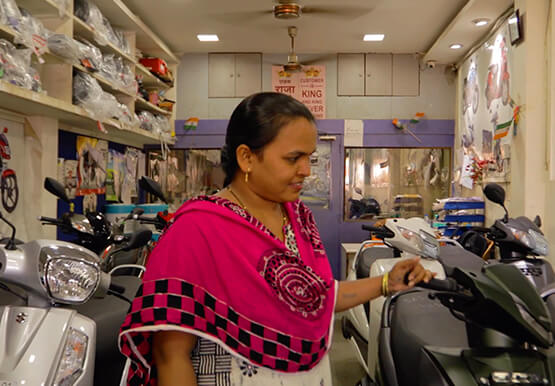

How L&T Financial Services Processes 95% of Motorcycle Loans in Less Than Two Minutes
L&T Financial Services is one of the largest lenders in India. India’s demonetization policy in recent years has led to a shift from cash transactions to digital payments. In 2016, the government withdrew 500 and 1000 rupee notes from circulation and encouraged a heavily cash-based population to deposit their canceled notes



Strategies for Migrating to the Cloud
What are the technologies that are helping enterprises scale, adapt, and modernize? Are there any strategies that enterprises can adopt for moving to the cloud? What this webinar to find out the different migration patterns to the cloud and learn how enterprises can choose the right strategies based on their
