





Google Cloud Connector for SAP LaMa Helps Make Most of the Multi & Hybrid-cloud Strategies
3498
Of your peers have already read this article.
1:30 Minutes
The most insightful time you'll spend today!
As an SAP user, you may already be familiar with SAP Landscape Management (SAP LaMa) — a specialized product that supports centralized management of your SAP landscape. SAP LaMa is useful for a wide range of SAP customers and use cases, but it’s especially important to large enterprises that manage very large, diverse, and often geographically dispersed SAP landscapes.
Google Cloud recently released a free connector that our SAP customers can deploy on an existing or new SAP LaMa instance. It’s a potentially important contribution for enterprises that need to address the growing complexity associated with multi-cloud and hybrid-cloud application strategies.
Let’s take a look at how SAP LaMa works, how it fits into a customer’s SAP landscape, and what kinds of benefits they can expect. We’ll also run through some adjustments that SAP admins will need to make in order to launch the connector.
SAP LaMa: Bringing simplicity to SAP landscapes
The Google Cloud Connector for SAP LaMa is distributed as a Java archive — provided free of charge — that customers can deploy on a SAP LaMa system that already exists on premises, or on another cloud, or as part of a new SAP LaMa deployment on Google Cloud. SAP LaMa itself is a centralized SAP management tool designed to simplify, automate, and orchestrate a variety of management and administration tasks across your entire SAP landscape. Some examples of use cases for LaMa include:
- Getting a single, comprehensive overview of your organization’s full SAP landscape
- Automating day-to-day system administration tasks, like system refreshes
- Executing mass stop/start operations across your landscape
- Deploying custom operations and workflows within the SAP application environment
SAP admins can reclaim a significant amount of time by creating SAP context sensitive automation routines that can execute without human intervention, and by completing system maintenance tasks more quickly and consistently. SAP LaMa also elevates service quality by using automation to remove manual intervention (and thus human error) from the system admin process.
The Google Cloud Connector builds bridges for SAP customers
The Google Cloud connector functions as a trigger that extends LaMa functionality to SAP systems deployed on Google Cloud. The connector enables standard SAP LaMa execution scenarios, such as:
- Listing Google Cloud projects, zones, and VM instances within SAP LaMa’s landscape overview
- Mass stop/start of Google Compute Engine (GCE) instances, using either the SAP LaMa user interface or the scheduler
- System clone, copy, and DB refresh with Post Copy Automation
- Resizing of machine types
- Relocating SAP application instances to another VM instance
- SAP HANA failover to a replicated SAP HANA HA system via the SAP Host Agent
By supporting native SAP automation and orchestration, the Google Cloud connector contributes to the overall value customers get from using SAP LaMa. What may be just as important, however, is how the connector makes life easier for customers running Google Cloud as part of a hybrid cloud or multi-cloud SAP landscape. That’s an increasingly important advantage, given recent research revealing that 82% of enterprises are currently deploying hybrid clouds.1
Before getting started with the Google Cloud connector, it’s important to be aware that you’ll have to run it on SAP LaMa 3.0 (the current version), and that you will need to have an SAP Landscape Management – Enterprise Edition licence provided by SAP to support all functionality.
In addition, getting access to the full SAP LaMa feature set for your Google Cloud SAP environment will require you to deploy SAP systems using SAP’s adaptive design principles. These include:
- Using SID (SAP system ID) and instance-specific disk mount points
- Using alias IP for virtual host mapping and portability
- Configuring DNS to manage virtual hostname (aka. FQDN) for all VMs
- Using a local NFS host to manage shared files, as well as copying, migrating, and managing solutions like Filestore and NetApp separately
Because meeting these requirements may require altering your production systems, you’ll have to assess the pros and cons of doing so to take full advantage of the Google Cloud Connector.
Google Cloud is constantly looking for ways to support our SAP customers in running more efficiently and in making the most of their hybrid cloud and multi-cloud strategies. Releasing the Google Connector for SAP LaMa is one more reflection of our commitment to creating value for customers any way we can. Learn more about Google Cloud offerings for SAP customers.
Telus Ensures Workers’ Safety Using Edge and 5G

3199
Of your peers have already read this article.
1:30 Minutes
The most insightful time you'll spend today!
Editor’s note: In February 2021, Google Cloud and TELUS announced a 10-year strategic alliance to drive innovation of new services and solutions across data analytics, machine learning, and go-to-market strategies that support digital transformation within key industries, including communications technology, healthcare, agriculture, and connected home. By December 2021, TELUS had completed a pilot for a use case that leveraged Google Cloud AI and Machine Learning solutions and Telco Edge Anthos to increase safety in the workplace and save lives in manufacturing facilities. The use case leverages Multi-Access Edge Computing (MEC) to move the processing and management of traffic from a centralized cloud to the edge of TELUS’ 5G network, making it possible to deploy applications and process content closer to its customers, and thus yielding several benefits including better performance, security, and customization. Today, we invite Samer Geissah, Head of Technology Strategy and Architecture at TELUS, to share how the company is delivering on its promise to use this technology to drive meaningful change, starting with workers’ well-being.
Whenever a new technology buzzword comes along I think: what problems does this solve, and for whom is this going to make a real difference? That’s because at TELUS, we see innovation as a means to act on our social purpose to drive meaningful change, from modernizing healthcare and making our food supply more sustainable, to reducing our environmental footprint and connecting Canadians in need. Multi-Access Edge Computing (MEC) is a buzzword that offers an opportunity to do just this. That’s why we want to leverage cloud capabilities and optimize our network’s edge computing potential, tapping into our award-winning high-speed 5G connectivity to help solve some of industry’s most complex challenges.
The reason why this presents such a great opportunity is that companies across industries still rely on maintenance-heavy on-premises systems to manage core computing tasks. But, with cloud capabilities delivered at the edge of our 5G network, we open a new world of possibilities for them. For example, manufacturers who currently rely on IoT-enabled equipment in their facilities can deliver new experiences by running advanced AI-based visual inspections directly from 5G-enabled devices–all without the need for local processing power or extra on-site space. In fact, it’s this example that inspired our new use case, where our Connected Worker Safety solution can be applied across a range of business verticals to help improve safety, prevent injury, and save lives, demonstrating how the perfect combination of skilled people and digital technology can make the world a safer place.
Empowering intelligent decision making at the edge
Be it a farm, manufacturing facility, hospital, or a factory floor, workers should be able to work in environments where their health and safety are held as the highest priority. But how can employers ensure that their remote, frontline, and in-office employees are safe and healthy at all times? We’ve found the answer by combining Google Cloud AI/ML capabilities and Anthos as a platform for delivering workloads, with our network’s infrastructure.
Together with Google Cloud, we have been leveraging solutions with the power of MEC and 5G to develop a workers’ safety application in our Edmonton Data Center that enables on-premise video analytics cameras to screen manufacturing facilities and ensure compliance with safety requirements to operate heavy-duty machinery. The CCTV (closed-circuit television) cameras we used are cost-effective and easier to deploy than RTLS (real time location services) solutions that detect worker proximity and avoid collisions. This is a positive, proactive step to steadily improve workplace safety. For example, if a worker’s hand is close to a drill, that drill press will not bore holes in any surface until the video analytics camera detects that the worker’s hand has been removed from the safety zone area.
A few milliseconds could make all the difference when you are operating heavy equipment without guards in place. So, to power the solution’s predetermined actions with immediate response times, we worked with Accenture and hosted the application on an Anthos bare metal Google Cloud environment running on our TELUS multi-edge access computing.
Because all the conditions in our model are programmable, this solution can be replicated at scale across a variety of practical scenarios other than factory floors. The actions in response to the analysis are also programmable, which means companies can use this technology to look at workers’ conditions and decide the best course of action to educate, assist, and protect them. All this is done through a single pane of glass ecosystem, making it easy to customize this solution to meet various business needs.
Meanwhile, leveraging our existing global networks to process data and compute cycles at the edge eliminates the need to transport data to a central location for real-time computation. This means that we can offer this solution to partners while optimizing latency and lowering costs.
Powering blink-of-an-eye communication with Anthos
To put the importance of lowering speed into perspective, consider that the average latency of blinking your eye is about 300 milliseconds. From a safety point of view, preventative processes need to be much faster than that. For this use case, our machine learning models running on edge are currently processing data at a tenth of the time it takes for you to blink your eyes, and we’re aiming to lower that latency further to help build even safer systems.
Our plan is to deploy Anthos clusters on bare metal to our customers across Canada to take advantage of our existing enterprise infrastructure, making it possible for us to run our solution closer to partners and eventually enable just one millisecond of latency.
At that point, we’ll be able to power new use cases that require near real-time feedback, leaving absolutely no room for error. This could include remote surgery, platooning of fleets on autonomous vehicles, and many other cellular vehicle-to-everything (V2X) solutions that require high-speed communication for platform operators to manage remote edge fleets in far-away places.
Improving workers’ safety while enabling new sources of revenue
Although edge computing and 5G have been around for a while, we believe that use cases like this are only just starting to demonstrate the incredible speed of change and high potential that these models provide. The next step for us is to develop our workers’ safety solution and get it to market, making TELUS an early adopter of new 5G solutions at the edge that can help our business and industry partners make workplaces safer.
It’s a great win to be able to combine efforts with Google Cloud and reduce latency in a context where timing can impact and save lives, and I’m confident that workers’ safety is just the beginning of a series of industry challenges that we’ll address together.
Explore Google Cloud SQL’s 3 Fault Tolerance Mechanism to Ease Data Pro
5231
Of your peers have already read this article.
2:00 Minutes
The most insightful time you'll spend today!
If you’re managing a crucial application that has to be fully fault-tolerant, you need your system to be able to handle every fault, no matter the type and scope of failure, with minimal downtime and data loss. Protecting against these faults means juggling numerous variables that can impact performance as well as recovery time and cost.
Today’s managed database services take over the operational complexity that used to exist for database administrators. Growing your organization’s tolerance required adding machines, compute, and storage, plus the operational costs of IT management: performing backups, writing scripts, creating dashboards, and carrying out testing to make sure your platform is ready when problems arise–all in a secure way.
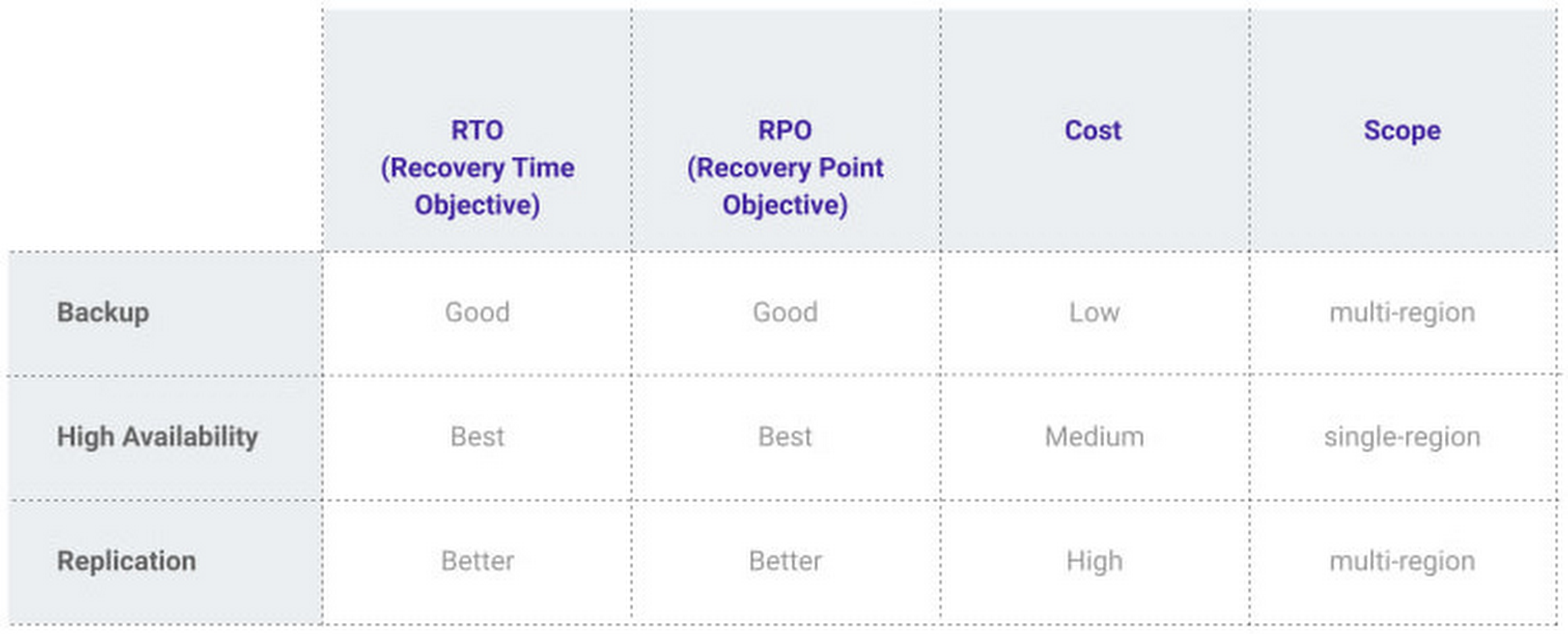
At Google, our Cloud SQL managed database service offers three fault tolerance mechanisms —backup, high availability, and replication—and there are three major factors to consider for each of them:
- RTO (recovery time objective): When a failure happens, how much time can be lost before significant harm occurs?
- RPO (recovery point objective): When a failure happens, how much data can be lost before significant harm occurs?
- Cost: How cost-effective is this solution?
We’ve heard from customers like Major League Baseball, HSBC, and Equifax that they have strict data-protection needs and require highly fault-tolerant multi-region applications—and they’ve all chosen Cloud SQL to meet those needs.
Let’s take a closer look at how the decision-making process plays out for each recovery solution.
High availability (HA)
If your application is business critical, you require minimum RTO and zero RPO— a high availability configuration ensures that you and your customers are protected. If the primary instance fails, there’s another standby instance ready to take over with no data loss. There’s an additional cost here, but doing this manually brings a great operational cost, since you have to detect and verify the fault, do the failover, and make sure it’s correct—you can’t have two primary instances or you risk data corruption—then finally connect the application to the new database.
Cloud SQL removes all that complexity. Choose high availability for a given instance and we’ll replicate the data across multiple zones, synchronously, to each zone’s persistent disk. If an HA instance has a failure, you don’t have to think about when to fail over because Cloud SQL detects the failure and automatically initiates failover, for a full recovery and no data loss within minutes. Cloud SQL also moves the IP address during failover so your application can easily reconnect. MLB, for example, uses Cloud SQL high availability to serve prediction data to live games with minimal downtime. Dev/test instances don’t need those same guarantees, but can use local backups to recover from any potential failure.
Cross-region replica
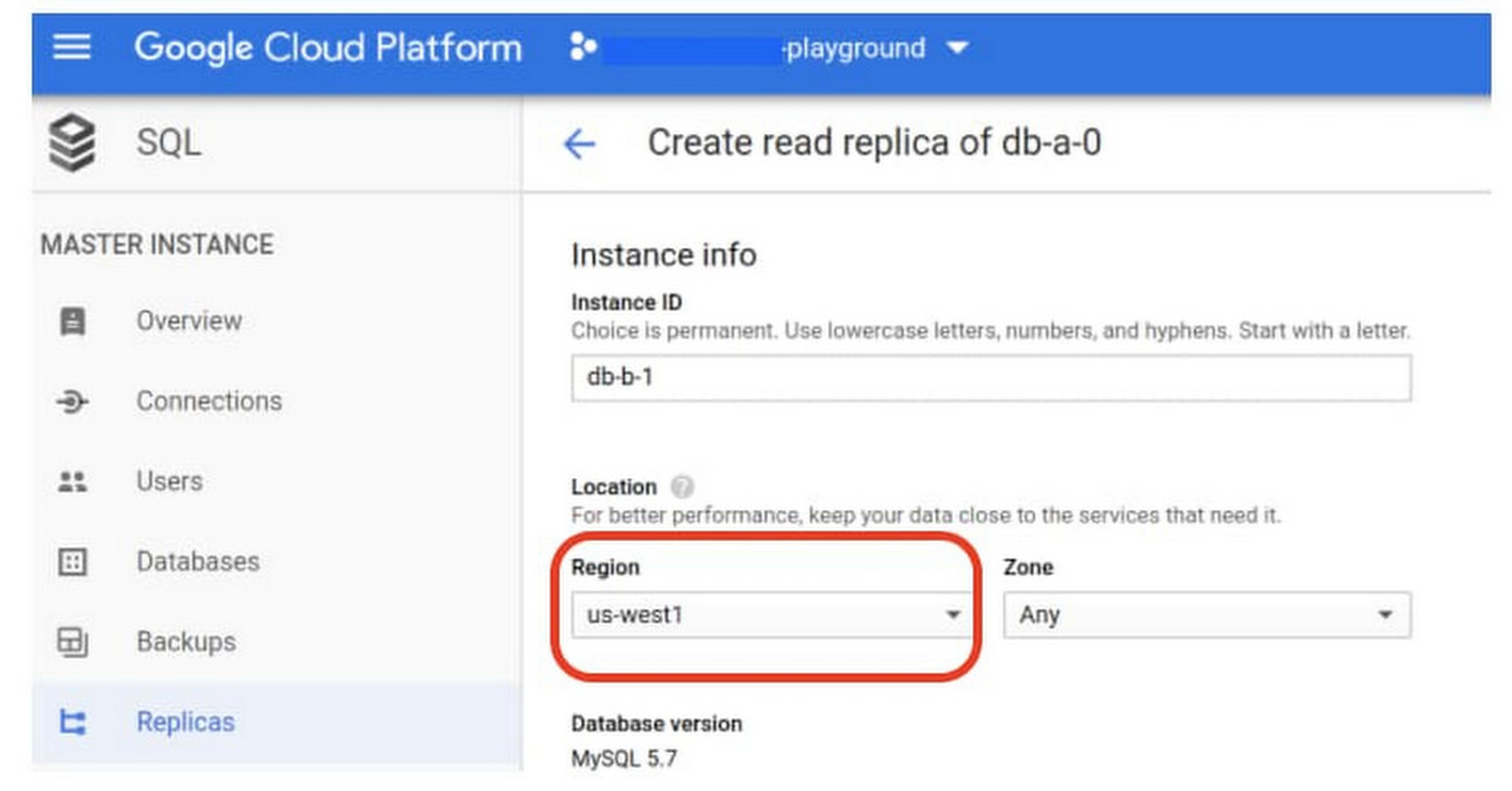
If a whole Google Cloud region goes down you still need your business to continue to run. That’s where cross-region replication comes in, a hot standby replica in another Google Cloud region provides RTO of minutes and RPO typically less than a minute . If you create a read replica in a region separate from your primary instance and you get hit with a regional outage, your application and database can start serving customers from another region within minutes. But this solution can be complex and enabling it yourself can be difficult and time-consuming. Securing cross-geography traffic demands end-to-end encryption and can bring connectivity issues too.
This is where the fully managed Cloud SQL solution shines. We offer MySQL, PostgreSQL and SQL Server database engines as a cross-region replication solution that’s easily configured and bolstered by Google’s interconnected global network. Just say, “I’m in U.S. East, I want to create a replica in U.S. West,” and it’s done, reliably and securely.
Backup
When you suffer data loss because of an operations error (for example, a bug in a script dropped your tables) or human error (for example, someone dropped the wrong table by accident), backups help you restore lost data to your Cloud SQL instance. Our low cost backup mechanism features point-in-time, granular recovery, meaning that if you accidentally delete data or something else goes wrong, you can ask for recovery of, for example, the state of that database down to the millisecond, such as Monday at 12:53pm. Your valuable data is replicated multiple times in multiple geographic locations automatically. This enables the automatic handling of failover in cases of major failure. You can always rest assured that your database is available and data is secure, even in the times of major failure crises.
Cloud SQL provides automated and on-demand backups. With automated backups, Google manages the backups so that you can easily restore them when required. Also, the scheduled backing is automatically taken by default. With on-demand backup, you can create a backup at any time. This could be useful if you are about to perform a risky operation on your database, as Cloud SQL lets you select a custom location for your backup data. When the backup is stored in multiple regions, and there’s an outage in the region that contains the source instance, you can restore a backup to a new or existing instance in a different region. This is also useful if your organization needs to comply with data residency regulations that require you to keep your backups within a specific geographic boundary.
Putting it all together
For critical workloads, MLB configures their Cloud SQL instances with backups, high availability, and cross-region replication. Doing so ensures they can recover from many failure types.
- To recover from human error (“Oops, I didn’t mean to delete that”), MLB uses backups and point-in-time recovery to recovery to a millisecond or specific database transaction
- To automatically recover from primary instance failures and zonal outages, MLB uses Cloud SQL’s high availability configuration
- To protect against regional outages, MLB uses cross-region replication
Creating a robust configuration, like MLB did, takes just a few minutes. Get started in our Console or review documentation.
Multi-cloud Adoption Empowers GCCs to be Resilient, Scalable and Future-proof: Whitepaper
DOWNLOAD WHITEPAPER3293
Of your peers have already downloaded this article
1:30 Minutes
The most insightful time you'll spend today!
India has emerged as the Technology capital for the world – there are now at least 55 unicorns in India, nearly 600 funding rounds in just the last 30 months and 200+ GCCs expected in the next 2 years. There has been a rapid acceleration not just in the number of startups being launched, but also in the variety of technologies they are experimenting with.
India GCC’s are leading the transformation agenda for the enterprise and the pandemic has accelerated the inevitable. Technology now underpins every facet of a business: products, services, business processes, and how customers and businesses interact. As organizations are investing and progressing on their digital journey, they are increasingly relying on talent and teams across the globe to help them navigate the changes and build strategic capacity.
How is Cloud enabling this strategic change? This whitepaper compiled by ANSR and Google Cloud aims to expand on the following,
What is the cloud adoption story and how can it empower GCCs to be resilient, scalable and future-proof?
How have global teams or Global Capability Centers enabled the strategic and accelerated adoption of technology?
What are the key Cloud considerations for building an innovative, collaborative ecosystem for a thriving organization?
Consumption Packs Shorten’s Customers Transition to Google Cloud and Boosts Partners’ Financial Growth

3246
Of your peers have already read this article.
2:00 Minutes
The most insightful time you'll spend today!
When we launched Partner Advantage, we committed to making it predictable and easy for partners to drive business with us. Since launch, those commitments have been validated by channel experts like CRN, which gave Partner Advantage a 5-Star award for 2022, and by the fact that our partners have seen impressive growth* across virtually every facet of their business.
I am pleased to announce that our commitments endure today with the launch of Consumption Packs for Deal Acceleration Funds and Partner Services Funds (DAF and PSF for partners). Inspired by partner feedback, these new packages are designed to accelerate all stages of a customer’s journey to the cloud, and make it even easier and faster for partners to do business with us.
Consumption Packs are purpose-built so that partners can plan and initiate customer projects much more quickly, with predictable funding. They include assets and templates that allow partners to deliver Google Cloud designed and validated infrastructure, application migration and modernization plans to customers faster than ever–particularly for customers beginning their journey to the cloud. Based on learnings gathered from thousands of customer deployments, these turnkey packs have been designed by our partners and Google Cloud Partner Engineering and Professional Services’ teams.
Here’s a brief look at Consumption Packs in action:
- Consumption Packs offer pre-approved, curated templates and assets to simplify and shorten the process for most common projects.
- For Deal Acceleration Funds (DAF), packages include everything partners need to conduct assessments, workshops and proofs-of-concept so they can quickly meet customers where they are on their journey to the cloud.
- For Partner Services Funds (PSF), packages are structured so that partners can develop cloud ready foundation and migration plans that align with Google Cloud priority solution areas.
- Packages have pre-determined funding levels to enable faster deployments.
Partners still have the option to engage with Google Cloud Partner Advantage and their customers through customized requests, as they always have. This is ideally suited for projects that require a tailored approach to meet unique customer requirements.
We are launching nine consumption packs today focused on key enterprise workloads, with a vision toward introducing additional packages to cover more solutions. Partners can explore Consumption Packs now by visiting the Partner Advantage portal.
We welcome your continued feedback and suggestions, and look forward to helping our customers achieve new levels of growth and success, together.
See you in the cloud.
- The Google Cloud Business Opportunity For Partners, a commissioned Total Economic Impact™ study conducted by Forrester Consulting, October 2021
3594
Of your peers have already downloaded this article
1:30 Minutes
The most insightful time you'll spend today!
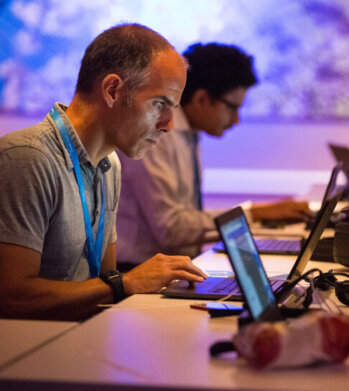
Sky News live streamed the results from 150 of the 650 constituency counts in the U.K. while competitors, who did not have live video from as many counts, had to wait for slower independent data services to report the results. Sky News also delivered all the live streams over the Internet via YouTube, providing a service that none of its competitors offered.
Sky News faced a unique set of technical challenges in order to stream video from the constituency counting stations to YouTube and for TV broadcast. For streams to be used on air and be made simultaneously live via YouTube, each stream needed to be delivered to both Youtube and the Sky News studios. The streams from the field could not simply be sent to a receive server in the Sky News studios, as would be done for a regular news live.
So the company turned to Google Compute Engine, because it could quickly and affordably create virtual servers to process all incoming data streams. Sky News didn’t have to set up physical servers and connections.
More Relevant Stories for Your Company

The Total Economic Impact of SAP on Google Cloud
Through customer interviews, a survey, and data aggregation, Forrester concluded that migrating and running SAP on Google Cloud has a number of benefits, including financial benefits. Download this Forrester infographic to understand the 3-year financial impact it can have on your organization.
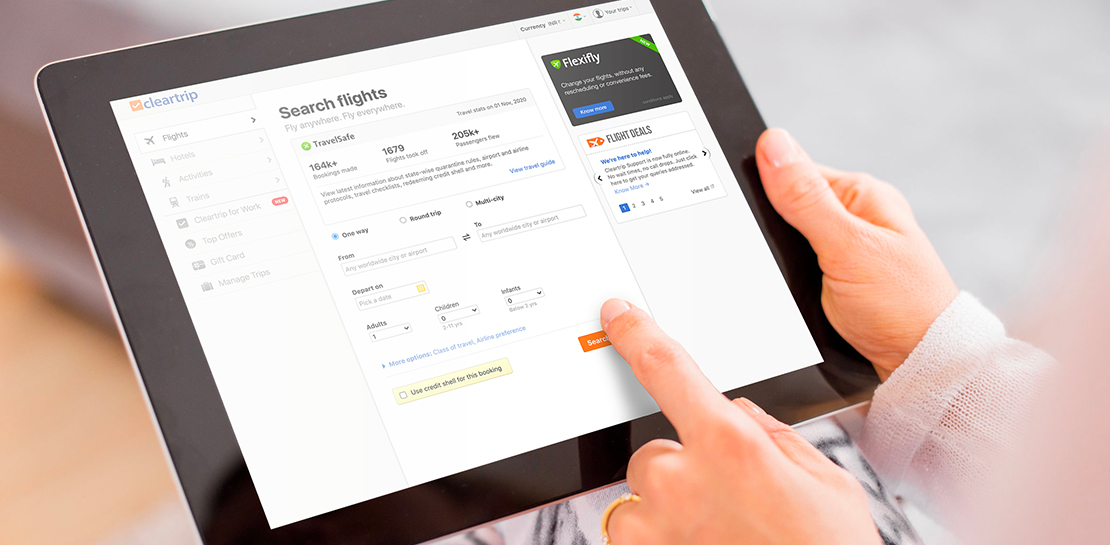
How Cleartrip.com is leveraging Google Cloud to survive the slump in the travel industry
With the novel coronavirus COVID-19 sweeping across continents and fatalities climbing every day, it was only a matter of time before countries closed their borders to contain its spread. In the wake of this decision, travel and tourism, the linchpins of many economies, were among the worst affected. According to

Google Introduces Cloud Career Jump Start Certification for the U.S. Underrepresented Communities
It’s no question that the cloud computing industry is booming and cloud experts are in high demand. In 2020, 67 percent of organizations surveyed in the IDG Cloud Computing Report added new cloud roles and functions (source). So there are plenty of cloud jobs out there, but if you don’t
Google Cloud Featured at TechCrunch Disrupt 2021
Startups need to move quickly and focus their limited resources on areas where they can differentiate. If infrastructure isn’t your differentiator, don’t put a lot of energy into your infrastructure when someone else can do it for you. What’s more, time-to-market matters to startups more now than ever. Successful early
