





Creation of Go applications on Google Cloud Made Easy

901
Of your peers have already read this article.
2:30 Minutes
The most insightful time you'll spend today!
Go is the world’s leading programming language for cloud-based development, used by millions of developers to build and scale their cloud applications and business-critical cloud infrastructure. Whether it’s building CLIs, web applications, or cloud and network services, developers find Go easy to learn, easy to maintain, and packed with useful features such as built in concurrency and a robust standard library.
And now, getting started with Go on Google Cloud is a little bit easier. Following Go’s recent announcement of gonew, an experimental tool for instantiating new projects in Go from predefined templates, Google Cloud is releasing four templates for gonew that developers can use to bootstrap their Go applications across several Google Cloud products. This includes common use cases such as creating a simple HTTP handler Cloud Function, subscribing to a Cloud Pub/Sub topic, or creating an HTTP Server on Cloud Run.
Google Cloud Go templates
- httpfn: A basic HTTP handler (Cloud Function)
- pubsubfn: A function that is subscribed to a PubSub topic handling a Cloud Event (Cloud Function)
- microservice: An HTTP server that can can be deployed to a serverless runtime (Cloud Run)
- taskhandler: An basic app that handles tasks from requests (App Engine)
Let’s get started
- Make sure you have Go installed on your machine, if not you need to download/install from here .
- Start by installing gonew using go install:
$ go install golang.org/x/tools/cmd/gonew@latest
To generate a basic HTTP Handler Cloud Function, instantiate the existing httpfn template by running gonew in your new project’s parent directory. As of now, gonew’s syntax expects two arguments: first, the path to the template you wish to invoke, and second, the module name of the project you are creating. For example:$ gonew github.com/GoogleCloudPlatform/go-templates/functions/httpfn yourdomain.com/httpfn - Deploy this new go module to Cloud Functions by following the steps listed here, you can also try this in the Cloud Shell editor.
What’s next?
We have big plans for Go on Google Cloud, with several new enhancements on our roadmap. In the meantime, please try out these new templates, deploy them to Google Cloud using the instructions provided and let us know how we can make them better. Please use this to report any issues.
Google Cloud Celebrates Journey of 3 Inspiring Founders for the Asian Pacific American Heritage Month

8157
Of your peers have already read this article.
1:30 Minutes
The most insightful time you'll spend today!
May is Asian Pacific American Heritage Month —a time for us to come together to celebrate and remember the important people and history of Asian and Pacific Island heritage. This feature highlights three AAPI founders from the Google For Startups community.
Read on to learn how these three founders built their businesses, leverage Google tech, and suggestion they have for aspiring entrepreneurs.
CultivatePeople
Founder: Lola Han
Description: CultivatePeople’s compensation software, Kamsa, provides global market pay rate data and helps companies make data-driven salary decisions so they can attract and retain their most valuable asset: employees.
Why GCP: “CultivatePeople began using GCP when integrating SSO/SAML authentication after our SaaS product became a high priority. We were able to exceed our clients’ expectations and increase their level of trust in our platform’s capabilities. We’re currently investigating additional machine learning products, such as Cloud AutoML, that will allow us to quickly deliver exciting features.”
Note from the Founder: “I grew up with immigrant parents who value stability and are risk-averse. My parents discouraged me from starting my own company because they didn’t want to see me struggle financially or see my health suffer (due to stress). I felt strongly about what CultivatePeople could do, so I started the company as a sole founder in 2017 and watched it double in size year over year since. While the ones I love most may not have cheered me on initially, it was important for me to hang on to the encouraging words of former bosses, executives, and founders to keep me focused on my mission.
My advice for other AAPI founders is to be a “silent assassin” and believe in the mission and values of your organization. Always remember to stop along the way and:
1) Enjoy the journey by celebrating wins and giving yourself credit;
2) Follow your intuition—it’s (almost) always right;
3) Recognize and invest in your people regularly (ie. give increases more than once a year, if warranted);
4) Give regular words of affirmation to employees on even small achievements.”

Swit
Founder: Josh Lee and Max Lim
Description: Swit is a team collaboration platform that seamlessly combines team chat with task management by allowing teams to turn their conversations into trackable tasks and share tasks to chat with simple drag-and-drop functionality, ensuring everyone is on the same page and projects get done faster.
Why GCP: “Swit is a cross-category hybrid work tool for chat and tasks. This functionality requires more complicated and heavier architecture for performance. So, configuring and managing virtual machines was really challenging to scale up our systems, while handling occasional unexpected traffic surges and frequent updates. Eventually we divided our monolithic architecture into 35 microservices when we launched our official product. The migration to GKE took around one month, and it turned out to be well worth the effort—our systems became able to offer high scalability and enough resilience to keep its uptime no matter what happened. Now we’re operating 84 workloads and 252 microservices with high stability with remarkably low downtime – less than 0.00001%/year.”
Note from the Founder: “As an AAPI founder based in Silicon Valley, I feel proud of the work ethics and diligence fellow Korean American entrepreneurs and professionals have long demonstrated here. Especially with K-pop breaking into the mainstream, I feel even more proud of our culture that strives toward an absolute perfection molded through years of training and dedication. The mission-driven culture of Silicon Valley coupled with Google’s edging technology and creativity really helped us build a product that not only encompasses verticals but also transcends cultures. Swit is growing at an unprecedented rate, and we hope to join the long list of successful AAPI entrepreneurs here. Swit’s close network with the AAPI community wouldn’t have been possible without Google support. We are grateful for this collaborative environment, and we hope to become the next-generation ambassador for collaboration after Google.”
Check out more from Swit in their founder story.

WISY
Founder: Min Chen
Description: Wisy develops technology to bring digital efficiency into the physical world, supporting consumer products businesses and making them thrive in the new economy. All of us have a bad experience when we can’t find the product we want to buy. That is a $1.9T problem in the consumer-packaged goods industry that Wisy is solving with AI and analytics to help manufacturers and retailers sell more by reducing out-of-stocks and waste at a global scale.
Why GCP: “GCP has an intuitive, easy to use interface, was lower cost, and offered preemptible instances with flexible compute options. Some of the reasons why Wisy decided to use GCP include instance and payment configurability, privacy and traffic security, cost-efficiency, and Machine Learning.
Wisy has been able to advance quickly with product development, as well as collaborate better and iterate faster in the creation of our AI models, while reducing costs by 40%. At Wisy, we are solving a problem that affects everyone who shops at a store.“
Note from the Founder: “Two years ago, I moved to San Francisco to expand my second startup, Wisy. This is when I learned that my name ‘Min’ stands for ‘minority.’ I was born in China, raised in a Black community in Panama, received scholarships to attend both Carnegie Mellon and UC Berkeley. I worked for 20 years in several countries, but I have never felt so discriminated against due to my race, ethnicity, gender and age than during my time in Silicon Valley. However, this is also the place I learned that my diverse life experience is my competitive advantage. My background enables me to recruit and relate to people in different countries, create scalable and flexible products for multinational customers, and run global operations efficiently.
My recommendation to AAPI founders is to find strength in their multicultural background. Don’t hide what makes you unique, do not limit yourselves, and do not let others limit you. You will lose your edge when trading authenticity for validation. Be proud and own your story.”
If you want to learn more about how Google Cloud can help your startup, visit our Startup Program application page here and sign up for our monthly startup newsletter to get a peek at our community activities, digital events, special offers, and more.To learn more about how you can help #StopAsianHate during Asian Pacific American Heritage Month and beyond, visit their website here.
APIs to Power the Future of Retail: Study Confirms

3558
Of your peers have already read this article.
1:30 Minutes
The most insightful time you'll spend today!
Today, retail customers have more digital-first, convenient ways of shopping than ever before. And APIs are one of the critical pieces of technology that have made this possible by giving retailers the ability to transform their systems and processes in an efficient and quick way.
APIs have allowed retailers to be more accessible to their remote customers with services such as order online and pick up in-store, curbside pickup, fulfilment of orders through delivery partners, and personalized recommendations while shopping online etc. These capabilities have been especially important over the last year, as the world has changed at a rapid pace. With many changes to customer interactions yet to come, APIs will continue to play a pivotal role in helping retailers to further personalize digital experiences and streamline their operations.
In Google Cloud’s State of API Economy 2021 report, 32% of organizations reported increasing their digital transformation investments, while 16% stated they would completely change their strategies to become digital-first companies. Moreover, by early 2021, online sales had already reached levels previously predicted for 2022, and APIs will become the foundation for business resilience and growth in retail over the next five years.
APIs are at the forefront of retail innovation
Retailers leverage APIs to experiment and connect teams for faster collaboration, helping them to use data for revolutionary experiences that increase customer engagement.
They allow retailers to innovate in new ways internally, externally, and across market borders. Modern digital experiences are built from a variety of data and functionality, throughout the entire supply chain, across multiple systems, and often belonging to a variety of services across distribution channels. APIs are the digital nervous system connecting everything together. They help retailers enhance internal efficiency, partner at scale, and leverage cutting-edge services such as machine learning—all because they make various kinds of technological value interoperable and easy for developers to access and reuse. In our research, 52% of retailers said APIs accelerate innovation by enabling partners to leverage digital assets at scale while 36% say they see APIs as strategic assets for creating business value.
Let’s take a look at some retail use cases and real world examples that are powered by APIs.
Deliver personalized customer experiences
Retailers are using APIs to create interactive and predictive personalized experiences.These range from “magic” mirrors that reflect personalized clothing, accessory, and even makeup suggestions; to smartphone alerts that encourage shoppers to check out special items while they’re browsing in the store; offers of coupons; and more. Behind the scenes APIs interconnect between the store and consumer data, business intelligence, and application security to bring these innovative experiences to life.
Streamline retail operations
APIs can help any retail business to operate more efficiently, from human resources, customer service, and distribution, to invoicing, marketing, and compliance. For example, APIs make it super easy and simple to onboard, manage and train employees and contractors. They can help connect various internal and external third-party systems for use cases like tracking real-time package status and gathering consumer shopping insights.
Conrad Electronic, German retailer of electronic products, demonstrates how API management can lead to enhanced efficiency. They used Apigee to build a tool that provides store employees and visitors with product, service, and warranty information on their mobile devices. The company was able to not only use data to enhance offers and services to their customers, but also streamline operations because more than 60% of their customers were using the API-enabled tool.
Power the future of retail with APIs
APIs are key to driving innovation across all areas of retail. They are enabling retailers to not only implement continuous digital transformation but also develop tools that navigate disruptions as they occur.
Retailers are already harnessing the power of APIs to prepare for:
- Borderless channels across markets that allow for the free flow of products and shopping experiences in the way consumers want them.
- Interactive and intelligent merchandising that evolves in realtime to predict consumer needs and bolsters buying decisions.
- Autonomous and virtual shopping experiences that develop deeper consumer interactions and product insights.
To learn more about how APIs can help drive innovation, download our latest eBook. In this eBook, you’ll find more retail-specific API use cases, detailed real world examples and insights into how APIs are shaping the future of retail.
Manage APIs effectively
As you grow your API program, and start powering business-critical applications and front-end experiences with APIs, you need an effective way to manage and scale them. This is where Google Cloud’s Apigee API management platform can help. Top retailers across the globe use Apigee to gain control over and insights into their APIs and enables them to manage end-to-end API lifecycle. Click here to learn more about Apigee.
Neo4J & Google Cloud: Graph Data in Cloud to Address Challenges in FinServ Industry

6912
Of your peers have already read this article.
3:00 Minutes
The most insightful time you'll spend today!
Over the last decade, financial service organizations have been adopting a cloud-first mindset. According to InformationWeek, lower costs and enhanced scalability were the biggest drivers for cloud adoption in financial services, and cloud-native applications allow access to the latest technology and talent, enabling adopters to rebuild transaction processing systems capable of supporting very high volumes and low latency.
Both Neo4j and Google Cloud have been using relationship-based data representations since the beginning, and we’re dedicated to using this technology to help financial services customers drive business transformation. We are excited about the prospects of financial services (FinServ) cloud systems and believe that graph data in the cloud can help solve significant challenges in the industry.
Data Challenge #1: Risk Management and Compliance
First among the top concerns for any CIO moving to the cloud is risk management and compliance. Disconnected, uncontextualized, or stale data create opportunities for fraud and financial crimes to occur. The fact is when it comes to FinServ, the question is not “if” but rather how often an attack will occur. Unfortunately, incidents have been trending upward over the last decade, and COVID has only exacerbated this reality. Financial crimes affect the bottom line both in the remediation of these crimes and in intangibles like brand value.
Add to this the complexity of international banking, which makes “compliance” a moving target. Penalties due to noncompliance are a constant concern to any FinServ organization.
The tabular representation of information with a fixed number of columns that never change prevents a description of an ever changing world with changing characteristics. Relational databases are great if the world you describe does not move fast but have limitations when data structures are highly interlinked and not homogeneous.
Neo4j Aura on Google Cloud provides a foundation for creating dynamic, futureproof, scalable applications that adhere to the security standards and protocols today’s financial services organizations require to meet the challenges of finding and preventing bad actors. This also includes enterprise scalability; reaching over 1 Billion nodes and relationships to streamline queries and provide solutions that meet regulatory and privacy compliance across geographies. Neo4j has helped some organizations save billions of USD in fraud in the first year of deployment alone.
What makes graph technology the best choice for fraud detection use cases is that the relationships between the data-points are as important as the data-points themselves. Let’s take as an example, one John Smith approaches a multi-national banking institution to manage the primary account for his new holding corporation.
While no one has any record of John R Smith Holdings LLC, the bank’s application built on graph technology understands that there are several well-known entities owned by John Smith Holdings. The application also identifies several well-known board members who bank with this institution. Due to this relationship-driven approach, the bank now understands John R Smith is not “John Smith,” who previously attempted to open an account for his holding corporation, which had no information associated with it prior to two months ago.
Data Challenge #2 Manual Processes and Inefficiencies
The ubiquity of the cloud offers an opportunity to deploy automation at unprecedented levels to tackle the errors and inefficiencies that manual processing allows to creep into processes. When data comes from disparate, perhaps legacy systems – which may have become siloed and “untouchable” over the years – further complexity arises. As an example, if someone in sales types “John Smith” into a CRM system not knowing that John R Smith is the spelling in the customer data master, it may result in two separate and potentially conflicting records. Being able to join those records together in a mastered view helps to solve this problem. In addition, low data quality equates to an increase in risk, costs, and implementation times for new systems.
Neo4j Aura on Google Cloud provides automation and artificial intelligence (AI) that reduces manual processes and the errors that accompany them. In this graph architecture each node, which can represent a person, will have labels, relationships, and properties associated with it. This allows for the use of AI which can easily understand that John Smith in the CRM is the same John R Smith in the customer master. The information contained in Neo4j can be connected bi-directionally to ensure consistency across applications and data sources.
One of the benefits of this approach is that linking information allows organizations to keep the full value of the data, rather than forcing the data into predetermined tabular representations, with the risk of losing valuable information and insights.
Data Challenge #3: Customer Engagement and Insight
Another significant concern is the high expectations today’s customers have for every interaction. End users are accustomed to predictable experiences on their digital devices, and FinServ apps are no exception. Added to this, the “Covid economy” has driven digital adoption significantly across demographics; even among customers who might traditionally have used in-person services. This also equates to increased expectations for personalized, predictable experiences with every digital interaction. We know that latency has always been a key consideration for financial trading, but a recent ComputerWeekly study showed that every financial organization should ensure their visible latency is at 10 milliseconds or less. Customers no longer accept their broadband is at fault.
Finally, blind spots in the customer journey often result in dissatisfaction, which ultimately leads to increased churn. Without gaining actionable insights from your customers, there is no room to innovate and iterate on what they are looking for in your products and services. And this translates to losing market share and competitive advantage.
The NoSQL architecture, specifically the dynamic schema and structure of Neo4j Aura gives you the ability to take charge of your data and make changes according to your development cycles or newer data models. This equates to faster builds, more comprehensive releases and a wider, richer data-set that can be contextualized and understood instantly. Graph technology is the logical choice for building a Customer 360 application. Under this approach organizations not only get valuable insight into the individual client’s behavior and patterns, but also those of their family, friends and colleagues. This allows for stronger personalization, targeted campaigns and successful execution, resulting in increased customer satisfaction and retention levels.
Graph Technology on Google Cloud

Neo4j is a recognized leader in graph database technology and the only fully integrated graph solution on Google Cloud, helping to fill a common need for Google Cloud customers. Both Neo4j and Google Cloud are invested in continuing to grow our partnership and mutual product direction.
You can find and deploy the Neo4j graph database straight from the Google Cloud marketplace, whether you want to download the software for an on-premises deployment, use the virtual machine image, or use the hosted solution, Aura on Google Cloud, the graph database-as-a-service. In any deployment, you get the same enterprise-grade scalability, reliability, and connectivity along with successful, repeatable use cases you can rely on to resolve your particular challenges and integrated billing.
For a real-world example of how graph technology can optimize financial services, you can read our Case Study with fintech Current. Current, a leading U.S. financial technology platform with over three million members, used Neo4j Aura on Google Cloud to create a personalization engine based on client relationships.
To learn more about Neo4j Aura on Google Cloud for FinServ organizations, register for our webinar on Thursday, December 16 with Jim Webber, Chief Scientist, CTO Field Ops at Neo4j and Antoine Larmanjat, Technical Director, Office of the CTO, Google Cloud.
How APIs Help Financial Services Firms Enhance Digital CX and Increase Revenue

3476
Of your peers have already read this article.
2:00 Minutes
The most insightful time you'll spend today!
Faced with changing customer behaviors and demands, tightening margins, and increasing threat from digital competitors, financial services institutions (FSIs) will need to meet customers where they are, open up their services, and establish new ways to monetize their products. Doing so will also enable them to build a better profile of their customers, and deliver more personalized user experiences and fast, convenient banking and payment services. Cloud technology plays a big role in this shift toward digital FSIs.
In Asia, bank branches now account for just 12% to 21% of monthly transactions in the region, with customers turning to digital channels for routine transactions such as peer-to-peer transfers and bill payments, according to McKinsey&Company. Overall customer engagement has climbed from an average 12.7 to 14.9 transactions a month in Asia’s developed markets, and from 6 to 8.1 in emerging markets.1
Fueled by growing smartphone adoption, the evolving customer behavior and momentum toward digital platforms have enabled digital-first players to snag a growing piece of the banking pie.
McKinsey estimates that digital banking penetration has grown an average of 97% in Asia’s developed markets, and 52% in emerging markets, with between 30% and 50% of those that have yet to use digital banking likely to do so.
Consumers now are more than ready to make the switch to neobanks, or digital banks. In Singapore, 63% are open to banking with digital-only players, according to a Visa study. On what will entice them to do so, 63% point to bill payments while 56% will use neobank services to make payments at retail outlets. Furthermore, 54% prefer digital banks for the convenience they offer while 52% like the faster service.
Among those who are open to digital banks, 60% will move some services from their current bank to these new players even if the latter have no prior banking experience. One in five of respondents say they are willing to switch all services to a neobank.
The same is true for small and midsize businesses (SMBs) in Singapore. According to a separate survey by Visa, 88% of these companies will consider moving some services to digital banks.
Driven to do so by their frustration over a lack of quality corporate products and control of their banking experience, 55% of SMBs believe neobanks will help bring down overall banking costs. Another 54% say digital banks offer greater convenience, while 53% point to greater ease in paying bills online.
These stats should worry even established FSIs, especially those that have not done quite enough to open up their service ecosystems and drive innovation through APIs.
An API toward new revenue
While most banks have active APIs, the services that some of them currently provide are just functional; they’re the means to an end for partners to obtain their targeted products and services. Without knowing, consumers use these types of APIs indirectly by using their favorite applications every day—a payment processing API will enable them to purchase their lunch, while a loan application API will get them that dream home.
But while banks do not always own the customer journey, they still can find opportunities to sell their products via partners. Many leading banks are leveraging key technologies, such as API management, artificial intelligence (AI), and data analytics to embed digital banking into consumers’ everyday lives, including groceries, travel, entertainment, healthcare, and food delivery.
When traditional banks open up their APIs to third parties offering broader services that pull in unique services into their own apps, they then become plugged into the broader customer journey. This helps boost usage of their services and embeds them in the overall customer experience. It also provides aggregated data that will help banks build richer consumer profiles, and deliver more personalized products and services.
APIs also create equal opportunities for smaller participants to be involved in the financial services ecosystem, potentially creating micro-segments that previously may not have existed. With insufficient demand within a closed system, to justify the provision of such services, some customers in these micro-segments have previously been left unserved. The APIs, which facilitate collaboration between the different micro-segments so they can be commercially viable, help assuage this problem.
Some banks are also opening up APIs to allow access to datasets that enable businesses to trigger automated workflows and enhance their operational efficiencies. Others, such as Bank Rakyat Indonesia (Bank BRI) have generated new revenue by leveraging Google Cloud’s Apigee to manage their API lifecycle and identify new revenue opportunities.
Apigee’s monetization feature has helped Bank BRI realize $50 million in revenue and enabled the bank to define its pricing based on API calls and automatically bill based on usage.
In addition, the Indonesian bank uses the data analysis alongside Google Maps Platform to score its customer base of 75.5 million, and identify those who can be recruited as BRILink agents for underbanked areas. These agents are customers who maintain a minimum balance of $800 USD and score high on reliability.
The appointment of branchless agents via the Agent BRILink app has pushed the loan volume from the bank’s branchless business to $26 billion in 2018, up from $15 billion the year before.
How banks can get started with APIs
Clearly, there are new revenue opportunities for banks to leverage the data they already have. Here are some tips to help FSIs kickstart their API journey:
- Align with internal leadership growth initiatives. Leverage executive key performance indicators around growth and cost savings to foster a culture that offers APIs to micro-segmented markets with an eye on cultivating a healthy financial services ecosystem.
- Productize APIs with a strong value proposition. Starting with an API-first approach, stock the shelves of your API shop with new services and a strong inventory of APIs that will entice third parties (i.e., retailers, telcos, etc.) to start using them. This customer-first, outside-in approach will serve as a strong base to build on and enable the addition of more APIs as adoption grows.
- Actively nurture a developer community. A properly trained API manager will ensure constant contact with the developer community, and that partners are provided with case studies to help them identify viable use cases for your APIs.
- Leverage security as a strategic enabler. Security is a key enabler of the API economy, and most API security postures are defensive. By leveraging deep security tooling together with strong identification of developers, banks can better track information and data usage offensively.
FSIs also need to avoid some common pitfalls, such as overlooking the need to continuously improve their APIs. If no one is using it, the API clearly is failing to provide any real value to third-party developers.
In addition, efforts should be made to market the APIs and let developers know what is available. A common mistake FSIs make is assuming their work is done once their APIs are released and neglecting the need to carry out community outreach and marketing to generate awareness about the APIs.
If you are interested in learning more about this topic, don’t miss our session at the Google Cloud Financial Services Summit on Embedded Finance: The Future of Banking.
1. McKinsey & Company. “Asia’s digital banking race: Giving customers what they want.” Global Banking Practice. April 2018.
Transforming Businesses with Google Distributed Cloud Edge Appliance: A Look at Real-World Use Cases

2538
Of your peers have already read this article.
4:30 Minutes
The most insightful time you'll spend today!
While many organizations are driving digital transformation by migrating to the cloud, there are some industries, geographies, and use cases that require a different approach to cloud modernization. Regulated industries such as healthcare, insurance, pharmaceutical, energy, telecommunication, and banking have stringent data residency and sovereignty requirements. Other industries need to meet local data processing requirements, while others require real-time data processing with sub-millisecond latencies, for example to detect defects on manufacturing lines. These use cases demand a combination of edge, on-premises and cloud services for their infrastructure.
With these requirements in mind, Google Cloud launched Google Distributed Cloud powered by Anthos to extend the power of Google Cloud infrastructure and services to the edge (or closer). The underlying infrastructure for this service comes in two variants: a 42U rack filled with compute, storage, and networking devices called Google Distributed Cloud Edge Rack and a 1U appliance called Google Distributed Cloud Edge Appliance.
In this blog post, we discuss the Google Distributed Cloud Edge Appliance and how manufacturing, retail, and automotive industry verticals can use it to address common use cases.
How the appliance works
But first, let’s talk about the Google Distributed Cloud Edge Appliance itself.
Google Distributed Cloud Edge Appliances comprises two components: (1) Distributed Cloud Edge infrastructure and (2) the Distributed Cloud Edge service.
The Google Distributed Cloud Edge service runs on Google Cloud and serves as a control plane for the nodes and clusters running on your appliance. In order to perform remote management of the appliance and to collect metrics, the Distributed Cloud Edge service must be connected to Google Cloud at all times, allowing you to manage your workloads on the edge hardware through the Google Cloud Console. For customers who can’t be connected at all times for data residency or sovereignty reasons, we highly recommend that the appliance be connected to the cloud at least once a month to allow for needed security patches and updates.
Google Distributed Cloud Edge Appliances come with built-in network ports that provide connectivity to the control plane via the internet, Cloud VPN, or Dedicated Interconnect, and to your on-prem network. Each Google Distributed Cloud Edge Appliance is homed to a specific Google Cloud region but it is designed to also use any public Google Cloud endpoint to communicate with the control plane in Google Cloud, allowing you to move these appliances between different geographic locations.
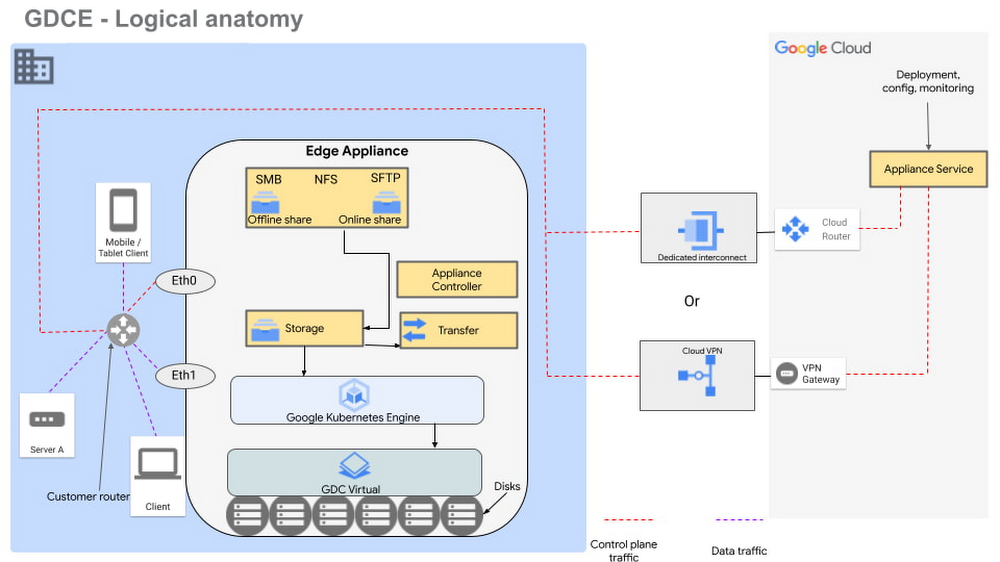
Figure 1 – Logical design of Google Distributed Cloud Edge Appliance
There are two NFS shares on each appliance; one is offline, meaning it does not transfer data to Google Cloud, and the other is online, meaning data saved to that share is synced to Cloud Storage on Google Cloud for further processing. The appliance supports Server Message Block (SMB) and Secure File Transfer Protocols (SFTP) for communication.
Each Google Distributed Cloud Edge Appliance runs Google Distributed Cloud Virtual, enabling you to build a single-node Kubernetes cluster with access to the underlying file system of the appliance. This allows you to build containerized applications on the underlying appliance hardware to address use cases in the following verticals.
Vertical use cases
Now that you understand how Google Cloud Edge Appliance is configured, let’s consider some of the industry use cases where it can provide unique value.
Manufacturing
In the manufacturing industry, quality control and safety is a crucial factor. Businesses need to ensure products are manufactured to the highest standards to remain competitive in their markets, to retain customers, and to keep factory workers safe. To do this, manufacturers need real-time data about the products being manufactured on the production lines, ensuring quality control and gaining a real-time view of where people are on the factory floor.
In manufacturing environments, Google Distributed Cloud Edge Appliance can be used to detect hazards or manufacturing defects in real-time. Figure 1 is a reference architecture for a hazard detection solution running off a Google Distributed Cloud Edge Appliance on a factory floor.
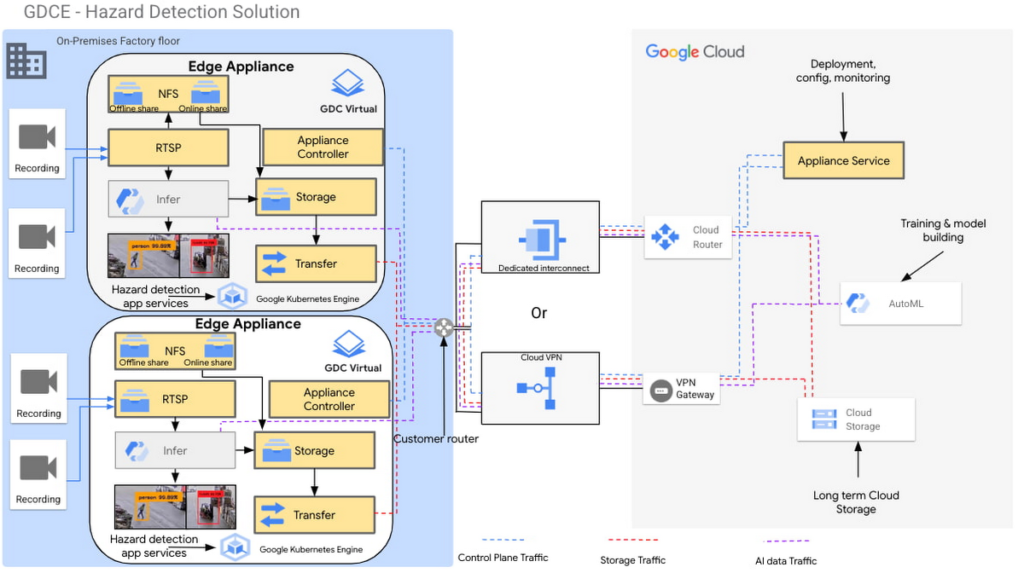
Figure 2 – Hazard detection architecture using Google Distributed Cloud Edge Appliance
In this architecture, cameras on the factory floor stream live video into the Google Distributed Cloud Edge Appliance. Depending on the number of cameras and appliances, cameras could be split or mapped to different appliances. This architecture makes it possible to initially transfer video data to Google Cloud using an online NFS share. Once in Google Cloud, you can use AutoML to train and build models that can be used as part of the hazard detection solution.
With these trained models, the cameras can stream video data into the appliance using the real-time streaming protocol (RTSP). You can then use AutoML inference to analyze the real-time video streaming data.
For example, in this reference architecture, if an individual comes too close to the fork lift, a function is triggered by the microservices running on the edge appliance that pushes a notification either to a messaging service, or to an enterprise resource planning tool. This alerts factory managers to factory floor hazards in real time so they can take corrective action.
You can also review messages and videos later on for preventive planning purposes, or push streamed videos to Cloud Storage for archive, to use the appliance’s storage space more efficiently.
Data transfers to Google Cloud can be done over Google Cloud Dedicated Interconnect, or VPN between the region and your site. This connectivity also allows you to send the appliance’s control-plane network traffic to the region.
You could also use the reference architecture in figure 2 for a product anomaly detection solution running off a Google Distributed Cloud Edge Appliance on a factory floor or manufacturing line. In this instance, machine learning models are trained to detect anomalies on finished products before final packaging.
Retail
In the retail industry, the Google Distributed Cloud Edge Appliance reference architecture in Figure 2 enables a number of transformative capabilities for retail operations, including:
- contactless checkout
- product scans
- mobile-scan-bag
- cashierless checkout
- unattended retail shops
- visual check-out monitoring
It does all this within a retailer’s facilities with the low latency and high throughput you need to process data locally, so you can obtain actionable insights from your data.
Or, you could use Google Distributed Cloud Edge Appliance at the edge to overhaul store management operations, for example, monitoring store occupancy, queue depth and wait times, detecting slips and falls and out-of-stock items, or monitoring inventory compliance.
Automotive
Advanced Driver Assistance Systems (ADAS) are becoming standard in modern automobiles. To successfully build and roll out continued improvements around ADAS, the automotive industry continues to run extensive tests on ADAS systems that are built into the vehicles they manufacture. Automotive companies can use Google Distributed Cloud Edge Appliance to modernize and transform how they collect data for the ADAS systems they’re developing. For example, test vehicles contain several different sensors that generate data, which can be quickly offloaded to an in-vehicle edge appliance.
Then, within the appliance, you can deploy containerized workloads to transform sensor data, infer videos and images and detect events. This alleviates the need for operators to label all events and allows development teams to quickly gather insights from the tests.
If you want to focus on a subset of information, you can transfer specific data or the entire data payload into Transfer Appliances when vehicles return to the development center. All these systems, i.e., transfer appliances and edge appliances, work in tandem to reduce local system administration and operational costs through a cloud-based control plane.
This approach allows you to deploy, track, monitor and configure services that are running in data centers or at edge locations from the cloud. From the factories, the data can be moved offline or online into Google Cloud where you can use different storage classes and processing capabilities to further process or store the data. You can also deploy newly trained models and business rules back to the edge appliances. In all this, data transfers between the cloud and the appliance are performed using end-to-end encryption, to give you control over your data.
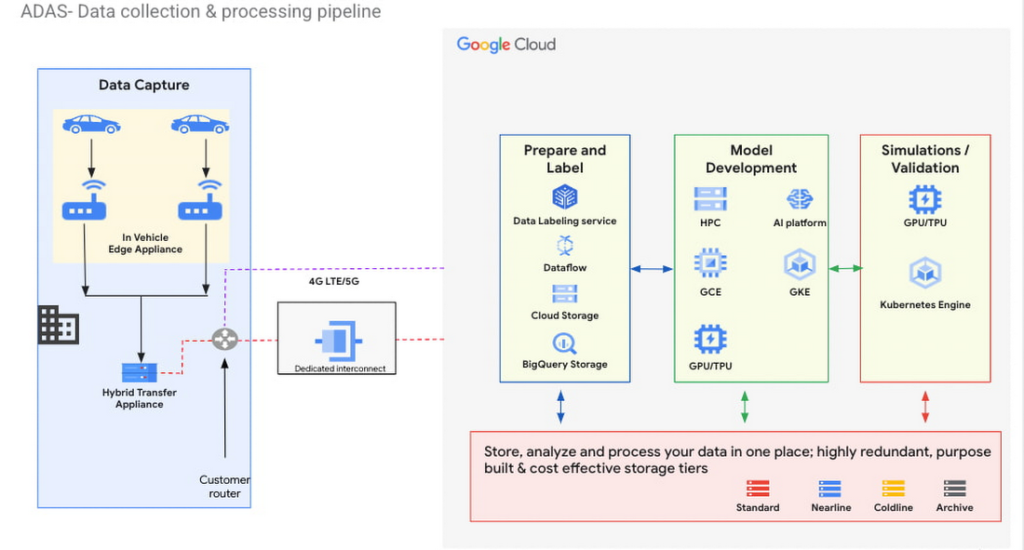
Figure 3 – ADAS implementation with a Google Distributed Cloud Edge Appliance
The reference architecture in Figure 3 shows an ADAS implementation where Google Distributed Cloud Edge Appliance is being used to gather, process and transform data at the edge in the automotive industry. It could also be applied to data capture and processing use cases in manned and unmanned vehicles. Notice how the Distributed Edge Appliance extends to the cloud by sending data there, or using other cloud-based services.
We’re just getting started
These are just a few of the use cases where organizations in the manufacturing, retail and automotive industries are using Google Distributed Cloud Edge Appliance with modern and containerized applications that are powered by Google Cloud. If you’re interested in bringing the power of Google Cloud to the edge using Google Distributed Cloud Edge Appliances to transform your business, reach out to us or any of our accredited partners.
More Relevant Stories for Your Company

Google Cloud named a Leader in API Management Solutions in The Forrester Wave
The right API strategy is a key element of your digital business success, so choosing the best API management solution is critical - but often challenging. Organizations like yours need to address a wide range of criteria to support an effective digital business strategy, and that requires a robust API


Building a Bank with Kubernetes: How Monzo is Creating the Best Banking App Ever
Based in London, Monzo is a bank that lives on the smartphone and is built for the way modern customers live today. By solving their problems, treating them fairly and being totally transparent, Monzo believes it can transform the way people bank. “We are building a full retail bank. What

Pizza Hut India: Increasing Customer Coverage and Delivering Pizzas on Time
A subsidiary of United States-headquartered corporation Yum! Brands, Pizza Hut prides itself on serving more pizzas than any other pizza business. Founded in 1958, Pizza Hut operates 18,000 restaurants in over 100 countries. In the Indian subcontinent, Pizza Hut and franchise partners Devyani International and Sapphire Foods India operate more than 500

Business Evolution with API Ecosystems
During uncertain times, ecosystem partnerships that leverage APIs have proven to help companies scale and address gaps in their businesses. Apigee customers, like CHAMP Cargosystems, have pursued API-first ecosystem models to enter adjacent markets, create new customer interaction models, and rapidly grow their brand reach and partner ecosystems. As a
