





3364
Of your peers have already watched this video.
10:00 Minutes
The most insightful time you'll spend today!
Transform Your Business with Google’s Open, Hybrid, and Multi-Cloud Enterprise Network
Modernization and digital transformation starts with the network, which must enable agile access to the innovation promised by cloud, as well as simplified models for multi-cloud, multi-platform deployments. The network must evolve to provide agility, simplicity, and openness that is needed to power this transformation.
Google’s enterprise network is revolutionizing the enterprise networks paradigm, enabling you to use Google’s network as your own to connect your offices, branches, data center, Google, and other public clouds. It provides innovative technical and business models for open multi-cloud, application-centric networks, and integrates with a partner ecosystem, so that you can leverage your current on-premises site investments.
Google Cloud’s Autism Career Program to Nurture Neurodiverse Talent
3574
Of your peers have already read this article.
1:30 Minutes
The most insightful time you'll spend today!
My passion for neurodiversity began 10 years ago, when I became involved with Els for Autism, an organization that works with children and adults who have autism, as well as their families. At the time, I had a friend who was struggling to find resources for his son with autism. The foundation promotes acceptance and inclusion for people on the spectrum, helping them live independently and find jobs that harness their talents and skills. The organization’s focus on autism in the workplace resonated deeply with me, due to the rich experiences I had working with individuals with autism over the course of my career.
Approximately two percent of the population has autism, but it’s estimated this number is actually quite low as many individuals go undiagnosed. Of those that have been diagnosed, only 29% have had any sort of paid work in their lives. Personally, I find this tragic, because individuals with autism can be highly-functioning and contributing professionals in any organization. Too often, though, the interview process can pose challenges due to unconscious bias from a hiring manager or interviewer, for example, if the candidate doesn’t look an interviewer in the eyes or asks for additional time to complete a test. This bias often unintentionally marginalizes great candidates and means businesses miss out on valuable talent who can contribute and enrich the workplace.
Introducing Google Cloud’s Autism Career Program
It is in that spirit that I am excited to announce the launch of Google Cloud’s Autism Career Program, designed to hire and support more talented people with autism in the rapidly growing cloud industry.
We are working with experts from the Stanford Neurodiversity Project (part of the Stanford University School of Medicine), which provides consultation services to employers to advise on opportunities and success metrics for neurodiverse individuals in the workplace.
One key pillar of our program is to train up to 500 Google Cloud managers and others who are involved in hiring processes. Our goal is to empower these Googlers to work effectively and empathetically with autistic candidates and ensure Google’s onboarding processes are accessible and equitable. Stanford will also provide coaching to applicants, as well as ongoing support for them, their teammates and managers once they join the Google Cloud team.
We’re taking this approach to break down the barriers that candidates with autism most often face. In addition to bias, there may be challenges with how interviews are structured or conducted without the right tools. For these reasons, we will offer candidates in this program reasonable accommodations like extended interview time, providing questions in advance, or conducting the interview in writing in a Google Doc rather than verbally on a call. These accommodations don’t give those candidates an unfair advantage. It’s just the opposite: They remove an unfair disadvantage so candidates have a fair and equitable chance to compete for the job.
This program is just one example of Google Cloud’s commitment to inclusion, and it is an important step forward to building a more representative team and creating value for customers and stakeholders.
Bharat Light & Power’s CEO Says Enough! It’s Time to Leverage AI and IoT

3946
Of your peers have already read this article.
4:30 Minutes
The most insightful time you'll spend today!
As community and business concern over global warming, sustainability, and energy security continues to rise, companies such as Bharat Light & Power (BLP) are working on answers.
Founded in 2010 and located in Bangalore and Delhi, BLP is one of the leading clean energy generation companies in India. According to Tejpreet Singh Chopra, Chief Executive Officer of BLP, the business started with the aim of delivering clean energy from renewable sources such as wind, solar, biomass, and hydro to the 300 million residents of India that did not have reliable access to power at that time.
However, BLP soon began experiencing problems ensuring availability of the wind turbines that powered utility-scale wind power generation across the country.
“While we were investing large amounts building wind farms, the failure of the smallest component could shut down an entire wind turbine and compromise our efficient operation,” says Chopra. “A $5,000 battery could fail and shut down a $2.5 million piece of equipment!”
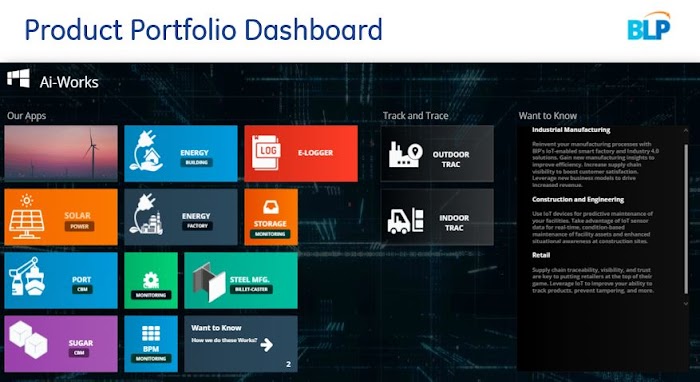
BLP transformed its legacy thinking about man, machine, technology, and process, and implemented an AI and Internet of Things (IoT) project. The business used hundreds of tags from its wind turbines to capture and send machine behavior and performance data to a control center. This data triggered an 18-month project to create AI and machine learning algorithms that would enable engineers to predict component failures in wind turbines, improve generation, and adjust maintenance and replacement schedules accordingly.
This activity provided the foundation of a technology business—one of the three companies that comprise BLP—that delivers enterprise AI for industrial uses over a platform, branded Orion.
“We provide an end-to-end solution that enables businesses in industries such as transportation, logistics, ports, infrastructure, oil and gas, supply chain manufacturing, steel, and automotive to improve productivity,” says Chopra.
As the business expanded, it began to extend beyond its core “AI for industry” mission. It recruited an IoT team to help factory owners and operators enable the programmable logic controllers (PLC) and supervisory control and data acquisition (SCADA) systems that run disparate equipment and machines—such as production line machines of different ages and countries of origin—to talk to each other and provide usable data and insights.
Agility and adaptability key
BLP’s management team realized early that the business needed to be agile and adaptable to keep pace with changes in technology.
“We knew we would have to effectively destroy and remake the business every 18–24 months to remain relevant, so we needed a service that could support our dynamic infrastructure, data, and AI needs,” says Chopra.
The business started operations on a cloud service but quickly ran into problems. “We found in the world of industry—the vast amounts of data, the variety of sources of data, and the complexity of insights required—created a very different set of challenges relative to the consumer technology environment,” says Chopra. “Our cloud provider could not provide an architecture that made sense for an industry-focused solution.”

Google Cloud to power AI and visual analytics
Within two years, BLP advanced its strategy and focused on using open source to reduce the cost of its architecture. As Orion matured and its take-up grew, the business began looking at multinational cloud services to run the forthcoming version 3.0 of the platform.
BLP found Google Cloud provided the best fit for its needs for a range of reasons, including the ease of use of Google Cloud services—likened by the BLP technology team as “the equivalent of a consumer app experience”—and its high quality database services, high availability, fast response times, and the power to run the platform’s AI and visual analytics.
BLP established as its key objective a 20% reduction in costs over its previous cloud service and availability levels exceeding 99.9%. The business completed the deployment in June 2019 following discussions and input from Google Cloud’s engineering and architecture experts prior to and during the first stage of the project.
Cloud IoT Core—a managed service that allows organizations to connect, manage, and ingest data from dispersed devices—is the cornerstone of the architecture supporting the latest latest version of the Orion platform, Orion 4.0. BLP has also created a data pipeline based on Cloud Pub/Sub event ingestion and delivery and Cloud Dataflow data processing.
Cloud Bigtable provides a high-performance NoSQL database service for the platform’s analytical workloads and BigQuery delivers a powerful analytics data warehouse. Cloud Functions enables the business’s developers to build event-driven serverless applications.
This architecture currently captures, processes, analyzes, and reports on 8 million data points in 578 turbines around the world per day and processes data from 200,000 data points in 4,000 sensors per day.
The Google Cloud architecture supports the data visualization and reporting and the AI and machine learning-powered products created by BLP. These reports and products enable users to monitor remote assets and use AI-based analytics to predict machine failures before they occur, sequence failure events, and maximize equipment uptime.
A range of benefits to customers
With Google Cloud, BLP is delivering projects with a range of benefits to customers, including increasing manufacturing productivity by at least 5% and reducing costs by about 10%.
“We’ve enabled one of the largest electrical companies in India to compare production line performance by capturing data from PLC and SCADA systems and extracting it to Google Cloud for processing, analysis, and reporting,” says Chopra. “For another customer, we’ve deployed an IoT system that has saved them about $200,000 in energy costs over six months.”
The business is also providing monitoring, reporting, and analysis to predict likely failures of gearboxes, bearings, generators, and blades in 2,000 wind turbines—that provide close over 2 GW of wind power—in countries such as France, Germany, Italy, India, Portugal, Spain, the United Kingdom, and the United States.
Furthermore, BLP is providing visual analytics to help one of the largest ports in the world detect when workers are not wearing helmets or safety equipment.
“We also do a lot of inventory track-and-trace work to help companies improve supply chains and help factories keep track of tooling through Bluetooth low-energy technologies,” says Chopra.
With Google Cloud, BLP is now ideally placed to execute its business strategy of helping customers improve productivity and increase growth, control and reduce costs, and enhance quality and safety.
“We are realizing this strategy by working to become the best company in the world at using AI to predict machine failure,” says Chopra. “Our underlying technology strategy entails enabling the most advanced IoT hardware used by industry to talk to software and the cloud, using the most powerful AI cloud around—which is why we chose to marry our AI algorithms with Google Cloud—and delivering insights through visualization.”
Testing Edge TPU
The business is now testing Edge TPU to run AI at the edge in high-performance, small-footprint, and low-power ASIC environments.
“We think that will be the next big revolution as TPU costs come down,” says Chopra. “It will be a considerable benefit performing AI at the edge rather than involving the full infrastructure of the cloud.”
BLP is keen to build on its existing relationship with and use of Google Cloud to further transform manufacturing worldwide.
“Manufacturers are pushing the boundaries of quality and cost through initiatives such as Lean Six Sigma, Zero Defects, poka-yoke, just in time, and other methodologies and approaches,” says Chopra.
“The next wave of manufacturing improvements are coming through industry 4.0, AI, IoT, and Google Cloud’s analytics, databases and other services. These are ideal to power this change in the industrial world.”
G R Infraprojects Limited Turns to Google Cloud to Run Business-Critical SAP S/4HANA

3507
Of your peers have already read this article.
4:30 Minutes
The most insightful time you'll spend today!
Road construction is booming in India. A recent report prepared by the India Brand Equity Foundation—a trust established by the Department of Commerce—pointed out that in FY 2019 alone, the country added 10,855 kilometers of highways to a road network that spans 5.89 million kilometers. This network is the second largest in the world and transports 90% of passenger traffic and 64.5% of all goods in the country.
The Indian Government has also earmarked road construction as key to plans to increase the nation’s GDP to $5 trillion in coming years, targeting road construction worth $212.8 billion in the two years from April 2020.
G R Infraprojects Limited is well positioned to support the government’s program. The business, which started as a contractor building roads in rural villages in India, now specializes in road engineering, procurement, and construction (EPC), a model whereby private construction firms build roads funded by the government.
The business now undertakes the processing of bitumen, manufacture of thermoplastic road-marking paint and road signage, and fabrication and galvanizing road-crash barriers. Its in-house integration model includes a design and engineering team, as well as manufacturing facilities in Rajasthan, Assam, and Gujarat.
The business recently expanded into rail—another area expected to benefit from extensive government investment—with its competencies including earthworks, materials supply, track lining, and bridge construction.
In this environment—and despite the economic impact of the coronavirus pandemic—G R Infraprojects Limited aims to substantially increase turnover and manpower over the next five years.

Best-in-class infrastructure key to success
Digital transformation is key to enabling growth while best-in-class IT infrastructure is one of the foundations on which the business seeks to build success.
G R Infraprojects Limited’s digital initiatives include deployment of a new document management system and corporate systems that enable remote monitoring, live tracking, effective real-time communication, and efficient data management.
Providing a scalable, reliable cost-effective infrastructure
But most important of all is providing a scalable, reliable, and cost-effective infrastructure to support a business-critical SAP enterprise resource planning system. Over the last few years, versions of SAP have enabled the organization to digitize processes and seamlessly run business-critical functions such as inventory management and finance.
G R Infraprojects Limited initially went live with SAP ECC6.0, with a few hundred team members using the system for business-critical tasks such as tracking stock level and movement and generating financial statements and reports for review and action.
“Google Cloud is a very big brand, so we were easily able to secure the trust from our executive and business teams to run an important system such as SAP S/4HANA on the platform.”—Sachin Kumar Agarwal, Head, Transformation, G R Infraprojects Limited
Lowering maintenance costs
However, as G R Infraprojects Limited grew, projects proliferated, and new markets emerged, the business elected to move to the cloud from an on-premises infrastructure. “We wanted to move because there were so many maintenance costs in on-premises solutions and cloud provided convenience to IT and the broader organization,” explains Sachin Kumar Agarwal, Head, Transformation at G R Infraprojects Limited.
The business also wanted to move to SAP S/4HANA to take advantage of features such as AI, advanced analytics, and machine learning to transform business processes. The system runs on the HANA database, an in-memory database with fast processing speeds and a simplified data model.
G R Infraprojects Limited selected Google Cloud to run SAP S/4HANA because, Sachin says, it is “much better than any other platform,” incorporates a wide range of features, and meets uptime requirements. The cloud service could also scale to support forecast growth without a sharp increase in cost.
Furthermore, Sachin adds, “Google Cloud is a very big brand, so we were easily able to secure the trust from our executive and business teams to run an important system such as SAP S/4HANA on the platform.”
“With Google Cloud, our speed and availability are controlled and optimized day by day. With such a scalable and dynamic platform, we are very happy with the performance.”—Sachin Kumar Agarwal, Head, Transformation, G R Infraprojects Limited
Successful transition with Infrabeat
G R Infraprojects Limited completed the project with assistance from partner InfraBeat over three months and SAP S/4HANA on Google Cloud went live mid-2019. “Our dedicated SAP team worked closely with Infrabeat to deliver the project successfully,” says Sachin. “We needed an experienced partner to assist with the implementation process and Infrabeat performed that role admirably. Both teams supported each other and worked to plan to deliver a great result.”
SAP S/4HANA runs on an infrastructure comprising virtual machine instances delivered through Compute Engine, Cloud Storage, and Cloud NAT to enable the secure transmission and receipt of packets to and from the internet.
G R Infraprojects Limited estimates the cost of running SAP S/4 HANA in Google Cloud is significantly lower than on alternative infrastructure options—freeing up budget for other business priorities.
In addition, moving SAP S/4 HANA to infrastructure as a service through Google Cloud has eliminated the need to assign internal team members to infrastructure management, allowing them instead to focus on higher-value activities.
Google Cloud also incorporates the security needed to protect the data and processes of SAP S/4 HANA from intrusion or disruption and ensure the uptime and continuity required of a business-critical system.
Optimized speed and availability
G R Infraprojects Limited’s decision to run SAP S/4 HANA on Google Cloud is delivering benefits on a daily basis. “With Google Cloud, our speed and availability are controlled and optimized day by day,” says Sachin. “We are very happy with the performance.”
Success with SAP S/4HANA has helped the business decide to move its remaining apps and data to the cloud when its on-premises servers and other equipment reach end of life. G R Infraprojects Limited is already running Active Directory in Google Cloud and Sachin says the cloud platform’s “fast and excellent services” made the decision easy.
“There are definitely instances of various upgrades of our systems and within the organization, and as we talk about our application and mobility requirements, we see Google Cloud playing a crucial role.”—Sachin Kumar Agarwal, Head, Transformation, G R Infraprojects Limited
Adding value
As G R Infraprojects Limited grows, Sachin adds, the business expects Google Cloud to continue to add value. “There are definitely instances of various upgrades of our systems and within the organization, and as we talk about our application and mobility requirements, we see Google Cloud playing a crucial role.”

New Histogram Features in Cloud Logging Make it Easier to Track Log Volumes, Errors and Anomalies!
3410
Of your peers have already read this article.
2:30 Minutes
The most insightful time you'll spend today!
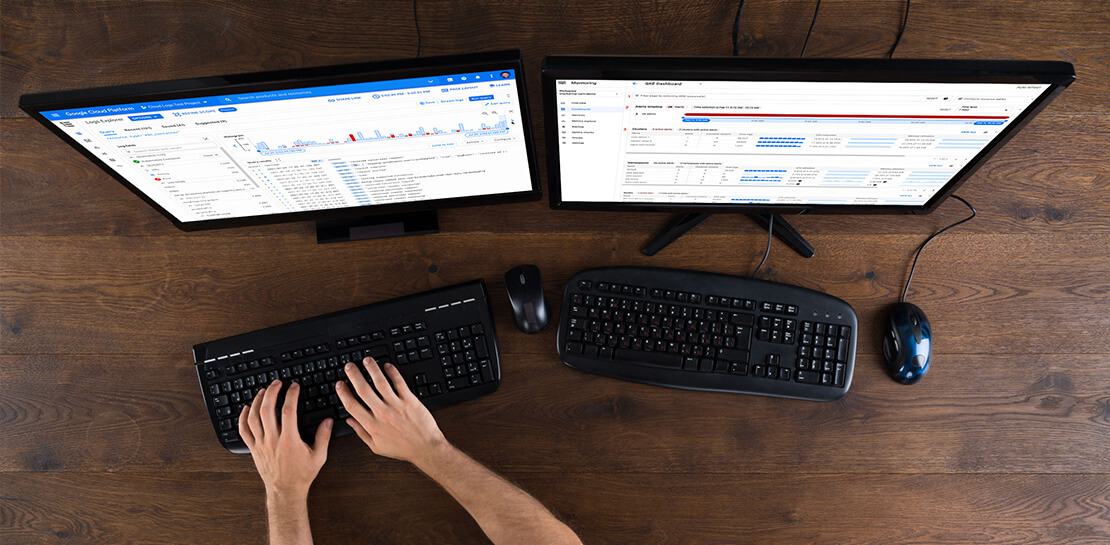
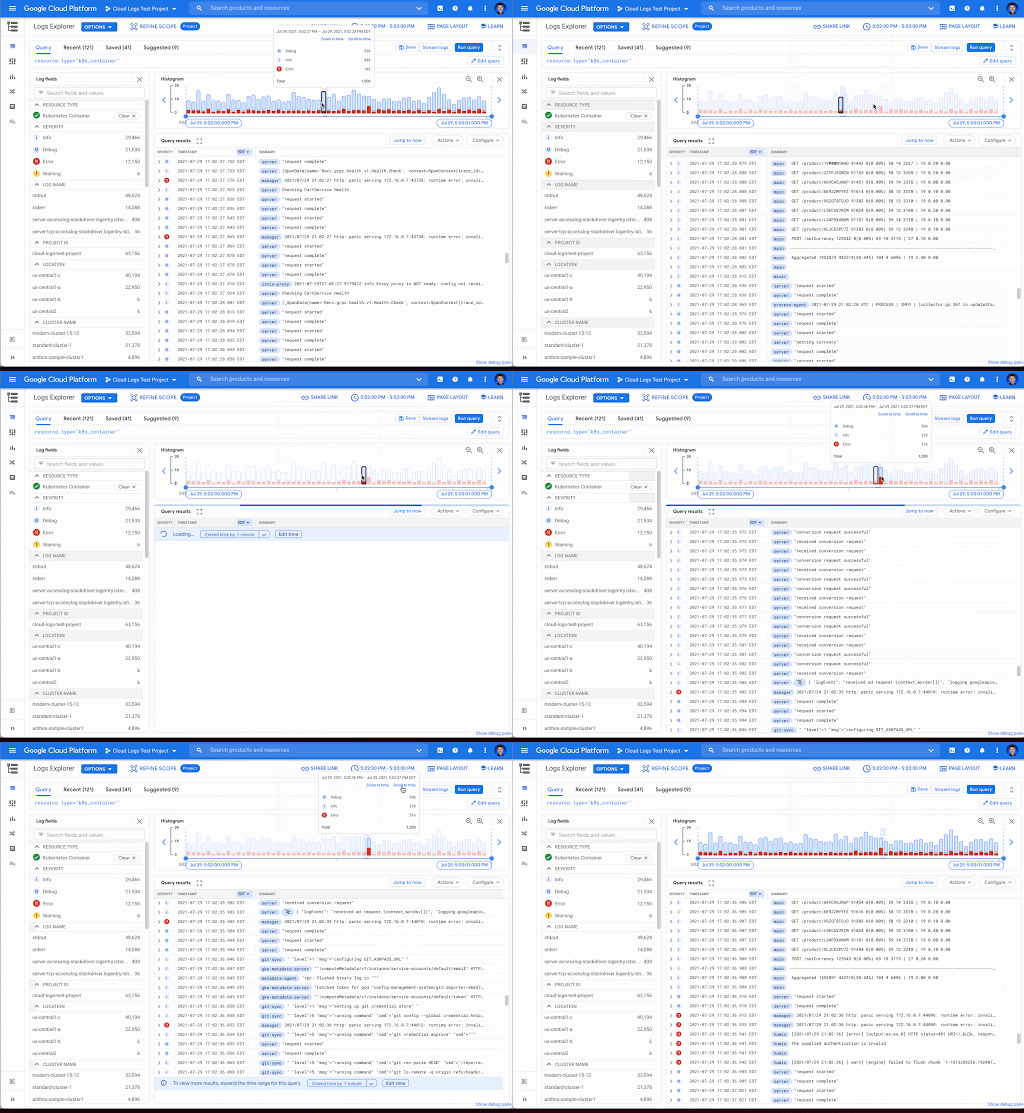
Visualizing trends in your logs is critical when troubleshooting an issue with your application. Using the histogram in Logs Explorer, you can quickly visualize log volumes over time to help spot anomalies, detect when errors started and see a breakdown of log volumes. But static visualizations are not as helpful as having more options for customization during your investigations.
That’s why we’re excited to announce that we recently added three new query controls along with separate colors for log severity to the histogram. These new features make it even easier to refine and analyze your logs by time range. The new histogram controls help find logs before or after the current period, jump to a specific time range represented in a histogram bar and zoom in/out of the current time window in the histogram.
Histogram colors
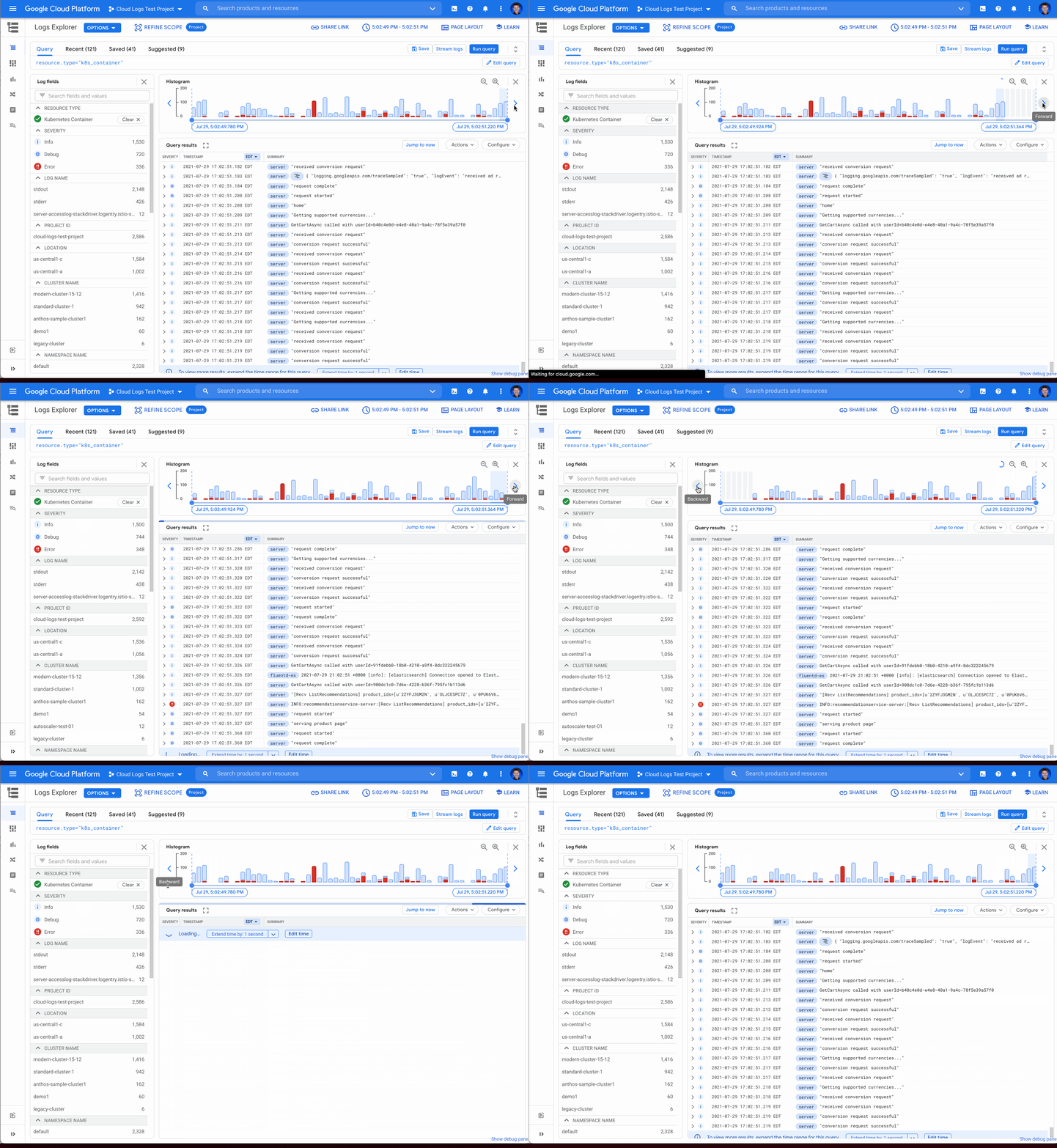
The histogram now makes it easier to view the breakdown of logs by severity with the introduction of color coding. For example, the severity colors make it easy to spot an increasing number of errors even when the volume of requests is relatively constant. Looking at the histogram below, the red vs blue shading makes it clear that there has been an increase in overall log volume and provides a visual breakdown of errors within that log volume.

Pan left/right to scroll through time
Sometimes in your troubleshooting journey, you may want to look at the logs directly before or after the current set of logs. Perhaps there was an unexpected spike in errors at the beginning of the time range and you need to see the logs in the time period directly preceding the current time range. Pressing the left arrow on the left side of the histogram shifts the time range earlier while the arrow on the right side of the histogram shifts the time range ahead. Either arrow will refine the time range in the query and rerun the query to return the logs in the new time range.
Zooming in or out
Zooming in or out from a given time range may be useful to visualize fine-grained details or a broader trend Clicking the zoom in or out icons in the upper right corner of the histogram refines the time range in the query and then reruns the query, returning the logs in the newly defined time range.
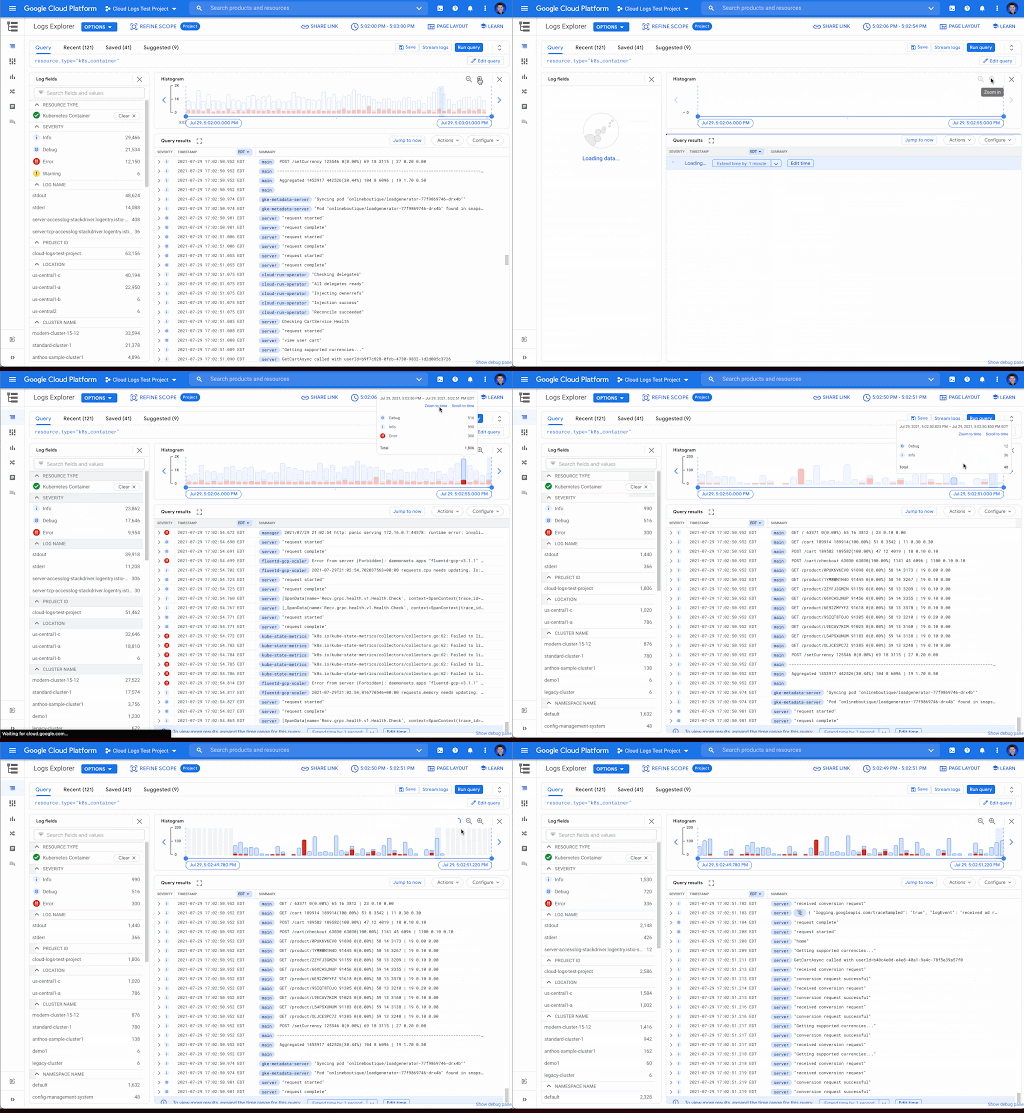
Scrolling to time
If you see a large spike in logs volume in the histogram, it’s useful to quickly review the logs generated during that spike. Clicking on the histogram bar that contains the spike now scrolls you to the logs generated during that time period.
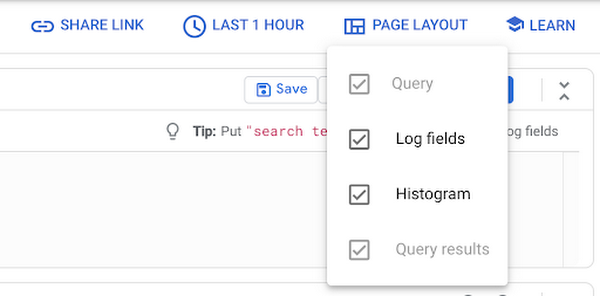
Where to find the histogram
The histogram is a panel in Logs Explorer that can be displayed or hidden using the controls in the Page Layout menu. When you no longer want to display the histogram, click the “X” button in the upper right corner to quickly close it. To open it again, use the same Page Layout menu to enable the histogram display.
Get started with the histogram
These improvements move the histogram from a utility for visualization to an integral part of the troubleshooting journey. We are continuously working to launch new features that make Cloud Logging the best place to troubleshoot your Google Cloud logs. If you are not already a Cloud Logging user, review this getting started documentation or watch a quick video on troubleshooting services on Google Kubernetes Engine (GKE) to learn more. If you have specific questions or feedback, please join the discussion on our Google Cloud Community, Cloud Operations page.

How The New York Times Increased Speed of Delivery by Using Kubernetes
DOWNLOAD CASE STUDY6188
Of your peers have already downloaded this article
2:40 Minutes
The most insightful time you'll spend today!
When New York Times decided a few years ago to move out of its data centers, its first deployments on the public cloud were smaller and less critical applications that were being managed on virtual machines.
“We started building more and more tools, and at some point, we realized that we were doing a disservice by treating Amazon as another data center,” says Deep Kapadia, Executive Director, Engineering at The New York Times.
Kapadia was tapped to lead a Delivery Engineering Team that would “design for the abstractions that cloud providers offer us.”
The team decided to use Google Cloud Platform and its Kubernetes-as-a-service offering, GKE (Google Kubernetes Engine). Owing to Google Cloud solution and GKE, The New York Times was able to increase the speed of delivery.
Some of the legacy VM-based deployments took 45 minutes; with Kubernetes, that time was “just a few seconds to a couple of minutes,” says Brian Balser, Engineering Manager at The New York Times.
“Teams that used to deploy on weekly schedules or had to coordinate schedules with the infrastructure team, now deploy their updates independently, and can do it daily when necessary,” says Tony Li, Site Reliability Engineer, The New York Times.
Adopting Cloud Native Computing Foundation technologies allowed The New York Times to have a more unified approach to deployment across the engineering staff, and portability for the company.
More Relevant Stories for Your Company

Application Modernization Made Easy
Modernizing apps on the cloud isn’t an “all or nothing” decision. Businesses want the option to modernize on-premises or choose multi-cloud solutions that meet their needs. That’s why we created a new solution for running apps anywhere – simply, flexibly, and securely. Embracing open standards, Anthos lets you run your applications, unmodified,

Accelerating Success: Tips and Techniques for Optimizing and Scaling Your Startup
At Google Cloud, we want to provide you with the access to all the tools you need to grow your business. Through the Google Cloud Technical Guides for Startups, leverage industry leading solutions with how-to video guides and resources curated for startups. This multi-series contains 3 chapters: Start, Build and

Indian retail industry is picking up the digital pulse
Over the last year, the Indian retail space has significantly strengthened its digital maturity. The industry is pacing towards better customer engagements, acquisitions and personalized experiences. With one-third of retailers leading the way, there are massive opportunities for digital participants to fast-track transformation. Read this infographic to see how retailers


Metro Consolidates 100 SAP Instances on Google Cloud
German retailer Metro, with operations in 25 countries across Europe and Asia and employing over 150,000 people, decided to consolidate its 100 SAP instances into one SAP S/4HANA system running on the Google Cloud Platform. This helped the company lower costs, increase efficiency, and improve customer experience. In addition, the
