





Mercari’s Big Leap: Supercharging Growth with Google Cloud’s BigQuery

1126
Of your peers have already read this article.
6:30 Minutes
The most insightful time you'll spend today!
When peer-to-peer marketplace Mercari came to the US in 2014, it had its work cut out for it. Surrounded by market giants like eBay, Craigslist, and Wish, Mercari needed to carve out an approach to compete for new users. Furthermore, Mercari wanted to build a network for buyers and sellers to return to, rather than a site for individual specialty purchases.
As an online marketplace that connects millions of people across the U.S. to shop and sell items of value no longer being used, Mercari is built for the everyday shopper and casual seller. Two teams, Machine Learning (ML) team and Marketing Technology specialists, both led by Masumi Nakamura, Mercari VP of Engineering, saw an opportunity to supercharge Mercari’s growth in the US by leveraging their first-party data in BigQuery and connecting predictive models built in Google Cloud directly to marketing channels, such as churn predictions and item recommendations for email campaigns, and LTV predictions to optimize paid media. Churn predictions could be used to target marketing communications, and item recommendations could be used to personalize the content of those communications at the user level. By fully utilizing cloud computing services, they could grow sustainably and flexibly, focusing their team’s efforts where they belonged — user understanding and personalized marketing.
In 2018, the Mercari US team engaged GrowthLoop, formerly Flywheel Software, experts in leveraging first-party customer data for business growth. Working exclusively in Google Cloud and BigQuery, GrowthLoop helped Masumi transform Marketing Technology at Mercari in the US.
Use cases: challenges
Masumi and the ML team’s primary goal aimed to reduce churn across buyers and sellers. Customers would make an initial purchase, but repurchase and resale rates were lower than the team hoped for. The ML team, led by Masumi, was confident that if they could get customers to make a second and third purchase, they could drive strong lifetime value (LTV).
Despite the team’s robust data science capabilities and investments in a data warehouse (BigQuery), they were missing the ability to streamline efforts for efficient audience segmentation and targeting. Like most companies looking to utilize data for marketing, the team at Mercari had to engage with engineering in order to build out customer segments for campaign launches and testing. From start to finish, launching a single campaign could take three months.
In short, Mercari needed a way to speed up the process across the teams at Mercari. How could they turn the team’s predictions into active marketing experiments with greater velocity and agility?
Solution: BigQuery and GrowthLoop supercharge growth across the customer lifecycle
With their strong data engineering foundation and BigQuery already in place, the Mercari team began addressing their needs step-by-step. First, they used predictions to identify retention features, then built out initial segment definitions based on those features. From there, the team designed and launched experiments and measured their performance, refining as they went. By providing Mercari’s marketing team with the ability to build their own customer lists that leveraged predictive models without requiring continuous support from other teams’ data engineers and business intelligence analysts, GrowthLoop enabled them to address churn and acquisition with a single, self-serve solution.
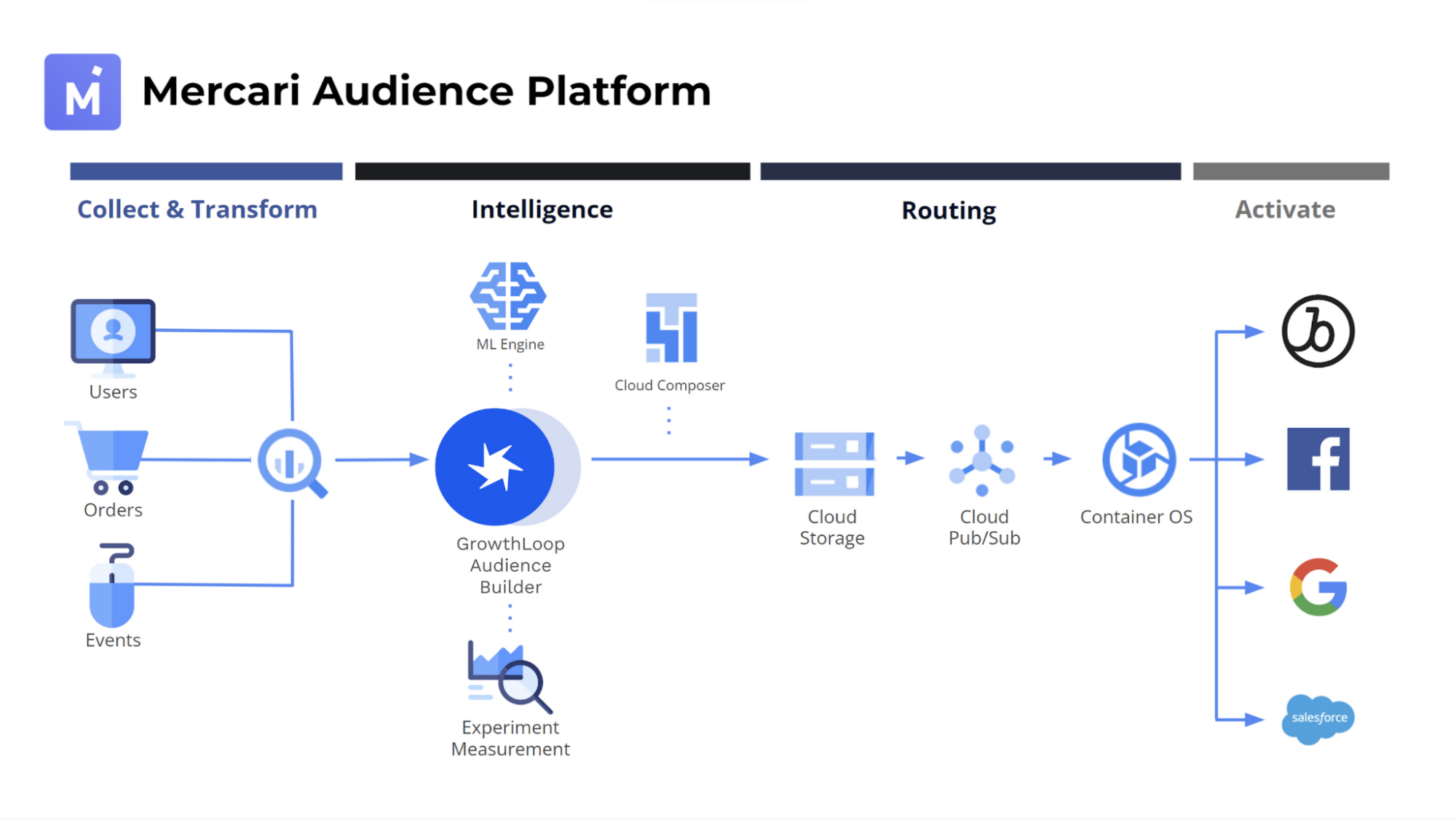
The dynamic duo: GrowthLoop and BigQuery
- Customer 360: GrowthLoop enabled Mercari to combine their data sources into a single view of their customers in BigQuery, then connected them to marketing and sales channels via GrowthLoop’s platform. Notably, Mercari is able to leverage its own complex data model, which was ideal for a two-sided marketplace. This is shown in the “Collect & Transform” stage in the architecture diagram above.
- Predictive models: GrowthLoop activated predictions that had been snapshotted by Mercari’s team in BigQuery. The Mercari ML team used Jupyter notebooks offering part of Google Vertex AI Workbench to build user churn and customer lifetime value (CLTV) prediction models, then productionized them using Cloud Composer to deploy Airflow DAGs, which wrote the predictions back to BigQuery for targeting, and triggered exports to destination channels using Pub/Sub. This is shown in the “Intelligence” stage of the architecture diagram above.
- Extensible measurement and data visualization: Since GrowthLoop writes all audience data back to BigQuery, the Mercari analytics team can conduct performance analysis on metrics from revenue to retention. They are able to use GrowthLoop’s performance visualization in-app, but they are also able to create custom data visualizations with Looker Studio. This is also shown in the “Intelligence” stage of the architecture diagram.
- Seamless routing and activation: With GrowthLoop’s audience platform connected directly to Customer 360 and the predictive model’s results in BigQuery, the marketing team is able to launch and sync audiences and their personalization attributes across all of Mercari’s major marketing, sales and product channels, such as Braze, Google Ads and other destinations. This is shown in the “Routing” and “Activate” stage of the architecture diagram.
“Being able to measure what you’re doing – that results-based orientation – is key. The thing that I like most about GrowthLoop is that you brought a really fundamental way of thinking which was very feedback-based and open to experimenting but within reason. With other products, that feedback loop isn’t so built in that it’s very easy to get lost.”– Masumi Nakamura, VP of Engineering at Mercari
Predictive modeling puts the burn on churn
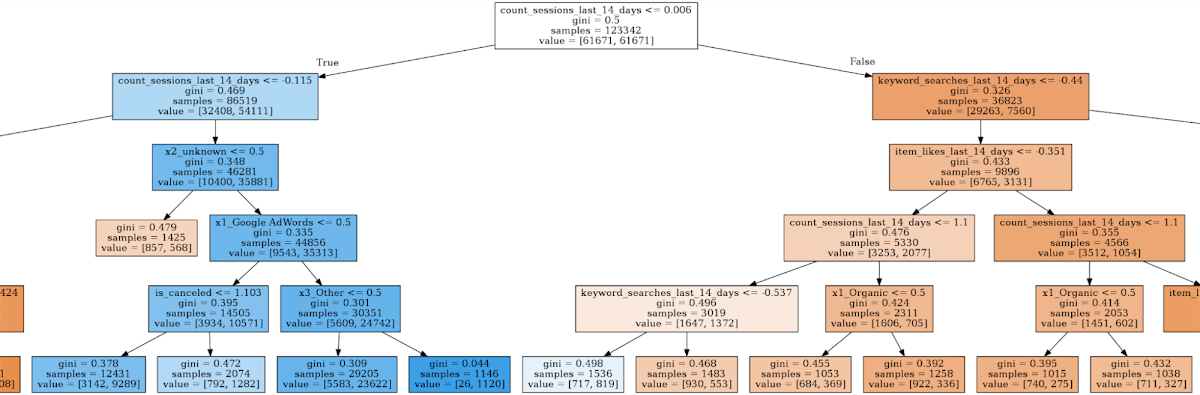
In collaboration with GrowthLoop, Mercari began analyzing user data in BigQuery via Vertex AI Workbench to identify patterns across churned customers. The teams evaluated a range of attributes like the customer acquisition channel, categories browsed or purchased from, and whether or not they had any saved searches while shopping. Comparing various models and performance metrics, the teams selected the best model for accurately predicting when a buyer or seller was at risk to churn. For sellers, they evaluated audience members by the time elapsed since their last sale – for buyers, the time since their last purchase.
These churn prediction scores could then be applied to data pipelines that would feed into GrowthLoop’s audience builder. Audience members with a high likelihood to churn would be segmented into their own group and from there, Mercari could target those users with relevant paid media and email campaigns.
By partnering with GrowthLoop, Mercari was able to simultaneously bridge the gap between the data and marketing teams – and reduce the time between segmentation and campaign launch from months to just a few days.
“One of the big areas of benefit of working with GrowthLoop was the increased integration of marketing channels such as the CRM, User Acquisition, as well as more traditional marketing channels.” – Masumi Nakamura, VP of Engineering at Mercari
Creating the audience within the audience
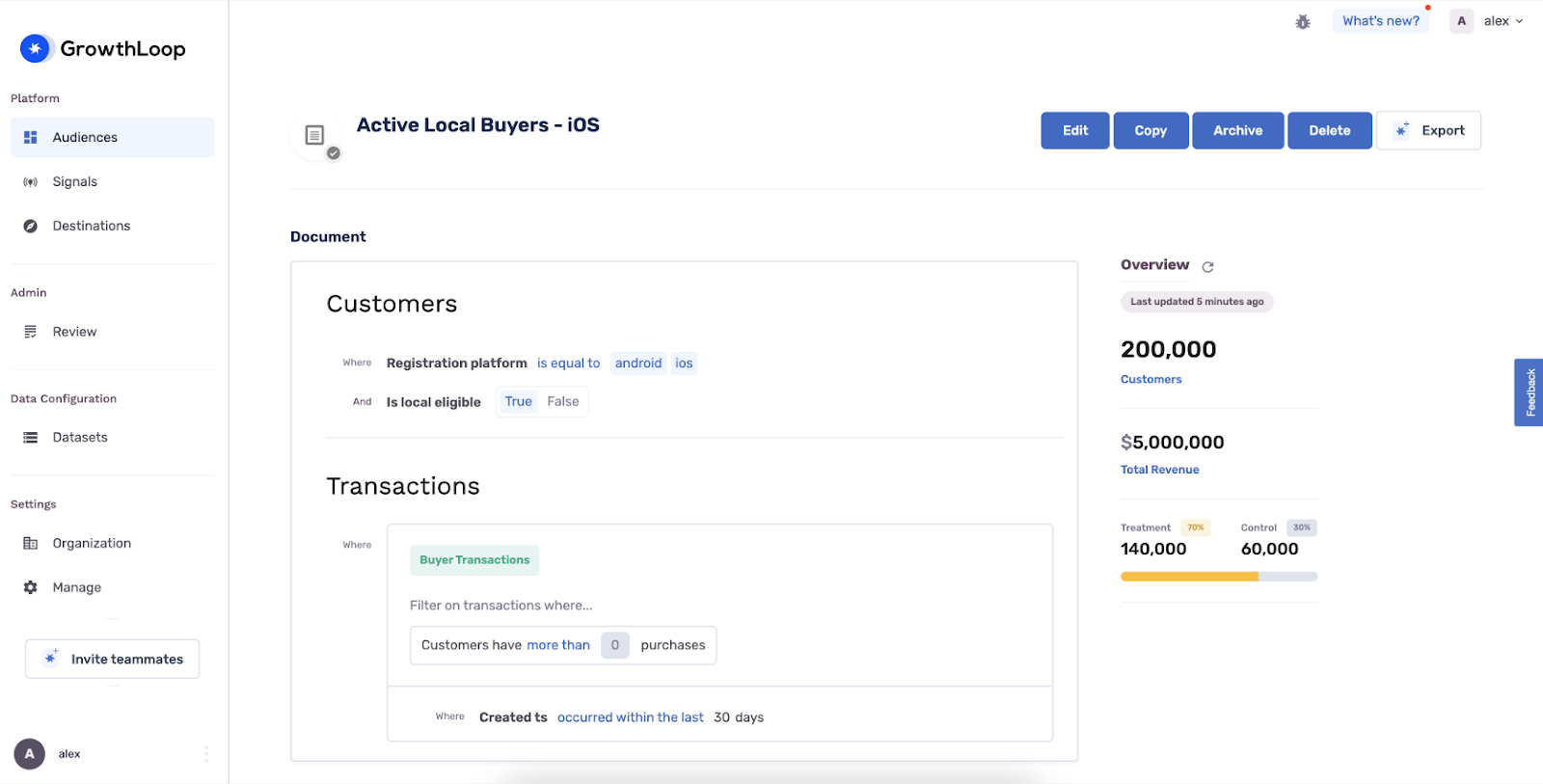
Once the team had successfully created a model to predict churn across buyers and sellers, Mercari needed to launch retargeting campaigns to measure their ability to reduce churn. Each of their ongoing experiments features tailored segments along with automatic A/B testing. With analytics and activation all under one roof, the marketing team at Mercari could craft audiences and begin measuring the impact of their targeted campaigns. Since starting their work with GrowthLoop, the Mercari team has created over 120 audiences.
“Our marketing teams are more sophisticated with in-house knowledge, but GrowthLoop provides a more user-friendly way to build audiences for campaigns.” – Masumi Nakamura, VP of Engineering, Mercari
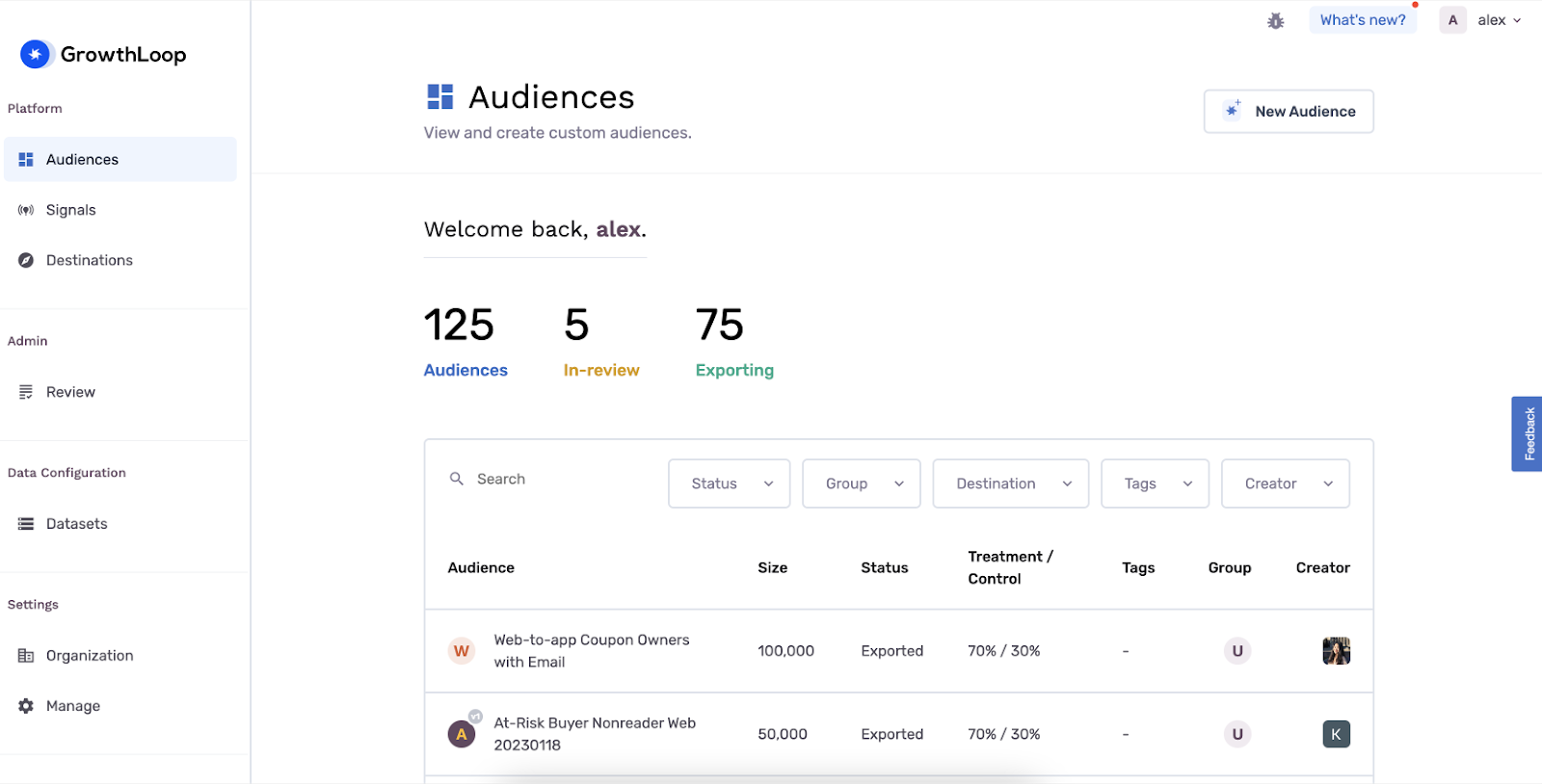
“GrowthLoop brings a very fundamental way of thinking about problems, including experimentation…. The ability to organize experiments and results was key. The number of variables is too high for most people without good organization.”– Masumi Nakamura, VP of Engineering at Mercari
Making segmentation smarter
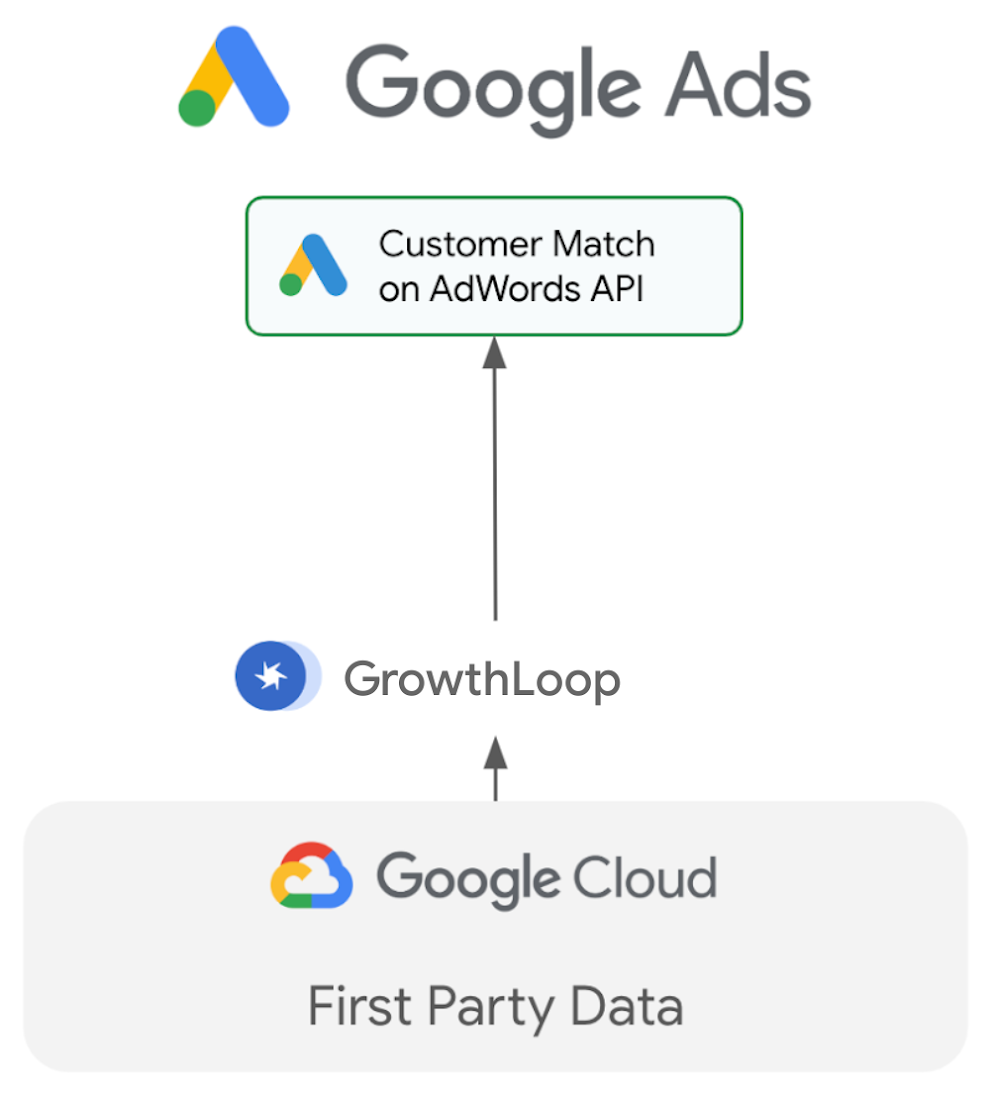
Mercari’s first audiences leveraging GrowthLoop were sent to Braze to supercharge email campaigns and coupons with churn predictions and automated campaign performance evaluations. Then, Mercari shifted its focus to Facebook for paid media retargeting, using GrowthLoop’s lifecycle segmentation framework to target customers at the right step in their user journey. Lastly, Mercari moved its focus to Google Ads, where they used GrowthLoop to implement new segmentation models based on product category propensity. Mercari had long used Google Ads for product listing ads, and with GrowthLoop, Mercari was able to define more powerful product propensity segments and measure custom incremental lift metrics.
Finding new users in the haystack
Finally, in addition to preventing churn and driving retention, the Mercari team also wanted to boost user acquisition. They were having trouble measuring performance of UA campaigns due to new iOS and Facebook data privacy restrictions that made measuring campaign attribution impossible for many users. Using the familiar stack of Vertex AI Workbench for analysis, performance analysis on campaign data in BigQuery, and Airflow DAGs deployed via Cloud Composer to productionize the data pipelines, GrowthLoop enabled the team to activate targeted campaigns based on a user’s geographical location. In this way, Mercari could make decisions about their UA campaigns using incrementality analysis between geographic regions rather than attribution data, thus preserving user privacy.
The Mercari approach to customer data activation and acquisition
Other marketplace retailers can learn from Mercari’s successes activating data from BigQuery with GrowthLoop. Here are a few best practices to apply:
Identify your team’s needs and existing strengths
Mercari knew that their team had built out a strong foundation for data analysis within BigQuery. They also knew that their process was missing a key component that would allow them to activate that data. In order to achieve similar results, work to evaluate the strength of your team and your data – and define exactly what you aim to achieve with customer segmentation.
Partner with the right providers
With BigQuery, the Mercari team had all of their data centralized in one single location, simplifying the process for predictive modeling, segmentation, and activation. By partnering with GrowthLoop, this centralized data could be activated with ease across Mercari’s marketing teams. When evaluating providers for data warehousing, segmentation, and activation, be sure to partner with a provider that ensures you can get the most out of your data.
Know your audience
With a deeper understanding of their customers, Mercari was able to see nearly immediate value. By investing in the proper tools to accurately predict customer behavior, Mercari delivered impact in exactly the right areas. Using the data you’ve already compiled on your customers, consider partnering with a customer segmentation platform provider like GrowthLoop. In fact, Masumi went so far as to organize his Machine Learning team around these concepts: “We split the ML team into two areas – one to augment and work with GrowthLoop, the other team was to augment and orient around item data.”
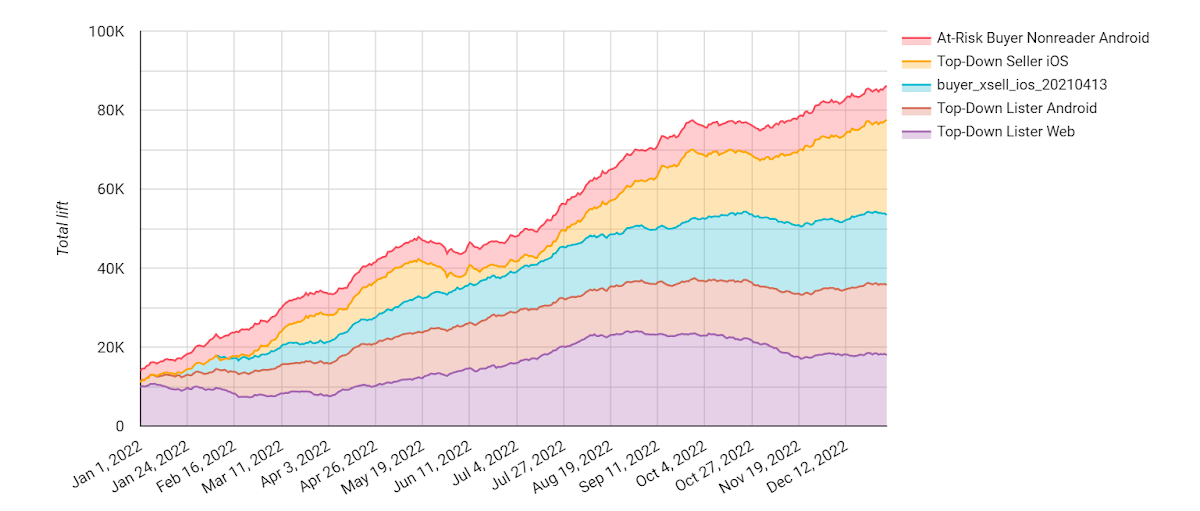
Scale has been modified to intentionally obfuscate actual results.
How to boost growth like Mercari in three steps
Today, many leading brands leverage GrowthLoop and BigQuery to drive marketing and sales wins. Whether your company is in retail, financial services, travel, software, or another industry entirely, you can join the growing number of companies driving sustainable growth through real-time analytics by connecting BigQuery from Google Cloud to GrowthLoop. Here’s how:
If you have customer data in BigQuery…
- Book a GrowthLoop + BigQuery demo customized to your use cases.
- Link your BigQuery tables and marketing and sales destinations to the GrowthLoop platform.
- Launch your first GrowthLoop audience in less than one week.
If you are getting started with BigQuery…
- Get a Data Strategy Session with a GrowthLoop Solutions Architect at no cost.
- Use our Quick Start Program to get started with BigQuery in 4 to 8 weeks.
- Launch your first GrowthLoop audience in less than one week thereafter.
GrowthLoop and Google: Better together
The key question for many marketers today is, “How do you best leverage all you know about your customers to drive more intelligent and effective marketing engagement?” When Mercari set out to answer this question in 2019, they applied an innovative BigQuery data strategy that leveraged machine learning models. However, they achieved remarkable marketing results because they were among the first companies to discover and apply GrowthLoop to enable the marketing team to launch audiences with a first party data platform directly connected to their datasets and predictions in BigQuery. This greatly accelerated the design-launch-measure feedback loop to generate repeatable growth in customer lifetime value.
The Built with BigQuery advantage for ISVs and Data Providers
Google is helping companies like GrowthLoop build innovative applications on Google’s data cloud with simplified access to technology, helpful and dedicated engineering support, and joint go-to-market programs through the Built with BigQuery initiative. Participating companies can:
- Accelerate product design and architecture through access to designated experts who can provide insight into key use cases, architectural patterns, and best practices.
- Amplify success with joint marketing programs to drive awareness, generate demand, and increase adoption.
BigQuery gives ISVs the advantage of a powerful, highly scalable data warehouse that’s integrated with Google Cloud’s open, secure, sustainable platform. And with a huge partner ecosystem and support for multi-cloud, open source tools and APIs, Google provides technology companies the portability and extensibility they need to avoid data lock-in.
Click here to learn more about Built with BigQuery.
We thank the Mercari, GrowthLoop and Google Cloud team members who collaborated on the blog:
Mercari: Masumi Nakamura, VP of Engineering
GrowthLoop: Julia Parker, Product Marketing Manager; Alex Cuevas, Head of Analytics
Google: Sujit Khasnis, Solutions Architect
ML Workflow Made Simple: How to Automate ML Experiment Tracking with Vertex AI Experiments Autologging

1267
Of your peers have already read this article.
3:30 Minutes
The most insightful time you'll spend today!
Practical machine learning (ML) is a trial and error process. ML practitioners compare different performance metrics by running ML experiments till you find the best model with a given set of parameters. Because of the experimental nature of ML, there are many reasons for tracking ML experiments and making them reproducible including debugging and compliance.
But tracking experiments is challenging: you need to organize experiments so that other team members can quickly understand, reproduce and compare them. That adds overhead that you don’t need.
We are happy to announce Vertex AI Experiments autologging, a solution which provides automated experiment tracking for your models, which streamlines your ML experimentation
With Vertex AI Experiments autologging, you can now log parameters, performance metrics and lineage artifacts by adding one line of code to your training script without needing to explicitly call any other logging methods.
How to use Vertex AI autologging
As a data scientist or ML practitioner, you conduct your experiment in a notebook environment such as Colab or Vertex AI Workbench. To enable Vertex AI Experiments autologging, you call aiplatform.autolog() in your Vertex AI Experiment session. After that call, any parameters, metrics and artifacts associated with model training are automatically logged and then accessible within the Vertex AI Experiment console.
Here’s how to enable autologging in your training session with a Scikit-learn model.
# Enable autologging
aiplatform.autolog()

# Build training pipeline
ml_pipeline = Pipeline(...)

# Train model
ml_pipeline.fit(x_train, y_train)
This video shows parameters and training/post-training metrics in the Vertex AI Experiment console.
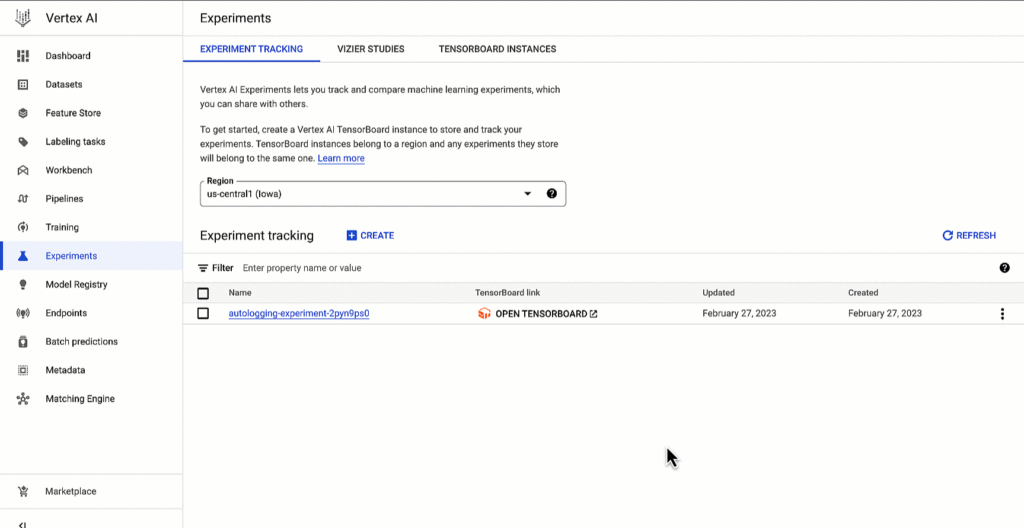
Vertex AI SDK autologging uses MLFlow’s autologging in its implementation and it supports several frameworks including XGBoost, Keras and Pytorch Lighting. See documentation for all supported frameworks.
Vertex AI Experiments autologging automatically logs model time series metrics when you train models along multiple epochs. That’s because of the integration between Vertex AI Experiments autologging and Vertex AI Tensorboard.
Furthermore, you can adapt Vertex AI Experiments autologging to your needs. For example, let’s say your team has a specific experiment naming convention. By default, Vertex AI Experiments autologging automatically creates Experiment Runs for you without requiring you to call `aiplatform.start_run()` or `aiplatform.end_run()`. If you’d like to specify your own Experiment Run names for autologging, you can manually initialize a specific run within the experiment using aiplatform.start_run() and aiplatform.end_run() after autologging has been enabled.
What’s next
You can access Vertex AI Experiments autologging with the latest version of Vertex AI SDK for Python. To learn more, check out these resources :
- Documentation: Autolog data to an experiment run
- Github: Get started with Vertex AI Experiments autologging
While I’m thinking about the next blog post, let me know if there is Vertex AI content you’d like to see on Linkedin or Twitter.
5697
Of your peers have already watched this video.
22:00 Minutes
The most insightful time you'll spend today!
Chronicle Security Analytics: Key to Address Security Data Overload
Google Cloud’s Chronicle is a security analytics platform built for modern use cases to combat modern threats. In today’s world, enterprises have undergone significant changes in all aspects, and must adapt to their security needs to counter threats and attacks. Watch the video to learn Google Cloud’s initiative to help businesses improve their security by 10x to catch up with the way the world is changing and how Chronicle Security Analytics is poised to help address data security challenges.
IT Team Figures Out Easiest Way to Build Data Pipelines and Create ML Models

14116
Of your peers have already read this article.
5:15 Minutes
The most insightful time you'll spend today!
Building a strong brand in today’s hyper-competitive business environment takes vision. It also requires a flexible, easily managed approach to digital asset management (DAM), so marketing professionals and other stakeholders can easily share, store, track, and manipulate assets to build the brand.
Many of today’s leading companies, including JetBlue, Slack, TripAdvisor, Lyft, and HealthONE, rely on Brandfolder to deliver consistent, organized, and efficient brand experiences. Brandfolder provides an easy-to-use platform that can scale across an entire company with little end-user training, empowering customers to distribute digital assets wherever they are needed. Customers also gain much greater insight into how those assets are used, and how to use them more effectively in marketing campaigns and brand messaging.
“Google Cloud made it easy to build an ML platform to quickly iterate through different brand intelligence use cases and release data-driven product features into the Brandfolder platform.”
—Ajay Rajasekharan, Head of Data Science, Brandfolder
Brandfolder is constantly advancing its development efforts to introduce new data-driven features without complicating the user experience. Big data, artificial intelligence (AI), and machine learning (ML) are key to meeting customers’ unique business needs, and essential for Brandfolder to compete in the fast-moving DAM industry. To enhance these capabilities, Brandfolder sought a public cloud provider that could help it scale its data pipeline cost effectively while providing access to advanced AI technologies.
After graduating from the Techstars startup accelerator program in 2013, Brandfolder tried two other cloud providers before standardizing on Google Cloud Platform (GCP).
“We saw a difference with Google Cloud from the very beginning because the interactions felt like a strategic relationship,” says Jim Hanifen, Head of Product at Brandfolder. “Google gave us startup credits and a lot of face-to-face support, which we hadn’t experienced with other cloud providers. We decided to move our entire infrastructure to Google Cloud Platform.”
Building an ML platform for brand intelligence
After performing an initial lift-and-shift migration of virtual machines (VMs) onto Compute Engine, Brandfolder built an ML platform using GCP managed services to seamlessly deliver its data products. The platform leverages Cloud SQL, Cloud Storage as the data lake, Cloud Dataproc for cloud-native Apache Spark computing clusters, Cloud Composer as the batch job scheduler, Cloud Pub/Sub as the backbone data pipeline, Container Registry to store Docker images, and Google Kubernetes Engine (GKE) as the application orchestrator. Cloud Dataflow brings data into the data lake and into BigQuery for analysis.
“Google Cloud made it easy to build an ML platform to quickly iterate through different brand intelligence use cases and release data-driven product features into the Brandfolder platform,” says Ajay Rajasekharan, Head of Data Science at Brandfolder, who describes the architecture in a detailed blog. “We simply ingest raw application and event data on one end and output an ML service on the other.”
“Moving to Google Cloud Platform allows us to complete more sophisticated data analysis and ML models much faster, and at a much lower cost. We can create brand-specific ML models 12x faster and get them into production quickly to address our customers’ unique business needs.”
—Brett Nekolny, Head of Engineering, Brandfolder
For many general use cases, Brandfolder does not need to build custom ML models, and instead relies on pre-trained API models from GCP. For example, it uses Vision API and Video Intelligence API to auto-tag creative assets on import to enable fast, intuitive searches across images and videos. When more product- and brand-specific modeling is required to address unique customer use cases, Brandfolder builds and trains custom ML models using its GCP pipeline or Cloud AutoML, a suite of products built on Google transfer learning and neural architecture search technology. For example, if a Brandfolder customer makes different types of grills, Brandfolder can use AutoML Vision to train a model to recognize the different grills.
“Moving to Google Cloud Platform allows us to complete more sophisticated data analysis and ML models much faster, and at a much lower cost,” explains Brett Nekolny, Head of Engineering at Brandfolder. “We can create brand-specific ML models 12x faster and get them into production quickly to address our customers’ unique business needs.”
Industry-leading security and performance
Google Cloud’s security model helps Brandfolder give existing and prospective customers peace of mind that their data will be protected. Cloud Identity & Access Management (Cloud IAM) provides enterprise-grade access control, while Cloud Identity-Aware Proxy (Cloud IAP) enables remote users to work more securely without the hassles of a VPN client. GCP also isolates cloud resources into projects, making it easy to assign permissions and keep data and VMs organized and segregated.
“With Google Cloud, everything begins and ends with security, which makes things very easy for us,” says Jim. “If we’re under a security review, we can submit a Google security white paper. If a potential customer has security concerns, we tell them we are hosted on GCP, and those concerns go away.”
To give customers even better application performance for accessing their brand assets, Brandfolder uses Cloud Memorystore, an in-memory data store service for Redis, to cache data and provide sub-millisecond data access for production applications.
“It was much easier for us to use Cloud Memorystore versus running Redis on our compute instances,” says Brett. “The high availability, replication across zones, and automatic failover with no data loss are big for us.”
Global private network interconnects between Google Cloud and the Fastly content delivery network (CDN) dramatically reduce latency, allowing Brandfolder’s customers to deliver and update even very large creative assets quickly around the world.
“What’s beautiful about the relationship between Google and Fastly is that if one of our customers uploads a new version of an asset, we can propagate that out to Fastly, and the new version will automatically show up in all the places where it’s referenced,” says Brett.
“The ability to quickly solve problems with AI has a substantial impact on our revenue, and that’s more apparent every quarter. Few of our competitors are doing product- or brand-specific modeling because it takes a lot of time and resources. We overcame those hurdles with Google Cloud.”
—Jim Hanifen, Head of Product, Brandfolder
Improving employee and customer productivity
Brandfolder also uses Google solutions for real-time collaboration and productivity, using G Suite to connect employees with intuitive, cloud-based apps. Teams use Gmail, Calendar, Docs, Drive, Sheets, Slides, and Hangouts Meet every day to move the business forward. Many of Brandfolder’s customers are also G Suite users, and Brandfolder offers a plug-in that allows them to view their creative assets inside of Docs and pull images in as needed. Customers can also log into Brandfolder with their G Suite credentials, making the solution even easier to use.
“We’ve been using G Suite since the beginning, and it’s helped us collaborate efficiently to build a successful, growing company,” says Jim. “Our teams expect to have that kind of close collaboration, and everyone here enjoys the G Suite experience.”
Driving 99 percent annual business growth
With automated tagging and other innovative AI-based features, Brandfolder is helping customers locate and distribute assets faster. As a result, Brandfolder is building customer loyalty and increasing sales, growing its business by 99 percent year-over-year. Since moving to GCP, Brandfolder has been able to scale its analytics and data pipeline 50x without a corresponding increase in costs and has not had to expand its development team.
“The ability to quickly solve problems with AI has a substantial impact on our revenue, and that’s more apparent every quarter,” says Jim. “Few of our competitors are doing product- or brand-specific modeling because it takes a lot of time and resources. We overcame those hurdles with Google Cloud.”
Google Cloud CCAI’s Support for the Public Sector Soars during the Pandemic

5280
Of your peers have already read this article.
2:00 Minutes
The most insightful time you'll spend today!
Scaling Virtual Support in the Pandemic Era: The AI Connection
Since the early days of the pandemic, we’ve partnered with government organizations and academic institutions to serve communities at scale with Contact Center Artificial Intelligence (CCAI). I sat down with Bill MacKenzie, IT liaison for the Upper Grand School District in Ontario, and Marco Palermo, director of digital government and modernization, to discuss how they embraced CCAI to introduce scalable service delivery to residents and students alike. I’m sharing more on their stories below, and for the full overview, check out our Google Cloud Public Sector Summit session, Scaling Virtual Support in the Pandemic Era: The AI Connection.
Upper Grand School District: Answering questions with speed and accuracy
Bill MacKenzie described the Upper Grand School District’s struggles at the beginning of the pandemic, particularly helping parents with IT issues. The staff-oriented help desk was not equipped to assist parents trying to securely login for students as young as kindergarten. Without sufficient support for parents, the District was struggling to handle thousands of phone calls a day.
To alleviate the manual strain, they turned to Quantiphi, a Google Cloud partner, to implement Google Cloud Dialogflow. They were fully functional within a few weeks. The new website provided real-time responses as well as clear documentation to help parents get up and running quickly.
“In the first 10 days, we had over 5,000 hits, and the accuracy rate was 92%,” MacKenzie said.
The district doesn’t know what the future holds, but now that they have been through the process, they are confident they now understand how to create their own bots to meet critical needs.
City of Toronto: Getting critical information to the community
Marco Palermo explained how the city of Toronto was facing a very rapid and fluid situation at the beginning of the pandemic. Getting information to constituents was extremely important, and they needed alternative channels to deliver that information.
Toronto has been committed to workforce equity and inclusivity in order to best represent the diversity of its residents. As a result, solutions had to be accessible to all. The bot handled 25,330 unique users and addressed 20,174 total questions with an 80% accurate response rate in the first four months. It’s been a huge success for the city, with plans to expand its capabilities.
Personalized response to the pandemic challenge
I noted that even before the pandemic, government leaders were asking for a way to provide more flexible personal experiences and better support outside of normal business hours. Around 60% of constituents want more self-service options and 75% would happily interact with digital resources if they could get the answers they needed.
Google Cloud CCAI addresses these needs with a single core of intelligence that provides a consistently high-quality conversational experience—human or virtual—across all channels and platforms. It can be deployed on legacy infrastructure without upgrades in an average of two weeks.
CCAI operates with a conversational core that centralizes the ability to talk, understand, and interact, orchestrating high-quality conversations at scale. It provides services in three different ways:
- Virtual Agent AI allows natural conversation with customers to identify and address their issues effectively
- Agent Assist AI helps human agents by providing real-time turn-by-turn guidance so they can better serve constituents
- Insight AI determines metrics and trends in real-time to enable faster and more accurate insights
CCAI provides consistency across every application. It can go off-script when answering complex questions, adjusting human conversation with the capacity to handle unexpected stops and starts, odd word choices, or implied meanings. It can also handle multiple use cases for the customer, such as taking payments, updating information, providing information, and more. By allowing agencies to automate routine tasks and reduce the amount of time employees need to dedicate to answering calls, the solution created cost savings for the agency.
Explore more on this session by visiting the Public Sector Summit on-demand video.
Held Back by Database Scalability, This Financial Services Company Switches to Google Cloud and Cloud Spanner

11599
Of your peers have already read this article.
4:30 Minutes
The most insightful time you'll spend today!
Azimut Group operates an international network of companies handling investment and asset management, mutual funds, hedge funds, and insurance. Founded in Milan, Italy in 1988, Azimut Group today has branches in fifteen countries, including Brazil, China, and the USA.
“We have subsidiaries and manage funds all over the world,” explains Simone Bertolotti, IT Manager at Azimut Holding S.p.a. “That means that any technology that we put in place has to cover needs from many different countries.”
“When complicated analysis has to be executed, we have to increase our table space in a couple of minutes so that the AI can drill down into the data and deliver the information we need.”
—Simone Bertolotti, IT Manager, Azimut Holding S.p.a.
Azimut manages its funds with investment advisors who use information sourced from Bloomberg, Reuters and others. “They use a huge amount of data,” says Simone. “They work with spreadsheets, algorithms, formulae and they analyse data in minutes.” In finance, every second is crucial, which is why Azimut decided to develop a risk management dashboard that can process information even more quickly, then distribute it worldwide.
“When an advisor manages data, that data is used to make immediate decisions on funds, capital movements or whether to sell stock,” says Simone. “They have to be ready to make recommendations for any amount of data that comes to them. For our dashboard, that means that when additional information arrives or complicated analysis has to be executed, we have to increase our table space in a couple of minutes so that the AI can drill down into the data and deliver the information we need.”
Generating insights at speed
Investors and investment managers make decisions based on the most accurate, up-to-date information possible. For Azimut Group, information sourced through financial data vendors such as Bloomberg and Reuters provided only part of the data that the group required.
“We looked to collect information from a range of different providers,” explains Simone, “then analyse it to develop a predictive algorithm that could work faster than an advisor stationed at the terminal. We set ourselves the challenge to try to manipulate that data to add new insights into our matrix, so that every one of our branches across the world can see risk information about the funds in real-time.”
“We compared Google Cloud Platform’s performance with our previous cloud provider, and saw huge benefits of switching to Google. For me, the key performance issue is scaling. With Google Cloud Platform I know that I can increase and decrease my infrastructure quickly, when I need it.
—Simone Bertolotti, IT Manager, Azimut Holding S.p.a.
The first cloud provider Azimut used to build its system struggled to scale quickly to meet different kinds of data challenges. “If we wanted to add more cores, that was fine,” says Simone. “But the previous cloud provider made it complicated to raise the amount of space in a database infrastructure and scale up to demand. Scaling up for more in-depth analysis would take a day, and our need was immediate.”
That’s why Azimut switched one year ago to Google Cloud Platform to run the 150 VMs on its risk analysis platform. “We compared Google Cloud Platform’s performance with our previous cloud provider, and saw huge benefits of switching to Google. For me, the key performance issue is scaling,” says Simone. “With Google Cloud Platform I know that I can increase and decrease my infrastructure quickly, when I need it. Instead of waiting a day to scale up infrastructure, we can request and add space to our database in a couple of minutes.”
The infrastructure of Azimut’s solution handles around 800TB of data per month, and Google’s global network of servers and high-speed connections ensure that it gets to where it’s most needed by the most direct route. Impressed by the speed, security and availability of Google Cloud Platform, Azimut has moved its intranet on to Google Cloud Platform, too, eliminating the need for staff to login with VPNs.
“Instead of waiting a day to scale up infrastructure, we can request and add space to our database in a couple of minutes.”
—Simone Bertolotti, IT Manager, Azimut Holding S.p.a.
Driving ahead with Noovle
For Azimut, migrating the risk management dashboard is the latest of many Google product collaborations with cloud consultancy Noovle. “Everything started five years ago,” says Simone, “when Noovle assisted us in migrating to Gmail from our on-premise email solution. From G Suite to Google Cloud Platform, we’ve had a great relationship. Noovle provides consultancy services, support for mobility, and external advisors who work on our premises, such as when they trained us how to broadcast our meetings on Google Hangouts. As an independent company, we know we can trust them for transparent advice. All they care about is the best way to get a job done and to help us reach our goals.”
New app, new customers
In a business case comparison, Google Cloud Platform cost Azimut 35% less to run than the previous cloud provider. Now the group is building a major new mobile application on Google App Engine to be released in 2018.
“The new mobile application will allow customers to trade directly, without human advisors, by proposing different investment solutions depending on targets the customers set,” says Simone. “So if a customer aims to make money with investments, they enter their relevant personal information and we carry out the necessary regulatory checks and suggest what they could buy. The entire project will be based on Google Cloud Platform, so customers can control their investments through the app while we manage the fund, using Google Cloud Spanner on the backend.”
More Relevant Stories for Your Company




BK Medical’s Lift and Shift of SAP Environs on Google Cloud Results in Real-time Success
BK Medical is known for designing active imaging systems to help care providers visualize anatomy and provide real-time guidance to aid surgical interventions. After becoming an entity independent of the parent company, Analogic corporation, BK Medical decided to separate its SAP environs from the latter, and move into cloud. After

How One Company Uses AI and Data Analysis to Boost Revenue
AI, deep learning, and image recognition is transforming the shopping experience. These technologies enable consumers to use product images or screenshots rather than text to search for similar products. This improves the customer experience and enables retailers with online and offline outlets to provide a genuine omnichannel experience. The lack of



Nippon India Mutual Fund Re-Invents How Indians Buy with AI
Nippon India Mutual Fund, formerly Reliance Mutual Funds is changing the way Indians purchase funds making it easier and faster, with the help of Google Cloud. In India, only 3-4 percent of the population has invested in mutual funds. There's a sizeable market to tap into for mutual fund houses--if

How Google Cloud’s PSO Supports Customers’ Migration Goals
Google Cloud’s Professional Services Organization (PSO) engages with customers to ensure effective and efficient operations in the cloud, from the time they begin considering how cloud can help them overcome their operational, business or technical challenges, to the time they’re looking to optimize their cloud workloads. We know that all parts of
