





Synopsys & Google Cloud: Helping Semiconductor Companies Drive Electronic Design Automation Innovation

2853
Of your peers have already read this article.
2:30 Minutes
The most insightful time you'll spend today!
Google Cloud and Synopsys Inc are partnering to help semiconductor companies drive Electronic Design Automation (EDA) innovation in the cloud to accelerate time to market, and lower costs across the entire semiconductor product life cycle. Synopsys is the industry’s largest provider of EDA technology used in the design and verification of integrated circuits, or semiconductor chips. Bringing Synopsys technology onto Google Cloud enables customers to benefit from scalable cloud bursting and complementary licensing models to help them quickly deploy and scale Synopsys’ EDA tools. Semiconductor companies can significantly accelerate chip design and production, increase designer productivity, and empower innovation in power-performance-area optimization.
Google Cloud Platform has enabled high performance computing workloads, such as those used by today’s semiconductor chip designers, to deliver exceptionally fast results and reduce prototyping from years to months. Google Cloud’s HPC services have delivered highly scalable solutions across multiple industries – from scientific research to autonomous vehicle testing and simulation.
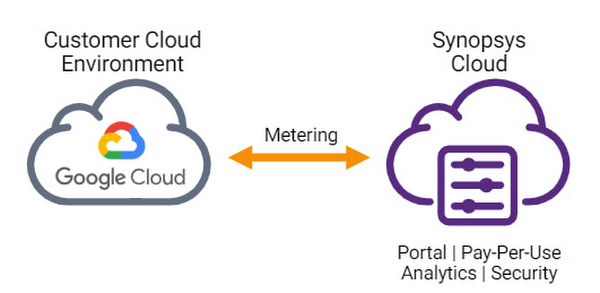
EDA software is a large consumer of high performance computing capacity in the cloud. With the release of Synopsys Cloud bring-your-own-cloud (BYOC) solution on Google Cloud, chip designers can now scale their Google Cloud infrastructure with Synopsys’s leading EDA tools under the flexible FlexEDA pay-per-use model and access unlimited EDA software license availability on-demand by the hour or minute.
The Synopsys Cloud BYOC deployment architecture on Google Cloud is enabled through their unique cloud metering service which uses Google Cloud regional MIGs (Managed Instance Groups) for autoscaling and multi-zone deployment. This enables the service to scale up to meet customer workload demands and scale down to optimize costs. Secrets used by Synopsys Cloud are securely stored in Google Secret Manager and usage data is encrypted using Google Cloud key management, providing customers with a highly secure design environment.
Synopsys Cloud also leverages Google Cloud’s Ops Agent and Operations Suite Dashboards are used to show metric data, alerting policies, and log entries, providing customers with detailed analytics visibility to make better chip design project lifecycle management decisions. The Synopsys Cloud BYOC solution has been validated with EDA workloads scaling out to thousands of cores on Google Cloud, using Google Filestore network file storage during validation to provide the highest throughput performance.
Vikram Bhatia, Head, Synopsys Cloud Product Management, Synopsys said, “With the release of Synopsys Cloud BYOC solution on Google Cloud, we are transforming the way our mutual semiconductor customers can design the chips of the future. Google Cloud has been leading the innovation wave for semiconductors in the cloud and we are excited about being an early adopter in leveraging those innovations for our unique EDA offerings on the cloud.” Customers can evaluate a full featured Synopsys Cloud BYOC environment on Google Cloud for free by signing up at: synopsys.com/cloud.
“Combined with GCP’s unique platform services for AI, security, and shared storage, the Synopsys Cloud BYOC solution creates a compelling package for semiconductor designers who will create the next generation of chips for the world’s insatiable needs” says Simon Floyd, Industry Director, Manufacturing & Transportation, Google Cloud.
Google Cloud provides everything you need, including free Google Cloud credits to get you up and running. Click here to learn more about Semiconductors on Google Cloud.
3984
Of your peers have already watched this video.
1:20 Minutes
The most insightful time you'll spend today!
Philips Looks to Google Cloud for its Connected Lighting Solution
Philips Lighting wanted to transform the way people use lighting in their homes. The company aimed to connect light bulbs to the Internet, tie them to usage data, and make them interactive in order to offer benefits beyond basic lighting—for creating amazing experiences, home security, or to support well-being, like providing the right light for daily activities.
To do that, Philips Lighting launched Philips Hue connected lighting, designed so people could control their lighting from smartphone apps. But Philips Lighting needed a cloud platform that would let the apps securely access, monitor, and interact with the new lighting system. The company decided to build the backend using Google Cloud Platform.
Google Cloud Platform has dramatically cut the costs and resources required to handle the Philips Hue backend and scales on demand. Philips Lighting runs the platform with 10 times the scale of other similar projects, but with only one-tenth of the workforce.
Watch the video to find out how.

Google Cloud Garners Highest Score in Forrester New Wave for Computer Vision Platforms
DOWNLOAD WHITEPAPER5315
Of your peers have already downloaded this article
8:30 Minutes
The most insightful time you'll spend today!
In Forrester’s evaluation of the emerging market for computer vision platforms, it identified the 11 most significant providers in the category — Amazon Web Services, Chooch AI, Clarifai, Deepomatic, EdgeVerve, Google, Hive, IBM, Microsoft, Neurala, and SAS — and evaluated them.
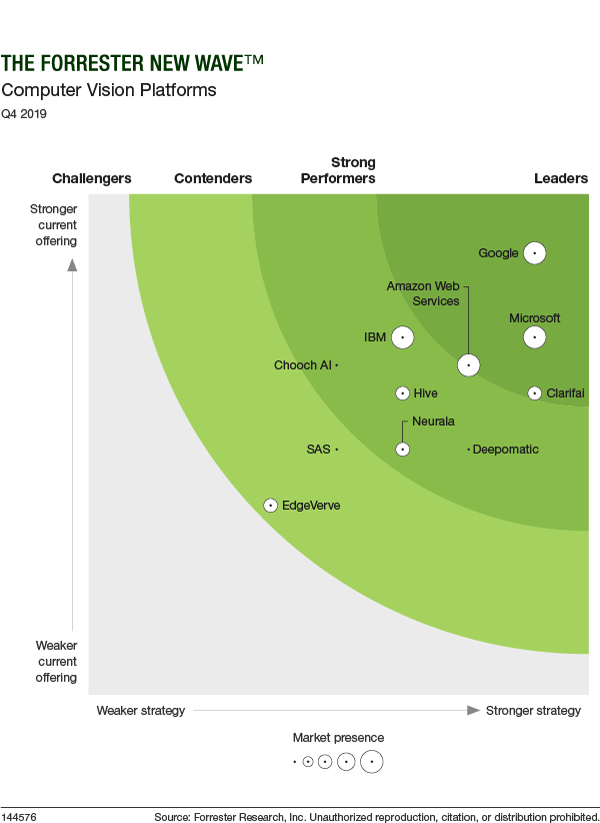
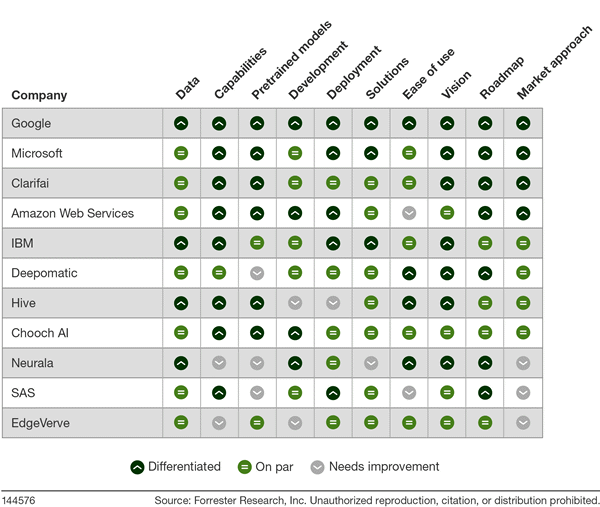
Its report details its findings about how well each vendor scored against 10 criteria and where they stand in relation to each other.
Google Cloud was classified as “differentiated” (the highest class) across all 10 criteria.
Find out more. Download The Forrester New Wave™: Computer Vision Platforms, Q4 2019.
3236
Of your peers have already watched this video.
20:00 Minutes
The most insightful time you'll spend today!
The Transformative Journeys of Financial Firms on Google Cloud: Watch Video
The reliance on cloud-based architectures, high performance computing, big data and more are accelerating in the banking, capital, insurance and financial services industries. Google Cloud had a strong role in transforming many businesses especially in the pandemic to smoothly transition into the digital space and understand their customers. Two years since then, financial firms have been able to design better products based on intelligent, real-time insights and leverage many capabilities of Google Cloud to deliver tailored experiences. So, how big of an impact Google Cloud has on the future of the financial services? The answer is huge and endless.
Watch this video to dive into the state of global financial services companies that leveraged modern cloud architecture for their sensitive data, platforms, devices and products while they increase revenues, stay compliant and curb costs.

Forrester Surveyed Indian Retailers About Digital Transformation. Here’s What They Found
DOWNLOAD WHITEPAPER3987
Of your peers have already downloaded this article
12:30 Minutes
The most insightful time you'll spend today!
As today’s empowered consumers demand more of the retail experience than ever before, leading retailers and brands in India are investing to rethink and reinvent in their customers’ cross-touchpoint experiences.
Our survey results demonstrate that retail decision makers understand that better customer experience can yield financial benefits, including faster revenue growth, and elevate the reach of influence and brand in the market.
Forty percent or more of retail executives are prioritizing revenue growth, improvement of customer experience (CX), and simplification of operations as the top priorities in their business agendas over the next year.
The survey also covers:
- Key Drivers For Retail Organizations To Migrate Application To Public Cloud
- Cloud Investments In The Retail Industry
- The Three Dimensions That The Industry’s Cloud Challenges Are Taking
- The Top Agendas Retailers Want to Accomplish with the Public Cloud
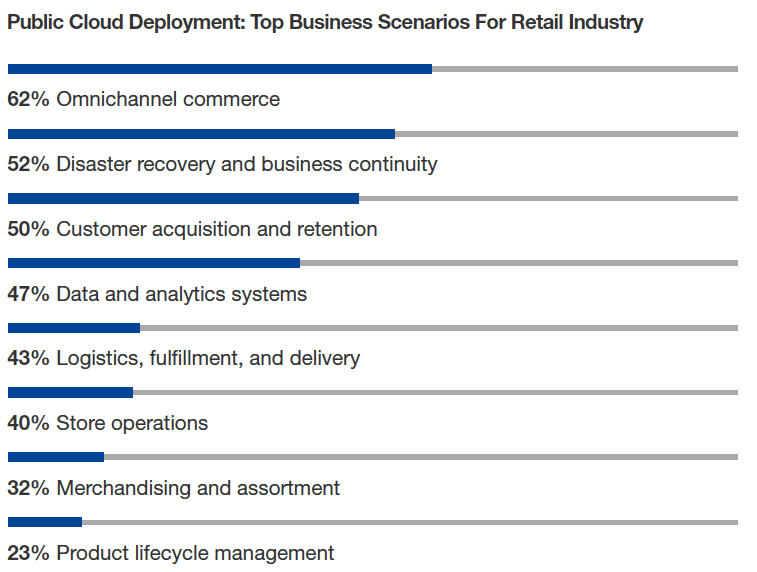
Download Forrester’s Retail Report Now.
Google Announced Leader in 2021 Gartner Magic Quadrant for Cloud Infrastructure and Platform Services

3545
Of your peers have already read this article.
3:00 Minutes
The most insightful time you'll spend today!
For the fourth consecutive year, Gartner has positioned Google as a Leader in the 2021 Gartner Magic Quadrant for Cloud Infrastructure and Platform Services (formerly titled as Magic Quadrant for Cloud Infrastructure as a Service upto 2014 Infrastructure as a Service, or (IaaS).
With our customers and communities adjusting to new ways of working and doing business, Google Cloud has remained focused on building services and platforms that help you be more resilient and derive even more value from your cloud infrastructure. We believe Gartner’s analysis and recognition gives our customers the confidence needed to choose Google as the platform for customer-centric innovation. Here are just a few recent examples.
Ready for the most demanding, mission-critical workloads
Our enterprise-ready cloud provides you the uptime, performance, and scale to run even your most demanding workloads. Examples of recent launches:
- The largest single-node GPU-enabled VM in the industry with up to 16 NVIDIA A100 instances so that our customers can run their ML workloads
- The only cloud to support scale-out out 96TB SAP HANA so that customers can confidently bring their most critical workloads to GCP
- Strategic partnerships with leading partners like SAP
- Several regions and an expanded global network footprint including new subsea cables, Firmina, Dunant, Blue and Raman
- High bandwidth 50/75/100Gbps networking for VMs
- Persistent Disk Extreme (block storage) with 120K IOPS
- Filestore High Scale scale-out NFS for HPC
Saves you money
Save money with a transparent and innovative approach to pricing and intelligent recommendations. In the past year, we’ve launched several innovations to help you save costs:
- Tau VMs, which offer the best price-performance among leading clouds for scale-out workloads
- Machine-learning-driven predictive auto-scaling for VMs and GKE Autopilot, enabling infrastructure to scale up and down as needed with minimal waste
- Standard network tier which routes traffic over the internet for cost optimization
Open
We have a long history of leadership in open technologies—from projects like Kubernetes, the industry standard in container orchestration and interoperability, to TensorFlow, a platform to help anyone develop and train machine learning models. Here are a few recent improvements we’ve made to ensure your cloud is an open cloud:
- Extended Anthos to bare metal and Microsoft Azure to support customers who want a multi-cloud and hybrid cloud posture.
- Announced a new network dataplane for Google Kubernetes Engine (GKE) and Anthos that supports eBPF, an open-source Linux kernel technology optimized for Kubernetes.
- Google Kubernetes Engine (based on the Kubernetes standard) received the top overall score based on 2021 Gartner Solution Scorecard for Google Kubernetes Engine.
Secure
Google Cloud’s trusted infrastructure uses layers of security to protect your data with advanced technologies and operations, keeping your organization secure and compliant. For example, we offer:
- Confidential VMs and Confidential GKE with in-memory encryption and encryption keys controlled by you, with a single checkbox
- Enhanced security for Cloud Run
- Strong support against DDoS attacks. In 2017, our infrastructure absorbed the largest-known DDoS attack at 2.5Tbps with no impact to customers.
Sustainable
Google Cloud helps customers transform their business sustainably. We operate the cleanest cloud in the industry to make sure your digital footprint doesn’t leave a carbon one. Here are a few proof points:
- Google has been carbon neutral since 2007, and for the past four years has matched 100% of the electricity we consume globally with wind and solar purchases. Everything you run on Google Cloud is net carbon neutral.
- We continue to innovate towards greater energy efficiency in our data centers, and compared with five years ago, now deliver around seven times as much computing power with the same amount of electrical power.
- Recently we announced new features to help customers reduce the carbon footprint of their applications and infrastructure, including a region picker to help with architecture decisions, and low carbon indicators in the Google Cloud Console.
Supporting our customers
Most importantly, our field organizations and partner organizations work with a singular focus to ensure customer success. This has made Google Cloud the fastest growing hyperscaler, with a rapidly expanding customer base across all geos and industries.
Since launching Customer Care last year, we consolidated and simplified the post-sales engagement with customers, increased the support channels, created an API to allow programmatic case creation, and combined product specific support into a single package for all of Google Cloud. Enterprises with Customer Care continue to report high levels of satisfaction with their focused technical account managers (TAMs), helping them get the most business value out of Google Cloud.
We are committed to sustaining and accelerating the pace of customer-centric innovation. You can download a complimentary copy of the 2021 Magic Quadrant for Cloud Infrastructure and Platform Services on our website.
Join us to learn much more about Google Cloud at the upcoming Google Cloud Next ‘21 digital conference.
Gartner, Magic Quadrant for Cloud Infrastructure and Platform Services, Raj Bala | Bob Gill | Dennis Smith | Kevin Ji | David Wright, 27 July 2021
Gartner, Solution Scorecard for Google Kubernetes Engine, Tony Iams | Traverse Clayton | Megan Bain, 12 April 2021
Gartner does not endorse any vendor, product or service depicted in its research publications, and does not advise technology users to select only those vendors with the highest ratings or other designation. Gartner research publications consist of the opinions of Gartner’s research organization and should not be construed as statements of fact. Gartner disclaims all warranties, expressed or implied, with respect to this research, including any warranties of merchantability or fitness for a particular purpose.
More Relevant Stories for Your Company

Google Unveils New Cloud Region in Delhi NCR to Power India’s Digitization
In the past year, Google has worked to surface timely and reliable health information, amplify public health campaigns, and help nonprofits get urgent support to Indians in need. Now, we are continuing to focus on helping India’s businesses accelerate their digital transformation, deepening our commitment to India’s digitization and economic recovery.

AI-powered Business Messages for Timely, Engaging and Helpful Conversations with Customers
Over the last two years, we’ve seen a significant uptick in the number of people using messaging to connect with businesses. Whether it was checking hours of operation, verifying what was in stock, or scheduling a pick-up, the pandemic caused a significant shift in consumer behavior. 45% of users are
Dassana: Choosing Google Workspace and Google Cloud to accelerate growth and reach goals
When Dassana co-founders Gaurav Kumar and Parth Shah, formerly founder and founding engineer at RedLock (now Prisma Cloud by Palo Alto Networks), set out on a new startup journey in 2020, they knew exactly where to start: sign up for Google Workspace. “Every startup I’ve been at, we used Google

Vizrt’s Story of ‘Lift and Shift’ and Delivering Phenomenal Performance with Google Cloud
When moving software applications from on-premise hardware to the cloud, it often "just works," but it's never guaranteed. This is especially the case for applications that are hardware intensive. This blog post examines what happened when a media company took software for real-time video broadcasts into the cloud. We'll share
