





Highnote Build the First Flexible, End-to-end Embedded Finance Platform on Google Cloud

3264
Of your peers have already read this article.
3:00 Minutes
The most insightful time you'll spend today!
The ability to quickly introduce and evolve payment options for products or services is essential for businesses, as nearly 50% of consumers who can’t use a preferred payment method abandon their purchase. At the same time, gift cards, branded credit cards and rewards programs are critical tools that companies rely on to build more loyal and lasting customer relationships. With Highnote, companies have an all-in-one embedded platform to quickly create payment cards and wallets, offer innovative rewards programs and credit, and provide sustainable wage access. It is the first platform that allows enterprises to make card issuance an embedded capability of their product without creating an entirely new (and costly) organization.
Creating an exciting fintech future with Google Cloud
When thinking about building the industry’s first end-to-end embedded finance platform, we quickly realized Highnote would only be successful if it enabled companies to truly innovate and quickly roll out new programs. To do so, the platform would have to be built on scalable infrastructure capable of securely delivering services with speed and reliability while offering easy access to actionable Big Data analytics.
Working closely with the team at the Google for Startups Cloud Program, we successfully implemented Google Cloud as a versatile, future-proof foundation of our platform—and built Highnote from the ground up in just one year. Highnote’s GraphQL-based API platform reinvents the card issuance process. Utilizing the developer-friendly Highnote platform, product and engineering teams at digital enterprises of all sizes can easily and efficiently embed virtual and physical payment cards (commercial and consumer prepaid, debit, credit, and charge), ledger, and wallet capabilities into their existing products. This creates compelling value while growing revenue and building a unique and differentiated brand.
We leverage Cloud Spanner, BigQuery, and Google Kubernetes Engine (GKE) to create a unified and highly secure PCI DSS-compliant platform with GraphQL APIs that provide rapid and flexible money transfers. This gives us a reliable platform to deliver and test customer experiences, respond to outcomes, and make better business decisions. Powered by Google Cloud, our data models and application domains are architected to support configurations and customizations that unlock a diverse set of new use cases across industries, including retail, travel, logistics, healthcare, and sustainable wage access programs.
We are especially proud to highlight our enablement of sustainable wage access, as this program helps the 50% of Americans living paycheck to paycheck. Embedding this program within payroll systems provides a viable alternative to payday lenders who often charge exorbitant fees and interest rates. In real world terms, this means Highnote helps people access earned wages before payday at no cost.
The other customer we just went live with was Tillful, and their Tillful card helps small businesses build their business credit. This program will help new and emerging businesses as well as underrepresented owners of small businesses by making the credit ecosystem accessible. Highnote’s platform is designed to support multiple use cases across many industries. For example, we also help the trucking and logistics companies to develop fleet and fuel cards, and spend management companies who are looking to uplevel offerings.
Delivering high-performance transactions with Cloud Spanner
Building one of the world’s most modern card platforms would not have been possible without Cloud Spanner. We needed a solution that would keep our massive petabyte databases from buckling and more securely deliver data anywhere in the U.S. Cloud Spanner does all this and more, as it routinely connects purchases from millions of customers to tens of thousands of vendors. We also wanted to reduce overhead by 80% by eliminating manual sharding, partitioning, and optimization of data. These processes are automatic with Cloud Spanner so we can operate at maximum efficiency.
We specifically selected Cloud Spanner as our distributed SQL database management and storage solution because of its outstanding availability, zero plan maintenance downtime, security certifications, and the highest consistency guarantees of any scale-out database. We continue to optimally scale without any downtime or compromises to the integrity or security of our data. This is key for us because we can address unexpected spikes, long-term growth, and new services without costly rearchitecting.
Highnote is designed to perform over billions of transactions on Cloud Spanner, and the average latency of less than 250 ms is a testament to the robustness of Google Cloud services.
Enabling actionable customer insights at scale
BigQuery is another key Google Cloud solution that we rely on to deliver deep insights and visibility for our customers on a highly secure and scalable platform. When building Highnote, we knew we needed a cost-effective solution that excelled at data analytics. This is particularly critical for accurately measuring the performance—whether profitability or efficacy—of any program or card.
Using BigQuery, we successfully run analytics at scale with as much as a 34% lower three-year TCO than cloud data warehouse alternatives. Over the past year, BigQuery has enabled our customers to unlock data-rich capabilities with a ledger that tracks money in real time and serves up complete debit and credit entries for every event across their accounts. Companies also access real time balances for revenue, fees, customer accounts, and available funds management without complicated spreadsheets.
To quickly and efficiently roll out Highnote to our customers, we needed a simple way to automatically deploy, scale, and manage Kubernetes. When selecting a Kubernetes management tool, our top priorities were rapidly spinning up and securely scaling across multiple sites. As part of Google Cloud’s expansive ecosystem, Google Kubernetes Engine (GKE) was the top choice due to seamless and automatic Kubernetes scaling and management.
We quickly got off the ground with single-click clusters and scaled up by using the high-availability control plane—including multi-zonal and regional clusters—to easily accommodate multiple active-active regions (which other solutions cannot do). As an embedded finance platform, stringent security protocols were obviously a key consideration for us. GKE is secure by default and runs routine vulnerability scans of container images and data encryption. Further security assistance was provided by Google Cloud partners 66degrees and DoiT International to help us rapidly validate VPC PCI compliance and ensure the uninterrupted performance of thousands of transactions per second.
Winning in fintech with Google for Startups
Building the industry’s first end-to-end embedded finance platform would have been extremely challenging without the extensive Google Cloud support. By working closely with our Startups team and Google partners, we had access to Google Cloud services to more easily validate VPC PCI compliance and address most issues before we exited stealth. Their responsiveness is incredible and stands out compared to support services we’ve seen from other technology providers.
Our participation in the Google for Startups Cloud program has been instrumental to our success. With Google Cloud, we are making embedded payments accessible to our customers without a big budget price tag. By doing so, we help unleash the creativity of emerging enterprises by enabling them to innovate with payment services and rewards programs to reach new markets and customers. If companies can dream, we can enable them to realize it on Highnote. Our platform really is that flexible. We’re excited where we can go and grow with Google Cloud.
If you want to learn more about how Google Cloud can help your startup, visit our page here to get more information about our program, and sign up for our communications to get a look at our community activities, digital events, special offers, and more.
Digital Maturity in Higher Ed Tied to Improvements in Students’ Journey: Study

5125
Of your peers have already read this article.
3:00 Minutes
The most insightful time you'll spend today!
Why Higher Ed Needs to Go All-in on Digital
In the wake of the COVID-19 pandemic, the majority of students within the 18-24-year-old demographic now expect hybrid learning environments–even once we are beyond the pandemic. And a vast number of adult learners are seeking options that accommodate their work and family lives now that it’s clear that effective learning can indeed occur virtually. Implementing cloud technologies and achieving digital maturity within higher education will enable institutions to be innovative and responsive to evolving student preferences, while being prepared for future disruptions.
The state of digital maturity
In February and March 2021, Boston Consulting Group (BCG), in partnership with Google, surveyed U.S. higher education leaders on their views of the state of digital maturity in the higher education sector. This survey found that institutional and technology leaders strongly agreed that moving legacy IT systems to the cloud, centralizing and integrating data, and increasing the use of advanced analytics is necessary to make a successful digital transformation, and ultimately achieve digital maturity.
But what is digital maturity? Digital maturity—a measure of an organization’s ability to create value through digital delivery—focuses on three areas of technological advancement that drive large-scale innovation:
- Using cloud infrastructure
- Expanding access to data
- Using that data to improve processes through advanced analytics, such as Artificial Intelligence and Machine Learning (AI/ML)
Although university leaders agree on prioritizing digital maturity, more than 55% said they considered their schools to be “digital performers” or “digital leaders.” However, only 25% of tech leaders at these universities stated that their schools regularly use data analytics. As with corporations and governments, higher education institutions face barriers to technological innovation, such as:
- Competing priorities to meet step-change goals and decentralized decision making
- Budget constraints
- Cultural resistance to change
- Tech staff skillset gaps
Still, leaders understand that the way to overcome institutional inertia is with a strong, goal-oriented vision of what is best for the institution overall. Although only a handful of schools have reached digital maturity as we define it, others can learn a great deal from their examples. Here are the top takeaways from higher education leaders who successfully transformed their institutions:
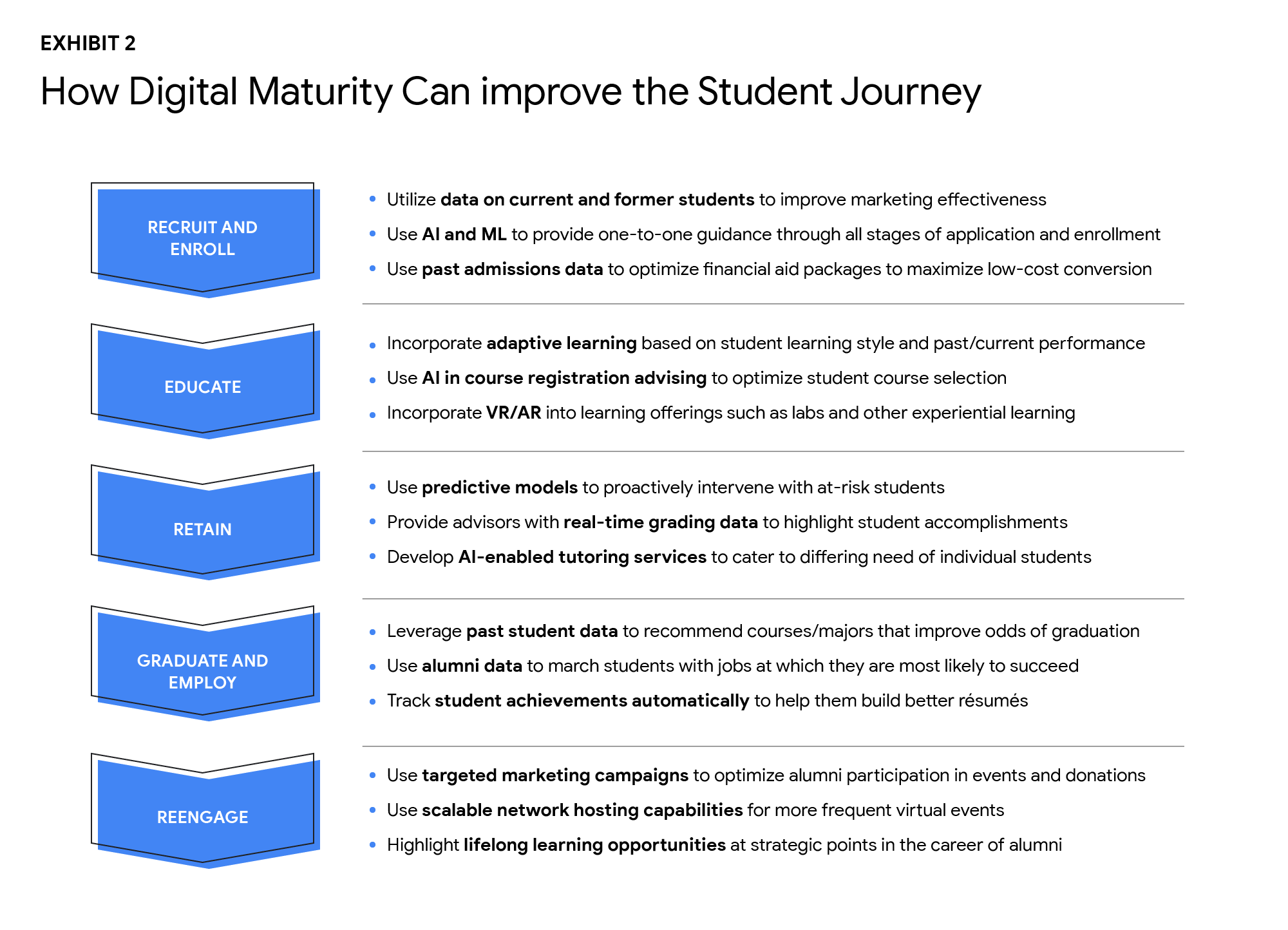
Digital solutions can improve the student journey in many ways
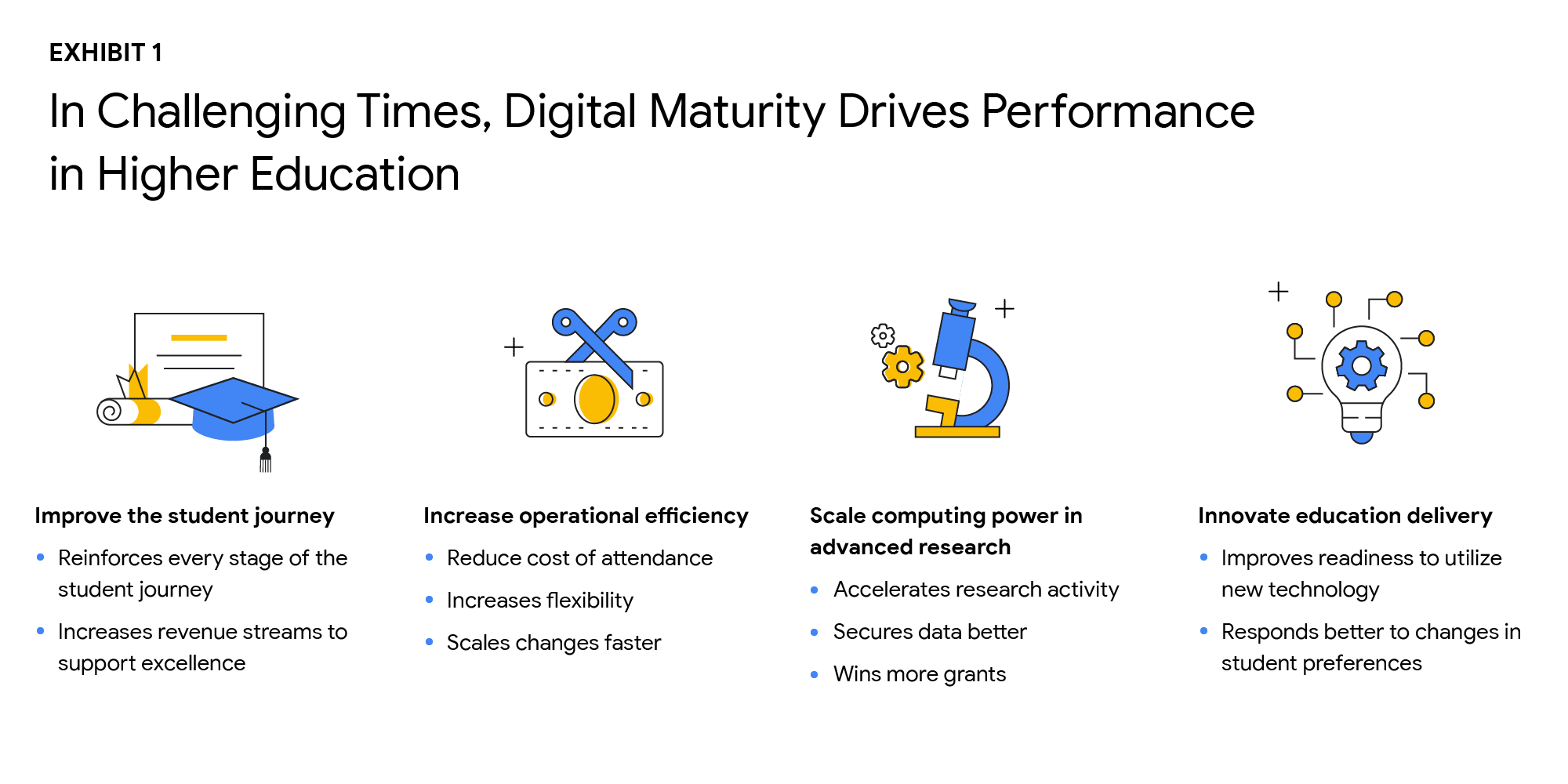
As digital capabilities hold the key to dealing effectively with declining enrollment and rising costs, higher ed leaders identified four goals that are critical to improving performance:
- Improve the student journey
- Increase operational efficiency
- Scale computing power in advanced research
- Innovate education delivery
The research found that technology investments can help enhance the student journey in the recruiting and retention of students, improving digital education delivery, government funding, and donations from alumni. Digital maturity can make institutions more agile and efficient in delivering education that aligns with the changing societal norms, evolving student preferences, and future disruptions. Survey participants shared that they plan to increase the use of the cloud by more than 50% over the next three years. By shifting legacy IT systems to the cloud, institutions can increase scalability, lower the cost of ownership, and improve operational agility, while offering a more secure, long-term data storage solution.
Cloud-native software-as-a-service (SaaS) solutions provide an excellent platform for centralizing data. However, institutions that attempt to “lift and shift” their legacy systems to the cloud may encounter challenges to achieving measurable improvements in data integration and cost reduction. Higher ed leaders must realize that centralizing data and transitioning to the cloud do not happen simultaneously.
Leaders who are able to articulate a strong vision and commitment will experience a more successful technology transformation. By linking their vision to specific needs, such as more effective recruiting, leaders will find their technology investments will have a more substantial return. University presidents should base their decisions about which systems to move, when, and how on desired performance outcomes.
Big visions become a reality with small steps. Small pilot projects are an excellent way to start the journey toward digital maturity. Small steps toward a significant transformation can reduce resistance to change, build positive momentum, and produce better student outcomes. Read the full report here. If you’d like to talk to a Google Cloud expert, get in touch.
6709
Of your peers have already downloaded this article
4:30 Minutes
The most insightful time you'll spend today!
Unlocking the Power of Data and Creativity with
the Cloud: The WPP Story
Qlik and Google Cloud Combo: Extending Integration of SAP Data on BigQuery
5465
Of your peers have already read this article.
2:00 Minutes
The most insightful time you'll spend today!
If your organization is one of the 52% of SAP customers whose top analytics pain point is data integration1, Google Cloud has got you covered. By working with partners like Qlik, we are expanding our integration options and bringing real-time replication capability for SAP to BigQuery.
Integrated data for accelerated insights
BigQuery—our fully managed, enterprise data warehouse that can scale up to petabytes on demand and execute queries in seconds—allows SAP customers to consolidate enterprise data silos and confidently derive more use and value from their data. Customers can accelerate and simplify the delivery of SAP data on BigQuery with the latest Qlik Data Integration platform offering for Google Cloud which allows data integration using an automated, near real-time data pipeline through Qlik Replicate, whether data originates from legacy SAP environments, SAP HANA, or SAP application servers. Additionally, Qlik Compose for Data Warehouses can be used to easily generate and automate logical data models from SAP directly in BigQuery freeing up more time for data analysts to leverage advanced built-in capabilities such as BigQuery ML to derive greater value and insights using standard SQL without the need for advanced programming expertise.
Delivering faster results with real-time
Traditional extract-transform-load (ETL) solutions operate on a batch basis, pulling data sets from SAP daily, hourly, or every minute. These tools often require manual mapping of multiple data fields so that data flows accurately. Given SAP’s highly complex table relationships, in which a single transaction can result in multiple changes, this can be a time consuming and tedious process. ETL can also increase the burden on your SAP systems.
Qlik Replicate simplifies this with its intuitive user interface where you can set up real-time data replication between SAP and BigQuery, eliminating the need for manual coding. And, to prevent system overhead, as soon as a new transaction is entered into SAP, the resulting data is replicated into BigQuery in a process known as change data capture (CDC) from SAP’s log layer. This means that data transfer can benefit from high performance with minimal impact on the source system’s resources. Read our latest white paper to learn how to extract SAP data into BigQuery leveraging Qlik Replicate.
Solution expertise for all core SAP workloads
It doesn’t matter what database your SAP system runs on, Qlik Replicate supports all core SAP systems. It automates real-time data replication and decodes SAP’s complex, application-specific data structures into formats that flow smoothly into BigQuery. This ensures that anyone who depends on data analytics has the most current and relevant SAP data they need. For its robust solution capabilities Qlik has received a new “SAP on Google Cloud Expertise” designation for supporting:
- Fast onboarding and accelerated replication of SAP data into Google Cloud
- Real-time and continuous data replication from SAP applications to BigQuery
- Support for all core SAP modules and a broad set of data sources
- Automated data integration, which cuts resource requirements for initial delivery and ongoing maintenance
Proven customer results
Many SAP customers have experienced the benefits of leveraging Qlik alongside BigQuery for data analytics and AI at scale, including German luxury department store chain Breuninger. In order to meet its customers’ growing and changing expectations,Breuninger needed to accelerate its time to insight from data sources across a highly dispersed landscape of on-premises databases and systems, including SAP. The company uses Qlik Replicate to feed corporate data from modules in its SAP system into BigQuery and integrate its varying on-premises databases with the Google Cloud environment. This has yielded game-changing, real-time customer insights for the retailer.
What could your business do with faster, more integrated insights? Learn more about BigQuery for SAP customers and also how Qlik and Google Cloud can help you modernize and automate data integration and analytics.
Three Benefits of VPC Network Peering for SAP Managed Apps

3525
Of your peers have already read this article.
3:00 Minutes
The most insightful time you'll spend today!
Over the past year, RISE with SAP has emerged as a valuable solution for SAP customers seeking a faster, simpler, and more affordable path to the cloud. RISE with SAP is a subscription-based offering that typically includes a number of fully managed cloud application options, including SAP S/4HANA Cloud and elements of the SAP Business Technology Platform. It’s a great way to migrate your business to modern cloud ERP applications, while handing off the implementation and management to SAP and freeing your own IT staff to focus on other projects.
As a strategic partner for RISE with SAP, Google Cloud works closely with SAP to ensure reliable, secure, high-performance connectivity between your SAP managed applications and your other Google Cloud applications and services. Today, we’re focusing on a Google Cloud capability that plays a big part in achieving this goal: VPC network peering. If your company uses Google Cloud to host its RISE with SAP managed applications (or any other SAP-managed offering, such as SAP Enterprise Cloud Services), it’s worth learning more about why VPC network peering is an important capability and how your network admin can implement it.
VPC network peering: The critical link for your SAP managed applications
We recently co-authored a white paper with SAP that goes into technical detail about how VPC network peering works and includes step-by-step configuration instructions. But it is useful to understand, at a higher level, why it matters for RISE with SAP subscribers.
When SAP implements your RISE with SAP managed applications on Google Cloud, it also provisions a virtual private cloud (VPC) — a virtualized network that provides the same functionality, performance, and security benefits as a dedicated physical network — for this SAP environment. In fact, a VPC actually gives you some capabilities that a physical network can’t match, such as the ability to increase IP space without downtime.
Using VPC network peering to connect your SAP managed environment with your Google Cloud applications and services gives you three key benefits:
- Network latency: Traffic that remains inside Google’s network enjoys lower latency than connectivity that uses external addresses.
- Network security: Service owners do not need to have their services exposed to the public internet and deal with its associated risks.
- Network cost: Rather than pay egress bandwidth costs for networks using external IPs to communicate, peered networks can use internal IPs to communicate, saving you money on those egress costs. Regular network pricing still applies to all traffic.
Many customers also appreciate the flexibility they get from VPC network peering: It supports the ability to peer your own VPC networks with other VPC networks that reside in different projects and even in different organizations.
Using VPC network peering to strengthen your SAP security posture
Most Google Cloud customers find VPC network peering most useful to ensure seamless connectivity between their SAP managed applications and the rest of their Google Cloud environment. But some companies also rely on VPC network peering to gain greater control over the security of their cloud environments. This can include:
- Implementing additional network security capabilities, such as advanced firewalls, intrusion detection, and network package inspection, that go above and beyond standard SAP security measures.
- Leveraging Google Cloud Interconnect to link your on-premises and Google Cloud environments, including your RISE with SAP managed applications, without sending traffic across the public internet.
Once your company has configured VPC network peering, things get even more interesting. Google Cloud offers plenty of ways to complement and enhance the value of your SAP applications: using Google BigQuery to consolidate and enrich your SAP application data; relying on Google AI/ML capabilities to sharpen your predictive analytics and real-time decision-making; or leveraging Google Kubernetes Engine to jump-start your own cloud-native application development efforts, among many other examples.
Some of the world’s biggest SAP customers, including The Home Depot, and Cardinal Health, have chosen Google Cloud to migrate their business-critical SAP applications. And we’ve seen how useful VPC network peering can be for SAP customers to unlock the full value and potential of Google Cloud. Be sure to download our white paper so you can get VPC network peering configured for your RISE with SAP managed applications, and discover for yourself just what’s possible when you run SAP applications on Google Cloud.

Forrester Report on Indian Healthcare: Why this Sector’s Seeing Greater Cloud Investments than BFSI or Retail
DOWNLOAD WHITEPAPER4182
Of your peers have already downloaded this article
11:45 Minutes
The most insightful time you'll spend today!
The healthcare industry in India is experiencing a rapid change, becoming one of India’s largest sectors in terms of both revenue and employment. But healthcare firms are under immense pressure to improve clinical outcomes and reduce the cost of care. Healthcare firms must recognize that their patients are customers who demand an experience that mirrors the depth that technology has reached in the rest of their lives. Healthcare delivery is becoming an increasingly digital experience for doctors and patients alike. To thrive in this new reality, healthcare executives need to deliver mature, clinically meaningful digital experiences to their patients.
However, many healthcare executives are concerned about aging devices, legacy software, and an expanding ecosystem of connected devices. To succeed, healthcare firms must explore the potential of digital technologies and increasingly focus on how to deliver on customer outcomes through digital customer experience, digital operational excellence, digital innovation, and digital ecosystems.
One way they are doing that is by adopting a public cloud strategy.
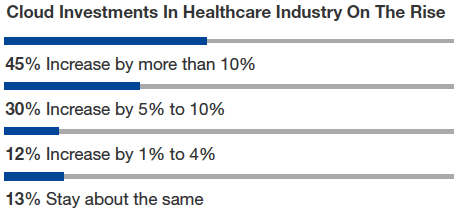
But these approach isn’t without it’s challenges..
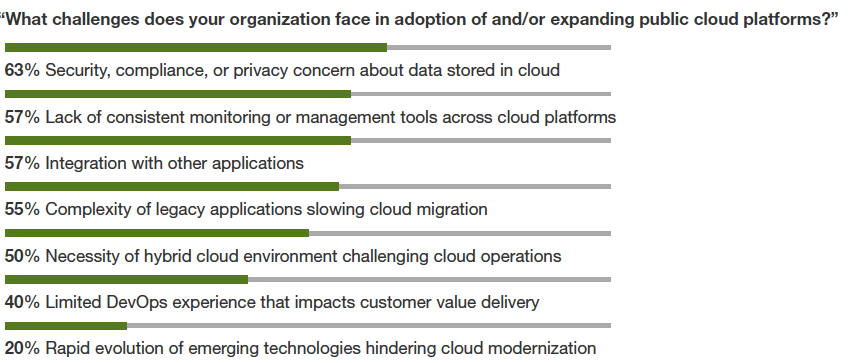
To find out more about what’s behind these trends, download Forrester’s report now.
More Relevant Stories for Your Company

MIT Cloud Security Confidence Report: An Evolution Worth Noting
The age of unthinking fears about cloud security is over. Not only is cloud adoption rising steadily across geographies, industries and job functions, but confidence in cloud security is rising as well — to the point where increased security is a major reason enterprises opt for cloud solutions. Gone are

Google Cloud’s Professional Service Organization: How it Accelerates Operational Health Review Cloud Migration
Introduction The Google Cloud Professional Services Organization's (PSO) mission is to help our customers get the most out of Google products. PSO is responsible for customer success by sharing our technical expertise in order to unlock business value from the cloud by providing cloud strategy and best practice advice, implementation guidance, and

How Companies can Improve Scalability, Flexibility, and Reliability While Reducing Costs: Tips from Route4Me
Google Cloud Results Improves application performance by 8x to 12x; customers can create increasingly complex optimized driving routes in single-digit secondsImproves customer satisfaction via increased reliability and greater application performanceFocuses on adding value to customers by improving software and algorithms, not infrastructure managementSaves 5x in infrastructure costs In 2009, Dan

Giving Customers More Choice: Google Cloud’s New Product and Pricing Options
Over the past several years, Google Cloud has made significant investments in our infrastructure product portfolio. We launched new Tau T2D VMs, which deliver 42% better price-performance vs. other leading cloud providers. We upgraded Cloud Storage to offer more flexibility to support customers’ enterprise and analytics workloads, with dual-region buckets
