





Cloud and AI Paves the Future of Finance: Excerpts from FIA Boca 2022

6616
Of your peers have already read this article.
4:00 Minutes
The most insightful time you'll spend today!
Financial markets were among the first to adopt new technologies, and that has certainly been true of the derivatives markets, which were early adopters of electronic trading. Going forward, new capabilities will transform the way industry participants communicate, analyze, and trade.
I sat down with Google Cloud’s Phil Moyer and former SEC Commissioner, Troy Paredes, for a fireside chat at FIA Boca 2022 to discuss the future of markets and policy, the new technologies that are already paving the way for greater speed and transparency, and how cloud can help promote greater resiliency, performance, and security to enable the long-term vision for the market. The following is a summary of our discussion.
The current state of cloud technology
When it comes to technology adoption, we’re seeing the market and participants adopt cloud technologies, and increasingly, machine learning (ML) on a wider scale. Cloud technology allows for easier, faster, and much more secure experimentation with large datasets and ML.
A recent Google sponsored study by Coalition Greenwich (September, 2021) showed that more than 93% of trading systems, exchanges, and data providers are in some way providing services on the cloud. The same study, revealed that about 72% of the financial industry across the buy side and sell side, intend to consume public cloud-data based market data within the next 12 months.
Data-driven decision-making and risk management have always been, and continue to remain, the cornerstones of the financial markets. Over time, technology innovation has facilitated access to better insights from data, and therefore, better decision-making and the ability to manage risk. That expectation is now mainstream, and will continue to grow in sophistication.
The multi-phased technology trajectory
The movement of exchanges to the cloud will occur in a “crawl-walk-run” fashion, with low-hanging fruits the first to be picked in the near term while bigger, paradigmatic changes will occur over the medium and long term. Some organizations are starting all three stages simultaneously, understanding that each will move at an independent cadence.
The “crawl” phase is one in which foundations are built, starting with organizations moving data to the cloud and experimenting with some degree of analytics. It’s one of the most important phases because it’s where the opportunity to increase transparency and risk management takes shape.
In moving to the cloud, the infrastructure – which in the past relied on a combination of people, processes, and some technology – becomes the code that runs applications. This early phase is key to empowering organizations to shift to a cloud-based, agile-first operating model that makes it easier and more seamless to launch new products in the future, including by freeing up people and resources from IT management to more mission-focused work.
Establishing the cloud operating model simplifies the “walk” and “run” phases where compliance is more automated, latency-sensitive applications are more readily available, and the next generation of exchanges, market participants, and regulators is better prepared to meet future challenges.
The “walk” phase is where much of the innovation happens. Exchanges are making significant progress in leveraging foundational data decisions in the “crawl” phase and innovations in the cloud to improve settlement, clearing, risk management, collateral management, and compliance, and launch new products.
And finally, the “run” phase is where organizations will start to move the latency-sensitive markets to the cloud, as the markets increasingly will demand low-latency and high performance along with transparency and analytics to solve historical obstacles to market access.
Opportunities for both regulators and market participants
Any time significant technological change takes place, regulators explore its implications, particularly with respect to their ability to meet their regulatory objectives.
Increasingly, we are seeing technological change driving more opportunities for regulators and market participants alike. Such changes may also allow better protection of the marketplace, with greater integrity and transparency.
Over time, regulatory regimes – rules, regulations, statutes, interpretations, and guidance – will also adjust to new technologies, both benefiting the marketplace and advancing regulatory goals.
As one example, the cloud is increasing the ability to meet compliance obligations by allowing compliance to be built into transactions. Moreover, predicated on the vision of real-time regulatory reporting, and given the pace of technological change in the marketplace over the last several years, various regulators have been using more advanced analytics. This trend will continue to help them more effectively and efficiently meet their objectives, and monitor and meet the expectations they have for the entire market.
Machine learning’s role in the financial markets
Google Cloud’s head of AI and Industry Solutions, Andrew Moore, said that ML will be doing three key things for us in the next 10 years: giving us meaning, providing concierge services, and serving as a guardian. Extracting information that is critical to investor decision-making can be extremely important. With more data than ever, ML can increase the ability to process it while also becoming more accessible in the cloud and better supporting regulatory objectives.
The technology will likely manifest in trading and anti-money laundering activities as they relate market functions, as well as managing a wide variety of risks – supporting the interests of both investors and regulators in terms of decision-making, surveillance, and protections.
Rather than taking individuals out of the equation, the digitization of markets, assets, and guard rails combined with ML will allow people to focus their expertise in different ways to achieve key objectives.
Building the market foundation for the future
The goals of operational resiliency, security, and privacy will continue to be critical for building the market foundation for both participants and regulators. While technology promises to create advantages in concrete, tangible ways, it will be important to scrutinize potential risks and concerns.
Priority one for technology providers is to build an environment of trustless security, including encryption at motion and encryption at rest, ensuring that markets are operationally resilient while instilling confidence for any exchange that runs on top of that infrastructure. Multicloud architectures and approaches are likely also to be part of the solution for operational resilience.
Throughout time, liquidity has been the outcome of improved access, transparency, and security. Technology providers are responding by sharing both the responsibility for, and fate of, the markets of the future to build an efficient, faster, and more transparent and secure financial industry.
You can learn more about our approach in our newest white paper, Building the financial markets foundation for the future.
5891
Of your peers have already watched this video.
1:30 Minutes
The most insightful time you'll spend today!
FFF Enterprises See 80% Improvements in Speed at Lower Cost by Moving SAP Data to Google Cloud
FFF Enterprises, a pharmaceutical distributor of lifesaving biopharma products, vaccines and plasma products deployed SAP on Google Cloud to leverage its ability to scale server demands, reduce costs and improve speed and performance. Learn how the migration helps FFF empower healthcare to care!
6368
Of your peers have already watched this video.
1:30 Minutes
The most insightful time you'll spend today!
How Bloomberg uses Google Translate to Share Breaking News with the World
Bloomberg uses Google Translate to instantly share news with customers in more than 170 countries. Financial markets can move within seconds of a story breaking, so speed matters. With Google’s automated translation Bloomberg can quickly disseminate breaking financial news to customers around the world in 40 different languages.
3501
Of your peers have already watched this video.
2:30 Minutes
The most insightful time you'll spend today!
Google Cloud Helps DSW Engage Over 28M Shoe Lovers in Real Time
DSW Shoes turned to Google Cloud and Google Cloud Partner – Slalom to develop a realtime, engaging loyalty program that serves more than 28 million active members instantly.
The major move from on premise to a cloud-based, data-driven platform that offers speed, flexibility, and scalability has helped increase DSW’s new customer rate by 9% and allows the company to achieve a best-in-class retention rate.
Watch the video to understand how DSW Shoes did this.
4550
Of your peers have already watched this video.
3:30 Minutes
The most insightful time you'll spend today!
Strategies for Migrating to the Cloud
What are the technologies that are helping enterprises scale, adapt, and modernize? Are there any strategies that enterprises can adopt for moving to the cloud?
What this webinar to find out the different migration patterns to the cloud and learn how enterprises can choose the right strategies based on their business and technical environments, and the tooling that can help them get there.
DB Corp Opts For Google Cloud to Drive Transformation to Real-Time Operation

3869
Of your peers have already read this article.
2:30 Minutes
The most insightful time you'll spend today!
About DB Corp
DB Corp is India’s largest newspaper publisher delivering 62 editions in four languages and selling about 62 million copies per day. The business also has an extensive online and mobile presence.

Google Cloud Result
- Reduced time to complete sales reports and updates from a week to two hours
- Delivered a single source of truth and real-time data to support decision-making
- Hindi news source material with 95 percent accuracy
Headquartered in Bhopal, India, and listed on the Bombay Stock Exchange, DB Corp is India’s largest newspaper group. DB Corp publishes 62 editions in four languages and sells about 6 million newspaper copies per day. Beyond newspapers, DB Corp operates 29 radio stations, 13 portals and two mobile apps.
Like the media industry in general, DB Corp is having to adapt to readers’ increasing preference for accessing news content online – particularly on mobile devices. However, online advertising is yet to fill the gap left by the leakage of advertising revenues from print. Further disruption occurred when the Indian Government’s implemented a demonetization program in November 2016 that prompted a sharp surge in e-commerce transactions and online banking.
Facing a tsunami of change, DB Corp is developing and executing new strategies to engage consumers and build revenues. These plans include evolving from an IT-supported business to an IT enabled company, and finally to an IT-led business that complements its newspapers with online news and updates throughout the day. DB Corp is building e-commerce properties that leverage its print brands and is moving to increase advertising across its mobile services. Furthermore, the business is looking to capture information about readers and customers to tailor its publications and services more closely to their needs.
Expertise in managing large data volumes behind GCP selection
However, DB Corp’s on-premises infrastructure and traditional applications could not deliver the flexibility and agility needed to support the transition to real-time news delivery. In late 2015, DB Corp started evaluating public and private cloud services, including cloud-based application suites and platform as a service offerings. This process led the business to deploy G-Suite and start working with Google Cloud Platform (GCP). “We selected GCP due to Google’s experience in delivering cloud services, and because nobody else manages data volumes of the magnitude that they do,” says R D Bhatnagar, Chief Technology Officer, DB Corp. “We were also impressed by the fact GCP had a local team with the skills and expertise to educate us about how best to use its products.”
DB Corp is migrating its websites and key applications to GCP. The business is also upgrading its network to remove bandwidth restrictions that could impede the value provided by GCP services. The scale and scope of DB Corp’s G Suite and GCP projects has required the business to engage four partners and access technical expertise and support from Google itself. Technical and business experts from the platform as a service provider are providing monthly updates and training sessions with various groups within the organisation, including user communities and the board of directors.
The Google projects at DB Corp are driving a sharp increase in the speed, agility and performance of the business. “As a senior leader within the organisation, I see the key benefits of GCP and other technologies being lower cost; greater efficiency; and improved business continuity,” says Bhatnagar. “For example, the current data center team can be redeployed to other initiatives as the technical experts at GCP will be undertaking most of the management and maintenance tasks.
DB Corp is already making business and financial performance data available in real time from a single source, enabling business teams to make sound, consistent decisions about digital strategies and other key activities. These teams may also address issues or problems before they compromise the quality of content and services provided to consumers.
Deploying Chrome for Meetings across various offices has enabled teams to communicate and collaborate effectively in real time, breaking down geographic barriers, ensuring each member is on the same page and ensuring the business transformation proceeds smoothly. Sales teams are using Google Forms and Google Sheets to centralize and control tasks such as sales forecasting, reducing the time required to complete reports and updates from up to a week to two hours.
Furthermore, various teams are using calendars to improve organization and productivity. For example, editorial teams are using calendars to track Indian holidays and festivals and deliver relevant content to readers. Reporters are also using Google Cloud Speech API and Google Cloud Translation API services to capture and document interviews and source material for articles at accuracy rates of 95 percent for Hindi alone.
More Relevant Stories for Your Company
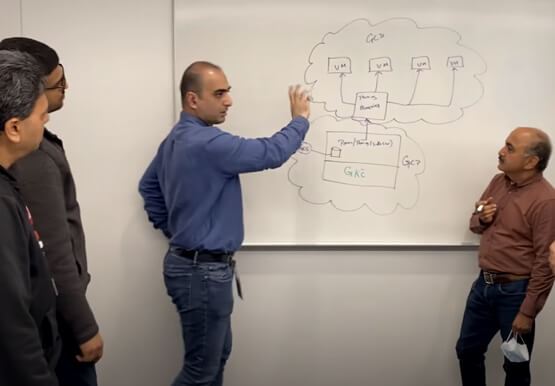


A Winner’s Story of Optimizing IT Operations for Informed Business Decisions with Google Cloud
An award-winning leader in the enterprise software industry, Broadcom Software is known for modernizing, securing and optimizing the most complex and largest hybrid environments. It's broad portfolio of industry-leading, enterprise infrastructure and security software built on different tech stack and vision of tech leaders, are run on on-prem, private and
Quick Recap on Google Cloud: Latest News, Launches, Updates, Events and More
Want to know the latest from Google Cloud? Find it here in one handy location. Check back regularly for our newest updates, announcements, resources, events, learning opportunities, and more. Tip: Not sure where to find what you’re looking for on the Google Cloud blog? Start here: Google Cloud blog 101: Full list

Create and Protect Admin Accounts
Setting up your new cloud infrastructure is scary. Extra scary when you realize that someone (is it gonna be you?) gets to have phenomenal cosmic power over the whole thing. Yes, I'm talking about the admin account, and today we'll dig into why they are important, dangerous and different. When



Google Cloud’s ML-based Image Classification App: A Key to Global Wildlife Conservation
Wildlife provides critical benefits to support nature and people. Unfortunately, wildlife is slowly but surely disappearing from our planet and we lack reliable and up-to-date information to understand and prevent this loss. By harnessing the power of technology and science, we can unite millions of photos from [motion sensored cameras]
