





Five Ways Cloud Computing Helps Companies Optimize Operations and Lower IT Costs

4811
Of your peers have already read this article.
1:30 Minutes
The most insightful time you'll spend today!
There is no one way to recover. The past year has seen unprecedented challenges for business across the world, with social distancing and quarantine measures forcing many organizations to quickly adapt to remote working. A new report from BCG Platinion, titled “Finding a New Normal in the Cloud”, points out that while companies have done well to survive so far, the overall business environment is still a tough one with contracted economies and lowered revenues. CIOs have to find the right balance between technological innovation and lowering their cash burn rate.
The report identifies five key ways in which companies can use cloud computing to optimize their operations and reduce overall IT costs by as much as 10%.
1. Go beyond VPN
The BCG Platinion report states that companies need “rapid, efficient, highly scalable, and device agnostic solutions”. Traditionally, when employees had to work offsite, companies provided them with VPNs. But the sheer scale of the COVID-19 pandemic has shown these solutions to be expensive, slow, inconvenient, and hard to manage when entire workforces are working remotely.
Instead, BCG Platinion emphasizes the need for cloud-based solutions such as BeyondCorp Enterprise for more secure, more effective, lower cost remote access at scale. BeyondCorp Enterprise offers customers a zero trust platform for simple and secure access with continuous end-to-end protection that can be used on any device at any time. Deliveroo, a global food delivery company headquartered in the UK, uses BeyondCorp Enterprise to bring the zero trust model to its distributed workforce.
“Having secure access to applications and associated data is critical for our business,” says Vaughn Washington, VP of Engineering at Deliveroo. “With BeyondCorp Enterprise, we manage security at the app level, which removes the need for traditional VPNs and associated risks.”1
With a low cost cloud subscription model, BeyondCorp Enterprise eliminates the need for hardware, operating, and maintenance costs that come with VPN solutions and can also enable organizations to offer protection to the extended workforce at a fraction of the cost. BCG Platinion estimates that solutions like BeyondCorp Enterprise can save companies as much as 50% versus the cost of a traditional VPN.
2. Use SaaS to keep productivity up
With so much of the workforce fragmented due to social distancing measures, the need for seamless, efficient collaboration is greater than ever. According to BCG Platinion, a fully functional Software-as-a-Service productivity solution such as Google Workspace helps to “alleviate the traditional costs and burdens around availability, backup, and maintenance of on-premise collaboration infrastructure.” BCG Platinion analysts estimate that adopting a SaaS solution can lower computing costs for end users by up to 35%.
But working in the cloud does more than lower costs. The BCG Platinion report cites a 2020 study from Forrester that found adopting Google Workspace boosted revenue growth by 1.5%, reduced the need for on-demand tech support by 20%, and cut the risk of data breaches by more than 95%. Over the last year, companies of all sizes have looked on the conditions of the pandemic as an opportunity to change the way they work.
“Airbus has spent the past year thinking about what it actually means to return to work and we’re looking to support greater flexibility with Google Workspace in a leading role,” says Andrew Plunkett, Airbus Vice President Digital Workplace. “In 2020, we held 5.6M Google Meet sessions and we now have more than 70,000 shared Drives where people collaborate. Google Workspace has changed the way people work at Airbus and that will continue as the solution empowers the hybrid work reality.”2
3. Reduce IT overhead and management costs with cloud-first devices
Working in the cloud can be made even more effective with devices specifically designed for the cloud, says the BCG Platinion report. “Cloud-native devices such as Google’s Chromebooks and Chromeboxes are cost-effective, easy to deploy, simple to use, and highly secure,” says BCG Platinion. Additionally, with “thin client” devices, companies can save on hardware costs compared with traditional laptops and desktops.The report suggests that a thin client approach can produce savings of up to 25% in end-user technology and support.
Organizations and businesses of all sizes have found that Chrome OS and devices have greatly enhanced their capacity to work together in even the most challenging circumstances. Chrome OS provides employees with a modern experience and devices that stay fast, have built-in security, deploy quickly, and reduce the total cost of ownership. “Chromebooks are simple-to-use and cost-effective devices that do everything that our staff need them to do, which is mainly accessing Google Workspace online,” says Henry Lewis, Head of Platform for the London Borough of Hackney. “As soon as the Grab and Go Chromebooks were available, they were well used every day.”3
4. Lift and shift for easier transitions
While migrating to the cloud is a priority for many organizations to succeed, it does not have to happen all at once and in the same way. A total cloud migration can be a huge undertaking, involving redesigns of architecture and refactoring of applications. For many organizations, this process can take several months, even years.
But in times like these, CIOs need to make decisions quickly and reduce cash burn as much as possible. When resources are stretched and time is tight, BCG Platinion recommends a “lift-and-shift” approach for minimal disruption. With Google Compute Engine, for example, organizations can simply rehost their existing workloads on virtual machines without transformation. BCG Platinion reports that moving non-critical workloads to the cloud with lift-and-shift approaches can reduce IT spend by as much as 4% in just three months. Additionally, a quick, effective migration paves the way for more advanced IT infrastructure changes, creating effects that ripple long into the future.
5. Make data work for you with the cloud
Data is central to any industry and making the most out of it is more important now than ever before. With business as usual upended by the pandemic, organizations have turned to data for urgent tasks like demand forecasting or predicting supply-chain disruptions. A McKinsey report from last year points out that while many organisations had already started to engage with analytics and AI technologies, their progress was dramatically accelerated by the urgency of the pandemic: “Analytics capabilities that once might have taken these organizations months or years to build came to life in a matter of weeks.”
With the right setup a company can use data to drive efficiencies, respond quickly to its customers and open new markets. But big wins require huge amounts of information and powerful analytics, which means that effective data handling can be very difficult and expensive to do with on-premises architecture.
Moving to a cloud-based infrastructure minimizes infrastructure costs while opening up cutting edge techniques like machine learning for greater insight. The BCG Platinion report found that using a cloud-based data platform was not only cheaper and more efficient for businesses, but could result in a 70% increase in “effectiveness” which it defined as increased sales, lower costs of procured goods, and reduced inventory holding costs. “Moving to cloud provides competitive advantage as you scale innovation, accelerating the creation of new services to keep ahead of the competition,” explains Norbert Faure, Managing Director, Platinion Western Europe at Boston Consulting Group (BCG).
The key mission of any data platform is to make sure that the right people have access to the right information at the right time. Google Cloud helps to unify data across the entire business, increase agility, and innovate faster with a range of products. BigQuery runs complex analytics at infinite scale while helping organizations save up to 34% on the total cost of ownership compared with alternative cloud-based data warehouse solutions.4 Cloud Spanner provides a fully managed relational database that operates at 99.999% availability. Meanwhile, with Vertex AI, businesses can access the same groundbreaking machine learning tools that Google uses itself for unprecedented insight on a unified AI platform. “The whole Google Cloud suite of products accelerates the process of getting established and up and running, so we can perform the ‘bread-and-butter’ work of data science,” says David Herberich, VP, Head of Data at fintech startup Branch.5
Minimize costs today, innovate for tomorrow
As the world recovers from the pandemic, continued success depends on staying nimble and adaptive, argues the BCG Platinion report. Cloud computing can make companies more resilient by helping them to keep costs low, reducing overall IT spend by as much as 10% overall according to BCG Platinion. “For CIOs, cloud migrations can offer important near-term savings and benefits, while also reinvigorating progress toward the long-term goal of digital transformation.“
To learn more, read the full report from BCG Platinion.
1. BeyondCorp Enterprise: Introducing a safer era of computing
2. Building the future of work with Google Workspace
3. Hackney Council: Empowering 4,000 staff to keep serving their community from home
4. The Economic Advantages of Google BigQuery versus Alternative Cloud-based EDW Solutions
5. Fintech startup, Branch makes data analytics easy with BigQuery
Google’s Latest ‘Carbon Footprint’ can Flag Users about Carbon Emission Levels from their Cloud Usage

7101
Of your peers have already read this article.
4:00 Minutes
The most insightful time you'll spend today!
Google Cloud is proud to support our customers with the cleanest cloud in the industry. For the past four years, we’ve matched 100% of our electricity use with renewable energy purchases, and we were the first company of our size to commit going even further by running on carbon-free energy 24/7 by 2030. As we work to achieve 24/7 carbon-free energy, we help you take immediate action to decarbonize your digital applications and infrastructure. We’re also working with our customers across every industry to develop new solutions for the unique climate change challenges that organizations face. Today, we’re excited to expand our portfolio of carbon-free solutions and announce new partnerships that will help every company build a more sustainable future.
First, we’re launching Carbon Footprint, a new product that provides customers with the gross carbon emissions associated with their Google Cloud Platform usage. Now available to every GCP user for free in the Cloud Console, this tool helps you measure, track and report on the gross carbon emissions associated with the electricity of your cloud usage. Of course, the net operational emissions associated with your Google Cloud usage is still zero. With growing requirements for Environmental Social and Governance (ESG) reporting, companies are looking for ways to show their employees, boards and customers their progress against climate targets. Using Carbon Footprint, you have access to the gross energy related emissions data you need for internal carbon inventories and external carbon disclosures, with one click.
Built in collaboration with customers like Atos, Etsy, HSBC, L’Oréal, Salesforce, Thoughtworks and Twitter, our Carbon Footprint reporting introduces a new standard of transparency to support you in meeting your climate goals. You can monitor your gross cloud emissions over time, by project, by product and by region, giving IT teams and developers metrics that can help them reduce their carbon footprint. Our detailed calculation methodology is published so that auditors and reporting teams can verify that their cloud emissions data meets GHG Protocol guidance.

“The power of knowledge combined with the power of technology innovation plays a vital role in proactively responding to the climate crisis we are facing. With Google Carbon Footprint reporting, Atos feeds emissions data in our Decarbonization Data Platform, demonstrating potential emissions reductions from the Google Cloud Platform to our customers. This reporting opens up new levels of emissions transparency, trajectory planning, and data insight to support our customers in meeting, and potentially accelerating towards, their climate goals.”—Nourdine Bihmane, Head of Decarbonization Business Line, Atos
“The capability to measure and understand the environmental footprint of our Public Cloud usage is among the key axis of our sustainable tech roadmap. With Google Cloud Carbon Footprint, we are now able to directly follow the impact of our sustainable infrastructure approach and architecture principles.”—Hervé DUMAS, Sustainability IT Director, L’Oreal
While digital infrastructure emissions are just one part of your environmental footprint, accurately accounting for IT carbon emissions is necessary to measure progress against the carbon reduction targets required to avert the worst consequences of climate change. To help you account for emissions beyond our cloud and across your organization, we’re excited to partner with Salesforce Sustainability Cloud, integrating our Google Cloud Platform emissions data into their carbon accounting platform.
“As we face unprecedented climate challenges, companies across the globe need to embed sustainability into the core of their business in order to meet growing customer and stakeholder expectations, and reduce their environmental impact. Together, Google Cloud and Salesforce Sustainability Cloud can help our joint customers accelerate their path to Net Zero, leveraging data-driven insights and visualizations to track and reduce their carbon emissions to drive sustainable change.”—Ari Alexander, GM of Salesforce Sustainability Cloud.
From information to action
With the gross energy-related emissions footprint of data associated with your Google Cloud usage now available, we’re committed to providing tools to not only measure your carbon footprint, but help you reduce it. We recently launched low-carbon region icons to help you choose cleaner regions to locate your Google Cloud resources. New users who see the icons are over 50% more likely to choose clean regions over others, ensuring their applications emit less carbon over time.
For current Google Cloud users, we’re pleased to announce that Active Assist Recommender will include a new sustainability impact category, extending its original core pillars of cost, performance, security, and manageability. Starting with the Unattended Project Recommender, you’ll soon be able to estimate the gross carbon emissions you’ll save by removing your idle resources. Unattended Project Recommender uses machine learning to identify, with a high degree of confidence, projects that are likely abandoned based on API and networking activity, billing, usage of cloud services, and other signals, and provides actionable recommendations on how to remediate those abandoned projects. By deleting these projects, not only can you reduce costs and mitigate security risks, but you can also reduce your carbon emissions. In August, Active Assist analyzed the aggregate data from all customers across our platform, and over 600,000 gross kgCo2e was associated with projects that it recommended for cleanup or reclamation. If customers deleted these projects they would significantly reduce future gross carbon emissions. Check out this blog to learn more about Active Assist.

Solutions for climate resilience
Many of our customers face difficult questions about how their business impacts the natural environment today, and how it will be affected by climate change in the future. Answering these questions requires rich datasets about the planet, better analytics tools and smarter models to predict potential outcomes. For over a decade Google Earth Engine has supported scientists and developers with hyperscale computing power and the world’s largest catalog of satellite image data. Today, we are delighted to announce the preview of Earth Engine as part of Google Cloud Platform. Now, you can access Earth Engine and combine it with other geospatial-enabled products like BigQuery. By extending Earth Engine’s powerful platform to enterprises through Google Cloud, we are bringing the best of Google together.
Over the past year we’ve worked with a number of organizations to use Earth Engine technology with tools like BigQuery and the Cloud AI Platform to develop new solutions for responsible commodity sourcing, sustainable land management and carbon emissions reduction. Earth Engine enables companies to track, monitor and predict changes in the Earth’s surface due to extreme weather events or human-caused activities, thus helping them save on operational costs, mitigate and better manage risks, and become more resilient to climate change threats. This new offering will wrap the unique data, insights and functionality of Earth Engine with a fully-managed, enterprise-grade experience and reliability.
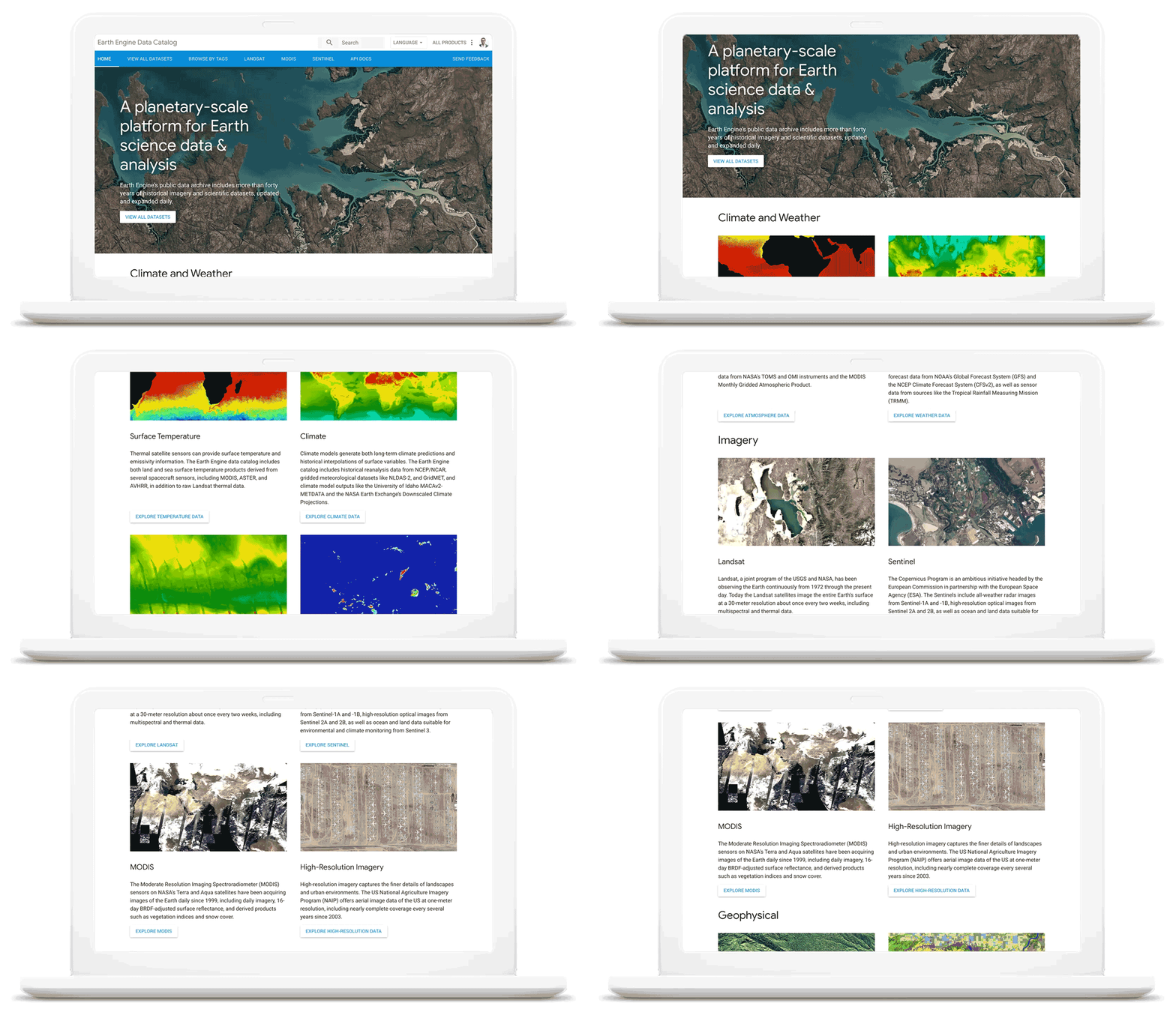
As we work with our customers to accelerate their sustainability initiatives, earth observation data is proving critical to effectively plan for the long-term impacts of climate change. To extend our geospatial and sustainability use cases we’re also expanding our partnerships with CARTO, Climate Engine, Geotab, NGIS, and Planet to bring their data and core applications to Google Cloud.
These partners will each make their existing platforms and datasets available globally on Google Cloud, giving you low-latency and reliable access to critical data and applications that will inform your sustainability initiatives. By integrating water availability, agricultural data, weather risks, and extensive daily satellite imagery into Earth Engine and BigQuery, you can achieve more ambitious goals for the sustainability of your business and our planet.
Committing to help you meet your climate goals
With each of these tools, we’re working to reduce the barriers you face in adopting more sustainable technology practices. We understand that building more sustainable applications and infrastructure is not easy. You face competing priorities, technical challenges, and the perception that climate action is costly.
It doesn’t have to be this way. Today, we are making a sustainability pledge to you: teams across Google Cloud are committing to eliminating the barriers you face in building a more sustainable digital future for your organization, and will help you take action today to realize your climate goals. We’ll do this in a number of ways:
- In digital transformation projects and workshops, sustainability teams will always have a seat at the planning table, so we can work together on using cloud technology to build a more sustainable future.
- We’re putting low-carbon signals natively into our products to help developers choose more sustainable options early in their application development.
- We’ll ensure carbon impact is measured consistently with other key performance indicators. Leveraging the social cost of carbon, the ROI models and value assessments you conduct with Google Cloud will project your emissions impact too.
- We’ll be transparent about our carbon impact, by publishing third-party reviewed reports and methodologies, so you can trust the data for your own reports and disclosures.
- We’ll continue to work with the industry on best practices, including educational resources like Sustainable IT – Decoded, a new masterclass created in partnership with Intel, that shares the expertise of sustainability thought leaders.
For the next decade we need to work together to avert the worst consequences of climate change. We’ve made tremendous progress in building technology that helps everyone do more for the planet, and we’re excited to see what you do with it. Visit this page to learn more about Google Cloud’s sustainability efforts.
3474
Of your peers have already watched this video.
3:30 Minutes
The most insightful time you'll spend today!
Rightmove’s Right Move to Google Cloud
In 2020, Rightmove, UK’s renowned property website app saw over a billion minutes from users and clocked about 100 busy days in 2021. To continue innovating their products and improve customer experiences while achieving sustainability goals, Rightmove chose Google Cloud to migrate their infrastructure!
The property search application platform already boasts of dedicated tech teams running heavily code-driven multi-data center infrastructure and high velocity CI/CD platform. To reduce time to product and time to market, Rightmove selects Google Cloud. Watch further to learn how Google Cloud Products helped them add new features, update their existing services and adhere to sustainability objectives.
Strengthening Operational Resilience in Financial Services by Migrating to Google Cloud

3278
Of your peers have already read this article.
3:30 Minutes
The most insightful time you'll spend today!
Operational resilience continues to be a key focus for financial services firms. Regulators from around the world are refocusing supervisory approaches on operational resilience to support the soundness of financial firms and the stability of the financial ecosystem. Our new white paper discusses the continuing importance of operational resilience to the financial services sector, and the role that a well-executed migration to Google Cloud can play in strengthening it. Here are the key highlights:
Operational resilience in financial services
Financial services firms and regulators are increasingly focused on operational resilience, reflecting the growing dependency that the financial services industry has on complex systems, automation and technology, and third parties.
Operational resilience can be defined as the “ability to deliver operations, including critical operations and core business lines, through a disruption from any hazard”1. Given this definition, operational resilience needs to be thought of as a desired outcome, instead of a singular activity, and as such, the approach to achieving that outcome needs to address a multitude of operational risks including:
- Cybersecurity: Continuously adjusting key controls, people, processes and technology to prevent, detect and react to external threats and malicious insiders.
- Pandemics: Sustaining business operations in scenarios where people cannot, or will not, work in close proximity to colleagues and customers.
- Environmental and Infrastructure: Designing and locating facilities to mitigate the effects of localised weather and infrastructure events, and to be resilient to physical attacks.
- Geopolitical: Understanding and managing risks associated with geographic and political boundaries between intragroup and third-party dependencies.
- Third-party Risk: Managing supply chain risk, and in particular of critical outsourced functions by addressing vendor lock in, survivability and portability.
- Technology Risk: Designing and operating technology services to provide the required levels of availability, capacity, performance, quality and functionality.
Operational resilience benefits from migrating to Google Cloud
There is a growing recognition among policymakers and industry leaders that, far from creating unnecessary new risk, a well-executed migration to public cloud technology over the coming years will provide capabilities to financial services firms that will enable them to strengthen operational resilience in ways that are not otherwise achievable.
Foundationally, Google Cloud’s infrastructure and operating model is of a scale and robustness that can provide financial services customers a way to increase their resilience in a highly commercial way.
Equally important are the Google Cloud products, and our support for hybrid and multi-cloud, that help financial services customers manage various operational risks in a differentiated manner:
- Cybersecurity that is designed in, and from the ground up. From encryption by default, to our Titan security chip, to high-scale DOS defences, to the power of Google Cloud data analytics and Security Command Center our solutions help you secure your environment.
- Solutions that decouple employees and customers from physical offices and premises. This includes zero-trust based remote access that removes the need for complex VPNs, rapidly deployed customer contact center AI virtual agents, and Google Workspace for best-in-class workforce collaboration.
- Globally and regionally resilient infrastructure, data centers and support. We offer a global footprint of 24 regions and 73 zones allowing us to serve customers in over 200 countries, with a globally distributed support function so we can support customers even in adverse circumstances.
- Strategic autonomy through appropriate controls. Our recognition that customers and policymakers, particularly in Europe, strive for even greater security and autonomy is embodied in our work on data sovereignty, operational sovereignty, and software sovereignty.
- Portability, substitutability and survivability, using our open cloud. We understand that from a financial services firm’s perspective, achieving operational resilience may include solving for situations where their third parties are unable, for any reason, to provide the services contracted.
- Reducing technical debt, whilst focusing on great financial products and services. We provide a portfolio of solutions so that financial services firms’ technology organisations can focus on delivering high-quality services and experiences to customers, and not on operating foundational technologies such as servers, networks and mainframes.
Cloud IoT Core Helps Businesses Leverage their IoT Data to Build a Competitive Edge

7113
Of your peers have already read this article.
1:30 Minutes
The most insightful time you'll spend today!
The ability to gain real-time insights from IoT data can redefine competitiveness for businesses. Intelligence allows connected devices and assets to interact efficiently with applications and with human beings in an intuitive and non-disruptive way. After your IoT project is up and running, many devices will be producing lots of data. You need an efficient, scalable, affordable way to both manage those devices and handle all that information.
IoT Core is a fully managed service for managing IoT devices. It supports registration, authentication, and authorization inside the Google Cloud resource hierarchy as well as device metadata stored in the cloud, and the ability to send device configuration from other GCP or third-party services to devices.
Main components
The main components of Cloud IoT Core are the device manager and the protocol bridges:
- The device manager registers devices with the service, so you can then monitor and configure them. It provides:
- Device identity management
- Support for configuring, updating, and controlling individual devices
- Role-level access control
- Console and APIs for device deployment and monitoring
- Two protocol bridges (MQTT and HTTP) can be used by devices to connect to Google Cloud Platform for:
- Bi-directional messaging
- Automatic load balancing
- Global data access with Pub/Sub
How does Cloud IoT Core work?
Device telemetry data is forwarded to a Cloud Pub/Sub topic, which can then be used to trigger Cloud Functions as well as other third-party apps to consume the data. You can also perform streaming analysis with Dataflow or custom analysis with your own subscribers.
Cloud IoT Core supports direct device connections as well as gateway-based architectures. In both cases the real time state of the device and the operational data is ingested into Cloud IoT Core and the key and certificates at the edge are also managed by Cloud IoT Core. From Pub/Sub the raw input is fed into Dataflow for transformation, and the cleaned output is populated in Cloud Bigtable for real-time monitoring or BigQuery for warehousing and machine learning. From BigQuery the data can be used for visualization in Looker or Data Studio and it can be used in Vertex AI for creating machine learning models. The models created can be deployed at the edge using Edge Manager (in experimental phase). Device configuration updates or device commands can be triggered by Cloud Functions or Dataflow to Cloud IoT Core, which then updates the device.
Design principles of Cloud IoT Core
As a managed service to securely connect, manage, and ingest data from global device fleets, Cloud IoT COre is designed to be:
- Flexible, providing easy provisioning of device identities and enabling devices to access most of Google Cloud
- IThe industry leader in IoT scalability and performance
- Interoperable, with supports for the most common industry-standard IoT protocols
Use cases
IoT use cases range across numerous industries. Some typical examples include:
- Asset tracking, visual inspection, and quality control in retail, automotive, industrial, supply chain and logistics
- Remote monitoring and predictive maintenance in oil & gas, utilities, manufacturing, and transportation
- Connected homes and consumer technologies.
- Vision intelligence in retail, security, manufacturing, and industrial sectors
- Smart living in commercial, residential, and smart spaces
- Smart factories with predictive maintenance and real-time plant floor analytics
For a more in-depth look into Cloud IoT Core check out the documentation.
https://youtube.com/watch?v=76v16P-Wqe4%3Fenablejsapi%3D1%26
For more #GCPSketchnote, follow the GitHub repo. For similar cloud content follow me on Twitter @pvergadia and keep an eye out on thecloudgirl.dev.
How Retailers Can Beat Inflation Like a Pro With These 5 Tips

2849
Of your peers have already read this article.
3:30 Minutes
The most insightful time you'll spend today!
Budget concerns and inflation shock are causing noticeable shifts in consumer behavior, a head-spinning turnabout since the pandemic days of 2020. We went from not having access to enough goods to now not having the right goods at the right price points. Heading into the holiday season, retailers will need to look sharp and be able to deliver value to the increasingly cost-conscious consumer — with frictionless product discovery and digital shopping experiences, relevant inventory, and personalization.
Those are a few of the insights gleaned from a recent eMarketer webcast on how retailers can better combat the effects of inflation, with pragmatic recommendations from experts including Amy Eschliman, managing director of retail solutions strategy and industry engagement at Google Cloud; Alexis Hoopes, vice president and head of e-commerce and direct-to-consumer (DTC) at Mattel Inc; and Elissa Quinby, head of retail insights at Quantum Metric. We’d like to share five key takeaways that retailers can adopt.
1. Be prepared for earlier holiday planning. Budget-conscious buyers are planning their purchases earlier than ever. According to our partner Quantum Metric’s latest Retail Benchmarks research, 40% of U.S. consumers and 30% in the UK have already started their holiday shopping1. At Mattel, Alexis noted, “We’ve learned to be nimble and early for our consumers, and to have products available for them when they’re ready to shop.” With higher prices, she added, “Consumers are preplanning and researching more, viewing product detail pages multiple times to check a higher-price item before adding it to their basket.”
Quantum Metric’s same research also shows that while average cart values grew between January to July 2022 — larger than they were at the same time last year1 — consumers were shopping less frequently. Because of higher prices, 37% of shoppers are now pre-planning and purchasing items all at once to help keep to their budget1. Amy observed. “That means retailers need to make it super easy for customers to find what they want to avoid shopping-cart abandonment.”
Retailers who make it easier for shoppers to find the right products, by providing Google-quality search and recommendations, can help reduce cart abandonment and increase conversions.
2. Get a handle on out-of-stock issues. While many of the supply-chain issues that surfaced during the pandemic have cleared up, inventory continues to be a challenge in retail. During the 2021 holiday season, Google/Ipsos research shows that consumers saw a 253% increase in “out of stock” messages versus pre-pandemic2. Elissa further pointed out that a great majority of both U.S. and UK consumers experience out-of-stock issues several times a month. It’s a fluid situation, however, with retailers facing bloated inventory as consumer demands quickly pivot from, for example, branded goods to generic or white-label items. “In the next six months or so, you really need to make sure you have the right inventory to meet consumer demands,” she advised.
The need for end-to-end visibility and the ability to act in real-time across the supply chain has never been more pressing. Google Cloud and our partners are tackling the top supply chain issues head on with solutions that enable end-to-end visibility, analytics and alert-driven event management as well as AI solutions and automation to streamline processes like procurement, fulfillment, and delivery.
3. Introduce value: communicate the quality of the product and the experience. While rising prices are paramount for many shoppers, it’s a common misconception that consumers are making purchase decisions based solely on price. Alexis remarked, “In e-commerce, we talk about price, product, service, and experience. Price is only one of the pillars for consumers. At Mattel, we are fully focused on product and experience. What makes this special? How do we connect directly in new ways to the consumer? Create ‘wow’ moments and deeper connections. When we think about value for our consumers, it’s the strength of the products that will drive the purchase.”
Elissa also noted that while consumers are doing a lot of comparison shopping, it’s really about value, whether a high-quality product or a high-quality experience. Quantum Metric’s Continuous Product Design solution, which is built with BigQuery, ingests data across multiple digital touchpoints, including from mobile and web applications, and connects customer signals to every stage of the product lifecycle to help deliver the products and experiences that customers actually want.

4. Ensure consistent experiences across channels. Today, consumers crave the cross-channel shopping experience. “The channel experience has gone from online to in-store to now everywhere,” Amy commented. “We call it ubiquitous digital shopping.” Elissa added that 75% of consumers do most of their shopping digitally. However, mobile drives 67% of digital traffic, but just 49% of sales.1 “Recent trends in traffic and conversion rates by device show that we can expect the most traffic for the big sale days on mobile,” she said. “People are looking for discovery and awareness, maybe even adding items to the cart as a placeholder or reminder. But they prefer to complete a sale on a desktop. It will be critical for retailers to offer a consistent experience, especially on major sale days like Black Friday and Cyber Monday.” Elissa also advised wrapping up any experiments with product and site design early, making sure to understand the customer experience holistically across the organization and prioritizing efforts to eliminate friction.
Consumers now expect to be able to shop wherever and whenever best fits their needs, whether in a store, on your website, through your app, or from within a social media ad, and have it be a consistently good experience no matter how they first entered or exited your commerce site. Google’s 2022 Retail Marketing Guide provides useful insights and tips on how to grow your online and in-app sales.
5. Personalize touchpoints to build loyalty. Connecting with your customer base and making sure they understand the value of your offering is essential. Alexis noted that the key is to keep your messages fresh as the holiday shopping season expands, providing new messages as they keep coming back to your store. “We need to engage them by helping them find what they are looking for at the right time,” she said. “Recognize that they are doing more planning and wish-list building early, then buying last-minute gifts at lower prices towards the end. Make sure those are front and center.”
Alexis also pointed out that today, consumers are providing more data points with the products they view or the items sitting in their carts. “What’s so great about e-commerce is that we can use all of this to create more personalized, direct messages targeted to those consumers,” she commented.
Amy recommended continuing to focus on conversion with product discovery and personalization, harnessing customer data to drive insights and action. “Any company’s biggest asset is their data. Using it in as many ways possible and activating it across the company is incredibly important,” she remarked. “Take advantage of your first-party data to activate everything from marketing campaigns to a more efficient supply chain. For every customer who comes to one of your digital properties, make sure your product discovery is as easy as possible. Pay attention to your recommendations, driving personalization to make that experience as unique and fruitful for the customer as possible.”
Achieving these objectives requires a modern cloud data warehouse and activation of a customer data platform. Retailers can explore how Google Cloud’s advanced data capabilities and our ecosystem of partners can power a customer data platform that supports more personalized marketing, shopping experience, and customer service.
While these are our key takeaways, we invite you to register to watch the on-demand webinar, “5 Ways Retailers Can Combat the Effects of Inflation,” for even more insights.
- Quantum Metric Retail Benchmarks, “Adjusting for Inflation.” The report is based on aggregated browsing behavior from January to July 2022, paired with a survey of 3,400 consumers in the U.S. and UK.
- Google/Ipsos, Holiday Shopping Study, Oct 2021 – Jan 2022, Online survey, US, n=7,253, Americans 18+ who conducted holiday shopping activities in past two days
More Relevant Stories for Your Company

Answering the 4 Common FAQs on Compute Engine
Compute Engine lets you create and run virtual machines (VMs) on Google’s infrastructure, allowing you to launch large compute clusters with ease. When it comes to getting started with Compute Engine, our customers have lots of questions—but some questions come up more often than others. We looked at an internal list

7 Fantastic Ways Google Cloud VMWare Engine Stands Out from the Rest for Running VMWare Workloads in the Cloud!
Google Cloud VMware Engine delivers an enterprise-grade, cloud-native VMware experience that is built on Google Cloud’s highly performant and scalable infrastructure. By enabling a consistent VMware experience, the service allows customers to adopt Google Cloud rapidly, easily, and with minimal modifications to their vSphere workloads, bringing the best of VMware

Google and Fervo Agreement to Shape-up Plans for 24/7 Carbon-free Energy by 2030
When Google announced our plan to go beyond purchasing renewable power for 100% of our energy usage and operate on 24/7 carbon-free energy by 2030, we noted that achieving this goal will require new transaction structures, advancements in clean energy policy, and innovative new technologies. Today, we’re pleased to announce that one of


Fitbit’s Zero-Downtime Migration to GCP
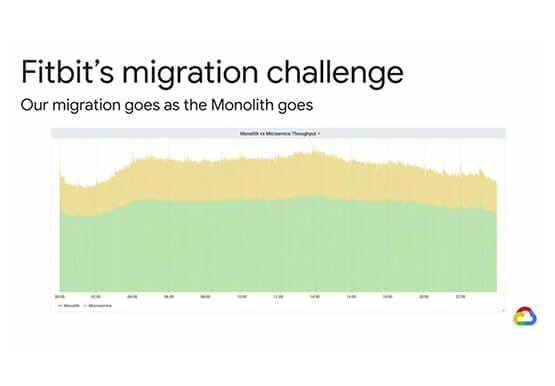
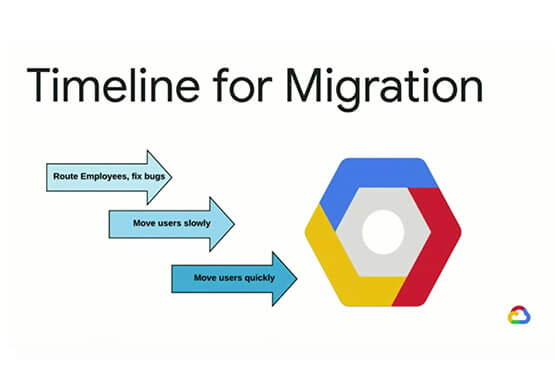
In 2019, Fitbit moved all of its production operations from managed hosting to Google Cloud Platform without any downtime. The Fitbit experience is provided by a monolithic application backed by 200+ data stores, making the task of moving service by service impossible. So, Fitbit decided to run services in both
