





3433
Of your peers have already watched this video.
1:30 Minutes
The most insightful time you'll spend today!
Google Cloud Cortex Framework: Innovate on Cloud with Less Risk, Cost and Complexity!
Google Cloud Cortex Framework is a comprehensive approach to cloud innovation that enables users to accelerate value with less risk, complexity and cost! The Cortex Framework includes a comprehensive tools and know-how to build, design and deploy cloud solutions to address business challenges and achieve desired outcomes. Watch the video to get started with Google Cloud Cortex Framework.
Italian Utility Company Deploys its SAP Workloads on Google Cloud to Meet Sustainability Goals

3275
Of your peers have already read this article.
2:00 Minutes
The most insightful time you'll spend today!
With more than 2.5 million customers, Italian utility company A2A is committed to delivering electricity, gas, clean water, and waste collection every day. More recently, the company made another significant commitment: To incorporate the principles of the “circular economy” into its way of doing business — part of the UN 2030 Agenda’s Sustainable-Development Goals — all while also aiming to double its client base by 2030. Growing rapidly but sustainably requires operating as efficiently as possible at every level of the organization, from operating smart meters to generating accurate demand projections. That’s why A2A chose to deploy its SAP S/4HANA ERP and the SAP BW/4HANA data warehouse on Google Cloud.
Roadblocks to innovation
Instead of a linear consumption model that starts with raw materials and ends with use and disposal, the circular economy is a continuous cycle that emphasizes repair, recycling, and the creation of materials rather than their disposal. To take an example from A2A’s own success story: The company keeps 99.7 percent of collected waste out of landfills.1 Of the UN’s sustainability goals, A2A is committing to the three most relevant to its industries:
- Ensuring availability and sustainable management of water and sanitation for all
- Ensuring sustainable consumption and production patterns
- Protecting, restoring, and promoting sustainable use of terrestrial ecosystems
Achieving A2A’s sustainability and customer-first strategies requires high scalability, rapid data ingestion, and rich, accurate analytics. None of this could be reliably supported with the company’s legacy on-premises SAP and Data Warehouse, especially given A2A’s projected growth and the increasing complexity of the data landscape, including IoT deployments and energy market liberalization.
Provisioning data infrastructure was also slow and complex. Simply adding a new metric could require increasing capacity by an order of magnitude. And analytical and transactional data lived in siloes, which created a fragmented and out-of-date view of each customer across sales and customer support teams. A2A’s fragmented data also made it difficult to take proactive action when changing priorities or processes required shifting focus from one data source to another.
With a data warehouse that refreshed only once every 24 hours, simple processes such as responding to a customer calling because their power has been cut off due to an unpaid bill became cumbersome.
Scalability was also a concern. With the on-premises solution, A2A needed to define the budget for its data warehouse over a two-year timeframe, but the rollout of new electricity meters — each sending data every 10 minutes — across Italy made those data requirements hard to predict.
The move to the cloud: From monolith to microservices
The move has been a giant step forward in A2A’s goal of meeting its data-driven, customer-centric strategy. In deploying its SAP systems to Google Cloud, A2A can take advantage of a highly flexible hybrid environment and powerful data management and analytics. It can replicate data from Salesforce, SAP, and other systems in BigQuery, which operates as a data lake with Google Cloud SQL, connected directly to Google Analytics and Google Ads for data-driven customer service, decision-making, and marketing.
“From BigQuery we can feed relevant information directly to the people who need it. Our customer operators work on Salesforce, so we use an OData protocol to embed real-time data in that platform. Elsewhere, we present the information through a dashboard, or with a BI component delivering one-page reports.” —Vito Martino, Head of CRM, Marketing and Sales B2C & B2B, A2A
By running SAP on Google Cloud, A2A can also count on an infrastructure platform that provides:
- Scalability. The robust data architecture on Google Cloud adapts to shifting and increasing demands without compromising on speed or availability, so A2A doesn’t have to worry about over- or under-provisioning as the rollout of smart meters proceeds.
- Speed. The new A2A data solution refreshes every five minutes instead of 24 hours, so the company can respond to its customers’ needs without delays. Customer operators working in Salesforce now receive real-time data from Google BigQuery so that, when a customer calls, operators can see accurate information in seconds. They can now offer value-added services and sustainable options tailored to the customer’s needs, from energy consumption to their preferred method of communication.
- Availability. With microservices orchestrated by Google Kubernetes Engine, the team can update the solution through continuous integration and delivery (CI/CD), eliminating the need for downtime when changes are required.
- Security and control. The A2A IT team uses Google Kubernetes Engine to orchestrate clusters of instances on Google Compute Engine, with Google Cloud Load Balancing and backups on Google Cloud Persistent Disk. Google Cloud Anthos ensures operational consistency across on-premises and cloud platforms.
Ready to grow the sustainable way
By moving to Google Cloud — the industry’s cleanest cloud, with zero net emissions — A2A is ready to grow quickly while locking down the efficiency it will need to meet its ambitious sustainability goals. “To bring sustainable utilities to market, we need to be both responsive to our customers and responsive to the internal needs of A2A,” explains Davide Rizzo, Head of IT Governance and Strategy at A2A. “Understanding what customers need in detail means we can improve their services and reduce their environmental impact at the same time.”
Learn more about the ways Google Cloud can transform your organization’s SAP solutions with scalability, speed, and advanced analytics capabilities.
1. Circular Economy: one of the four founding pillars of A2A’s 2030 sustainability policy | Drupal
Cloud Computing at Sea: Google Public Sector Boosts U.S. Navy Collaboration

3065
Of your peers have already read this article.
2:00 Minutes
The most insightful time you'll spend today!
With a global, always-on workforce, the U.S. Navy requires secure collaboration between teams across countries and time zones. This is especially relevant for the 50,000 U.S. Navy sailors deployed aboard approximately 100 ships at any given time, who need to connect with personnel at regional shipyards for everything from routine maintenance, to more serious ship repairs.
Google Public Sector directly assists Naval Sea Systems Command (NAVSEA), the largest of the U.S. Navy’s five “systems commands,” by providing support to the U.S. Naval Ship Repair Facility and Japan Regional Maintenance Center (SRF-JRMC) in Yokosuka and Sasebo, Japan. NAVSEA is using Google Workspace, which harnesses Google’s threat protection and zero trust capabilities, to enable effective, secure, and compliant collaboration between the SRF-JRMC and Navy stakeholders around the world.
The workforce in the SRF-JRMC facility had two unique challenges. The first was around ineffective collaboration and communication channels. Before deploying Google Workspace, a Navy officer in Japan would need to be on-base to communicate over a secure connection, and calls were typically late at night given the time difference. This challenge was even further magnified when the COVID-19 pandemic hit, further restricting staff mobility.
The second challenge was a language barrier. With more than 3,000 Japanese Master Labor Contract (MLC) employees providing critical support to SRF-JRMC’s shipyard, Navy leadership needed an easier way to communicate with their Japanese-speaking counterparts. Breaking down this barrier would ensure work could be completed faster and more effectively, facilitating a more collaborative environment.
Enabling secure collaboration
The Navy partnered with Google Public Sector to enable Google Workspace for SRF-JRMC. Today, Google Workspace assists the Navy’s shipyards by enabling Google Voice for secure voice over Internet Protocol (VoIP) calling options, so personnel can join calls and sessions on-site or at-home to communicate securely and reliably across continents. In addition, early access to solutions like English to Japanese translated captions in Google Meet help break down the language barrier by providing instant translation during meetings. The platform also saves the U.S. Navy thousands of dollars a month in phone bills by providing country-specific dial-in numbers for interviews.
Moreover, Google Workspace tools like Google Drive and Docs also help to simplify human resource workflows by streamlining the hiring for onboarding local Japanese employees for the shipyard. Having a shared Google Drive eliminates the need to send multiple files back and forth among the NAVSEA team, allowing them to minimize on-premises storage space. In addition, Google Docs enables Navy employees to communicate and collaborate with each other and with potential candidates securely, and across any device.
“As the largest overseas ship repair facility of the U.S. Navy, operational readiness and continuity of operations is our top priority,” said Peter Guo, chief information officer at SRF-JRMC. “Cloud collaboration capabilities provide us seamless and secure connectivity across continents and break down language barriers with our colleagues across the globe. We’ve improved our ability to operate anytime, and anywhere and have increased our ability to securely communicate and coordinate especially during network outages and natural disasters.”
Providing pandemic assistance
Google for Government’s Workspace solutions also became useful to the SRF-JRMC during the pandemic, providing valuable communication and collaboration tools during a time of uncertainty. In addition to deploying Google Workspace, SRF-JRMC’s IT department created a COVID-19 Pandemic Dashboard, a Google-based site that consolidated Japanese and international open-source data on COVID-19 outbreaks and provided updated guidance. The Dashboard was built in less than two hours, using Looker Studio, and it leveraged an automated data collection process to track local hospitalization numbers. Before building the site, it took the NAVSEA team hours to compile this information; now, the team can access this information in real-time.
“This Dashboard drastically reduced redundant weekly meetings centered on COVID-19 updates, and saved more than 10 hours per week manually gathering data and presenting it via slide decks,” said Guo. “Additionally, this capability enabled our leadership to make real-time, data-driven decisions and put necessary risk mitigations in place. It empowered supervisors across the shipyard to reference this website at any time and put additional health measures in place to minimize the transmission of COVID-19. Every minute counts at our two shipyards in Japan, so this made a tremendous impact on our operational efficiency and ensured the safety of our sailors.”
Delivering the best possible tools means making life better and work more fulfilling for millions of people, inside and outside of government. To help government agencies maintain access to communications and collaboration tools that they need during and after an incident to keep work going, we are also offering workshops for federal, state and local governments. Learn more about Google for Government solutions for the Department of Defense, and Google Workspace for Government.
Google Cloud and StartEd Join Forces to Boost EdTech Startups

1343
Of your peers have already read this article.
2:00 Minutes
The most insightful time you'll spend today!
Over the past few years, as the education sector was going through transformative change, EdTech startups rose to meet the demand of learners and help address some of the biggest challenges in education. At Google Cloud, we’re inspired by how EdTech startups continue to solve challenges with agility, innovative technology, and determination. We’re proud to help EdTechs make learning more personal, safe, and accessible, and we’re working to connect EdTech startups with the right people, products, and best practices that will help them grow
Announcing a new partnership with StartEd
Google Cloud is excited to announce a partnership to offer mentor-based programming for EdTechs with StartEd — an organization that accelerates education innovators addressing Early Childhood, K-12, HigherEd, Workforce, and Adult Learning.
Founded by entrepreneurs nearly ten years ago, StartEd is on a mission to attract and develop a network of innovators working to ensure equitable, quality education and lifelong learning opportunities for all. The company trains and connects thousands of diverse entrepreneurs, educators, and investors at for-profit and not-for-profit organizations each year, working alongside corporations, foundations, and higher education institutions across the United States.
StartEd has helped grow more than 2,500 companies and built a mentor network of over 800 senior leaders with deep expertise in early-stage EdTech companies. The StartEd community now numbers more than 25,000 members.
“I am thrilled to embark on this transformative partnership with Google Cloud,” said Ash Kaluarachchi, StartEd CEO and managing director. “This alliance not only amplifies our mission to empower and nurture the world’s education innovators at every point in their journey, but it also unlocks unprecedented potential for the entire EdTech ecosystem. Together, we’re poised to redefine the future of education and work and to create lasting, positive impact for generations to come.”
Mentoring and networking opportunities for EdTech startups
Through this partnership, U.S.-based EdTech startups can apply to a new program, StartEd sponsored by Google Cloud. The program offers startups access to personal coaching, hands-on training, business support, and a large network of industry experts to help them accelerate their growth and transform education. Beyond the benefits from StartEd, startups will gain access to cloud credits, technical support from Google Cloud, and coaching from Google’s education leadership.
How Retailers Can Beat Inflation Like a Pro With These 5 Tips

2848
Of your peers have already read this article.
3:30 Minutes
The most insightful time you'll spend today!
Budget concerns and inflation shock are causing noticeable shifts in consumer behavior, a head-spinning turnabout since the pandemic days of 2020. We went from not having access to enough goods to now not having the right goods at the right price points. Heading into the holiday season, retailers will need to look sharp and be able to deliver value to the increasingly cost-conscious consumer — with frictionless product discovery and digital shopping experiences, relevant inventory, and personalization.
Those are a few of the insights gleaned from a recent eMarketer webcast on how retailers can better combat the effects of inflation, with pragmatic recommendations from experts including Amy Eschliman, managing director of retail solutions strategy and industry engagement at Google Cloud; Alexis Hoopes, vice president and head of e-commerce and direct-to-consumer (DTC) at Mattel Inc; and Elissa Quinby, head of retail insights at Quantum Metric. We’d like to share five key takeaways that retailers can adopt.
1. Be prepared for earlier holiday planning. Budget-conscious buyers are planning their purchases earlier than ever. According to our partner Quantum Metric’s latest Retail Benchmarks research, 40% of U.S. consumers and 30% in the UK have already started their holiday shopping1. At Mattel, Alexis noted, “We’ve learned to be nimble and early for our consumers, and to have products available for them when they’re ready to shop.” With higher prices, she added, “Consumers are preplanning and researching more, viewing product detail pages multiple times to check a higher-price item before adding it to their basket.”
Quantum Metric’s same research also shows that while average cart values grew between January to July 2022 — larger than they were at the same time last year1 — consumers were shopping less frequently. Because of higher prices, 37% of shoppers are now pre-planning and purchasing items all at once to help keep to their budget1. Amy observed. “That means retailers need to make it super easy for customers to find what they want to avoid shopping-cart abandonment.”
Retailers who make it easier for shoppers to find the right products, by providing Google-quality search and recommendations, can help reduce cart abandonment and increase conversions.
2. Get a handle on out-of-stock issues. While many of the supply-chain issues that surfaced during the pandemic have cleared up, inventory continues to be a challenge in retail. During the 2021 holiday season, Google/Ipsos research shows that consumers saw a 253% increase in “out of stock” messages versus pre-pandemic2. Elissa further pointed out that a great majority of both U.S. and UK consumers experience out-of-stock issues several times a month. It’s a fluid situation, however, with retailers facing bloated inventory as consumer demands quickly pivot from, for example, branded goods to generic or white-label items. “In the next six months or so, you really need to make sure you have the right inventory to meet consumer demands,” she advised.
The need for end-to-end visibility and the ability to act in real-time across the supply chain has never been more pressing. Google Cloud and our partners are tackling the top supply chain issues head on with solutions that enable end-to-end visibility, analytics and alert-driven event management as well as AI solutions and automation to streamline processes like procurement, fulfillment, and delivery.
3. Introduce value: communicate the quality of the product and the experience. While rising prices are paramount for many shoppers, it’s a common misconception that consumers are making purchase decisions based solely on price. Alexis remarked, “In e-commerce, we talk about price, product, service, and experience. Price is only one of the pillars for consumers. At Mattel, we are fully focused on product and experience. What makes this special? How do we connect directly in new ways to the consumer? Create ‘wow’ moments and deeper connections. When we think about value for our consumers, it’s the strength of the products that will drive the purchase.”
Elissa also noted that while consumers are doing a lot of comparison shopping, it’s really about value, whether a high-quality product or a high-quality experience. Quantum Metric’s Continuous Product Design solution, which is built with BigQuery, ingests data across multiple digital touchpoints, including from mobile and web applications, and connects customer signals to every stage of the product lifecycle to help deliver the products and experiences that customers actually want.

4. Ensure consistent experiences across channels. Today, consumers crave the cross-channel shopping experience. “The channel experience has gone from online to in-store to now everywhere,” Amy commented. “We call it ubiquitous digital shopping.” Elissa added that 75% of consumers do most of their shopping digitally. However, mobile drives 67% of digital traffic, but just 49% of sales.1 “Recent trends in traffic and conversion rates by device show that we can expect the most traffic for the big sale days on mobile,” she said. “People are looking for discovery and awareness, maybe even adding items to the cart as a placeholder or reminder. But they prefer to complete a sale on a desktop. It will be critical for retailers to offer a consistent experience, especially on major sale days like Black Friday and Cyber Monday.” Elissa also advised wrapping up any experiments with product and site design early, making sure to understand the customer experience holistically across the organization and prioritizing efforts to eliminate friction.
Consumers now expect to be able to shop wherever and whenever best fits their needs, whether in a store, on your website, through your app, or from within a social media ad, and have it be a consistently good experience no matter how they first entered or exited your commerce site. Google’s 2022 Retail Marketing Guide provides useful insights and tips on how to grow your online and in-app sales.
5. Personalize touchpoints to build loyalty. Connecting with your customer base and making sure they understand the value of your offering is essential. Alexis noted that the key is to keep your messages fresh as the holiday shopping season expands, providing new messages as they keep coming back to your store. “We need to engage them by helping them find what they are looking for at the right time,” she said. “Recognize that they are doing more planning and wish-list building early, then buying last-minute gifts at lower prices towards the end. Make sure those are front and center.”
Alexis also pointed out that today, consumers are providing more data points with the products they view or the items sitting in their carts. “What’s so great about e-commerce is that we can use all of this to create more personalized, direct messages targeted to those consumers,” she commented.
Amy recommended continuing to focus on conversion with product discovery and personalization, harnessing customer data to drive insights and action. “Any company’s biggest asset is their data. Using it in as many ways possible and activating it across the company is incredibly important,” she remarked. “Take advantage of your first-party data to activate everything from marketing campaigns to a more efficient supply chain. For every customer who comes to one of your digital properties, make sure your product discovery is as easy as possible. Pay attention to your recommendations, driving personalization to make that experience as unique and fruitful for the customer as possible.”
Achieving these objectives requires a modern cloud data warehouse and activation of a customer data platform. Retailers can explore how Google Cloud’s advanced data capabilities and our ecosystem of partners can power a customer data platform that supports more personalized marketing, shopping experience, and customer service.
While these are our key takeaways, we invite you to register to watch the on-demand webinar, “5 Ways Retailers Can Combat the Effects of Inflation,” for even more insights.
- Quantum Metric Retail Benchmarks, “Adjusting for Inflation.” The report is based on aggregated browsing behavior from January to July 2022, paired with a survey of 3,400 consumers in the U.S. and UK.
- Google/Ipsos, Holiday Shopping Study, Oct 2021 – Jan 2022, Online survey, US, n=7,253, Americans 18+ who conducted holiday shopping activities in past two days
4928
Of your peers have already watched this video.
9:37 Minutes
The most insightful time you'll spend today!
L’Oréal: Managing Big-data Complexity with Google Cloud
L’Oreal is a global company with a presence in 150 countries worldwide. Between managing all of its brands and requirements for different countries, L’Oreal looks to data to make insightful business decisions. How does L’Oreal unify its data across all its systems and databases? How does L’Oreal make the data accessible to thousands of employees? In this video, Antoine Castex, Enterprise Architect at L’Oreal, discusses with Martin Omander how L’Oreal built a serverless, multi-cloud warehouse based on Google Cloud.
Chapters:
0:00 – Intro
0:23 – Why does L’Oreal need a new data warehouse?
0:51 – Who is the L’Oreal group?
1:35 – Which systems does L’Oreal use?
2:14 – How does L’Oreal manage complexity?
3:59 – What is ELT?
4:57 – Who are L’Oreal’s data consumers?
5:41 – How L’Oreal built the data warehouse
8:51 – L’Oreal’s future plans
9:10 – Wrap up
Google Cloud Workflows → https://goo.gle/3q20M1V
Cloud Run → https://goo.gle/3CSWbXG
Eventarc → https://goo.gle/3B7qhFy
BigQuery → https://goo.gle/3KHgyJ3
Looker → https://goo.gle/3Rx4Ind
Checkout more episodes of Serverless Expeditions → https://goo.gle/ServerlessExpeditions
Subscribe to Google Cloud Tech → https://goo.gle/GoogleCloudTech
More Relevant Stories for Your Company

Google Cloud: Lowering Migration Risks for Indian Firms
A common perception is that migrating existing workloads to the public cloud—especially those with a lot of data—is complex, time consuming, and risky. But with the right planning, organizations can rapidly establish the right practices to accelerate migrations, lower risk, and succeed in the cloud.
The Future of Cloud Computing
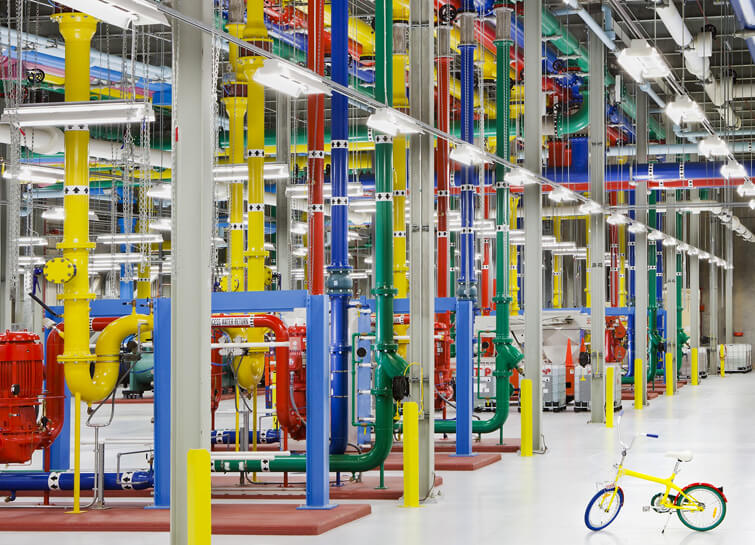
Increasingly, technology, data, and human interactions will follow a new model of real-time inputs, enabling change without interruption and positive iteration. Cloud computing powers an important shift for information technology, and it will usher in new and better ways to serve customers, make discoveries, and build great products and services.

How Can Brands Evolve in Post-pandemic Era amid Changing Consumer Behavior Patterns
2020 saw an unprecedented change in consumer behaviour around the world, with shoppers finding new ways of discovering, evaluating and buying products. This has created fresh expectations for both brands and retailers to drive consumer closeness, embrace the digital moment and transform their operations to be more agile and sustainable.

How a Mid-Sized Firm is Shrinking Inventory Carryovers 50% with AI
For more than 10 years, NMK Textile Mills has manufactured bed linens for major retailers in the United States and Canada. As e-commerce exploded, the company’s co-founder saw an opportunity to grow the business. So, in addition to manufacturing bed linens wholesale for retail customers, NMK Textile Mills reworked its complete supply
