





3358
Of your peers have already watched this video.
24:40 Minutes
The most insightful time you'll spend today!
A Guide to Anthos: the App Modernization Platform for Hybrid and Multi-cloud Deployments
Anthos gives you a consistent platform for all your application deployments, both legacy as well as cloud native, while offering a service-centric view of all your environments.
You can build enterprise-grade containerized applications faster with managed Kubernetes on cloud and on-premises environments. Create a fast, scalable software delivery pipeline with cloud-native tooling and guidance.
It also helps leverage a programmatic, outcome-focused approach to managing policies for apps across environments, and enable greater awareness and control with a unified view of your services’ health and performance.
Tune in to this brief explainer video for an overview of Anthos, deployment examples, and explore options to get started illustrated through a demo with Bradley Wong, Product Manager at Google Cloud. Learn to make the best first step in your journey of application modernization and gain a clear understanding of the value of Anthos for your hybrid and multi-cloud workloads.

Upgrade Your Contact Center with Knowlarity’s AI-powered Speech Analytics for Higher CX
DOWNLOAD E-BOOK6206
Of your peers have already downloaded this article
7:00 Minutes
The most insightful time you'll spend today!
Did you know, everyday about 56 million hours worth of phone conversations, equalling to 420 billion spoken words are handled by contact centers? Knowlarity, a renowned cloud business communication service provider with nearly 6,000 customers and over a million virtual users, leverages AI-powered speech analytics that offer insights to gauge customer preferences and emotions, campaign performance, agent’s effectiveness and much more. Knowlarity’s programmatic speech analytics platform is built with Google Cloud to optimize contact center performance by transcribing and analyzing millions of calls to impact savings, operations, CX, customer loyalty and retention, and revenue generation.
Download the e-Book to learn more about Knowlarity’s speech analytics for your business’ contact centers and elevate your agents’ performance by leveraging ML, natural language processing (NLP) and AI capabilities.

3351
Of your peers have already downloaded this article
5:30 Minutes
The most insightful time you'll spend today!
The Latest in Spring Cloud GCP: Upgrading the Sample Bank of Anthos App
1394
Of your peers have already read this article.
3:30 Minutes
The most insightful time you'll spend today!
We’re excited to announce that Spring Cloud GCP version 4.0 is now generally available! In this post, we’ll be describing what the new major version has to offer, and demonstrating the process of using the migration guide on one of our reference architectures, Bank of Anthos.
What’s new?
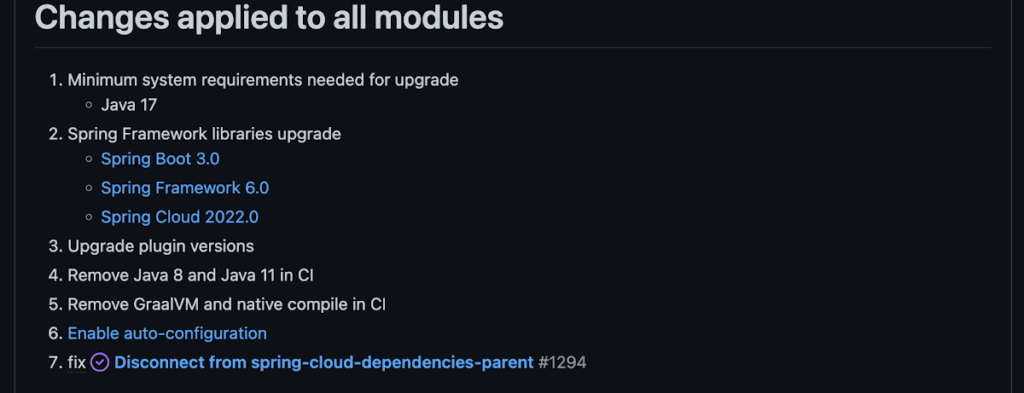
With this release, Spring Cloud GCP officially supports Spring Boot 3.x. However, this migration involves a number of breaking changes as outlined in the migration guide. The full list of changes made is available on Github, but the one of the most significant differences is that Java 17 is now a minimum requirement.
Another notable feature of this release is the addition of starter artifacts – Spring Boot starters for Google Cloud – that provide dependencies and auto-configurations for 80+ Google Client libraries. Just as the name suggests, these starters can serve as helpful starting points when working with a new client library. For now, they’re in preview.
These starters are not included in the BOM by default and need to be added as a dependency to your project before they can be used. For example, if you wanted to get started with Cloud Text-to-Speech, you would include the following:
<dependency>
    <groupId>com.google.cloud</groupId>
    <artifactId>google-cloud-texttospeech-spring-starter</artifactId>
    <version>4.0.0-preview</version>
  </dependency>
The upgrade process
We prepared a migration guide to help answer any questions involved with moving from 3.x to 4.x. Let’s follow those instructions to migrate Bank of Anthos.
We’ll start by cloning and building the application before the upgrade, according to the quickstart and development guide:
PROJECT_ID=<YOUR-PROJECT-ID>
gcloud services enable container --project ${PROJECT_ID}

git clone https://github.com/GoogleCloudPlatform/bank-of-anthos.git
cd bank-of-anthos/

gcloud services enable container.googleapis.com monitoring.googleapis.com \
  --project ${PROJECT_ID}

REGION=us-central1
gcloud container clusters create-auto bank-of-anthos \
  --project=${PROJECT_ID} --region=${REGION}

gcloud container clusters get-credentials bank-of-anthos \
  --project=${PROJECT_ID} --region=${REGION}

skaffold run --default-repo=gcr.io/${PROJECT_ID}/bank-of-anthos
At the end of this, you should see a “deployment stabilized” message:
Deployments stabilized in 9.657 secondsWith the environment set up for development, we’re ready to move on to the actual migration. The migration is already complete at time of writing, but here’s the full list of changes made:
- We began by checking the current Java, Spring Boot and Spring Cloud GCP versions.
- Our Java version is okay, but the other two are out of date, and will need to be updated.
We can also add the Spring Cloud GCP BOM to manage our versions going forward while we’re here.
- Our Java version is okay, but the other two are out of date, and will need to be updated.
- Then, in no particular order, we can make the following code changes:
- Remove the explicit type declarations from our ResponseEntity instantiations.
- Replace all javax.* imports with Jakarta.* counterparts, since Spring 3.0 makes use of Jakarta EE 9.0
With those changes in place, the app is upgraded and ready to re-deploy!
Live example
For a finished example of this migration, check out the Bank of Anthos repository on Github. It’s an excellent sample application that showcases a polyglot Java & Python app, served on Kubernetes and Google Cloud. All CI/CD and configurations are open source, so it may be instructive as you approach this migration.
Thanks for reading, and feel free to provide comments or feedback on Twitter, or in the issues section of the repository.
Rubin Observatory Leverages Google Cloud to Power Astronomical Research

6064
Of your peers have already read this article.
2:00 Minutes
The most insightful time you'll spend today!
This week, the Vera C. Rubin Observatory is launching the first preview of its new Rubin Science Platform (RSP) for an initial cohort of astronomers. The observatory, which is located in Chile but managed by the U.S. National Science Foundation’s NOIRLab in Tucson, AZ and SLAC in California, is jointly funded by the NSF and the U.S. Department of Energy. The platform provides an easy-to-use interface to store and analyze the massive datasets of the Legacy Survey of Space and Time (LSST), which will survey a third of the sky each night for ten years, detecting billions of stars and galaxies, and millions of supernovae, variable stars, and small bodies in our Solar System.
The LSST datasets are unprecedented in size and complexity, and will be far too large for scientists to download to their personal computers for analysis. Instead, scientists will use the RSP to process, query, visualize, and analyze the LSST data archives through a mixture of web portal, notebook, and other virtual data analysis services. An initial launch with simulated data, called Data Preview 0, builds on the Rubin Observatory’s three-year partnership with Google to develop an Interim Data Facility (IDF) on Google Cloud to prototype hosting of the massive LSST dataset. This agreement marks the first time a cloud-based data facility has been used for an astronomy application of this magnitude.
Bringing the stars to the cloud
For Data Preview 0, the IDF leverages Cloud Storage, Google Kubernetes Engine (GKE), and Compute Engine to provide the Rubin Observatory user community access to simulated LSST data in an early version of the RSP. The simulated data were developed over several years by the LSST Dark Energy Science Collaboration to imitate five years of an LSST-like survey over 300 square degrees of the sky (about 1,500 times the area of the moon). The resulting images are very realistic: they have the same instrumental characteristics, such as pixel size and sensitivity to photons, that are expected from the Rubin Observatory’s LSST Camera, and they were processed with an early version of the LSST Science Pipelines that will eventually be used to process LSST data. “This will be the first time that these workloads have ever been hosted in a cloud environment. Researchers will have an opportunity to explore an early version of this platform,” says Ranpal Gill, senior manager and head of communications at the Rubin Observatory.
Broadening access for more researchers
Over 200 scientists and students with Rubin Observatory data rights were selected to participate in Data Preview 0 from a pool of applicants that represents a wide range of demographic criteria, regions, and experience level. Participants will be supported with resources such as tutorials, seminars, communication channels, and networking opportunities—and they will be free to pursue their own science at their own pace using the data in the RSP.
“The revolutionary nature of the future LSST dataset requires a commensurately innovative system for data access and analysis paired with robust support for scientists,” says Melissa Graham, lead community scientist for the Rubin Observatory and research scientist in the astronomy department at the University of Washington. “I’m personally excited to enhance my own skills by using the RSP’s tools for big data analysis, while also helping others to learn and to pursue their LSST-related science goals during Data Preview 0.”
At the same time, the fact that the RSP is hosted in the cloud provides researchers at smaller institutions access to state-of-the-art astronomy infrastructure that is comparable to that of the largest national research centers.
The launch benefits the observatory too: the development team can learn what researchers are interested in while also testing and debugging the platform. Graham says that “the platform is still in active development so researchers using it will be able to follow along in the progress, and provide feedback on ways that we can optimize the development of the tools.”
Next steps
The LSST aims to begin the ten-year survey in 2023-24 and expects it to include 500 petabytes of data. Through the cloud, Google aims to help make this extraordinary project scalable and accessible to researchers everywhere. To learn more about Data Preview 0, watch this video.
Want to ramp up your own research in the cloud? We offer research credits to academics using Google Cloud for qualifying projects in eligible countries. You can find our application form on Google Cloud’s website or contact our sales team.
Rhode Island’s VCC Platform Built on GCP Helps Jobseekers Get Back to Work!

3253
Of your peers have already read this article.
5:00 Minutes
The most insightful time you'll spend today!
2020 brought many challenges, especially as in-person operations were shut down, and many were left vulnerable to unemployment.
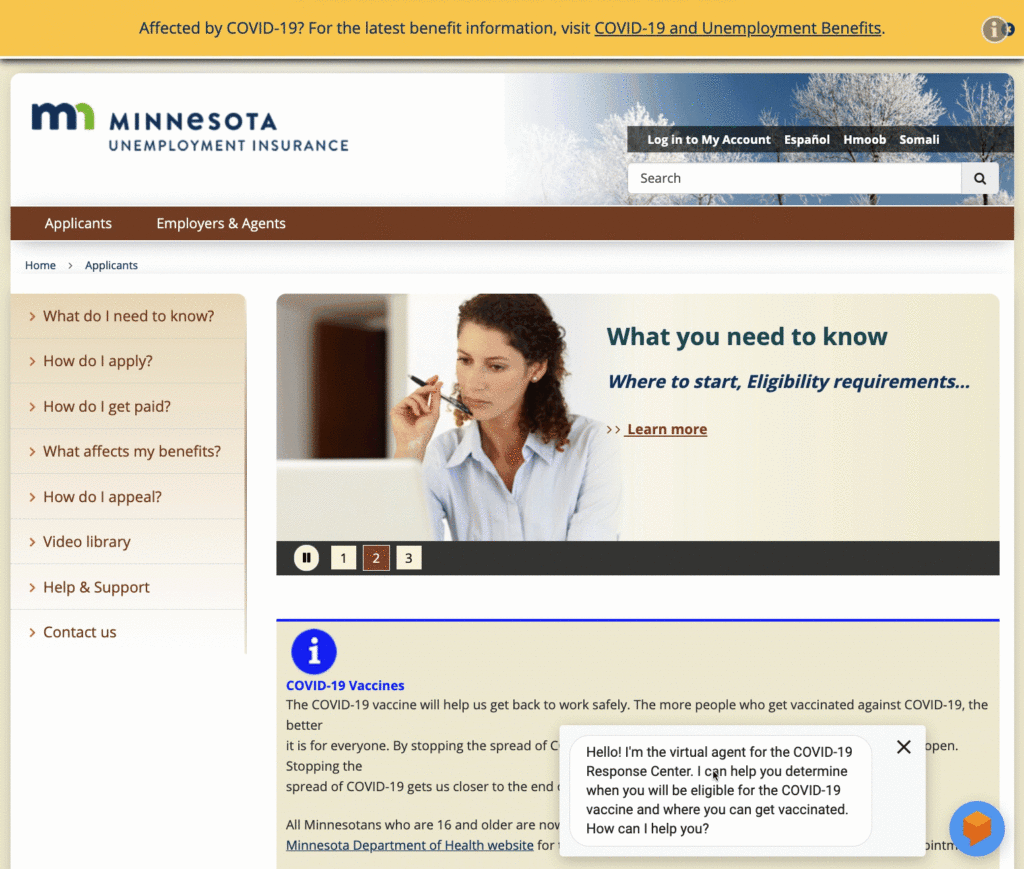
The State of Rhode Island responded to these challenges, by modernizing their workforce development operations and moving completely to a custom online platform called the Virtual Career Center, also nicknamed “the VCC.”
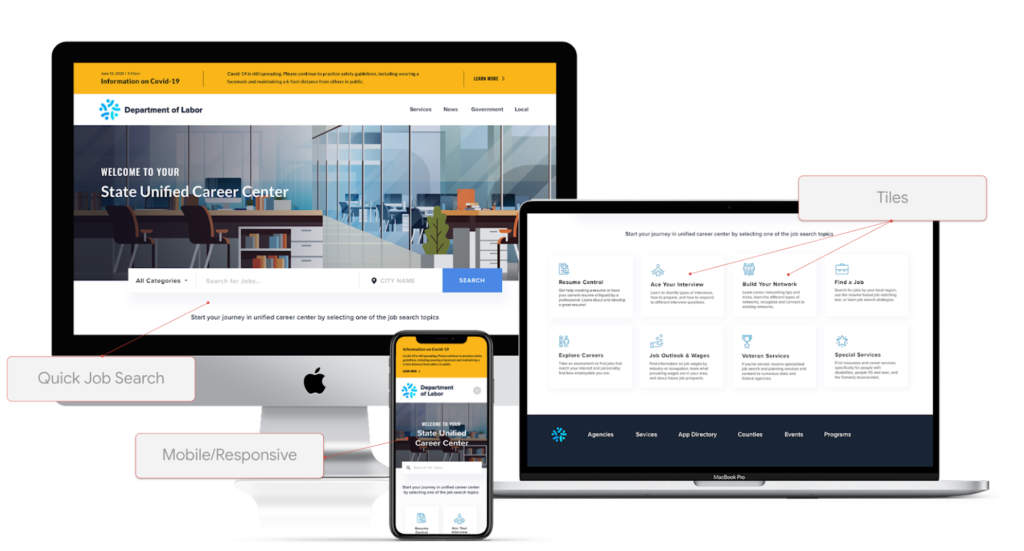
It was developed in partnership with Google Cloud and a nonprofit called “Research Improving People’s Lives” (RIPL), and was fully built by Google Cloud partner Maven Wave, which helps a wide array of organizations, including public sector customers, with many types of cloud initiatives.
In this episode of Architecting with Google Cloud, we interviewed Joel Osman, head of Digital Experience & Custom Applications at MavenWave who shared a lot of insights such as:
“We looked at how we can apply leading edge emerging technologies to help people get back to work and use them as tools in such a way that we can augment the personal one to one interactions that agencies had been using with job seekers, to help them get back to work.”
One of those key benefits is enabling job seekers to find coaches that are specialized in their respective community. During the in-person walk-in model, applicants were paired on a first come first serve basis with any available coach on site. Meanwhile online scheduling has enabled a greater opportunity to match veterans, college graduates, non-English speakers, etc with coaches with prior experience in that specific area.
How the VCC was built
This VCC web app was built on Angular. It has a custom frontend built on top of 2 key Google Cloud products. The first is Workspace, which includes functionality such as video conferencing, documents, slides, chat, file storage, etc. And the other is Google Cloud computing resources. Here’s a view of the architecture:
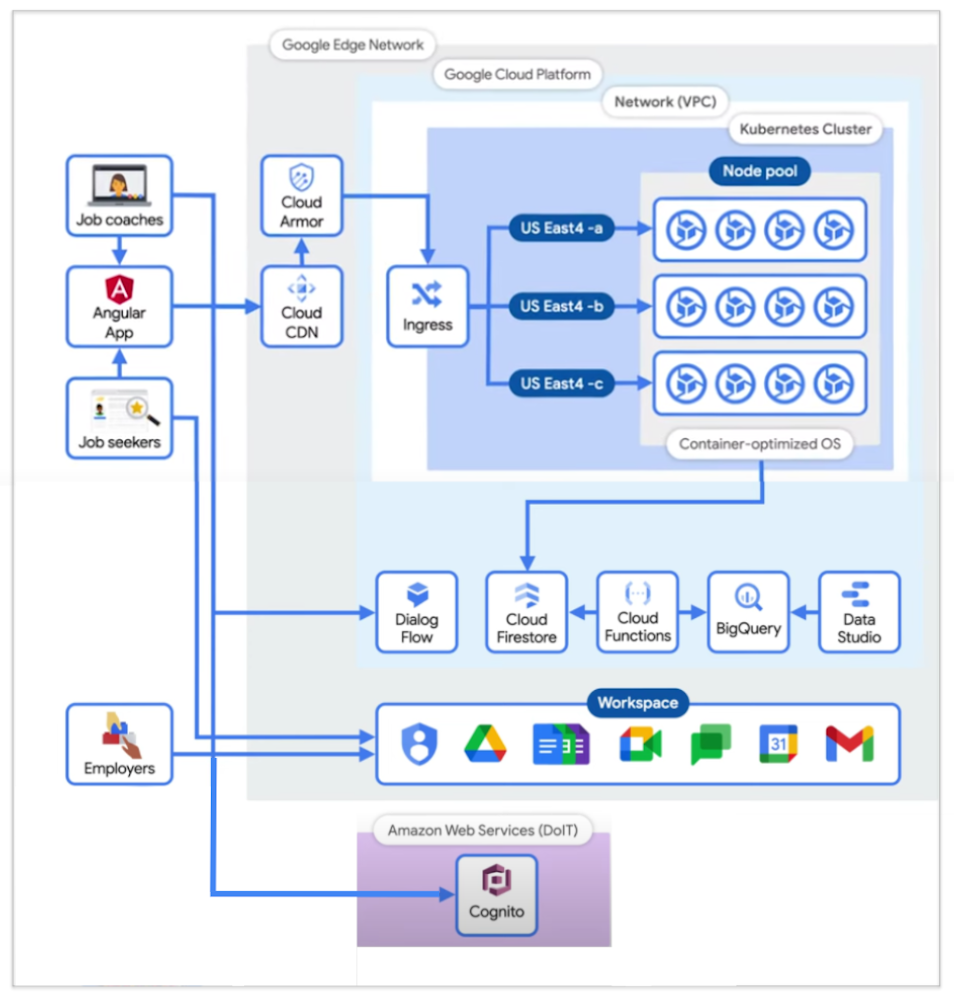
There are 3 main types of users at this time, and that’s job coaches, job seekers, and employers.
- 👩🔧 Job Coaches all have Google IDs in the Google Workspace domain, and therefore authenticate against the Google identity repository.
- 🕵️♂️ Job Seekers are authenticated through a Cognito-based process maintained by the nonprofit I mentioned earlier (RIPL), the Rhode Island infrastructure team, and the Department of Information Technology (DoIT). Cognito was an identity repository setup prior to this project for users interacting with the State, and remained as their form of authentication.
- 🧭 Employers participate directly with Google Meet, and, to an extent, Google Calendar; but not the Angular app. There’s also a focus on building a future dashboard to see how the center has helped employers with applicants.
The specific Google Cloud components used are the following:
- Firestore: realtime Database that keeps data in sync across client apps.
- BigQuery: serverless warehouse for data.
- Data Studio: is used to build filterable dashboards over BigQuery
- Cloud Functions: which serve as triggers to keep scheduling and data workflows in sync.
- Kubernetes cluster: runs & autoscales the server-side code in a single-region deployment, with a minimum of four nodes per zone across three zones of the US East region.
- Cloud Armor: protects applications and websites from attacks, and sets NIST-compliant policies.
- Google’s Content Distribution Network (CDN): content is accessed and cached.
To manage the lifecycle of the infrastructure, a Terraform script is used, which is an open source tool, and is structured into 5 folder environments:
- Admin
- Dev
- QA & UAT
- Networks
- Prod
- Shared Services (for CI/CD pipelines between Dev & Prod).
Adoption outcomes
A universal fear we technical practitioners may have is:
“Will our tool be loved and adopted by our intended audiences?”
Joel mentioned Job Coaches at the time were not used to working from home, and the team was concerned that they would potentially feel overwhelmed with a lot of new technology.
As a rewarding surprise, when Job Coaches were presented the proof of concept, it was received with positivity.
“95% of Job Coaches rated the VCC as a valuable solution and 87% reported to find it very or extremely effective.”
This alignment was thanks to designing the tool with the users in mind, and performing user research since the beginning of the journey, which helped address their day to day needs.
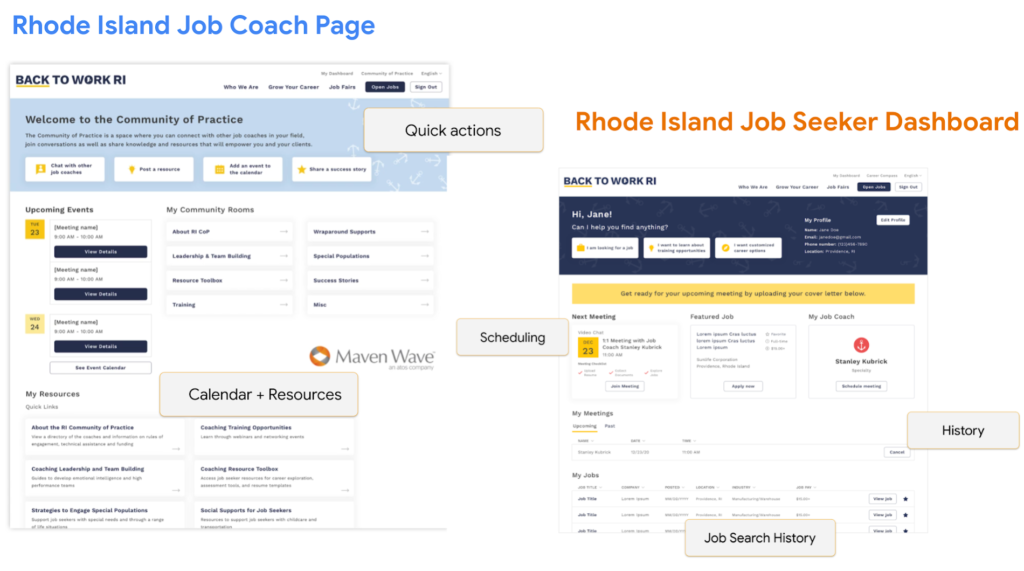
Additional innovation for the future
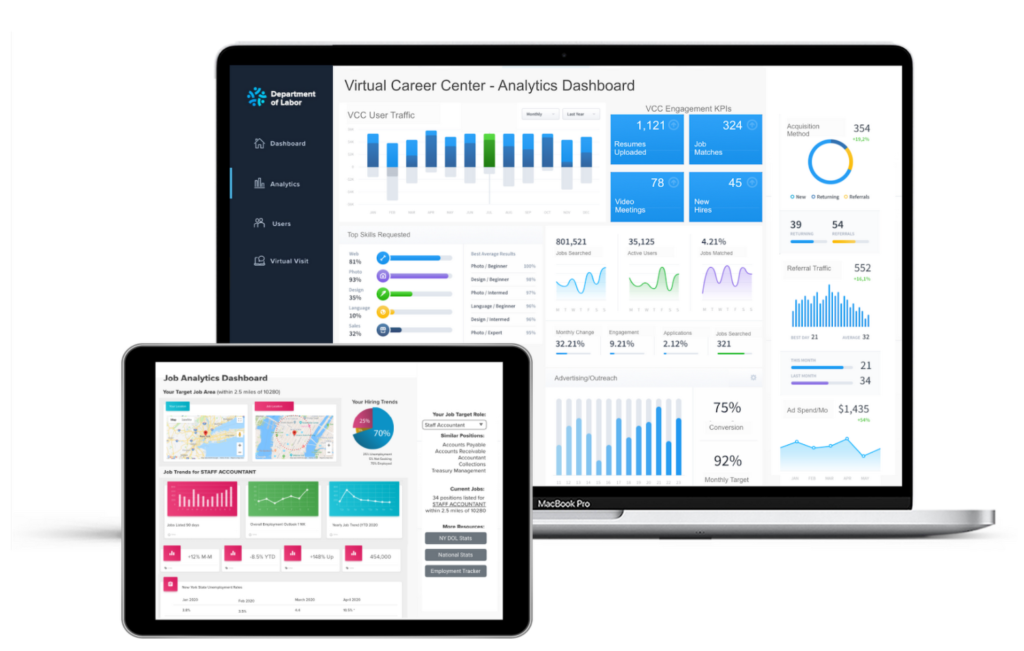
After creating a centralized hub and moving operations to a digital format, many more benefits also arise. For example, there can now be an integrated data analytics view which enables meaningful dashboards that can be customized for different audiences such as job applicants, coaches, program stakeholders, or state agencies.
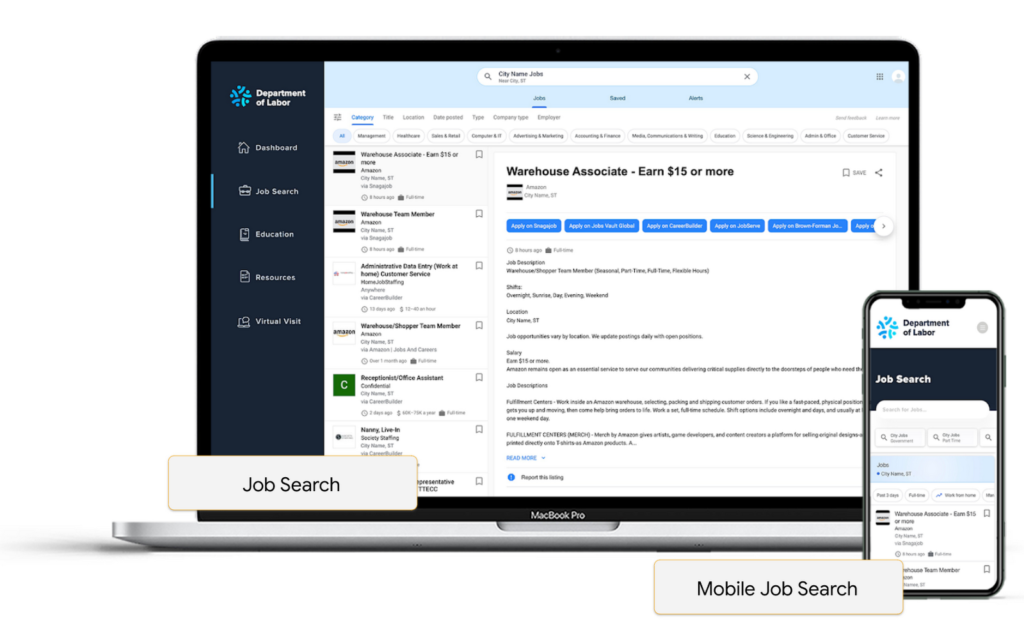
There can be improved job searchability by integrating machine learning, helping with resume building and parsing that take keywords out of a resume and match them to a variety of relevant job clusters, rather than just performing raw keyword searches.
Embedding chat bots can also help reduce the load of call centers in states, as they utilize natural language processing as well to help guide job seekers with prompt answers.
Conclusion
The State of Rhode Island’s Virtual Career Center is an amazing success story. By having worked with an experienced partner to move their operations to a digital format, they were able to respond to their citizen’s needs in a time where in-person operations were not possible. They also unlocked opportunities such as better matching and reporting along that journey.
For any organization whether they are in the public sector, university, private sector, etc; anyone can take advantage of this platform and customize it to their needs as Maven Wave shared that they offer a menu of options, where you can pick and choose functionality based on your requirements, IT resources, and budget.
More Relevant Stories for Your Company

Enhance Your GKE Deployment with Improved Control Plane Connectivity and Isolation
Once upon a time, all Google Kubernetes Engine (GKE) clusters used public IP addressing for communication between nodes and the control plane. Subsequently, we heard your security concerns and introduced private clusters enabled by VPC peering. To consolidate the connectivity types, starting in March 2022, we began using Google Cloud’s




How to Manage Complexity While Going Multi-Cloud with Anthos
Today's success depends more than ever on making the most of both on-premises investments and the various cloud offerings available to you. Come learn about how Google Cloud is bringing to you simplified operations everywhere to help you succeed in a world of hybrid, multi cloud and edge scenarios that

How to Build A Basic Image Search Utility for Natural Language Queries
This post shows how to build an image search utility using natural language queries. Our aim is to use different GCP services to demonstrate this. At the core of our project is OpenAI's CLIP model. It makes use of two encoders - one for images and one for texts. Each encoder

Lower risk, greater return: Public sector organizations are focusing on multicloud adoption
Government organizations are starting to realize that no single cloud can meet their wide range of needs. According to the Nutanix 2022 Enterprise Cloud Index1, 75% of public sector organizations agree that multicloud is ideal, and more public sector organizations than average have adopted multicloud as a primary IT operating
