





Transforming Media Industry: Three Strategies for Media Leaders to Leverage Generative AI

1551
Of your peers have already read this article.
3:30 Minutes
The most insightful time you'll spend today!
The digital era turned the traditional formula for media and entertainment success on its head, ushering in new technologies that have changed how content is produced, distributed, experienced, and monetized. Audiences have more choice, flexibility, and power over what they consume, and today’s media companies have to embrace ongoing transformation or risk falling behind – or becoming irrelevant.
A new wave of transformation is arriving with generative AI, a type of artificial intelligence that can interact with users in natural language and create novel data, ranging from story outlines, reports, and other text outputs to multimodal content like images, videos, and audio. Media and entertainment are inherently about content creation and creativity—so what does this new technology mean for the industry?
At Google Cloud, we see tremendous opportunity for creative industries, from more efficient creation methods to improved user experiences. Let’s explore.
AI for media with Google Cloud
Google Cloud has a long history with large language models (LLMs) and other generative AI technologies—from their influence over the years on products like Document AI, to recent announcements like Generative AI support in Vertex AI, which lets businesses access and tune generative AI foundation models, and Generative AI App Builder, which lets developers build chatbots and other generative apps in minutes.
We’ve helped our global media and entertainment customers with AI for personalization, search and recommendations, predictive analytics, and much more — and with generative AI now on the rise, we have some ideas to help media leaders, technologists, and creators think about and prepare to utilize powerful AI in their work.
Three lenses on innovation in media
The media and entertainment industry is increasingly diverse and complex, with companies spanning over-the-top (OTT) subscription streaming services, 24-hour linear channels, live broadcasts of sporting events, digital journalism, traditional publishing, short-form user-generated social video, and more. More and more, the boundaries between these segments of the media industry are blurring — but common to them all is the focus on providing compelling content in an engaging audience experience that can be directly or indirectly monetized.
With this in mind, we suggest media and entertainment companies look at the application of innovative technologies like generative AI through the following three lenses:
- Improving content creation, production, and management
- Enhancing and personalizing audience experiences
- Improving monetization
Improving content creation, production, and management
Generative AI democratizes many aspects of content creation, opening new ways to create written material, illustrations, sound effects, special effects, and more. Its recent maturation has been so rapid, some in the media industry have expressed concern that generative AI implies the end of creative professions. We think the opposite is more likely: just as photography, audio recordings, and computer generated images have enabled new modes of creativity, rather than making old ones obsolete, generative AI has the potential to both enable new forms of expression and enhance familiar ones.
For example, journalists could use generative AI to speed up research by helping them synthesize and analyze large volumes of information, or to help them create initial drafts or summaries of editorial content. Film and television producers could leverage the technology to accelerate the post-production editing process, with new AI-enabled interfaces for rapidly adjusting or enhancing scene details such as lighting and color. Broadcasters could use generative AI to make vast libraries of video footage searchable and accessible for use in telling more compelling stories. The potential use cases go on and on.
Far from undermining incredible creative professions, generative AI is poised to free writers, artists, editors, and many others from the tedious and mundane aspects of their work, empowering them to focus more of their time on creativity.
Enhancing and personalizing audience experiences
Every media organization in the world today faces the reality that for most consumers, switching costs are extremely low. This puts incredible pressure on these companies to invest in delivering low-friction and compelling audience experiences that help mitigate subscribers from churning and viewers from abandoning content experiences for competitive platforms.
Generative AI can help media companies engage and retain viewers, such as by enabling more powerful search and recommendations on their digital content platforms. With its increasingly multimodal capabilities extending from natural language to both audio and video content, generative AI is well-positioned to power more personalized audience experiences.
Consumers often complain about “the paradox of choice” or their inability to find something interesting to watch on streaming platforms that have incredibly vast libraries of content available on demand. Imagine a not-too-distant future wherein a consumer can simply ask the content platform they’re using to help them find a specific show to watch based on mood, specific types of scenes, combinations of actors, award nominations, or practically anything they can think to ask. And that’s just the tip of the iceberg — imagine generative AI’s potential to curate, assemble, and even create personalized content for a viewer to consume!
Improving monetization
As consumers’ content consumption further expands from traditional theatrical and linear television programming to include digital offerings across an array of platforms, devices, and content types, media companies face the challenge of maintaining and improving monetization. The conventional economics and approaches to advertising and subscription models are proving, in many cases, not to deliver sufficient ROI.
Generative AI has the potential to help media companies improve their monetization of audience experiences. As mentioned previously, enhanced personalization can play a role in mitigating churn, which in turn can help sustain and grow subscription and advertising revenues. Going beyond this, generative AI can be leveraged to drive even greater advertising revenues via more targeted, contextual, and personalized advertisements. Imagine both display and video advertisements that are generated on the fly to personalize product specifics, messaging, style, colors, and innumerable other characteristics to drive greater engagement and higher click-through rates (CTR), and thus higher advertising CPMs (cost per thousand impressions).
Coming up next
Generative AI presents a significant opportunity for media companies to fundamentally transform content creation, engagement, and monetization. Compelling services are already on the market — but there is far more to come.
Google Cloud continues to build on its deep experience and expertise with AI, and we are committed to working with the industry to develop compelling, accessible, trusted, and responsible AI solutions that will drive meaningful business outcomes. We are excited to create the future together with our global media customers and partners across the ecosystem. To learn more about this disruptive topic, read “Debunking five generative AI misconceptions” from Google Cloud vice president of AI & Business Solutions Phil Moyer, or explore our Trusted Tester Program for generative AI.
Google is a Leader in the 2019 Gartner Magic Quadrant for Data Management Solutions for Analytics

6001
Of your peers have already read this article.
2:10 Minutes
The most insightful time you'll spend today!
As organizations continue to produce vast quantities of data, they increasingly need platforms that allow them to analyze, store, and extract meaningful insights from that data. And research from analyst firms like Gartner offer an important way for organizations to evaluate and compare cloud data warehouse providers.
Earlier this year, Gartner named Google a Leader in the 2019 Gartner Magic Quadrant for Data Management Solutions for Analytics (DMSA) (report available here). This evaluation covers Google Cloud’s core data analytics offerings, including BigQuery, a serverless, managed data warehouse, Cloud Dataproc, a managed Spark and Hadoop service, and Cloud Dataflow, which enables you to stream and batch-process your data. Here are a few takeaways:
Simplicity and speed
BigQuery’s performance permits complex queries on large-scale data sets to return in seconds, and a substantial number of BigQuery customers maintain data warehouses that store more than 50 terabytes (and a few customers now use more than 100 petabytes). More than half of these customers are loading data either continuously or many times per day. These customers value the ability to extract, transform, load, and analyze their data on a serverless platform, all without maintaining any underlying infrastructure.
A versatile serverless data warehouse
One of BigQuery’s major advantages is its ability to allow customers to address a wide variety of use cases—from a traditional data warehouse to data science. Over the past year, we’ve worked hard to introduce new features in BigQuery like data types for financial and monetary uses, BigQuery GIS for geospatial data, and machine learning capabilities through BigQuery ML. BigQuery’s continuous ingest capabilities make it suitable for an operational—or a real-time—serverless data warehouse.
An expanding ecosystem
With overall increased market adoption, our analytics offerings continue to benefit from a fast-growing partner ecosystem of service providers, and business intelligence (BI) and data integration vendors. In particular, in 2018 we expanded our partnerships with established industry providers, including Confluent, Dell Boomi, Informatica, Looker, Reltio, Tableau, and ThoughtSpot.
More and more organizations are finding value in Google Cloud’s serverless data warehouse and analytics offerings. If you’d like to learn more, you can download a complimentary copy of the Gartner Magic Quadrant for Data Management Solutions for Analytics on the Google site (requires an email address).
Gartner does not endorse any vendor, product or service depicted in its research publications, and does not advise technology users to select only those vendors with the highest ratings or other designation. Gartner research publications consist of the opinions of Gartner’s research organization and should not be construed as statements of fact. Gartner disclaims all warranties, expressed or implied, with respect to this research, including any warranties of merchantability or fitness for a particular purpose.
3123
Of your peers have already watched this video.
23:30 Minutes
The most insightful time you'll spend today!
Pytorch at Scale on Cloud TPUs
Cloud TPU Pods are machine learning supercomputers that enable enterprises to train large machine learning models at a scale otherwise difficult or sometimes impossible.
They deliver business value through solving many machine learning problems including image search, neural architecture search and large-scale language models both for Google and Google Cloud customers.
However, until a few months ago TPU devices and pods were limited to Tensorflow models. Much awaited support for Pytorch was announced in Pytorch conference 2019.
In this session, Vaibhav Singh, ML Specialist, Cloud Customer Engineer, Google Cloud and Taylan Bilal, Software Engineer, Google Cloud demystify the art and science of training your Pytorch models on TPUs. They take you through a step-by-step walkthrough using an example, then explain how it works, and finally how to scale up Pytorch training with Cloud TPU Pods.
Pindrop and Google Cloud Get Together to Make Way for Next Wave, Voice-first Interfaces!

2962
Of your peers have already read this article.
2:00 Minutes
The most insightful time you'll spend today!
If you’ve ever used only your voice to authenticate a payment, place an order, or check an account over the phone, there is a good chance that Pindrop’s technology made it possible.
Founded in Atlanta in 2011, Pindrop provides software and technology that uses machine learning, voice recognition, and behavioral analytics to help detect and prevent fraud in voice channels like AI-powered call centers and solve the long standing identity problem commonly encountered in customer care and contact center experiences. Demand for Pindrop’s technology has grown considerably over the past decade, as more organizations and people adopt voice as an interface for customer service, transactions, entertainment and more. As that demand has grown, safeguarding these voice interactions from fraud or authentication loops continues to be a unique challenge.
Now, with frictionless voice-driven customer experiences at an all-time high, cybersecurity is more critical than ever. In fact, research shows that fraudsters are able to accurately answer knowledge-based authentication questions 92% of the time, as opposed to only 46% for actual customers. To address this, Pindrop is bringing its products and technology to Google Cloud in order to scale and develop new capabilities that will help enable the next wave of voice-first interfaces and call centers.
The new partnership will enable Pindrop’s teams to accelerate their development of new capabilities to address an ever-shifting landscape – like detecting deep fakes and robocalls, helping banks authenticate transactions, providing retailers with AI-powered call center support, and helping IoT makers optimize for security, speed and simplicity.
More specifically, the partnership will help Pindrop scale its own businesses, and meet ever-growing customer needs in several ways.
First, Pindrop is bringing its SaaS platform to Google Cloud, enabling customers to deploy it at global scale, on secure, sustainable, and highly performant cloud infrastructure. Not only does this give Pindrop the ability to deliver secure voice interactions with low-latency, it also aligns with its mission to enable customer choice when selecting and implementing security technology. And for customers already operating on Google Cloud, getting started with Pindrop can be done directly within their cloud environment, now that the company is making its solutions available on Google Cloud Marketplace.
Second, Pindrop plans to offer its voice secure technology with Google Cloud’s Contact Center AI (CCAI) capabilities to develop new solutions that will enhance call center experiences. CCAI capabilities in understanding, augmenting, and ML-processing conversations allows companies to deliver interactions that are helpful and keep costs low. These capabilities alongside Pindrop’s authentication and anti-fraud solutions will enable the company with the tools and technologies needed to create the next evolution of frictionless experiences in a secure way.
Finally, building on top of Google Cloud will equip Pindrop with multicloud capabilities that will offer new channels to increase revenues through. Using technologies like Google Kubernetes Engine, frequently chosen by startups and tech companies, to quickly launch and scale new ML applications up or down will also support Pindrop’s growth as it adds to its suite of technologies.
Supporting innovative startups and digital native businesses like Pindrop is in Google’s DNA, and we’re delighted to support Pindrops’ growth, and the success of their customers, with Google Cloud infrastructure, Contact Center AI, and go to market expertise.
You can learn more about Pindrop on Google Cloud here, and Google Cloud’s Contact Center AI solution here.
Generative AI Takes Center Stage at Google I/O Conference 2023

1193
Of your peers have already read this article.
7:00 Minutes
The most insightful time you'll spend today!
Over the past decade, artificial intelligence has evolved from experimental prototypes and early successes to mainstream enterprise use. And the recent advancements in generative AI have begun to change the way we create, connect, and collaborate. As Google CEO Sundar Pichai said in his keynote, every business and organization is thinking about how to drive transformation. That’s why we’re focused on making it easy and scalable for others to innovate with AI.
In March, we announced exciting new products that infuse generative AI into our Google Cloud offerings, empowering developers to responsibly build with enterprise-level safety, security, and privacy. They include Gen App Builder, which lets developers quickly and easily create generative chat and enterprise search applications, and Generative AI support in Vertex AI, which expands our machine learning development platform with access to foundation models from Google and others to quickly build, customize and deploy models. We also introduced our vision for Google Workspace, and delivered generative AI features to trusted testers in Gmail and Google Docs that help people write.
Last month we introduced Security AI Workbench, an industry-first extensible platform powered by our new LLM security model Sec-PaLM, which incorporates Google’s unique visibility into the evolving threat landscape and is fine-tuned for cybersecurity operations.
Today at Google I/O, we are excited to share the next steps not only in our own AI journey, but also those of our customers and partners as well. We’ve already seen a number of organizations begin to develop with and deploy our generative AI offerings. These organizations have been able to move their ideas from experimentation to enterprise-ready applications with the training models, security, compute infrastructure, and cost controls needed to provide their customers with transformative experiences. Our open ecosystem, which provides opportunities for every kind of partner, continues to grow as well. And we are also pleased to share new services and capabilities across Google Cloud and Workspace, including Duet AI—our AI-powered collaborator—to enable more users and developers to start seeing the impact AI can have on their organization.
Customers bringing ideas to life with generative AI
Leading companies in a variety of industries like eDreams ODIGEO, GitLab, Oxbotica, and more, are using our generative AI technologies to create engaging content, synthesize and organize information, automate business processes, and build amazing customer experiences. A few examples we showcased today include:
- Adore Me, a New York-based intimate apparel brand, is creating production-worthy copy with generative AI features in Docs and Gmail. This is accelerating projects and processes in ways that even surprised the company.
- Canva, the visual communication platform, uses Google Cloud’s rich generative AI capabilities in language translation to better support its non-English speaking users. Users can now easily translate presentations, posters, social media posts, and more into over a hundred languages. The company is also testing ways that Google’s PaLM technology can turn short video clips into longer, more compelling stories. The result will be a more seamless design experience while growing the Canva brand.
- Character.AI, a leading conversational AI platform, selected Google Cloud as its preferred cloud infrastructure provider because we offer the speed, security and flexibility required to meet the needs of its rapidly growing community of creators. We are enabling Character.AI to train and infer LLMs faster and more efficiently, and enhancing the customer experience by inspiring imagination, discovery, and understanding.
- Deutsche Bank is testing Google’s generative AI and large language models (LLMs) at scale to provide new insights to financial analysts, driving operational efficiencies and execution velocity. There is an opportunity to significantly reduce the time it takes to perform banking operations and financial analysts’ tasks, empowering employees by increasing their productivity while helping to safeguard customer data privacy, data integrity, and system security.
- Instacart is always looking for opportunities to adopt the latest technological innovations, and by joining the Workspace Labs program, they have access to the new features and can discover how generative AI will make an impact for their teams.
- Orange is exploring a next-generation contact center with Google Cloud. With customers in 26 countries, the global telecommunications firm is testing generative AI to transcribe the call, summarize the exchange between the customer and service representatives, and suggest possible follow up actions to the agent based on the discussion. This experiment has the potential to dramatically improve both the efficiency and quality of customer interactions. Orange is working closely with Google to help ensure data protection and make sure that systematic employee review of Generative AI output and transparency can be implemented.
- Replit is developing a collaborative software development platform powered by AI. Developers using Replit’s Ghostwriter coding AI already have 30% of their code written by generative AI today. With real-time debugging of the code output and context awareness of the program’s files, Ghostwriter frees up developers’ time for more challenging and creative aspects of programming.
- Uber is creating generative AI for customer-service chatbots and agent assist capabilities, which handle a range of common service issues with human-like interactions with the aim of achieving greater customer satisfaction and cost efficiency. Additionally, Uber is working on using our synthetic data systems (a technique for improving the quality of LLMs) in areas like product development, fraud detection, and employee productivity.
Wendy’s is working with Google Cloud on a groundbreaking AI solution, Wendy’s FreshAI, designed to revolutionize the quick service restaurant industry. The technology is transforming Wendy’s drive-thru food ordering experience with Google Cloud’s generative AI and LLMs—with the ability to discern the billions of possible order combinations on the Wendy’s menu. In June, Wendy’s plans to launch its first pilot of the technology in a Columbus, Ohio-area restaurant, before expanding to more drive-thru locations.
Partnering creates a strong ecosystem of real-world options for customers
At Google Cloud, we are dedicated to being the most open hyperscale cloud provider, and that includes our AI ecosystem. Today, we are excited to expand upon the partnerships announced earlier this year for every layer of the AI stack—chipmakers, companies building foundation models and AI platforms, technology partners enabling companies to develop and deploy machine learning (ML) models, app-builders solving customer use cases with generative AI, and global services and consulting firms that help enterprise customers implement all of this technology at scale.
We announced new or expanded partnerships with SaaS companies like Box, Dialpad, Jasper, Salesforce, and UKG; and consultancies including Accenture, BCG, Cognizant, Deloitte, and KPMG. Together with our previous announcements with companies like AI21 Labs, Aible, Anthropic, Anyscale, Bending Spoons, Cohere, Faraday, Glean, Gretel, Labelbox, Midjourney, Osmo, Replit, Snorkel AI, Tabnine, Weights & Biases, and many more, they provide the a wide range of options for businesses and governments looking to bring generative AI into their organizations.
Introducing new generative AI capabilities for Google Cloud
To help cloud users of all skill levels solve their everyday work challenges, we’re excited to announce Duet AI for Google Cloud, a new generative AI-powered collaborator. Duet AI serves as your expert pair programmer and assists cloud users with contextual code completion, offering suggestions tuned to your code base, generating entire functions in real-time, and assisting you with code reviews and inspections. It can fundamentally transform the way cloud users of all skill sets build new experiences and is embedded across Google Cloud interfaces—within the integrated development environment (IDE), Google Cloud Console, and even chat.
For developers looking to create generative AI applications more simply and efficiently, we are also introducing new foundation models and capabilities across our Google Cloud AI products. And to continue to enable and inspire more customers and partners, we are opening up generative AI support in Vertex AI and expanding access to many of these new innovations to more organizations.
- New foundation models are now available in Vertex AI. Codey, our code generation foundation model, helps accelerate software development with code generation, code completion, and code chat. Imagen, our text-to-image foundation model, lets customers generate and customize studio-grade images. And Chirp, our state-of-the-art speech model, allows customers to more deeply engage with their customers and constituents inclusively in their native languages with captioning and voice assistance. They can each be accessed via APIs, tuned through our intuitive Generative AI Studio, and feature enterprise-grade security and reliability, including encryption, access control, content moderation, and recitation capabilities that let organizations see the sources behind model outputs.
- Text Embeddings API is a new API endpoint that lets developers build recommendation engines, classifiers, question-answering systems, similarity matching, and other sophisticated applications based on semantic understanding of text or images.
- Reinforcement Learning from Human Feedback (RLHF) allows organizations to incorporate human feedback to deeply customize and improve model performance.
Underpinning all of these innovations is our AI-optimized infrastructure. We provide the widest choice of compute options among leading cloud providers and are excited to continue to build them out with the introduction of new A3 Virtual Machines based on NVIDIA’s H100 GPU. These VMs, alongside the recently announced G2 VMs, offer a comprehensive range of GPU power for training and serving AI models.
Extending generative AI across Google Workspace
Earlier this year, we shared our vision for bringing generative AI to Workspace, and gave many users early access to features that helped them write in Gmail and Google Docs. Today, we are excited to announce Duet AI for Google Workspace, which brings together our powerful generative AI features and lets users collaborate with AI so they can get more done every day. We’re delivering the following features to trusted testers via Workspace Labs:
- In Gmail, we’re adding the ability to draft responses that consider the context of your existing email thread—and making the experience available on mobile.
- In Google Slides and Meet, we’re enabling you to easily generate images from text descriptions. Custom images in slides can help bring your story to life, and in Meet they can be used to create custom backgrounds.
- In Google Sheets, we’re automating data classification and the creation of custom plans—helping you analyze and organize data faster than ever.
Moving the industry forward, responsibly
Customers continue to amaze us with their ideas and creativity, and we look forward to continuing to help them discover their own paths forward with generative AI. While the potential for impact on business is great, we remain committed to taking a responsible approach, guided by our AI Principles. As we gather more feedback from our customers and users, we will continue to bring new innovations to market, with a goal to enable organizations of every size and industry to increase efficiency, connect with customers in new ways, and unlock entirely new revenue streams.

Takeaways from Forrester’s Cloud Data Warehouse Q1 2021 Report
DOWNLOAD RESEARCH REPORTS5153
Of your peers have already downloaded this article
20:00 Minutes
The most insightful time you'll spend today!
Cloud data warehouse (CDW) solutions have transformed the delivery of modern analytics and are known to have the capabilities to provision data warehouse of any size in a matter of minutes, autotune queries, scale resources including compute and storage on demand and auto-upgrade to the latest version. As the need for integrated, real-time and self-service analytics scale, CDW vendors continue to focus on native integration with data lakes and object stores; self-service to simplify access and administration for larger and more complex warehouses; and advanced capabilities on parallel processing, compression, partitioning, indexing, query optimization, and dynamic resource provisioning. The most common CDW use cases include customer analytics, AI/machine learning (ML)-based analytics, vertical-specific analytics, and real-time analytics. Customers that are looking to select a CDW vendor need to consider couple of factors.
Download the report learn more 13 leading CDW providers in the Forrester Wave: Cloud Data Warehouse, Q1 2021 report and also explore Google Cloud’s BigQuery for data warehousing.
More Relevant Stories for Your Company

Sopra Steria’s Next-gen Virtual Voice Assistants Powered by Google’s AI and Cisco Contact Center by Activeo
With people expecting to access products and services through easy, always-on experiences delivered across channels, transforming approaches to digital services is a must for every business. As a result, business leaders have to strive to provide employees with these same frictionless experiences. Sopra Steria is a European leader in consulting,

How a Mid-Sized Firm is Shrinking Inventory Carryovers 50% with AI
For more than 10 years, NMK Textile Mills has manufactured bed linens for major retailers in the United States and Canada. As e-commerce exploded, the company’s co-founder saw an opportunity to grow the business. So, in addition to manufacturing bed linens wholesale for retail customers, NMK Textile Mills reworked its complete supply


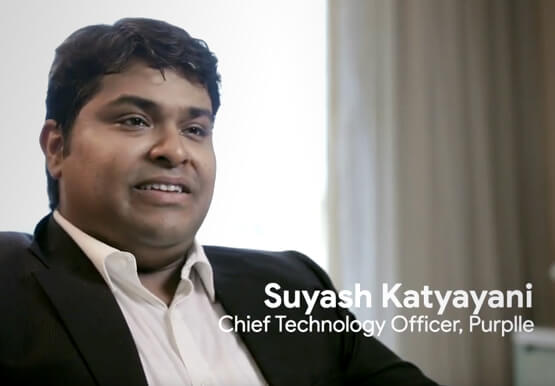

An Indian Example of How to Really Up Your Customer Experience Game and Increase Conversion Rates With AI
How about selfie analysis of users to recommend them the right lipstick color? That’s just one of the many ideas folks at Purplle.com came up with to improve the buying experience of Indian consumers. And without the power of Google Cloud, it would probably have remained just that…an idea. But



How Good Are Google’s Vision, Speech, Translation and Natural Language ML APIs?
Many companies want to be able to adopt machine learning and artificial intelligence quickly into their businesses. But it isn't always straight-forward and easy. Custom building the models and setting up and maintaining the infrastructure required for an AI project is time-consuming. That is where Google’s machine learning APIs come
