





Transforming Canadian Healthcare and Medical Research with Google Cloud

912
Of your peers have already read this article.
2:30 Minutes
The most insightful time you'll spend today!
Is Cloud an option for Canadian Healthcare healthcare and medical research organizations?
Yes, Canadian healthcare and medical research organizations are moving to the cloud. The cloud market is expected to grow in Canada significantly through 2027.
There are several reasons why Canadian healthcare and medical research organizations are moving to the cloud.
- Reduce costs by eliminating the need to invest in and maintain on-premises infrastructure.
- Enable the healthcare research community to drive their research more expediently to clinical outcomes
- Improve patient satisfaction by making it easier for patients to access their health information and communicate with their providers.
- Improve the quality of care by providing access to patient data and records from anywhere in the country.
Overall, the transition to the cloud is a positive development for Canadian healthcare and medical research organizations.
Canadian healthcare providers face many challenges before they can move to the cloud, such as addressing security and privacy concerns, data sovereignty issues, and ensuring interoperability. To help them overcome these challenges, it is important to provide Healthcare Data Custodians, Infrastructure Architects, and Research Leads with clear guidance on how the cloud can align with Canadian Healthcare Regulations. This will allow them to have a practical understanding of what is required to enhance their cloud journey and facilitate a smoother transition to the cloud.
iSecurity and MD+A Health are actively assisting Canadian healthcare and medical research organizations in comprehending the risks and exploring pathways to embrace the cloud. Through extensive research and analysis, iSecurity and MD+A Health have evaluated Google Cloud as a suitable platform for healthcare. Their diligent efforts have resulted in the production of comprehensive documents that detail their findings via a Threat Risk Assessment (TRA) and a Privacy Impact Report (PIA).
Why a Threat Risk Assessment?
A threat risk assessment is a process of identifying and evaluating threats to an organization and then determining the likelihood and impact of those threats. The goal of a threat risk assessment is to identify the most serious threats and develop mitigation strategies to reduce the likelihood and impact of those threats.
A threat risk assessment typically involves the following steps:
- Identify threats: The first step is to identify all potential threats to the organization. This can be done by brainstorming, interviewing experts, or reviewing historical data.
- Evaluate threats: Once the threats have been identified, they need to be evaluated in terms of their likelihood and impact. The likelihood of a threat is the probability that it will occur, while the impact of a threat is the severity of the consequences if it does occur.
- Prioritize threats: The threats need to be prioritized based on their likelihood and impact. The most serious threats should be addressed first.
- Develop mitigation strategies: Once the threats have been prioritized, mitigation strategies need to be developed to reduce the likelihood and impact of those threats. Mitigation strategies can include things like implementing security controls, training employees, and developing contingency plans.
- Implement mitigation strategies: The mitigation strategies need to be implemented and tested to ensure that they are effective.
- Monitor and review: The threat risk assessment should be monitored and reviewed regularly to ensure that it is still effective.
Why a Privacy Impact Assessment?
A Privacy Impact Assessment (PIA) is a process that organizations use to identify and assess the privacy risks associated with a new or changed information technology (IT) system or project. The goal of a PIA is to help organizations protect the privacy of individuals whose personal information is collected, used, or disclosed by the IT system or project.
PIAs typically include the following steps:
- Identifying the purpose of the IT system or project and the types of personal information that will be collected, used, or disclosed.
- Identifying the privacy risks associated with the IT system or project.
- Assessing the likelihood and severity of the risks.
- Developing and implementing controls to mitigate the risks.
- Monitoring the effectiveness of the controls.
PIAs are an important tool for organizations to help them follow privacy laws and regulations. They can also help organizations build trust with their patients, employees and the research community by demonstrating their commitment to protecting privacy.
The benefits of conducting a PIA:
- Helps organizations identify and assess privacy risks
- Helps organizations develop and implement controls to mitigate privacy risks
- Helps organizations comply with privacy laws and regulations
- Helps organizations build trust with customers and employees
Why Google Cloud?
Google Cloud is committed to providing Canadian healthcare organisations with an environment to expand both their clinical and research environments. Google Cloud has invested significant resources into building out a cloud environment based on best practices coming from Google’s experience running some of the world’s largest platforms.
Some highlights include:
- Built-in security features that help protect your data and applications from unauthorized access, use, disclosure, disruption, modification, or destruction.
- A comprehensive security management platform that helps you assess, prioritize, and address security risks across your organization.
- A team of security experts who can help you design, implement, and manage your security solutions.
- A wide range of security training and resources to help you learn about and stay up-to-date on the latest security threats and best practices.
Google Cloud’s Professional Service Organization: How it Accelerates Operational Health Review Cloud Migration

3366
Of your peers have already read this article.
2:00 Minutes
The most insightful time you'll spend today!
Introduction
The Google Cloud Professional Services Organization’s (PSO) mission is to help our customers get the most out of Google products. PSO is responsible for customer success by sharing our technical expertise in order to unlock business value from the cloud by providing cloud strategy and best practice advice, implementation guidance, and training using our proven methodology.
In this blog post, we want to focus specifically on Operational Health Reviews and how PSO engages in a myriad of activities to ensure the overall success and health of a customer engagement while ensuring we are meeting customer expectations and objectives, managing risk, and ultimately delivering value during or after the Google Cloud migration. We will discuss the assets, methodology, and tools that we leverage to ensure this success.
What is an Operational Health Review and what purpose does it serve?
Operational Health Reviews (OHR) are regular reviews to proactively address the below topics:
- A customer’s support experience
- Analysis of trends in key operational metrics
- Analysis of trends in Google Cloud usage
- Status reports for high-priority cloud projects
- Discussion of upcoming events
- Discussion of potential opportunities for training
- Review of feature requests
The core aim of an OHR is to measure progress and advise customers on the overall health of the account and migration progress while providing recommendations as a team on what adjustments should be considered to ensure continued success. During the OHR, we will address any pain points as well as identify and remediate any negative trends in support interfaces and usage metrics.
The intention of the activity is to also perform a blameless reflection for continuous improvement. This supports the effort to maintain common ground and obtain mutual optimism for the next phase of the customer’s journey on Google Cloud.
Let’s dive a little deeper into some of the activities that go into an OHR.
Support experience
One of the Google Cloud’s Support Organization’s goals is to simplify and streamline our customer’s support experience with a scalable and flexible set of offerings built with the customer needs at the center. This includes supporting an ongoing partnership model, with a proactive and collaborative approach. Premium Support is our top-tier support model which is a paid support offering designed for enterprises that run mission critical workloads and require fast response times, platform stability, and increased operational efficiencies. As part of this offering, customers are provided with a Technical Account Manager (TAM) who is in charge of delivering frequent touchpoints, including OHRs.
During the support experience section of an OHR, some of the following topics may be reviewed:
- Case volume by priority
- Case volume by product
- Cases linked to Google Cloud incidents
- Escalated cases or incidents
- Case initial response time (IRT)
- Case IRT SLO Met Rate
- Case total resolution time (TRT) hours
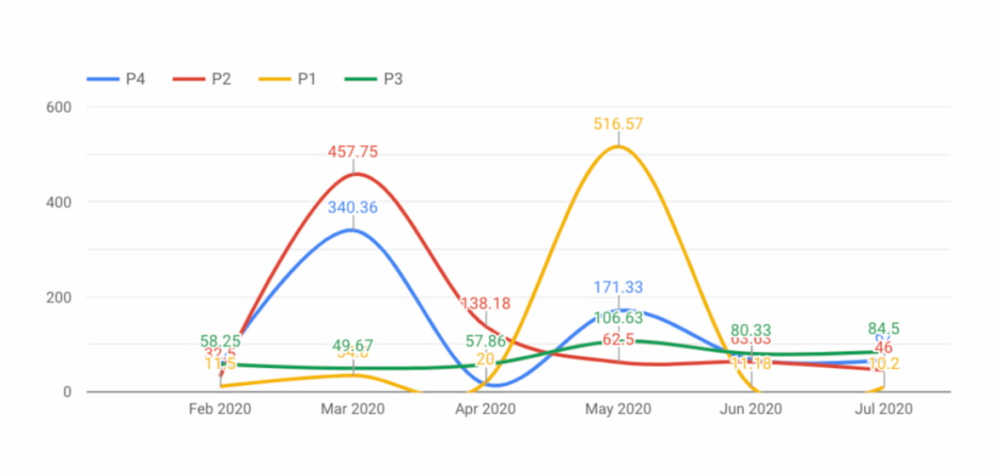
The purpose of this activity is to better understand the efficiency of both the customer’s and Google’s cloud operations from a support trend perspective. The goal is to celebrate any positive trends, but also to identify potential negative trends and proactively determine a remediation strategy.
Status reports for high-priority cloud projects
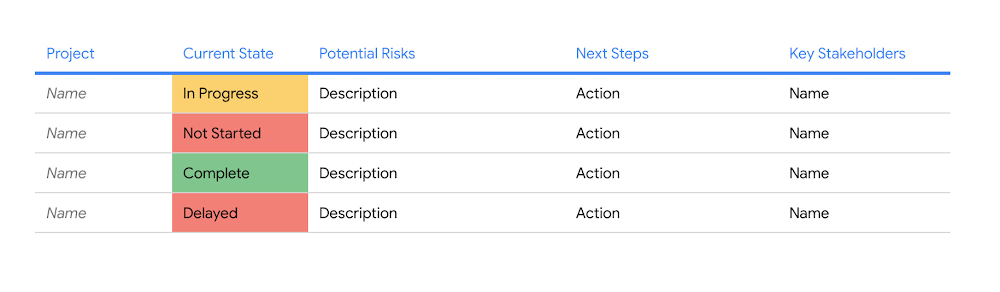
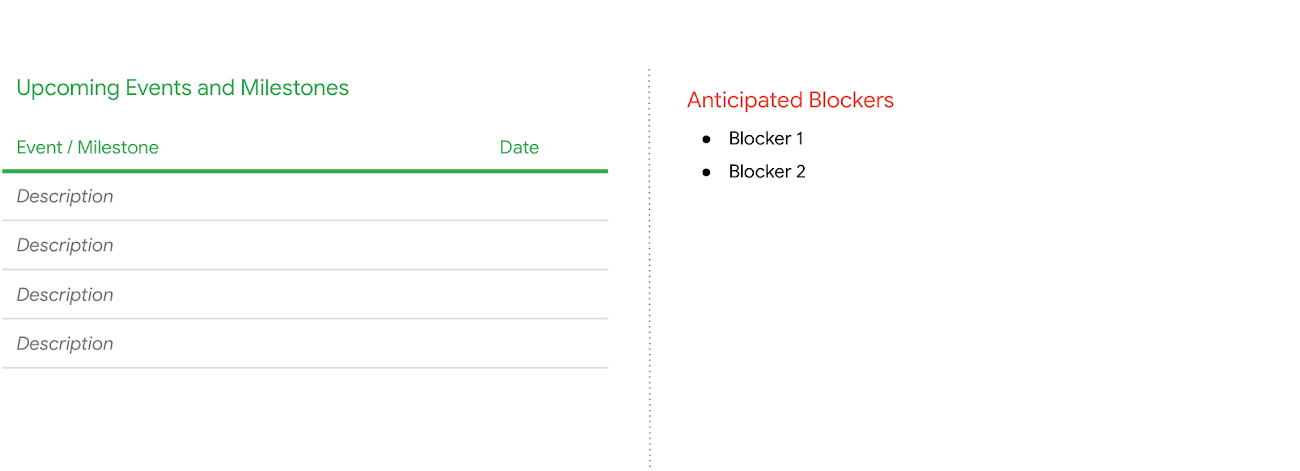
The purpose of this part of the OHR is to ensure the senior management stakeholders have continued visibility into the status of all their high-priority cloud initiatives with an easy-to-read, sometimes color-coded assessment on the status of each project. The assessment [Figure 1] may include, but is not limited to potential identified risks, key next steps, key stakeholders, and a mitigation plan for any high priority issues that may occur during their migration engagement. Additionally, the TAM may also cover any upcoming milestones or events, as well as any potential anticipated future blockers [Figure 2].
Review trends in Google Cloud usage
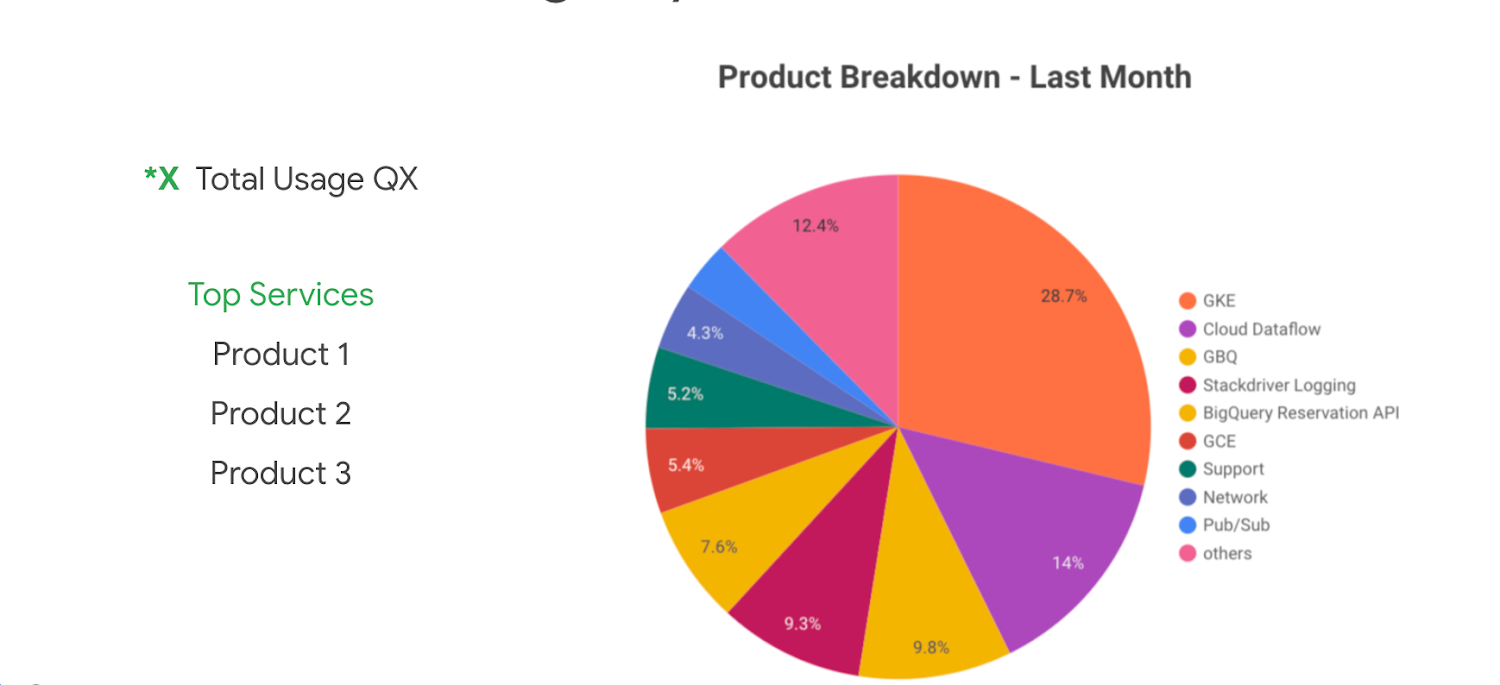
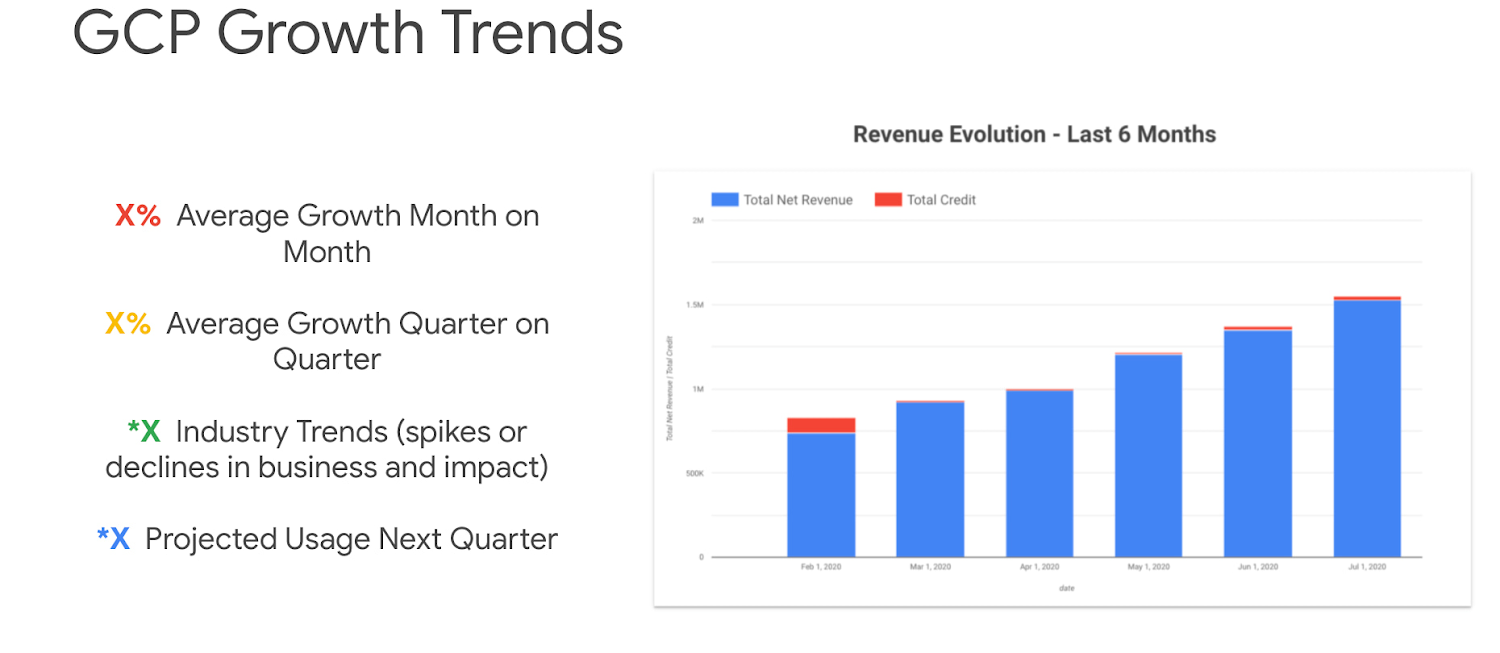
This part of the OHR is meant to provide the customer with a holistic view of their overall Google Cloud usage. The purpose is to provide understanding around what products are being used on Google Cloud and also where cost is generally being allocated for overall cost management and budget tracking purposes. This can help customers with their overall cost optimization efforts. Some of the metrics we may cover in this section are:
- Current Google Cloud usage by service
- Google Cloud growth trends
- Google Cloud growth trends by service
- Google Cloud growth trends by project
- Review of used and available service credits
Feature request review and advocacy
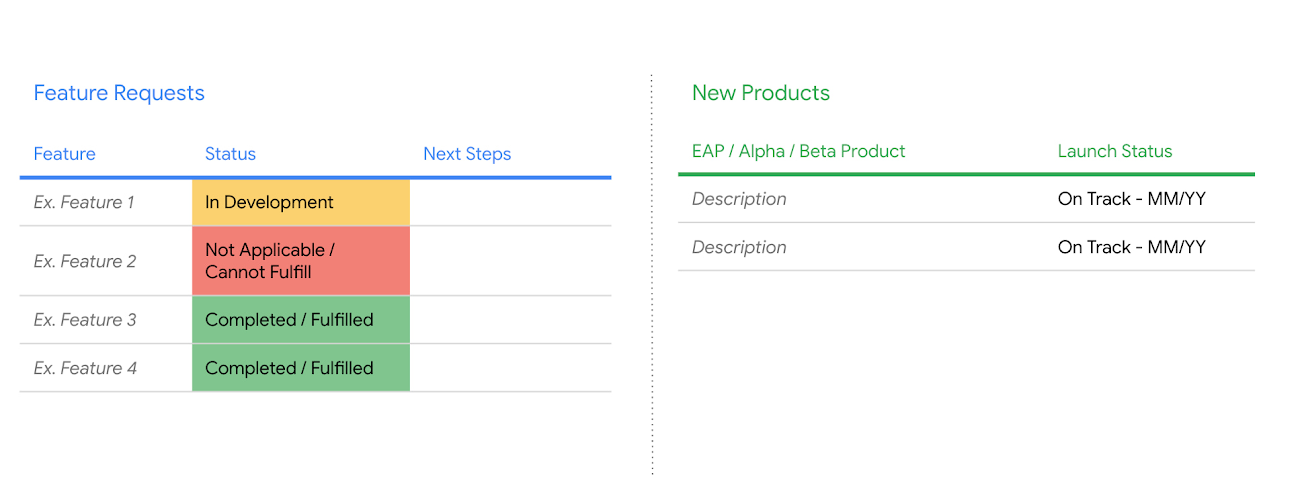
TAMs will work with customers to help identify product needs and advocate for feature requests with Google Product Management and Engineering teams. While feature request advocacy is an ongoing activity, during the OHR, the TAM will review any high priority feature requests that have previously been submitted, providing updates on status including potential release dates.
When a feature is coming up for the release, the TAM can help the customer prepare for implementation (providing early Preview access, coordinating a meeting with the Product Manager to review the feature, etc.) and then continue to provide support until the feature is successfully implemented in the customer environment. Similarly, if a high priority or technical blocking feature is not yet coming available, the TAM can help offer an alternative solution that can unblock the customer in the short term.
The OHR is also a great time for the TAM to work with the customer to ensure they have early access to new and exciting features that are in Alpha or Beta, and that would be beneficial to the customer and their environment.
Training strategy
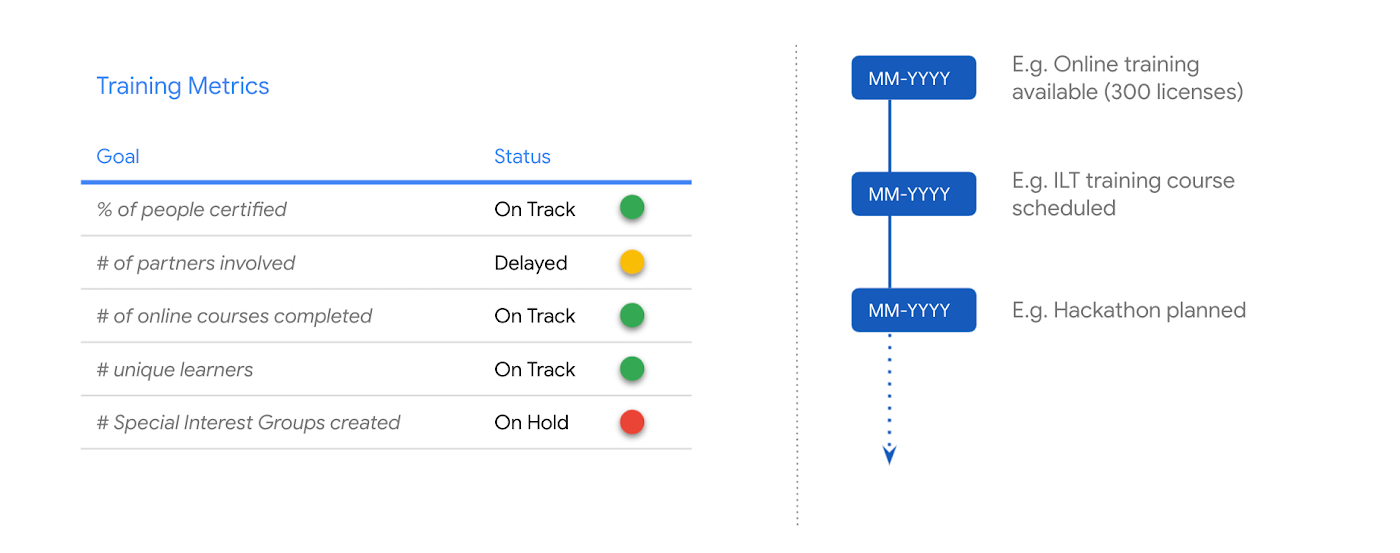
Training is a primary component to ensuring the overall success in adopting Google Cloud. During the OHR, a review of training metrics will be provided. This may include tracking metrics to determine how the customer is tracking towards an initially agreed upon learning plan or coming up with additional upskilling strategies as necessary. Additionally, throughout an engagement, the customer’s TAM will provide opportunities for both free and paid Google Cloud training.
Conclusion
PSO is the voice of customer health, maintaining priority to proactively and strategically guide large enterprise customers to operate effectively and efficiently in the cloud, both during and after the migration process. The OHR is an efficient and effective way to maintain alignment, ensure expectations and objectives are being met, manage risk, and overall ensure the success of the customer.
Learn more about our methodology and get started with Google Cloud by completing a free discovery and assessment of your migration. Alternatively, if you’d like to engage directly with our PSO team on your migration, contact us!
This Chart, from Home Depot, Dramatically Demonstrates the Power of a Cloud Data Warehouse

7598
Of your peers have already read this article.
2:30 Minutes
The most insightful time you'll spend today!
The Home Depot (THD) is the world’s largest home-improvement chain, growing to more than 2,200 stores and 700,000 products in four decades. Much of that success was driven through the analysis of data. This included developing sales forecasts, replenishing inventory through the supply chain network, and providing timely performance scorecards.
However, to compete in today’s business world, THD has taken this data-driven approach to an entirely new level of success on Google Cloud, providing capabilities not practical on legacy technologies.
The pressures of contemporary growth that drove much of the work are familiar to many businesses. In addition to everything it was doing, THD needed to better integrate the complexities in its related businesses, like tool rental and home services. It needed to better empower teams, including a fast-growing data analysis staff and store associates with mobile computing devices. It wanted to better use online commerce and artificial intelligence to meet customer needs, while maintaining better security.
Even before addressing these new challenges, THD’s existing on-premises data warehouse was under stress as more data was required for analytics and data analysts were utilizing the data with increasingly complex use cases. This drove rapid growth of the data warehouse, but also created constant challenges for the team in managing priorities, performance, and cost.
In order to add capacity to the environment, it was a major planning, architecture, and testing effort. In one case, adding on-premises capacity took six months of planning and a three-day service outage. Within a year, capacity was again scarce, impacting performance and ability to execute all the reporting and analytics workloads required. The capacity refresh cycles were shrinking, and the expecations for data were growing. There had to be a better way.
Still, THD did not take its move to the cloud lightly. A large-scale enterprise data warehouse migration involves tremendous effort among people, process, and technology. After careful consideration, THD chose Google Cloud’s BigQuery for its cloud enterprise data warehouse.
BigQuery, a scalable serverless data warehouse, was better on cost, infrastructure agility, and analytics capability, driving better insights with improved performance. There are no service interruptions when capacity is added, and that capacity can be added within a week (and soon same day). It doesn’t require complex system administration, and its standard SQL support means people can easily ramp up quickly. Valuable BigQuery products like Identity and Access Management meant THD could create many separate Google Cloud projects, while ensuring that different teams weren’t interfering with each other or accessing protected data.
THD also utilizes BigQuery’s flat-rate monthly pricing model that allows teams to budget their capacity based on need and provides billing predictability. The capacity not being used by a given project is available for enterprise use. This ensures no surprises when the monthly bill arrives and provides all analytical users access to significant computing power.
While THD’s legacy data warehouse contained 450 terabytes of data, the BigQuery enterprise data warehouse has over 15 petabytes. That means better decision-making by utilizing new datasets like website clickstream data and by analyzing additional years of data.
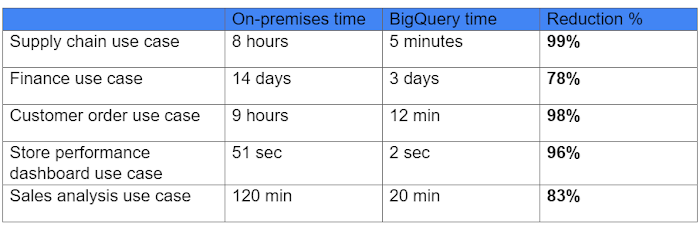
As for performance, look at this chart:
With the cloud EDW migration complete, and the legacy on-premises data warehouse retired, analysts now execute more complex and demanding workloads that they would not have been able to complete before, such as utilizing Datalab for orchestrating analytics through Python Notebooks, utilizing BigQuery ML for machine learning directly against the BigQuery data (no movement of large datasets), and AutoML to help determine the best model for predictions.
Additionally, engineers at THD have adapted BigQuery to monitor, analyze, and act on application performance data across all its stores and warehouses in real time, something that was not practical in the on-premises system.
With over 600 projects that THD now has on Google Cloud, the BigQuery story is just one of the many ways that Google Cloud is working with THD to deliver meaningful business results, every day.

The Cloud-First Imperative To Accelerate Digital Transformation In Retail
DOWNLOAD WHITEPAPER3450
Of your peers have already downloaded this article
1:30 Minutes
The most insightful time you'll spend today!
In a study by Forrester Consulting of 60 business and technology decision makers and influencers from Indian retail organizations, it is found that 2 in 3 organizations are planning to increase their cloud spending by 5% or more in the next 12 months.
According to the study, public cloud platforms help retailers to:
- Scale business faster and more easily
- Free up IT time to focus on core differentiators instead of commodity workloads
- Improve customer experience
- Establish greater connectivity for digital transformation
Download this infographic to understand why Indian retailers are adopting a cloud-first approach to accelerate digital transformation.

3609
Of your peers have already downloaded this article
1:30 Minutes
The most insightful time you'll spend today!
Many organizations are looking to the public cloud to solve on-premises infrastructure challenges. These range from capacity constraints, aging hardware, or reliability issues; or alternatively, organizations may be looking to capitalize on the value that cloud infrastructure can bring – saving money through automatic scaling, or deriving business value from large scale, cloud-native approaches to data processing and analytics.
However, moving to the cloud can be a complex and time-consuming journey. An inefficient migration program can significantly reduce the benefits realized from the migration, and a pure lift-and-shift approach can leave you with similar challenges and costs in the cloud as you were trying to escape from on-premises.
In this whitepaper, we outline Google’s approach to building a Migration Factory – an organization structure and set of processes that enable a fast, efficient migration to the cloud. We don’t presume that this is a team of Googlers coming to deliver your migration. We recommend building a blended team of people with the right skills and understanding of your organization, with clearly defined goals that are closely measured through the life of the program.
Google Announces New Cloud Region in Toronto

3406
Of your peers have already read this article.
1:30 Minutes
The most insightful time you'll spend today!
For over a decade, we’ve been investing in Canada to become a go-to cloud partner for organizations across the country. Whether they’re in financial services, media and entertainment, retail, telecommunications or the public sector, a rapidly growing number of organizations located or operating in Canada are choosing Google Cloud to help them build applications better and faster, store data, and deliver awesome experiences to their users, all on the cleanest cloud in the industry. To support this growing customer base, we’re excited to announce that the new Google Cloud region in Toronto is now open.
As you’d expect, we’re thrilled about this news, but we aren’t the only ones that have been looking forward to this launch. We asked some of our customers operating in Canada for their take on the upcoming cloud region. Here’s what they had to say:
“Our alliance with Google is truly distinctive in the Canadian market as we are working together to co-innovate and create new services for key industries, including communications technology, healthcare, agriculture, security, and the connected home. The new cloud region in Toronto marks another key milestone that will propel TELUS’ digital leadership by further leveraging the scalability, reliability and cost effectiveness of Google Cloud to support improved customer experience and build stronger, healthier and more sustainable communities.”—Hesham Fahmy, Chief Development Officer, TELUS
“We’re simplifying, modernizing and digitizing Scotiabank to enhance the customer experience for our 25 million customers across the globe. By leveraging powerful cloud-based services including Google Cloud, we’re able to put the most advanced software engineering, data analytics and machine learning tools in the hands of our talented employees. We welcome Google Cloud’s investment in Toronto and look forward to the opportunities the Toronto Cloud Region will present to our Technology team.”
—Michael Zerbs, Group Head Technology & Operations, Scotiabank
“Cloud technologies—and the access to scalable compute, rich geospatial datasets and smart analytics tools—will be critical contributors to support climate action and sustainable policy decisions. At Natural Resources Canada, scientists and researchers are applying innovative digital solutions to support Canada’s natural resource sector. The new Google Cloud region in Toronto will provide our scientists, technologists and researchers with the products and services necessary to turn Earth data into actionable insights.”
—Vik Pant, PhD, Chief Scientist and Chief Science Advisor, Natural Resources Canada
“At Accenture, we bring together technology and human ingenuity to create and respond to change. We’re thrilled to join forces with Google Cloud and their newest region in Toronto with an important mutual goal: to accelerate cloud innovation in Canada. Our clients already know us for our deep industry intelligence, cloud-first expertise and market-renowned delivery. We’re now combining that with Google’s human-centric design to bring even more opportunities to our clients across all industries.”
—Jeffrey Russell, President of Accenture in Canada.
“We are thrilled to see Google’s commitment to Canada. We look forward to helping our joint customers transform their operations, leveraging Google Cloud’s latest data center in Toronto. At Deloitte, we believe cloud is THE opportunity to reimagine everything.”
—Terry Stuart, Deloitte Chief Digital Officer, Canada.
“As Canadian organizations increasingly leverage cloud to transform their businesses, we are excited about the new opportunities that the Toronto Google Cloud region brings to the market. We look forward to continuing our strong partnership with Google Cloud to bring customized and innovative solutions that help Canadian companies fully realize the value of cloud technology, so that they can compete and win on the global stage.”
—Andrew Caprara, Chief Operating Officer, Softchoice
Toronto joins 27 existing Google Cloud regions connected via our high-performance network, helping customers better serve their users and customers throughout the globe. In combination with our Montreal region, customers now benefit from improved business continuity planning with distributed, secure infrastructure needed to meet IT and business requirements for disaster recovery, while maintaining data sovereignty.
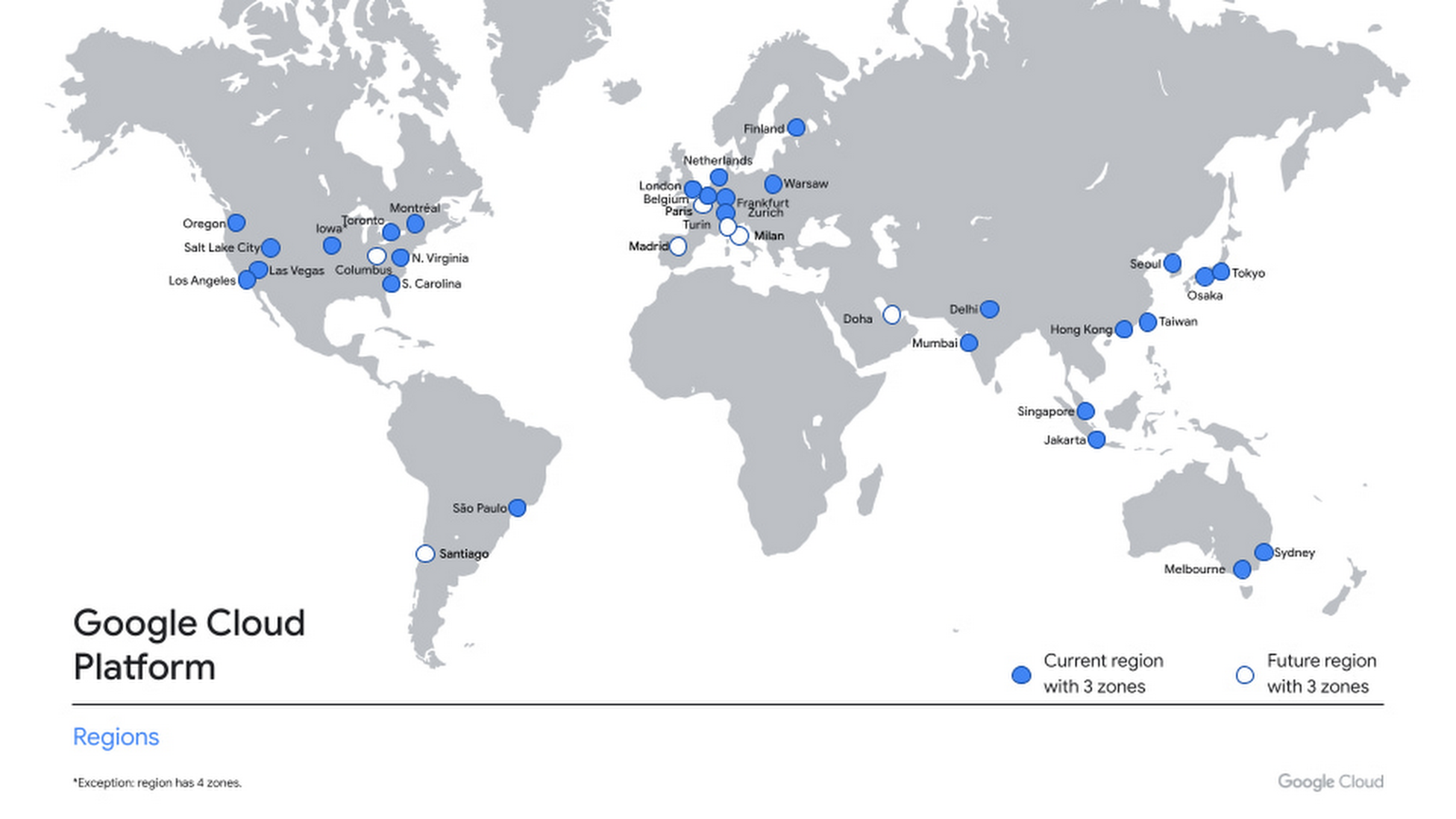
The new region launches with three zones, allowing organizations of all sizes and industries to distribute apps and storage to protect against service disruptions, and with our core portfolio of Google Cloud Platform products, including Compute Engine, App Engine, Google Kubernetes Engine, Bigtable, Spanner, and BigQuery.
We’re working to bring you new cloud products and capabilities in Canada, and our goal is to allow you to access those services quickly and easily—wherever you might be in the country. The past year has proved how important easy access to digital infrastructure, technical education, training and support are to helping businesses respond to the pandemic. We’re particularly proud of the teams who faced the unique challenges of building a cloud region during this time to help our customers and community accelerate their digital transformation.
To support all of our users, customers and government organizations in Canada, we’ll continue to invest in new infrastructure, engineering support and solutions. We’re currently hosting our first ever Google Cloud Accelerator Canada to bring the best of Google’s programs, products, people and technology to startups doing interesting work in the cloud. We’ve recently received Protected B accreditation with Canadian Centre for Cyber Security, which is crucial for healthcare, education, and regulated industries adopting cloud services. We’re also pleased to announce the preview of Assured Workloads for Canada—a capability which allows you to secure and configure sensitive workloads in accordance with your specific regulatory or policy requirements.
For help migrating to Google Cloud, please contact our local partners. For additional details on Google Cloud regions, please visit our locations page, where you’ll find updates on the availability of additional services and regions. You can always contact us to help you get started or access our many educational resources. We’re excited to see what you build next with Google Cloud.
More Relevant Stories for Your Company

Highmark & Google’s Secure-by-design Technique to Bring the Living Health Solution to Life
In an industry as highly regulated as healthcare, building a single secure and compliant application that tracks patient care and appointments at a clinic requires a great deal of planning from development and security teams. So, imagine what it would be like to build a solution that includes almost everything

Southwire Completes SAP Migration to Google Cloud as a First Step of its Tech Evolution
“Talk about tough times, right?” That’s how Dan Stuart, Senior Vice President of IT Services at Southwire Company, refers to the months following a December 2019 ransomware event, and the COVID crisis that began in spring of 2020. Those events hit just as the company was preparing for an overhaul

Developers and Practitioners’ Guide for Moving On-prem Data Warehouse to BigQuery
Data teams across companies have continuous challenges of consolidating data, processing it and making it useful. They deal with challenges such as a mixture of multiple ETL jobs, long ETL windows capacity-bound on-premise data warehouses and ever-increasing demands from users. They also need to make sure that the downstream requirements

STAC-M3 Tick History Analytics in Google Cloud Benchmark Results Reveals it is 18X Faster than Previous Version
The Securities Technology Analysis Center (STAC®), an organization that improves technology discovery and assessment in the finance industry through dialog and research, recently audited the STAC-M3™ benchmark suite on Google Cloud (SUT ID KDB211210). These enterprise tick-analytics benchmarks assess the ability of a solution stack such as database software, servers,
