





Latest Features and Updates to Globally Bolster Translation Services

5291
Of your peers have already read this article.
2:00 Minutes
The most insightful time you'll spend today!
Let’s face it: in the globalized world, which is now more than ever a digital demand world, you need to scale and reach your customers right where they’re at. Translation is a critical piece of that, whether you’re translating a website in multiple languages or releasing a document, a piece of software, or training materials.
Manual translation does not scale, which is why machine translation, powered by machine learning (ML), is becoming more important to our customers. Machine translation has historically been challenging because of the sheer volume and breadth of content that can add value when translated into multiple languages. Companies acquire and share content in many languages and formats, and scaling translation to meet needs is a tall order due to multiple document formats, integrations with optical character recognition (OCR), and the need to correct for domain-specific terminology.
Our goal is to simplify translation services, while enabling flexibility and control for our customers’ unique needs across industries. Read on to learn more about recent features and updates.
Formatting matters: Document Translation is now GA
In many cases, the layout of a document dictates how it should be interpreted—e.g., readers navigate text and discern meaning based on formatting, like bold or italicized text, or markups for headers, paragraphs, and columns. Previously, to automate translation of documents, text needed to be separated from these layout attributes, meaning the document’s structure was either lost or needed to be recreated later in the developer pipeline, after the text had been translated. This required translation teams to do a lot of extra work and maintain a lot of additional code. But now, those steps are unnecessary. Formatting can be retained throughout the translation process, handled directly by the Translation API Advanced.
This feature lets customers translate documents in 100+ languages and supports document types such as Docx, PPTx, XLSx, and PDF while preserving document formatting.
And if your needs go beyond Document Translation, we can help you translate audio as well. For real-time streaming translation, check out the Media Translation API, and for offline transcription translation, combine the Translation API with the Video Intelligence API.
Real-Time translation when you need it, Batch when you don’t
One of the biggest differentiators for Translation API Advanced’s document translation capabilities is the ability to do real-time, synchronous processing for a single file.
For example, if you are translating a business document such as HR documentation, online translation provides flexibility for smaller files and provides faster results. You can easily integrate with our APIs via REST or gRPC with mobile or browser applications, with instant access to 100+ language pairs so that content can be understandable in any supported language.
Meanwhile, batch translation allows customers to translate multiple files into multiple languages in a single request. For each request, customers can send up to 100 files with a total content size of up to 1 GB or 100 million Unicode codepoints, whichever limit is hit first.
State of the Art (SOTA) accuracy, with flexibility for customization
In order to achieve the highest level of accuracy for your translation, we now support multiple options:
- Use Google’s SOTA translation models: Each year, Google heavily invests to improve the quality of our translations across Apps, Cloud APIs, and Chrome, as well to enable multilanguage answers in Search. A popular metric for automatic quality evaluation of Machine translation systems is the BLEU score, which is based on the similarity between machine translation and the reference translations that were generated by people. While we push out incremental improvements for individual models on a monthly cadence, there are also times where we make significant leaps. In the releases since 2019, we have improved our average BLEU score by 5pts on average across 100+ languages and 7pts on low resource languages.
- Leverage glossaries for specific terms and phrases: Glossary is our terminology control feature. It allows you to import source content to define preferred translations, such as product names or department names. Then, when calling the glossary in the API request, your preferred translations will be enforced. This will work for words as well as phrase translation.
- Pick a pre-trained model with model selection: If you create custom models for machine translation, we don’t think you should have multiple client libraries and multiple APIs to maintain in order for you to use the best model for your needs. Translation API Advanced now supports Model Selection. Pick your pretrained model or pick your custom ML model built on AutoML for any language pair you’ve created and use the same API and the same client library.
- Build custom translation models with AutoML: AutoML Translation is a suite of ML products that enable you to build high quality models for your own use case or data, with limited-to-no ML expertise or coding required. Bring your past human-validated translations to improve translation specificity for your domain.
Keep localization local with Regional Endpoints
If you are a customer operating in the EU, we recently launched an endpoint specifically for EU regionalization. This is a configurable endpoint for customers to store and perform machine translation processing of customer data only in the EU multi region. For now, this only supports our pretrained translation models and glossary, but batch translations will be coming soon.
How Eli Lilly uses Cloud Translation to translate content globally
Historically, translations at Eli Lilly have been complicated: numerous translation vendors have been needed for different languages and organizations, all with their own processes and expectations. On top of that, translations have been costly and slow.
To solve this, Eli Lilly took a codified approach to enable users and systems to spend less time and resources to safely generate quality translations.
Learn more, and even catch a demo, from Thomas Griffin, Translation Tech Lead & Global Regulatory Architect for Eli Lilly.

Learn more
- To get started using Cloud Translation – Advanced, complete the setup and then try the Translate text (Advanced edition) quickstart.
- Document Translation is priced per page. For more information, see pricing.

3462
Of your peers have already downloaded this article
4:45 Minutes
The most insightful time you'll spend today!
Since 1994, IDOM, Japan’s leading buyer and retailer of used cars, has enjoyed success in the auto industry with a simple yet traditional business model: buy pre-owned vehicles directly from car owners and auction them to third-party dealers, or sell them to other consumers at retail stores.
In an increasingly frugal economy, Japanese consumers are buying fewer new cars. Most young urban workers take public transport, a cheap alternative for getting from point A to point B. Additionally, people who do own cars are keeping them longer: the average period of ownership is 7.5 to 10 years.
Although Japanese consumers are buying fewer new cars, used car sales are steadily on the uptick. Pre-owned car sales in Japan rose by 1.7% in 2015—the first big spike in three years. IDOM dominates this industry with about 40% market share, and it wanted to continue to take advantage of this growing market trend.
To do so, IDOM reinvented its marketing strategy, using Google’s machine-learning technology to make full use of its available customer data. The brand’s main goal was to attract more prospective car sellers to its physical stores because (1) that’s where they could close trade-in deals and (2) sourcing used cars efficiently is integral to the success of its business model.
Secondly, rather than measure marketing success solely on clicks, views, brand awareness, or favorability, IDOM relied on data to determine which advertising techniques—including phone calls and customized ads to prospective sellers—turned a real profit.
After successfully identifying and targeting existing car owners with a high chance of selling their car, it was only natural for IDOM to leverage this approach to identify and target potential customers with a higher chance of buying a car—key for the other side of its business as well. Thus, IDOM also showed customized ads to potential car buyers and prioritized follow-up phone calls to high-value potential car buyers.
Find out how IDOM increased the number of sellers and buyers visiting its stores by a whopping 25% and grew gross profits by 300% in a key market segment. Download now!
Volkswagen + Google Cloud: Using Machine Learning to Drive Smarter with Energy Efficient Cars
2664
Of your peers have already read this article.
2:30 Minutes
The most insightful time you'll spend today!
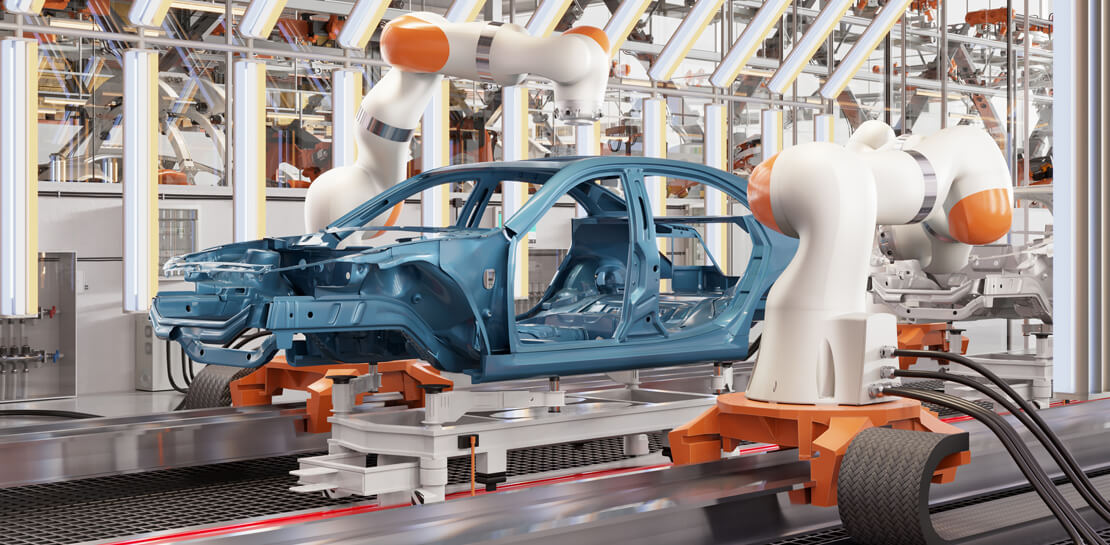
Volkswagen strives to design beautiful, performant, and energy efficient vehicles. This entails an iterative process where designers go through many design drafts, evaluating each, integrating the feedback, and refining.
For example, a vehicle’s drag coefficient—its resistance to air—is one of the most important factors of energy efficiency. Thus, getting estimates of the drag coefficient for several designs helps the designers experiment and converge toward more energy-efficient solutions. The cheaper and faster this feedback loop is, the more it enables the designers.
Unfortunately, estimating drag coefficient is an expensive and time-consuming operation that involves either a physical wind tunnel or a computationally intensive simulation. This can be a bottleneck in the feedback cycle.
For this reason, Volkswagen and Google Cloud decided to collaborate on a joint research project to investigate using machine learning (ML) to get fast and inexpensive estimates of the drag coefficient. In this post, we’ll explore the challenges and approaches undertaken in this project.
The core principles of the project were simple. First, we needed to collect a dataset of existing car designs and their respective drag coefficients. Then, we needed to create a representation of the various cars that would be suitable for ML. The next step was to train a deep learning model to predict the drag coefficient, and then, finally, we would use that model to efficiently estimate drag for any new design.
Representing three-dimensional car designs
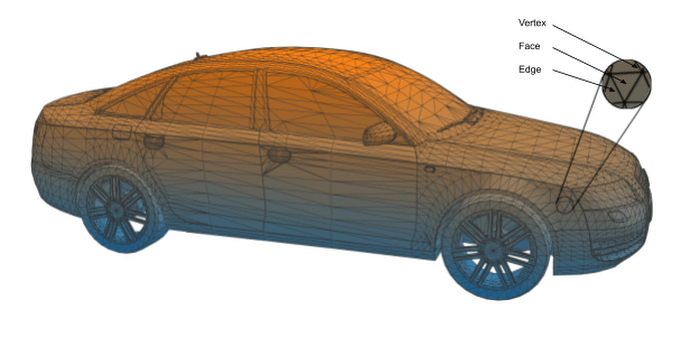
Design software recreates a physical object as a three-dimensional triangle mesh made up of three types of objects—faces, edges, and vertices. Figure 1, below, shows such a mesh for an Audi S6. Faces are flat surfaces, such as the window in a car door. An edge is where two faces meet (e.g., the side of the door), and a vertex is where two or more edges meet, such as the corner of the door.
Car bodies, however, come in all shapes and sizes. A Volkswagen Golf economy model is very different from a Tiguan SUV, and a single vehicle can have both large smooth surfaces as well as areas with delicately designed features. Consequently, there can be a huge variety from one polygonal mesh to the next.
ML models need consistent representation in order to form robust generalized rules. With such a dramatic variance between each polygonal mesh, the models would be compromised and the results could have huge margins of error.
We needed to find a way to create simple meshes that capture the shape of the car but are still suited for ML models.
Representing a car with digital shrink wrapping
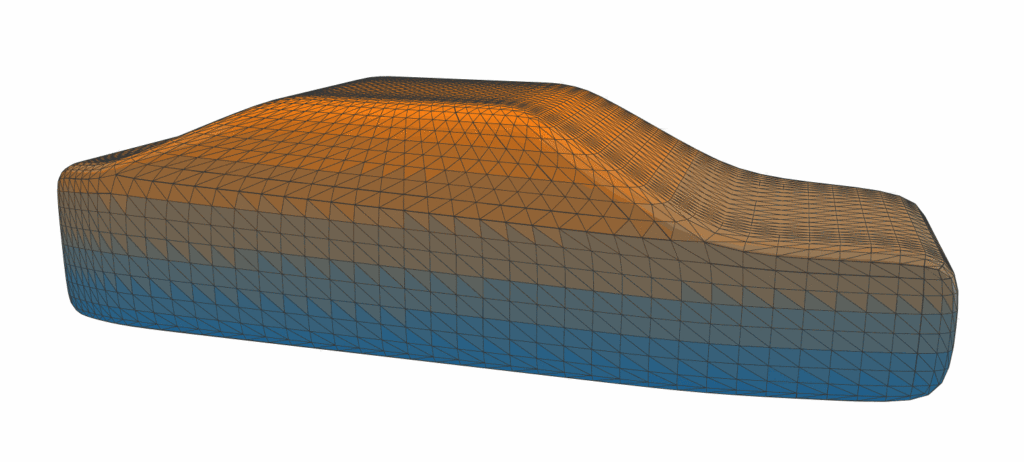
Rather than building a representation of each car from the ground up, we applied a “shrink wrapping” method for the 3D meshes. The principle is very similar to vacuum-sealing a cucumber. The cucumber is placed in a plastic bag and the air is then gradually removed until the bag fits tightly around it, capturing its shape.
Our approach works similarly: we start with a base mesh, a simple shape that corresponds to the plastic bag, and we deform it until it captures the shape of the target mesh. For our purposes, the base mesh is a simplified representation of a car and the target mesh is the particular car we are designing for at that moment. Such meshes can be defined, managed, and presented to ML models for training using the Tensorflow Graphics and trimesh libraries.
Our “shrink wrapping” method mainly works by iteratively minimizing a measure of distance (e.g., chamfer distance) between the two meshes. Additionally we can regularize our mesh to preserve certain qualities, like smoothness, in the resulting mesh. This iterative optimization is analogous to the vacuum pump, gradually shrinking and fitting the vertices of the mesh as closely as possible to the complex shape of the car. With shrink-wrapping, we are able to produce cleaner meshes that are more suitable to our estimation task. An example of such a procedure is shown in Figure 2.
How to train a model
Shrink-wrapping the 3D car designs was an important first step, but the work was far from over. Our next challenge was to build and test the machine learning algorithms.
We wanted our algorithms to estimate the drag coefficient as accurately and quickly as possible each time it looked at a new design. To do so, we had to train the ML models on existing data.
From publicly available datasets, we calculated the drag coefficients for 800 different car meshes, which we trained the models on. Then, we evaluated the trained models on a further 100 meshes, seeing how accurate their estimates were on new data.
As we worked through this training, we refined our approach. Initially, we tested models based on convolutional neural networks – similar to PointNet – that observed only the vertices, i.e., the fixed points in each mesh. But when we tested mesh-convolutional models – similar to FeastNet – we found a slightly different focus improved the accuracy of the estimates. Rather than focusing on vertices alone, these models looked at a mesh of vertices and how they relate to each other. These models placed each vertex in a richer context, leading to more accurate estimates when air-flow hit particularly subtle design features.
Working in parallel and at scale
To collaborate across time zones and two organizations, we’ve used the Google Cloud Vertex AI platform.
Vertex AI Workbench serves as a central hub to interact with other services and infrastructure on the Vertex AI platform. It enables quick experiments and preparation of training packages for resource-intensive ML model training jobs, all in a Python notebook environment for immediate execution of code. The notebook environments allow code-based interaction with other services on Google Cloud and ML tools such as Vertex AI Training and Vertex AI Pipelines.
The process of training a new model is a seamless one. First, a dataset is prepared and stored in Google Cloud Storage, usually with the help of Tensorflow Datasets. Then, for every ML model we want to test, we package and store the training code as a container image with Google Cloud Build and Container Registry. This ensures that every job is fully documented, including the provided parameters, training code package, logs from the training task, and resulting artifacts such as metrics and model files.
From there, we submit the model to the Vertex AI Training service, which provides easy access to large scale infrastructure and hardware accelerators, such as GPUs and TPUs, by simply defining resource needs when submitting a job. By using Vertex AI Training’s hyperparameter tuning feature, we can run experiments in parallel with multiple neural networks to find the right one for our purposes.
With Vertex AI Tensorboard, we can capture metrics and visualize the results of our experiments. These are readily available to anyone in the team, wherever they are in the world, for a wider discussion.
The first milestone
This joint research effort between Volkswagen and Google has produced promising results with the help of the Vertex AI platform. In this first milestone, the team was able to successfully bring recent AI research results a step closer to practical application for car design. This first iteration of the algorithm can produce a drag coefficient estimate with an average error of just 4%, within a second.
An average error of 4%, while not quite as accurate as a physical wind tunnel test, can be used to narrow a large selection of design candidates to a small shortlist. And given how quickly the estimates appear, we have made a substantial improvement on the existing methods that take days or weeks. With the algorithm that we have developed, designers can run more efficiency tests, submit more candidates, and iterate towards richer, more effective designs in just a small fraction of the time previously required.
Going forward, faster and more accurate estimates could even enable more automated searching for efficient designs, which would help both engineers and designers to hone in on the areas of the vehicle body where they could have the most impact. An important next step will be integrating the results into 3D design software to let designers benefit from the output and provide feedback.
As we continue, our focus is on improving the accuracy of the models. Firstly, we will build a larger, better quality dataset. Secondly, we will improve our shrink-wrapping algorithm to capture more details. Finally, we will enhance our existing models by experimenting with Vertex AI Neural Architecture Search to explore and experiment with different neural architecture options.
Moreover, we believe that our results for drag coefficient estimation is only a starting point for further exploration. There could potentially be numerous use cases in the space of physical simulations and assessments where cost and time savings could be achieved through ML-based estimators.
Acknowledgements
This work wouldn’t have been possible without the contributions from Volkswagen Data:Lab, Google Research, and Google Cloud. Thanks to Ahmed Ayyad, Dr. Andrii Kleshchonok, Dr. Daniel Weimer, Gülce Cesur, Henrik Bohlke, Andreas Müller from Volkswagen, Ameesh Makadia, Ph.D., and Carlos Esteves, Ph.D., from Google Research, and Daniel Holgate, Holger Speh, and Dr. Michael Menzel from Google Cloud.

How Domino’s Increased Monthly Revenue By 6% with Google Marketing Platform
DOWNLOAD CASE STUDY5767
Of your peers have already downloaded this article
1:30 Minutes
The most insightful time you'll spend today!
Pizza purveyor Domino’s is dominating delivery sales around the world. Today, Domino’s is the most popular pizza delivery chain operating in the U.K., the Republic of Ireland, Germany, and Switzerland — and sales just keep growing.
In these regions in 2014, Domino’s sold 76 million pizzas and generated £766.6 million (1.02 billion USD) in revenue — a 14.6% increase from the previous year.
In the U.K. and Ireland, online sales are increasing 30% year over year and currently account for almost 70% of all sales. Notably, 44% of those online sales are now made via mobile devices.
Multi-Device Purchasing Means Fresh Opportunities
Domino’s is a consistent digital innovator. Much of the company’s success stems from early investments in ecommerce and mobile commerce platforms that help people easily purchase pizzas from different devices.
Domino’s sold its first pizza online in 1999. It then launched an iPhone app in 2010, quickly followed by apps for Android and iPad in 2011, and a Windows app in 2012. By late 2014, Domino’s customers could even order pizzas from Xboxes.
The Domino’s marketing team had assembled a variety of tools to measure marketing performance, keeping pace with the company’s rapid innovations. Unfortunately, measuring siloed analytics and channel-focused tools restricted the team’s ability to fully understand all of the different paths to purchase.
Find out how they worked around this challenge with Google Marketing Platform. Download the case study!
4415
Of your peers have already watched this video.
28:30 Minutes
The most insightful time you'll spend today!
Data Leaders in 2021 and Beyond: How to Prepare
As technologies and workplace environments are quickly evolving, how people and businesses leverage data in their day-to-day workflow is also changing.
Data leaders are an emerging force navigating and charting pathways forward towards new horizons for how people and organizations experience data.
In this presentation, Pedro Arellano, Product Marketing Director, Looker, will cover three areas:
- Underline that the value of data within an organization is no longer up for debate. Everybody needs data, and everybody’s job has the potential to be improved with data.
- Three trends that will help put into context how we’ve arrived at this particular moment of such great potential for data.
- Why data leaders, almost regardless of their title, are now in a position to really influence the direction of organization like never before.
Learn what’s guiding the thinking of data leaders in 2021 and beyond.
Digital Maturity in Higher Ed Tied to Improvements in Students’ Journey: Study

5118
Of your peers have already read this article.
3:00 Minutes
The most insightful time you'll spend today!
Why Higher Ed Needs to Go All-in on Digital
In the wake of the COVID-19 pandemic, the majority of students within the 18-24-year-old demographic now expect hybrid learning environments–even once we are beyond the pandemic. And a vast number of adult learners are seeking options that accommodate their work and family lives now that it’s clear that effective learning can indeed occur virtually. Implementing cloud technologies and achieving digital maturity within higher education will enable institutions to be innovative and responsive to evolving student preferences, while being prepared for future disruptions.
The state of digital maturity
In February and March 2021, Boston Consulting Group (BCG), in partnership with Google, surveyed U.S. higher education leaders on their views of the state of digital maturity in the higher education sector. This survey found that institutional and technology leaders strongly agreed that moving legacy IT systems to the cloud, centralizing and integrating data, and increasing the use of advanced analytics is necessary to make a successful digital transformation, and ultimately achieve digital maturity.
But what is digital maturity? Digital maturity—a measure of an organization’s ability to create value through digital delivery—focuses on three areas of technological advancement that drive large-scale innovation:
- Using cloud infrastructure
- Expanding access to data
- Using that data to improve processes through advanced analytics, such as Artificial Intelligence and Machine Learning (AI/ML)
Although university leaders agree on prioritizing digital maturity, more than 55% said they considered their schools to be “digital performers” or “digital leaders.” However, only 25% of tech leaders at these universities stated that their schools regularly use data analytics. As with corporations and governments, higher education institutions face barriers to technological innovation, such as:
- Competing priorities to meet step-change goals and decentralized decision making
- Budget constraints
- Cultural resistance to change
- Tech staff skillset gaps
Still, leaders understand that the way to overcome institutional inertia is with a strong, goal-oriented vision of what is best for the institution overall. Although only a handful of schools have reached digital maturity as we define it, others can learn a great deal from their examples. Here are the top takeaways from higher education leaders who successfully transformed their institutions:
Digital solutions can improve the student journey in many ways
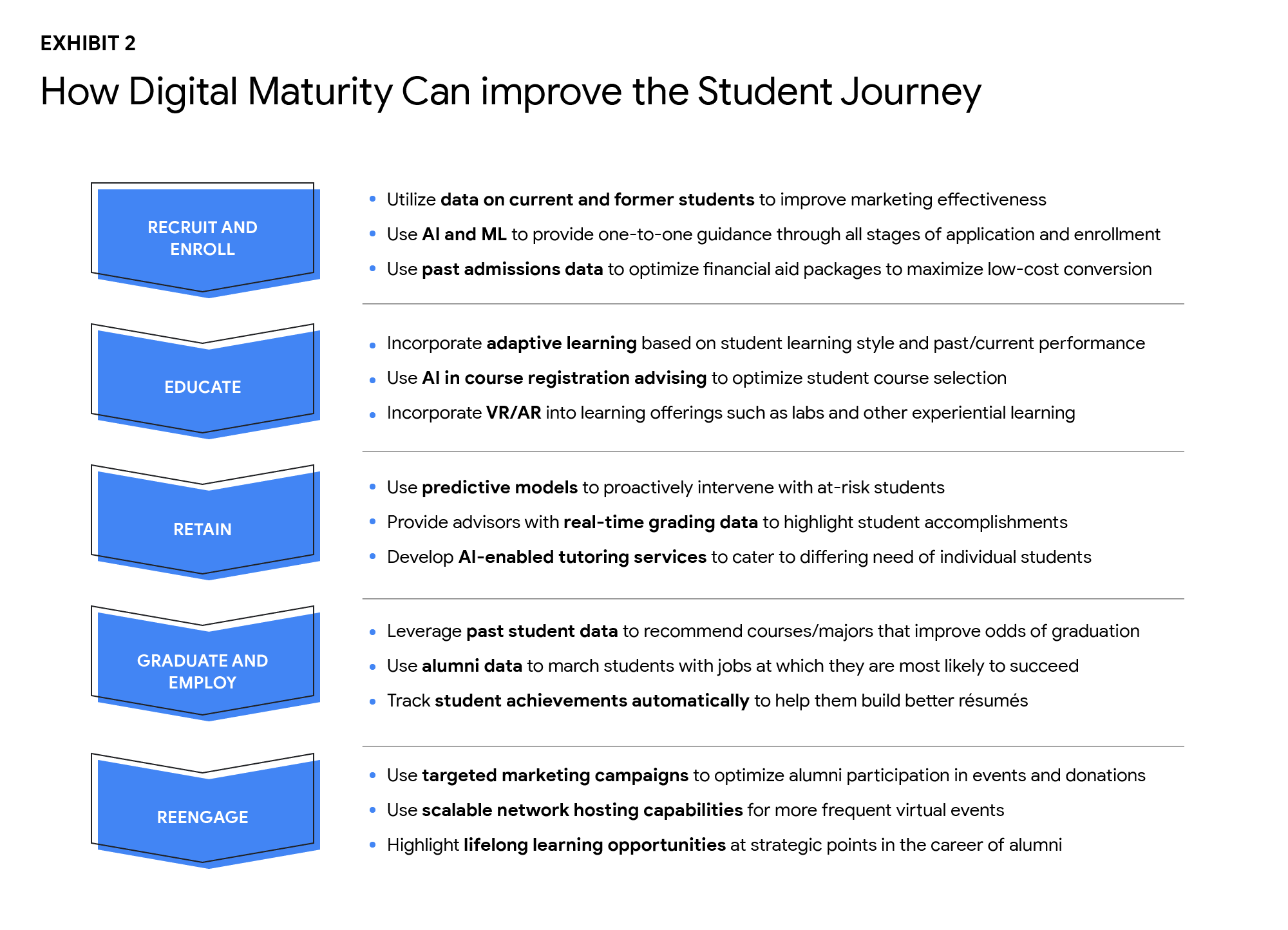
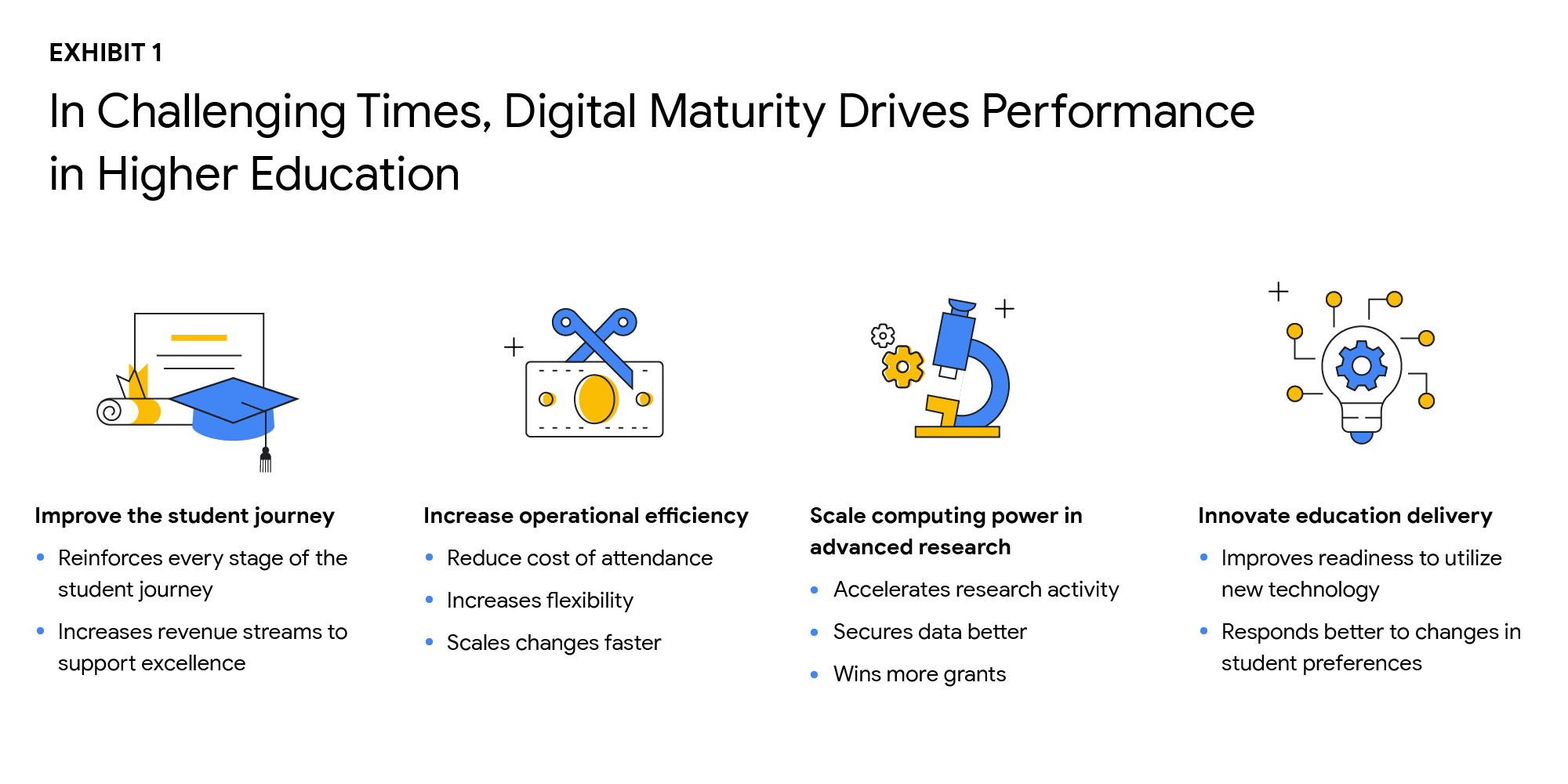
As digital capabilities hold the key to dealing effectively with declining enrollment and rising costs, higher ed leaders identified four goals that are critical to improving performance:
- Improve the student journey
- Increase operational efficiency
- Scale computing power in advanced research
- Innovate education delivery
The research found that technology investments can help enhance the student journey in the recruiting and retention of students, improving digital education delivery, government funding, and donations from alumni. Digital maturity can make institutions more agile and efficient in delivering education that aligns with the changing societal norms, evolving student preferences, and future disruptions. Survey participants shared that they plan to increase the use of the cloud by more than 50% over the next three years. By shifting legacy IT systems to the cloud, institutions can increase scalability, lower the cost of ownership, and improve operational agility, while offering a more secure, long-term data storage solution.
Cloud-native software-as-a-service (SaaS) solutions provide an excellent platform for centralizing data. However, institutions that attempt to “lift and shift” their legacy systems to the cloud may encounter challenges to achieving measurable improvements in data integration and cost reduction. Higher ed leaders must realize that centralizing data and transitioning to the cloud do not happen simultaneously.
Leaders who are able to articulate a strong vision and commitment will experience a more successful technology transformation. By linking their vision to specific needs, such as more effective recruiting, leaders will find their technology investments will have a more substantial return. University presidents should base their decisions about which systems to move, when, and how on desired performance outcomes.
Big visions become a reality with small steps. Small pilot projects are an excellent way to start the journey toward digital maturity. Small steps toward a significant transformation can reduce resistance to change, build positive momentum, and produce better student outcomes. Read the full report here. If you’d like to talk to a Google Cloud expert, get in touch.
More Relevant Stories for Your Company

Enabling Sustainable Agriculture: InstaDeep uses Cloud TPU v4
You are what you eat. We’ve all been told this, but the truth is what we eat is often more complex than we are – genetically at least. Take a grain of rice. The plant that produces rice has 40,000 to 50,000 genes, double that of humans, yet we know

Google and AI Researchers Work towards Building Data-centric AI
AI researchers and engineers need better data to enable better AI solutions. The quality of an AI solution is determined by both the learning algorithm (such as a deep-neural network model) and the datasets used to train and evaluate that algorithm. Historically, AI research has focused much more on algorithms




How Visual Inspection AI Transforms the Manufacturing Industry
The pandemic has created demand volatility and has placed lots of pressure on manufacturers. Decreased demand for new products, the disruption of retail channels, and interruptions to supply chain operations have made it very challenging for manufacturers to operate profitable businesses. This has left manufacturers keen to decrease costs and


Creating Value With the Breadth and Depth of AI Platform
Watch Craig Wiley, Director of Product Management - Google Cloud, as he breaks down and simplifies AI for enterprises and the adoption of AI. “As I think about AI, fundamentally AI only does two things. One it helps you grow your market, increase subscribership, increase users, increase their spend or
