





Google Workspace and Chrome Enterprise Integral for Colgate-Palmolive’s Flexible Work-Culture

3887
Of your peers have already read this article.
2:00 Minutes
The most insightful time you'll spend today!
Editor’s note: Today’s post is by Roger Lim, IT Manager of Collaboration Infrastructure Development, and Jim Arcure, Director of Infrastructure Development, both with Colgate-Palmolive, the multinational consumer products company. Colgate-Palmolive is in the midst of a multiyear project to create a collaborative, flexible work culture, leveraging Google Workspace and Chrome Enterprise.
Colgate-Palmolive Company is a caring, innovative growth company reimagining a healthier future for all people, their pets, and our planet. Focused on Oral Care, Personal Care, Home Care, and Pet Nutrition, and reaching more than 200 countries and territories, Colgate teams are developing and selling product offerings essential to society through brands such as Colgate, Palmolive, elmex, meridol, Tom’s of Maine, hello, Sorriso, Speed Stick, Softsoap, Irish Spring, Protex, Sanex, Filorga, eltaMD, PCA Skin, Ajax, Axion, Fabuloso, Soupline and Suavitel, as well as Hill’s Science Diet and Hill’s Prescription Diet.
Colgate-Palmolive has been accelerating growth and delivering meaningful innovation and attracting new and diverse talent in areas such as ecommerce, innovation and digital. That speed and agility comes in large part from the Chrome Enterprise tools that allow the business to move faster and stay competitive.
Changing out software and hardware for 30,000 employees in 70+ countries is a massive project. Early on, we chose Chrome Enterprise as our partner. We had to move away from our dependency on legacy platforms, software, and devices if our business was going to thrive. We knew cloud-based tools like Chrome and Google Workspace would do what on-premises solutions can’t—ease the IT workload while keeping employees happy and productive.
Why we’re escaping legacy apps and embracing the cloud
We don’t want Colgate-Palmolive’s size and geographical breadth to get in the way of people working together and maintaining its strength in global teamwork. That’s why we’re replacing bulky, hard-to-maintain, on-premises applications and software with cloud versions that everyone can securely access in a web browser.
As an IT team, we thought about how much work time we spent installing, updating, and troubleshooting software (up to 30 percent of work hours during big upgrades!). As we were looking at ways to work together better, we had our eyes on the cloud revolution—and, specifically, Chrome Enterprise and Google Workspace.
First step, switch to a new browser
Back in 2016, the IT team was working to move everyone to Google Workspace and away from legacy productivity applications. Once you start Google Workspace adoption, it’s time to take a closer look at browser options.
We chose Chrome Browser for several reasons. It updates automatically, so we could cross lengthy upgrade tasks off our list. An even bigger benefit is that Chrome Browser’s management tools, data protection, and malware detection are all built in. We anticipate a lot of synergy here by leveraging these features and having our users go all Chrome.
Chrome Browser also gave us tools to manage and grant access to apps across our multi-platform device fleet. We call Chrome Browser Cloud Management our “golden nugget” because every browser gets enrolled automatically in browser management.
It’s now much easier to push out new extensions and apps (and allowlist or blocklist them) compared to the time-consuming process of using our existing desktop policy management settings. The ability to easily manage extensions is a huge benefit since it enabled IT to provide new and safe functionality to our end users.
Next, share new ways of working together
Our IT team wants workers to see the benefits of Google Workspace and Chrome Browser on their own, but sometimes we have to guide them toward the finish line. At the beginning of the project, we developed “Going Google” tools to notify users to consider Google Workspace when opening legacy applications that are no longer needed.
As Chrome Enterprise and Google Workplace became our primary productivity tools, it was also important to ensure our users did not fall back on old habits. Our “Going Google” tools gave our IT organization the ability to not only notify, but turn off specific legacy apps per user. Though IT could easily restore access to these legacy apps on a temporary basis, we have seen a significant dropoff in these types of requests over the past few months. Our goal is to give Colgate people a gentle and consistent reminder that we will be a Google Workspace-only company. By taking these active and decisive steps, we ensure that our users and teams are migrating to Google Workspace today.
To that end, we’ve provided lots of support. We use over 1,000 Colgate “Google Guides” around the world who run on-site classes and webinars on Google Workspace, and are available for one-on-one help, as well as roughly 700 “Google Gurus” who are savvy early-adopters and can lend a hand to colleagues with questions about Google Workspace. Our training classes and webinars are playing to packed houses, and we’re scheduling sessions that focus on specific skills, like a class about using Google Sheets attended by 250 people via Google Meet.
Finally, start rolling out new devices
If we can get everyone at Colgate-Palmolive working in Google Workspace and Chrome Browser, then offering Chromebooks is another natural fit: Chromebooks and the Chrome OS are built for the cloud world we want to work in. We’re pilot testing about 200 Chromebooks for employees, mostly in our customer development department. The Chromebooks are in high demand in challenging locations because they’re easier to deploy for new hires. When employees eventually get back to their offices, we are eager to expand Grab-and-Go racks for people that need a temporary loaner. These Grab-and-Go racks in our New York City and Piscataway, N.J. offices will provide another way for people to test drive Chromebooks.
Two hundred-odd years after Colgate-Palmolive started doing business, we’re excited about the modern focus of our workplace tools. The Google tools that allow us to collaborate also allow the company to succeed well into our third century.
Beyond Traditional Learning: AI-based Online Learning Platform and Google Cloud Solutions Push Learners to Get Ahead

10365
Of your peers have already read this article.
1:30 Minutes
The most insightful time you'll spend today!
The combination of a vital need for IT experts among businesses and a digital skills gap is making lifelong learning increasingly critical. Beyond professional development, learning new skills offers additional rewards from building peer connections to boosting your creativity. That’s why in 2020 Krishna Deepak Nallamilli and I launched KIMO.ai to reimagine how people approach learning, especially in developing markets. Our team is building the artificial intelligence needed to generate individual learning paths through a wide range of quality digital learning content.
Google Cloud and its Startup Program have been instrumental in connecting our team with the tools, people, processes, and best practices to grow our business.
Existing learning platforms lack engagement
Outside of traditional education settings, massive open online learning courses (MOOCs)—often modeled after university courses—can provide a flexible and affordable way to upskill or reskill. But the vast majority of people who participate in MOOC programs fail to complete courses. Based on our research, the challenge with existing learning platforms is a lack of engagement, primarily caused by limited direction on which skills to learn, whether AI, fintech, blockchain, or other in-demand disciplines.
We’ve also received feedback that many corporate learning management systems–developed as online training systems to upskill employees–tend to be poorly designed and time-consuming to use.
Overall, a significant challenge with most existing learning platforms is that they’re generic. For example, suppose you’re interested in learning about AI. In that case, you need AI-related coursework that applies to your industry and the job you want because AI in medicine is vastly different from AI in financial services. Today’s online learning options typically take a one-size-fits-all approach and fail to capture the nuances of what learners really need to get ahead.
Building a future-proof learning platform
The commitment to highly personalized, accessible learning inspired KIMO.ai, a platform that we believe is the future of education. Depending on your goals, current skills, location, and other factors, our AI-based platform will identify which coursework (and where to find those classes) to build the skills you need. The more personalized, relevant learning recommendations even take into account people’s preferences for podcasts, MOOCs, books, articles, videos, courses, publications, and more.
In a mix of cooperation and competition we call “coopetition,” KIMO.ai will regularly recommend courses from other established online learning systems if, based on our automated assessment, it’s the best option for a learner. There’s also the option to access free content only.
Google cultural alignment fosters trust
Our platform started with one developer exploring NLP models and Google APIs. As we’ve grown our team and launched our beta to 110,000 users in developing markets, we discovered there is a lot of interest in our platform, and we believe we can make a significant impact. In feedback forums, we also learned that we need to focus our efforts on the mobile experience to improve engagement since 99% of the beta testers use mobile devices.
Beyond our team’s high level of trust in Google Cloud solutions, our team also appreciates the cultural alignment with Google. We value Google’s developer-centric approach and rely on tools like Dataflow for batch data processing and Cloud TPU to reliably run machine learning models with AI services on Google Cloud. We also build all of our deployments on Google Kubernetes Engine (GKE), which makes it easy to manage all our containerized workloads
On the front end, Google App Engine makes it easy to deploy apps and experiment, and it integrates seamlessly with Firebase for authentication and more. BigQuery is our serverless data warehouse that efficiently scales to support the millions of articles, videos, and other learning resources we need to analyze to provide the targeted coursework recommendations our learners require.
As we grow our business having a network of trusted advisors is also extremely valuable. By working closely with DoIT International, the 2020 Google Cloud Global Reseller Partner of the Year, our team has access to their cloud, Kubernetes, and machine learning expertise. DoIT has already helped us quickly resolve IT issues and create analytics dashboards that give us insights to continually enhance our services.
Building for a growing industry
The dynamic edtech market is growing rapidly and estimated to become an $11B industry by 2025. We’re proud to be part of the next wave of personalized education that has the potential to empower people in developing markets and beyond to grow their skills with coursework tailored to their exact needs and how they like to learn. This year, we will deliver our platform to at least 400,000 more people. We’re excited to see how they use it and where it takes them.
If you want to learn more about how Google Cloud can help your startup, visit our Startup Program application page here to get more information about our program, and sign up for our communications to get a look at our community activities, digital events, special offers, and more.
Taking Partnership forward: Google Cloud VMware Engine Now in VMware Cloud Universal

3484
Of your peers have already read this article.
1:30 Minutes
The most insightful time you'll spend today!
As the pace of digital transformation accelerates, our partnership with VMware continues to focus on helping customers successfully navigate their cloud journey and achieve their business objectives through seamless and rapid migration of business critical VMware workloads.
We announced the general availability of Google Cloud VMware Engine in May 2020. Since then we have worked closely with VMware to make it easier for customers to quickly migrate and run business-critical, VMware-based workloads on Google Cloud. Customers are already leveraging the service across a variety of use cases including application migration, datacenter exit, virtual desktop infrastructure, disaster recovery, and spinning up new capacity quickly to meet business needs.
For example, retailer Carrefour migrated its on-premises VMware workloads to Google Cloud without disruption to shoppers or employees while reducing operating costs by 40% and energy consumption by 45%. Once in the cloud, Carrefour was able to leverage its data and AI to deliver innovative customer experiences across online and in-store channels. Similarly, telecommunications provider Mitel migrated thousands of VMware instances across 30 data centers to Google Cloud in less than 90 days, quickly achieving increased stability, scale, and security.
Today, we announced the continued growth of the Google Cloud and VMware partnership with the addition of Google Cloud VMware Engine within VMware Cloud Universal. Google Cloud VMware Engine delivers a cloud-native VMware experience and enables you to rapidly migrate to the cloud without changes to your apps, policies, or tools. Once you migrate your VMware workloads to Google Cloud, you can accelerate digital transformation through seamless access to services such as BigQuery for real-time data analytics and cloud-native container-based architectures on Kubernetes.
With VMware Cloud Universal, you will be able to accelerate migrations of your workloads and applications to Google Cloud through purchase of Google Cloud VMware Engine from VMware and its partners, allowing you to flexibly purchase credits, and leverage existing spend and unused VMware Cloud Universal credits. The program will offer the following benefits:
- Financial flexibility by letting you redeem VMware Cloud Universal credits for Google Cloud VMware Engine
- Streamlined consumption by enabling you to burn down your Google Cloud commits while purchasing from VMware
- Use of existing VMware licensing investments through the VMware Cloud Universal program for Google Cloud VMware Engine
With Google Cloud VMware Engine, you can take advantage of Google Cloud’s highly performant, scalable infrastructure with fully redundant and dedicated 100 Gbps networking, providing 99.99% availability to meet the needs of the most demanding workloads at very low costs. By providing a consistent VMware environment natively in Google Cloud, you can quickly migrate your VMware workloads to Google Cloud without changes. Deep and unique networking integrations and capabilities such as multi-region and multi-VPC connectivity, further ease the migration of complex enterprise networking topologies to Google Cloud. With rapid provisioning of private clouds across 13 global regions, you can also take advantage of on-demand capacity to serve your infrastructure needs with a cloud-native VMware environment in Google Cloud.Once in the cloud, you can take advantage of other Google Cloud services such as BigQuery and Cloud Operations to gain data-driven insights and unify operations.
Getting started
With Google Cloud VMware Engine as part of VMware Cloud Universal, Google Cloud is a compelling cloud destination for your VMware workloads. You can learn more about how to get started with the service and get additional detail around use cases and pricing on our website.
Google Cloud’s Autism Career Program to Nurture Neurodiverse Talent
3573
Of your peers have already read this article.
1:30 Minutes
The most insightful time you'll spend today!
My passion for neurodiversity began 10 years ago, when I became involved with Els for Autism, an organization that works with children and adults who have autism, as well as their families. At the time, I had a friend who was struggling to find resources for his son with autism. The foundation promotes acceptance and inclusion for people on the spectrum, helping them live independently and find jobs that harness their talents and skills. The organization’s focus on autism in the workplace resonated deeply with me, due to the rich experiences I had working with individuals with autism over the course of my career.
Approximately two percent of the population has autism, but it’s estimated this number is actually quite low as many individuals go undiagnosed. Of those that have been diagnosed, only 29% have had any sort of paid work in their lives. Personally, I find this tragic, because individuals with autism can be highly-functioning and contributing professionals in any organization. Too often, though, the interview process can pose challenges due to unconscious bias from a hiring manager or interviewer, for example, if the candidate doesn’t look an interviewer in the eyes or asks for additional time to complete a test. This bias often unintentionally marginalizes great candidates and means businesses miss out on valuable talent who can contribute and enrich the workplace.
Introducing Google Cloud’s Autism Career Program
It is in that spirit that I am excited to announce the launch of Google Cloud’s Autism Career Program, designed to hire and support more talented people with autism in the rapidly growing cloud industry.
We are working with experts from the Stanford Neurodiversity Project (part of the Stanford University School of Medicine), which provides consultation services to employers to advise on opportunities and success metrics for neurodiverse individuals in the workplace.
One key pillar of our program is to train up to 500 Google Cloud managers and others who are involved in hiring processes. Our goal is to empower these Googlers to work effectively and empathetically with autistic candidates and ensure Google’s onboarding processes are accessible and equitable. Stanford will also provide coaching to applicants, as well as ongoing support for them, their teammates and managers once they join the Google Cloud team.
We’re taking this approach to break down the barriers that candidates with autism most often face. In addition to bias, there may be challenges with how interviews are structured or conducted without the right tools. For these reasons, we will offer candidates in this program reasonable accommodations like extended interview time, providing questions in advance, or conducting the interview in writing in a Google Doc rather than verbally on a call. These accommodations don’t give those candidates an unfair advantage. It’s just the opposite: They remove an unfair disadvantage so candidates have a fair and equitable chance to compete for the job.
This program is just one example of Google Cloud’s commitment to inclusion, and it is an important step forward to building a more representative team and creating value for customers and stakeholders.
Why Moving SAP Workloads to Google Cloud is Beneficial for the Consumer Goods Industry

3646
Of your peers have already read this article.
3:00 Minutes
The most insightful time you'll spend today!
Even before the COVID-19 pandemic struck, the consumer packaged goods (CPG) industry was facing disruption. Consumers have come to expect personalized and seamless experiences at every point in their relationship with a brand. Additionally, consumers are expecting CPG brands to meet rising standards for sustainability, social responsibility, and transparency. Business models are shifting as well. Direct-to-consumer and subscription models have been gaining ground on traditional business models. Add in the CPG industry’s ever-present pressure for wider profit margins and the effects of the global pandemic, and you get a perfect storm of disruption.
Leading CPG companies are responding to these changes by capitalizing on the potential of emerging technologies and leveraging the power of the cloud to create digital enterprises. In doing so, they can unlock value through reduced operational costs, faster innovation, improved marketing ROI, and greater transparency and sustainability—among other benefits. For businesses that run on SAP, accessing these benefits requires creating a digital enterprise with SAP at its heart.
What CPG can expect from SAP on Google Cloud
SAP drives core business processes across most enterprise functions in CPG companies, and modernizing these operations is step one in unlocking next-level data and analytics capabilities. Creating a digital enterprise with SAP at the core requires establishing a digital foundation on a cloud platform capable of supporting and optimizing SAP workloads well into the future. From there, CPG companies can leverage the combination of SAP data and additional data signals to support high-value use cases utilizing the advanced analytics capabilities of the cloud
For CPG companies, running a successful digital enterprise in this climate depends on the power of the cloud because of the unmatched agility, security, scale, and flexibility offered by cloud technologies. More and more, consumer brands are turning to Google Cloud to host their applications—including core enterprise applications such as SAP—to drive business agility and maximize the value of data through smart analytics and machine learning. Google Cloud establishes a digital foundation for SAP customers by simplifying SAP deployments and offering a suite of applications that integrates with and enhances SAP functionality. A Forrester study on the total economic value of Google Cloud for SAP customers found an average payback of less than six months and a total ROI of over 160%. By turning to Google Cloud to run their SAP systems, companies are able to:
- Maximize insights
CPG enterprise data is often fragmented across disparate systems. Google’s analytics tools including BigQuery and Looker allow businesses to connect customer, operational and business data at scale by unifying data from SAP systems with other Google data signals such as Ads, Maps, Shopping or Google Marketing Platform. This precious data is fully democratized, allowing for complex queries to be completed rapidly so companies can uncover and analyze insights and create an end-to-end view of the consumer and the business. - Create an intelligent organization
Google’s AI and machine learning capabilities allow businesses to create built-in intelligence. Instead of reacting to trends, they can accurately predict them. For marketing teams, this could be the ability to evaluate promotions and effectiveness of marketing spend. For forecasting, product quantities and restock timing can be better planned. Supply chain optimization can include external data sources to closely monitor inventory and eliminate stock outs. - Future-proof your business
Running SAP systems on Google Cloud creates an agile, secure and highly available environment that scales quickly as a business grows and as the CPG market evolves. A recent study conducted by IDC showed that SAP on Google Cloud deployments resulted in a 46% lower three-year cost of operations with 83% less frequent unplanned downtime and 56% more efficient IT teams. This frees IT resources to drive innovation and customer centricity. - Deliver on sustainability
Around the globe, consumers are becoming more and more demanding regarding sustainability. The impact of climate change and the abundance of plastic waste is only fueling this trend. Consumers are leaning into social signalling, and CPG companies are taking note. Sustainable IT is step #1, significantly advanced by moving applications to Google Cloud, the cleanest cloud in the industry. We’ve neutralized all of our carbon emissions since our founding in 1998 and matched 100% of our electricity consumption with renewable energy purchases since 2017. Google Cloud allows SAP enterprises to further drive sustainability compliance and business objectives with AI and ML tools that can drive down waste and provide real-time decision making power to support proactive green initiatives.
Rémy Cointreau is in high spirits after deploying SAP in the Google Cloud
Rémy Cointreau, a family-owned international maker of fine spirits, has products that can take up to one-hundred years to produce. But this long production cycle presents some unique challenges in today’s hyper-competitive premium beverage brands market. Since 1724, the company has been consumed with putting its customers first. In 2020, the company realized it was failing to capitalize on the benefits that the cloud can provide and began searching for a business partner that could help with this transformation.
Rémy Cointreau made the move to Google Cloud for many reasons. First, the company could connect its SAP backbone to key SaaS applications like Salesforce. This enabled the creation of a 360-view of data among its ecommerce platform, SAP, and Salesforce to deliver sophisticated customer experiences that reflect the heart of the brand. The Rémy Cointreau team quickly realized they now had the ability to be more agile in their finance, manufacturing, and supply chain functions with easy access to valuable SAP system data that drives decision-making. Sebastien Huet, the company’s CTO, explains: “Now that we’re fully deployed on Google Cloud Platform, anything is possible. We can pull data in from multiple sources via integration and analyze it in a matter of days. We don’t need a three-month project to see value.”
In today’s on-demand, omnichannel world, it’s not enough for CPG brands to understand their consumers. For companies like Rémy Cointreau, it is mission-critical that they anticipate consumer preferences and deliver personalized experiences. The winners will be the companies that can reduce time to insights by treating all their data as strategic assets, breaking down data silos to enable real-time business intelligence. With SAP on Google Cloud, CPGs are transforming consumer relationships and business outcomes.
Are you ready to change how your CPG brand operates? Check out this video and read the Google Cloud for SAP CPG customer white paper and ebook. Learn more about how your peers are leveraging SAP on Google Cloud to evolve their businesses.
4656
Of your peers have already downloaded this article
1:30 Minutes
The most insightful time you'll spend today!
As organizations continue to move workloads to public clouds, security professionals must protect the sensitive data and digital identities found in those workloads. Once wary of cloud adoption, many security professionals now believe that the native security capabilities of large public cloud platforms actually offer more affordable and superior security than what their teams could deliver themselves if the workloads remained on premises.
However, native security capabilities and features vary across public cloud providers. Three key factors can ensure a smooth transition to the cloud and influence public cloud provider selection: breadth and depth of native security features, unified configuration and management, and aggressive roadmaps.
Forrester researched, analyzed, and scored seven leading public cloud providers on 37 criteria and found that Google Cloud leads the pack.
Download this Forrester Research report to learn why Google Cloud comes out on top.
More Relevant Stories for Your Company

Google Cloud’s Metric Scope Makes Multi-project Monitoring Simple
Customers need scale and flexibility from their cloud and this extends into supporting services such as monitoring and logging. Google Cloud’s Monitoring and Logging observability services are built on the same platforms used by all of Google that handle over 16 million metrics queries per second, 2.5 exabytes of logs per month, and over

Three Benefits of VPC Network Peering for SAP Managed Apps
Over the past year, RISE with SAP has emerged as a valuable solution for SAP customers seeking a faster, simpler, and more affordable path to the cloud. RISE with SAP is a subscription-based offering that typically includes a number of fully managed cloud application options, including SAP S/4HANA Cloud and

SevenRooms: Building a profitable, sustainable future in food and beverage with Google Cloud
Finding ways to increase customer loyalty and profitability in a post-COVID world is top of mind for hotels, bars, and restaurants. Unfortunately, many food and beverage services providers struggle to deliver the personalized experiences that keep guests coming back for more. The reality is that most traditional hospitality apps offer


Driving Business Transformation in Manufacturing, Industrial, and Transportation Using Google Cloud and AI/ML
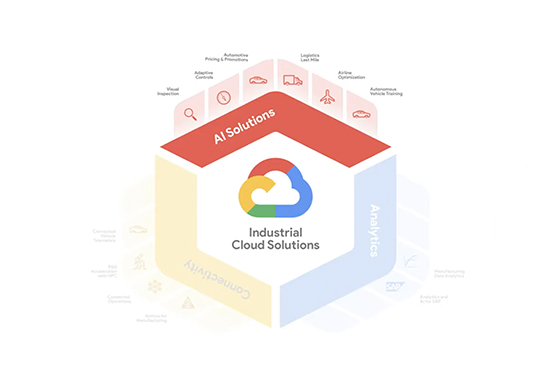
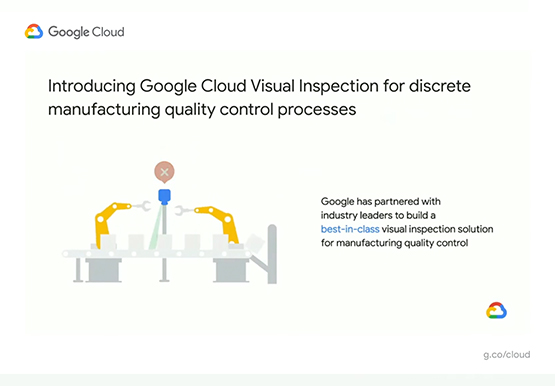
Google Cloud partners closely with manufacturing, industrial, and transportation organizations to drive business transformation. In this video, Mandeep Waraich, Head of Product - Industrial AI, Google Cloud, shares customer stories as well as Google Cloud’s differentiated AI products and solutions. Waraich covers the current state of automation and industrial efficiency
