





Cardinal Health Leads the Way in Healthcare App Modernization

2869
Of your peers have already read this article.
3:30 Minutes
The most insightful time you'll spend today!
Apps play a critical role in an ever-expanding range of healthcare services, as patients and providers increasingly expect streamlined, engaging digital experiences. This means that IT must become faster, more agile, and free from the constraints of everyday infrastructure management.
At Cardinal Health, we are continuously enhancing our technology to empower innovators across our organization as they strive to build connections across the continuum of care. Through our efforts, we have adopted a continuous integration and continuous delivery (CI/CD) pipeline that powers breakthroughs and drives innovation. Our CI/CID pipelines use a combination of Cloud Build for foundational elements, as well as our internal DevSecOps platform, NitroDX, to deploy our application workloads built on Google Cloud.
This CI/CD pipeline powered the development of our Pharmacy Marketing Advantage (PMA) Commerce, which was built from the ground up on Google Kubernetes Engine (GKE), to provide independent pharmacists with a digital platform that expands online shopping capabilities for patients by offering more than 11,000 over-the-counter products. We also replatformed our Order Express tool, which is a simple, reliable web ordering application for independent pharmacists, from on-prem to Google Compute Engine and GKE, which allowed us to shift from quarterly releases to weekly on-demand releases.
Our application teams work in close alignment with our product teams and handle everything from basic software updates to more advanced cloud-native app development. We place tremendous value on our ability to empower our application teams, and we invest in tools and technologies to make them as efficient and successful as possible.
As part of our efforts to optimize applications and deliver engaging digital experiences for our customers and their patients, we saw the value of rethinking our approach to storage and overall IT administration. Working with the NetApp Cloud Volume Service (CVS), a fully managed storage service, and Google Cloud, we fundamentally changed our IT capabilities.
Accelerating app development
As a cloud-first company, Cardinal Health has embraced a managed approach to IT provisioning in many areas. When we offload responsibilities like infrastructure maintenance, patching, and updates, we enable our developers to focus on continuous innovations that directly impact the quality of patient and provider experiences.
We’ve made measurable progress in automating our CI/CD pipelines to simplify provisioning Virtual Machines (VMs), managing firewall rules, launching Google Cloud projects, and more. Our NitroDx platform also significantly reduced development time from weeks to minutes, improving the software delivery process and accelerating digital transformation.
Google Cloud is our primary cloud services vendor and has removed much of the heavy lifting related to server provisioning, firmware patches, and similar tasks. We rely on a mix of Google Cloud services, including Compute Engine, GKE, BigQuery, and Vertex AI to deliver patient-centric solutions. We also work closely with partners like NetApp to improve our storage management at a much greater scale and more efficiently than we could do on our own.
By using a combination of NetApp and Google Cloud solutions, we’ve been able to decouple storage from our underlying infrastructure to make better use of our resources and accelerate app development. When running on-prem, shared storage proved to be a time and resource drain.
If an application needed shared storage in our legacy on-prem environment, we had to communicate the requirements to an engineer and create a change control. And even then, if all staff and funding were in place to support the change, it would take weeks to complete. This held up projects and delayed our time to market.
We quickly overcame this challenge with NetApp CVS. Through this tool, we can delegate permissions directly within a teams’ Google Cloud project, allowing them to administer their own shared volumes. This translates to on-demand shared storage without operational complexities or the need for dedicated teams to manage it.
We were an early adopter of NetApp CVS, and we’re happy to have made that decision. In addition to cost savings and faster time-to-market, we can now provide our staff with more professional development opportunities. The team members who made up the dedicated storage team now work across the cloud organization, focused on innovation and enablement rather than maintenance.
A stronger foundation for developers to stand on
We constantly work to fill gaps at any point in the developer experience. Containerizing our apps and deploying to GKE has been a major part of this process, driving efficiencies through consolidation and improving our processes to keep our operating systems patched, updated and maintained.
In the past, it was also difficult for us to get reproducible or CI/CD pipelines into our application spaces. Now, we make things easier for application teams as we can provide a CI/CD pipeline for the containers themselves, automating more of the underlying technology to keep developers moving forward.
As we shift more traditional virtual machine (VM) workloads into GKE and leverage NetApp CVS for shared storage, our developers can more easily plug into file-based services. This further accelerates app development and deployments and fuels a more easily managed, efficient CI/CD framework focused on value, not system maintenance.
Smart, data-driven decisions
We’ve been impressed by how quickly we can aggregate data, analyze it, and uncover insights with BigQuery, Vertex AI, and Dataproc — at a speed that would not have been possible without Google Cloud. Vertex AI pipelines helped us automate and standardize our ML operations so data scientists can focus on innovating code vs. managing deployments. This allowed us to make improvements in areas such as more accurately predicting market demand and providing more relevant product recommendations to our customers.
To date, Google Cloud has collaborated with us on many projects, giving us access to early-release products, listening to our needs, and applying our feedback to their product development. Likewise, NetApp continues to work closely with us to expand what is possible with NetApp CVS, particularly with the types of data we can store and the ability to manage it easily.
It’s an excellent partnership, and our work with Google Cloud and NetApp helps us redefine the possibilities of app modernization in healthcare. We can continue to push boundaries of speed, agility, and success of CI/CD pipelines. It’s exciting to see what we are accomplishing today and what we’ll do in the future to constantly improve our customer’s digital experience.
Learn how integrated solutions with NetApp on Google Cloud can help you unlock the full potential of your data.

4422
Of your peers have already downloaded this article
7:00 Minutes
The most insightful time you'll spend today!
Aspiration is easy, but execution is hard. Few concepts illustrate this as well as digital transformations.
Most businesses today are at some phase of their digital transformation journey. While some are evaluating strategies and solutions, many companies have already embarked on full-scale project implementations. However, one thing is clear. While most business and IT leaders aspire to revamp their businesses, executing a well-defined digital transformation strategy is extremely complicated. The hurdles are both cultural and technological.
This e-Book breaks down the process of creating a digital transformation strategy into ten core dimensions: platform, APIs, outside-in, ecosystem, leadership, funding, metrics, software development lifecycle, talent, and self-service. Read on to understand how companies like Walgreens, Ticketmaster, Magazine Luiza, AccuWeather, and Pitney Bowes, are successfully charting their digital transformation journey with the help of Apigee Compass and evolving their businesses.
3182
Of your peers have already watched this video.
6:00 Minutes
The most insightful time you'll spend today!
A Headless Ecommerce on Google Cloud
Headless commerce helps marketing teams gain flexibility to alter frontend elements to run marketing campaigns and promotions and create the most superior customer experience on frontend devices. Watch the video to learn the basics of building a headless commerce application on Google Cloud. Meaning you will learn to have the frontend experience deployed on Cloud Run in Google Cloud, and integrate with commerce backend from Google Cloud Marketplace offering partner commerce tools.
Bigbasket: Delivering Groceries Across 25 Cities in India

7321
Of your peers have already read this article.
1:30 Minutes
The most insightful time you'll spend today!
When Bigbasket was founded in December 2011, it guaranteed to deliver goods within a one-hour delivery slot of its customers’ choosing or it would refund them 10 percent of their orders. The company also introduced an express service, delivering groceries within 90 minutes of an order being placed.
Bigbasket needed a mapping platform that could help it meet its delivery times, and offer a familiar interface to customers. MediaAgility, a digital consulting company, recommended Google Maps Platform to Bigbasket.
When customers use the Bigbasket mobile app to place orders, they select their locations on a Google Map. The prices and availability of groceries varies according to location, so a customer’s location determines the cost of the order and what can be ordered.
Google Maps Platform Results
- Bigbasket handles more than one million orders per month, and delivers in more than two dozen cities in India
- Bigbasket now has more than four million customers
- Orders are delivered on time, increasing customer loyalty
It is also used to determine driver routes. Bigbasket used the Maps Javascript API to build a web-based app for the company’s backend that tracks all orders and delivery progress. Dispatchers use the Directions API to match drivers with orders and customers, and the Distance Matrix API to get estimate the time of arrival for deliveries. As dispatchers track the progress of deliveries on the map, they can tweak routes as necessary.
“We’ve built Bigbasket from the ground up using Google Maps Platform. It makes sure we have the right customer locations and deliver to them on time. We couldn’t have started Bigbasket without Google Maps. It helps us to be fast and efficient, and make sure our customers get what they’ve ordered quickly,” said Pramod Jajoo, Chief Technology Officer, Bigbasket
Announcing Apigee’s Pay-as-you-go pricing to provide flexibility and scale seamlessly

3166
Of your peers have already read this article.
2:30 Minutes
The most insightful time you'll spend today!
Apigee is Google Cloud’s API management platform that enables organizations to build, operate, manage and monetize their APIs. Customers from industries around the world trust Apigee to build and scale their API programs.
While some organizations operate with mature API-first strategies, others might still be working on a modernization strategy. Even within an organization, different teams often end up with diverse use cases and choices for API management. From our conversations with customers, we are increasingly hearing the need to align our capabilities and pricing with such varied workloads.
We’re excited to introduce a Pay-as-you-go pricing model to enable customers to unlock Apigee’s API management capabilities whilst retaining the flexibility to manage their own costs. Starting today, customers will have the option to use Apigee by paying only for what they are using. This new pricing model is offered as a complement to the existing Subscription plans (or) the ability to evaluate it for free.
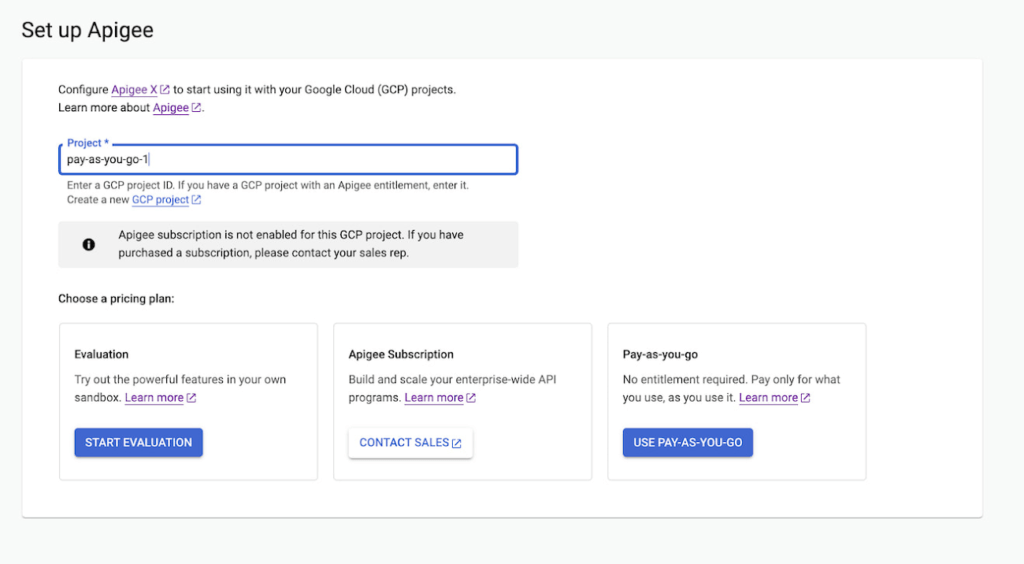
Start small, but powerful with Pay-as-you-go pricing
The new Pay-as-you-go pricing model offers flexibility for organizations to:
- Unlock the value of Apigee with no upfront commitment: Get up and running quickly without any upfront purchasing or commitment
- Maintain flexibility and control in costs: Adapt to ever-changing needs whilst maintaining low costs. You can continue to automatically scale with Pay-as-you-go or switch to Subscription tiers based on your usage
- Provide freedom to experiment: Every API management use case is different and with Pay-as-you-go you can experiment with new use cases by unlocking value provided by Apigee without a long term commitment
Pay-as-you-go pricing works just like the rest of your Google Cloud bills, allowing you to get started without any license commitment or upfront purchasing. As part of the Pay-as-you-go pricing model, you will only be charged based on your consumption of
- Apigee gateway nodes: You will be charged on your API traffic based on the number of Apigee gateway nodes (a unit of environment that processes API traffic) used per minute. Any nodes that you provision would be charged every minute and billed for a minimum of one minute.
- API analytics: You will be charged for the total number of API requests analyzed per month. API requests, whether they are successful or not, are processed by Apigee analytics. Analytics data is preserved for three months.
- Networking usage: You will be charged on the networking (such as IP address, network egress, forwarding rules etc.,) based on usage
When is Pay-as-you-go pricing right for me?
Apigee offers three different pricing models
- Evaluation plan to access Apigee’s capabilities at no cost for 60 days
- Subscription plans across Standard, Enterprise or Enterprise plus based on your predictable but high volume API needs
- Pay-as-you-go without any startup costs
Subscription plans are ideal for use cases with predictable workloads for a given time period, whereas Pay-as-you-go pricing is ideal if you are starting small with a high value workload. Here are a few use cases where organizations would choose Pay-as-you-go if they want to:
- Establish usage patterns before choosing a Subscription model
- Evolve their API program by starting with high value and low volume API use cases
- Manage and protect your applications build on Google cloud infrastructure
- Migrate or modernize your services gradually without disruption
Next steps
Every organization is increasingly relying on APIs to build new applications, adopt modern architectures or create new experiences. In such transformation journeys, Apigee’s Pay-as-you-go pricing will provide flexibility for organizations to start small and scale seamlessly with their API management needs.
- To get started with Apigee’s Pay-as-you-go pricing go to console or try it for free here
Check out our documentation and pricing calculator for further details on Apigee’s Pay-as-you-go pricing for API management. For comparison and other information, take a look at our pricing page.
Google Launches Product Locator and Gives Store Locator Plus an Upgrade to Expand Retail Offerings

5851
Of your peers have already read this article.
1:30 Minutes
The most insightful time you'll spend today!
We all experienced, first hand, how Covid-19 has impacted the world and our communities. Last year, store closures, reduced hours, and social-distancing requirements drove people to adopt more e-commerce options, which, according to eMarketer, grew 27.6% worldwide in 2020. Meanwhile, consumer desires to shop locally also grew with Google searches for “____ near me” up 100% year over year,1 and 1 in 3 consumers having tried curbside pickup over the last year.2
As countries begin to lift Covid-19 restrictions, businesses are looking toward a post-pandemic future and asking ‘Which of these shopping trends will stick and how should I adapt?’ At Google, we expect consumers to continue demanding helpful shopping experiences that blur the line between the physical retail and digital experience, as well as help them to continue shopping locally.3 To address these changes in shopper behavior, we refreshed our retail solutions—adding a new solution, Product Locator, and updating Store Locator Plus—to help you offer the best possible online-to-offline experience and drive shoppers to your stores.
Introducing Product Locator solution: connecting online shopping to nearby stores
Under Covid restrictions, consumers have grown accustomed to having a myriad of shopping options, from curbside pickup to same-day delivery. Increased searches for ‘along my route’ and ‘in stock’ tell us that convenience is king for today’s consumer.4 Retailers can increase online conversion rates and drive store visits by including product availability and pick-up options on each of their product description pages (PDP); emphasizing the speed and convenience of these options and saving on significant shipping costs.
Our newest retail solution, Product Locator, can further help drive customers to visit by showing the exact distance stores are to the shopper and even estimated driving time, to further highlight the convenience of a store visit. A study conducted by Shopify found that showcasing local inventory boosted key store metrics including 45% of local pickup who made an additional purchase upon arrival.5 See the Product Locator solution guide to get started today.
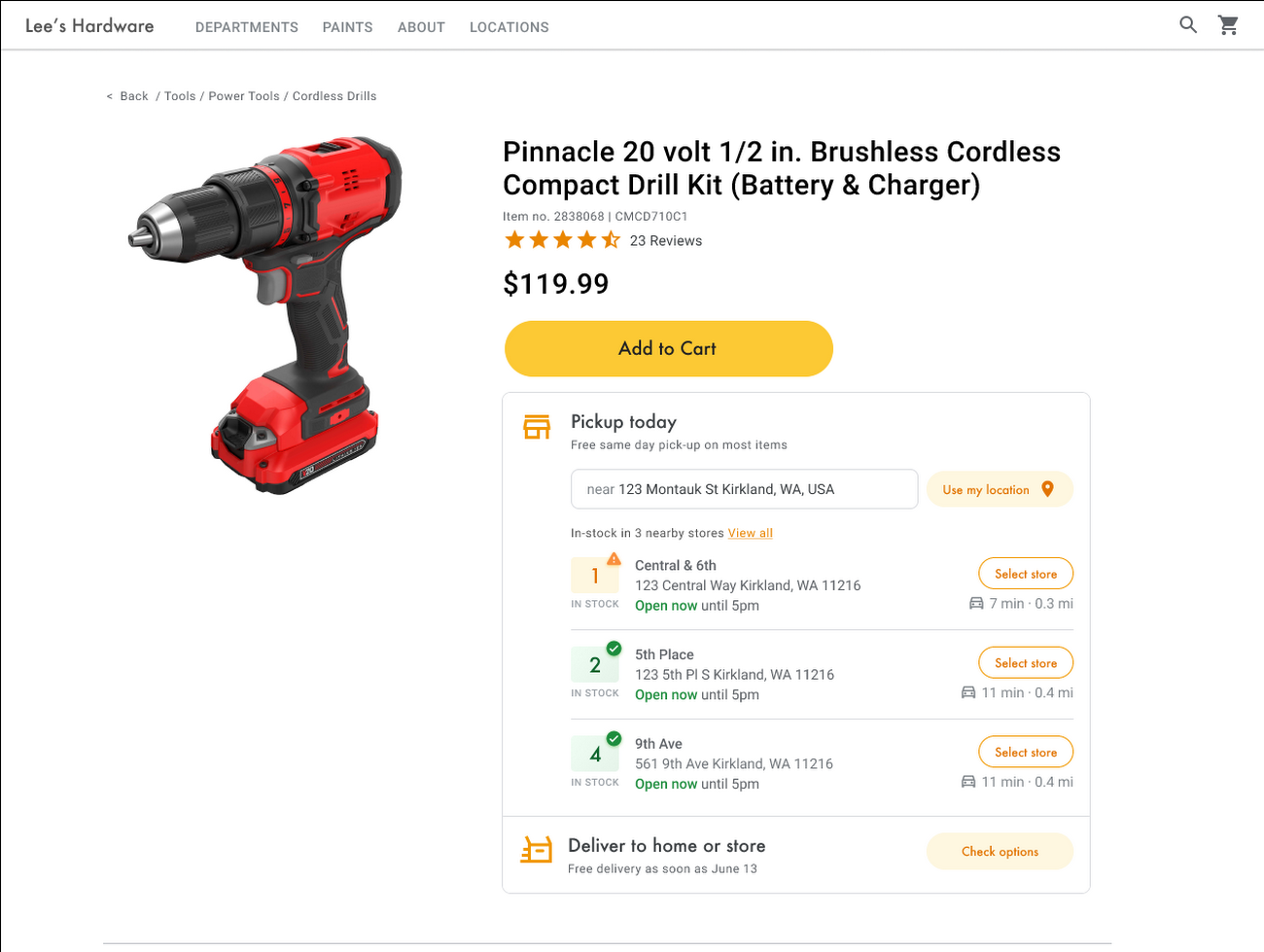
Update your store locator page to address more of shoppers’ needs
Store locators allow shoppers to more easily find your stores and can be made even more helpful with our Store Locator Plus solution. Our updated Store Locator Plus solution refreshes the store locator page to be more informative and engaging by integrating offers redeemable in-store, online scheduling for appointments and services, and text me directions services. Implement Store Locator Plus today using the guide.
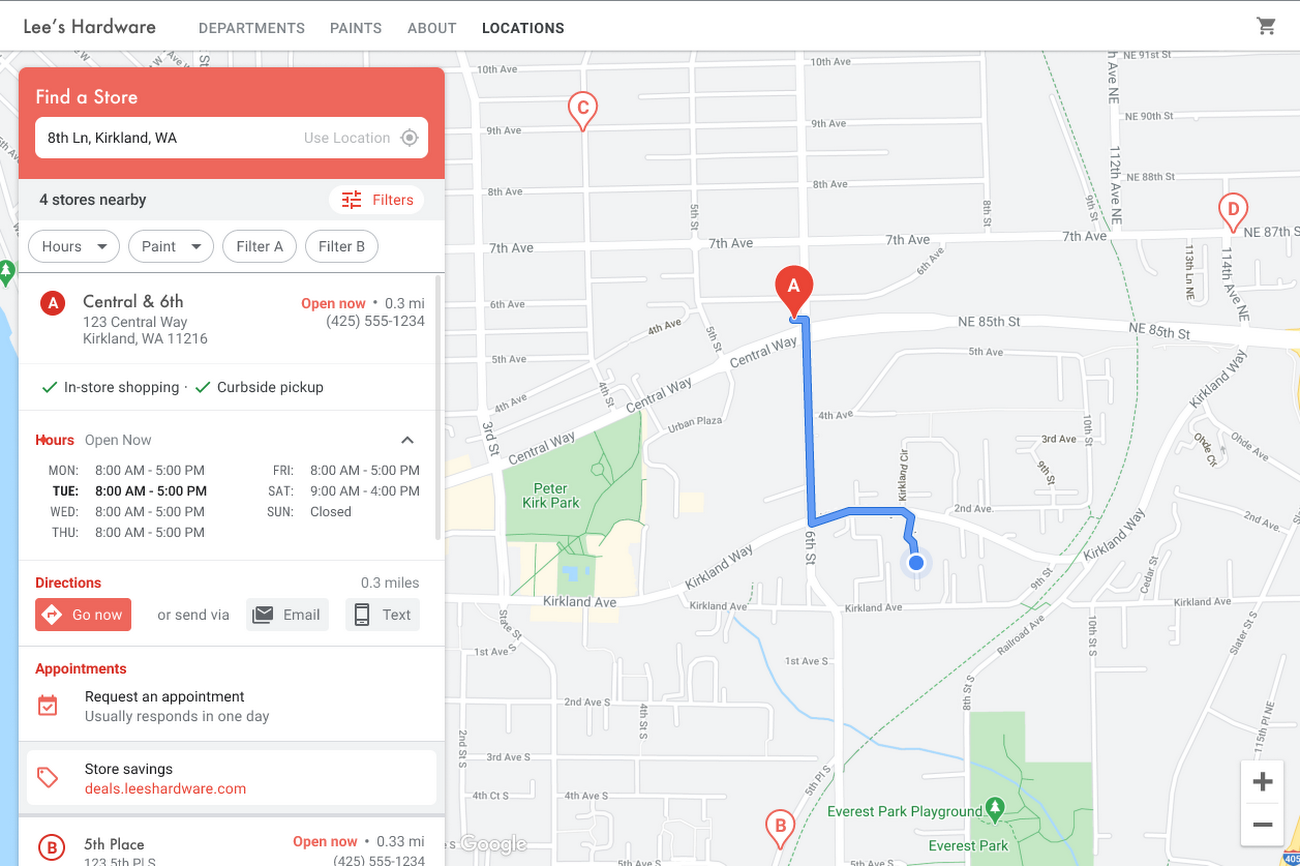
Build and customize Store Locator Plus for your business in minutes
At Google Maps Platform, we are always thinking of ways to make building a map easier and faster for our customers. In May at I/O we made Cloud-based Maps Styling generally available, enabling map updates to happen without touching a line of code. Today we’re excited to introduce Quick Builder, our free, low code builder which allows you to demo, customize and build a version of the Store Locator Plus solution for your website in minutes. Experience Quick Builder today.
To learn more about how you can start adopting these retail solutions, visit our retail solutions page.
For more information on Google Maps Platform, visit our website.
1 Global Insights Briefing: Getting back out there
2 https://www.shopify.com/pos/future-of-retail-2021
3 https://www.thinkwithgoogle.com/future-of-marketing/digital-transformation/covid-trends-1-year/
4 https://www.thinkwithgoogle.com/consumer-insights/consumer-trends/pandemic-shopping-behavior/
5 https://www.shopify.com/pos/future-of-retail-2021
More Relevant Stories for Your Company
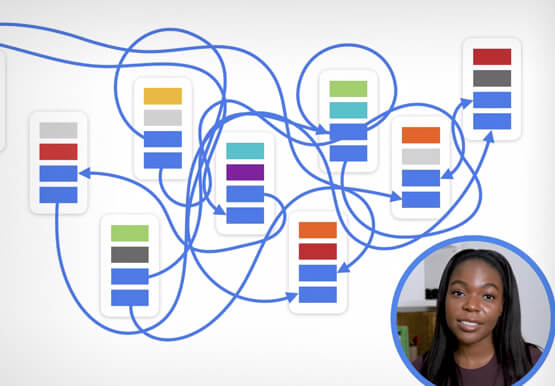


Application Development with Kpt
Learn how to create and customize configuration packages with Kpt to build applications and adhere to configuration-as-data philosophy.

Custom Voice Feature Can Help Brands Tweak IVR for Better Customer Experiences
With the rise of digital assistants and conversational interfaces, people have grown accustomed to hearing and speaking to synthetic voices. But what do those voices sound like? Often, pretty repetitive. We’re all familiar with the Google Assistant voice, for example. That’s why we are excited to announce the general availability
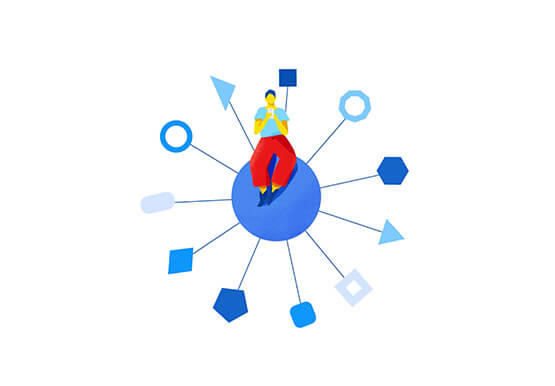
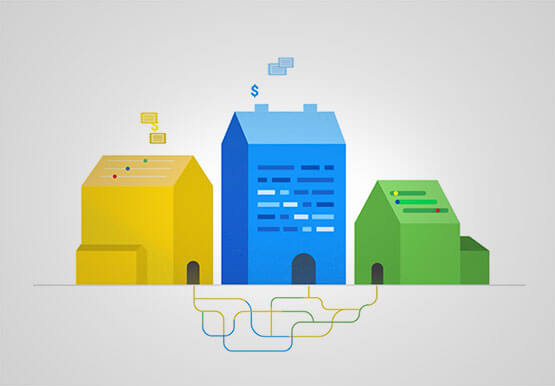

Leveraging APIs to Deliver Connected Customer Experiences
What does the connected customer experience even mean? It's not just about a checklist of assets like website and mobile but how those channels seamlessly work together with the physical world to give your customer great experiences with your brand. Modern APIs enable companies to mask back-end complexities behind a


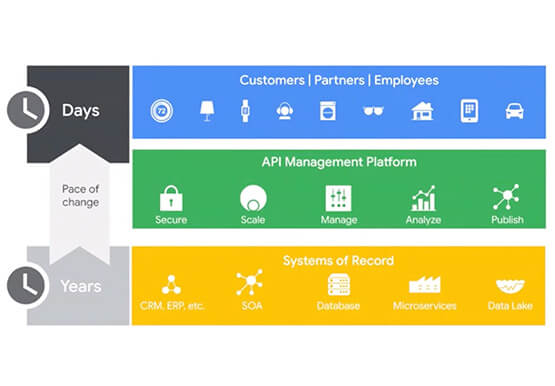
Booking.com’s Apigee Hybrid on Anthos is the Largest Hybrid Deployment Ever
Apigee API Management Platform helps unlock the value of data in legacy systems and applications to accelerate end-user/customer experience by modernizing apps and building multi-cloud environments. With Apigee Hybrid on Anthos, a service mesh technology, Booking.com was able to achieve its goal of providing customers a connected trip experience. Watch
