






3945
Of your peers have already downloaded this article
4:30 Minutes
The most insightful time you'll spend today!
Know Your Org’s Carbon Emission Per Workload with Active Assist
3438
Of your peers have already read this article.
3:00 Minutes
The most insightful time you'll spend today!
Last year, we analyzed the aggregate data from all customers across Google Cloud, and found over 600,000 gross kgCO2e in seemingly idle projects that could be cleaned up or reclaimed — which would have a similar impact to planting almost 10,000 trees1. Today, we’re making it easy for you to identify if any of those idle workloads are yours, with new Active Assist sustainability recommendations.
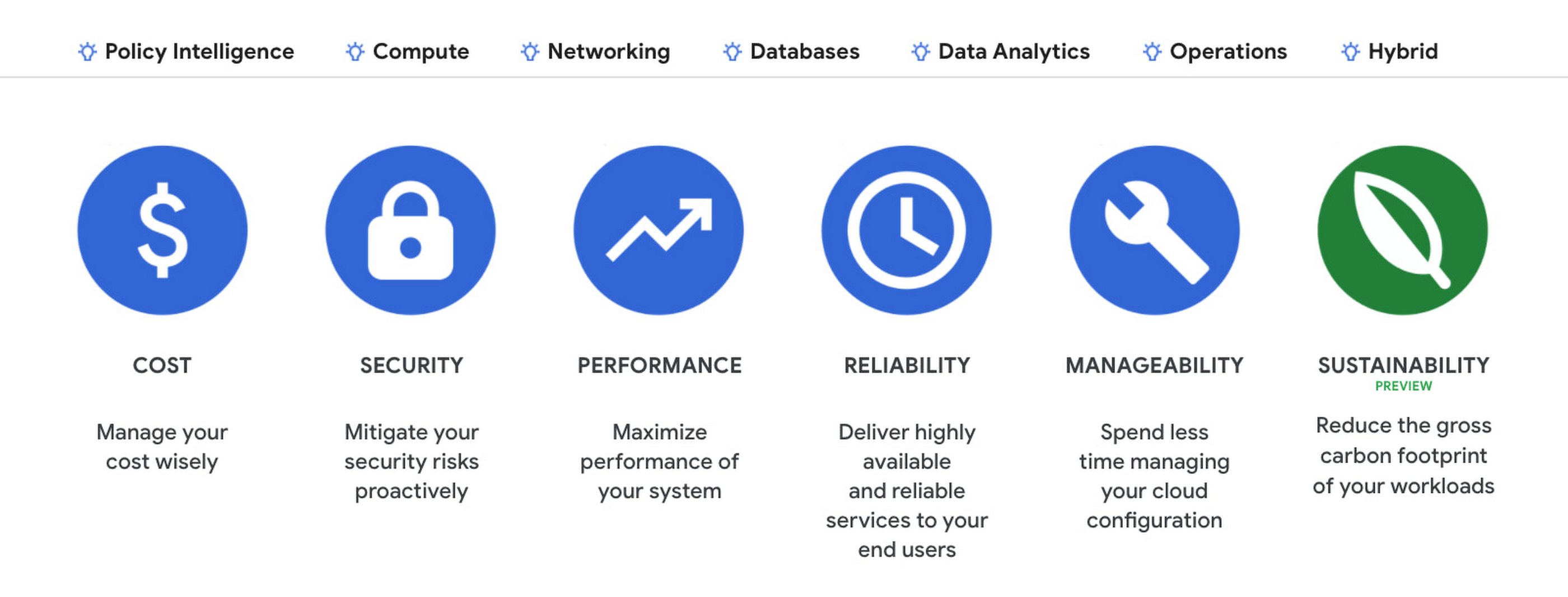
Active Assist is a part of Google Cloud’s AIOps solution that uses data, intelligence, and machine learning to reduce cloud complexity and administrative toil. Under the Active Assist portfolio, we have products and tools like Policy Intelligence, Network Intelligence Center, Predictive Autoscaler, and a collection of Recommendations for various Google Cloud services — all focused on helping you achieve your operational goals. Today, we are broadening the scope of Active Assist to help you achieve your sustainability targets and reduce the carbon footprint of your workloads.
The carbon emissions associated with your cloud infrastructure can be a big part of your overall environmental footprint. Choosing to run on Google Cloud is a great first step — we’ve matched the energy used by our data centers with 100% renewable energy since 2017, and are committed to running our operations on carbon-free energy 24/7 by 2030. But once you’re running on Google Cloud, if you want to reduce the gross carbon emissions of your workload you can take action to optimize your usage.
Assessing the gross carbon impact of unattended projects
You can now estimate the gross carbon emissions you’ll save by removing these idle projects with Active Assist Unattended Project Recommender, which provides rich utilization insights for all the projects in your organization, and uses machine learning to identify ones that are idle and most likely unattended. The data points Active Assist surfaces as a part of its utilization insights now include the carbonFootprintDailyKgCO2 field, which allows you to estimate carbon emissions associated with any given project. Recommendations also estimate the impact of removing an idle project in terms of kilograms of CO2 reduced per month. The capability is available via the Recommender API, Recommendation Hub, the Carbon Footprint dashboard, and BigQuery export of recommendations, making it easy for you to integrate with your company’s existing tools and workflows.

Introducing the Carbon Sense suite
Increasing the sustainability of digital applications and infrastructure is a priority for 90% of global IT leaders2, and we’ll be continuing to invest across a number of product areas in Google Cloud, including AIOps features like Active Assist’s recommendations, to help you make progress towards your sustainability goals. To make it easy for you to find and consume these new features, we’re bundling our existing and future product work into the Carbon Sense suite — a collection of features that makes it easy to accurately report your carbon emissions, and reduce them. Active Assist joins products like Carbon Footprint, which provides you with the ability to understand and measure the gross carbon emissions of your Google Cloud usage, and our low-carbon signals, which help users choose cleaner regions to run their workloads, in the Carbon Sense suite. Stay tuned for more updates on Carbon Sense in the coming months.
Getting started with sustainability recommendations
To get started with Active Assist sustainability recommendations, check the Carbon Footprint dashboard and Recommendation Hub to review projects that may be idle and assess the carbon emissions associated with them. See recommendations in Google Cloud Console.
To view the recommendations, you will need IAM permissions for Unattended Project Recommender itself and permissions to view resources in a given organization.
You can also automatically export the recommendations from your Organization to BigQuery and then investigate any idle projects with DataStudio or Looker. Or, you can use Connected Sheets to use Google Workspace Sheets to interact with the data stored in BigQuery without having to write SQL queries.
As with any other Recommender, you can choose to opt out of data processing for your organization or your projects at any time by disabling the appropriate data groups in the Transparency & Control tab under Privacy & Security settings.
We hope you use Unattended Project Recommender to reduce the carbon footprint associated with your idle cloud resources, and can’t wait to hear your feedback and thoughts about this feature! Please feel free to reach us at active-assist-feedback@google.com. We also invite you to sign up for our Active Assist Trusted Tester Group if you would like to get early access to new features as they are developed.
1. https://www.epa.gov/energy/greenhouse-gas-equivalencies-calculator
2. https://inthecloud.withgoogle.com/it-leaders-research-21/sustainability-dl-cd.html
Casper on Google Cloud: Revolutionizing Web3 Development with Flexibility & Security

1432
Of your peers have already read this article.
1:30 Minutes
The most insightful time you'll spend today!
Casper Labs announced a collaboration with Google Cloud that will allow developers to launch public and/or private Casper nodes directly from Google Cloud. This enables a much more seamless and highly secure process for the millions of developers who want to build in blockchain environments without having to learn new, highly specialized programming languages. Additionally, Google Cloud will provide its scalable and reliable infrastructure to developers building on the Casper Protocol.
Blockchain technology is maturing
As blockchain technology matures, a growing number of businesses are embracing it as a key way to drive new efficiencies and realize cost savings.
According to a recent Casper Labs study, 87% of executives polled in the United States, United Kingdom and China reported plans to invest in a blockchain solution in 2023. This is due in no small part due to recent innovations that help organizations overcome the so-called Blockchain Adoption Trilemma, which previously held that it was impossible for any blockchain to be simultaneously a) decentralized, b) scalable, and c) secure.
Thanks to the rise of proof-of-stake blockchains like Casper, new models have emerged that enable a more scalable and secure architecture that no longer forces a compromise on decentralization.
Another trend facilitating these growing adoption rates is the rise of WebAssembly (WASM) as a baseline technology for newer blockchains, including Casper. WASM (created by W3C) makes application development in blockchain environments far more accessible and interoperable to the millions of developers worldwide who specialize in languages like Java, Javascript, C++ and Rust. Previously, any blockchain-based build required a high degree of specialized developer knowledge, which made it a much more challenging option for most organizations.
Meet Casper
Casper is a permissionless, decentralized public blockchain based on WASM that was built explicitly to foster enterprise adoption of blockchain technology. Beyond its more accessible model, Casper is the first and only blockchain to offer native upgradable smart contracts. This means that organizations can have the option to securely and consistently update software code even after it is running on Casper. This gives organizations the control and flexibility to use industry best practices, such as continuous deployment and continuous integration, which are already in use in their IT departments. Casper is also highly configurable and allows organizations to support public, private, and/or hybrid deployments.
Casper is also noteworthy for the presence of Casper Labs, a software development and professional services firm that supports organizations building on the Casper network. Unlike most blockchains that follow a more traditional open-source project, Casper Labs provides around-the-clock support and bespoke software development for enterprise organizations. Recently, Casper Labs helped patent management company IPwe execute the largest-ever blockchain deployment, featuring more than 25 million patents being added as custom NFTs to the Casper Blockchain.
How to get started with Casper on Google Cloud
Developers who want to start building on Casper can find a comprehensive series of tutorials here.
The Casper Association also recently announced a $25 million grant program to support projects and developers building on Casper. Interested participants can apply here.
How the City of Memphis Uses Technology to Identify 75 Percent More Potholes

7135
Of your peers have already read this article.
4:30 Minutes
The most insightful time you'll spend today!
At 340 square miles, the City of Memphis is among the largest in the United States in terms of land area. Memphis has over 6,800 lane-miles of city streets, enough to drive back and forth to Los Angeles four times. Keeping these streets well maintained and safe for citizens and visitors is a major priority for the city.
Lots of traffic, lots of roads, and a four-season climate prone to wintertime freeze-thaw-refreeze cycles means the opportunity for potholes. Although the city aims to fill potholes within five business days of notification, it can take longer, especially during winter and early spring. Last year, the city’s Public Works crews repaired some 63,000 potholes, only 20% of which were reported by residents. Approximately 32,000-man-hours each year are spent repairing potholes, with seasonal fluctuations requiring ten to twelve Street Maintenance crews working steadily during the winter months. Still, many went unreported, leading the city to flag pothole request resolution under “needs improvement” on its open data portal website.
Like many large cities, Memphis also struggles with vacant and blighted properties. Nearly 15,000 properties in Memphis are likely vacant, and city officials contend that many are owned by out-of-town investors who live elsewhere and do not take necessary restoration or maintenance steps. These properties can decrease the value of surrounding real estate and discourage new businesses and other residents from moving to an area. Citizen frustration and concerns over the number of blighted properties has made blight eradication a major focus of the City of Memphis.
Historically, residents reported potholes and blighted properties by calling 311, or more recently by using the Memphis 311 app. However, these reports only covered about 20 percent of the problems — often the worst cases. And by the time residents took the initiative to submit a 311 report, they usually weren’t feeling good about the situation.
Recognizing that potholes and vacant properties are often the most visible indicators of whether a city government is doing its job efficiently, Memphis Mayor Jim Strickland and CIO Mike Rodriguez began looking for ways they could apply technology to fix the problems. Mike approached Google for ideas, and Google recommended conducting a machine learning proof-of-concept (POC) with SpringML, a Google Cloud Partner.
“Memphis is focused on easy living, and we want to do everything we can to keep our citizens happy,” says Mike Rodriguez. “Working with Google and SpringML to reduce potholes and urban blight using machine learning and artificial intelligence was an easy decision.”
Bringing machine learning to city operations and budgets
The city’s goal is to detect potholes and abandoned properties by analyzing video footage of roads and residential properties. It wanted to classify potholes by width and depth, and share the information with workers who can repair them. For abandoned properties, it wanted to enable more strategic deployment of resources for homeowners citywide and take action to hold neglectful property owners accountable.
The POC began by training TensorFlow models for ML object detection using preconfigured AI Platform Deep Learning VM Images on Compute Engine. SpringML helped set up cameras and developed a user interface to collect pothole data and automate the 311 ticketing process.
Together, the teams analyzed 30 days of video from a moving city bus and high-resolution video from 360-degree cameras mounted to a code enforcement vehicle, overlaid with data from 311 reports. As the models were refined, accuracy quickly climbed from 50 percent to over 90 percent as models were taught to differentiate a pothole from a manhole cover or other object.
The city also imported routes, potholes, and paving data along with geolocation data from ArcGIS and Google Maps into BigQuery to better understand street conditions and the proximity of potholes to one another. BigQuery also analyzes city property records, tax records, 311 reports, and third-party survey data on-demand to predict where homes are starting to become run down and where neighborhood decay is most likely to occur. The SpringML team created a pilot analysis to begin vacant property protections and developed a user interface tool to interact with the model’s results.
“Google Cloud Platform made it possible for us to experiment with machine learning and artificial intelligence to help solve our city’s problems while working within the budget constraints of a municipal IT organization,” says Mike. “Google turned a ‘nice to have’ into a ‘let’s do this!'”
Identifying 75 percent more potholes
Memphis expects to substantially reduce the number of potholes on its streets, creating a better driving experience for residents and visitors alike. Because drivers won’t be as likely to swerve to miss a pothole, streets will be safer and friendlier to bicycles and scooters. Fewer potholes will also save the city between $10,000 and $20,000 annually in city claims that it pays out in cases where vehicle damage results from a pothole that was not addressed in a timely manner.
“Historically, Public Works has relied primarily upon Street Maintenance crews to proactively locate and fill potholes. As Memphis has over 6,800 lane-miles of public streets, it is a daunting task to reliably survey the entire system in an efficient and systematic way,” says Robert Knecht, Public Works Director for the City of Memphis. “The outcome of the data collected will be invaluable to Public Works so that it can ensure it is managing the city’s street system in a more proactive manner.”
Memphis will be able to better prioritize road maintenance based on condition and impact, increasing the efficiency of its Public Works road crews. Analyzing video of streets also gave the city visibility into issues it wasn’t previously aware of, such as curbs, gutters, and manhole covers that had been mistakenly paved over and need to be excavated. The ML process is easily transferrable to other concerns as well, helping the city identify illegal signs or spools of cable hanging on light posts that could be potentially unsafe.
Helping communities recover and thrive
Memphis is also having success in analyzing predictive trends to combat high rates of abandoned and blighted properties, surpassing 97.5 percent accuracy. “In the past, Public Works experimented with comprehensive, city-wide blight identification by using approximately 200 volunteers to survey and photograph over 237,000 city parcels. This effort was costly, took a long time to complete, and resulted in inconsistent data collection,” says Robert. “Blighted property conditions can change quickly in a city the size of Memphis. Now, with this new technology, Memphis will be able to make a significant difference in the efforts to proactively and comprehensively identify and manage blighted and substandard properties.”
Code Enforcement with better data-driven detection mechanisms enables the city to also identify cases where homeowners are not physically or financially able to keep up with the challenges of homeownership and make them aware of resources that are available to assist them. Memphis Code Enforcement can do a better job of finding people living in derelict properties that pose hazards to inhabitants’ health and safety, and help them fix those problems or find a new place to live.
“Using SpringML and Google Cloud Platform to detect indicators of vacant or blighted properties will help Memphis create safer neighborhoods that will be more attractive to businesses and home buyers,” says Mike. “Property values and employment will go up, crime will go down, and social services can be more focused and effective.”
Revolutionizing service delivery for citizens
Memphis is proving the viability of a cost-effective, cloud-based machine learning model that other cities can follow. The city is already looking into new applications of AI and ML that will further improve city services and help it build a better future for its 652,000 residents.
As part of his commitment to a transparent government, Memphis Mayor Jim Strickland created an open data policy that commits to releasing raw data and sharing it with citizens in a variety of downloadable formats. Going forward, this transparency will help citizens understand how their needs are being served and uncover new, innovative use cases for AI and ML.
“Our goal is to become a smart city, and technologies such as Google Cloud Platform and SpringML put us ahead of the game,” says Mayor Strickland. “Google understands data, and there isn’t a better company to help us analyze our data resources for actionable insights.”
Google Cloud & Optiva Partnership Cements the Future of Telecom for Driving Strong Customer Experience

3178
Of your peers have already read this article.
3:00 Minutes
The most insightful time you'll spend today!
Editor’s note: Coming out of Mobile World Congress 2022, we are excited to share key learnings from our partner ecosystem on how to leverage advancements in 5G technologies to power customer experiences that seamlessly blend our physical and virtual world into one. The original version of this blog was published by Optiva, Inc. Please enjoy this updated entry from our partner.
Telecom operators and communications service providers (CSPs) are elevating customer experiences (CX) across the customer lifecycle. Today’s digital customers’ expectations, needs, usage behaviors and choices are growing and evolving exponentially. Therefore, it is critical to deliver superior and personalized digital customer experiences at each customer lifecycle touchpoint.
To succeed, you need to deliver a dynamic customer experience. Operators are embracing the mantra — next-level CX is the new currency — from onboarding and instant offer provisioning to delivering enhanced self service and supporting subscription renewals, queries and billing actions, and in-session improved experiences. There are commercial benefits to adapting to this paradigm, too, as key customer segments may see added value in enhanced experiences. With 5G, the Ericsson “5G consumer potential” report found that half of early adopters would be willing to pay 32% more for 5G services. Consider the advanced experiences that 5G is able to support, such as:
- Low-latency connectivity and real-time network slicing capabilities, delivering an immersive yet reliable augmented and virtual reality (AR/VR) experience. Imagine a soccer match with a rich 360-degree stadium experience from the customer’s choice of location that immerses a fan in the game excitement.
- AI-driven insights enabling operators to predict customer behavior patterns in real time and leveraging available network capacity to provide customers with personalized, just-in-time discounts and offers that can increase ARPU, enhance the customer experience and reduce churn.
- Proactive action, such as instantly optimizing 5G connectivity network slice bandwidth when the quality of service does not meet its promised level. This could include delivering assured, lag-free network performance to an online gamer for next-level gaming intensity or it could be about providing proactive, transparent reimbursements to end customers on the fly, preventing dissatisfaction complaints. Further, 5G with dedicated network slices also enables business applications that exceed an end-to-end SLA essential to a business-to-business (B2B) subscriber.
- Enabling immersive experiences across all services and touchpoints by redefining how consumers interact with offerings from anywhere, whether that’s a smartphone or tablet. What’s more, it’s about feeding intelligence gleaned from those customer interactions into a single view across all ecosystems in real time to gain a full picture of the customer.
How cloud shapes the future of telecom customer experience
Through cloud technology and cloud-native architectures, telecom operators and service providers have the opportunity to deliver such 5G use cases and differentiated offerings. Cloud maximizes the benefits and enables delivery, thereby dramatically improving and reimagining the possibilities for CX. This includes how customers connect, consume and buy services, and it strengthens customer affinity and loyalty.
Cloud and the technologies it maximizes, such as 5G, also present a wide range of innovative monetization opportunities beyond traditional telecom revenue streams and beyond connectivity. Thus, the highest priority for telecom must be on effectively and efficiently harnessing the potential capabilities for launching personalized service offerings for consumer and enterprise at a high velocity. As a result, the new customer engagement model requires agility, responsiveness and reliability to deliver these services across all touchpoints of the customer’s journey.
As such, Optiva and Google Cloud are engaging in a multi-year partnership to help CSPs enable faster time to innovation, flexible 5G monetization and operational cost savings, while driving strong customer experience. Leveraging the Google Cloud platform enabled by Anthos, which supports the deployment and operation of business support system (BSS) applications across public clouds, on-premises data centers and at the network edge, Optiva’s distributed solution deployment offers telecom operators new ways to monetize 5G networks through use cases such as private 5G, IoT and ultra-low latency edge solutions.
Gaining a competitive edge on the new playing field
The solution to these new BSS and monetization requirements lies in the cloud’s unique advantages. For example, to achieve agility, an essential cloud tool, the sandbox, allows operators to accelerate iterations to find optimal solutions. The sandbox shortens product cycles to a fraction of traditional timelines and empowers operators to reinvent their functionalities and service capabilities — lowering business risk and driving dramatic cost savings.
As a result, operators can increasingly explore, experiment, learn, launch and relaunch rapidly. This allows for the fast introduction of new and differentiated offerings, increased service velocity and cost-effective go-to-market opportunities. For that reason, a new competitive playing field is emerging and making the days of traditional and full digital transformations a thing of the past.
Instead, by leveraging cloud technologies, customer lifecycle opportunities and possibilities are born, such as:
- End-to-end digital onboarding experiences: Hassle-free digital customer onboarding in little time by leveraging next-gen BSS with embedded automation across the different modules. This digitizes the customer registration and ordering process, including customer verification, SIM allocation, and the selection and activation of a user’s choice of plans and more.
- Real-time offer optimization based on customer insights: On-the-fly optimization of offers based on AI-driven real-time insights to predict usage behavior.
- Handling ultra-low latency service quality with distributed systems: Delivering and charging for ultra-fast services from the edge rather than sending and processing them at a central cloud. This enables new business opportunities by leveraging new private 5G offerings.
- Assured service quality and complaint reduction through automated real-time network configuration: By consistently monitoring the network quality and application and taking corrective actions to match the SLA requirements, we can boost the user experience (e.g., if a user subscribes to an 8K video plan). Thus, if the bandwidth level drops below the agreed-upon resolution level, the service can push an update to the user and potentially offer them a complimentary added data bundle leveraging analytics, churn prediction models and insights.
- Maintaining a real-time single source of truth for customer data: Having a single, distributed repository of real-time updated customer data allows CSPs to deliver customer services more smoothly across all touchpoints.
- Expanding product catalog with a partner ecosystem: Leveraging open APIs to build and expand partner ecosystems to launch new products and services that enable CSPs to expand the services they provide customers and help increase their market relevance.
Cloud momentum accelerates, enabling revolutionized BSS and revenue models
Service providers are forging their paths and investing in and adopting cloud technologies. Cloud empowers operators beyond connectivity and volume offerings on data, text and voice. The technology offers more and unlocks the operator’s ability to meet specific user segment experience requirements in real time and differentiate offerings based on latency, capacity, throughput, speed and device type.
As a result, operators can shift to new product-driven monetization capabilities, allowing them to configure their BSS without heavy customizations or necessitating the expertise of their IT teams. Instead, they can now empower, for example, marketing teams — with minimal steps and product-specific expertise needed — to optimize rate plans in real time based on usage and experience analytics, roll out promotions and satisfy customer demand for a delightful experience.
The new currency across the customer lifecycle — next-level telecom BSS and CX
Operators need the capability to learn fast, fail fast, launch, and relaunch in quick cycles. This capability is growing more critical as Capex and Opex become challenged and protecting ARPU and increasing subscribers becomes harder in a cloud economy. Telecom operators are picking up speed for cloudification and reimagining the potential of their BSS systems. And with 5G, innovation driven by cloud-native capabilities and automation via machine learning, operators have a genuine opportunity to revolutionize customer engagement and deliver a next-level hyper-personalized CX — the new currency of 5G cloud.
Why Moving SAP Workloads to Google Cloud is Beneficial for the Consumer Goods Industry

3638
Of your peers have already read this article.
3:00 Minutes
The most insightful time you'll spend today!
Even before the COVID-19 pandemic struck, the consumer packaged goods (CPG) industry was facing disruption. Consumers have come to expect personalized and seamless experiences at every point in their relationship with a brand. Additionally, consumers are expecting CPG brands to meet rising standards for sustainability, social responsibility, and transparency. Business models are shifting as well. Direct-to-consumer and subscription models have been gaining ground on traditional business models. Add in the CPG industry’s ever-present pressure for wider profit margins and the effects of the global pandemic, and you get a perfect storm of disruption.
Leading CPG companies are responding to these changes by capitalizing on the potential of emerging technologies and leveraging the power of the cloud to create digital enterprises. In doing so, they can unlock value through reduced operational costs, faster innovation, improved marketing ROI, and greater transparency and sustainability—among other benefits. For businesses that run on SAP, accessing these benefits requires creating a digital enterprise with SAP at its heart.
What CPG can expect from SAP on Google Cloud
SAP drives core business processes across most enterprise functions in CPG companies, and modernizing these operations is step one in unlocking next-level data and analytics capabilities. Creating a digital enterprise with SAP at the core requires establishing a digital foundation on a cloud platform capable of supporting and optimizing SAP workloads well into the future. From there, CPG companies can leverage the combination of SAP data and additional data signals to support high-value use cases utilizing the advanced analytics capabilities of the cloud
For CPG companies, running a successful digital enterprise in this climate depends on the power of the cloud because of the unmatched agility, security, scale, and flexibility offered by cloud technologies. More and more, consumer brands are turning to Google Cloud to host their applications—including core enterprise applications such as SAP—to drive business agility and maximize the value of data through smart analytics and machine learning. Google Cloud establishes a digital foundation for SAP customers by simplifying SAP deployments and offering a suite of applications that integrates with and enhances SAP functionality. A Forrester study on the total economic value of Google Cloud for SAP customers found an average payback of less than six months and a total ROI of over 160%. By turning to Google Cloud to run their SAP systems, companies are able to:
- Maximize insights
CPG enterprise data is often fragmented across disparate systems. Google’s analytics tools including BigQuery and Looker allow businesses to connect customer, operational and business data at scale by unifying data from SAP systems with other Google data signals such as Ads, Maps, Shopping or Google Marketing Platform. This precious data is fully democratized, allowing for complex queries to be completed rapidly so companies can uncover and analyze insights and create an end-to-end view of the consumer and the business. - Create an intelligent organization
Google’s AI and machine learning capabilities allow businesses to create built-in intelligence. Instead of reacting to trends, they can accurately predict them. For marketing teams, this could be the ability to evaluate promotions and effectiveness of marketing spend. For forecasting, product quantities and restock timing can be better planned. Supply chain optimization can include external data sources to closely monitor inventory and eliminate stock outs. - Future-proof your business
Running SAP systems on Google Cloud creates an agile, secure and highly available environment that scales quickly as a business grows and as the CPG market evolves. A recent study conducted by IDC showed that SAP on Google Cloud deployments resulted in a 46% lower three-year cost of operations with 83% less frequent unplanned downtime and 56% more efficient IT teams. This frees IT resources to drive innovation and customer centricity. - Deliver on sustainability
Around the globe, consumers are becoming more and more demanding regarding sustainability. The impact of climate change and the abundance of plastic waste is only fueling this trend. Consumers are leaning into social signalling, and CPG companies are taking note. Sustainable IT is step #1, significantly advanced by moving applications to Google Cloud, the cleanest cloud in the industry. We’ve neutralized all of our carbon emissions since our founding in 1998 and matched 100% of our electricity consumption with renewable energy purchases since 2017. Google Cloud allows SAP enterprises to further drive sustainability compliance and business objectives with AI and ML tools that can drive down waste and provide real-time decision making power to support proactive green initiatives.
Rémy Cointreau is in high spirits after deploying SAP in the Google Cloud
Rémy Cointreau, a family-owned international maker of fine spirits, has products that can take up to one-hundred years to produce. But this long production cycle presents some unique challenges in today’s hyper-competitive premium beverage brands market. Since 1724, the company has been consumed with putting its customers first. In 2020, the company realized it was failing to capitalize on the benefits that the cloud can provide and began searching for a business partner that could help with this transformation.
Rémy Cointreau made the move to Google Cloud for many reasons. First, the company could connect its SAP backbone to key SaaS applications like Salesforce. This enabled the creation of a 360-view of data among its ecommerce platform, SAP, and Salesforce to deliver sophisticated customer experiences that reflect the heart of the brand. The Rémy Cointreau team quickly realized they now had the ability to be more agile in their finance, manufacturing, and supply chain functions with easy access to valuable SAP system data that drives decision-making. Sebastien Huet, the company’s CTO, explains: “Now that we’re fully deployed on Google Cloud Platform, anything is possible. We can pull data in from multiple sources via integration and analyze it in a matter of days. We don’t need a three-month project to see value.”
In today’s on-demand, omnichannel world, it’s not enough for CPG brands to understand their consumers. For companies like Rémy Cointreau, it is mission-critical that they anticipate consumer preferences and deliver personalized experiences. The winners will be the companies that can reduce time to insights by treating all their data as strategic assets, breaking down data silos to enable real-time business intelligence. With SAP on Google Cloud, CPGs are transforming consumer relationships and business outcomes.
Are you ready to change how your CPG brand operates? Check out this video and read the Google Cloud for SAP CPG customer white paper and ebook. Learn more about how your peers are leveraging SAP on Google Cloud to evolve their businesses.
More Relevant Stories for Your Company

A CIO’s Guide to Application Migration
A well-executed digital transformation should do much more than keep you competitive… it should also position you to excel by untethering IT staff from low value, labor-intensive tasks, allowing them to focus on innovation and high-impact projects. Also, replacing (or supplementing) legacy systems with modern technologies can reduce complexity and

Serverless for Startups, the Best Way to Succeed: Expert Says
As Google Cloud has become a choice for more startups, I’ve experienced an increase in founders asking how they should think about cloud services. Though each startup is different and requirements may vary across industries and regions, I’ve seen a few core best practices that help startups to succeed—as well as several

Cloud on Europe’s Terms: How Google Sets to Deliver Cloud Services for Driving Digital Sovereignty
Cloud computing is globally recognized as the single most effective, agile and scalable path to digitally transform and drive value creation. It has been a critical catalyst for growth, allowing private organizations and governments to support consumers and citizens alike, delivering services quickly without prohibitive capital investment. European organizations—in both

Reducing Data Costs by 80% with Google Cloud: Inshorts’ Success in the Indian Mobile News Market
Across India, hundreds of millions of people turn to their smartphones for news that will enhance their lives and help them achieve their goals. According to Professor Rasmus Kleis Nielsen, Director of the Reuters Institute for the Study of Journalism: “The past few years have seen explosive growth in mobile
